Saas-Bahu Temples
#4من أصل 8 مكانًا للزيارة في GwaliorGwalior, Madhya Pradesh
يُعرف أيضًا باسم Sasbahu Temple · Sahastrabahu Temple
إجابة سريعة
ساعات العمل: 08:00–18:00. رسوم الدخول: ₹75 للهنود · ₹250 للأجانب. خصّص 45 min. أفضل وقت: 09:30 – 11:00.
آخر تحديث · أعدّه Traveliac، بمساعدة الذكاء الاصطناعي · 4 دقيقة قراءة
- ساعات العمل
- 08:00–18:00
- رسوم الدخول
- ₹75 للهنود
- التذكرة تبدأ من
- الوقت اللازم
- 45 min
- أفضل وقت في اليوم
- 09:30 – 11:00
- أفضل الأشهر
- Oct – Mar
- العنوان
- Gwalior Fort, Gwalior, Madhya Pradesh 474001
عن Saas-Bahu Temples
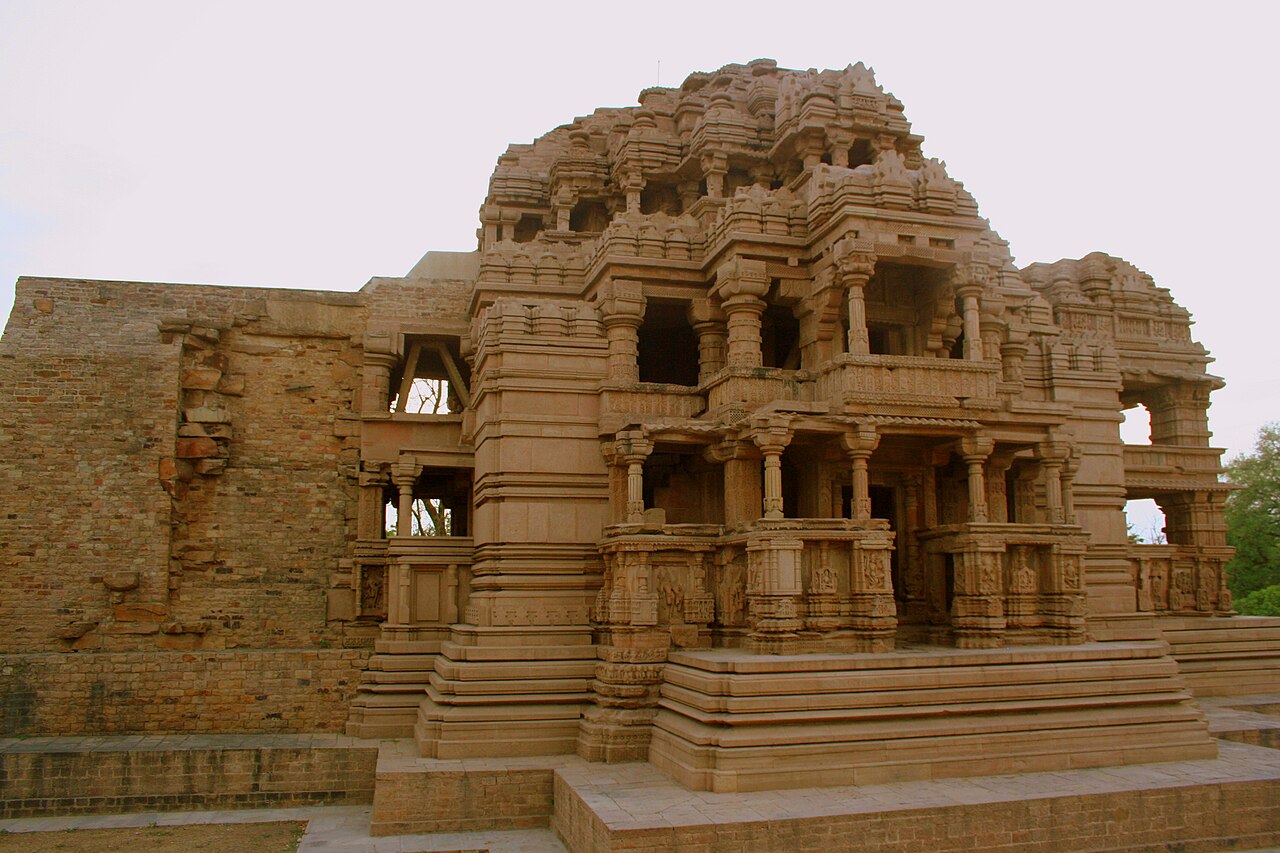
The Saas-Bahu Temples are two separate red sandstone shrines built in 1092–93 CE by King Mahipala of the Kachchhapaghata dynasty, and the popular reading of their name as 'mother-in-law and daughter-in-law' is very likely a folk misreading: Alexander Cunningham, the first director-general of the Archaeological Survey of India, deciphered a foundation inscription in the larger temple recording the name as a contraction of 'Sahastrabahu,' the thousand-armed form of Vishnu. The larger temple, dedicated to Vishnu, stands roughly four storeys tall on an open colonnaded base; the smaller temple beside it, dedicated to Shiva, has lost its superstructure but keeps a densely carved doorway and ceiling. Both towers are covered in figural bands read locally as scenes from the Ramayana and Mahabharata, cut into stone that has weathered to a deep ochre-red.
أفضل وقت في اليوم: 09:30 – 11:00. Raking mid-morning light shows the depth of the figural carving without midday glare.
مواعيد Saas-Bahu Temples
يفتح Saas-Bahu Temples في 08:00 ويغلق في 18:00. ولا يختلف الأمر في عطلة نهاية الأسبوع: السبت والأحد بالمواعيد نفسها.
- ساعات العمل
- 08:00–18:00
Mon–Sun 08:00–18:00 - يُغلق يوم
- مفتوح كل يوم
تم جمع ساعات العمل من gwalior.nic.in والسجلات العامة، وآخر تحديث في . قد تتغيّر دون إشعار مسبق — تأكد منها قبل السفر. كيف نكتب هذه الأدلة
سعر تذكرة Saas-Bahu Temples
| التذكرة | السعر |
|---|---|
| الزوار الهنود | ₹75 |
| الزوار الأجانب | ₹250 |
| الأطفال | ₹40 |
| الكاميرا | مجاني |
Saas-Bahu Temples are covered by the same combined Gwalior Fort ticket that includes Man Mandir Palace and Teli ka Mandir — ₹75 Indian / ₹40 child / ₹250 foreign as of 2026, verify at the counter. No separate payment is collected at the temple gate.
تم جمع الأسعار من gwalior.nic.in والسجلات العامة، وآخر تحديث في . قد تتغيّر دون إشعار مسبق — تأكد منها قبل السفر. كيف نكتب هذه الأدلة
أفضل وقت لزيارة Saas-Bahu Temples
- Quiet
- Moderate
08:00 – 09:30
Morning OpeningBest time to go
Quiet window right after the fort opens; the colonnaded hall of the larger temple is easy to have to yourself.
Quiet09:30 – 12:30
Circuit Traffic
Visitors arrive here as the last stop on the combined-ticket circuit from Man Mandir Palace and Teli ka Mandir.
Moderate12:30 – 15:30
Midday Heat
The open, shadeless plinth sees few visitors during peak heat.
Quiet15:30 – 18:00
Late Afternoon
A second wave arrives for photography before last entry, drawn by softer light on the carved towers.
Moderate
تاريخ Saas-Bahu Temples
King Mahipala of the Kachchhapaghata dynasty commissioned the Saas-Bahu Temples in 1092–93 CE, according to the inscription recovered from the larger structure, though a secondary local tradition credits a King Kirti Singh with building the smaller temple for a female relative — a claim the epigraphic record does not support and which should be treated as legend. The Kachchhapaghatas controlled Gwalior Fort through the 11th and 12th centuries, first as feudatories of the Pratiharas and then in their own right, and the temple complex belongs to the same building phase that produced the dynasty's other Vishnu- and Shiva-dedicated shrines across the region. Both temples suffered damage consistent with the same Delhi Sultanate campaigns of the 1230s that struck Teli ka Mandir elsewhere on the ridge, and the larger temple's upper storeys and roof were lost at an unrecorded later date, leaving the surviving colonnaded hall and doorway as the most intact sections. The Archaeological Survey of India has managed the site as a protected monument since the early twentieth century and has not attempted to reconstruct the missing roof.
القواعد والآداب في Saas-Bahu Temples
Saas-Bahu Temples are included in the same combined Gwalior Fort ticket that covers Man Mandir Palace and Teli ka Mandir — ₹75 Indian, ₹40 child, ₹250 foreign as of 2026, verify at the counter — with no separate payment collected at the temple gate. Visitors may walk into the open colonnaded hall of the larger temple and look up into the surviving ceiling carving, but climbing onto the plinth mouldings or the doorway frame for photographs is prohibited and is the most commonly enforced rule on site. Neither temple functions as an active place of worship, so there is no shoe-removal or dress-code requirement beyond the fort's general expectation of modest clothing. The path between the two temples is short and level, making this one of the more accessible stops on the fort ridge for visitors who find the stairways at Man Mandir Palace difficult.
نصائح لزيارة Saas-Bahu Temples
- 1
Saas-Bahu Temples are best photographed from the open ground in front of the larger shrine in the mid-morning, when raking light picks out the depth of the figural carving without the flat glare of midday. The complex sits at the northeastern end of the fort ridge, roughly ten minutes on foot from Teli ka Mandir, and is usually the last stop before visitors double back toward the main gate — a sensible order, since the temples take under an hour compared with the ninety minutes or more that Man Mandir Palace's stairways and chambers typically demand. Few of the guides working the fort circuit spend much time here, so visitors with an interest in the Ramayana and Mahabharata narrative panels on the smaller temple's surviving doorway should budget their own time rather than relying on a guided pace. Water is not sold on this stretch of the ridge, so carry a bottle from the main gate.
كيفية الوصول إلى Saas-Bahu Temples
لم نحدّد بعد الموقع الدقيق لـSaas-Bahu Temples على الخريطة؛ تعرض الخريطة الأماكن الأخرى في دليل Gwalior. استخدم العنوان أدناه أو رابط الاتجاهات.
Gwalior Fort, Gwalior, Madhya Pradesh 474001الاتجاهات في خرائط Google
من Gwalior Junction Railway Station
₹80–₹1204 km · 12–15 min
Auto, negotiated
من Teli ka Mandir
1 km · 10 min walk
Free (on foot along the ridge road)
أقرب مطار
من Rajmata Vijaya Raje Scindia Airport (GWL), Maharajpura
approximately 12 km, 25–30 minutes by road.
أقرب محطة قطار
من Gwalior Junction (GWL)
approximately 4 km, 12–15 minutes by road.
الأسئلة الشائعة عن Saas-Bahu Temples
Does 'Saas-Bahu' really mean mother-in-law and daughter-in-law?
Very likely not. Alexander Cunningham's reading of the foundation inscription traces the name to 'Sahastrabahu,' a thousand-armed epithet of Vishnu, rather than to the domestic relationship the popular name suggests.
When were the Saas-Bahu Temples built?
In 1092–93 CE, commissioned by King Mahipala of the Kachchhapaghata dynasty, according to the inscription in the larger temple.
Is there a separate ticket for the Saas-Bahu Temples?
No. Entry is covered by the same combined Gwalior Fort ticket used for Man Mandir Palace and Teli ka Mandir.
Which temple is larger, and to which deity is it dedicated?
The larger temple is dedicated to Vishnu and stands about four storeys on an open colonnaded base. The smaller, roofless temple beside it is dedicated to Shiva.
أُعدّ بمساعدة الذكاء الاصطناعي من مصادر رسمية وسجلات عامة، ونُشر فقط بعد عمليات التحقق الموضحة في كيف نكتب هذه الأدلة. لم يزر أحد من فريق Traveliac هذا المكان شخصيًا. آخر تحديث في . كيف نصنّف الأماكن ونتحقق منها
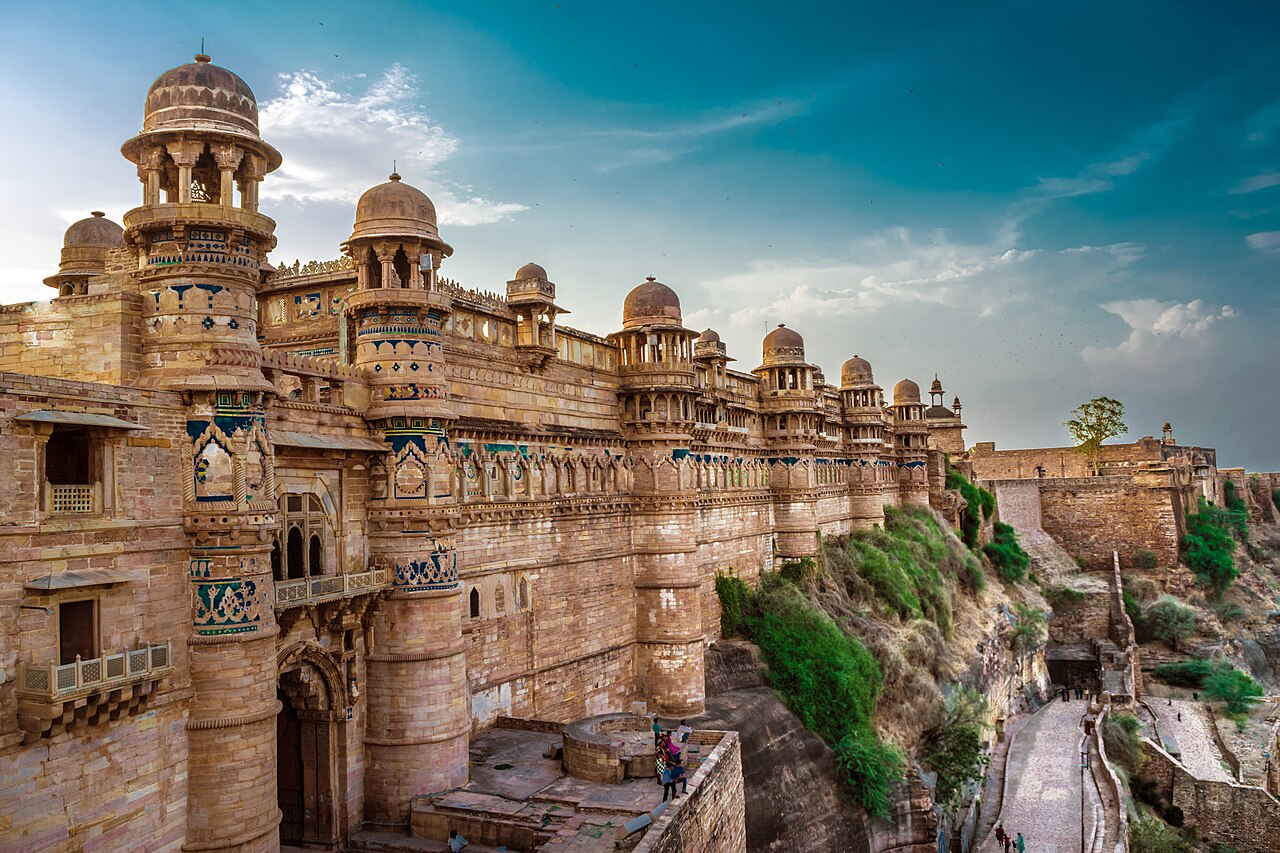
![Hathi Pol Gate, Man Mandir Palace, [Gwalior]](/wm/wikipedia/commons/thumb/d/da/Hathi_Pol_Gate%2C_Man_Mandir_Palace%2C_-Gwalior-.jpg/1280px-Hathi_Pol_Gate%2C_Man_Mandir_Palace%2C_-Gwalior-.jpg)