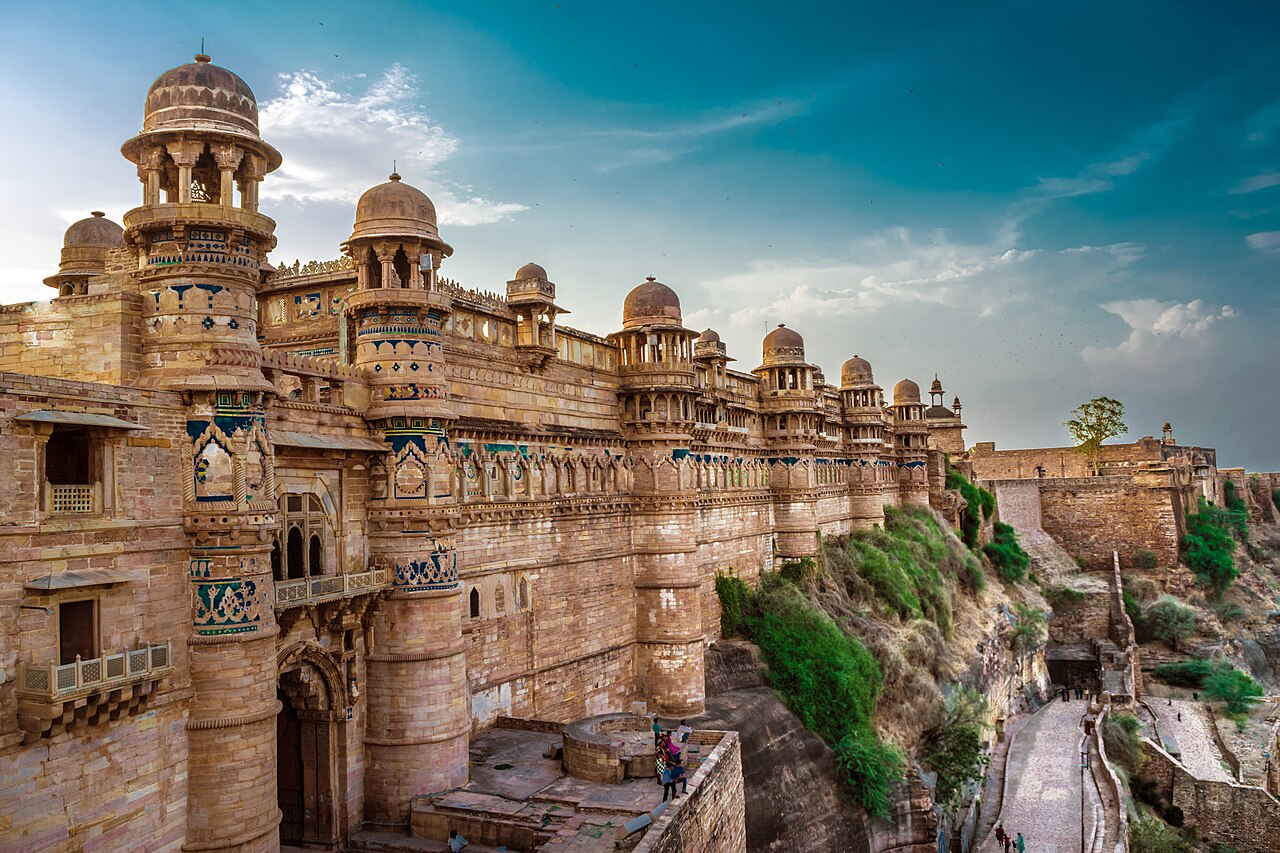
Gwalior Fort
#1von 8 Orten zum Besuchen in GwaliorGwalior, Madhya Pradesh
Auch bekannt als Gwalior Qila · Gibraltar of India
Kurz gesagt
Öffnungszeiten: 08:00–18:00. Eintritt: ₹75 für Inder · ₹250 für Ausländer. Plane 3 hrs ein. Beste Zeit: 08:00 – 10:00.
Aktualisiert am · Erstellt von Traveliac, KI-unterstützt · 4 Min. Lesezeit
- Öffnungszeiten
- 08:00–18:00
- Eintrittspreis
- ₹75 für Inder
- Ticket ab
- Benötigte Zeit
- 3 hrs
- Beste Tageszeit
- 08:00 – 10:00
- Beste Monate
- Oct – Mar
- Adresse
- Fort Road, Gwalior Fort, Gwalior, Madhya Pradesh 474001
Über Gwalior Fort
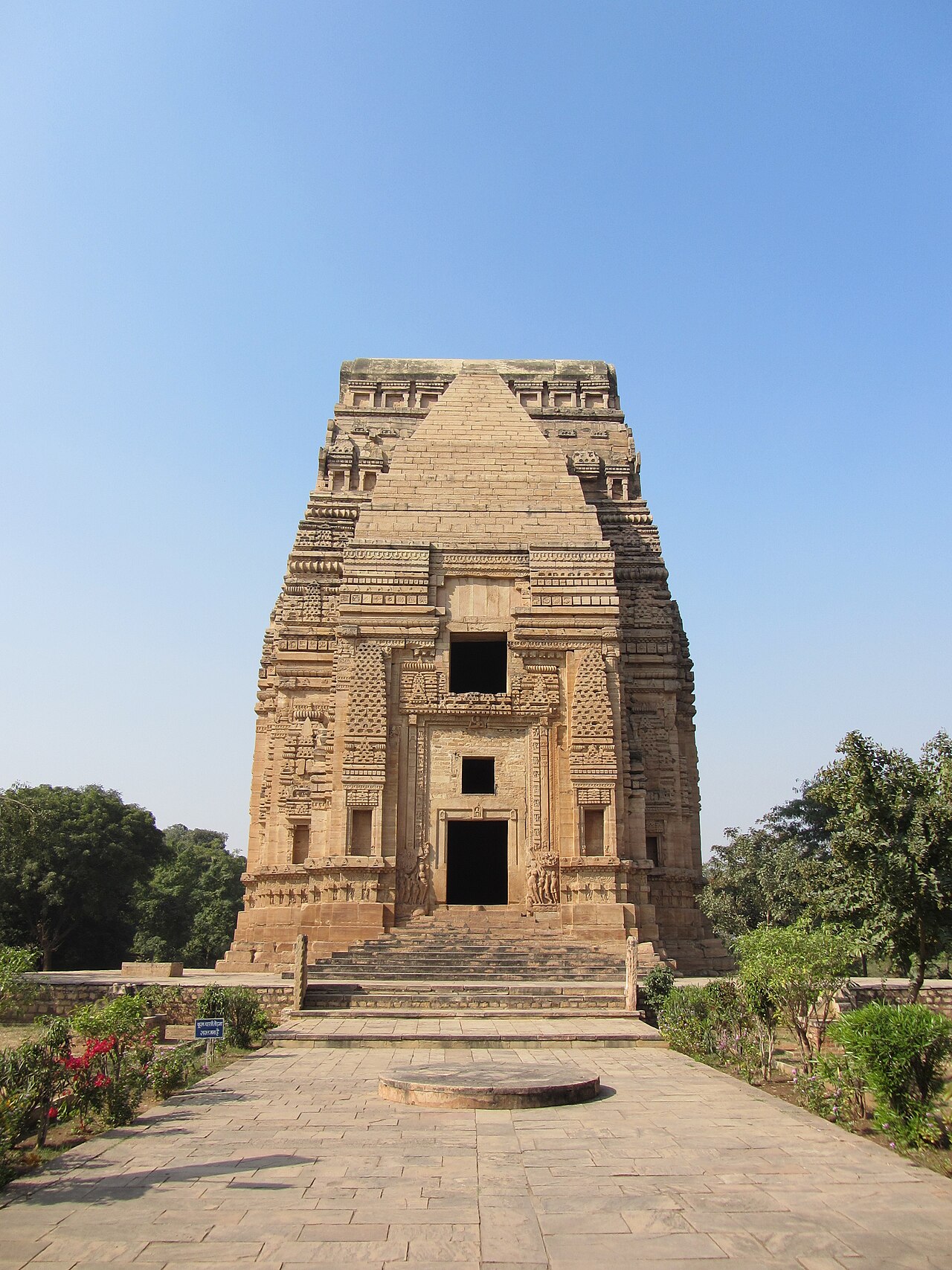
Gwalior Fort runs for roughly 3 kilometres along a sandstone ridge that rises 342 feet above the city, and the Mughal emperor Babur, who took the fort in 1526, called it 'the pearl amongst the fortresses of Hind.' The ridge itself is Vindhyan sandstone, ochre in tone and capped in places by a darker basalt cladding, and every dynasty that held the hill — Hunas, Pratiharas, Kachchhapaghatas, the Delhi Sultanate, Tomars, Mughals, and finally the Scindias — added a gate, a temple, or a palace rather than replacing what came before. Walking the ridge end to end takes a full morning: the circuit includes two working religious sites, a ruined Mughal-era palace, twin 11th-century temples, and a gorge lined with Jain rock-cut sculpture.
Beste Tageszeit: 08:00 – 10:00. The ridge has no tree cover, so the first two hours after opening give both the coolest air and the shortest queue at Man Mandir Palace.
Öffnungszeiten von Gwalior Fort
Gwalior Fort öffnet um 08:00 und schließt um 18:00. Am Wochenende ändert sich nichts: samstags und sonntags gelten dieselben Zeiten.
- Öffnungszeiten
- 08:00–18:00
Mon–Sun 08:00–18:00 - Geschlossen an
- Täglich geöffnet
Öffnungszeiten zusammengestellt aus gwalior.nic.in und öffentlichen Quellen, zuletzt aktualisiert am . Sie können sich ohne Vorankündigung ändern — vor der Reise bitte bestätigen. Wie wir diese Reiseführer schreiben
Eintrittspreis für Gwalior Fort
| Ticket | Preis |
|---|---|
| Indische Besucher | ₹75 |
| Ausländische Besucher | ₹250 |
| Kinder | ₹40 |
| Kamera | Kostenlos |
A single combined ticket covers Man Mandir Palace, Teli ka Mandir, and the Saas-Bahu Temples inside the fort; the Gujari Mahal Archaeological Museum and the evening sound-and-light show are ticketed separately. Aggregator listings quote Indian fees anywhere from ₹20 to ₹75 and foreign fees from ₹250 to ₹600, so ₹75 Indian / ₹40 child / ₹250 foreign is the most consistently cited figure as of 2026 — verify at the counter.
Preise zusammengestellt aus gwalior.nic.in und öffentlichen Quellen, zuletzt aktualisiert am . Sie können sich ohne Vorankündigung ändern — vor der Reise bitte bestätigen. Wie wir diese Reiseführer schreiben
Beste Reisezeit für Gwalior Fort
- Quiet
- Moderate
- Busy
- Very busy
08:00 – 10:00
Morning OpeningBest time to go
Gate opens at 08:00; the ridge is shadeless by mid-morning so early arrivals get both cool air and the thinnest queues at Man Mandir Palace.
Quiet10:00 – 13:00
Tour Group Peak
Domestic tour groups and school trips concentrate at Man Mandir Palace and the Saas-Bahu Temples; the ridge path between monuments narrows with foot traffic.
Very busy13:00 – 16:00
Midday Heat
Heat empties the open ramparts; the covered chambers of Man Mandir Palace stay busier than the exposed temple courtyards.
Moderate16:00 – 18:00
Late Afternoon
Photographers arrive for golden-hour views over the city from the ramparts; last entry is 18:00.
Busy
Geschichte von Gwalior Fort
Gwalior Fort's earliest confirmed occupation dates to the Hunas in the 5th century, with the Gurjara-Pratiharas fortifying the ridge more substantially between the 8th and 10th centuries and the Kachchhapaghata dynasty ruling from it through the 12th. Sultan Iltutmish took the fort for the Delhi Sultanate in 1232, and the Tomar Rajputs recaptured and held it from the 14th century until 1516, a period that produced the fort's most celebrated builder, Raja Man Singh Tomar. Sultan Sikandar Lodi besieged the fort for over a year before Man Singh's death in 1516, after which it passed to the Delhi Sultanate and then, in 1526, to Babur's invading Mughal army. The fort changed hands repeatedly after that: Jat rulers of Gohad held it from 1725, the Marathas under the Scindias took it in a night assault in the 1780s, the British East India Company seized it in 1858 during the aftermath of the 1857 uprising, and it was formally returned to the Scindia state in 1886. The Sikh Guru Hargobind was imprisoned here by Emperor Jahangir in the early 17th century, an episode still marked at the Gurudwara Data Bandi Chhod inside the fort walls.
Regeln & Etikette in Gwalior Fort
Gwalior Fort's principal historic entrance is Hathi Pol, the Elephant Gate, on the fort's southeast face, though most present-day visitors enter near the ticket office by Gujari Mahal. A single combined ticket, priced at ₹75 for Indian nationals, ₹40 for children, and ₹250 for foreign nationals as of 2026 (verify at the counter, since aggregator listings quote figures from ₹20 to ₹600), covers Man Mandir Palace, Teli ka Mandir, and the Saas-Bahu Temples — keep the stub until you exit, since attendants check it at each monument. Photography rules are enforced inconsistently from post to post; still cameras are typically waved through while tripods and drones need prior written clearance from the Archaeological Survey of India's Gwalior office. The stone ramps and staircases between monuments are uneven and shadeless at midday, so flat shoes and a hat matter more here than at most Indian forts.
Tipps für den Besuch von Gwalior Fort
- 1
Gwalior Fort rewards an early start more than almost any other monument in Madhya Pradesh, because the ridge has no tree cover and the sandstone reflects heat back at walkers by mid-morning. Autorickshaw drivers at the base of the hill quote a flat return fare to cover Man Mandir Palace, Teli ka Mandir, and the Saas-Bahu Temples in sequence, typically ₹300–₹500 depending on waiting time — agree the full circuit and the wait before starting rather than negotiating at each stop. The Jain rock-cut sculptures carved into the Urwahi gorge on the fort's western flank, roughly 1,500 figures including a 58-foot standing image of Rishabhanatha, sit outside the main ticketed circuit and can be seen without charge from the gorge road. A sound-and-light show runs most evenings from Man Mandir Palace's terrace on a separate ticket; check the timing at the fort's ticket counter since the schedule shifts with sunset through the year.
Anreise nach Gwalior Fort
Der rote Stern zeigt Gwalior Fort; die nummerierten Markierungen sind die 2 nächstgelegenen Orte aus unseren Reiseführern, jeweils mit ihrem Rang in der eigenen Stadt. Für Details auf eine Markierung tippen.
Fort Road, Gwalior Fort, Gwalior, Madhya Pradesh 474001Route in Google Maps
Ab Rajmata Vijaya Raje Scindia Airport (GWL)
₹250–₹35012 km · 25–30 min
Prepaid cab); ₹200–₹250 (auto, negotiated
Ab Gwalior Junction Railway Station
₹80–₹1204 km · 12–15 min
Auto, negotiated); ₹150–₹200 (cab
Ab Lashkar (city centre)
₹15–₹205 km · 15 min
City bus); ₹100 (auto, negotiated
Nächster Flughafen
Ab Rajmata Vijaya Raje Scindia Airport (GWL), Maharajpura
approximately 12 km, 25–30 minutes by road.
Nächster Bahnhof
Ab Gwalior Junction (GWL)
approximately 4 km, 12–15 minutes by road.
Häufige Fragen zu Gwalior Fort
What is the combined ticket price for Gwalior Fort's monuments?
₹75 for Indian nationals, ₹40 for children, and ₹250 for foreign nationals as of 2026, verify at the counter since online listings vary. One ticket covers Man Mandir Palace, Teli ka Mandir, and the Saas-Bahu Temples; keep it until you exit the complex.
Can you walk the fort ridge without paying for individual monuments?
Yes. The fort's ramparts, gates, and viewpoints are open without a separate ticket; the combined fee applies only when entering Man Mandir Palace, Teli ka Mandir, or the Saas-Bahu Temples.
Is the Gurudwara Data Bandi Chhod inside the ticketed area?
No. The gurudwara sits within the fort's outer walls but functions as an independent religious site with free entry, separate from the ASI ticket.
How long does the full fort circuit take?
Three hours covers Man Mandir Palace, Teli ka Mandir, and the Saas-Bahu Temples at an unhurried pace. Add another hour for the Jain sculptures in the Urwahi gorge.
Mit KI-Unterstützung aus offiziellen Quellen und öffentlichen Aufzeichnungen erstellt und erst nach den Prüfungen veröffentlicht, die beschrieben sind unter Wie wir diese Reiseführer schreiben. Niemand von Traveliac war persönlich vor Ort. Zuletzt aktualisiert am . Wie wir Orte bewerten und prüfen
Orte in der Nähe von Gwalior Fort
Luftlinien-Entfernungen laut unserer Karte; Zeiten sind Schätzwerte.