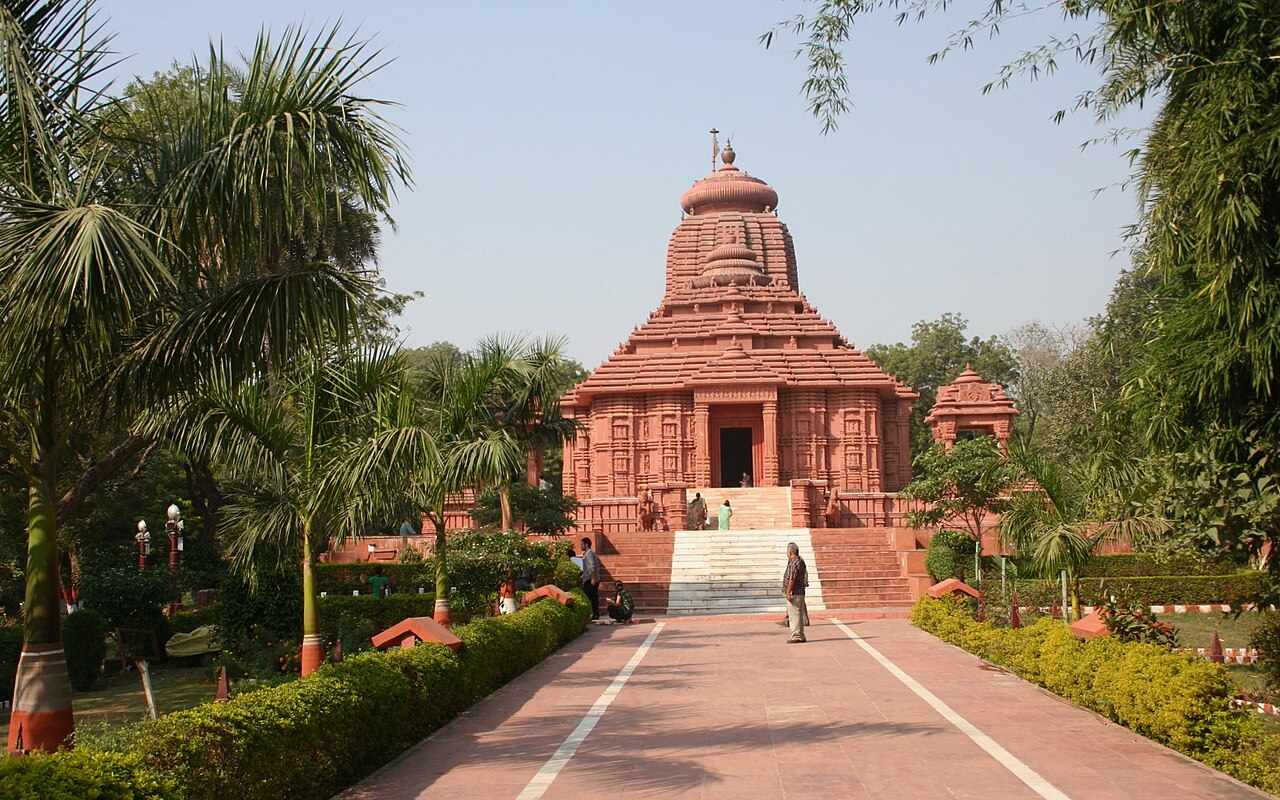
Sun Temple, Gwalior
#8von 8 Orten zum Besuchen in GwaliorGwalior, Madhya Pradesh
Auch bekannt als Surya Mandir Gwalior · Vivaswan Mandir · Birla Mandir Gwalior
Kurz gesagt
Öffnungszeiten: 06:00–12:00 and 16:00–19:00. Der Eintritt ist kostenlos. Plane 45 min ein. Beste Zeit: 16:00 – 18:00.
Aktualisiert am · Erstellt von Traveliac, KI-unterstützt · 4 Min. Lesezeit
- Öffnungszeiten
- 06:00–19:00
- Eintrittspreis
- Kostenlos
- Benötigte Zeit
- 45 min
- Beste Tageszeit
- 16:00 – 18:00
- Beste Monate
- Oct – Mar
- Adresse
- Sun Temple Road, near the Residency, Morar, Gwalior, Madhya Pradesh 474006
Über Sun Temple, Gwalior
The Sun Temple in Gwalior's Morar quarter was completed on 23 January 1988, four years and four days after the industrialist G. D. Birla laid its foundation stone, and its design reproduces the 13th-century Konark Sun Temple in Odisha at a reduced scale. Red sandstone covers the exterior in the stepped, receding tiers that Konark's original architects used to represent the sun god Surya's chariot, while the interior sanctum is finished in white marble rather than the sandstone used outside. The building's carved programme follows Konark's numerical symbolism directly: 365 carved figures for the days of the year, 24 wheels for the hours, and seven horses representing the days of the week, all cut into the stone rather than added as later ornament.
Beste Tageszeit: 16:00 – 18:00. Timed around the evening aarti, when the carved chariot wheels catch better light than at midday.
Öffnungszeiten von Sun Temple, Gwalior
Sun Temple, Gwalior ist 06:00–12:00 and 16:00–19:00 geöffnet. Am Wochenende ändert sich nichts: samstags und sonntags gelten dieselben Zeiten.
- Öffnungszeiten
- 06:00–19:00
Mon–Sun 06:00–12:00 and 16:00–19:00 - Geschlossen an
- Täglich geöffnet
Gut zu wissen: Some listings give 18:00 rather than 19:00 as the evening closing time; confirm locally on the day.
Öffnungszeiten zusammengestellt aus gwalior.nic.in und öffentlichen Quellen, zuletzt aktualisiert am . Sie können sich ohne Vorankündigung ändern — vor der Reise bitte bestätigen. Wie wir diese Reiseführer schreiben
Eintrittspreis für Sun Temple, Gwalior
| Ticket | Preis |
|---|---|
| Indische Besucher | Kostenlos |
| Ausländische Besucher | Kostenlos |
| Kinder | Kostenlos |
| Kamera | Kostenlos |
Entry is free as of 2026; a donation box near the sanctum accepts contributions toward upkeep.
Preise zusammengestellt aus gwalior.nic.in und öffentlichen Quellen, zuletzt aktualisiert am . Sie können sich ohne Vorankündigung ändern — vor der Reise bitte bestätigen. Wie wir diese Reiseführer schreiben
Beste Reisezeit für Sun Temple, Gwalior
- Quiet
- Moderate
- Busy
06:00 – 09:00
Early WorshippersBest time to go
Local worshippers attend morning darshan before the day's heat builds.
Quiet09:00 – 12:00
Late Morning
Visitors arrive before the midday closure; the courtyard sees steady but manageable footfall.
Moderate16:00 – 18:00
Reopening
Families arrive as the gates reopen, ahead of the evening aarti.
Moderate18:00 – 19:00
Evening Aarti
The ritual lamp offering draws the day's largest and most devotional crowd.
Busy
Geschichte von Sun Temple, Gwalior
G. D. Birla, the industrialist whose family funded temple-building projects across several Indian cities in the twentieth century, laid the foundation stone for Gwalior's Sun Temple on 19 January 1984, with construction completed on 23 January 1988. The temple belongs to a wave of Birla-funded temples built in this period — comparable Birla Mandirs went up in Delhi, Jaipur, and other cities during the same decades — that combined Hindu revivalist patronage with a deliberate architectural reference to older temple forms rather than an invented new style. Choosing Konark's 13th-century Sun Temple as the model was a specific decision: Konark, built under the Eastern Ganga king Narasimhadeva I and now a UNESCO World Heritage Site, is one of India's most studied surviving Surya temples, and reproducing its chariot form gave Gwalior's twentieth-century temple an explicit link to that older tradition rather than a generic revivalist design. The temple sits in Morar, the cantonment quarter developed under British administration in the nineteenth century, rather than within the older Lashkar or fort areas of the city.
Regeln & Etikette in Sun Temple, Gwalior
The Sun Temple in Morar asks visitors to remove footwear before stepping onto the temple platform, in line with standard practice at any active Hindu temple, and conservative dress covering the shoulders and knees is expected rather than formally enforced. Entry is free, with a donation box near the sanctum for those who wish to contribute toward the temple's upkeep. The temple closes at midday and reopens in the late afternoon, a two-part schedule rather than the continuous hours common at ASI-protected sites, so arriving between roughly noon and 16:00 means finding the gates shut. Evening visits during the aarti, the ritual lamp offering performed at dusk, draw the temple's largest and most devotional crowd of the day, and photography during the ceremony itself is generally discouraged out of respect for worshippers rather than by a posted rule.
Tipps für den Besuch von Sun Temple, Gwalior
- 1
The Sun Temple rewards a late-afternoon visit timed around the evening aarti rather than a midday stop, both because the temple closes over lunch and because the carved chariot wheels and horse reliefs on the exterior catch better light after 16:00 than they do at noon. Morar sits roughly 5 kilometres from Gwalior Junction and the Gwalior Fort ridge, on the opposite side of the city from Jai Vilas Palace and the old Lashkar quarter, so it works best as a separate half-day stop rather than an add-on to a fort-focused morning. Auto-rickshaws from the railway station or Lashkar take about 15 minutes and are generally metered or negotiated at a flat rate rather than shared. Visitors who have already seen Konark or read about it will notice the numerical programme most clearly here — counting the 24 wheels around the base is a common way visitors spend the last few minutes before the gates close.
Anreise nach Sun Temple, Gwalior
Wir haben die genaue Position von Sun Temple, Gwalior noch nicht erfasst; die Karte zeigt die anderen Orte aus unserem Gwalior-Reiseführer. Nutze die Adresse unten oder den Routenlink.
Sun Temple Road, near the Residency, Morar, Gwalior, Madhya Pradesh 474006Route in Google Maps
Ab Gwalior Junction Railway Station
₹120–₹1505 km · 15 min
Auto, negotiated
Ab Rajmata Vijaya Raje Scindia Airport (GWL)
₹180–₹2207 km · 15–20 min
Prepaid cab
Nächster Flughafen
Ab Rajmata Vijaya Raje Scindia Airport (GWL), Maharajpura
approximately 7 km, 15–20 minutes by road.
Nächster Bahnhof
Ab Gwalior Junction (GWL)
approximately 5 km, 15 minutes by road.
Häufige Fragen zu Sun Temple, Gwalior
Is there an entry fee for the Sun Temple in Gwalior?
No. Entry is free, with a donation box near the sanctum for those who wish to contribute.
Is Gwalior's Sun Temple as old as the Konark Sun Temple?
No. Gwalior's temple was built between 1984 and 1988 by the industrialist G. D. Birla as a scaled reproduction of the 13th-century Konark Sun Temple in Odisha.
What do the 365 carved figures represent?
They represent the days of the year, part of a numerical programme copied from Konark that also includes 24 wheels for the hours of the day and seven horses for the days of the week.
What are the temple's visiting hours?
06:00 to 12:00 and 16:00 to 19:00 daily, with a midday closure. Confirm the exact evening closing time locally, since sources vary between 18:00 and 19:00.
Mit KI-Unterstützung aus offiziellen Quellen und öffentlichen Aufzeichnungen erstellt und erst nach den Prüfungen veröffentlicht, die beschrieben sind unter Wie wir diese Reiseführer schreiben. Niemand von Traveliac war persönlich vor Ort. Zuletzt aktualisiert am . Wie wir Orte bewerten und prüfen
![Hathi Pol Gate, Man Mandir Palace, [Gwalior]](/wm/wikipedia/commons/thumb/d/da/Hathi_Pol_Gate%2C_Man_Mandir_Palace%2C_-Gwalior-.jpg/1280px-Hathi_Pol_Gate%2C_Man_Mandir_Palace%2C_-Gwalior-.jpg)