
Meiji Jingu Shrine
#6von 10 Orten zum Besuchen in TokyoTokyo, Kanto, Japan
Auch bekannt als Meiji Shrine · 明治神宮
Kurz gesagt
Öffnungszeiten: No fixed opening hours. Der Eintritt ist kostenlos. Plane 1.5 hrs ein. Beste Zeit: Early morning.
Aktualisiert am · Erstellt von Traveliac, KI-unterstützt · 4 Min. Lesezeit
- Öffnungszeiten
- No fixed hours
- Grounds open from sunrise to sunset, so hours shift monthly — roughly 05:00 opening in summer and 06:40 in winter, closing between 16:00 and 18:30 depending on season.
- Eintrittspreis
- Kostenlos
- Benötigte Zeit
- 1.5 hrs
- Beste Tageszeit
- Early morning
- Beste Monate
- Mar – Apr, Oct – Nov
- Adresse
- 1-1 Yoyogikamizonocho, Shibuya City, Tokyo 151-8557, Japan
Über Meiji Jingu Shrine
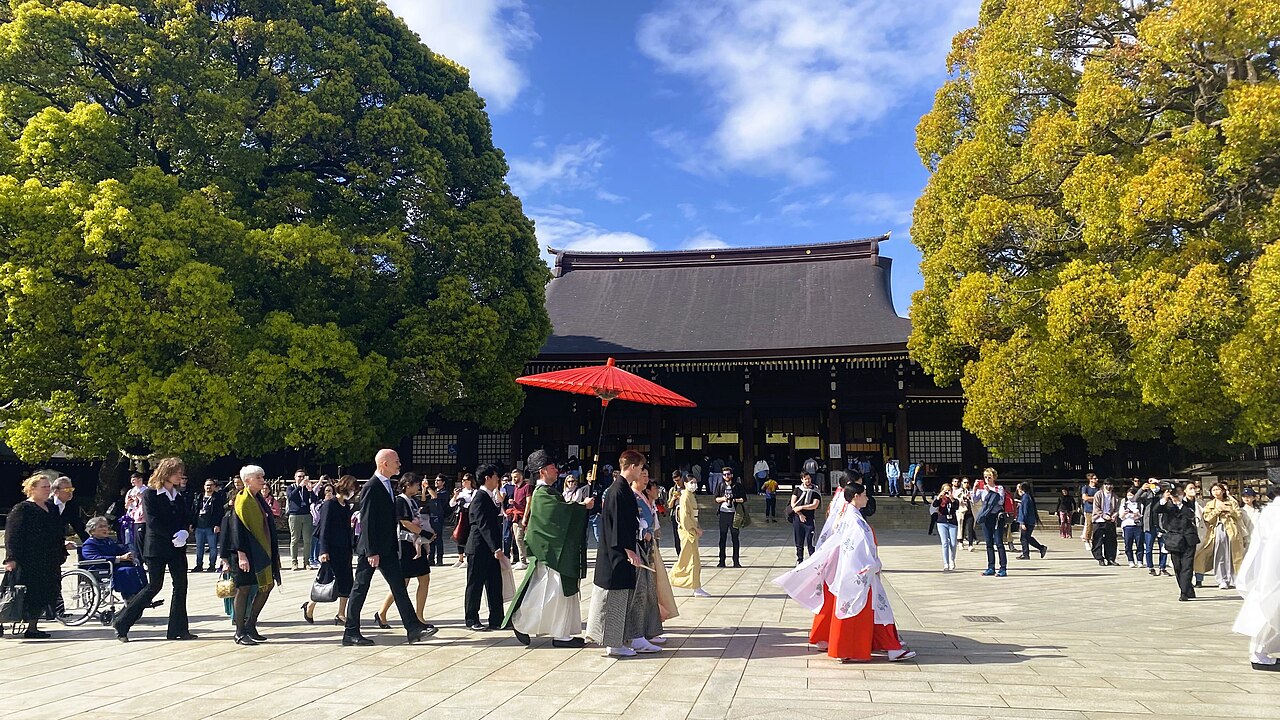
Meiji Jingu Shrine sits inside a forest of roughly 120,000 trees spanning about 700,000 square metres, planted entirely by hand between 1915 and 1920 using donations of 100,000 trees sent from across Japan and its former territories. The shrine is dedicated to Emperor Meiji, who presided over Japan's rapid industrialization from 1868 to 1912, and Empress Shoken. The approach path from the Harajuku entrance runs roughly 400 metres through the forest before reaching the first torii gate, made of Japanese cypress and standing 12 metres tall, one of the largest wooden torii in Japan. The current worship hall is a 1958 reconstruction after the original 1920 wooden structure was destroyed in a 1945 air raid.
Beste Tageszeit: Early morning. At gate opening, for the quietest walk through the forested approach and the shortest queue at the main worship hall.
Öffnungszeiten von Meiji Jingu Shrine
- Öffnungszeiten
- No fixed hours
Mon–Sun No fixed hours - Grounds open from sunrise to sunset, so hours shift monthly — roughly 05:00 opening in summer and 06:40 in winter, closing between 16:00 and 18:30 depending on season.
- Geschlossen an
- Meiji Jingu Museum: Thursdays
Gut zu wissen: Inner Garden closes earlier than the main grounds and has its own seasonal hours; the Meiji Jingu Museum keeps fixed 10:00–16:30 hours (last admission 16:00) year-round.
Öffnungszeiten zusammengestellt aus meijijingu.or.jp und öffentlichen Quellen, zuletzt aktualisiert am . Sie können sich ohne Vorankündigung ändern — vor der Reise bitte bestätigen. Wie wir diese Reiseführer schreiben
Eintrittspreis für Meiji Jingu Shrine
| Ticket | Preis |
|---|---|
| Standardticket | Kostenlos |
| Ermäßigt (Studenten / Senioren) | Kostenlos |
| Kinder | Kostenlos |
The main shrine grounds and worship hall are free. The Inner Garden (Gyoen) charges a ¥500 maintenance fee. The Meiji Jingu Museum charges ¥1,000 for adults, ¥900 for students, closed Thursdays. As of 2026, verify seasonal opening times for the Inner Garden at the official site.
Preise zusammengestellt aus meijijingu.or.jp und öffentlichen Quellen, zuletzt aktualisiert am . Sie können sich ohne Vorankündigung ändern — vor der Reise bitte bestätigen. Wie wir diese Reiseführer schreiben
Beste Reisezeit für Meiji Jingu Shrine
- Quiet
- Moderate
- Busy
Sunrise–08:00
Gate OpeningBest time to go
Local worshippers and joggers on the forest path; quietest window for photographing the main torii gate without crowds in frame.
Quiet10:00–14:00
Midday Peak
Tour groups arrive from Harajuku; the worship hall courtyard and sake-barrel wall become the day's busiest photo points.
Busy14:00–16:00
Afternoon
Crowds ease; weekend Shinto wedding processions, when scheduled, often cross the courtyard in this window.
Moderate16:00–sunset
Late Afternoon
Forest light softens; grounds close at sunset so this is the last practical entry window in most seasons.
Quiet
Geschichte von Meiji Jingu Shrine
Emperor Meiji died in 1912 and Empress Shoken in 1914; the Japanese government and public campaigned to establish a permanent shrine in their memory, settling on a swampy, largely treeless plot in what was then the outskirts of Tokyo near the former Kii-Tokugawa family estate. Landscape architects Honda Seiroku, Hongo Takanori, and Kentaro Ueda designed the forest as a deliberate 200-year ecological experiment: rather than planting native regional species, they modeled the forest on the successional stages of a natural broadleaf evergreen forest, expecting it to become self-sustaining without further human management — an outcome later confirmed by 20th-century forestry surveys showing the canopy evolving largely as the original designers predicted.
The shrine was completed and dedicated in November 1920, built using donations and volunteer labor that included 11 million individual volunteer-hours according to shrine records. The wooden worship hall and other structures burned in the May 1945 firebombing of Tokyo; postwar reconstruction, funded again by public donation, was completed in 1958. Meiji Jingu remains one of Japan's most visited shrines for hatsumode, the first shrine visit of the New Year, drawing several million visitors across the first three days of January alone.
Regeln & Etikette in Meiji Jingu Shrine
Visitors pass through the main torii gate along the center of the path traditionally reserved for the deity, so etiquette calls for walking slightly to either side rather than directly down the middle. At the purification fountain (temizuya) near the worship hall, the custom is to rinse the left hand, then the right hand, then the mouth using the left hand as a cup, without touching the ladle directly to the mouth.
Sake and wine barrels are displayed along the approach path — a wall of colorfully labeled sake casks donated by breweries, and opposite it, wine barrels from Burgundy reflecting Emperor Meiji's interest in Western culture — and are a popular but frequently misunderstood photo stop; the barrels are empty, ceremonial offerings rather than functioning storage. Photography is permitted throughout the outdoor grounds but restricted inside the worship hall's inner sanctum area, marked by signage and rope barriers.
Tipps für den Besuch von Meiji Jingu Shrine
- 1
The Inner Garden's ¥500 fee is worth paying in June, when its iris garden (around 1,500 plants across 150 varieties) blooms, and worth skipping in winter when the garden is comparatively bare. Tipping does not apply anywhere on the shrine grounds, consistent with practice across Japan.
- 2
The forest itself, rather than the shrine buildings, is the primary reason to allow 90 minutes rather than rushing through in 30; the canopy blocks most traffic noise from the surrounding Shibuya and Harajuku districts within a few hundred metres of the entrance. Harajuku's Takeshita Street, a dense youth-fashion shopping strip, sits directly opposite the shrine's south entrance, making a natural contrast stop immediately after leaving the forest.
- 3
Weekend visits, particularly when a traditional Shinto wedding procession crosses the main courtyard (a common Saturday occurrence), draw crowds who stop to watch; arriving on a weekday morning avoids both wedding-watching crowds and general tourist volume.
Anreise nach Meiji Jingu Shrine
Der rote Stern zeigt Meiji Jingu Shrine; die nummerierten Markierungen sind die 7 nächstgelegenen Orte aus unseren Reiseführern, jeweils mit ihrem Rang in der eigenen Stadt. Für Details auf eine Markierung tippen.
1-1 Yoyogikamizonocho, Shibuya City, Tokyo 151-8557, JapanRoute in Google Maps
Ab Haneda Airport (HND)
22 km · 40–50 min
¥650–¥700
Ab Narita Airport (NRT)
70 km · 80–100 min
¥3,200
Ab Shinjuku Station
3 km · 10–15 min
¥150
Nächster Flughafen
Ab Haneda Airport (HND)
22 km, approximately 40–50 minutes via monorail and JR/subway transfer to Harajuku or Yoyogi.
Nächste Station
Ab Harajuku Station (JR Yamanote Line)
adjacent to the south entrance; Meiji-jingumae Station (Tokyo Metro Chiyoda/Fukutoshin Lines) also borders the shrine.
Häufige Fragen zu Meiji Jingu Shrine
Is Meiji Jingu Shrine free to visit?
Yes, the main shrine grounds, forest paths, and worship hall are free. Only the separate Inner Garden (¥500) and the Meiji Jingu Museum (¥1,000 adult) charge admission.
What time does Meiji Jingu open?
The shrine grounds open at sunrise and close at sunset, so hours change monthly — roughly 05:00 in summer to around 06:40 in winter for opening, with closing between 16:00 and 18:30 depending on the season.
Is the forest at Meiji Jingu natural or planted?
It is entirely planted. Landscape architects designed and planted around 120,000 trees between 1915 and 1920, using donations from across Japan, modeling the layout on the natural succession of a broadleaf evergreen forest so it would become self-sustaining over roughly two centuries.
Can visitors see the sake barrels at Meiji Jingu up close?
Yes, the wall of donated sake casks and the opposite row of Burgundy wine barrels line the approach path and are freely viewable and photographable. The barrels are ceremonial offerings and are empty, not functioning storage.
Mit KI-Unterstützung aus offiziellen Quellen und öffentlichen Aufzeichnungen erstellt und erst nach den Prüfungen veröffentlicht, die beschrieben sind unter Wie wir diese Reiseführer schreiben. Niemand von Traveliac war persönlich vor Ort. Zuletzt aktualisiert am . Wie wir Orte bewerten und prüfen
Orte in der Nähe von Meiji Jingu Shrine
Luftlinien-Entfernungen laut unserer Karte; Zeiten sind Schätzwerte.
 #8 in Tokyo
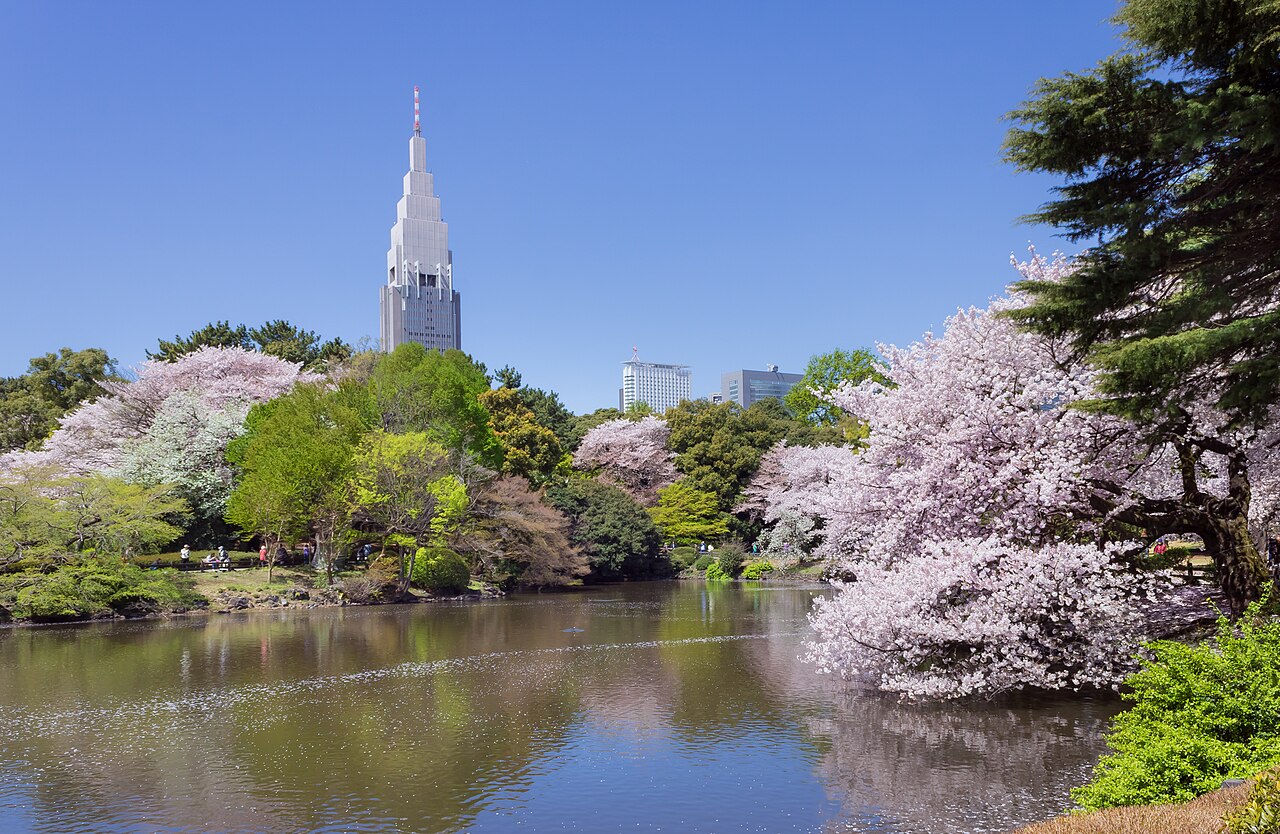
Shinjuku Gyoen National Garden
Garten · 1.4 km · about 23 min walk
 #7 in TokyoFreier Eintritt
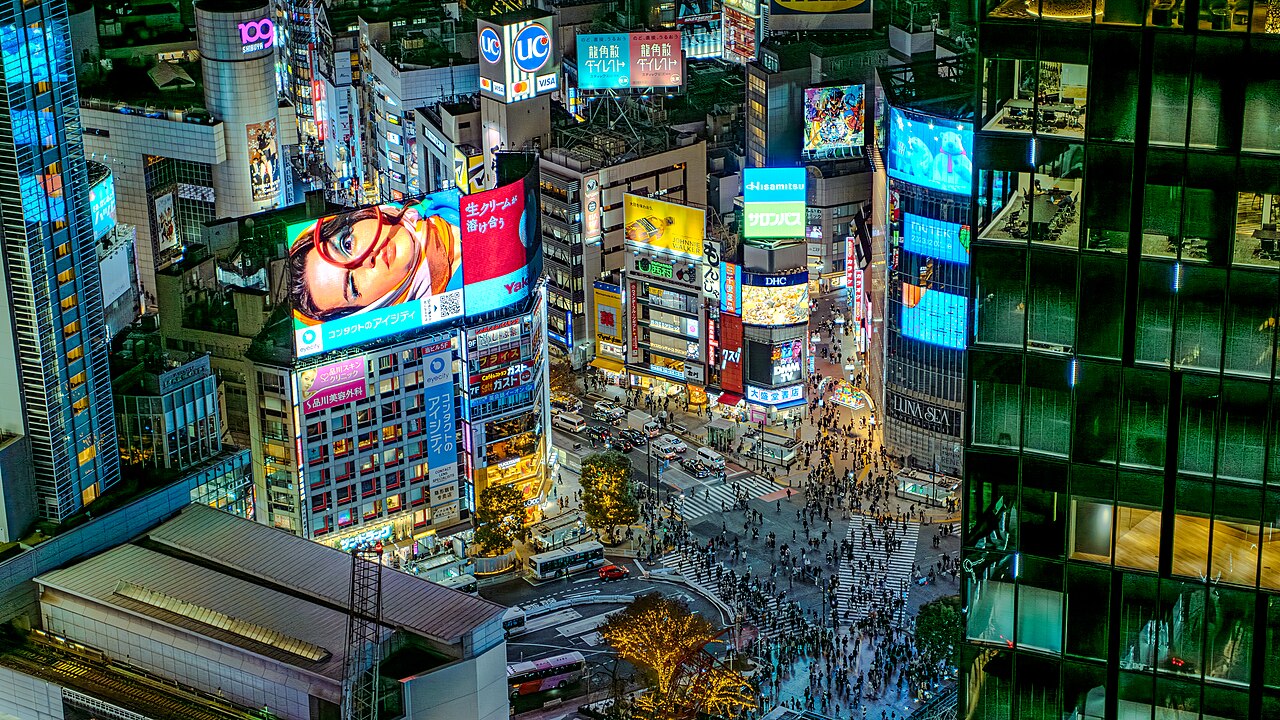
Shibuya Crossing
Kulturerbe · 1.9 km · about 30 min walk
 #5 in Tokyo
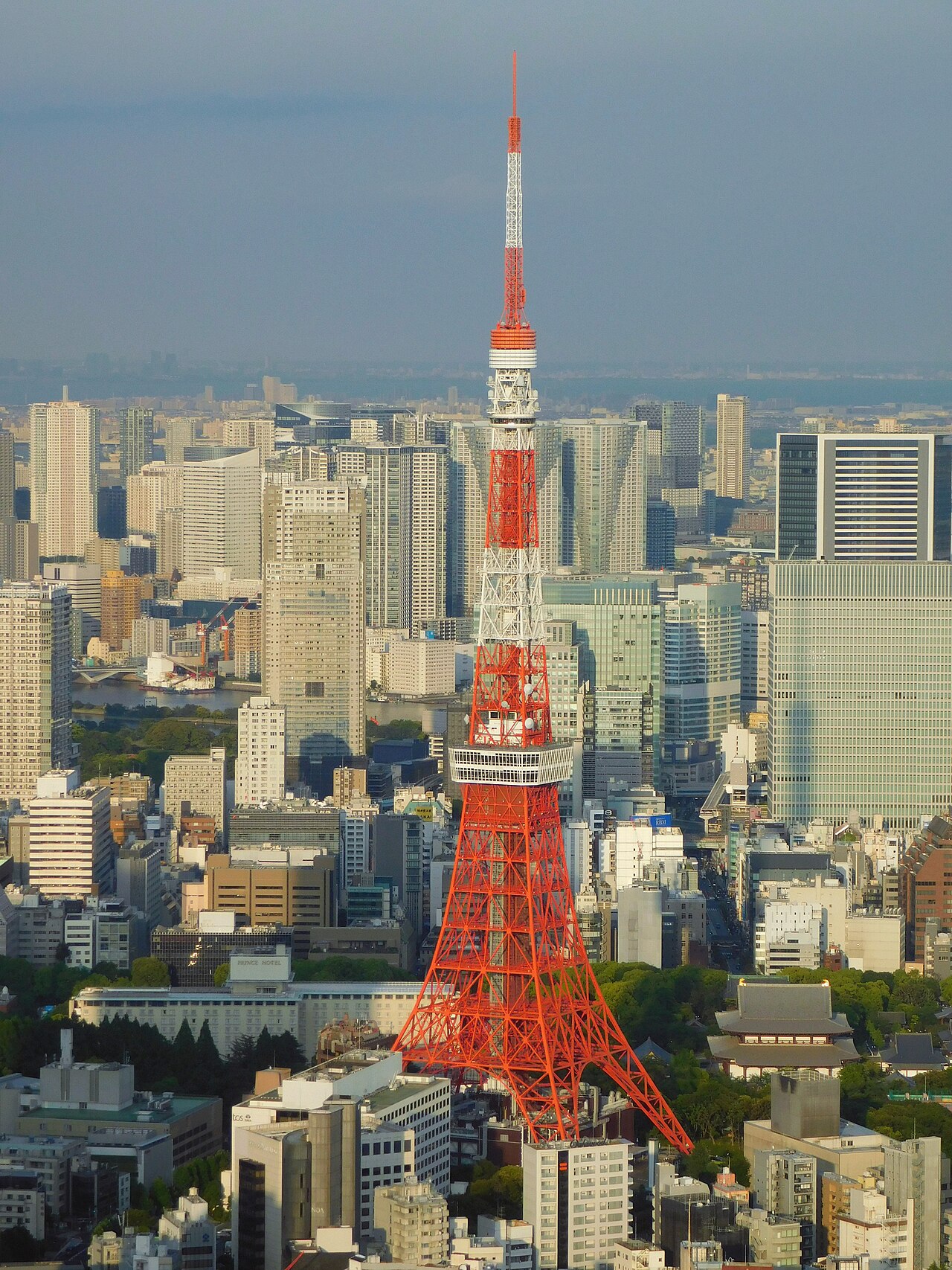
Tokyo Tower
Kulturerbe · 5 km · about 15 min by road
 #4 in TokyoFreier Eintritt
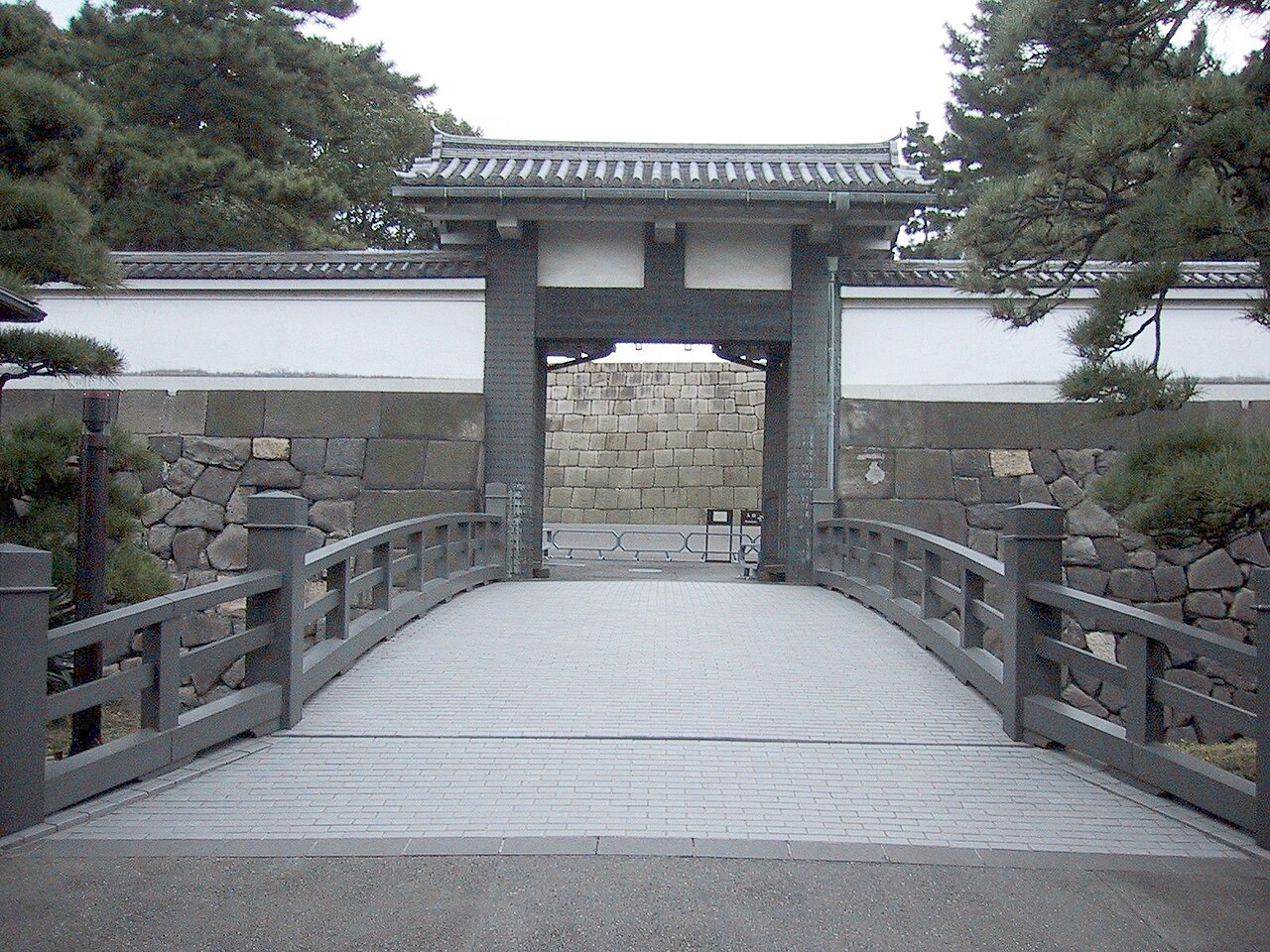
Imperial Palace East Gardens
Palast · 5 km · about 15 min by road