Grand Bazaar
#5de 10 lugares para visitar en IstanbulIstanbul, Istanbul Province, Turkey
También conocido como Kapalıçarşı · Covered Bazaar
Respuesta rápida
Horario: 09:00–19:00, closed Sundays. La entrada es gratuita. Calcula 2 hrs. Mejor momento: 09:30 – 11:00.
Actualizado el · Redactado por Traveliac, con ayuda de IA · 4 min de lectura
- Horario
- 09:00–19:00
- Closed Sundays
- Precio de entrada
- Gratis
- Tiempo necesario
- 2 hrs
- Mejor momento del día
- 09:30 – 11:00
- Mejores meses
- Apr – May, Sep – Oct
- Dirección
- Beyazıt, Kalpakçılar Cd., 34126 Fatih, Istanbul
Sobre Grand Bazaar
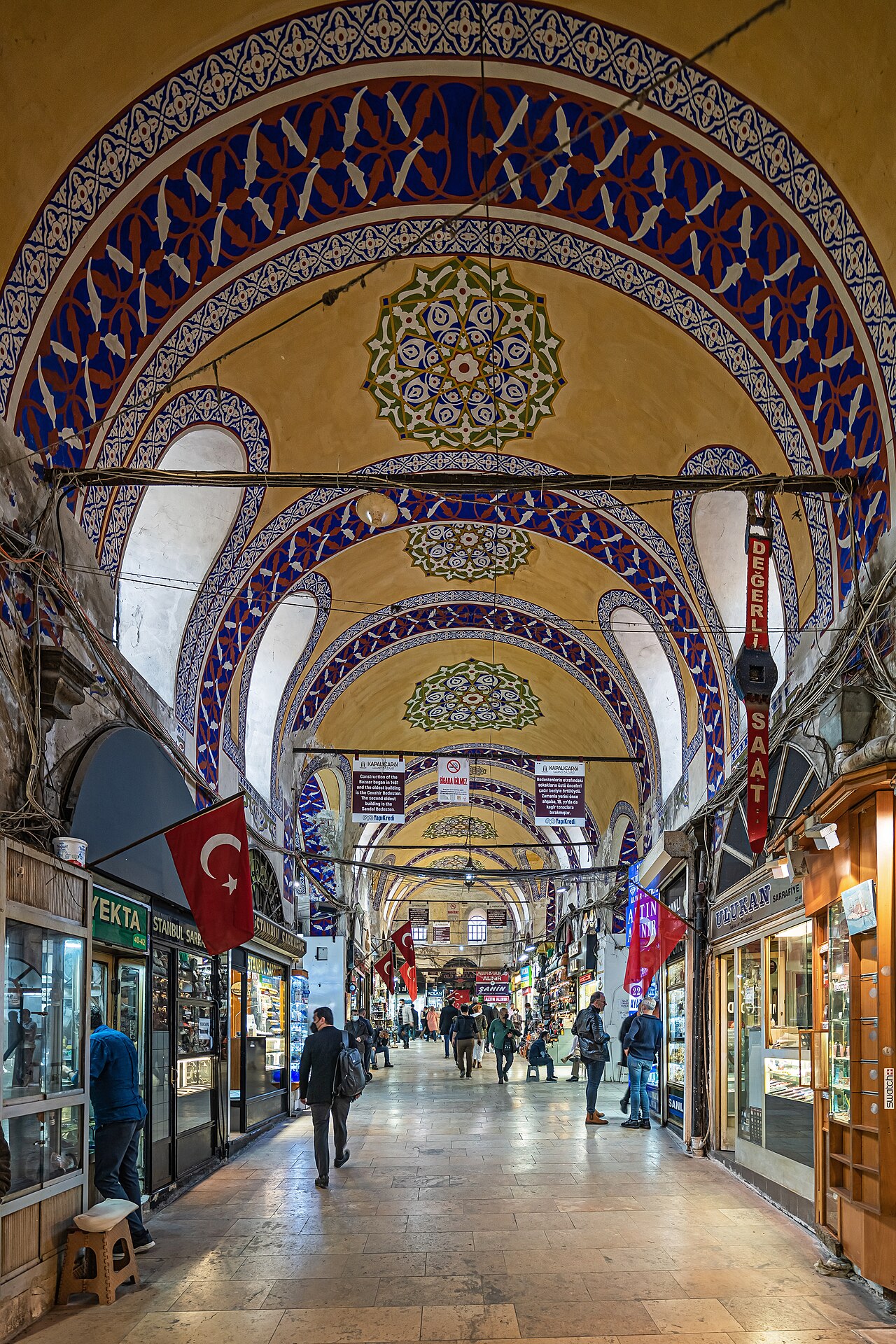
The Grand Bazaar spans more than 60 covered streets and, by most current counts, upward of 3,300 shops under a single vaulted roof, making it one of the oldest and largest covered markets still in daily commercial operation anywhere in the world. Twenty-two gates lead in from the surrounding Fatih streets, with Nuruosmaniye Gate, Beyazıt Gate, Mahmutpaşa Gate, and Örücüler Gate serving as the four most heavily used entrances by visitors arriving from Sultanahmet or the tram line. The bazaar organises loosely by trade guild tradition, even now: jewellery and gold concentrate along Kalpakçılar Caddesi, the main thoroughfare, while carpets, leather goods, ceramics, and antiques cluster in their own side lanes, a layout inherited from the Ottoman-era guild system that assigned specific trades to specific streets.
Mejor momento del día: 09:30 – 11:00. Shortly after opening, before tour groups and the midday domestic shopping crowd fill the narrower lanes.
Horario de Grand Bazaar
Grand Bazaar abre a las 09:00 y cierra a las 19:00. Abre los sábados (09:00–19:00) pero cierra los domingos.
- Horario
- 09:00–19:00
Mon–Sat 09:00–19:00 Sunday Closed - Cierra los
- Sunday
Bueno saber: Some individual shops open later or close earlier at their own discretion, particularly during the low winter season.
Horario recopilados de kapalicarsi.org.tr y registros públicos, última actualización el . Pueden cambiar sin previo aviso — confírmalos antes de viajar. Cómo escribimos estas guías
Precio de entrada de Grand Bazaar
| Entrada | Precio |
|---|---|
| Entrada estándar | Gratis |
| Tarifa reducida (estudiante / mayor) | Gratis |
| Niños | Gratis |
Entry to the bazaar itself is free at all 22 gates; individual shops set their own prices, none of which are fixed, so bargaining is standard practice throughout.
Precios recopilados de kapalicarsi.org.tr y registros públicos, última actualización el . Pueden cambiar sin previo aviso — confírmalos antes de viajar. Cómo escribimos estas guías
Mejor época para visitar Grand Bazaar
- Quiet
- Moderate
- Busy
- Very busy
09:00 – 09:30
Shop OpeningBest time to go
Shutters are still going up on many stalls; main thoroughfares are walkable without weaving through crowds.
Quiet10:00 – 13:00
Morning-Midday Peak
Tour groups and cruise excursions fill Kalpakçılar Caddesi and the main gates; side lanes remain noticeably quieter.
Very busy13:00 – 16:00
Afternoon Plateau
Domestic shoppers join tourist traffic; bargaining pace slows as shopkeepers handle more simultaneous customers.
Busy17:00 – 19:00
Pre-Closing Window
Crowds thin as day-tour groups depart; some shopkeepers grow more flexible on price near closing time to close a sale before shutting for the day.
Moderate
Historia de Grand Bazaar
Sultan Mehmed II ordered the first structure on the site shortly after the 1453 conquest of Constantinople, an Old Bedesten built to store and trade valuable goods securely under a stone vault; a second Bedesten and progressively more covered streets were added over the following two centuries as Istanbul's trade volume grew, gradually stitching the individual structures into the single covered complex visible today.
Fire has repeatedly reshaped the bazaar's fabric — major fires in 1546, 1652, 1701, 1750, 1791, and 1954 each required significant rebuilding, and the 1894 Istanbul earthquake caused further structural damage that was subsequently repaired. Because of this cycle of fire and reconstruction, very little of the bazaar's visible stonework and vaulting dates to the 15th-century original; most of what stands today reflects 18th- and 19th-century rebuilding layered onto the original street plan.
Normas y etiqueta en Grand Bazaar
Bargaining is expected and, in most shops, effectively mandatory — an initial asking price, particularly for carpets, jewellery, and leather goods, is routinely set well above what a seller will accept, and offering roughly half to two-thirds of the first quote as an opening counter is a common starting approach, adjusted through a few rounds of back-and-forth. Fixed-price shops, increasingly common for smaller souvenir items, will say so plainly; bargaining in those is not customary.
Aggressive touts near the busier gates approach visitors with claims of a relative's shop or a 'special today only' offer; a polite decline and continued walking is the standard response, since stopping to engage tends to prolong the interaction rather than end it. Photography inside is generally tolerated but individual shopkeepers may object to photos of their specific displayed goods, particularly gold and jewellery cases, for security reasons.
Consejos para visitar Grand Bazaar
- 1
Getting deliberately lost in the bazaar's side lanes away from Kalpakçılar Caddesi rewards the visitor with quieter alleys of leather workshops, antique dealers, and calligraphy shops that see a fraction of the main thoroughfare's foot traffic; the layout is confusing by design, a legacy of organic medieval expansion rather than planned grid streets, so a phone map or noting a distinctive gate name helps with reorientation.
- 2
Sandal Bedesten, the bazaar's second historic vaulted hall, hosts occasional art auctions and antique sales and is worth a look even without buying. For food, Şark Kahvesi, a long-running coffeehouse inside the bazaar near Yağlıkçılar Sokak, is a common stop for Turkish coffee mid-shop rather than the pricier cafés directly facing the main gates.
Cómo llegar a Grand Bazaar
Beyazıt, Kalpakçılar Cd., 34126 Fatih, IstanbulCómo llegar en Google Maps
Desde Istanbul Airport (IST)
44 km · 55–85 min
≈220–260 TRY combined fares (verify current pricing)
Desde Sabiha Gökçen Airport (SAW)
53 km · 95–130 min
≈250–300 TRY combined fares
Desde Sultanahmet
1.2 km · 5 min tram or 15 min walk
≈27 TRY Istanbulkart tram fare, or free on foot
Aeropuerto más cercano
Desde Istanbul Airport (IST)
approximately 44 km, 45–70 minutes by road or shuttle plus Metro/tram.
Estación más cercana
Desde Beyazıt-Kapalıçarşı tram stop (T1 line)
adjacent to the Nuruosmaniye and Beyazıt gates.
Preguntas frecuentes sobre Grand Bazaar
Is the Grand Bazaar open on Sundays?
No. The Grand Bazaar is closed on Sundays as well as on national holidays; it operates Monday through Saturday, generally 09:00 to 19:00, though some individual shops keep their own hours within that window.
Is bargaining required at the Grand Bazaar?
Yes, in most shops, particularly for carpets, jewellery, and leather goods, where the first quoted price is routinely set well above the seller's actual acceptable minimum. Fixed-price shops, more common for small souvenirs, will state so directly, and bargaining is not expected there.
How many shops and gates does the Grand Bazaar have?
Current counts put the number of shops above 3,300 across more than 60 covered streets, with 22 gates providing entry points around the perimeter. Nuruosmaniye, Beyazıt, Mahmutpaşa, and Örücüler are the four gates most used by visitors.
Does much of the Grand Bazaar's original 15th-century structure survive?
No, not visibly. Repeated major fires — in 1546, 1652, 1701, 1750, 1791, and 1954 — along with earthquake damage in 1894 required extensive rebuilding, so most of the vaulting and stonework visible today reflects 18th- and 19th-century reconstruction on the original 15th-century street plan.
Redactado con ayuda de IA a partir de fuentes oficiales y registros públicos, y publicado solo tras las comprobaciones descritas en Cómo escribimos estas guías. Nadie de Traveliac ha visitado este lugar. Última actualización el . Cómo clasificamos y verificamos los lugares