
Dal Lake & Shikara Rides
#1من أصل 8 مكانًا للزيارة في SrinagarSrinagar, Jammu & Kashmir
يُعرف أيضًا باسم Srinagar Lake
إجابة سريعة
ساعات العمل: 06:00–20:00. الدخول مجاني. خصّص 2 hrs. أفضل وقت: Early morning.
آخر تحديث · أعدّه Traveliac، بمساعدة الذكاء الاصطناعي · 6 دقيقة قراءة
- ساعات العمل
- 06:00–20:00
- Open 24 hours; shikara operators active from approximately 06:00 to 20:00
- رسوم الدخول
- مجاني
- الوقت اللازم
- 2 hrs
- أفضل وقت في اليوم
- Early morning
- أفضل الأشهر
- Apr – Jun, Sep – Oct
- العنوان
- Dal Lake, Boulevard Road, Srinagar, Jammu & Kashmir — 190001
عن Dal Lake & Shikara Rides
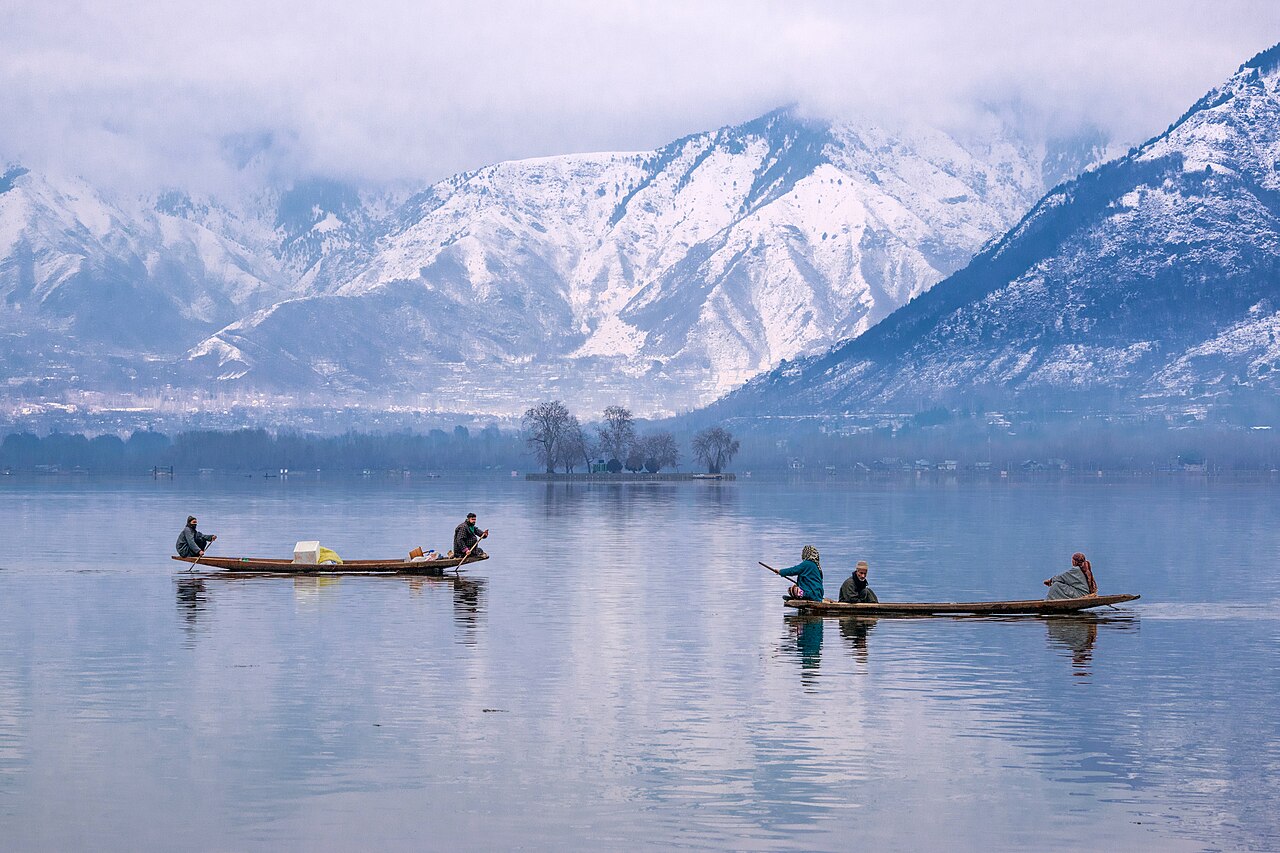
Dal Lake is not a lake in any passive, ornamental sense. It is a 26-square-kilometre working wetland whose surface, at any given hour, is simultaneously a vegetable farm, a floating market, a residential neighbourhood, a tourist corridor, and a place of private devotion. The water is not blue — it tends toward olive-green and brown from seasonal algal blooms — and the famous lotus flowers that carpet the shallower margins appear only in July and August. What gives Dal its hold on the imagination is not colour but movement: the slow, hip-rolling stroke of a shikara's heart-shaped paddle propelling a craft loaded with tomatoes, marigolds, or passengers through channels so narrow that overhanging willow branches brush the gunwale. The Zabarwan hills rising steeply behind the eastern shore create a backdrop of pine and deodar that frames the lake's northern horizon, and on clear winter mornings, the snow line descends close enough to feel implausibly cinematic. Living on Dal is not a romantic choice for its 60,000 residents — it is an inherited condition with real complications: restricted construction rights, periodic government dredging campaigns, and a water quality that has been in documented decline since the 1970s.
أفضل وقت في اليوم: Early morning. 06:00–08:00 for the floating vegetable market and mist on the water; late afternoon (16:00–18:00) for light quality on the Mughal gardens shoreline and reflections of the Zabarwan hills.
مواعيد Dal Lake & Shikara Rides
- ساعات العمل
- 06:00–20:00
Mon–Sun 06:00–20:00 - Open 24 hours; shikara operators active from approximately 06:00 to 20:00
- يُغلق يوم
- مفتوح كل يوم
من المفيد معرفته: Houseboat season: April through November. Some houseboats remain open in winter for snow tourism; lake surface may partially freeze in January–February. The famous floating vegetable market (radha bazaar) operates from 06:00–08:00 daily year-round.
تم جمع ساعات العمل من السجلات العامة؛ لا يوجد لهذا المكان موقع إلكتروني رسمي مُدرَج، وآخر تحديث في . قد تتغيّر دون إشعار مسبق — تأكد منها قبل السفر. كيف نكتب هذه الأدلة
سعر تذكرة Dal Lake & Shikara Rides
| التذكرة | السعر |
|---|---|
| الزوار الهنود | Free |
| الزوار الأجانب | Free |
| الأطفال | مجاني |
| الكاميرا | مجاني |
Entry to the lake area is free. Shikara rides are privately negotiated — Government of J&K DTP-registered shikaras display a licence plate and operate at roughly ₹300–₹500 per hour for a standard four-seater shikara. Always fix the fare before boarding. Houseboat accommodation is a separate commercial transaction ranging from ₹1,500 to ₹8,000 per night depending on category (deluxe, super-deluxe, six-star classification by J&K Tourism). Motorised shikaras are restricted in the inner lake and Nagin Lake zones under the J&K Lake and Waterways Development Authority regulations.
تم جمع الأسعار من السجلات العامة؛ لا يوجد لهذا المكان موقع إلكتروني رسمي مُدرَج، وآخر تحديث في . قد تتغيّر دون إشعار مسبق — تأكد منها قبل السفر. كيف نكتب هذه الأدلة
أفضل وقت لزيارة Dal Lake & Shikara Rides
- Quiet
- Moderate
- Busy
06:00–08:00
Floating market hoursBest time to go
The floating vegetable market draws mostly local traders. Tourist presence is minimal. Water reflections are at their best in early light.
Quiet09:00–11:00
Morning tourist rush
Shikara ghat on Boulevard Road begins to fill with domestic tourists, especially on weekends. Rates are slightly more negotiable at this hour than mid-afternoon.
Moderate11:00–15:00
Peak midday
Main ghat is crowded in peak season (May–June, September–October). Operator touts are most aggressive. Sun is harsh on open water.
Busy15:00–17:00
Golden hour approach
Crowd pressure eases slightly. Light on the Zabarwan hills turns amber. Best window for photography from the water.
Moderate17:00–20:00
Sunset and evening
Most day-trippers leave after sunset. Lake surface is calm. Reflections of houseboats and hills in still water are at their finest.
Quiet
تاريخ Dal Lake & Shikara Rides
Dal Lake's recorded history as a place of human habitation stretches back to at least the 3rd century BCE, when the Kashmir Valley was part of the Mauryan Empire and Buddhist stupas were reportedly established on the lake's margins. The Shaiva Kashmiri text Nilmat Purana, composed between the 6th and 8th centuries CE, references the lake as a site of ritual significance. The Sultanate period (1339–1586) saw the first formal settlements of fishermen and vegetable growers on the lake's floating islands, a community called the Hanjis whose descendants continue to live and work on the water today.
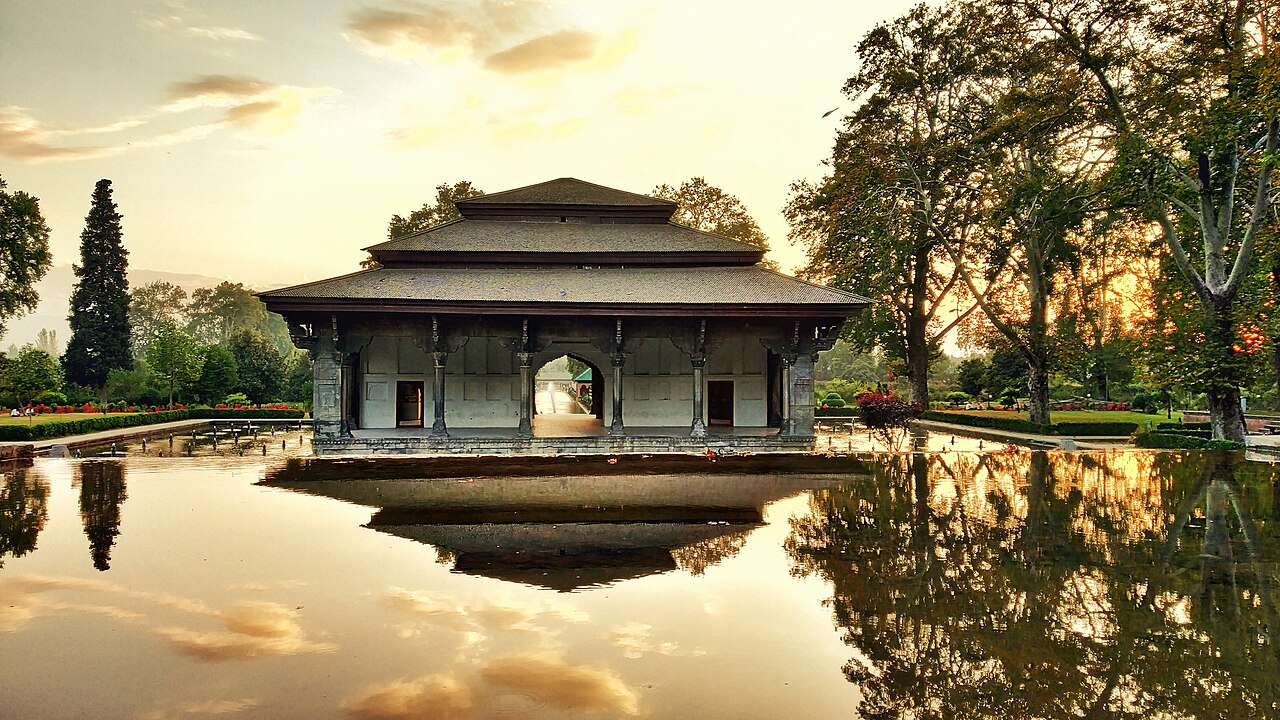
The Mughal transformation of Dal Lake's eastern shore began under Emperor Akbar, who conquered Kashmir in 1586 and recognised the valley's strategic and aesthetic value. His son Jahangir, who visited Kashmir 13 times, described Kashmir in his memoir Tuzk-i-Jahangiri as 'a paradise on earth' and commissioned Shalimar Bagh in 1619 as a pleasure garden for his empress Nur Jahan. Jahangir's own tomb is in Lahore, but his engagement with the Kashmir landscape through gardens, hunting lodges, and written description amounts to a kind of authorship of the valley's romantic image.
The houseboat tradition on Dal Lake developed under British colonial rule, specifically from a 19th-century restriction that prevented Europeans from owning land in Kashmir (then a princely state under Maharaja Gulab Singh's Dogra dynasty, who had purchased it from the East India Company in 1846 for ₹75 lakh under the Treaty of Amritsar). Unable to buy property, British officers and merchants simply moored large, elaborately fitted boats on the lake during the summer season — and the Kashmiri boat-builders responded with increasingly opulent floating structures, adding carved walnut-wood facades, silk-upholstered interiors, and attached cookboats. By the early 20th century, houseboat living on Dal had become an established subcultural experience for the British upper middle class, and the boats acquired names — 'Buckingham', 'New Yorker', 'Dreamland' — that persist to this day, painted in Gothic script above carved wooden doorframes.
القواعد والآداب في Dal Lake & Shikara Rides
Shikara operators at the main ghats on Boulevard Road operate under licensing by the J&K Department of Tourism and the Lake and Waterways Development Authority (LAWDA). Registered operators display a LAWDA licence number on a plate at the prow; it is advisable to use only registered operators and to fix the fare before boarding rather than after. Touts at the main ghats are persistent and often claim that 'government-fixed rates' apply — in practice, rates are negotiable. A reasonable opening counter-offer for a one-hour ride is ₹250; most transactions settle between ₹300 and ₹500 per hour for a standard shikara.
Do not agree to a 'free' shikara ride or to any ride offered without a prior price discussion — this invariably leads to a detour through a floating shop (papier-mâché, carpets, saffron) where the shikara operator receives a commission. If you wish to visit floating shops as a genuine buyer, negotiate this separately and agree on a price for the shopping detour explicitly.
Houseboat operators are also often involved in unsolicited sales of handicrafts. Clarify on arrival whether additional visits to shops form part of the 'complimentary' services. Houseboat category ratings (deluxe, super-deluxe, six-star) are issued by J&K Tourism and can be verified via the official tourism website. It is strongly advisable to book houseboats through the J&K Tourism desk at the airport or at the Tourist Reception Centre on Boulevard Road rather than through touts at the ghat.
Swimming in Dal Lake is not recommended due to water quality; the lake has elevated coliform counts, particularly near the shikara ghats. Photographs of the floating market and residential neighbourhoods are generally uncontroversial, but ask before photographing individual residents at close range.
نصائح لزيارة Dal Lake & Shikara Rides
- 1
The floating vegetable market (locally called radha bazaar or sabzi mandi) operates on the north-west arm of Dal Lake every morning from approximately 06:00 to 08:00. Vendors paddle their laden shikaras to an open-water meeting point where wholesale transactions in lotus roots, tomatoes, gourd, and leafy vegetables take place entirely afloat, with buyer and seller boats jostling side by side. A shikara ride to watch this market from the water is one of Srinagar's most genuinely interesting experiences, requiring an early start and a pre-arranged boat from your guesthouse or houseboat.
- 2
Nagin Lake, immediately to the north-west of Dal and connected by a narrow channel, is quieter, less commercially trafficked, and has better water clarity. Houseboats there are typically 15–20 percent cheaper and the shore is less developed.
- 3
For budget travellers, guesthouses in the Dalgate and Gagribal neighbourhoods on the southern shore of Dal Lake offer rooms from ₹600–₹1,500 per night with direct views of the water, avoiding houseboat prices without sacrificing the lakeside experience.
- 4
Shikara photographers and postcard sellers approach every arriving tourist; a firm 'nahi chahiye' (don't want it) is sufficient to disengage. Kashmiri carpet and shawl sellers will sometimes follow tourists for several minutes — walking into any occupied shop or chai stall usually ends the encounter.
- 5
In winter (December–February), the lake surface can partially freeze; shikara operations are reduced but not entirely suspended, and the snow-covered landscape is spectacular for those who can tolerate temperatures that drop to minus 10°C or lower overnight.
كيفية الوصول إلى Dal Lake & Shikara Rides
النجمة الحمراء تمثّل Dal Lake & Shikara Rides؛ والدبابيس المرقّمة هي أقرب 6 أماكن في أدلتنا، ويظهر على كل منها ترتيبه في مدينته. اضغط على أي دبوس لمزيد من التفاصيل.
Dal Lake, Boulevard Road, Srinagar, Jammu & Kashmir — 190001الاتجاهات في خرائط Google
من Sheikh ul-Alam International Airport (SXR)
₹400–₹60014 km · 30–45 min
Pre-paid taxi counter inside arrivals hall
من Lal Chowk (city centre)
₹80–₹1503 km · 10–20 min
By auto-rickshaw; ₹30–₹50 shared Sumo jeep to Dalgate
من Tourist Reception Centre (TRC), Boulevard Road
0.5 km · 5–8 min
Free
أقرب مطار
من Sheikh ul-Alam International Airport (IATA: SXR), Humhama
approximately 14 km from the Boulevard Road shikara ghats
أقرب محطة قطار
من Srinagar is not on the main Indian Railways network (the Udhampur–Srinagar–Baramulla Rail Link is under construction as of 2026). Nearest functional railhead: Banihal station on the Udhampur–Banihal section, approximately 100 km south.
الأسئلة الشائعة عن Dal Lake & Shikara Rides
What is a fair price for a shikara ride on Dal Lake?
Government of J&K DTP-registered shikaras should charge ₹300–₹500 per hour for a standard four-seater boat. Always negotiate before boarding. 'Government-fixed rate' claims from touts are misleading — rates are negotiable. Refuse any offer of a 'free' introductory ride.
Is it safe to stay on a houseboat on Dal Lake?
J&K Tourism rates houseboats in five categories (deluxe to six-star). Reputable operators are verifiable through the official J&K Tourism website or the Tourist Reception Centre on Boulevard Road. Book directly rather than through airport touts. Security on the lake is maintained by LAWDA water police.
When do the lotus flowers bloom on Dal Lake?
Lotus flowers typically bloom from late June through August. By September the blooms are largely spent. The shallow north-eastern margin of Dal Lake near Nehru Park has the densest concentration.
Can you swim in Dal Lake?
Swimming is not recommended. The lake has elevated coliform bacterial counts, particularly near shikara ghats and residential floating villages. No formal swimming area exists.
What is the floating vegetable market and when does it operate?
The floating vegetable market (radha bazaar) is a wholesale produce market held entirely on the water, where traders paddle their vegetable-laden shikaras to an open-water meeting point. It operates daily from approximately 06:00 to 08:00. Your houseboat or guesthouse can arrange an early-morning shikara to the market.
أُعدّ بمساعدة الذكاء الاصطناعي من مصادر رسمية وسجلات عامة، ونُشر فقط بعد عمليات التحقق الموضحة في كيف نكتب هذه الأدلة. لم يزر أحد من فريق Traveliac هذا المكان شخصيًا. آخر تحديث في . كيف نصنّف الأماكن ونتحقق منها
أماكن للزيارة قرب Dal Lake & Shikara Rides
المسافات خط مستقيم حسب خريطتنا؛ الأوقات تقديرية.
 #3 in Srinagar
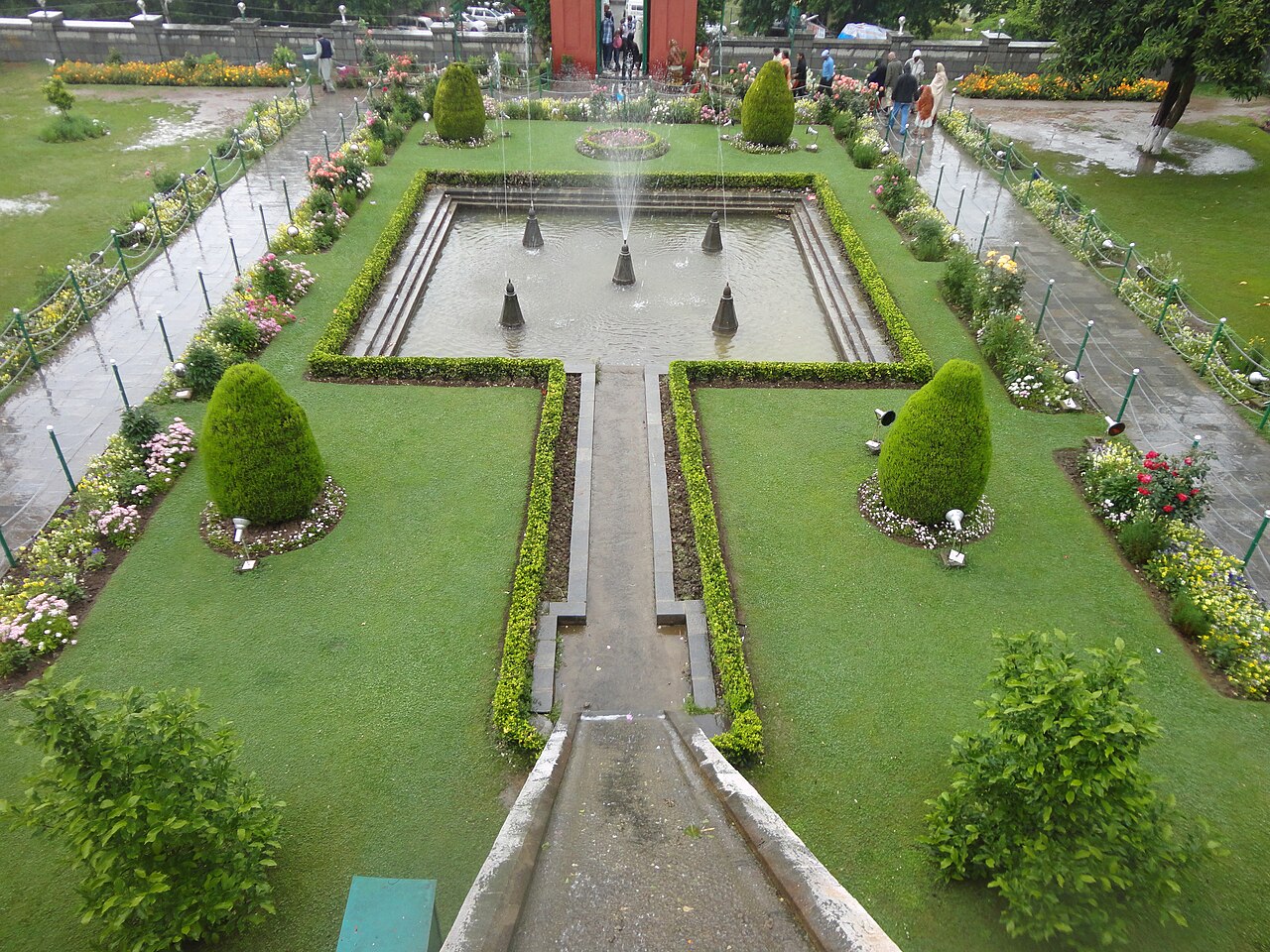
Nishat Bagh
حديقة · 1.2 km · about 19 min walk
 #2 in Srinagar
Shalimar Bagh
حديقة · 3 km · about 10 min by road
 #8 in Srinagar
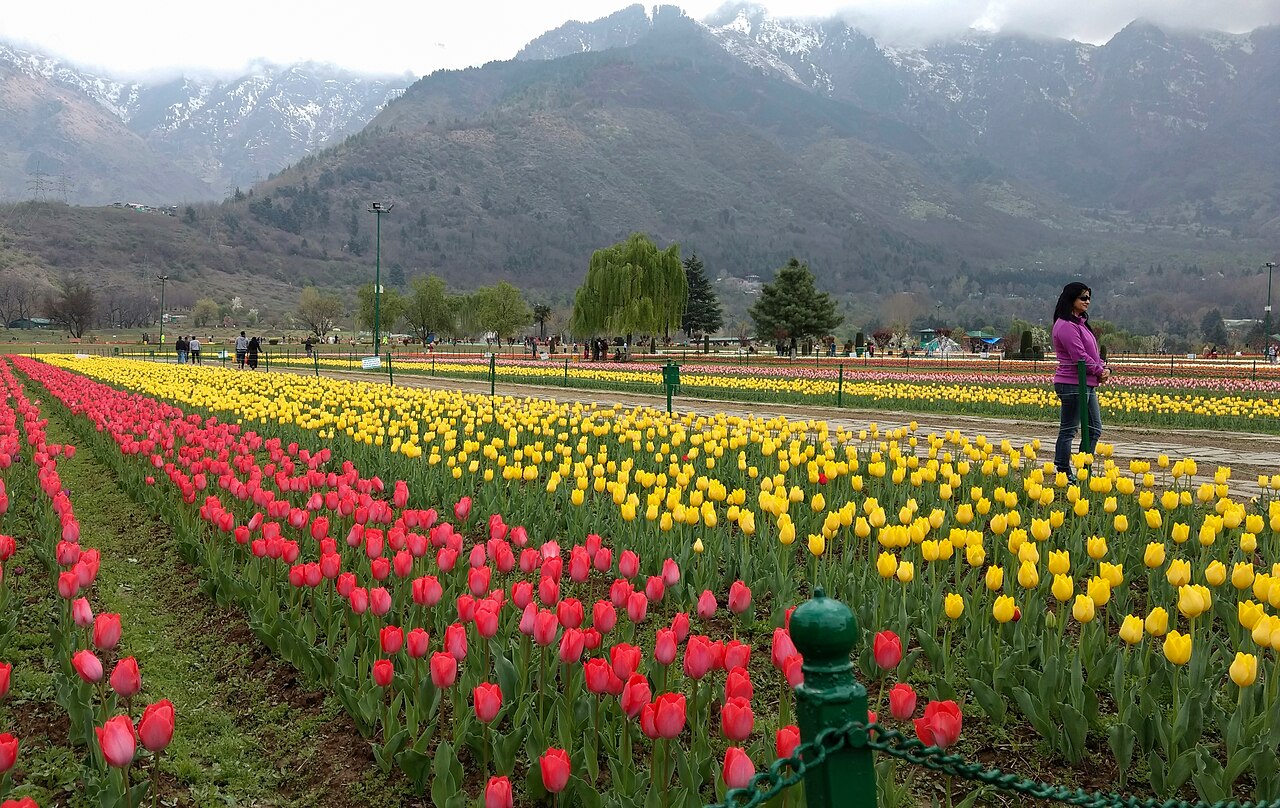
Indira Gandhi Memorial Tulip Garden
نصب تذكاري · 3 km · about 10 min by road
 #6 in Srinagar
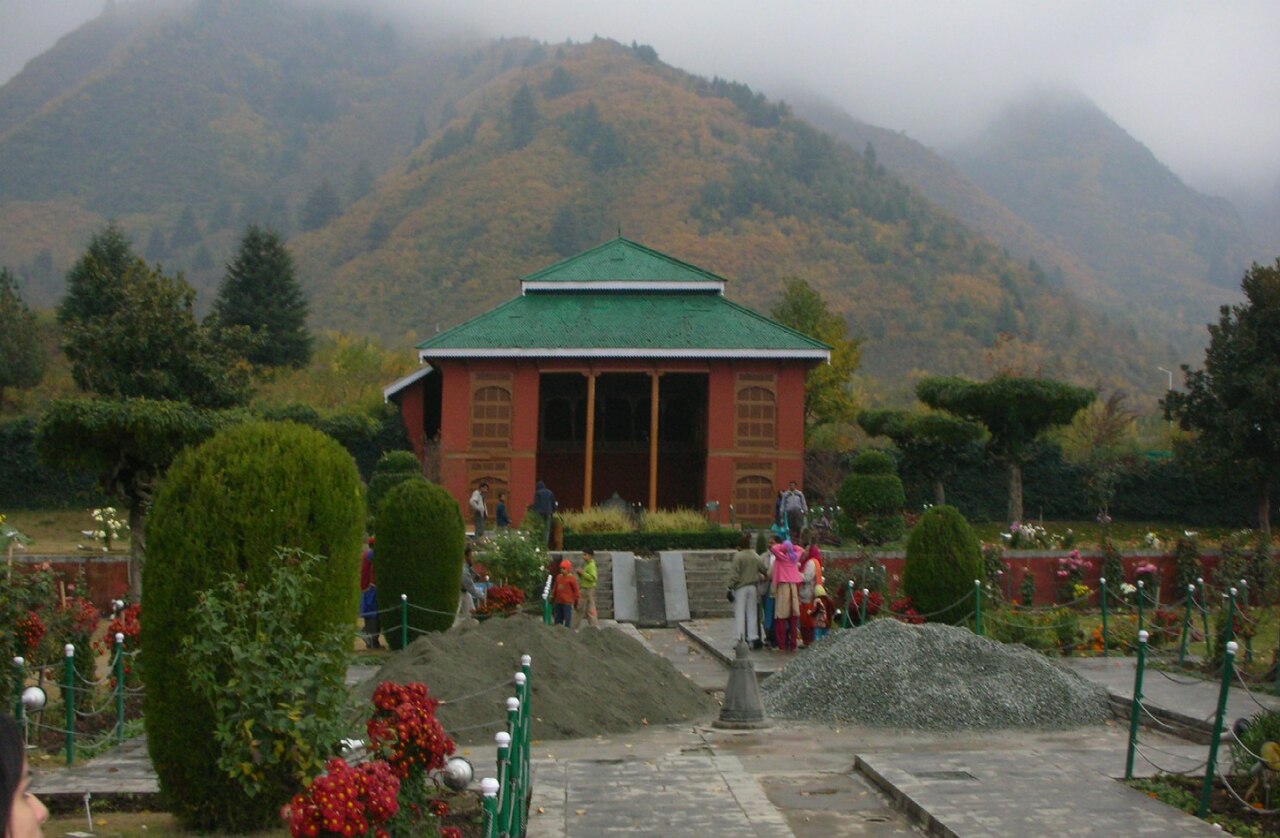
Chashme Shahi
تراث · 4 km · about 15 min by road