
Jamia Masjid Srinagar
#4von 8 Orten zum Besuchen in SrinagarSrinagar, Jammu & Kashmir
Auch bekannt als Jama Masjid Srinagar · Grand Mosque of Srinagar
Kurz gesagt
Öffnungszeiten: 06:00–20:00. Der Eintritt ist kostenlos. Plane 1 hr ein. Beste Zeit: 10:00 – 12:00.
Aktualisiert am · Erstellt von Traveliac, KI-unterstützt · 5 Min. Lesezeit
- Öffnungszeiten
- 06:00–20:00
- Open daily roughly 06:00 – 20:00 outside the five daily prayer times, when the inner prayer hall is reserved for worshippers
- Eintrittspreis
- Kostenlos
- Benötigte Zeit
- 1 hr
- Beste Tageszeit
- 10:00 – 12:00
- Beste Monate
- Apr – Jun, Sep – Oct
- Adresse
- Nowhatta, Srinagar, Jammu & Kashmir 190002, in the heart of the old city on the western bank of the Jhelum River
Über Jamia Masjid Srinagar
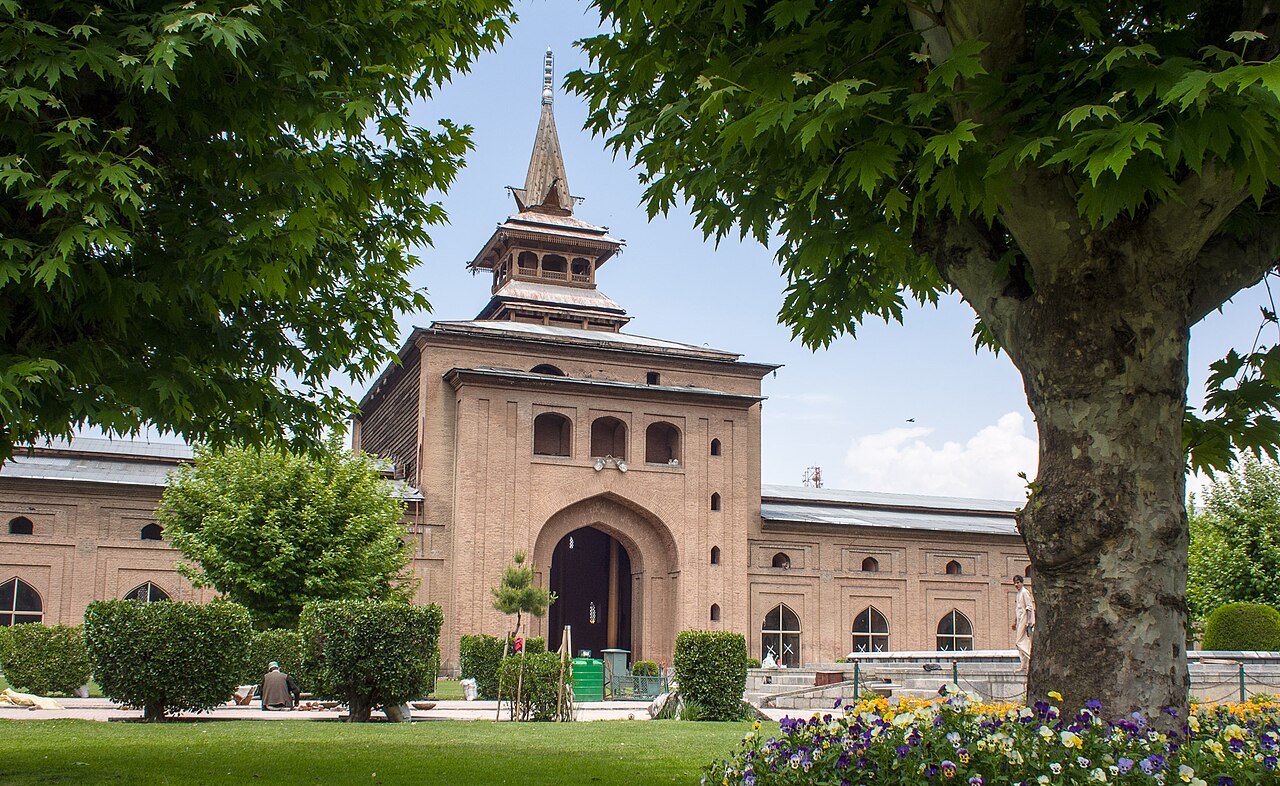
Jamia Masjid stands in the dense heart of Srinagar's old city at Nowhatta, and its scale only registers once you cross the threshold: a vast open courtyard, roughly 384 feet on each side, ringed by covered prayer halls resting on 378 tall deodar-cedar wooden pillars, each cut from a single tree trunk. There is no dome — the mosque's silhouette is defined instead by four brick minarets rising from the corners and a pagoda-like tiered roofline over the main prayer hall, a form that owes as much to Central Asian and Kashmiri vernacular timber building as it does to any conventional Indo-Islamic template further south. The pillar forest inside the covered halls, dim and cool even in the height of a Kashmiri summer, is the mosque's most distinctive interior experience — walking between the columns, their bases worn smooth by six centuries of worshippers, gives a better sense of the building's true age than the exterior, which has been rebuilt so many times that dating any single visible surface to a specific century is difficult.
Beste Tageszeit: 10:00 – 12:00. On a weekday (not Friday), when the vast courtyard and pillared halls are calm enough to appreciate the scale and the wooden ceiling craftsmanship without competing with a prayer congregation.
Öffnungszeiten von Jamia Masjid Srinagar
- Öffnungszeiten
- 06:00–20:00
Mon–Sun 06:00–20:00 - Open daily roughly 06:00 – 20:00 outside the five daily prayer times, when the inner prayer hall is reserved for worshippers
- Geschlossen an
- Täglich geöffnet
Gut zu wissen: Friday (Jumu'ah) congregation is the mosque's largest weekly gathering, drawing tens of thousands; non-Muslim sightseeing visits are best avoided on Friday around midday. During Ramzan, evening hours see significantly larger crowds for Iftar and Tarawih prayers.
Öffnungszeiten zusammengestellt aus jktourism.jk.gov.in und öffentlichen Quellen, zuletzt aktualisiert am . Sie können sich ohne Vorankündigung ändern — vor der Reise bitte bestätigen. Wie wir diese Reiseführer schreiben
Eintrittspreis für Jamia Masjid Srinagar
| Ticket | Preis |
|---|---|
| Indische Besucher | Free |
| Ausländische Besucher | Free |
| Kinder | Kostenlos |
| Kamera | Kostenlos |
Entry is free for all visitors. Non-Muslim visitors are welcome outside prayer times but must remove shoes and dress modestly; headscarves for women are advisable though not always strictly enforced. Photography of the courtyard and the 378 wooden pillars is generally permitted; ask before photographing worshippers directly. No entry fee, no camera fee.
Preise zusammengestellt aus jktourism.jk.gov.in und öffentlichen Quellen, zuletzt aktualisiert am . Sie können sich ohne Vorankündigung ändern — vor der Reise bitte bestätigen. Wie wir diese Reiseführer schreiben
Beste Reisezeit für Jamia Masjid Srinagar
- Quiet
- Moderate
- Very busy
06:00 – 09:00
Early MorningBest time to go
Post-Fajr calm. Courtyard largely empty aside from a few worshippers and mosque caretakers. Good light for photographing the brick minarets.
Quiet10:00 – 12:00
Weekday Visiting Window
The best window for unhurried sightseeing on a non-Friday weekday. Pillar halls are quiet and accessible outside active prayer times.
Quiet12:00 – 14:00 (Friday)
Jumu'ah Congregation
Tens of thousands of worshippers converge for Friday prayers; surrounding lanes are congested with foot traffic. Not recommended for casual sightseeing visits.
Very busy16:00 – 18:00
Late Afternoon
Local worshippers and old-city residents pass through steadily ahead of Asr and Maghrib prayers. Reasonable window for a second visit or photography in softer light.
Moderate
Geschichte von Jamia Masjid Srinagar
Sultan Sikandar Shah, the Kashmiri ruler remembered in later Hindu accounts as 'Sikandar But-Shikan' (Sikandar the Iconoclast) for his role in suppressing non-Islamic worship during his reign, commissioned the original Jamia Masjid in 1394–1402 CE, appointing the Persian architect Sayyid Muhammad Hamdani to design it in the Indo-Persian Islamic idiom that was becoming established across the Delhi Sultanate. From its earliest construction, the mosque has been repeatedly destroyed and rebuilt by fire — a fact that dominates its architectural history more than any single stylistic period. Major fires struck the structure in 1479, during the reign of Sultan Hassan Shah, who rebuilt it; again in 1620 under Mughal administration; and yet again in 1674, after which Emperor Aurangzeb ordered its reconstruction, contributing to the mosque's present form more than any other single patron.
The 378 deodar pillars supporting the covered halls have been replaced in sections multiple times across these rebuilding campaigns, always in the same timber and largely the same structural logic, which is why architectural historians describe Jamia Masjid as a building whose plan has remained remarkably consistent across six centuries even though very little of any single century's actual material survives intact. The mosque has functioned continuously as Srinagar's principal congregational mosque throughout this history, and its Friday sermon has, at various politically charged moments in Kashmir's modern history, carried significant public weight — the mosque's chief cleric, the Mirwaiz of Kashmir (a hereditary religious-political office), has historically used the Friday address at Jamia Masjid as a platform of considerable local influence.
The most recent significant restoration campaign addressed structural deterioration in the wooden pillar bases and the brick minarets, carried out under the Auqaf-i-Islamia Kashmir trust, which has managed the mosque's affairs since the mid-20th century.
Regeln & Etikette in Jamia Masjid Srinagar
Shoes must be removed before entering the courtyard proper, not merely the covered prayer halls; a shoe deposit area operates near the main gate. Modest dress is expected of all visitors: long sleeves and full-length lower garments for men, and full-length clothing with a head covering for women, though enforcement is somewhat less strict here than at Hazratbal Shrine.
During the five daily prayers, and especially the large Friday (Jumu'ah) congregation around midday, the covered prayer halls are reserved for worshippers and casual sightseeing should be paused or conducted quietly from the courtyard periphery rather than the halls themselves. Non-Muslim visitors are welcome to observe respectfully from the courtyard during prayer times but should not walk through active prayer rows.
Photography of the courtyard, the pillar halls when not in active prayer use, and the exterior brick minarets is generally uncontroversial. Photographing individual worshippers in prayer, particularly women, without consent is discouraged. The mosque is an active, working religious institution embedded in a residential old-city neighbourhood — loud conversation and disruptive tourist behaviour inside the courtyard draws visible disapproval from local worshippers and mosque staff.
Tipps für den Besuch von Jamia Masjid Srinagar
- 1
Jamia Masjid sits within Srinagar's old city, a genuinely different urban texture from the lakeside and Boulevard Road areas most tourists otherwise see — narrow lanes, unpainted brick and timber merchant houses, and small workshops for papier-mâché and copper work cluster within a few minutes' walk of the mosque gate. Combining a Jamia Masjid visit with a guided or self-directed walk through the surrounding Nowhatta and Khanqah-e-Moula neighbourhood gives a much fuller sense of Srinagar's old-city fabric than the mosque alone.
- 2
The nearby Khanqah-e-Moula (Shah-e-Hamadan shrine), a wooden-architecture Sufi shrine on the Jhelum riverbank, is a 10–15 minute walk from Jamia Masjid and worth combining into the same outing; it is one of Kashmir's oldest Islamic structures and shares the same timber-building tradition.
- 3
Old-city lanes around the mosque are not well served by ride-hailing apps or metered autos; agree a return fare with your driver in advance or arrange for them to wait, since finding onward transport from deep inside the old city can take considerably longer than the outbound journey.
- 4
Avoid visiting purely as a sightseer around Friday midday prayer — not because entry is barred, but because the courtyard and surrounding lanes are at their most congested and a casual visit is neither practical nor especially respectful of the working congregation.
Anreise nach Jamia Masjid Srinagar
Der rote Stern zeigt Jamia Masjid Srinagar; die nummerierten Markierungen sind die 6 nächstgelegenen Orte aus unseren Reiseführern, jeweils mit ihrem Rang in der eigenen Stadt. Für Details auf eine Markierung tippen.
Nowhatta, Srinagar, Jammu & Kashmir 190002, in the heart of the old city on the western bank of the Jhelum RiverRoute in Google Maps
Ab Lal Chowk, Srinagar
₹50–₹902 km · 10–15 min by auto; 25–30 min on foot
Negotiated
Ab Boulevard Road (Dal Lake ghats)
₹100–₹1606 km · 20–25 min
Ab Sheikh ul-Alam Airport (SXR)
₹450–₹65016 km · 30–45 min
Nächster Flughafen
Ab Sheikh ul-Alam International Airport (SXR), Humhama
approximately 16 km, 30–45 minutes by road.
Nächster Bahnhof
Ab No functioning direct rail link to Srinagar as of 2026; nearest functional railhead is Banihal, approximately 98 km south.
Häufige Fragen zu Jamia Masjid Srinagar
Why does Jamia Masjid Srinagar have no dome?
Its architectural vocabulary is Kashmiri and Central Asian timber-building tradition rather than the domed Indo-Islamic style seen further south in India. The mosque's silhouette comes from four corner brick minarets and a tiered, pagoda-like roof over the main prayer hall, reflecting local vernacular construction adapted to Kashmir's heavy snowfall and available cedar timber.
How many times has Jamia Masjid burned down and been rebuilt?
The mosque has suffered at least three major fires since its original construction in 1394–1402 — in 1479, 1620, and 1674 — with significant reconstruction after each, most notably under Emperor Aurangzeb after the 1674 fire. This is why very little of any single century's original material survives intact despite the layout's long continuity.
Can non-Muslims visit Jamia Masjid Srinagar?
Yes. Non-Muslim visitors are welcome outside prayer times, provided they remove shoes and dress modestly. Visiting during the Friday Jumu'ah congregation is technically possible from the courtyard periphery but not practical or advisable given the scale of the crowd.
How many pillars support the mosque and what are they made of?
The covered prayer halls rest on 378 tall pillars, each cut from a single deodar cedar trunk. Sections of these pillars have been replaced across the mosque's various post-fire reconstructions, but the overall structural plan has remained consistent for centuries.
Mit KI-Unterstützung aus offiziellen Quellen und öffentlichen Aufzeichnungen erstellt und erst nach den Prüfungen veröffentlicht, die beschrieben sind unter Wie wir diese Reiseführer schreiben. Niemand von Traveliac war persönlich vor Ort. Zuletzt aktualisiert am . Wie wir Orte bewerten und prüfen
Orte in der Nähe von Jamia Masjid Srinagar
Luftlinien-Entfernungen laut unserer Karte; Zeiten sind Schätzwerte.
 #1 in SrinagarFreier Eintritt
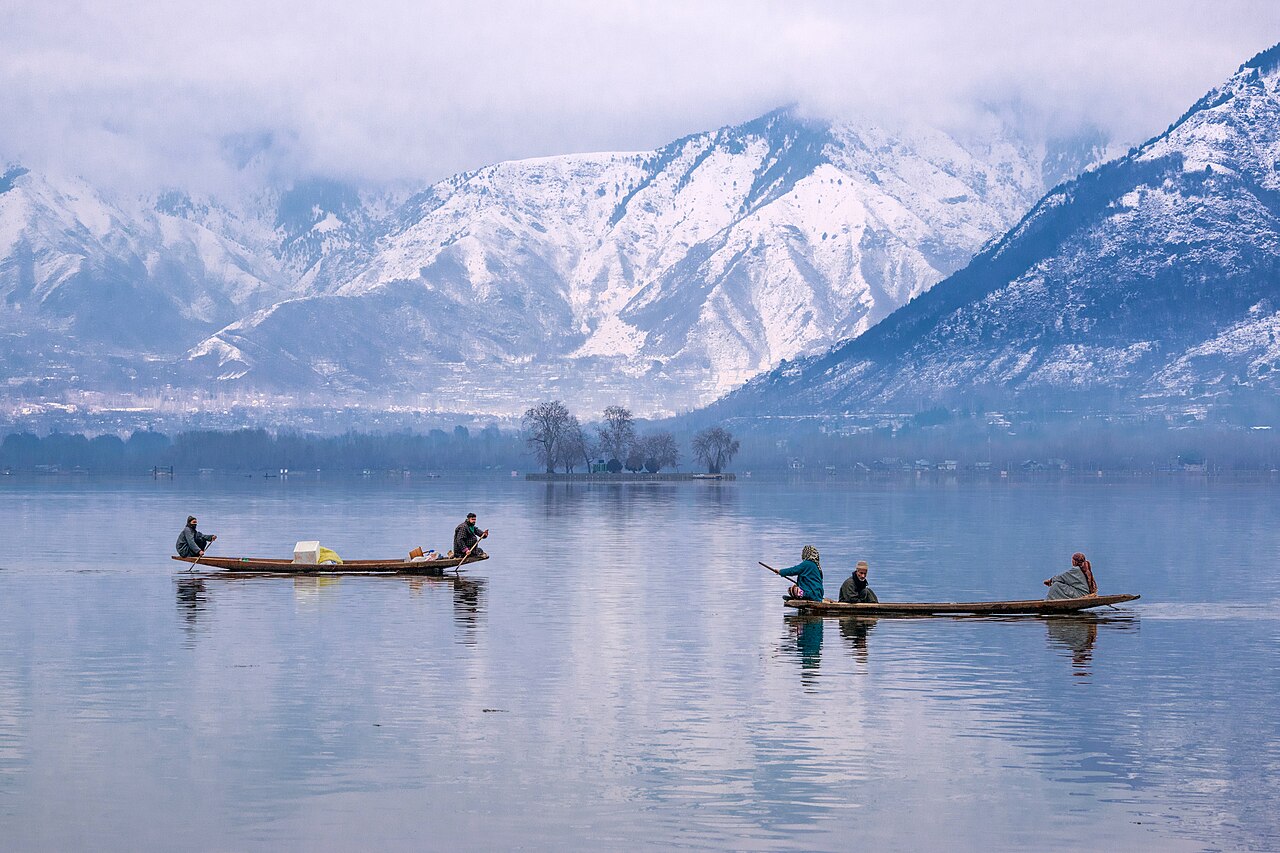
Dal Lake & Shikara Rides
See · 6 km · about 20 min by road
 #8 in Srinagar
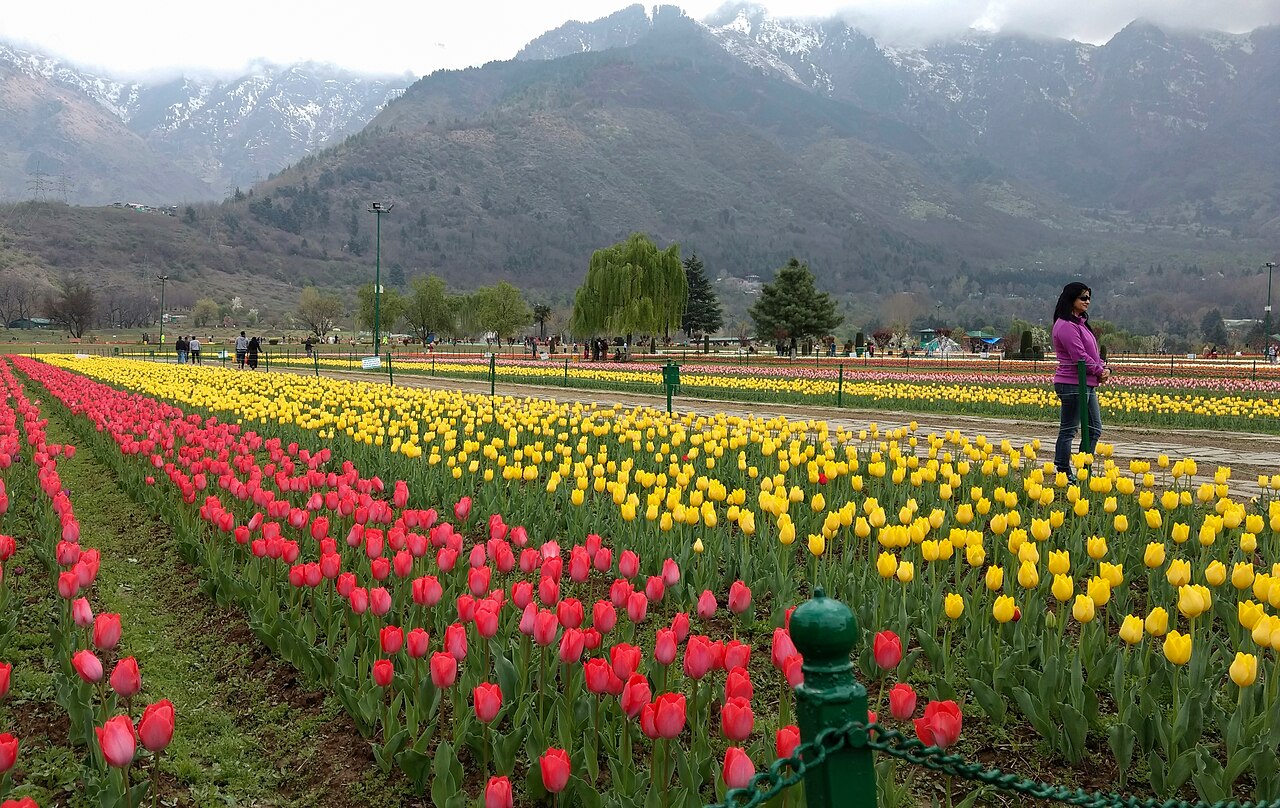
Indira Gandhi Memorial Tulip Garden
Gedenkstätte · 7 km · about 20 min by road
 #5 in Srinagar
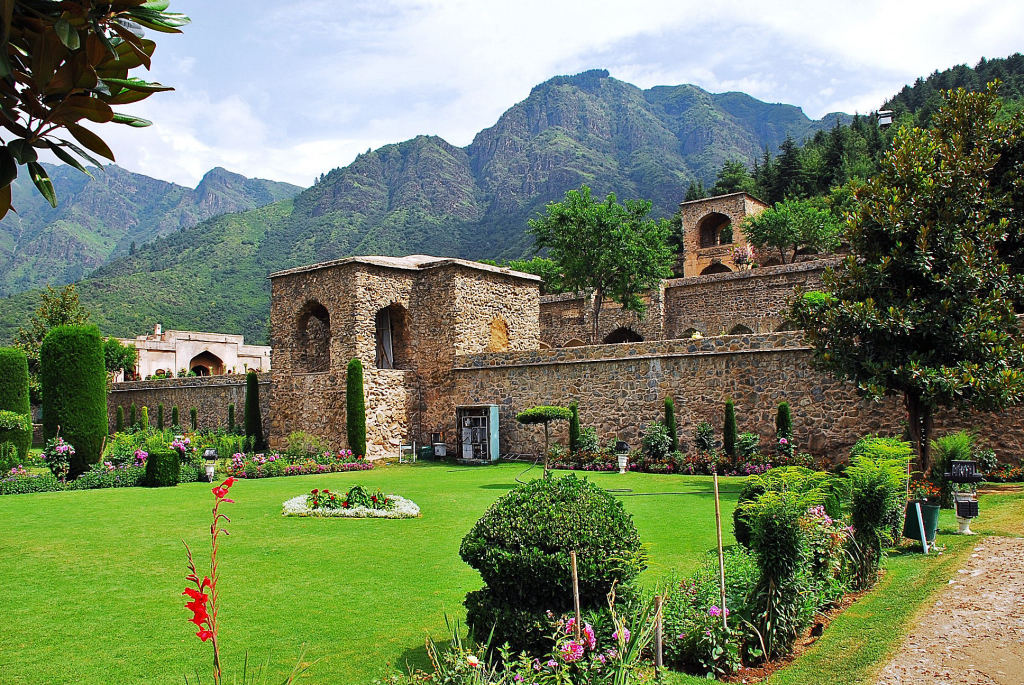
Pari Mahal
Palast · 7 km · about 20 min by road
 #2 in Srinagar
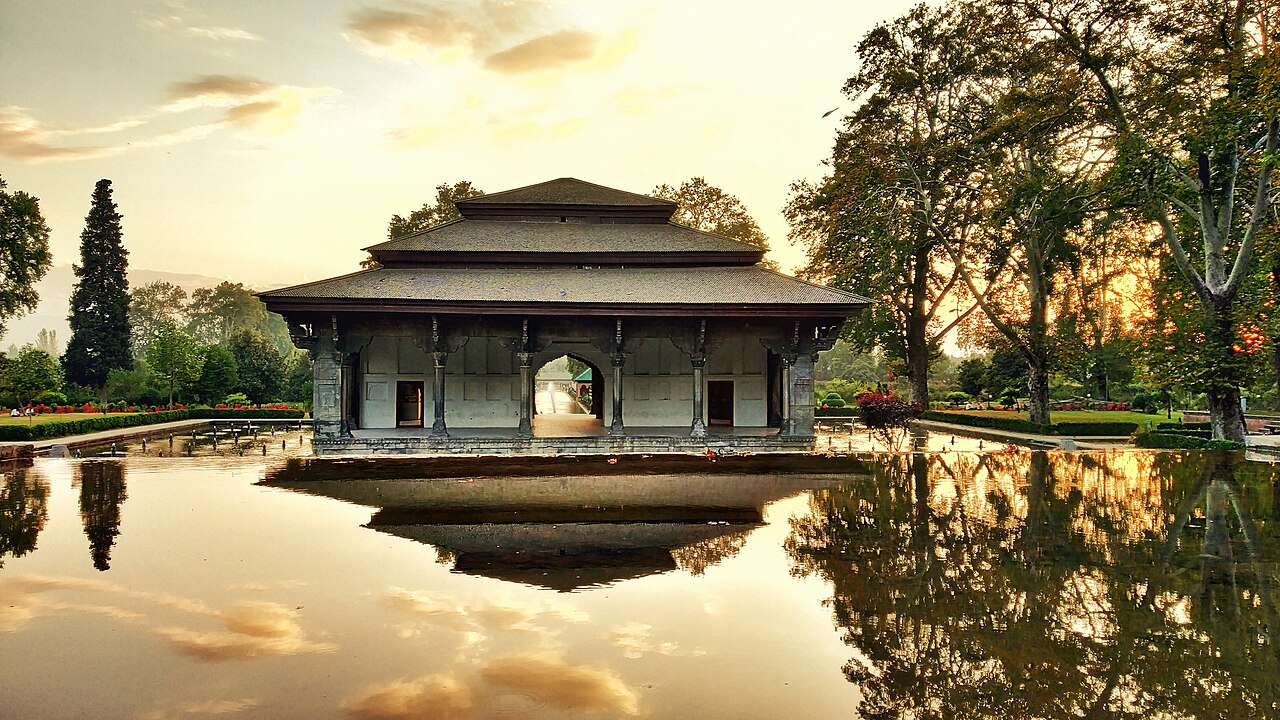
Shalimar Bagh
Garten · 7 km · about 20 min by road