
Arjuna's Penance
#3von 10 Orten zum Besuchen in MahabalipuramMahabalipuram, Tamil Nadu
Auch bekannt als Descent of the Ganges · Bhagiratha's Penance
Kurz gesagt
Öffnungszeiten: 06:00–18:00. Der Eintritt ist kostenlos. Plane 30 min ein. Beste Zeit: 09:00 – 10:30.
Aktualisiert am · Erstellt von Traveliac, KI-unterstützt · 4 Min. Lesezeit
- Öffnungszeiten
- 06:00–18:00
- Eintrittspreis
- Kostenlos
- Benötigte Zeit
- 30 min
- Beste Tageszeit
- 09:00 – 10:30
- Beste Monate
- Oct – Mar
- Adresse
- West Raja Street, Mahabalipuram, Chengalpattu District, Tamil Nadu 603104
Über Arjuna's Penance
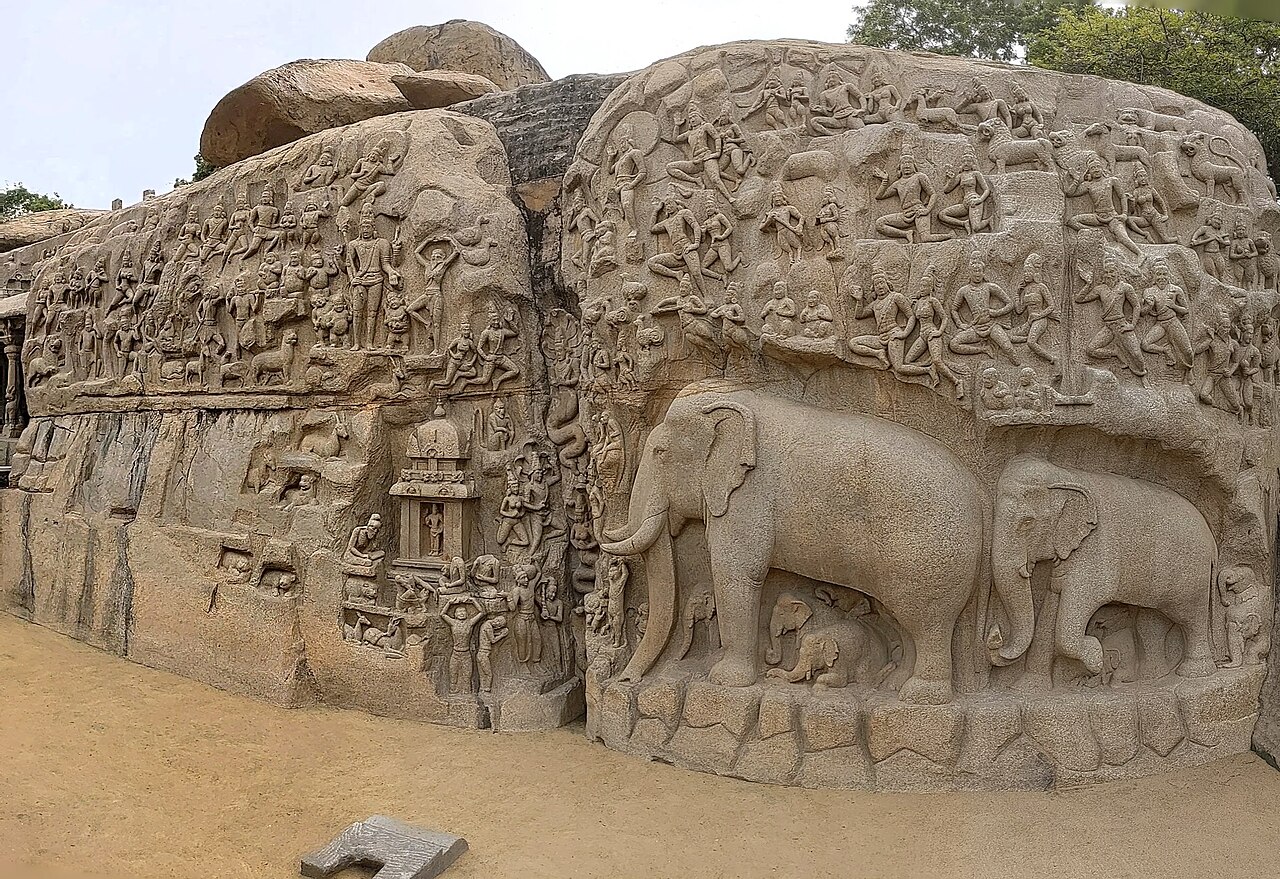
Arjuna's Penance covers a single granite rock face measuring 29 metres wide by 13 metres high with one of the largest bas-relief carvings in the world, cut in the mid-seventh century under Pallava patronage. A natural vertical fissure splits the panel in two, and Pallava engineers turned that crack into a functioning water channel: during festivals, water was released from a cistern above to flow down the cleft, simulating the mythical descent of the river Ganga from the heavens. Art historians read the carving two ways simultaneously — as Arjuna's penance to win the god Shiva's Pasupatastra weapon, and as the descent of the Ganges led by King Bhagiratha — and the ambiguity may be deliberate.
Beste Tageszeit: 09:00 – 10:30. When direct morning sun rakes across the relief without yet drawing the midday coach crowds.
Öffnungszeiten von Arjuna's Penance
Arjuna's Penance öffnet um 06:00 und schließt um 18:00. Am Wochenende ändert sich nichts: samstags und sonntags gelten dieselben Zeiten.
- Öffnungszeiten
- 06:00–18:00
Mon–Sun 06:00–18:00 - Geschlossen an
- Täglich geöffnet
Öffnungszeiten zusammengestellt aus tamilnadutourism.tn.gov.in und öffentlichen Quellen, zuletzt aktualisiert am . Sie können sich ohne Vorankündigung ändern — vor der Reise bitte bestätigen. Wie wir diese Reiseführer schreiben
Eintrittspreis für Arjuna's Penance
| Ticket | Preis |
|---|---|
| Indische Besucher | Kostenlos |
| Ausländische Besucher | Kostenlos |
| Kinder | Kostenlos |
| Kamera | Kostenlos |
No admission fee. The relief stands on open public ground outside the ASI-fenced, ticketed precinct that covers only Shore Temple and Five Rathas.
Preise zusammengestellt aus tamilnadutourism.tn.gov.in und öffentlichen Quellen, zuletzt aktualisiert am . Sie können sich ohne Vorankündigung ändern — vor der Reise bitte bestätigen. Wie wir diese Reiseführer schreiben
Beste Reisezeit für Arjuna's Penance
- Quiet
- Moderate
- Busy
- Very busy
06:00 – 09:00
Early WalkthroughBest time to go
Few visitors this early; local walkers and photographers outnumber tourists on the open pathway facing the relief.
Quiet09:00 – 12:30
Tour Group Window
Coach groups combine this stop with Five Rathas and Shore Temple. The narrow viewing path in front of the panel gets congested.
Very busy12:30 – 15:30
Midday Lull
Direct overhead sun flattens the relief's carved depth, which thins out photographer traffic even as general visitor numbers stay moderate.
Moderate15:30 – 18:00
Late Afternoon
A second wave of visitors arrives as the day cools, often combining the stop with Ganesha Ratha or Krishna's Butter Ball nearby.
Busy
Geschichte von Arjuna's Penance
Arjuna's Penance was carved during the reign of Narasimhavarman I in the mid-seventh century, on an open granite outcrop at the centre of what was then a working Pallava port town. Over one hundred figures cover the panel: life-size elephants, a family of deer, a meditating sage flanked by real and mythical beasts, and, in a detail art historians single out for its wit, a cat standing upright on one leg in mock-ascetic pose, surrounded by unbothered mice — a satirical aside on performative asceticism carved into the same rock as the epic's central drama. The natural cleft running down the panel's centre once carried water from a masonry cistern on the rock above; archaeologists have traced the remains of the stone channel that fed it, confirming the relief was designed from the outset as a working monsoon-season spectacle rather than a static carving. A smaller, unfinished relief panel lies immediately to the north, believed to be an abandoned second attempt at the same theme. UNESCO folded the site into the Group of Monuments at Mahabalipuram in 1984.
Regeln & Etikette in Arjuna's Penance
Arjuna's Penance sits in the open on public ground rather than inside a fenced ASI compound, so entry carries no ticket and no fixed gate hours, though the wider monument precinct is patrolled from roughly 06:00 to 18:00. Climbing onto the relief's ledges for photographs is prohibited and ASI staff patrolling the area will call visitors down; the granite carries no protective coating and hand and foot contact accelerates wear on figures already softened by 1,300 years of monsoon runoff. Street vendors selling postcards and stone souvenirs operate along the pathway approaching the relief and are not ASI-affiliated; prices are negotiable and unrelated to any admission cost, since the site itself is free.
Tipps für den Besuch von Arjuna's Penance
- 1
Arjuna's Penance is easiest to read in the mid-morning, once direct sun rakes across the panel from the east and throws each carved figure into sharper relief than the flat light of midday delivers. Spend a few extra minutes locating the ascetic cat panel near the base of the northern half — most self-guided visitors miss it entirely while focused on the elephants and the central cleft. Because the site has no gate and no ticket queue, it pairs efficiently with Krishna Mandapam and Ganesha Ratha, both within a five-minute walk, for a single free-admission loop through central Mahabalipuram before or after the ticketed Five Rathas visit.
Anreise nach Arjuna's Penance
Der rote Stern zeigt Arjuna's Penance; die nummerierten Markierungen sind die 7 nächstgelegenen Orte aus unseren Reiseführern, jeweils mit ihrem Rang in der eigenen Stadt. Für Details auf eine Markierung tippen.
West Raja Street, Mahabalipuram, Chengalpattu District, Tamil Nadu 603104Route in Google Maps
Ab Five Rathas Complex
₹40–₹602 km · 5–8 min
Auto
Ab Mahabalipuram Bus Stand
0.8 km · 10 min walk
Free (walking distance)
Ab Chengalpattu Junction (CGL)
₹500–₹70029 km · 45–60 min
Auto/cab
Nächster Flughafen
Ab Chennai International Airport (MAA)
approximately 58 km, 1h 15m–1h 45m by road via ECR/OMR depending on traffic.
Nächster Bahnhof
Ab Chengalpattu Junction (CGL)
approximately 29 km, 45–60 minutes by road.
Häufige Fragen zu Arjuna's Penance
Is there an entry fee for Arjuna's Penance?
No. Arjuna's Penance stands on open public ground with no ASI fence or ticket counter, unlike Shore Temple and Five Rathas.
What is the crack running down the middle of the relief?
It is a natural fissure in the granite that Pallava engineers converted into a water channel, releasing water from an overhead cistern during festivals to simulate the Ganges' mythical descent.
Does the carving show Arjuna's penance or the descent of the Ganges?
Both readings are accepted. Art historians have not resolved which single narrative the sculptors intended, and most scholarship treats the ambiguity as deliberate rather than a gap in the surviving evidence.
What is the cat carving near the base of the relief?
It depicts a cat standing on one leg in mock meditation, surrounded by mice unafraid of it — a satirical detail on performative asceticism, carved into the same panel as the main epic scene.
Mit KI-Unterstützung aus offiziellen Quellen und öffentlichen Aufzeichnungen erstellt und erst nach den Prüfungen veröffentlicht, die beschrieben sind unter Wie wir diese Reiseführer schreiben. Niemand von Traveliac war persönlich vor Ort. Zuletzt aktualisiert am . Wie wir Orte bewerten und prüfen
Orte in der Nähe von Arjuna's Penance
Luftlinien-Entfernungen laut unserer Karte; Zeiten sind Schätzwerte.
 #1 in Mahabalipuram
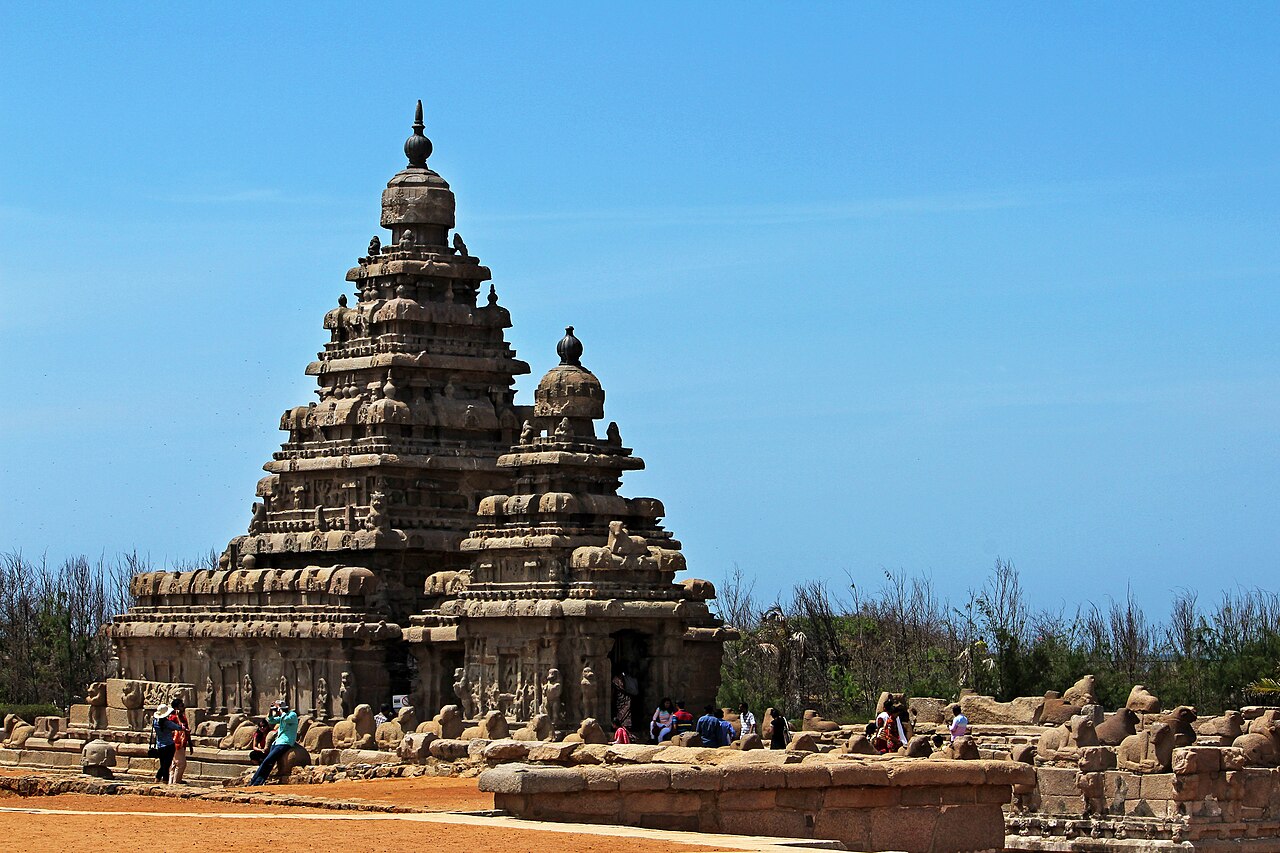
Shore Temple
Tempel · 150 m · about 2 min walk
 #5 in MahabalipuramFreier Eintritt
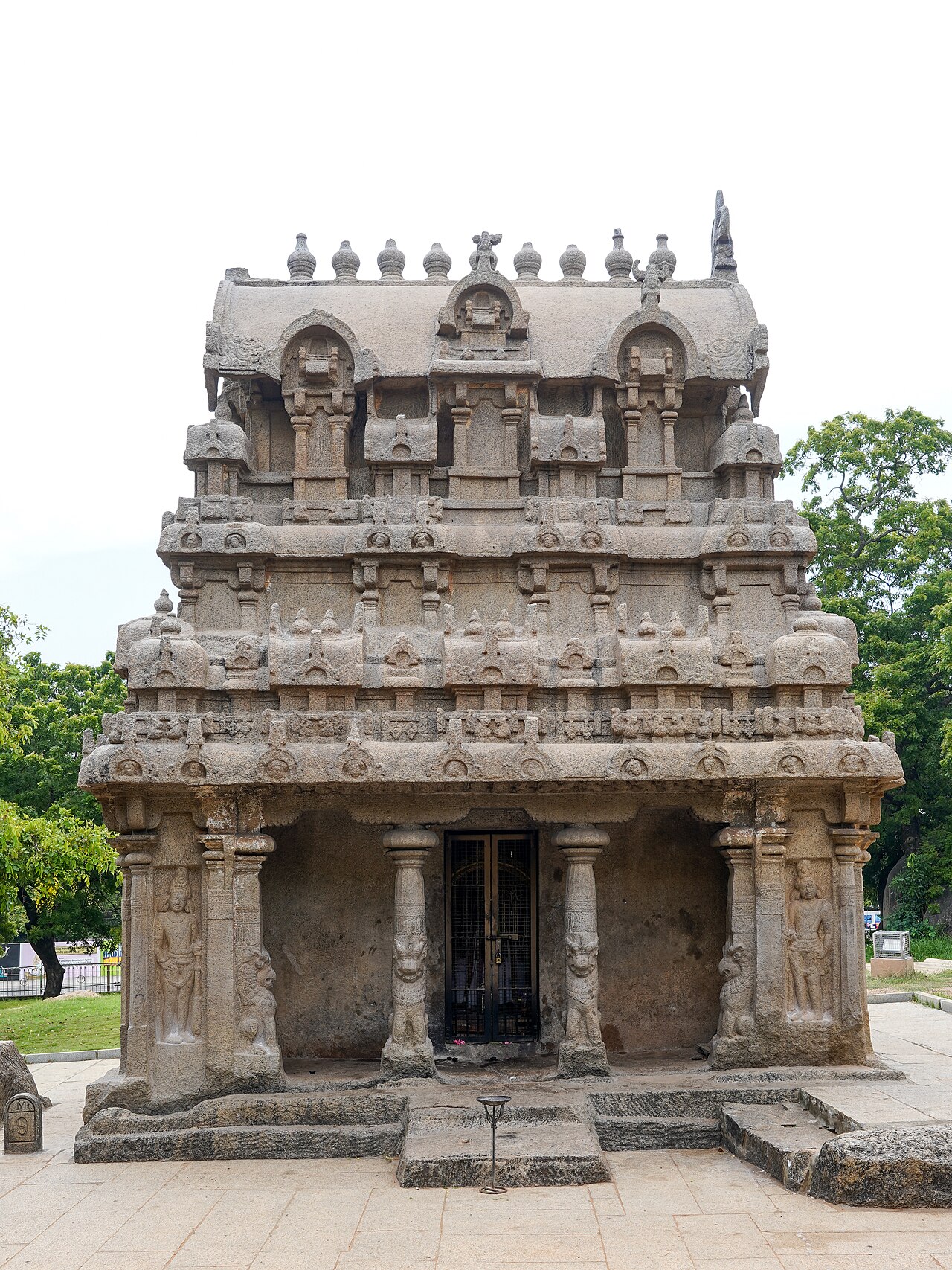
Ganesha Ratha
Tempel · 700 m · about 11 min walk
 #6 in MahabalipuramFreier Eintritt
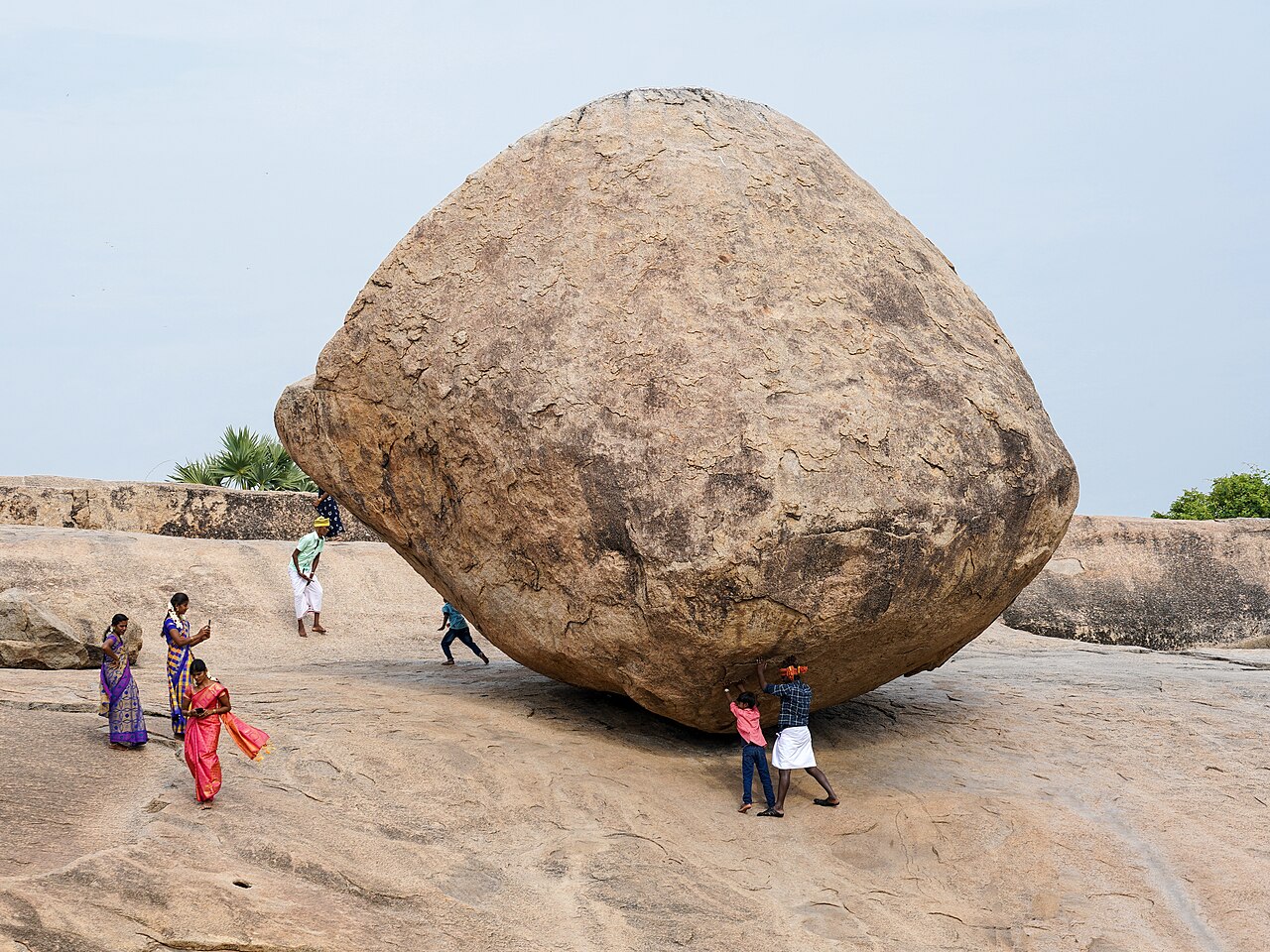
Krishna's Butter Ball
Kulturerbe · 750 m · about 12 min walk
 #4 in MahabalipuramFreier Eintritt
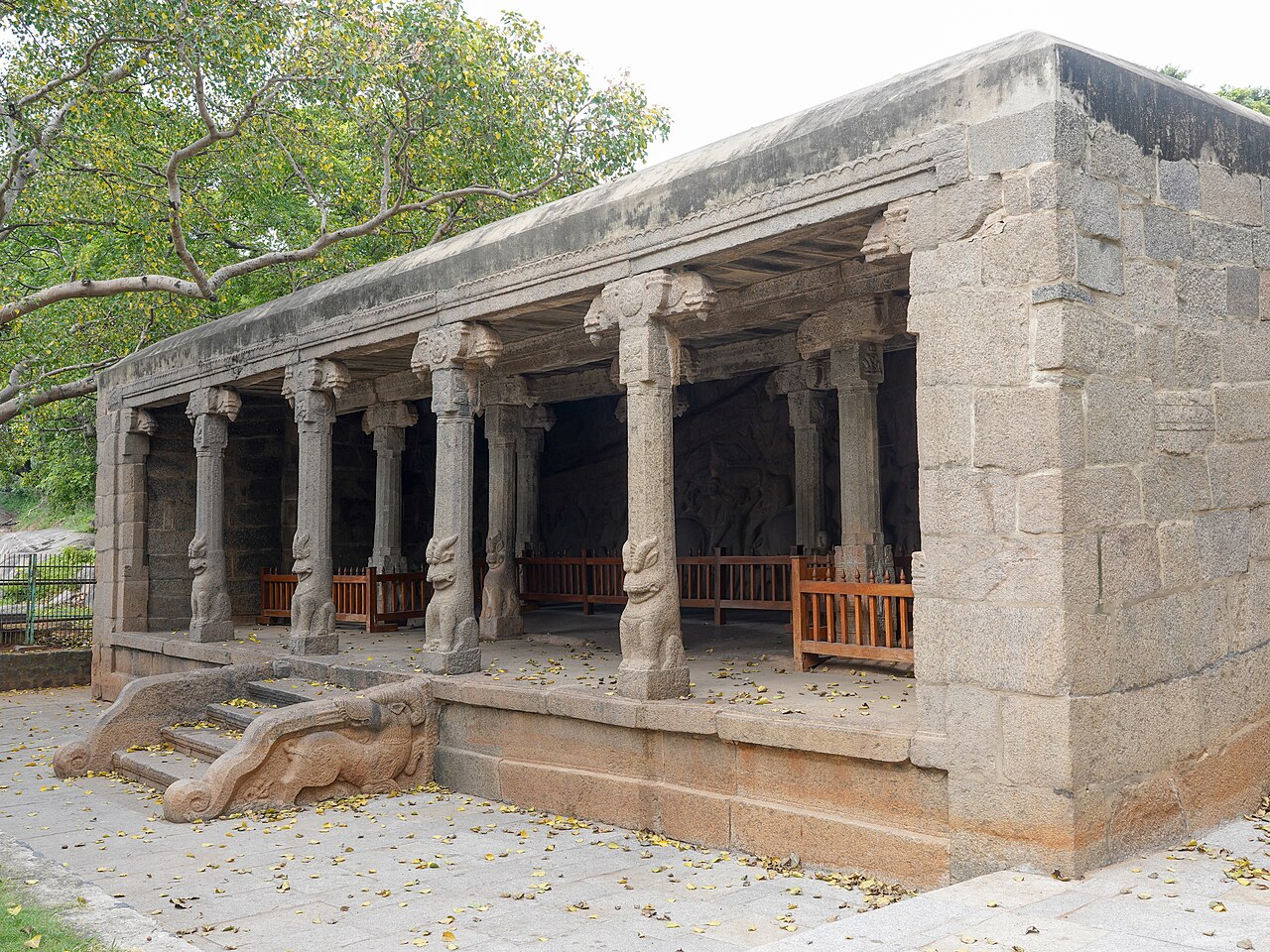
Krishna Mandapam
Tempel · 800 m · about 13 min walk