
Shore Temple
#1of 10 places to visit in MahabalipuramMahabalipuram, Tamil Nadu
Also known as Mamallapuram Shore Temple · Kadal Kovil
Quick answer
Opening hours: 06:00–18:00, last entry 17:30. Entry: ₹40 Indian · ₹600 foreign. Allow 1 hr. Best time: 06:00 – 08:00.
Updated · Compiled by Traveliac, AI-assisted · 4 min read
- Opening hours
- 06:00–18:00
- Entry fee
- ₹40 Indian
- Ticket from
- Time needed
- 1 hr
- Best time of day
- 06:00 – 08:00
- Best months
- Oct – Mar
- Address
- Shore Temple Road, Mahabalipuram, Chengalpattu District, Tamil Nadu 603104
About Shore Temple
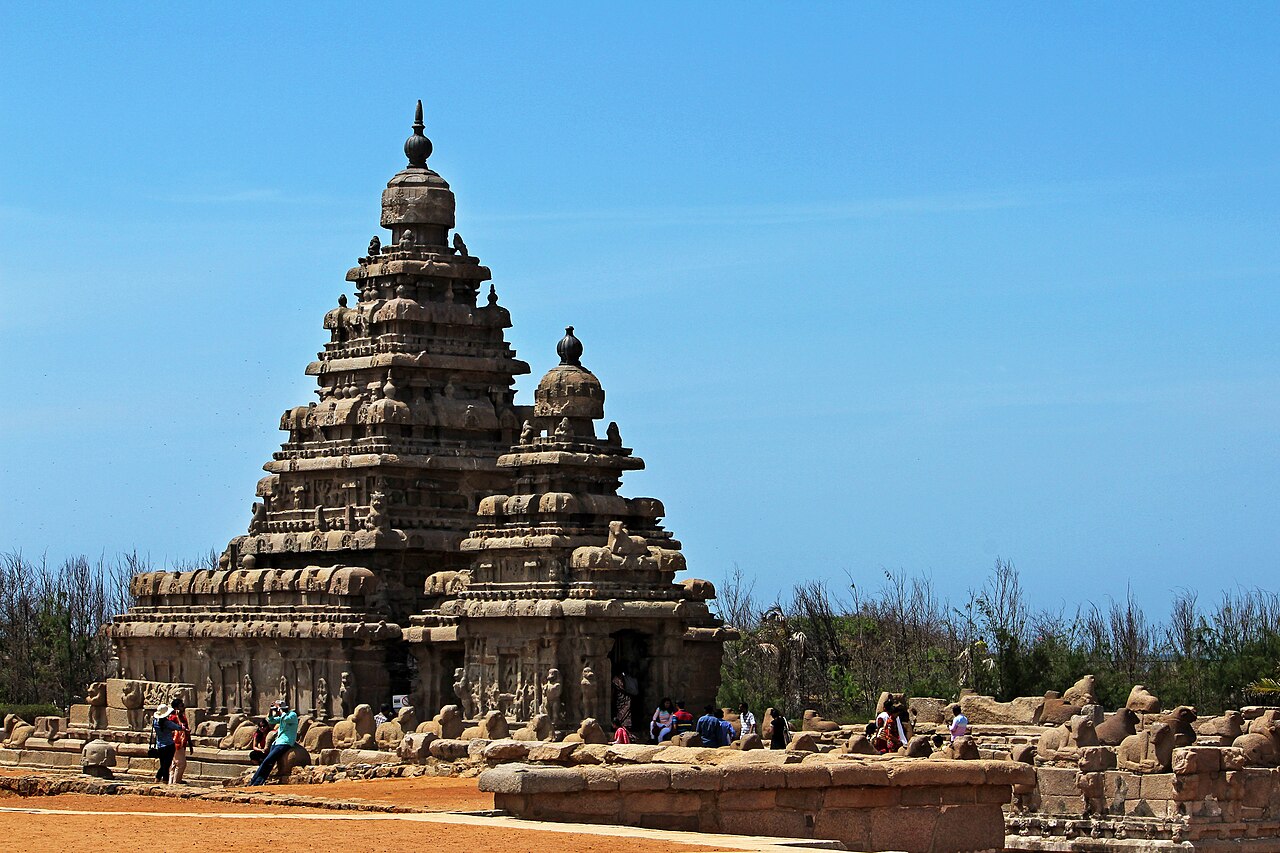
Shore Temple rises directly on the Bay of Bengal shoreline in granite blocks assembled without mortar, one of the earliest structural stone temples surviving in South India. Built during the reign of Pallava king Narasimhavarman II (Rajasimha), who ruled from roughly 700 to 728 CE, the complex carries two principal shrines back to back — a taller eastern tower dedicated to Shiva facing the sunrise over the sea, and a smaller western shrine also dedicated to Shiva, with an older sanctum to Vishnu set between them. Centuries of salt spray have worn the granite's outer face to a soft, rounded profile, and the Archaeological Survey of India has ringed the base with a rubble breakwater to slow further erosion.
Best time of day: 06:00 – 08:00. For soft light on the eastern tower and the thinnest crowds of the day.
Shore Temple timings
Shore Temple opens at 06:00 and closes at 18:00. It keeps the same hours on Saturday and Sunday.
- Opening hours
- 06:00–18:00
Mon–Sun 06:00–18:00 - Closed on
- Open every day
Opening hours compiled from tamilnadutourism.tn.gov.in and public records, last updated . They change without notice — confirm before you travel. How we write these guides
Shore Temple ticket price
| Ticket | Price |
|---|---|
| Indian visitors | ₹40 |
| Foreign visitors | ₹600 |
| Children | Free |
| Camera | Free |
Covered by the ASI composite ticket shared with Five Rathas, valid the same calendar day at both sites once bought at either counter. Children under 15 enter free. Still photography is free; video recording carries an additional ₹25 fee. ASI revises fees periodically, so as of 2026, verify the exact figure at the counter.
Prices compiled from tamilnadutourism.tn.gov.in and public records, last updated . They change without notice — confirm before you travel. How we write these guides
Best time to visit Shore Temple
- Quiet
- Moderate
- Very busy
06:00 – 08:00
Early LightBest time to go
Gates have just opened; photographers and early risers make up most of the small crowd. Soft directional light on the eastern tower is at its best.
Quiet09:00 – 12:00
Tour Bus Window
Chennai-based day-tour coaches arrive in volume. The plinth around the Shiva shrines becomes the most congested point in the entire complex.
Very busy12:00 – 15:00
Midday Heat
Many coach groups break for lunch. Exposed granite surfaces heat up sharply; shade is limited to the shrine interiors.
Moderate15:00 – 18:00
Late Afternoon
A second, smaller wave of visitors arrives ahead of the 17:30 last-entry cutoff. Sea breeze picks up, making the plinth more comfortable than midday.
Moderate
History of Shore Temple
Shore Temple's construction is dated to the final years of the seventh century and the opening decades of the eighth, commissioned by Narasimhavarman II after the Pallava dynasty's shift from rock-cut excavation toward free-standing structural building. Marco Polo, passing the Coromandel Coast in the late thirteenth century, recorded a cluster of ornate temples along this shoreline that European sailors later called the 'Seven Pagodas' — a name that stuck even after only Shore Temple remained visible above the waterline. The 2004 Indian Ocean tsunami briefly pulled the sea back far enough to expose stone foundations and a collapsed structure offshore, lending physical evidence to the old sailors' accounts and prompting a fresh round of underwater archaeological survey. Salt-laden wind and centuries of wave action have blunted the carved panels that once ringed the temple's plinth — rows of Nandi bulls and lion-based pilasters are now more silhouette than detail. UNESCO inscribed the temple in 1984 as part of the Group of Monuments at Mahabalipuram, citing it as the earliest surviving example of Dravidian structural, as opposed to rock-cut, temple architecture.
Rules & etiquette at Shore Temple
Shore Temple sits inside the same ASI-fenced precinct as the composite ticket counter, so visitors must buy the ₹40 Indian / ₹600 foreign ticket (as of 2026) before crossing the turnstile — there is no separate gate fee. Footwear is not required to be removed at the outer perimeter, but shoes must come off before stepping onto the raised plinth of either shrine, and a free shoe-minding rack operates at the plinth's base. The temple functions as an ASI monument rather than an active place of worship, so there is no priest-led ritual, no donation box, and no dress-code enforcement beyond the general fenced-monument standard of covered shoulders and knees. Drone photography is prohibited across the entire Mahabalipuram monument complex without prior written clearance from the Chennai Circle ASI office. Touts selling 'skip the line' guide services cluster near the ticket counter; licensed guides wear a laminated ASI identity tag and charge ₹300–₹500 for a 45-minute circuit.
Tips for visiting Shore Temple
- 1
Shore Temple photographs best in the first hour after the 06:00 opening, when low sun angles light the eastern Shiva tower from directly behind and the granite turns a warm amber before the day's heat haze sets in. Weekday mornings before 09:00 see the fewest tour buses; weekend afternoons bring coach groups from Chennai that can fill the plinth within minutes. The composite ASI ticket bought here also admits the holder to Five Rathas on the same calendar day, so pair the two sites in a single outing rather than buying twice. Waves at the adjoining beach carry a strong undertow and the ASI does not permit swimming from the monument's fenced shoreline; the nearest lifeguard-monitored swimming beach is Mahabalipuram Beach, a five-minute walk south past the ticket office.
How to reach Shore Temple
The red star is Shore Temple; the numbered pins are the 7 nearest places in our guides, each showing its rank in its city. Tap a pin for details.
Shore Temple Road, Mahabalipuram, Chengalpattu District, Tamil Nadu 603104Directions in Google Maps
From Chennai (CMBT / Thiruvanmiyur)
₹60–₹9058 km · 1h 15m – 1h 45m
TNSTC bus via ECR); ₹1,200–₹1,800 (one-way cab
From Chengalpattu Junction (CGL)
₹500–₹70029 km · 45–60 min
Auto/cab, negotiated
From Mahabalipuram Bus Stand
₹50–₹801.2 km · 15 min walk / 5 min auto
Auto, short hop
Nearest airport
From Chennai International Airport (MAA)
approximately 58 km, 1h 15m–1h 45m by road via ECR/OMR depending on traffic.
Nearest railway station
From Chengalpattu Junction (CGL)
approximately 29 km, 45–60 minutes by road.
Shore Temple FAQs
Does the Shore Temple ticket also cover the Five Rathas?
Yes. The single ASI composite ticket (₹40 Indian / ₹600 foreign as of 2026) purchased at Shore Temple is valid the same calendar day at Five Rathas, since both are ticketed within the same Group of Monuments at Mahabalipuram.
Is Shore Temple still an active place of worship?
No. Shore Temple operates purely as an Archaeological Survey of India monument; there is no daily puja, no resident priest, and no donation ritual inside the fenced precinct.
Can visitors swim at the beach beside Shore Temple?
No. The ASI-fenced shoreline directly below the monument carries a strong undertow and is closed to swimming; the nearest supervised swimming beach is Mahabalipuram Beach, about a five-minute walk south.
What caused the erosion visible on the temple's carved panels?
Nine centuries of direct salt-spray exposure have worn down the plinth's carved Nandi and lion-pilaster friezes. The 2004 tsunami additionally exposed submerged foundations offshore, evidence supporting old sailors' accounts of further temples now lost beneath the sea.
Compiled with AI assistance from official sources and public records, and published only after the checks in How we write these guides. Nobody from Traveliac has visited this place. Last updated . How we rank and check places
Places to visit near Shore Temple
Straight-line distances from our map; times are estimates.
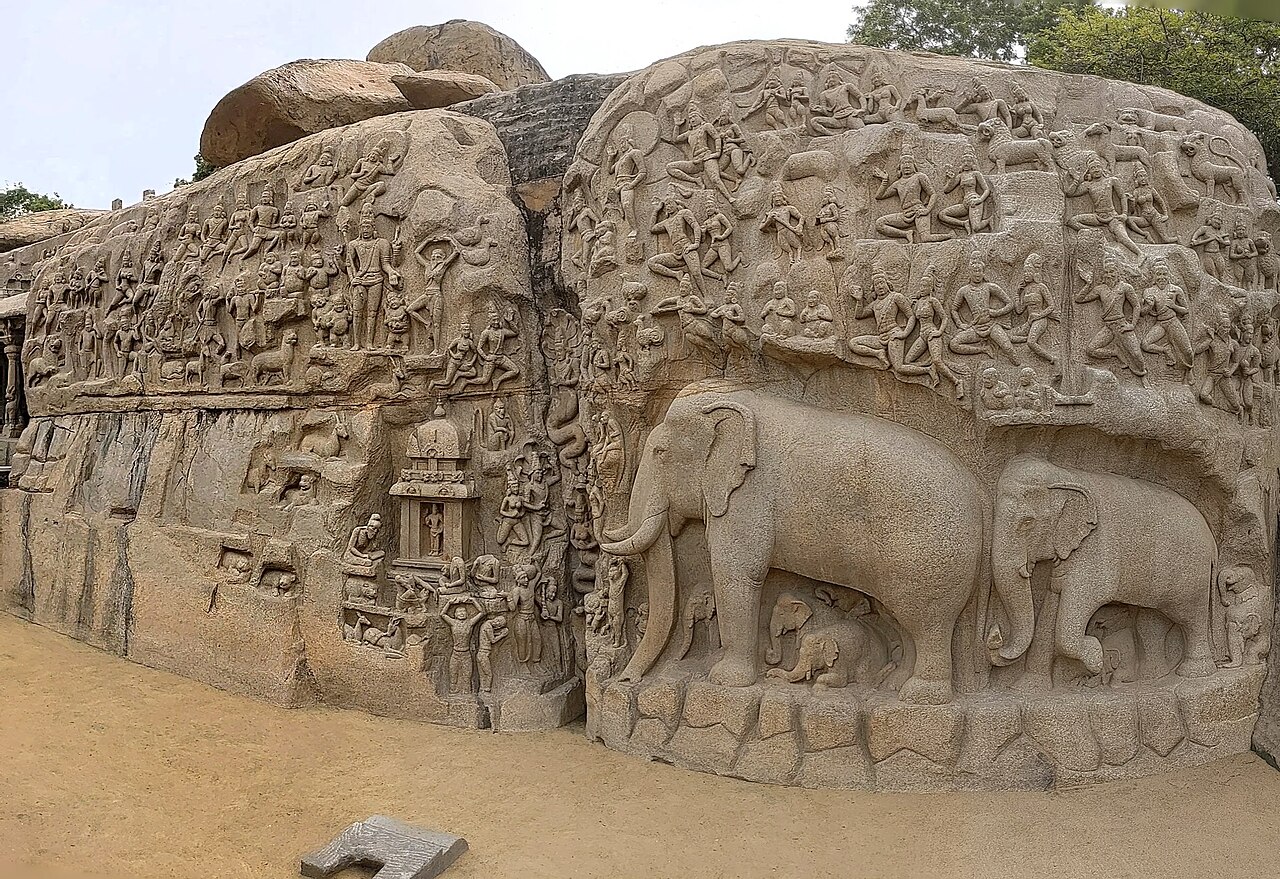 #3 in MahabalipuramFree entry
Arjuna's Penance
Heritage · 150 m · about 2 min walk
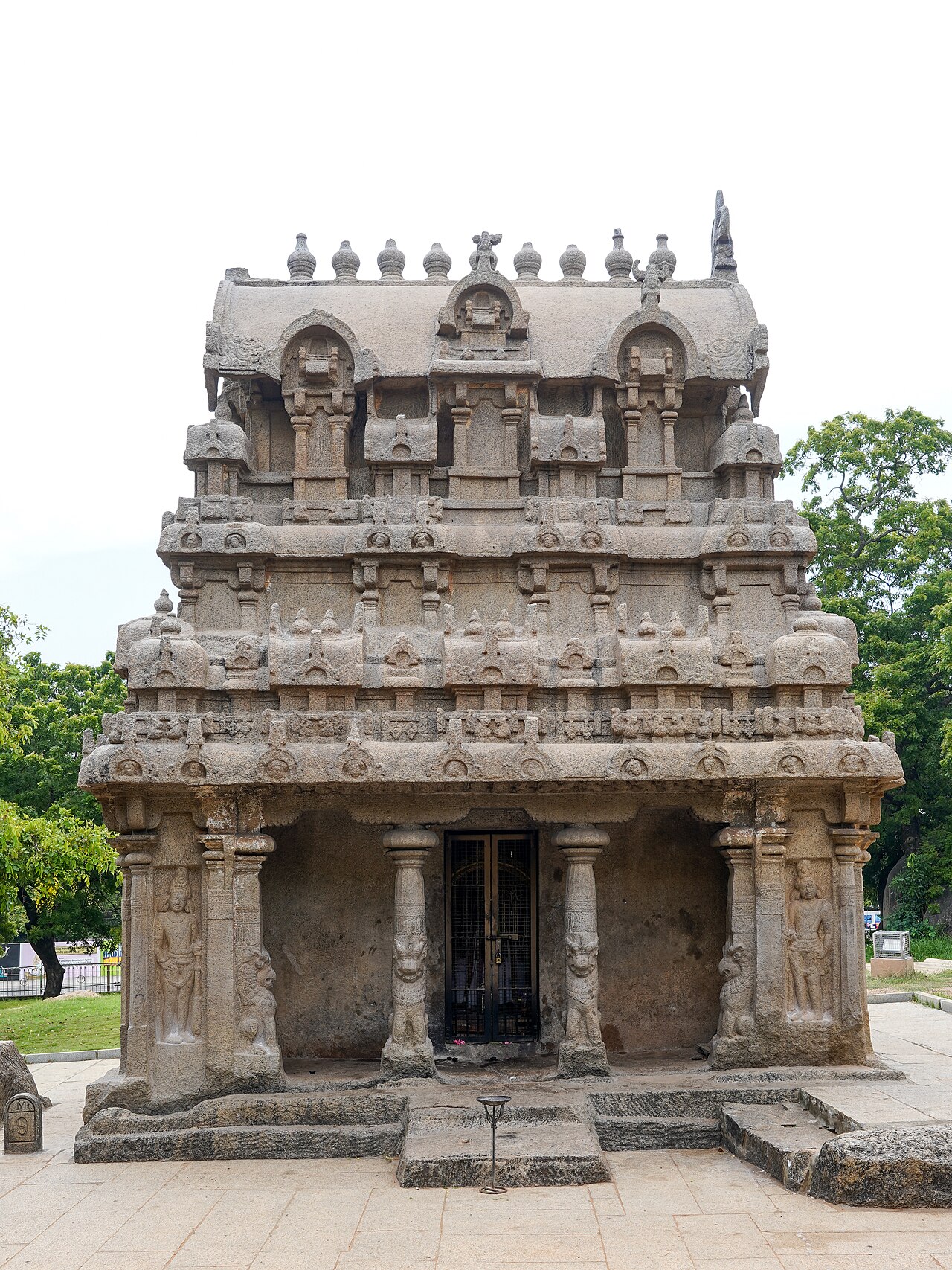 #5 in MahabalipuramFree entry
Ganesha Ratha
Temple · 700 m · about 11 min walk
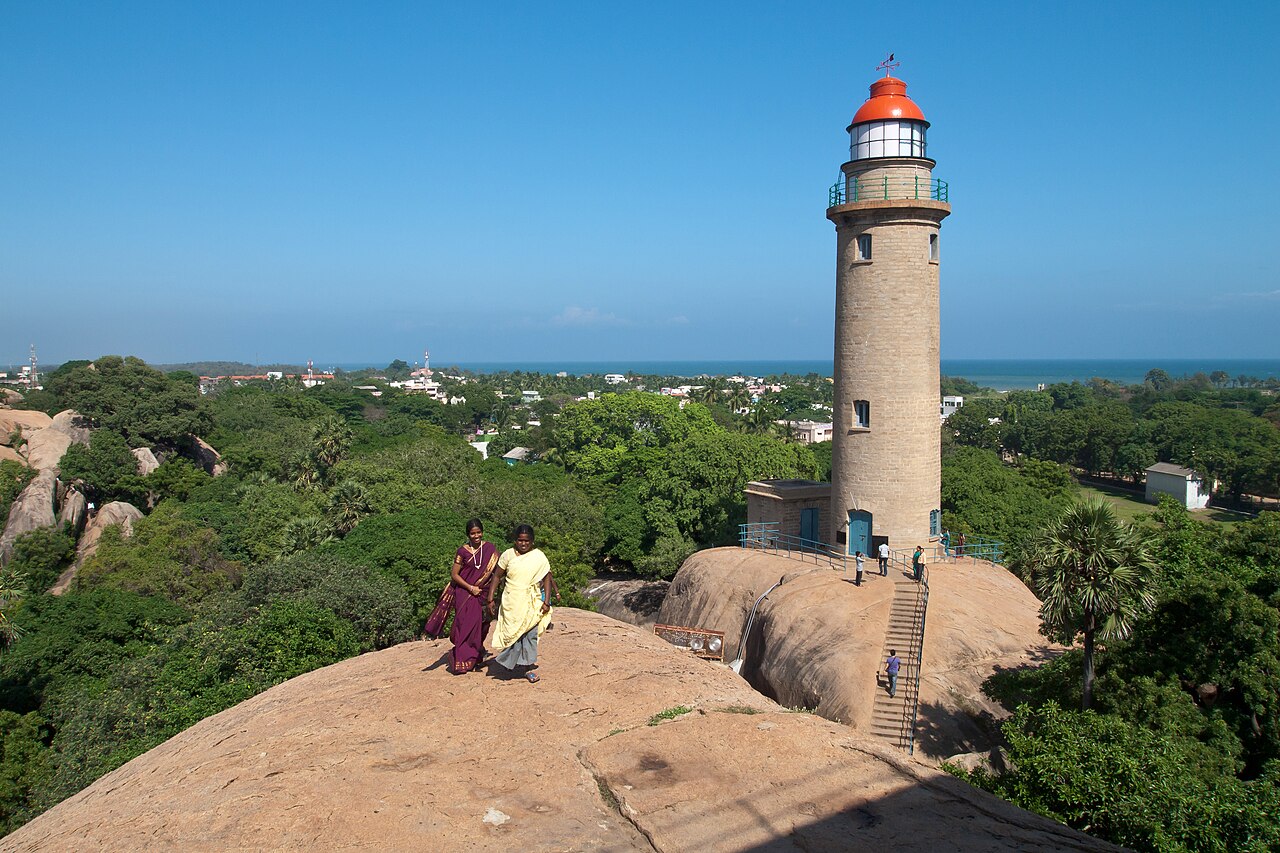 #9 in Mahabalipuram
Mahabalipuram Lighthouse
Heritage · 750 m · about 12 min walk
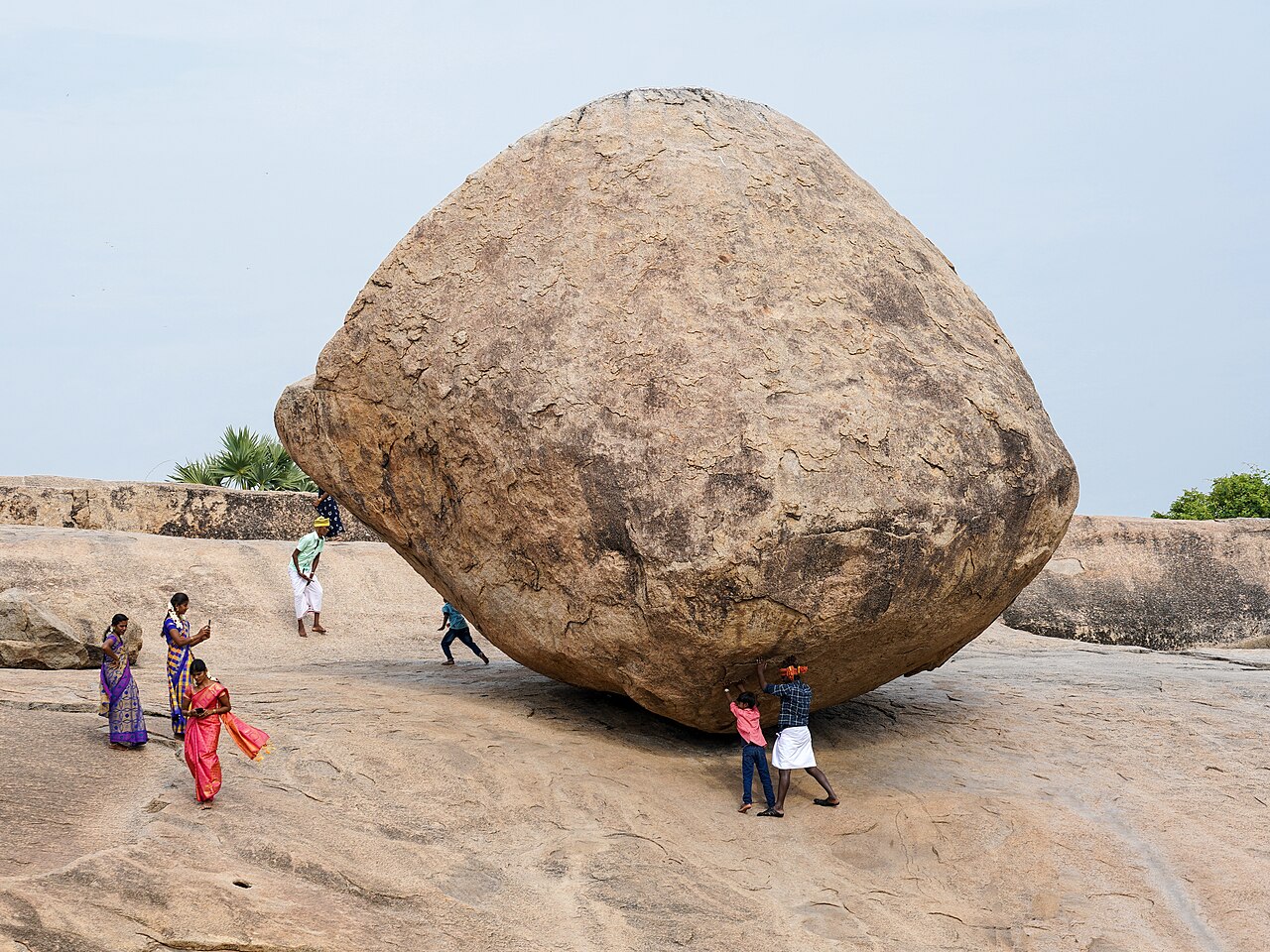 #6 in MahabalipuramFree entry
Krishna's Butter Ball
Heritage · 750 m · about 12 min walk