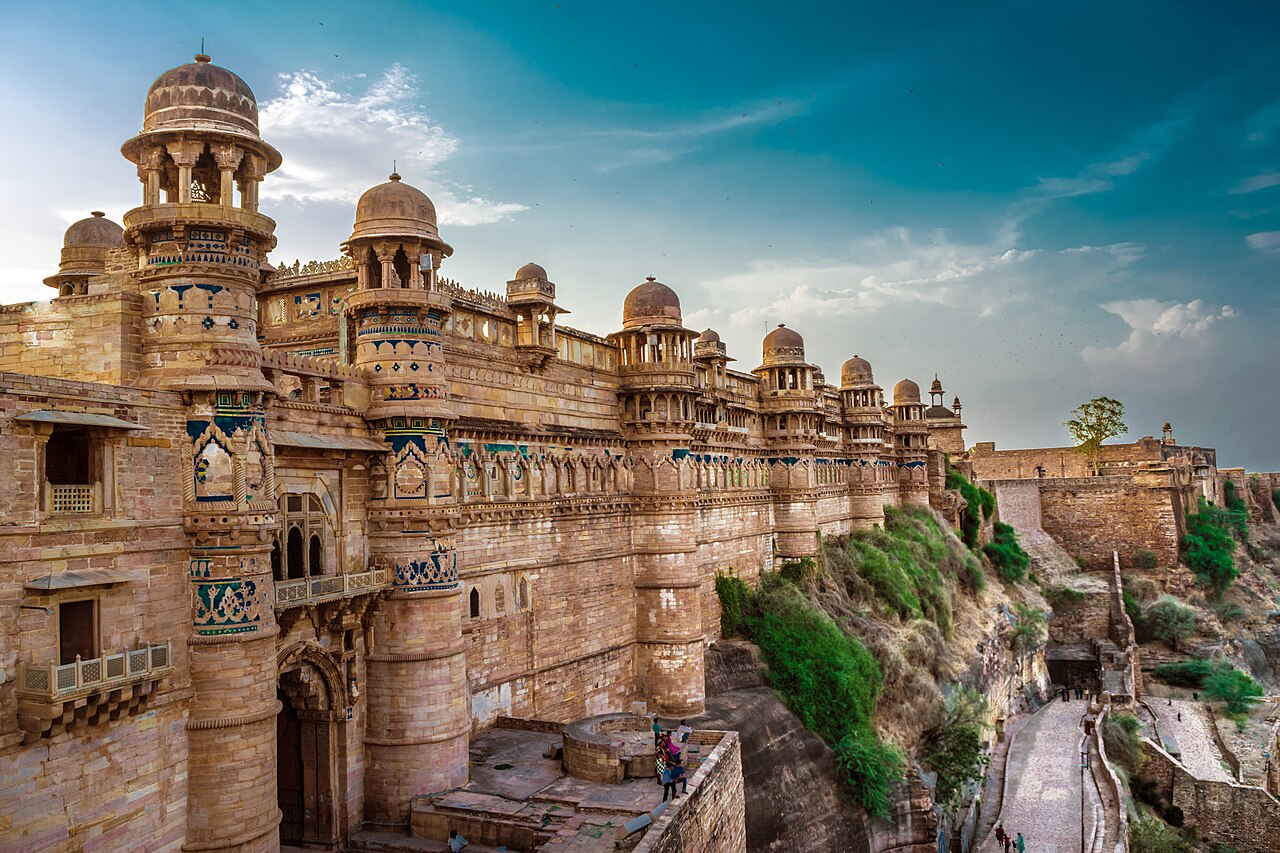
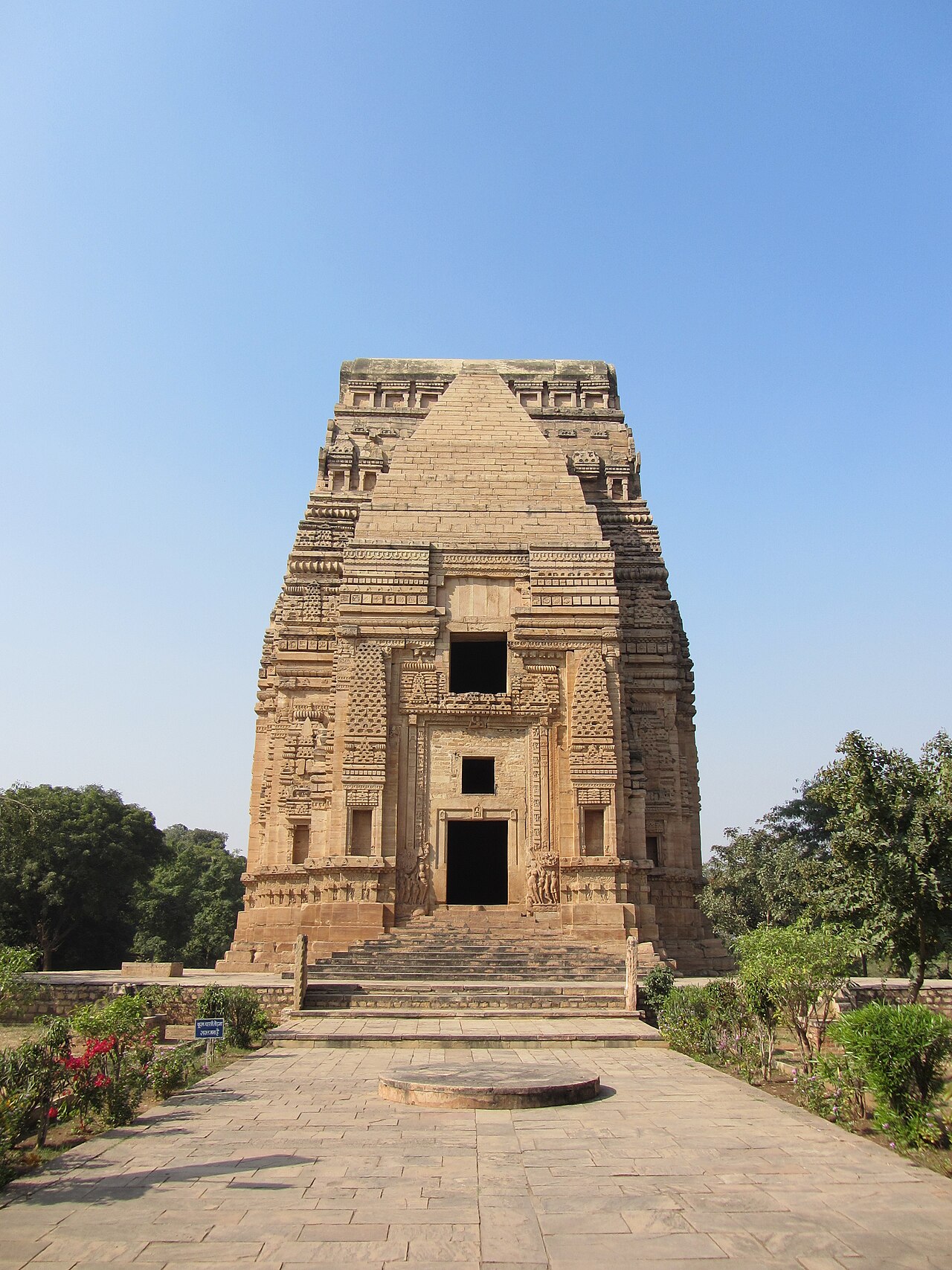
Teli ka Mandir
#3de 8 lugares para visitar en GwaliorGwalior, Madhya Pradesh
También conocido como Telika Mandir · Oilman's Temple
Respuesta rápida
Horario: 09:00–17:00. Entrada: ₹75 indios · ₹250 extranjeros. Calcula 30 min. Mejor momento: 09:00 – 10:30.
Actualizado el · Redactado por Traveliac, con ayuda de IA · 4 min de lectura
- Horario
- 09:00–17:00
- Precio de entrada
- ₹75 indios
- Entrada desde
- Tiempo necesario
- 30 min
- Mejor momento del día
- 09:00 – 10:30
- Mejores meses
- Oct – Mar
- Dirección
- Gwalior Fort, Fort Campus, near the ASI post office, Gwalior, Madhya Pradesh 474001
Sobre Teli ka Mandir
Teli ka Mandir stands roughly 100 feet tall on the Gwalior Fort ridge, and its barrel-vaulted roof — a form more associated with South Indian gopurams than with the temples of central India — makes it structurally unlike anything else on the hill. The sanctum is rectangular rather than square, a detail scholars point to as the oldest surviving example of that plan among Hindu temples in central India. Red sandstone was cut and dressed for the tower's exterior, then carved with figural bands that survive only in fragments, since the temple was damaged during the Delhi Sultanate raids of 1232 and rebuilt using a mix of original and replacement stone.
Mejor momento del día: 09:00 – 10:30. Low side light picks out the surviving carving on the tower's western face before midday haze sets in.
Horario de Teli ka Mandir
Teli ka Mandir abre a las 09:00 y cierra a las 17:00. Mantiene el mismo horario los sábados y domingos.
- Horario
- 09:00–17:00
Mon–Sun 09:00–17:00 - Cierra los
- Abierto todos los días
Horario recopilados de gwalior.nic.in y registros públicos, última actualización el . Pueden cambiar sin previo aviso — confírmalos antes de viajar. Cómo escribimos estas guías
Precio de entrada de Teli ka Mandir
| Entrada | Precio |
|---|---|
| Visitantes indios | ₹75 |
| Visitantes extranjeros | ₹250 |
| Niños | ₹40 |
| Cámara | Gratis |
Teli ka Mandir is covered by the same combined Gwalior Fort ticket that includes Man Mandir Palace and the Saas-Bahu Temples — ₹75 Indian / ₹40 child / ₹250 foreign as of 2026, verify at the counter. No separate payment is collected at the temple itself.
Precios recopilados de gwalior.nic.in y registros públicos, última actualización el . Pueden cambiar sin previo aviso — confírmalos antes de viajar. Cómo escribimos estas guías
Mejor época para visitar Teli ka Mandir
- Quiet
- Moderate
- Busy
09:00 – 10:30
Morning LightBest time to go
Best light on the western carving and thinnest crowds, right after the fort's monuments open.
Quiet10:30 – 13:00
Circuit Peak
Visitors move through as part of the combined-ticket circuit between Man Mandir Palace and the Saas-Bahu Temples.
Busy13:00 – 15:30
Midday Heat
The exposed courtyard around the tower empties out in the afternoon sun.
Moderate15:30 – 17:00
Late Afternoon
A second, smaller wave of visitors arrives before last entry, mostly photographers.
Moderate
Historia de Teli ka Mandir
Teli ka Mandir's construction is dated by the art historian Michael Meister to around 750 CE, with other scholars including George Michell placing the finished structure in the 9th century; the balance of evidence connects it to the Gurjara-Pratihara dynasty that controlled the fort in that period, with the emperor Mihira Bhoja sometimes credited as patron — a link sources treat as probable rather than certain. The temple was dedicated to Vishnu, and the name 'Teli ka Mandir,' Oilman's Temple, is a later folk name with no basis in any inscription; it may record a period when oil-pressers (telis) maintained the shrine rather than any connection to the original patron, and should be read as legend rather than documented history. Qutb-ud-din Aibak's and then Iltutmish's forces damaged the temple during the Delhi Sultanate's 1232 campaign against the fort, and a mosque was later built into the ruins using material scavenged from the site before Maratha troops demolished that mosque in turn. The Archaeological Survey of India, under Major Keith of the Royal Scots Regiment, carried out the first documented modern repairs between 1881 and 1883, rebuilding sections of the tower with a mix of salvaged and new sandstone blocks.
Normas y etiqueta en Teli ka Mandir
Teli ka Mandir sits inside the same combined Gwalior Fort ticket as Man Mandir Palace and the Saas-Bahu Temples — ₹75 Indian, ₹40 child, ₹250 foreign as of 2026, verify at the counter — and needs no separate payment at its own gate. Shoes are not required to be removed, since the ASI manages the building as a protected monument rather than as an active place of worship, though some visitors still leave small offerings at the base of the sanctum. The steep external stairway once used to reach upper viewing points is closed to the public for structural safety, so the temple is seen from ground level and the surrounding courtyard rather than from above. Climbing onto the plinth or the carved base mouldings for photographs is against ASI site rules and is enforced by the attending guard.
Consejos para visitar Teli ka Mandir
- 1
Teli ka Mandir photographs best in the hour after the fort's 09:00 opening, when low side light picks out the surviving figural carving on the tower's western face without the haze that builds up by midday. The temple sits roughly five minutes on foot south of Man Mandir Palace along the ridge road, making the two an easy sequence before the Saas-Bahu Temples a further ten minutes on. Because the barrel-vaulted roofline is unusual for the region, it is worth walking a full circuit of the base rather than viewing it from a single approach — the south face shows the clearest transition between the original 8th- or 9th-century stone and the visibly lighter replacement blocks from the 1880s repair. Guides working the fort circuit rarely stop here for more than five minutes; asking for extra time is reasonable given how little on-site signage the ASI provides.
Cómo llegar a Teli ka Mandir
La estrella roja es Teli ka Mandir; los pines numerados son los 2 lugares más cercanos de nuestras guías, cada uno con su clasificación en su ciudad. Toca un pin para ver más detalles.
Gwalior Fort, Fort Campus, near the ASI post office, Gwalior, Madhya Pradesh 474001Cómo llegar en Google Maps
Desde Gwalior Junction Railway Station
₹80–₹1204 km · 12–15 min
Auto, negotiated
Desde Man Mandir Palace
1 km · 5 min walk
Free (on foot along the ridge road)
Aeropuerto más cercano
Desde Rajmata Vijaya Raje Scindia Airport (GWL), Maharajpura
approximately 12 km, 25–30 minutes by road.
Estación de tren más cercana
Desde Gwalior Junction (GWL)
approximately 4 km, 12–15 minutes by road.
Preguntas frecuentes sobre Teli ka Mandir
When was Teli ka Mandir built?
Around 750 CE to the 9th century, most likely under Gurjara-Pratihara patronage; scholars disagree on the exact decade, though most place it before 900 CE.
Is Teli ka Mandir still used for active worship?
No. The Archaeological Survey of India manages it as a protected monument rather than an active daily-worship site, and no fixed puja schedule is posted, though some visitors leave informal offerings.
Why is it called the 'Oilman's Temple'?
The name is a later folk addition with no supporting inscription. It may refer to a period when oil-pressers (telis) maintained the shrine, but the connection is legend rather than documented fact.
Do I need a separate ticket for Teli ka Mandir?
No. It is covered by the same combined Gwalior Fort ticket used for Man Mandir Palace and the Saas-Bahu Temples.
Redactado con ayuda de IA a partir de fuentes oficiales y registros públicos, y publicado solo tras las comprobaciones descritas en Cómo escribimos estas guías. Nadie de Traveliac ha visitado este lugar. Última actualización el . Cómo clasificamos y verificamos los lugares
Lugares para visitar cerca de Teli ka Mandir
Distancias en línea recta según nuestro mapa; los tiempos son estimados.