
Shalimar Bagh
#2sur 8 lieux à visiter à SrinagarSrinagar, Jammu & Kashmir
Aussi appelé Shalamar Bagh · Garden of Love · Farah Baksh
L'essentiel
Horaires d'ouverture : 09:00–19:00 and 09:30–17:30. Entrée : ₹24. Comptez 1 hr. Meilleure période : 17:00 – 18:30.
Mis à jour le · Rédigé par Traveliac, avec assistance IA · 5 min de lecture
- Horaires d'ouverture
- 09:00–17:30
- 09:00 – 19:00 daily (April to September); 09:30 – 17:30 (October to March)
- Prix d'entrée
- ₹24
- Billet à partir de
- Durée nécessaire
- 1 hr
- Meilleur moment de la journée
- 17:00 – 18:30
- Meilleurs mois
- Apr – Jun, Sep – Oct
- Adresse
- Shalimar Bagh, Shalimar, Srinagar, Jammu & Kashmir 190006, on the north-eastern shore of Dal Lake
À propos de Shalimar Bagh
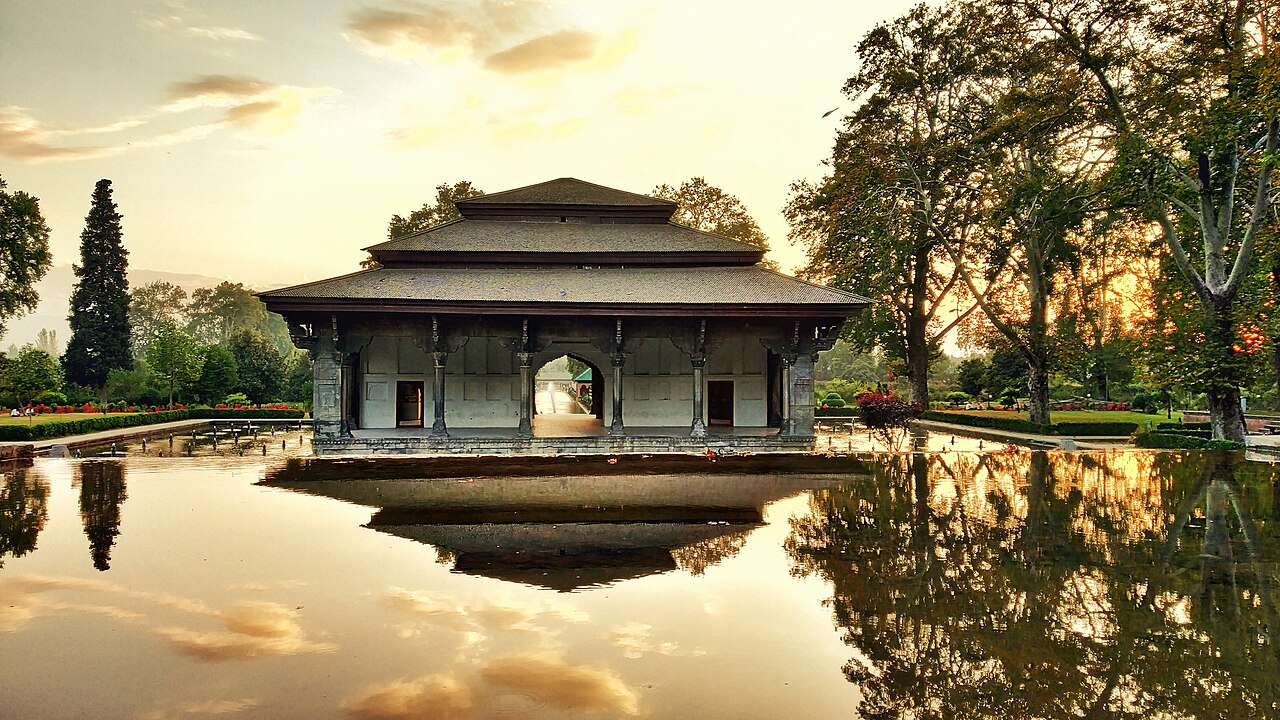
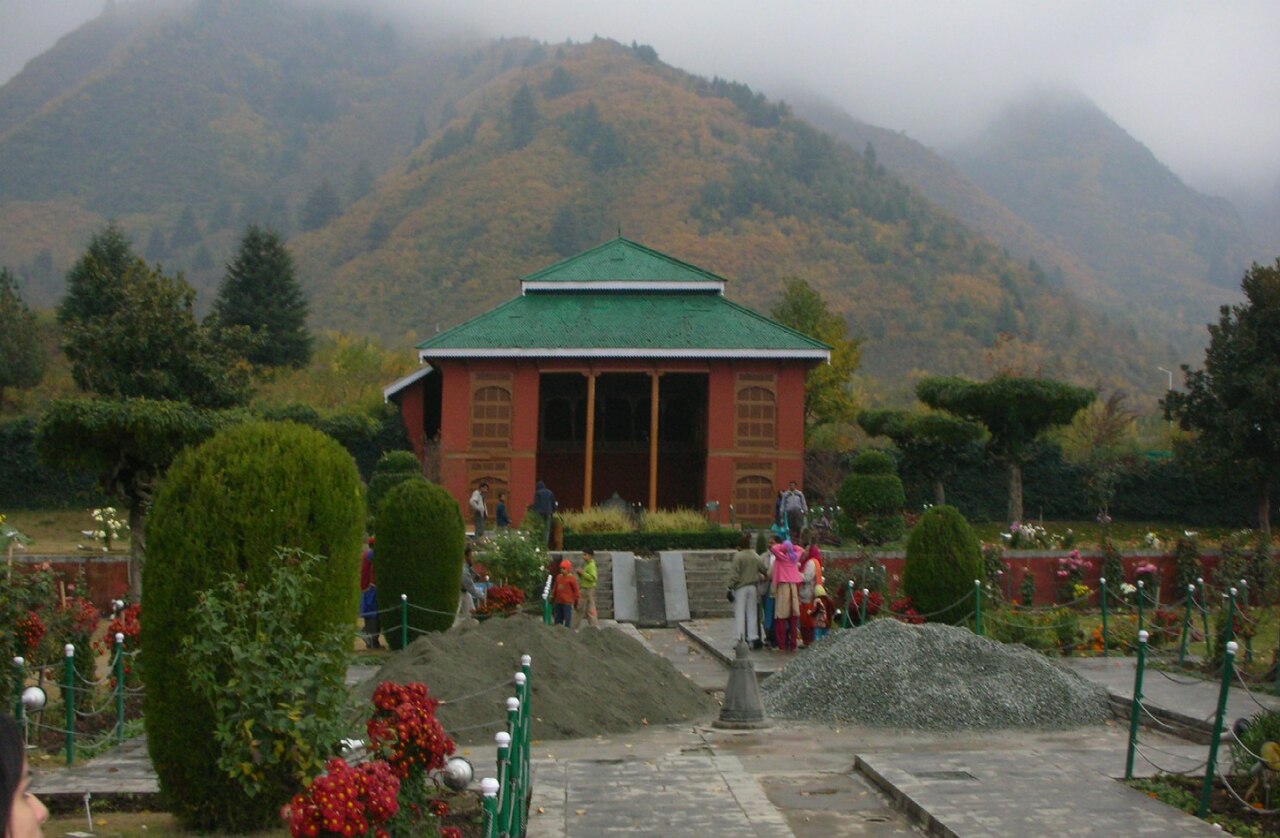
Shalimar Bagh is the original template that every other Mughal garden in Kashmir measures itself against, and its layout still shows the imperial hierarchy it was built to enforce. A single water channel — the Shah Nahar, fed by a mountain stream diverted specifically for the garden — runs the full length of the site in a dead-straight axis, stepping down through four distinct terraces, each historically reserved for a different rank of visitor: the public garden nearest the entrance, then the Diwan-i-Aam (hall of public audience) terrace, then the Diwan-i-Khas (hall of private audience) terrace reserved for the emperor's inner circle, and finally the topmost zenana terrace for the women of the royal household, walled off from general view and accessible in Mughal times only to the emperor and his family. The black marble pavilion on the Diwan-i-Khas terrace, its four corner pillars carved with a lotus motif, sits directly over the water channel so that the stream appears to flow through the building itself — a favourite device of Mughal hydraulic engineering repeated with variations across the empire's gardens from Lahore to Agra.
Meilleur moment de la journée : 17:00 – 18:30. For garden photography in warm light, followed by the evening sound-and-light show if visiting between April and October.
Horaires de Shalimar Bagh
- Horaires d'ouverture
- 09:00–17:30
Mon–Sun 09:00–19:00 and 09:30–17:30 - 09:00 – 19:00 daily (April to September); 09:30 – 17:30 (October to March)
- Fermé le
- Ouvert tous les jours
Bon à savoir : The sound-and-light show runs seasonally, typically two shows per evening (roughly 19:30 and 20:30 in summer, earlier in shoulder season) and is suspended entirely in winter and during rain. Confirm same-day at the ticket counter as timings shift with sunset.
Horaires d'ouverture établis à partir de jktourism.jk.gov.in et de sources publiques, mis à jour le . Ils peuvent changer sans préavis — vérifiez avant de partir. Comment nous rédigeons ces guides
Prix d'entrée de Shalimar Bagh
| Billet | Prix |
|---|---|
| Visiteurs indiens | ₹24 |
| Visiteurs étrangers | ₹24 |
| Enfants | Gratuit |
| Caméra | Gratuit |
Entry fee is collected by the Floriculture, Gardens and Parks Department, J&K, uniform for Indian and foreign visitors; children under 12 free. A separate ticket (roughly ₹150–₹250 depending on season) is sold for the evening sound-and-light show recounting the garden's Mughal history, staged most evenings April through October, weather permitting. Tripod video fee ₹50; handheld photography free.
Tarifs établis à partir de jktourism.jk.gov.in et de sources publiques, mis à jour le . Ils peuvent changer sans préavis — vérifiez avant de partir. Comment nous rédigeons ces guides
Meilleure période pour visiter Shalimar Bagh
- Quiet
- Moderate
- Very busy
09:00 – 10:30
Morning OpeningBest time to go
Gate opens at 09:00. Early visitors have the black marble Diwan-i-Khas pavilion largely to themselves. Cool morning air and quiet water channel.
Quiet10:30 – 14:00
Coach Tour Peak
Combined Nishat–Shalimar–Chashme Shahi tour coaches arrive in volume during May–June and September–October. Zenana terrace pavilion becomes the busiest single point in the garden.
Very busy14:00 – 16:30
Afternoon Lull
Crowd thins as groups move on to other gardens or lunch. Terraces remain sunny and open with limited shade.
Moderate16:30 – 20:30
Golden Hour & Show
Photography light improves; visitors gather for the seasonal sound-and-light show on the lower lawn (April–October, subject to weather). Evening crowd is a distinct, calmer audience from the daytime tour groups.
Moderate
Histoire de Shalimar Bagh
Emperor Jahangir commissioned Shalimar Bagh in 1619 as a pleasure garden for his empress Nur Jahan, during one of his thirteen recorded visits to Kashmir — a valley he wrote about with unusual personal warmth in his memoir, the Tuzk-i-Jahangiri, at one point describing it as a paradise that needed no embellishment from him. The name Shalimar derives from an earlier, smaller structure on the same site called Shalimar ("abode of love" in one reading of the Sanskrit-derived name), which Jahangir's engineers absorbed and dramatically expanded; the garden's fuller Mughal-era name, Farah Baksh ("the delightful"), is still used in some historical texts for the upper section added later.
Jahangir's son Shah Jahan, who would go on to build the Taj Mahal and Red Fort at Delhi, extended Shalimar further after his own accession in 1628, adding the topmost zenana terrace and its black marble pavilion — the same Diwan-i-Khas structure visitors see today — around 1630. This makes Shalimar a genuinely multi-generational imperial project, with father and son both leaving a permanent architectural signature on the same garden, a continuity of patronage that distinguishes it from Nishat Bagh's single-patron construction under the courtier Asaf Khan a few years later in 1633.
The garden's water supply comes from the Harwan stream, channelled down from the hills specifically to feed Shalimar's cascades — an engineering commitment that speaks to how seriously the Mughal court treated garden hydraulics as an expression of imperial power over the landscape. The terraces and pavilions suffered periods of neglect during the 18th-century Afghan and Sikh administrations of Kashmir, when court patronage lapsed, and underwent significant restoration first under the Dogra maharajas in the 19th century and again by the Jammu & Kashmir state horticulture department after 1947, which also introduced the present formal European-style flower bedding on the lower terraces in place of the more restrained Mughal-era planting of fruit trees and cypress avenues.
Règles et étiquette à Shalimar Bagh
Entry is at the lower gate; the four terraces rise gently rather than steeply, and the walk is considerably less strenuous than Nishat Bagh's twelve-level climb, making Shalimar the more accessible of the two major lakeside gardens for visitors with limited mobility, though the black marble Diwan-i-Khas pavilion floor can be slippery when wet.
The central Shah Nahar water channel and its stepped chadar (cascade) features run on a schedule during opening hours in season; as at the other Mughal gardens, wading or placing hands and feet in the channel is prohibited and enforced by garden staff. The zenana terrace pavilion, while no longer restricted by rank, is a fragile heritage structure — climbing on the black marble pillars or corner platforms is not permitted.
For the sound-and-light show, arrive at least 20 minutes before showtime; seating is on the lower terrace lawn and fills up during peak season weekends. The show is in Hindi with some English narration depending on the season's programming; check with the ticket counter on the night. As with Nishat and Chashme Shahi, informal costume-photography stalls and dried-fruit vendors operate near the entrance independently of the garden authority.
Conseils pour visiter Shalimar Bagh
- 1
Shalimar pairs naturally with Nishat Bagh and Chashme Shahi in a single half-day circuit; visiting Shalimar last, in the late afternoon, lets you stay on for the sound-and-light show if the season and weather cooperate, rather than backtracking across the city in the evening.
- 2
The black marble Diwan-i-Khas pavilion on the topmost terrace is the garden's single most photographed structure and is least crowded in the first hour after opening; by mid-morning it becomes the default gathering point for tour groups and queuing for a clear photograph can take several minutes.
- 3
Unlike Nishat, Shalimar has no equivalent chinar-forest upper terrace, so its strongest seasonal draw outside the main spring bloom is the sound-and-light show rather than autumn foliage — plan an evening visit specifically if that is the priority, and check same-day whether the show is running, since it is cancelled without much advance notice in poor weather.
- 4
Auto-rickshaws to Shalimar from the southern Dal Lake ghats (Dalgate, Boulevard Road) take longer than to Nishat because Shalimar sits further around the lake's northern arm; factor an extra 10–15 minutes into any combined-garden itinerary starting from a Boulevard Road houseboat or hotel.
Comment se rendre à Shalimar Bagh
L'étoile rouge indique Shalimar Bagh ; les repères numérotés sont les 6 lieux les plus proches de nos guides, chacun avec son classement dans sa ville. Touchez un repère pour plus de détails.
Shalimar Bagh, Shalimar, Srinagar, Jammu & Kashmir 190006, on the north-eastern shore of Dal LakeItinéraire sur Google Maps
Depuis Lal Chowk, Srinagar
₹180–₹26012 km · 30–40 min
Negotiated
Depuis Boulevard Road (Dal Lake ghats)
₹50–₹709 km · 20–30 min
Shared Sumo per seat; ₹250–₹350 private cab one-way
Depuis Sheikh ul-Alam Airport (SXR)
₹600–₹80022 km · 40–55 min
Aéroport le plus proche
Depuis Sheikh ul-Alam International Airport (SXR), Humhama
approximately 22 km, 40–55 minutes by road.
Gare la plus proche
Depuis No functioning direct rail link to Srinagar as of 2026; nearest functional railhead is Banihal, approximately 105 km south.
FAQ — Shalimar Bagh
Is there an evening sound-and-light show at Shalimar Bagh?
Yes, seasonally from April to October, weather permitting, typically two shows an evening starting around sunset. Tickets are sold separately from garden entry at the counter. It is suspended in winter and cancelled on rainy evenings, so confirm same-day.
Who built Shalimar Bagh and when?
Emperor Jahangir commissioned it in 1619 as a garden for his empress Nur Jahan. His son Shah Jahan extended it around 1630, adding the topmost zenana terrace with its black marble Diwan-i-Khas pavilion, making it a two-generation imperial project.
Is Shalimar Bagh easier to walk than Nishat Bagh?
Yes. Shalimar's four terraces rise gently over a shorter overall distance, whereas Nishat Bagh climbs twelve distinct levels up a steeper hillside. Shalimar is generally the more manageable option for visitors with limited mobility, though neither garden has wheelchair-accessible upper terraces.
Can I combine Shalimar Bagh with Nishat Bagh and Chashme Shahi in one visit?
Yes, this is the standard itinerary. All three gardens sit within roughly 5 km of each other along Srinagar's eastern Dal Lake shore road and can be covered in a half-day by auto-rickshaw or private cab, with Shalimar best saved for last if you plan to stay for the evening show.
Rédigé avec l'assistance de l'IA à partir de sources officielles et de registres publics, et publié seulement après les vérifications décrites dans Comment nous rédigeons ces guides. Personne chez Traveliac ne s'est rendu sur place. Mis à jour le . Comment nous classons et vérifions les lieux
Lieux à visiter près de Shalimar Bagh
Distances à vol d'oiseau, depuis notre carte ; les durées sont estimées.
 #3 in Srinagar
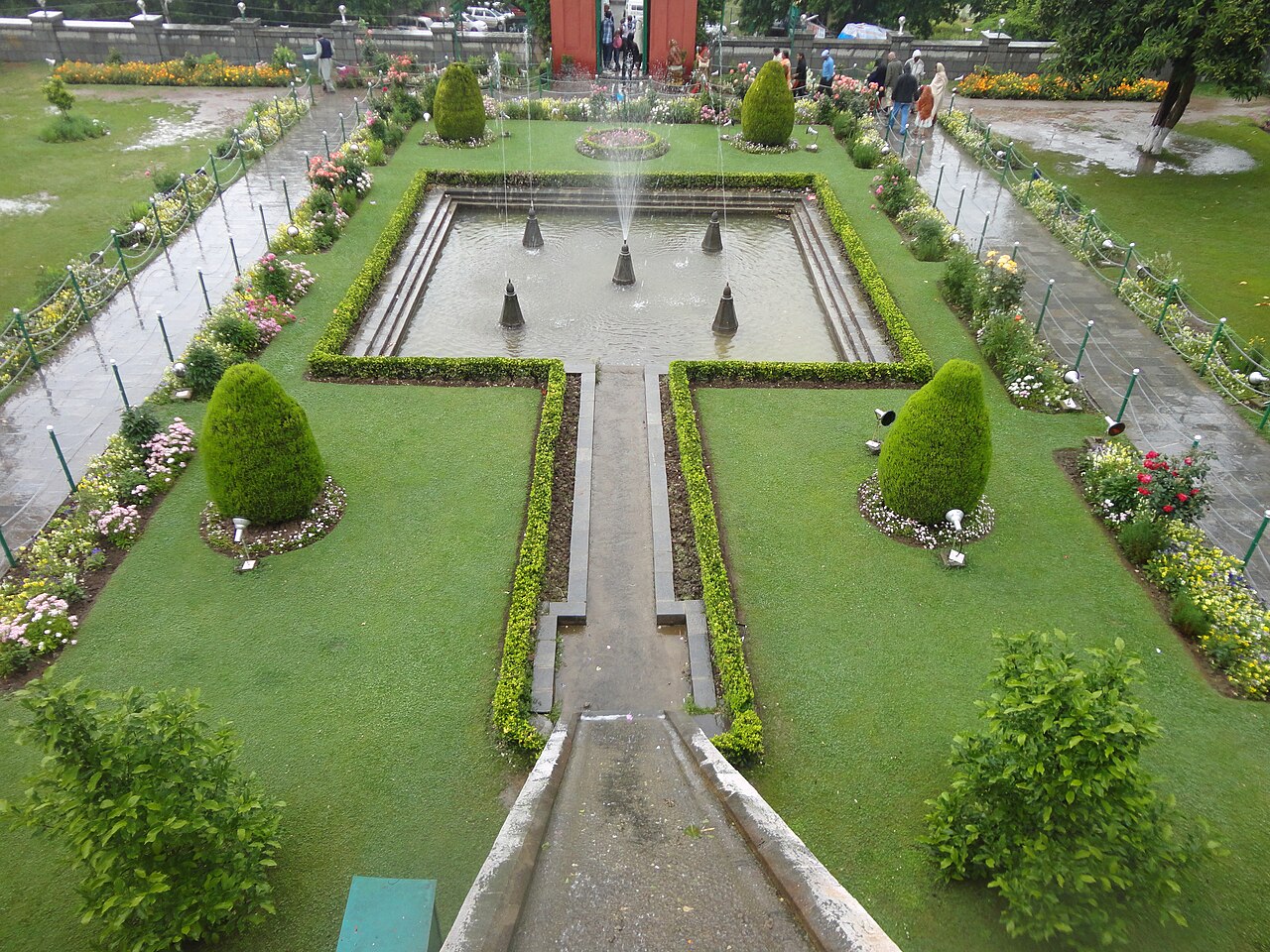
Nishat Bagh
Jardin · 3 km · about 10 min by road
 #1 in SrinagarEntrée gratuite
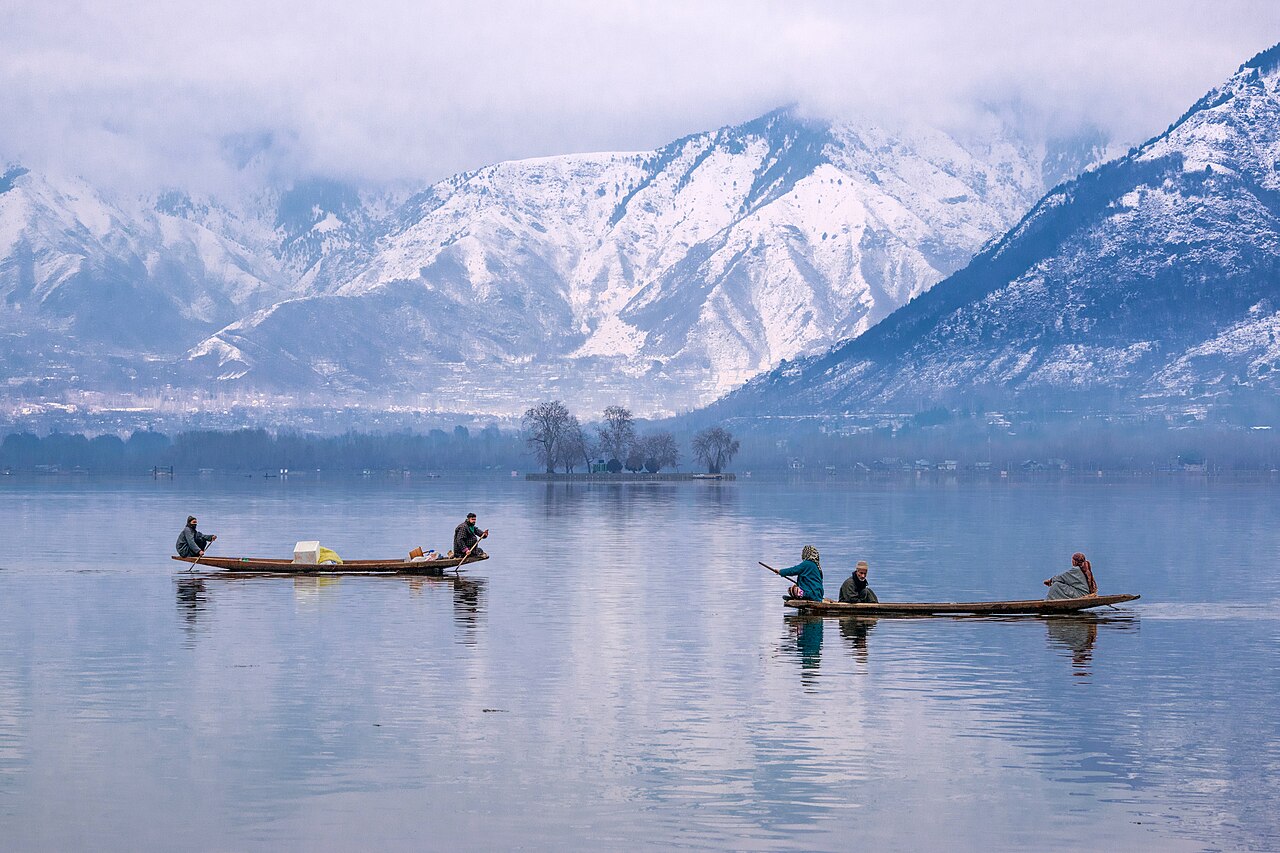
Dal Lake & Shikara Rides
Lac · 3 km · about 10 min by road
 #8 in Srinagar
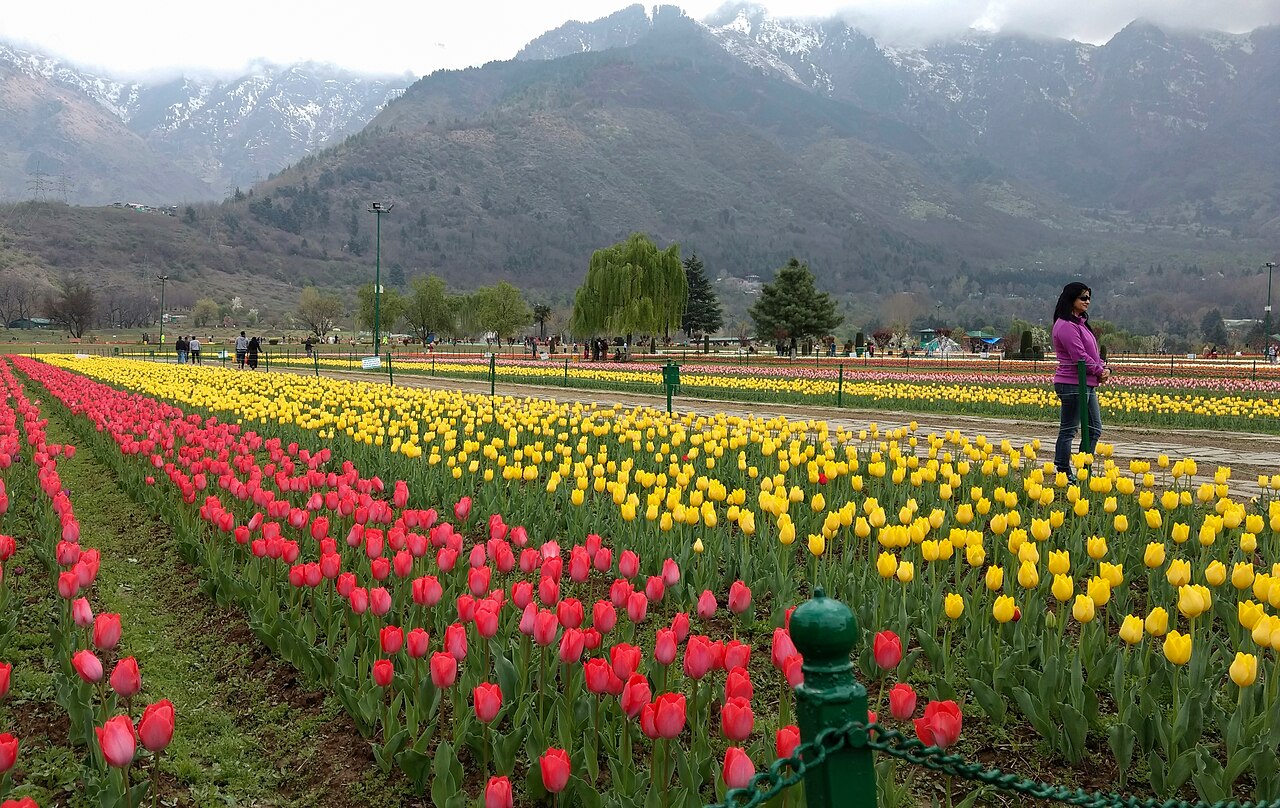
Indira Gandhi Memorial Tulip Garden
Mémorial · 5 km · about 15 min by road
 #6 in Srinagar
Chashme Shahi
Patrimoine · 7 km · about 20 min by road