
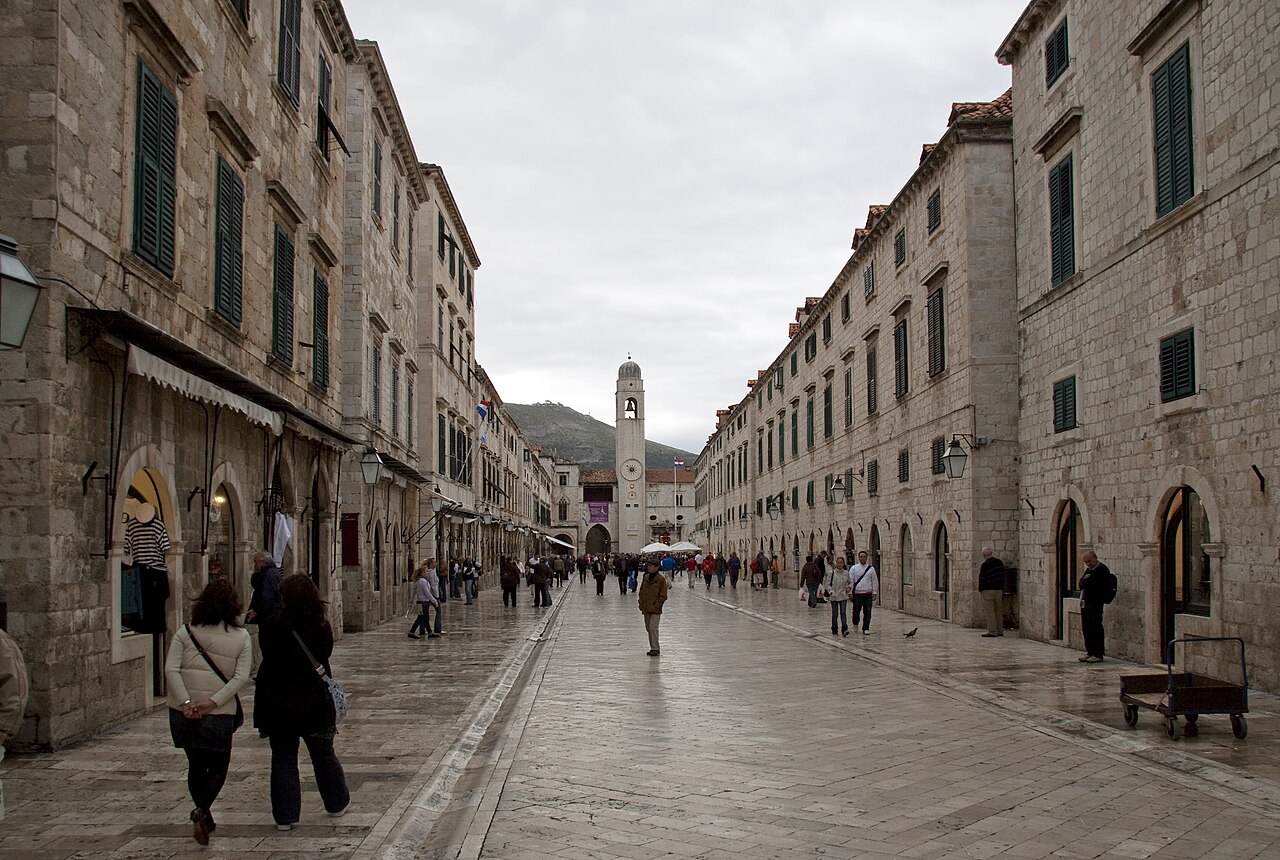
أماكن للزيارة في Croatia
A crescent of Adriatic coast, more than a thousand islands and Venetian-Habsburg walled towns, now inside both the Schengen Area and the eurozone since 2023.
Photo: Tony Hisgett from Birmingham, UK / Wikimedia Commons, CC BY 2.0
Croatia has two distinct climates: a Mediterranean coast and islands with hot dry summers (July and August highs commonly 28-32°C, sea temperatures near 25°C) and mild wet winters, and a continental interior around Zagreb with cold winters and warm summers. The euro replaced the kuna on 1 January 2023, so prices are in EUR and cash is still common in small konobas and on ferries, though cards are widely accepted in cities. The coast is served by the Jadrolinija ferry network and, since the Pelješac Bridge opened in 2022, the drive between Split and Dubrovnik no longer crosses the short Bosnian coastline at Neum. July and August bring the heaviest crowds and prices, and Dubrovnik, Split and Hvar are the most congested; May, June, September and early October offer warm sea and thinner crowds. Many island ferries and restaurants shut between November and March. Tipping is not compulsory, but rounding up or leaving about 10 percent for good restaurant service is normal, and service charges are not usually added automatically. Churches and monasteries expect covered shoulders and knees, and walking through town in swimwear can attract a fine in places such as Dubrovnik and Split.
العاصمة
Zagreb
العملة
Euro (EUR, €)
المنطقة الزمنية
CET/CEST (UTC+1/+2)
رمز الاتصال
+385
أفضل الأشهر
May – Jun, Sep – Oct
التأشيرة والدخول
Schengen Area member since 1 January 2023, so there are no routine passport checks at land borders with Slovenia and Hungary. EU/EEA/Swiss citizens need no visa. Many other nationalities (US, UK, Canada, Australia, Japan) can enter visa-free for up to 90 days in any 180-day period under the Schengen short-stay rule; the EU Entry/Exit System has been rolling out biometric registration at external borders since October 2025, and ETIAS pre-travel authorisation is scheduled for late 2026 - verify current requirements before travel. Other nationalities require a Schengen visa. Day trips from Dubrovnik to Bosnia and Herzegovina (Mostar) or Montenegro (Kotor) cross non-Schengen borders, so carry a passport and allow border queues.
من أين تبدأ في Croatia
المكان الأول ترتيبًا في كل دليل من أدلة مدننا.