Rumtek Monastery
#2من أصل 7 مكانًا للزيارة في GangtokGangtok, Sikkim
يُعرف أيضًا باسم Dharma Chakra Centre · Rumtek Dharma Chakra Centre
إجابة سريعة
ساعات العمل: 06:00–18:00. الدخول مجاني. خصّص 1.5 hrs. أفضل وقت: 07:30 – 09:30.
آخر تحديث · أعدّه Traveliac، بمساعدة الذكاء الاصطناعي · 5 دقيقة قراءة
- ساعات العمل
- 06:00–18:00
- 06:00 – 18:00 daily; the main shrine hall closes to visitors during the 15:00 monks' prayer session, typically 45–60 minutes.
- رسوم الدخول
- مجاني
- الوقت اللازم
- 1.5 hrs
- أفضل وقت في اليوم
- 07:30 – 09:30
- أفضل الأشهر
- Mar – May, Oct – Dec
- العنوان
- Rumtek, East Sikkim 737135, 24 km southwest of Gangtok via the Ranipool–Rumtek road
عن Rumtek Monastery
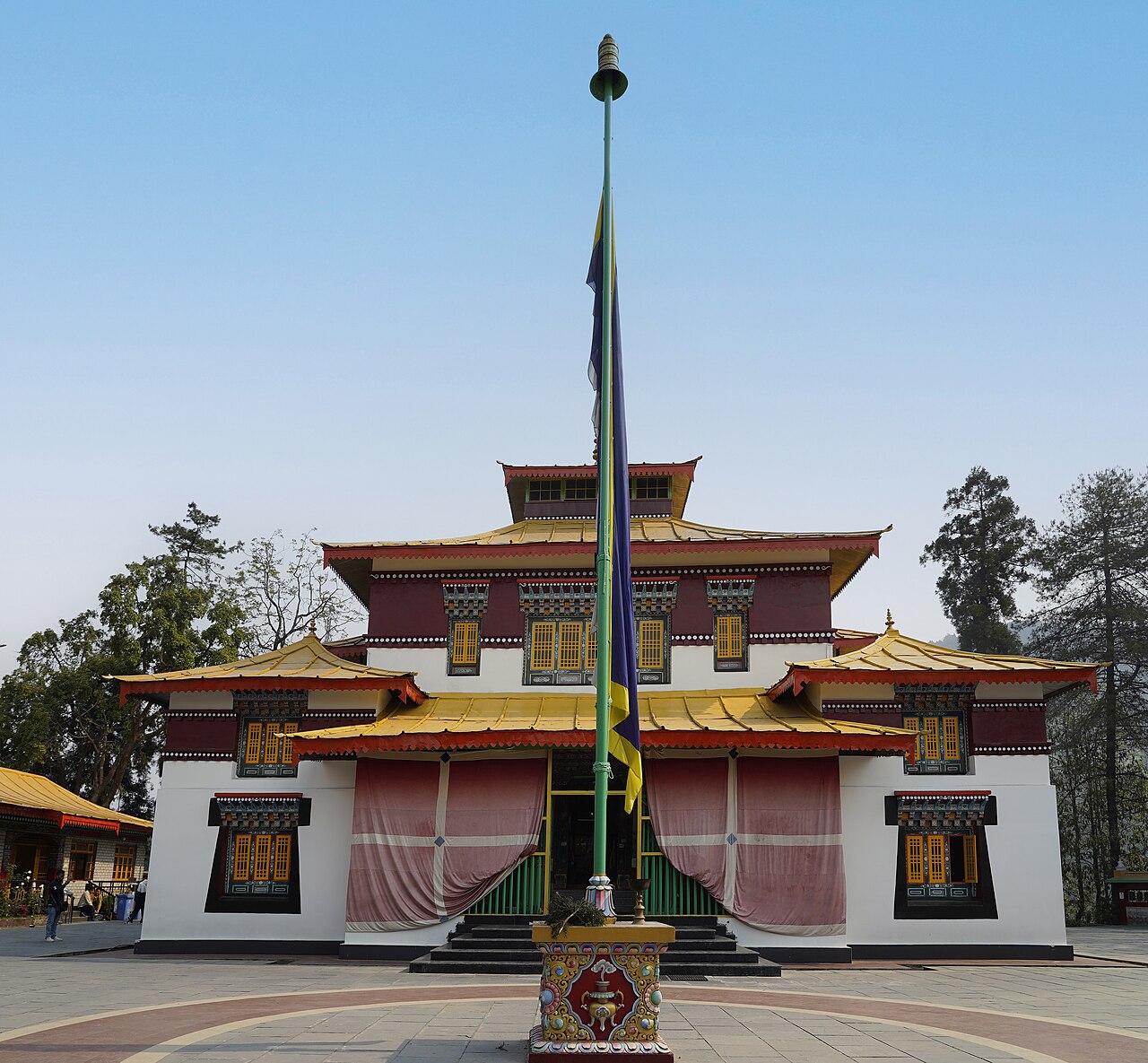
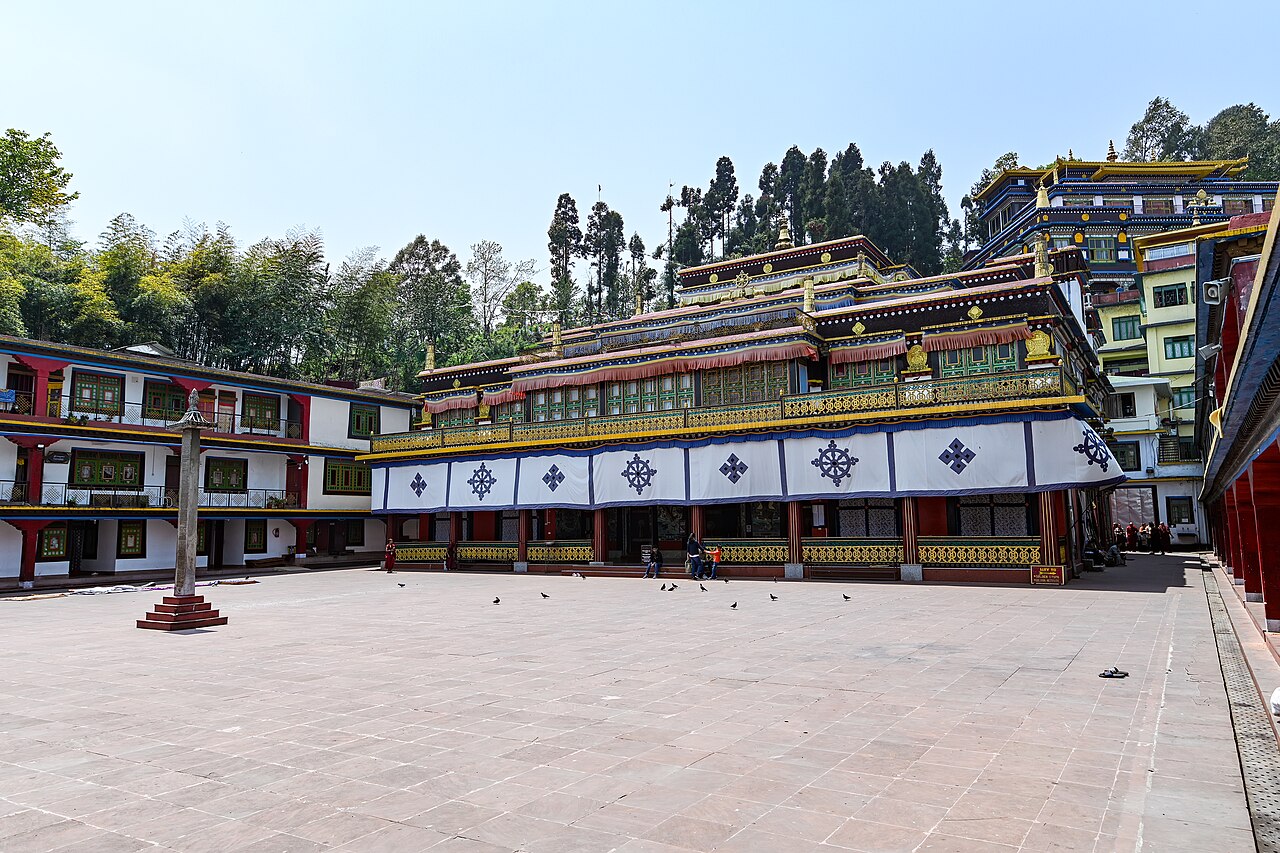
Rumtek is the largest monastery in Sikkim and the seat-in-exile of the Karma Kagyu lineage, one of the four principal schools of Tibetan Buddhism. The gold-roofed shrine hall, the golden reliquary stupa behind it, and the working monastic college on the upper terrace were all built between 1960 and 1966 by monks who had walked out of Tibet a year earlier with almost nothing. The result reads less like a heritage monument and more like a functioning transplant: the layout, proportions, and even the site's compass orientation were deliberately copied from Tsurphu Monastery, the Karmapas' original seat north of Lhasa, so that ritual continuity would not be broken by geography.
أفضل وقت في اليوم: 07:30 – 09:30. Before tour buses from Gangtok arrive and while morning puja chanting is audible from the main hall courtyard.
التصوير
₹10 رسوم الكاميرا
مواعيد Rumtek Monastery
- ساعات العمل
- 06:00–18:00
Mon–Sun 06:00–18:00 - 06:00 – 18:00 daily; the main shrine hall closes to visitors during the 15:00 monks' prayer session, typically 45–60 minutes.
- يُغلق يوم
- مفتوح كل يوم
من المفيد معرفته: Access can be tightened without notice around Losar (Tibetan New Year, February) and during the pre-Losar Kagyed masked-dance rehearsals, when courtyard areas are reserved for monks.
تم جمع ساعات العمل من sikkimtourism.gov.in والسجلات العامة، وآخر تحديث في . قد تتغيّر دون إشعار مسبق — تأكد منها قبل السفر. كيف نكتب هذه الأدلة
سعر تذكرة Rumtek Monastery
| التذكرة | السعر |
|---|---|
| الزوار الهنود | مجاني |
| الزوار الأجانب | مجاني |
| الأطفال | مجاني |
| الكاميرا | ₹10 |
Entry to the monastery courtyard and main shrine hall is free. A ₹10 still-camera fee is collected at the gate desk; video cameras and tripods are charged separately and are frequently disallowed inside the main prayer hall during active rituals. Passport or government ID is checked at the outer security gate, since the complex sits under continuous armed police presence due to the unresolved Karmapa succession dispute (see Rules & Etiquette).
تم جمع الأسعار من sikkimtourism.gov.in والسجلات العامة، وآخر تحديث في . قد تتغيّر دون إشعار مسبق — تأكد منها قبل السفر. كيف نكتب هذه الأدلة
أفضل وقت لزيارة Rumtek Monastery
- Quiet
- Moderate
- Busy
06:00 – 08:00
Morning PrayerBest time to go
Monks' chanting audible from the courtyard. Almost no tourist presence. Best light on the gold roof finials.
Quiet08:00 – 11:30
Day-Tour Arrival
Gangtok taxi and tour-bus circuits converge here as the first major stop of full-day East Sikkim itineraries. Courtyard and shrine-hall entrance congested.
Busy11:30 – 15:00
Midday Lull
Some groups move on to lunch in Ranipool. Main hall briefly closed around 15:00 for the monks' afternoon prayer session.
Moderate15:00 – 18:00
Late Afternoon
Crowds thin markedly. Good period for unhurried viewing of the golden stupa chamber, though some inner areas may already be closed for the evening.
Quiet
تاريخ Rumtek Monastery
A monastery first stood at Rumtek in 1740, built by the 9th Karmapa, Wangchuk Dorje, with the patronage of Sikkim's fourth Chogyal, Gyurmed Namgyal, and it functioned for two centuries as the country seat of the Karma Kagyu tradition in Sikkim. By the mid-20th century it had fallen into disrepair. Everything changed in 1959, when the 16th Karmapa, Rangjung Rigpe Dorje, crossed into Sikkim as a refugee from Tibet along with several hundred monks fleeing the Chinese occupation. Offered a choice of sites by the Sikkimese monarchy, he chose to rebuild at the ruined Rumtek site specifically, judging its geomantic qualities to be closest to Tsurphu's. Construction ran from 1960 to 1966, funded partly by the Chogyal's government and partly by international Buddhist patrons, and the complex was consecrated in 1966 as the new seat-in-exile of the Karma Kagyu lineage — a designation that made it, for a generation, the most important Kagyu institution outside Tibet.
The 16th Karmapa died in 1981, and the unresolved question of his recognised successor has shaped Rumtek's recent history as much as its founding did. Two principal claimants to the title of 17th Karmapa emerged in the 1990s — Ogyen Trinley Dorje, recognised by the Dalai Lama and enthroned at Tsurphu before later relocating to India, and Trinley Thaye Dorje, recognised by a separate faction of senior Kagyu lamas — and the resulting dispute over which candidate holds legitimate claim to Rumtek's seat led to prolonged litigation, a 2011 arms-smuggling scare that triggered a major security search of the complex, and the continuing presence of Indian paramilitary personnel at the gate. Visitors today are not caught up in any of this directly, but the checkpoints and the occasional closed wing are its visible residue.
القواعد والآداب في Rumtek Monastery
Security screening at the outer gate is thorough and non-negotiable: bags are hand-searched, metal detectors are in use, and photo ID is logged. Inside, footwear comes off before entering the main shrine hall, and photography of the seated monks during active chanting sessions is generally prohibited — ask the attending monk rather than assume. The golden reliquary stupa housing relics of the 16th Karmapa sits in a separate chamber behind the main hall; circumambulate it clockwise, in keeping with Tibetan Buddhist convention, and lower your voice, as it remains an active site of pilgrimage rather than a museum piece.
The upper floors house the Nalanda Institute for Higher Buddhist Studies, a working monastic college, and these areas are closed to general visitors. Loud conversation, shorts, and sleeveless tops are discouraged throughout the complex; a shawl or scarf is useful if you arrive under-dressed, and none is issued at the gate.
نصائح لزيارة Rumtek Monastery
- 1
Combine the visit with the Old Rumtek Monastery, a short walk uphill from the new complex and far less visited — it holds the original, much smaller 18th-century structure and gives useful visual contrast to how modest the site was before 1960. A local guide at the gate (unofficial but generally reliable, ₹200–₹300 for the full complex) will point out details easy to miss, including the wall murals depicting the Sixteen Arhats and the Wheel of Life painted by monks trained in the traditional Tsurphu style.
- 2
Time the trip for early morning if you want to hear the chanting; by late morning, Gangtok-based day-tour groups arrive in volume and the courtyard's contemplative character disappears for an hour or two. The narrow approach road through Ranipool can back up behind slow trucks, so budget the full hour each way rather than the 45 minutes GPS estimates suggest.
كيفية الوصول إلى Rumtek Monastery
لم نحدّد بعد الموقع الدقيق لـRumtek Monastery على الخريطة؛ تعرض الخريطة الأماكن الأخرى في دليل Gangtok. استخدم العنوان أدناه أو رابط الاتجاهات.
Rumtek, East Sikkim 737135, 24 km southwest of Gangtok via the Ranipool–Rumtek roadالاتجاهات في خرائط Google
من Gangtok (MG Marg / SNT Bus Stand)
₹800–₹1,00024 km · 50–70 min
Private taxi round-trip with waiting time (standard Gangtok fixed-taxi rate). Shared jeeps from the Deorali stand cost ₹100–₹150 one-way but run infrequently and only fill up by mid-morning.
من Bagdogra Airport (IXB)
₹3,500–₹4,500145 km · 4.5–5.5 hours
For a private car direct to Rumtek, bypassing central Gangtok; shared Sumo/jeep to Gangtok (₹250–₹350 per seat) then a taxi onward is the budget route.
من New Jalpaiguri (NJP) Railway Station
145 km · 4.5–5.5 hours
Same road route as Bagdogra Airport since both sit close together; shared Sumo to Gangtok ₹250–₹350 per seat, private car ₹3,500–₹4,500.
أقرب مطار
من Pakyong Airport (PYG)
approximately 40 km, 1.5–2 hours; flights are limited and weather-dependent. Bagdogra Airport (IXB) – approximately 145 km, 4.5–5.5 hours, the more reliable year-round gateway.
أقرب محطة قطار
من New Jalpaiguri (NJP)
approximately 145 km, 4.5–5.5 hours by road. Sikkim has no railway line of its own; NJP in West Bengal is the terminus for all rail travel to the state.
الأسئلة الشائعة عن Rumtek Monastery
Is Rumtek Monastery the original seat of the Karmapa, or a rebuilt one?
It is a deliberate 1960–1966 reconstruction. The 16th Karmapa fled Tibet in 1959 and chose the site of a much older, 1740-era Rumtek monastery — by then in ruins — to rebuild as the Karma Kagyu lineage's seat-in-exile, modelling the new complex on Tsurphu Monastery, the original seat near Lhasa.
Why is there a heavy security presence at Rumtek?
Since the 16th Karmapa's death in 1981, two candidates have been recognised by different factions of senior lamas as his successor, and the resulting dispute over legitimate claim to Rumtek's seat has involved litigation and, in 2011, a security search after an arms cache was reported. Indian paramilitary personnel remain posted at the gate as a result, though this does not affect ordinary visitor access.
Can you take photographs inside the monastery?
A ₹10 still-camera fee applies at the entrance. Photography during active chanting sessions inside the main shrine hall is generally discouraged and sometimes prohibited outright — check with the attending monk before shooting. The golden reliquary stupa chamber and courtyard exteriors are normally fine to photograph.
How far is Rumtek from Gangtok and how long does the trip take?
Rumtek is 24 km from central Gangtok via the Ranipool road, and the drive typically takes 50–70 minutes each way depending on traffic through Ranipool. A private taxi round-trip with waiting time costs approximately ₹800–₹1,000.
أُعدّ بمساعدة الذكاء الاصطناعي من مصادر رسمية وسجلات عامة، ونُشر فقط بعد عمليات التحقق الموضحة في كيف نكتب هذه الأدلة. لم يزر أحد من فريق Traveliac هذا المكان شخصيًا. آخر تحديث في . كيف نصنّف الأماكن ونتحقق منها