
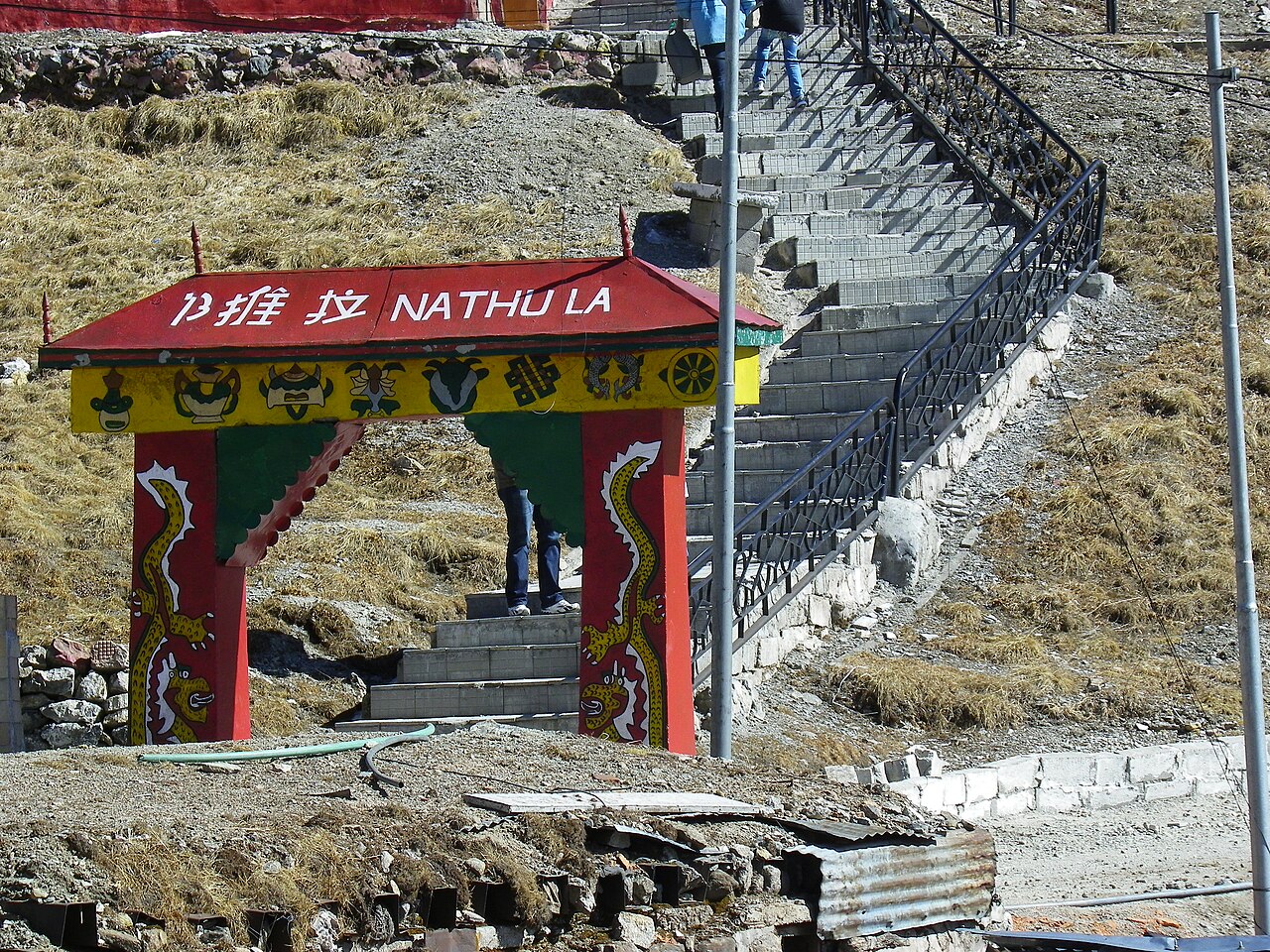
Nathu La Pass
#3of 7 places to visit in GangtokGangtok, Sikkim
Also known as Nathula · Nathu-La
Quick answer
Opening hours: 08:00–15:00, closed Mondays and Tuesdays. Entry is free. Allow 45 min. Best time: 09:00 – 11:00.
Updated · Compiled by Traveliac, AI-assisted · 5 min read
- Opening hours
- 08:00–15:00
- Closed Mondays and Tuesdays
- Entry fee
- Free
- Time needed
- 45 min
- Best time of day
- 09:00 – 11:00
- Best months
- Mar – May, Oct – Dec
- Address
- Nathu La, Indo-China border, East Sikkim, approximately 56 km from Gangtok via NH717A
About Nathu La Pass
Nathu La sits at 4,310 metres on the actual, marked India-China border, a saddle in the ridge where a low concrete wall, a scattering of boundary pillars, and facing sentries from the Indian Army and the People's Liberation Army stand within conversational distance of each other. It is one of only a handful of points anywhere on the 3,488-kilometre India-China frontier where civilians can stand and look directly across at the other country's soldiers, and the reaction it produces in most visitors is quieter than the itinerary promises — less a photo opportunity than a slightly startling encounter with how narrow and literal a national border actually is at altitude.
Best time of day: 09:00 – 11:00. Arriving as early as the permit convoy and single-file road control allow, since cloud typically closes in over the pass by early afternoon and obscures the border-marker view entirely.
Nathu La Pass timings
Nathu La Pass opens at 08:00 and closes at 15:00. Those hours hold on Saturday and Sunday too.
- Opening hours
- 08:00–15:00
Mon–Tue Closed Wed–Sun 08:00–15:00 - 08:00 – 15:00 on open days, though the pass frequently closes earlier if weather deteriorates or military movement requires the road to be cleared.
- Closed on
- Monday, Tuesday
Good to know: Closed to tourist visits on Mondays and Tuesdays year-round. The pass shuts entirely for extended periods from November through April due to heavy snowfall, and can close without notice at any time of year following fresh snow, landslide, or fog that drops visibility below safe driving limits. Confirm status with your travel agent the evening before, since conditions change day to day.
Opening hours compiled from sikkimtourism.gov.in and public records, last updated . They change without notice — confirm before you travel. How we write these guides
Nathu La Pass ticket price
| Ticket | Price |
|---|---|
| Indian visitors | Free |
| Foreign visitors | Free |
| Children | Free |
| Camera | Free |
There is no separate ticketed entry fee, but the Protected Area Permit — arranged in advance through a registered travel agent, not sold at the pass — is mandatory and functions as the effective cost of entry, typically bundled into a day-tour package priced ₹2,500–₹3,500 per vehicle. Nathu La is currently open to Indian nationals only; foreign passport holders are not permitted beyond Tsomgo Lake / Baba Mandir on this route.
Prices compiled from sikkimtourism.gov.in and public records, last updated . They change without notice — confirm before you travel. How we write these guides
Best time to visit Nathu La Pass
- Quiet
- Moderate
- Very busy
06:00 – 08:00
Departure & CheckpointBest time to go
Convoys assemble in Gangtok and clear the Ranipool Inner Line checkpoint. No visitors at the pass itself yet.
Quiet09:00 – 11:30
Convoy Arrival Peak
Bulk of the day's permit-holders reach the pass in this window after the single-file road control releases the morning convoy. Viewing point and car park at capacity.
Very busy11:30 – 13:00
Weather Turn
Cloud frequently rolls in over the ridge by midday, reducing visibility at the border marker. Some convoys are held or turned back at this stage on marginal-weather days.
Moderate13:00 onward
Return Convoy
Single-file road control switches to downhill flow; the pass itself empties as vehicles are released for the return leg to Gangtok, targeting arrival before dark.
Quiet
History of Nathu La Pass
Nathu La — the name translates roughly as 'listening ears pass', per local usage — was for centuries a working corridor of the southern Silk Road, carrying wool, raw silk, salt, and Indian tea and textiles between Lhasa and the Bengal plains via the Chumbi Valley and Kalimpong. Trader caravans and Buddhist pilgrims used the route long before it acquired any military significance, and its relatively gentle gradient (by Himalayan standards) made it one of the more heavily trafficked of the historic Tibet-facing passes.
That changed after the 1962 Sino-Indian war, when the pass was sealed to all civilian and trade movement and became instead a heavily militarised, closed frontier for 44 years. China's formal acknowledgment of Sikkim as Indian territory in 2003 — resolving a sovereignty question that had shadowed the border since 1975 — cleared the diplomatic path for a bilateral agreement, and border trade resumed on 6 July 2006, the first reopening of any Sino-Indian trading post since the war. Limited trade in items including wool, yak tails, and Tibetan carpets from the Chinese side, and rice, tea, and manufactured goods from India, ran on this route on fixed summer-season trading days. Cross-border trade and civilian movement through the pass have been intermittently suspended since 2020 amid broader deterioration in India-China border relations following clashes elsewhere on the frontier; the tourist viewing programme for Indian nationals, which is administratively separate from the trade mechanism, has continued on a similar permit basis, though travellers should confirm current operational status with their agent, since this is a live security situation rather than a fixed policy.
Rules & etiquette at Nathu La Pass
The road from Gangtok to Nathu La narrows to a single carriageway for long stretches above Tsomgo Lake, and the Army enforces one-way convoy control — vehicles move up in the morning and are held, sometimes for 30–45 minutes at a stretch, to let the returning convoy pass in the other direction. Build at least this delay into any schedule; it is routine, not exceptional.
Photography at the border line itself is restricted to designated points marked by the Army; do not photograph sentries, bunkers, or installations outside these points, and follow instructions from Army personnel immediately and without argument — this is an active military border, not a monument. Only Indian nationals currently receive permits for Nathu La itself; foreign passport holders travelling with a mixed group should confirm before departure that they will need to stop at Tsomgo Lake or Baba Mandir while the rest of the party continues. Warm, windproof layers are not optional: wind chill at 4,310 metres regularly pushes the effective temperature well below freezing even when the valley floor is mild.
Tips for visiting Nathu La Pass
- 1
Nathu La is the last and highest stop on the standard Tsomgo Lake–Baba Mandir–Nathu La circuit, and by the time most convoys reach it, altitude fatigue from the day's steady climb is already noticeable — walk deliberately slowly from the car park to the viewing point, which sits at a further short but genuinely breathless uphill stretch. Baba Mandir, a shrine to Indian Army soldier Harbhajan Singh who died near here in 1962 and is venerated by troops as a protective spirit, sits just below the pass and is worth the short stop it requires.
- 2
Oxygen cylinders are available for rent from stalls near the car park (₹100–₹200) and are a reasonable precaution rather than an overcautious one for visitors unused to altitude. Because Monday and Tuesday closures are fixed and weather closures are unpredictable, build a buffer day into any Gangtok itinerary that specifically prioritises Nathu La — travellers who allocate only a single day sometimes arrive to find the pass closed with no recourse.
How to reach Nathu La Pass
The red star is Nathu La Pass; the numbered pins are the 1 nearest places in our guides, each showing its rank in its city. Tap a pin for details.
Nathu La, Indo-China border, East Sikkim, approximately 56 km from Gangtok via NH717ADirections in Google Maps
From Gangtok (MG Marg / SNT Bus Stand)
₹2,500–₹3,50056 km · 2.5–3.5 hours each way including convoy holds
For the combined Tsomgo Lake–Baba Mandir–Nathu La day package per vehicle (4–5 passengers), arranged through a registered agent who files the permit.
From Bagdogra Airport (IXB)
₹4,000–₹5,500180 km · 6–7 hours to Gangtok, with the Nathu La excursion requiring a separate day
Private car to Gangtok; Nathu La permit and vehicle must be booked in Gangtok at least a day ahead.
Nearest airport
From Pakyong Airport (PYG)
approximately 90 km, 3.5–4 hours; small, weather-dependent flight schedule. Bagdogra Airport (IXB) – approximately 180 km, 6–7 hours, the reliable year-round gateway.
Nearest railway station
From New Jalpaiguri (NJP)
approximately 180 km, 6–7 hours by road. Sikkim has no railway of its own; NJP is the nearest broad-gauge terminus for all onward rail travel.
Nathu La Pass FAQs
Can foreign nationals visit Nathu La Pass?
Currently, no. Only Indian nationals receive permits for Nathu La itself. Foreign passport holders travelling on the same East Sikkim circuit are typically routed to stop at Tsomgo Lake or Baba Mandir instead, while the rest of a mixed group continues to the pass.
Which days is Nathu La closed?
The pass is closed to tourist visits every Monday and Tuesday, year-round, in addition to closures for heavy snowfall (common November–April) and any day when weather, fog, or security conditions make the road unsafe. Confirm the day's status with your travel agent the evening before.
Why is Nathu La significant beyond being a viewpoint?
It sits on the actual, marked India-China border, one of the few points on the entire frontier where the two countries' soldiers stand facing each other within a civilian visitor's view. Historically it was a Silk Road trading corridor, sealed after the 1962 war, and reopened for limited bilateral trade in July 2006 — the first India-China trading post reopening since that war.
Why does the journey to Nathu La take so long for a relatively short distance?
The road above Tsomgo Lake narrows to single-file traffic for long stretches, and the Army enforces convoy control — vehicles travelling up are held for 30–45 minutes at a time to let the returning convoy pass safely. Combined with altitude and checkpoint processing, the 56 km from Gangtok routinely takes 2.5–3.5 hours each way.
Compiled with AI assistance from official sources and public records, and published only after the checks in How we write these guides. Nobody from Traveliac has visited this place. Last updated . How we rank and check places
Places to visit near Nathu La Pass
Straight-line distances from our map; times are estimates.
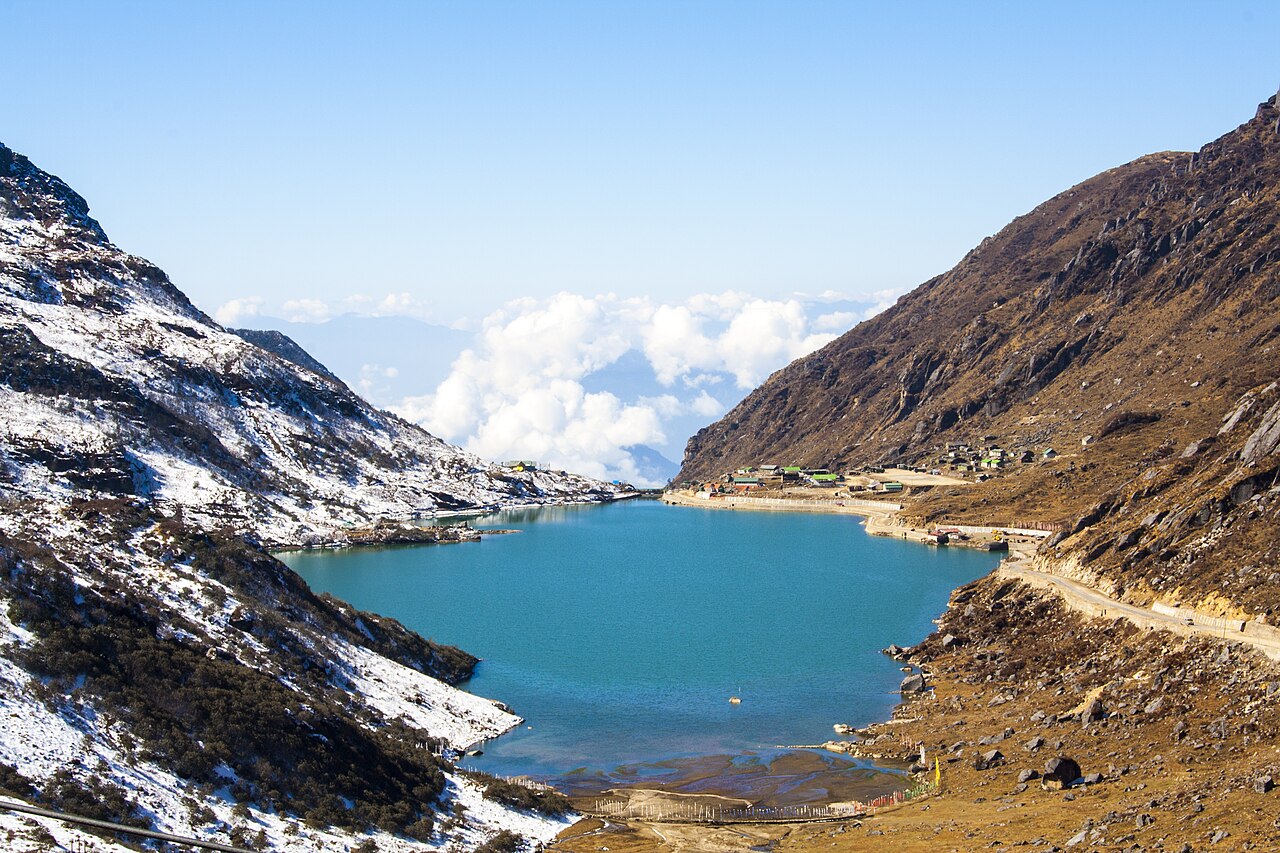 #1 in GangtokFree entry
Tsomgo Lake
Lake · 7 km · about 20 min by road
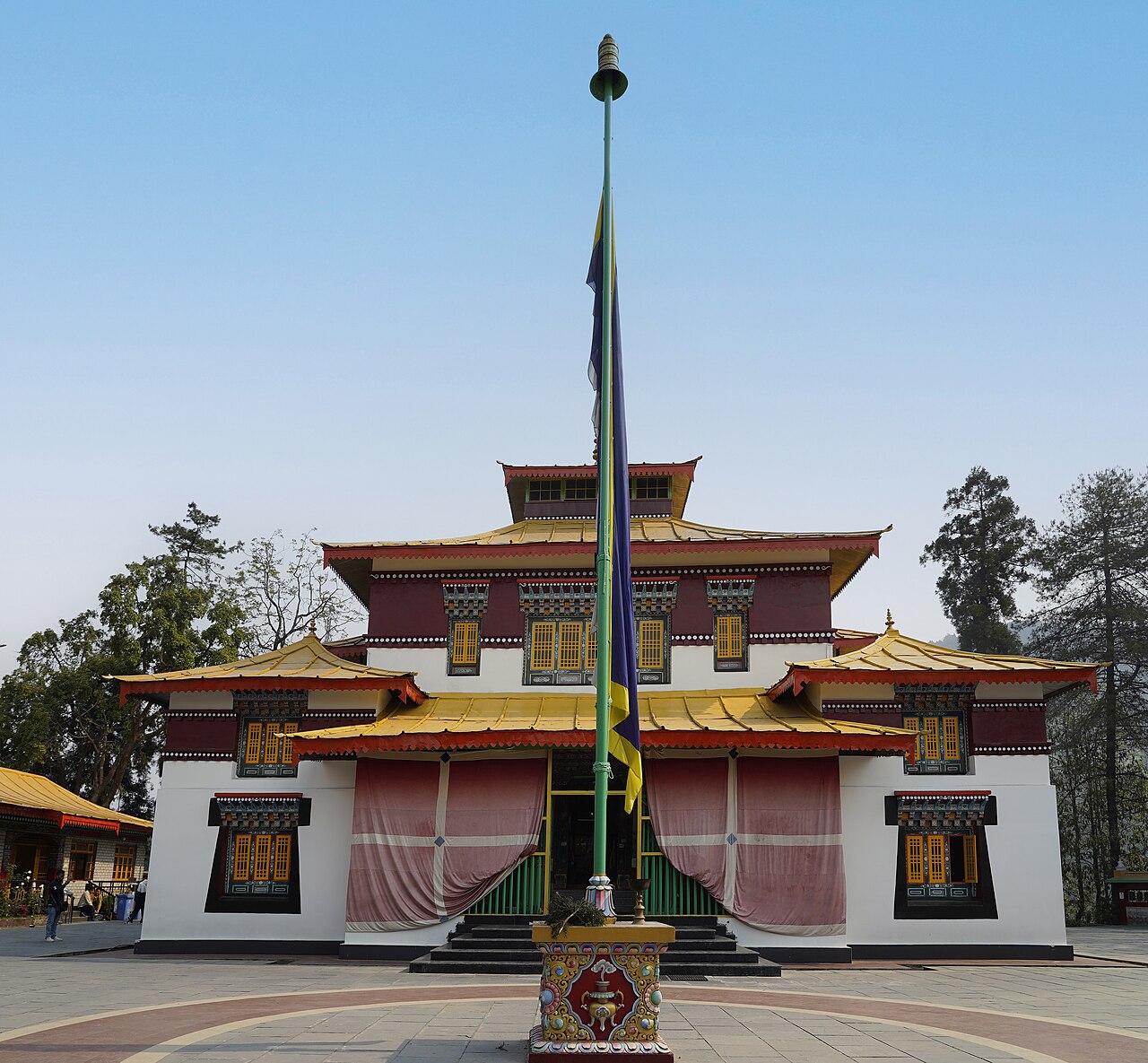 #5 in GangtokFree entry
Enchey Monastery
Monastery · 22 km · about 70 min by road
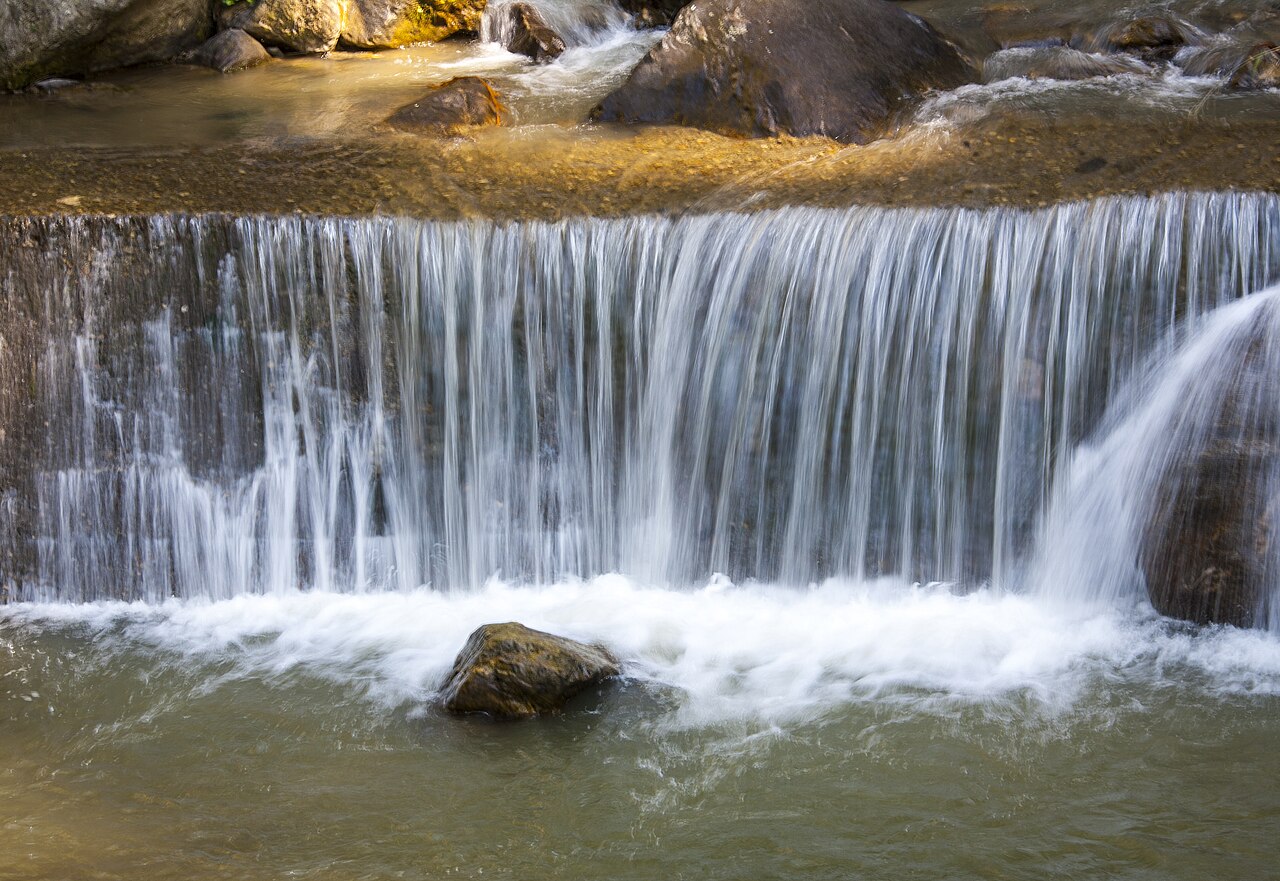 #7 in Gangtok
Banjhakri Falls & Energy Park
Waterfall · 23 km · about 70 min by road
 #4 in Gangtok
Namgyal Institute of Tibetology
Museum · 24 km · about 75 min by road