
Sabarmati Riverfront
#7de 10 lugares para visitar en AhmedabadAhmedabad, Gujarat
También conocido como Sabarmati River Front Development · SRFD · Atal Bridge Promenade
Respuesta rápida
Horario: 05:30–22:30 and 08:00–20:00. La entrada es gratuita. Calcula 1.5 hrs. Mejor momento: 17:30–20:00 or 06:00–08:00.
Actualizado el · Redactado por Traveliac, con ayuda de IA · 5 min de lectura
- Horario
- 05:30–20:00
- 05:30–22:30 daily for the open promenade and Atal Bridge; individual gardens within the riverfront (such as the flower park) typically run 08:00–20:00
- Precio de entrada
- Gratis
- Tiempo necesario
- 1.5 hrs
- Mejor momento del día
- 17:30–20:00 or 06:00–08:00
- Mejores meses
- Oct – Mar
- Dirección
- Along both banks of the Sabarmati River, Ahmedabad, Gujarat — principal access points near Gandhi Bridge, Nehru Bridge, and Atal Bridge
Sobre Sabarmati Riverfront
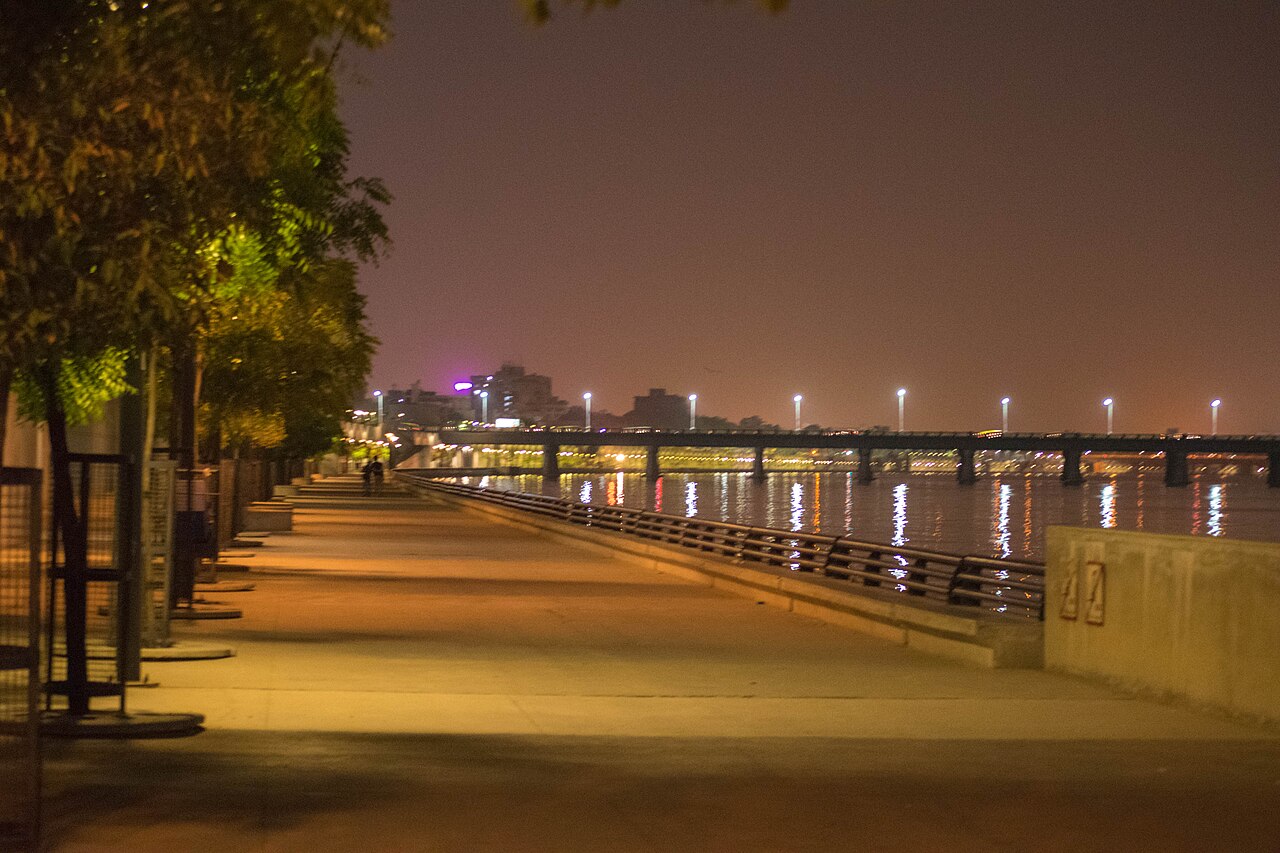
For most of the twentieth century, the stretch of the Sabarmati River running through central Ahmedabad was, for long dry-season months, closer to an exposed silt bed lined with informal settlements and untreated sewage outflows than a river in any conventional sense — a condition common to many Indian urban rivers before their monsoon-fed flow. The Sabarmati Riverfront Development Project, conceived in the 1960s but not substantially executed until the 2000s, reclaimed roughly 11.5 kilometres of both banks, containing the river within a narrower engineered channel and building a continuous public promenade, gardens, and event spaces along the reclaimed land on either side. Its most photographed single feature is the Atal Bridge — a pedestrian-only, cable-stayed bridge opened in 2022, its lattice-patterned canopy inspired by the geometry of a patang, the paper kite flown citywide during Ahmedabad's January Uttarayan festival — connecting the riverfront's eastern and western promenades a short walk from the old walled city.
Mejor momento del día: 17:30–20:00 or 06:00–08:00. When the Atal Bridge and riverside gardens are lit and the evening walking crowd is at its most characteristic. Early morning (06:00–08:00) suits joggers and cyclists using the dedicated riverside tracks before the day's heat and traffic build up.
Horario de Sabarmati Riverfront
- Horario
- 05:30–20:00
Mon–Sun 05:30–22:30 and 08:00–20:00 - 05:30–22:30 daily for the open promenade and Atal Bridge; individual gardens within the riverfront (such as the flower park) typically run 08:00–20:00
- Cierra los
- Abierto todos los días
Bueno saber: The riverbed and lower promenade sections are periodically closed during and immediately after heavy monsoon releases from the upstream Dharoi and Vasna dams, when water levels rise sharply. Confirm current access before a specific visit during July–September.
Horario recopilados de sabarmatiriverfront.com y registros públicos, última actualización el . Pueden cambiar sin previo aviso — confírmalos antes de viajar. Cómo escribimos estas guías
Precio de entrada de Sabarmati Riverfront
| Entrada | Precio |
|---|---|
| Visitantes indios | Free |
| Visitantes extranjeros | Free |
| Niños | Gratis |
| Cámara | Gratis |
The public promenade, gardens, and Atal Bridge are free to walk at any time. Certain event grounds and the flower park charge a small separate entry fee (roughly ₹20–₹50) during specific programming; river cruise boat rides, where operating, are ticketed separately at around ₹100–₹150 per person.
Precios recopilados de sabarmatiriverfront.com y registros públicos, última actualización el . Pueden cambiar sin previo aviso — confírmalos antes de viajar. Cómo escribimos estas guías
Mejor época para visitar Sabarmati Riverfront
- Quiet
- Moderate
- Busy
05:30–08:00
Morning exercise window
Joggers, cyclists, and walkers use the dedicated tracks before the day's heat and road traffic build up. A genuinely local rather than tourist-heavy crowd at this hour.
Moderate08:00–17:00
Daytime lullBest time to go
Open sections of the promenade see comparatively few visitors during peak daytime heat, particularly April–June. Gardens and shaded stretches remain in light use.
Quiet17:30–20:00
Sunset and evening promenade
The Atal Bridge and adjoining gardens fill with local families and photographers for sunset and the subsequent illumination. The single busiest window for the riverfront as a whole.
Busy20:00–22:30
Late evening wind-down
Crowds thin gradually after 20:30 but the bridge and main promenade stretches remain active until close, especially on weekends.
Moderate
Historia de Sabarmati Riverfront
Planning for a Sabarmati riverfront redevelopment dates to a 1960s concept by the French architect-planner Bernard Kohn, but the project remained largely theoretical for decades, constrained by the scale of resettlement required for informal riverbank settlements and the technical challenge of narrowing and stabilising the river channel through a dense city centre. Serious execution began in the early 2000s under the Sabarmati Riverfront Development Corporation Limited, a special-purpose entity set up jointly by the state government and the Ahmedabad Municipal Corporation, with construction proceeding in phases from roughly 2005 onward and continuing to expand in the years since.
The project's engineering core is a reclaimed and channelised riverbed: retaining walls were built along both banks, narrowing the river's effective width and creating flat, usable land on the reclaimed margins for the promenade, gardens, and event grounds that did not exist when the riverbed ran wide and unmanaged. This reclaimed land has since hosted major public events, including large sections of the annual Vibrant Gujarat investor summit programming and civic celebrations, and the riverfront's western bank sits close to the Narendra Modi Stadium at Motera, one of the world's largest cricket stadiums, which hosted the widely covered 2020 'Namaste Trump' civic reception.
The Atal Bridge, the riverfront's newest landmark, opened in August 2022 as a pedestrian-only crossing named for former prime minister Atal Bihari Vajpayee. Its perforated, multi-coloured canopy structure — engineered as a series of triangulated steel and fabric-clad sections — is illuminated after dark in changing colour sequences, and it has rapidly become one of the most photographed structures in the city, alongside the historic pols and stepwells that otherwise define Ahmedabad's built heritage.
Normas y etiqueta en Sabarmati Riverfront
The promenade is a genuinely public, heavily used civic space rather than a curated tourist attraction, and the etiquette that applies is largely the etiquette of any well-used Indian urban park: keep to the marked cycling and jogging lanes if using them at pace, since pedestrian and cycle traffic share the same paved surface in most stretches. Littering carries a municipal fine that is occasionally but not consistently enforced; bins are provided at regular intervals.
Swimming or wading into the river itself is neither encouraged nor practical given the engineered embankments, and is not advisable given variable water quality depending on upstream conditions. The Atal Bridge is pedestrian-only — cycles and motorised vehicles are prohibited on the bridge deck itself, with enforcement by stationed security personnel at both approach ramps.
As with the rest of Gujarat, the riverfront is subject to the state's alcohol prohibition; no alcohol is sold or permitted anywhere along the promenade, event grounds, or gardens.
Consejos para visitar Sabarmati Riverfront
- 1
The Atal Bridge is best experienced at two different times: at sunset, when the western sky is visible through its perforated canopy from the deck itself, and again after full dark, when the illumination sequence is the main draw. Both are free and take only 15–20 minutes to walk end to end, though the surrounding photography crowd on weekend evenings can slow that considerably.
- 2
The riverfront's flower park and several of its formal gardens charge a small separate entry fee and are more oriented toward local families than international visitors, but they provide a rare stretch of maintained green space in central Ahmedabad and are worth a stop if travelling with children.
- 3
The promenade runs close to several of the city's other key sites — Sabarmati Ashram sits directly on the western riverbank a short walk or auto-rickshaw ride north, and the walled city's Sidi Saiyyed Mosque and Jama Masjid are within a 15–20 minute auto-rickshaw ride east — making the riverfront a practical connective thread for a day that combines Gandhi heritage sites with the old city's Sultanate-era monuments.
- 4
Weekend evenings, particularly Saturday, draw the largest local crowds for a simple walk, and food carts cluster near the main bridge access points, though the formal food-stall culture here is less developed than at Kankaria Lake.
Cómo llegar a Sabarmati Riverfront
La estrella roja es Sabarmati Riverfront; los pines numerados son los 8 lugares más cercanos de nuestras guías, cada uno con su clasificación en su ciudad. Toca un pin para ver más detalles.
Along both banks of the Sabarmati River, Ahmedabad, Gujarat — principal access points near Gandhi Bridge, Nehru Bridge, and Atal BridgeCómo llegar en Google Maps
Desde Sardar Vallabhbhai Patel International Airport (AMD)
₹280–42012 km · 25–40 min
Desde Ahmedabad Junction Railway Station (ADI)
₹60–903 km · 15–20 min
Desde Sabarmati Ashram
2 km · 20–25 min
Free
Aeropuerto más cercano
Desde Sardar Vallabhbhai Patel International Airport, Ahmedabad (AMD)
approximately 12 km northwest
Estación de tren más cercana
Desde Ahmedabad Junction, Kalupur (ADI)
approximately 3 km east
Preguntas frecuentes sobre Sabarmati Riverfront
Is the Sabarmati Riverfront free to visit?
Yes, the open promenade, walking and cycling tracks, and the Atal Bridge are all free at any time. A small separate fee applies only to certain gardens, such as the flower park, and to ticketed activities like river cruise boat rides where these operate.
What is the Atal Bridge and why is it significant?
The Atal Bridge is a pedestrian-only cable-stayed bridge opened in August 2022, connecting the riverfront's eastern and western promenades. Its multi-coloured, triangulated canopy design is inspired by the patang, the paper kite flown across Ahmedabad during the January Uttarayan festival, and it is illuminated after dark. It is named for former prime minister Atal Bihari Vajpayee.
How does the Sabarmati Riverfront connect to Sabarmati Ashram?
Sabarmati Ashram sits directly on the western riverbank, a walkable distance (roughly 2 km, 20–25 minutes) north along the promenade from the Atal Bridge area, or a short auto-rickshaw ride. Combining both in one visit is a common and practical itinerary choice.
Can I swim in the Sabarmati River at the riverfront?
No. The river runs within engineered retaining walls at this stretch and swimming is neither encouraged nor practical. Water quality also varies depending on upstream conditions, particularly outside the monsoon season, and the riverfront is designed as a promenade and civic space rather than a recreational swimming area.
Redactado con ayuda de IA a partir de fuentes oficiales y registros públicos, y publicado solo tras las comprobaciones descritas en Cómo escribimos estas guías. Nadie de Traveliac ha visitado este lugar. Última actualización el . Cómo clasificamos y verificamos los lugares
Lugares para visitar cerca de Sabarmati Riverfront
Distancias en línea recta según nuestro mapa; los tiempos son estimados.
 #3 in AhmedabadEntrada gratuita
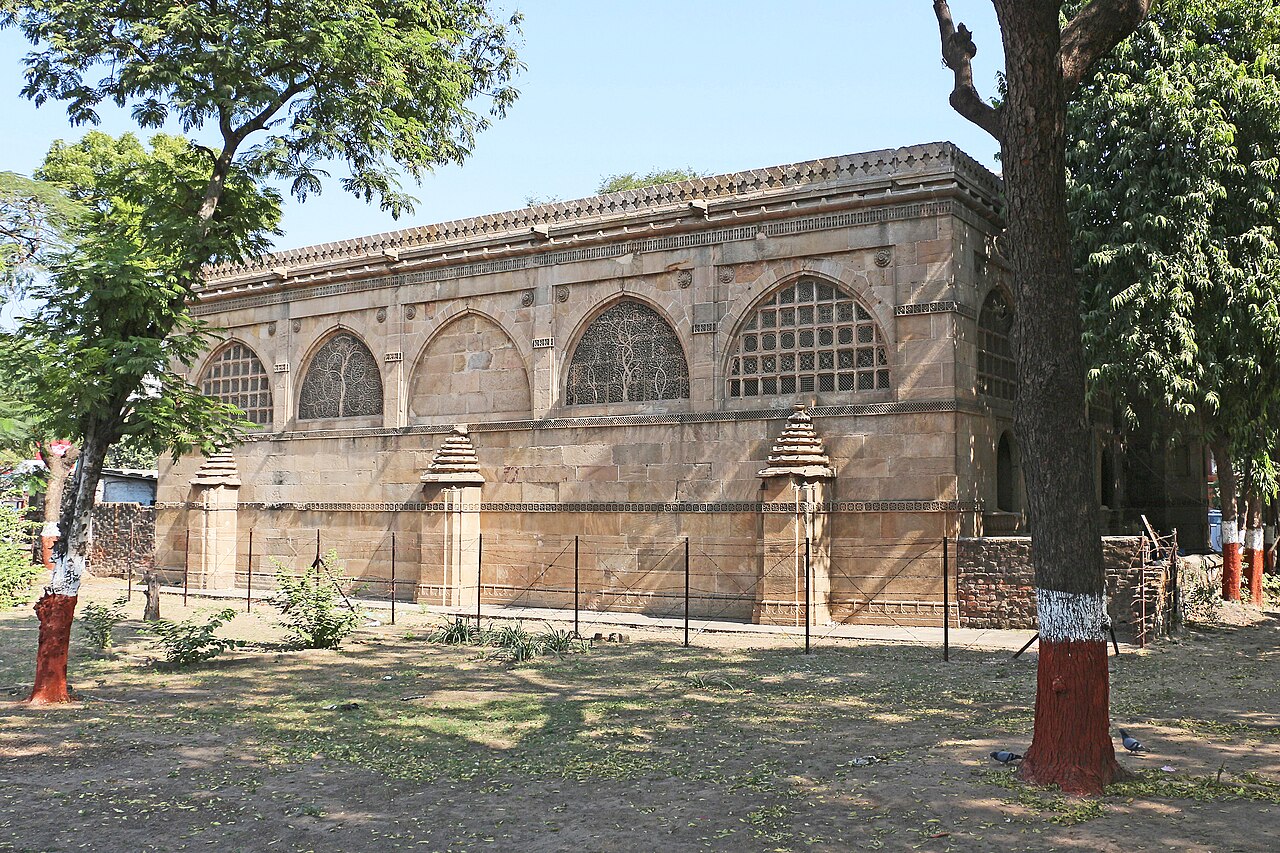
Sidi Saiyyed Mosque
Mezquita · 1.2 km · about 20 min walk
 #4 in AhmedabadEntrada gratuita
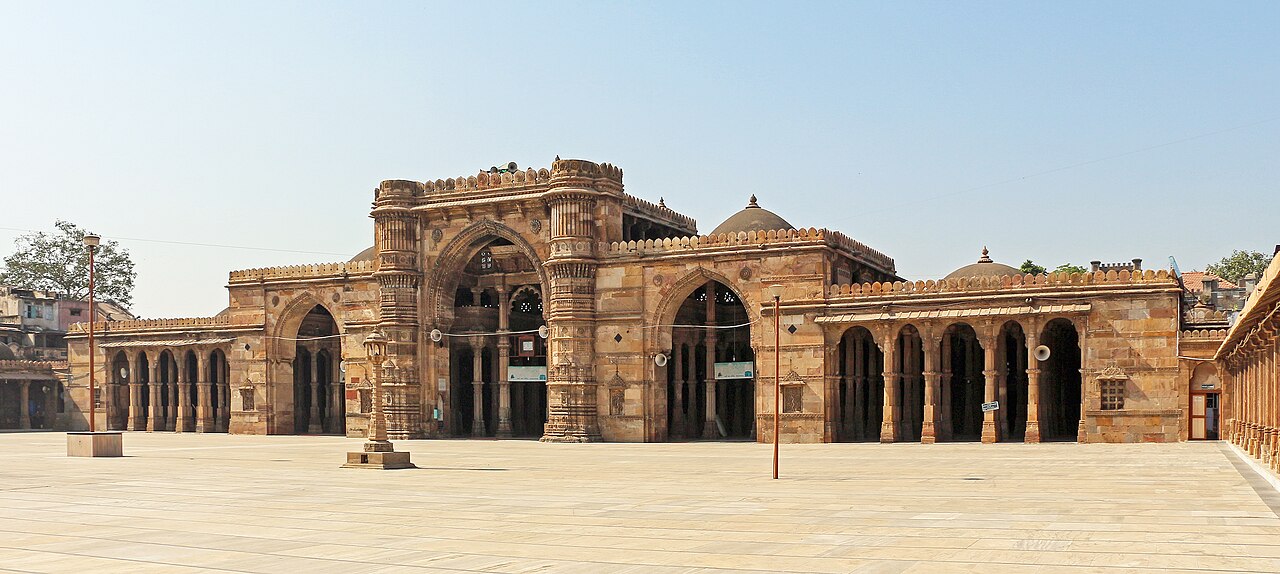
Jama Masjid, Ahmedabad
Mezquita · 1.9 km · about 31 min walk
 #6 in AhmedabadEntrada gratuita
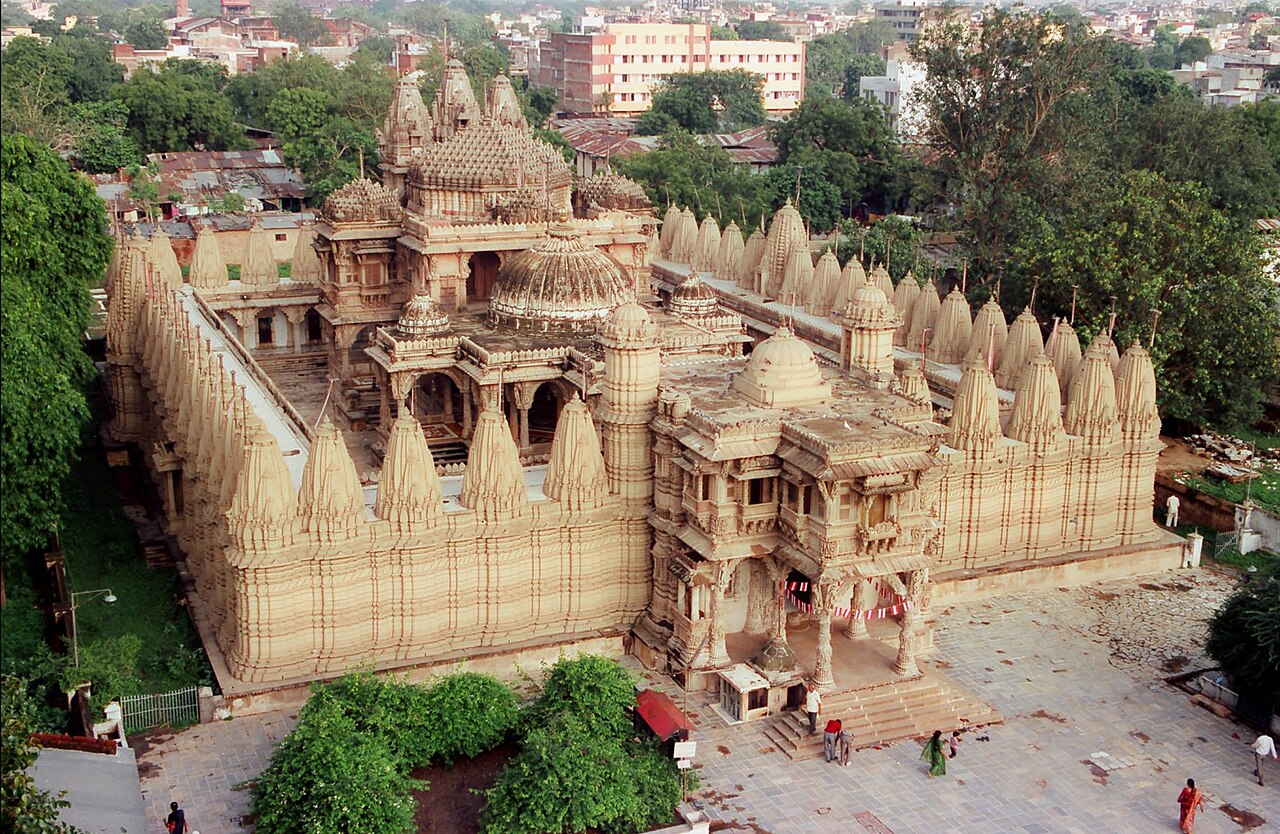
Hutheesing Jain Temple
Templo jainista · 1.9 km · about 31 min walk
 #5 in AhmedabadEntrada gratuita
Calico Museum of Textiles
Museo · 3 km · about 10 min by road