
Jama Masjid, Ahmedabad
#4of 10 places to visit in AhmedabadAhmedabad, Gujarat
Also known as Jami Masjid · Ahmedabad Jama Masjid · Badi Masjid
Quick answer
Opening hours: 05:00–21:00. Entry is free. Allow 45 min. Best time: 07:30–09:00.
Updated · Compiled by Traveliac, AI-assisted · 5 min read
- Opening hours
- 05:00–21:00
- 05:00–21:00 daily, with a pause in visitor access during the five daily prayer calls (roughly 15–20 minutes each)
- Entry fee
- Free
- Time needed
- 45 min
- Best time of day
- 07:30–09:00
- Best months
- Oct – Mar
- Address
- Gandhi Road, Manek Chowk, near Teen Darwaza, Ahmedabad, Gujarat 380001
About Jama Masjid, Ahmedabad
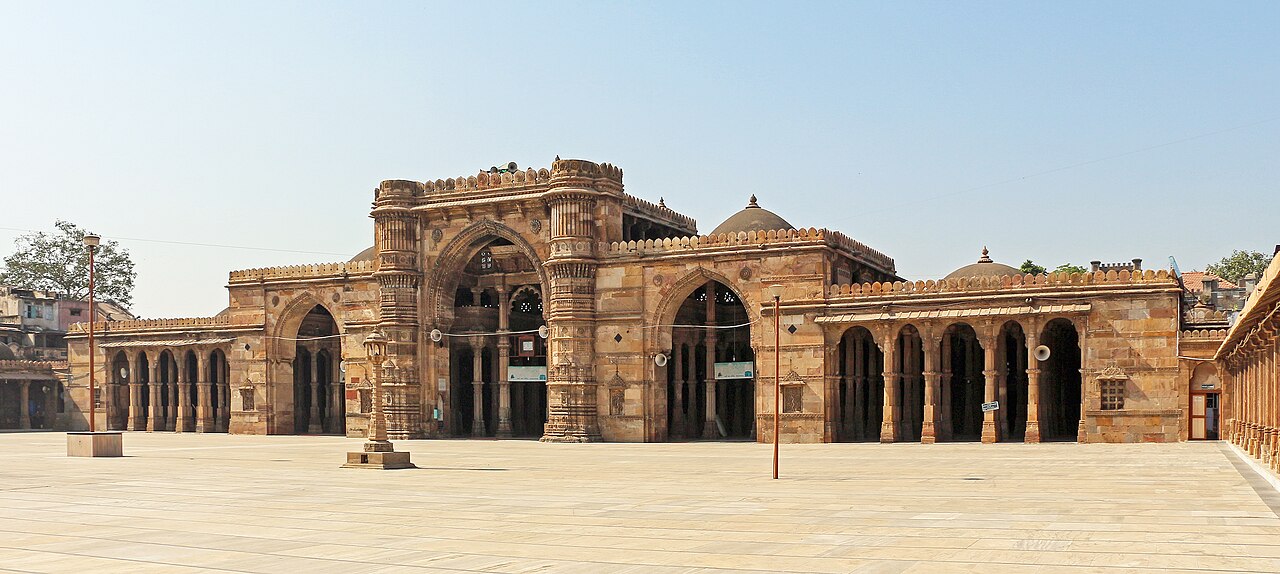
Sultan Ahmad Shah I, who founded Ahmedabad in 1411 on the ruins of the older settlement of Karnavati, built this mosque as the city's principal congregational centre, completing it in 1424. It remains, by pillar count alone, one of the largest surviving mosques of the Indo-Islamic Sultanate period in India: 260 columns arranged in a forest-like hypostyle hall, supporting fifteen domes at varying heights above a floor of yellow and black marble. A rectangle of that inlaid marble near the central mihrab marks, according to established local tradition, the exact spot where Ahmad Shah himself prayed — visitors still pause over it, though it carries no barrier or signage beyond the colour change in the stone. The courtyard beyond the prayer hall is vast — large enough that the mosque could, and still does, accommodate several thousand worshippers for Friday prayers and Eid congregations. A raised ablution tank sits at its centre, functioning exactly as it did six centuries ago.
Best time of day: 07:30–09:00. When the courtyard is nearly empty and the low sun rakes across the 260 sandstone pillars at an angle that reveals the carved capitals clearly. Avoid the Friday midday Jumu'ah window entirely for casual visits.
Jama Masjid, Ahmedabad timings
Jama Masjid, Ahmedabad opens at 05:00 and closes at 21:00. Those hours hold on Saturday and Sunday too.
- Opening hours
- 05:00–21:00
Mon–Sun 05:00–21:00 - 05:00–21:00 daily, with a pause in visitor access during the five daily prayer calls (roughly 15–20 minutes each)
- Closed on
- Open every day
Good to know: During Ramadan, evening access after Iftar (sunset) draws a substantially larger congregation and the courtyard fills for Taraweeh prayers; casual sightseeing is best confined to mid-morning during this period.
Opening hours compiled from gujarattourism.com and public records, last updated . They change without notice — confirm before you travel. How we write these guides
Jama Masjid, Ahmedabad ticket price
| Ticket | Price |
|---|---|
| Indian visitors | Free |
| Foreign visitors | Free |
| Children | Free |
| Camera | Free |
Entry is free for all visitors. The mosque is active and functioning; non-Muslim visitors are welcome outside prayer times. No camera fee, though tripods are discouraged in the prayer hall during worship hours.
Prices compiled from gujarattourism.com and public records, last updated . They change without notice — confirm before you travel. How we write these guides
Best time to visit Jama Masjid, Ahmedabad
- Quiet
- Moderate
- Very busy
05:00–07:30
Dawn prayer and quiet openingBest time to go
Fajr prayer draws a modest number of regular worshippers. The courtyard is otherwise empty and the pillared hall is at its most atmospheric, lit only by early daylight through the clerestory openings.
Quiet07:30–11:00
Morning sightseeing window
The best window for unhurried viewing of the pillar carvings and the marble prayer marker. Occasional small tour groups pass through but rarely linger more than 15 minutes.
Quiet12:30–14:00 (Fridays)
Jumu'ah congregation
The courtyard and prayer hall fill to capacity for Friday prayers. Casual sightseeing is impractical and discouraged during this window; the mosque's function as an active place of worship takes clear precedence.
Very busy18:00–20:00
Evening and Manek Chowk transition
Maghrib prayer brings a steady but manageable flow of worshippers. Outside the mosque, Manek Chowk begins its transformation from jewellery market to night food street, adding pedestrian density to the surrounding lanes.
Moderate
History of Jama Masjid, Ahmedabad
Ahmad Shah I intended the Jama Masjid as the architectural centrepiece of his new capital, and the building's construction drew directly on the craftsmanship of local Hindu and Jain temple-building guilds who had worked the region for centuries before the Sultanate's founding. Several of the mosque's interior pillars carry the residual decorative vocabulary of temple architecture — bell-and-chain motifs and lotus-medallion capitals — a detail widely attributed to the reuse of carved stone salvaged from earlier Hindu and Jain structures on or near the site, though the extent of literal spolia versus newly carved work in the same idiom remains debated among architectural historians.
Directly across the lane to the east stands Badshah no Hajiro, the mausoleum enclosure containing Ahmad Shah's cenotaph beneath an open marble-screened pavilion; the tradition at many Indo-Islamic royal tombs of this period, including this one, is that the visible cenotaph marks the position of the actual grave in a sealed chamber below the platform. A separate enclosure nearby, Rani no Hajiro, holds the tombs of the royal women of the Ahmad Shahi line and today doubles as a functioning bangle and textile bazaar built into its surrounding arcade — one of the more striking instances in India of a historic mausoleum precinct absorbed into daily commercial life without losing its original structure.
The mosque has undergone repeated restoration across the Mughal, colonial, and post-Independence periods, but its Sultanate-era plan — five aisles of arcaded columns leading to the qibla wall, and a central higher nave lit by clerestory openings — survives essentially intact.
Rules & etiquette at Jama Masjid, Ahmedabad
Footwear must be removed before stepping onto the courtyard paving, not merely at the prayer hall threshold; racks are provided at both entrances. Modest dress is expected throughout — shoulders and knees covered for all visitors, and women should carry a headscarf, though it is not strictly enforced outside prayer times.
Friday Jumu'ah prayers, roughly 12:30–14:00, draw the mosque's largest weekly congregation and non-Muslim sightseeing is discouraged during this window as a matter of practical courtesy rather than formal rule — the courtyard and prayer hall are simply full. Photography is permitted in the courtyard and exterior arcades; inside the prayer hall, be unobtrusive and avoid photographing worshippers directly during prayer. No tripods during active prayer sessions.
The marble panel marking Ahmad Shah's traditional prayer spot has no physical barrier, and visitors are asked informally by the mosque's caretakers not to stand directly on it for extended photography — a courtesy rather than a posted rule.
Tips for visiting Jama Masjid, Ahmedabad
- 1
The mosque sits at the centre of the walled city's densest historic cluster. Teen Darwaza, the triple-arched ceremonial gateway through which Sultanate-era processions once passed to the royal maidan, is a two-minute walk east. Manek Chowk, by day a wholesale gold and silver jewellery market and by night one of Ahmedabad's most famous street-food markets, wraps around the mosque's southern and eastern flanks — come back after 20:00 and the same lanes that were quiet during the day become a dense corridor of stalls serving pav bhaji, sandwiches, and kulfi until well past midnight.
- 2
Badshah no Hajiro and Rani no Hajiro, both a short walk from the mosque's main gate, are free to enter and take no more than 15–20 minutes combined; visiting them alongside the mosque and Sidi Saiyyed Mosque (roughly 700 metres south) makes a coherent 90-minute walking loop through the oldest part of the city.
- 3
Auto-rickshaws struggle to navigate directly to the mosque gate given the surrounding pedestrian-only lanes in Manek Chowk; expect to be dropped 100–150 metres away and to walk the final stretch. This is not a scam — it is a genuine access constraint of the old city's lane widths.
How to reach Jama Masjid, Ahmedabad
The red star is Jama Masjid, Ahmedabad; the numbered pins are the 7 nearest places in our guides, each showing its rank in its city. Tap a pin for details.
Gandhi Road, Manek Chowk, near Teen Darwaza, Ahmedabad, Gujarat 380001Directions in Google Maps
From Sardar Vallabhbhai Patel International Airport (AMD)
₹280–42013 km · 30–45 min
From Ahmedabad Junction Railway Station (ADI)
₹50–803 km · 15–20 min
From Sidi Saiyyed Mosque
0.7 km · 8–10 min
Free
Nearest airport
From Sardar Vallabhbhai Patel International Airport, Ahmedabad (AMD)
approximately 13 km northwest
Nearest railway station
From Ahmedabad Junction, Kalupur (ADI)
approximately 3 km northwest
Jama Masjid, Ahmedabad FAQs
Is the Jama Masjid in Ahmedabad the same as Delhi's Jama Masjid?
No. This is a distinct mosque built in 1424 by Sultan Ahmad Shah I, the founder of Ahmedabad — nearly two centuries before Shah Jahan's Jama Masjid in Delhi (completed 1656). Many Indian cities with an Islamic Sultanate or Mughal history have their own 'Jama Masjid', meaning simply the principal congregational mosque of that city.
Can non-Muslims enter the mosque?
Yes. The mosque is open to visitors of all faiths outside prayer times, free of charge. Footwear must be removed at the courtyard entrance and modest dress is expected. Casual visits during the Friday Jumu'ah window (roughly 12:30–14:00) are discouraged as a matter of practical courtesy.
What is the significance of the yellow and black marble panel inside?
Local tradition identifies this inlaid marble rectangle near the central mihrab as the spot where Sultan Ahmad Shah I himself prayed. It carries no formal barrier or plaque, but mosque caretakers informally discourage visitors from standing on it for extended photography.
Are Ahmad Shah's tomb and the Rani no Hajiro worth visiting alongside the mosque?
Yes, and they are immediately adjacent. Badshah no Hajiro, across the lane, holds Ahmad Shah's cenotaph under an open marble-screened pavilion. Rani no Hajiro, a short walk further, contains the tombs of the Ahmad Shahi royal women and is unusually now also a functioning bangle and textile market built into its arcade. Both are free and take 15–20 minutes combined.
Compiled with AI assistance from official sources and public records, and published only after the checks in How we write these guides. Nobody from Traveliac has visited this place. Last updated . How we rank and check places
Places to visit near Jama Masjid, Ahmedabad
Straight-line distances from our map; times are estimates.
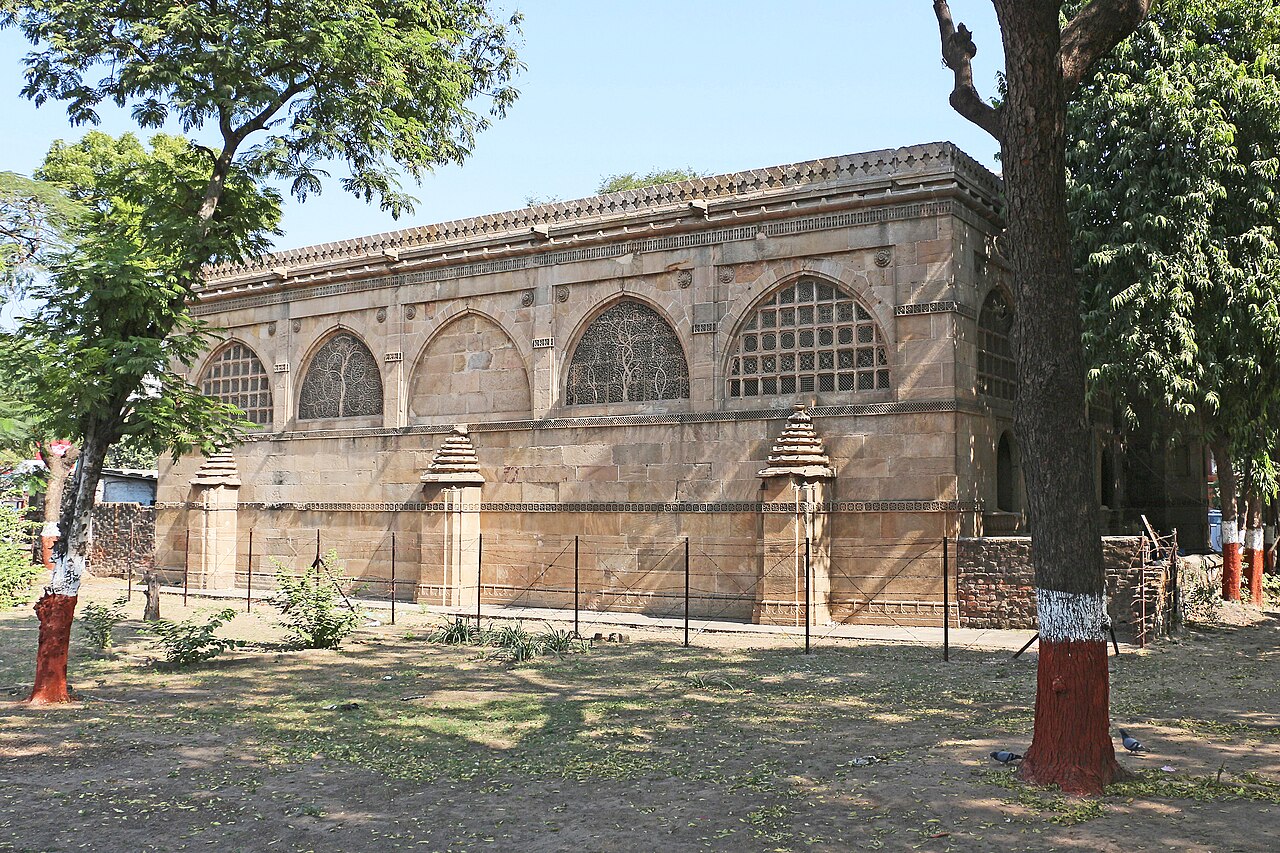 #3 in AhmedabadFree entry
Sidi Saiyyed Mosque
Mosque · 700 m · about 12 min walk
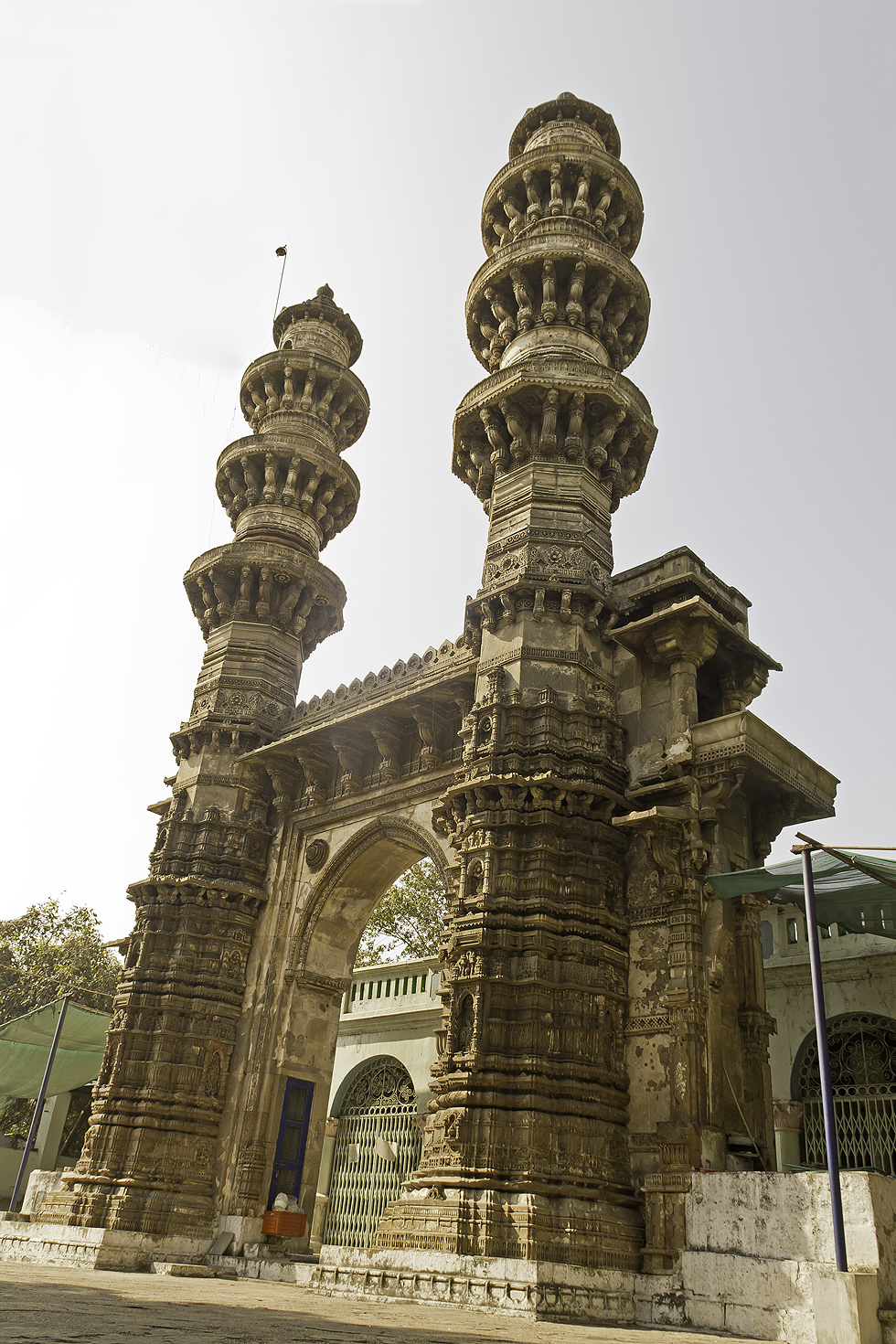 #8 in AhmedabadFree entry
Jhulta Minar (Shaking Minarets of Sidi Bashir Mosque)
Mosque · 1.3 km · about 21 min walk
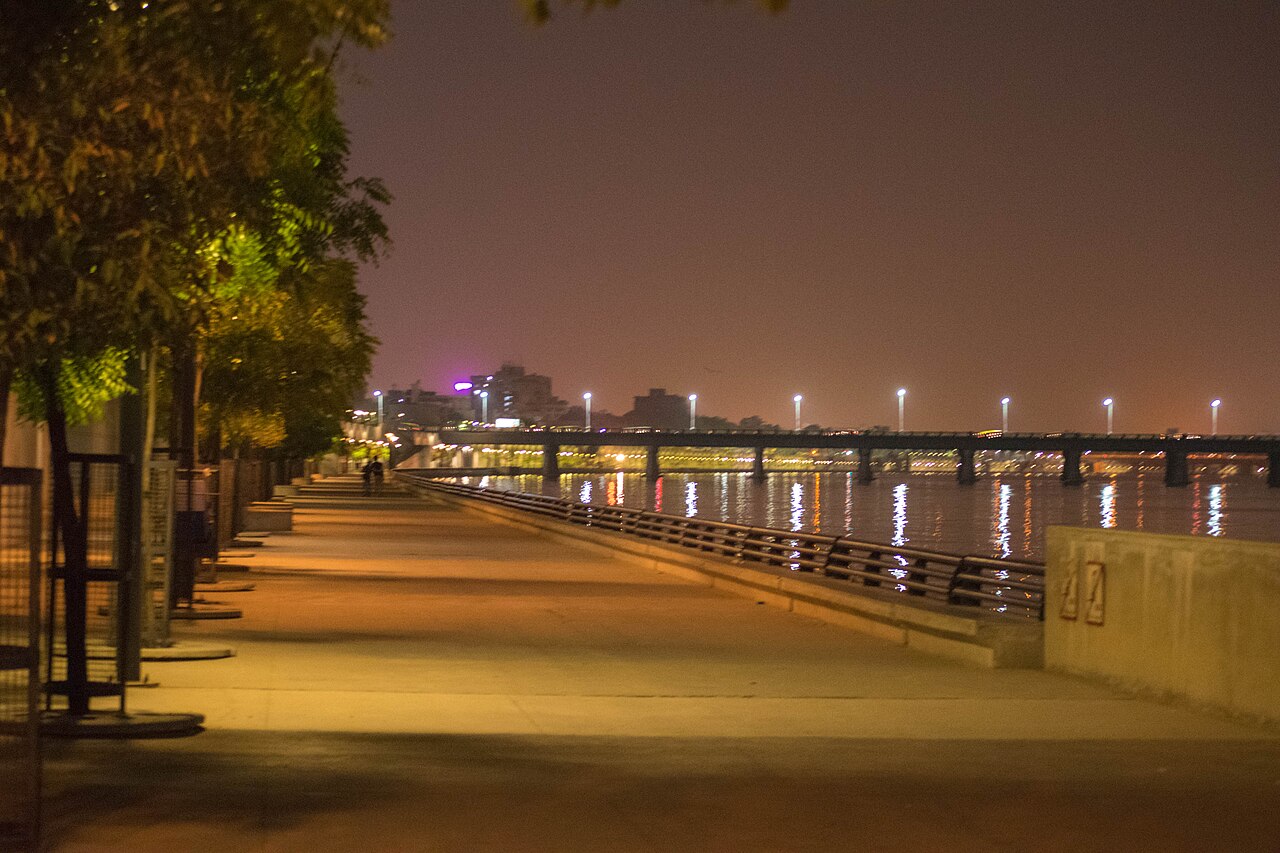 #7 in AhmedabadFree entry
Sabarmati Riverfront
Heritage · 1.9 km · about 31 min walk
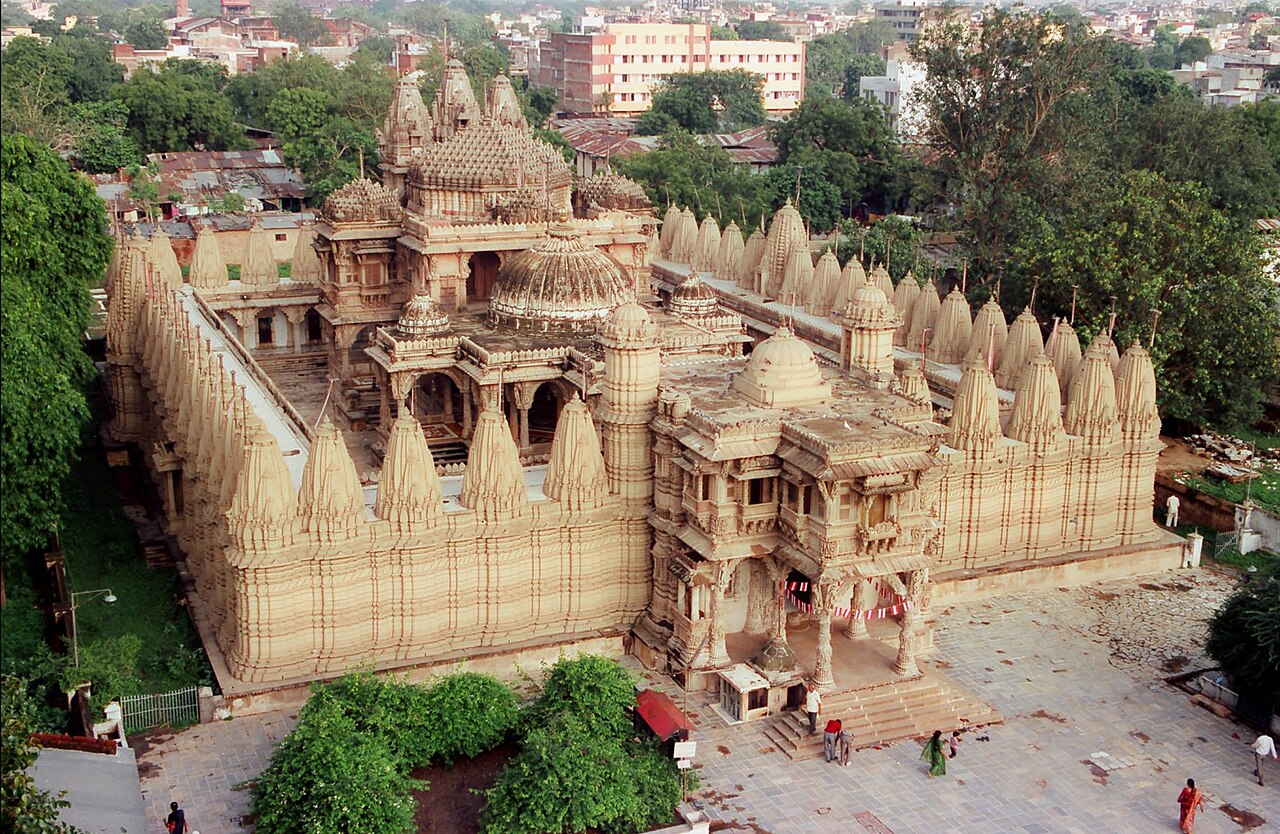 #6 in AhmedabadFree entry
Hutheesing Jain Temple
Jain temple · 1.9 km · about 31 min walk