Rangji Temple
#5de 7 lugares para visitar en PushkarPushkar, Rajastán
También conocido como Shri Rangji Mandir · Ranganatha Temple, Pushkar
Respuesta rápida
Horario: 06:00–13:30 and 16:00–20:30. La entrada es gratuita. Calcula 45 min. Mejor momento: 16:30 – 18:00.
Actualizado el · Redactado por Traveliac, con ayuda de IA · 4 min de lectura
- Horario
- 06:00–20:30
- Precio de entrada
- Gratis
- Tiempo necesario
- 45 min
- Mejor momento del día
- 16:30 – 18:00
- Mejores meses
- Oct – Mar
- Dirección
- Gau Ghat Road, old town, Pushkar, Ajmer district, Rajasthan 305022
Sobre Rangji Temple
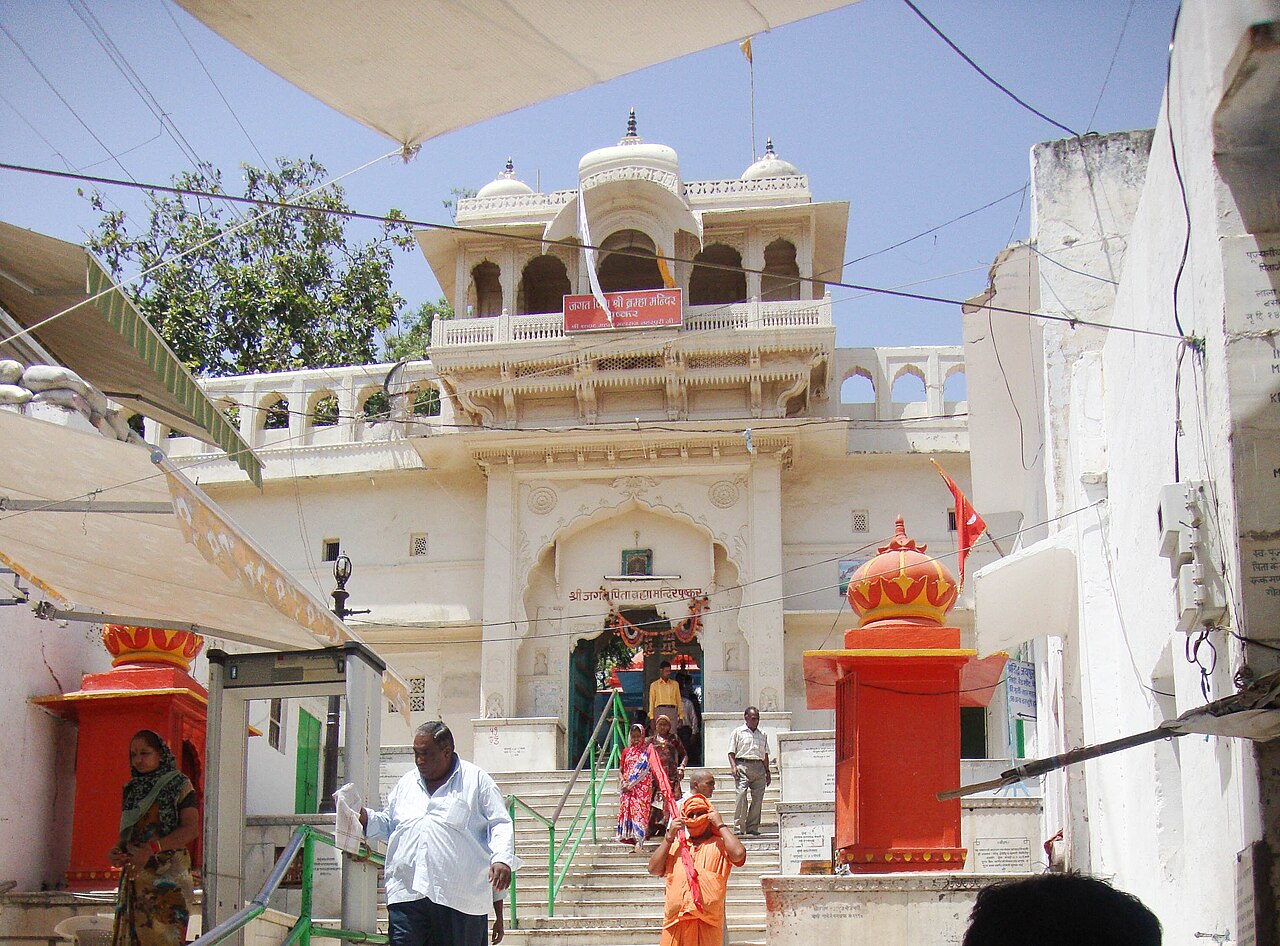
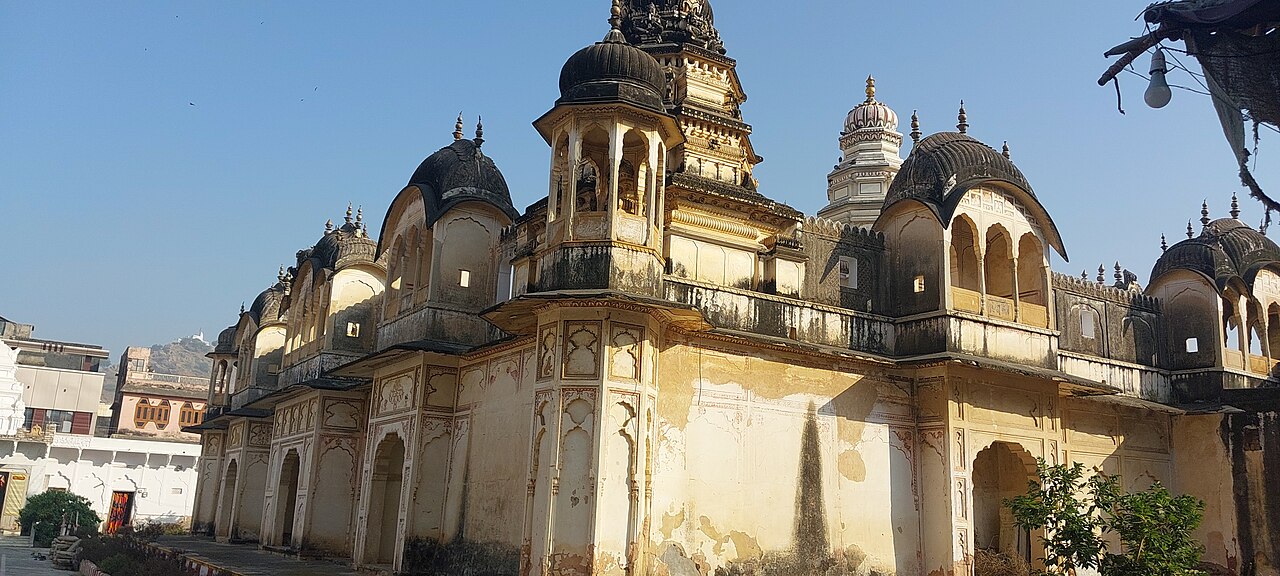
Rangji Temple announces itself from well down the lane by a tiered gopuram — the stepped, pyramidal gateway tower characteristic of South Indian, specifically Dravidian, temple architecture — rising in tapering stone stages covered in painted stucco figures of deities, guardians, and mythological scenes. Nothing else in Pushkar, or arguably in this part of Rajasthan, looks quite like it: the surrounding town is built almost entirely in the flat-roofed, sandstone-and-marble idiom of Rajput and Mughal-influenced construction, while Rangji's gopuram, painted courtyard pillars, and stepped vimana (tower over the sanctum) belong unmistakably to Tamil Nadu's temple-building tradition transplanted a thousand kilometres northwest. The temple is dedicated to Vishnu in his form as Rangji (Ranganatha), the presiding deity of the great Srirangam temple in Tamil Nadu, and the iconography, ritual calendar, and architectural vocabulary here are deliberately modelled on that South Indian original rather than adapted to local Rajasthani convention — a genuinely unusual case of a specific regional devotional tradition being reproduced wholesale rather than blended.
Mejor momento del día: 16:30 – 18:00. When the gopuram's carved figures catch angled afternoon light and the temple is past its midday closure but before the evening aarti crowd peaks.
Horario de Rangji Temple
- Horario
- 06:00–20:30
Mon–Sun 06:00–13:30 and 16:00–20:30 - Cierra los
- Abierto todos los días
Horario recopilados de rajasthantourism.gov.in y registros públicos, última actualización el . Pueden cambiar sin previo aviso — confírmalos antes de viajar. Cómo escribimos estas guías
Precio de entrada de Rangji Temple
| Entrada | Precio |
|---|---|
| Visitantes indios | Gratis |
| Visitantes extranjeros | Gratis |
| Niños | Gratis |
| Cámara | Gratis |
No entry ticket. Photography is prohibited throughout the inner temple complex, including the courtyard immediately below the gopuram, not only the sanctum — this is enforced more strictly here than at most other Pushkar temples. Donation box near the entrance is voluntary.
Precios recopilados de rajasthantourism.gov.in y registros públicos, última actualización el . Pueden cambiar sin previo aviso — confírmalos antes de viajar. Cómo escribimos estas guías
Mejor época para visitar Rangji Temple
- Quiet
- Moderate
06:00 – 08:00
Morning RitualBest time to go
A small number of local devotees for opening rituals; the lane outside is quiet.
Quiet08:00 – 13:00
Late Morning
Occasional visitors combining this with a wider old-town temple walk; rarely congested.
Quiet13:30 – 16:00
Midday Closure
Temple closed; only the exterior gopuram is viewable from the lane.
Quiet16:30 – 19:00
Afternoon/Evening Reopening
Best light on the gopuram's painted stucco figures; local families arrive for evening darshan.
Moderate
Historia de Rangji Temple
The temple was built in 1844, funded by a wealthy Marwari merchant patron from the Ganeriwal family with trading interests extending into South India, according to locally recorded temple history — a pattern consistent with the broader 19th-century phenomenon of Marwari merchant wealth funding temple construction across India, often reproducing architectural styles the patron had encountered through trade routes rather than defaulting to local convention.
The deliberate choice of Dravidian gopuram architecture, uncommon anywhere in North India, reflects the specific devotional lineage being honoured: Ranganatha worship is centred overwhelmingly in Tamil Nadu and the broader Vaishnava Sri Vaishnava tradition associated with the theologian Ramanuja, and a patron seeking to establish an authentic Rangji shrine outside that heartland evidently commissioned architects and craftsmen versed in the southern idiom rather than a locally standard Rajasthani temple form. The result has functioned since construction as a genuine outpost of South Indian Vaishnava practice within a Rajasthani pilgrimage town otherwise dominated by Shaiva, Shakta, and Brahma worship traditions.
Normas y etiqueta en Rangji Temple
Non-Hindu visitors are not permitted beyond the outer courtyard and are explicitly barred from the inner sanctum — a rule enforced by temple staff at a marked threshold, and one of the few places in Pushkar where this restriction is applied with real consistency rather than left to an individual priest's discretion. This is stated plainly by temple authorities and should not be tested or negotiated at the gate.
Photography is prohibited throughout the inner complex, including the courtyard directly beneath the gopuram — a broader restriction than most Pushkar temples apply, where only the sanctum itself is typically off-limits. Visitors wanting to photograph the tower should do so from the public lane outside, where the full gopuram is visible and photography is unrestricted.
Shoes off at the outer gate, modest dress expected, and — consistent with the temple's South Indian devotional lineage — some ritual timings and practices differ subtly from Pushkar's other Rajasthani-tradition temples, which local priests are generally willing to explain to genuinely curious visitors standing at the permitted threshold.
Consejos para visitar Rangji Temple
- 1
View the gopuram from across the lane at a reasonable distance for the best photograph — the tower's full height and painted detail are best appreciated from 15–20 metres back rather than standing directly beneath it, and this vantage requires no entry into the temple itself.
- 2
The contrast with the Brahma Temple's marble-and-red-spire style, a short walk away, is worth experiencing back to back: seeing both within the same hour makes Pushkar's architectural range — Rajput sandstone, Mughal-influenced marble work, and this transplanted Dravidian tower — considerably more legible than reading about it in isolation.
- 3
Because it draws fewer casual tourists than the Brahma Temple or the lake ghats, Rangji Temple's approach lane is comparatively free of the aggressive flower-and-thread solicitation common elsewhere in the old town, making it one of the calmer stops on a walking circuit of Pushkar's temple architecture.
Cómo llegar a Rangji Temple
Todavía no tenemos la ubicación exacta de Rangji Temple; el mapa muestra los demás lugares de nuestra guía de Pushkar. Usa la dirección de abajo o el enlace de cómo llegar.
Gau Ghat Road, old town, Pushkar, Ajmer district, Rajasthan 305022Cómo llegar en Google Maps
Desde Brahma Temple
0.7 km · 10 min walk
Free — walkable through old-town lanes.
Desde Ajmer Junction Railway Station (AII)
₹300–₹45015 km · 30–40 min
Auto/taxi to the nearest drop point, followed by a short walk).
Desde Pushkar Bus Stand
0.9 km · 12 min walk
Free on foot.
Aeropuerto más cercano
Desde Kishangarh Airport (KQH)
25 km, approximately 40–50 minutes. Jaipur International Airport (JAI) – 150 km, approximately 3–3.5 hours.
Estación de tren más cercana
Desde Ajmer Junction (AII)
15 km, approximately 30–40 minutes.
Preguntas frecuentes sobre Rangji Temple
Why does Rangji Temple look so different from other Pushkar temples?
It was built in 1844 in South Indian Dravidian gopuram style, funded by a Marwari merchant patron, and is dedicated to Vishnu as Rangji (Ranganatha), whose primary worship tradition is centred at Srirangam in Tamil Nadu rather than in Rajasthan.
Can non-Hindus enter Rangji Temple?
Non-Hindu visitors may enter the outer courtyard but are barred from the inner sanctum — a rule that is consistently enforced here, unlike at some of Pushkar's other, more discretionary temples.
Is photography allowed at Rangji Temple?
No, photography is prohibited throughout the inner complex, including the courtyard beneath the gopuram, though the tower itself can be freely photographed from the public lane outside.
What does 'gopuram' mean and why is it unusual here?
A gopuram is the tiered, pyramidal gateway tower typical of South Indian Dravidian temples. Its presence at Rangji Temple is unusual because virtually every other temple in Rajasthan follows a Rajput or Mughal-influenced sandstone-and-marble architectural idiom instead.
Redactado con ayuda de IA a partir de fuentes oficiales y registros públicos, y publicado solo tras las comprobaciones descritas en Cómo escribimos estas guías. Nadie de Traveliac ha visitado este lugar. Última actualización el . Cómo clasificamos y verificamos los lugares