Savitri Temple
#3of 7 places to visit in PushkarPushkar, Rajasthan
Also known as Savitri Mata Mandir · Ratnagiri Hill Temple
Quick answer
Opening hours: 05:30–19:00. Entry is free. Allow 2 hrs. Best time: 05:45 – 07:00 or 17:30 – 18:45.
Updated · Compiled by Traveliac, AI-assisted · 5 min read
- Opening hours
- 05:30–19:00
- The temple and the walking trail keep these hours. The ropeway runs 08:00–19:00 and may slow at midday for maintenance.
- Entry fee
- Free
- Time needed
- 2 hrs
- Best time of day
- 05:45 – 07:00 or 17:30 – 18:45
- Best months
- Oct – Mar
- Address
- Ratnagiri Hill, south side above Pushkar Lake, Pushkar, Ajmer district, Rajasthan 305022
About Savitri Temple
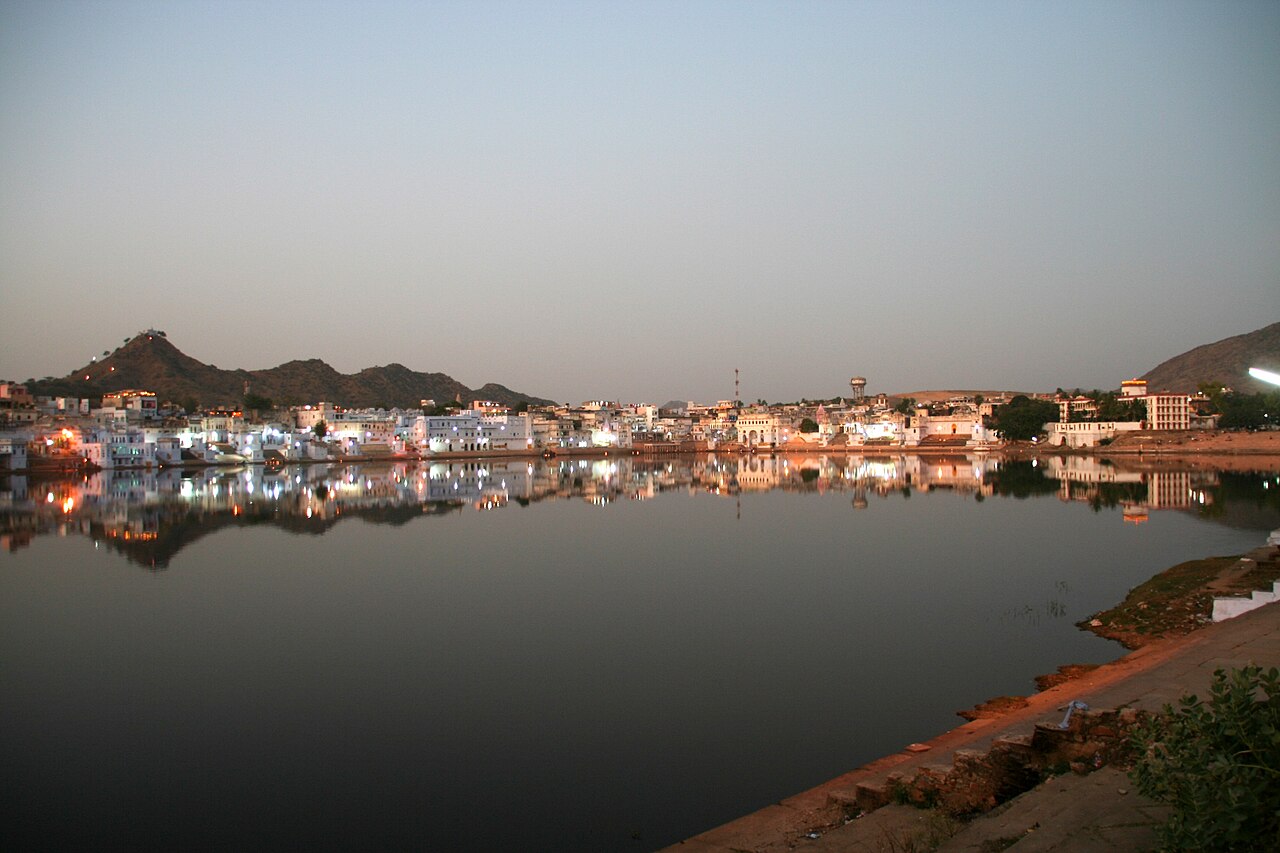
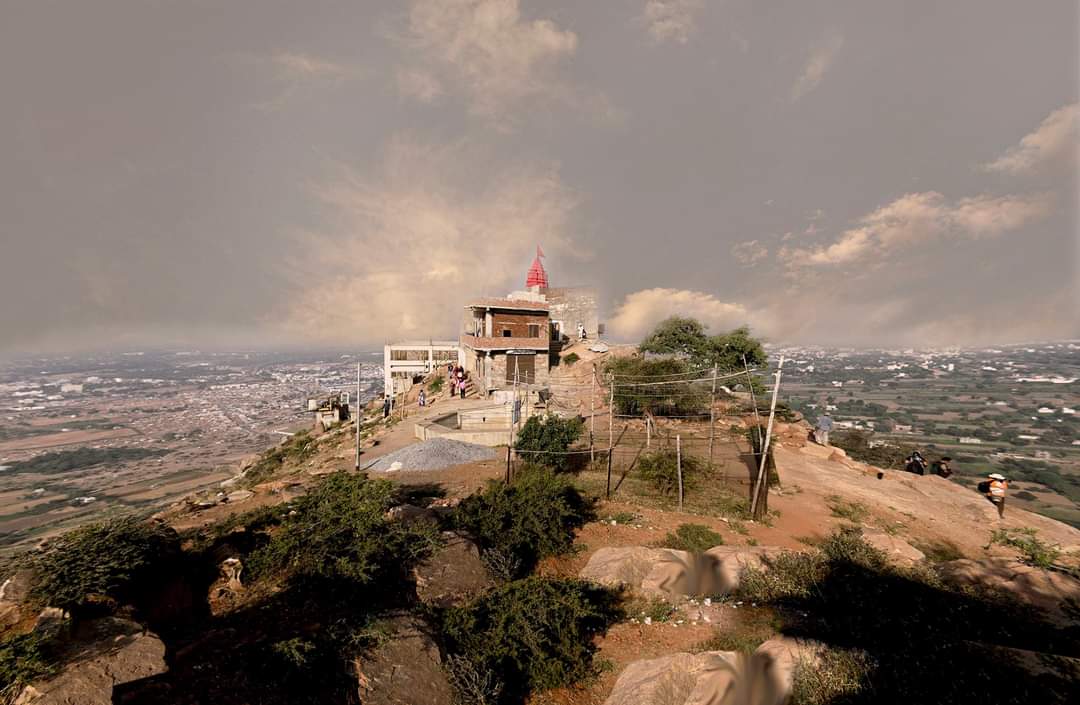
Savitri Temple crowns Ratnagiri hill on the ridge directly south of Pushkar Lake, a whitewashed shrine with a modest single stone spire that matters far less for its architecture than for what it commands: an unbroken view over all 52 ghats, the flat rooftops of the old town, and the pale expanse of the Thar's eastern edge running toward the horizon. The temple itself is small and plain by Rajasthan standards — a single sanctum housing an image of Savitri, reached through a narrow stone-paved forecourt — because the point of the climb has always been the vantage as much as the deity. Two routes reach the summit. A cable ropeway, installed in stages since the 2010s and run under a state tourism concession, covers the ascent in roughly seven to eight minutes in open-sided cabins. The alternative is a stepped stone trail of close to 700–750 steps cut directly into the hillside, unshaded for most of its length, which takes a fit walker 45–60 minutes and considerably longer for anyone unused to heat or altitude gain of roughly 100 metres over a short horizontal distance.
Best time of day: 05:45 – 07:00 or 17:30 – 18:45. For sunrise over the Aravalli ridge and the lake below; 17:30 – 18:45 for sunset, which is the more crowded of the two options.
Savitri Temple timings
Savitri Temple opens at 05:30 and closes at 19:00. Those hours hold on Saturday and Sunday too.
- Opening hours
- 05:30–19:00
Mon–Sun 05:30–19:00 - The temple and the walking trail keep these hours. The ropeway runs 08:00–19:00 and may slow at midday for maintenance.
- Closed on
- Open every day
Good to know: Ropeway service is occasionally suspended in high wind, common during the pre-monsoon months of May and June — check locally before climbing up expecting a ropeway descent.
Opening hours compiled from tourism.rajasthan.gov.in and public records, last updated . They change without notice — confirm before you travel. How we write these guides
Savitri Temple ticket price
| Ticket | Price |
|---|---|
| Indian visitors | Free |
| Foreign visitors | Free |
| Children | Free |
| Camera | Free |
No temple entry fee. The ropeway (ascent and descent) is the main cost: approximately ₹250–₹300 round trip for adults, ₹150–₹200 for children under 12, as of 2024–2025 pricing. Walking the trail is free. Small donation box at the shrine itself is voluntary.
Prices compiled from tourism.rajasthan.gov.in and public records, last updated . They change without notice — confirm before you travel. How we write these guides
Best time to visit Savitri Temple
- Quiet
- Moderate
- Very busy
05:45 – 07:00
Sunrise ClimbBest time to go
Small numbers of dedicated photographers and early pilgrims; ropeway may not yet be running, so this window favours the trail.
Quiet07:00 – 11:00
Morning Ropeway Traffic
Ropeway operating at normal capacity; queues manageable, summit views still clear before afternoon haze builds.
Moderate11:00 – 16:00
Midday Heat
Trail walking discouraged in peak sun; most visitors use the ropeway only, and even that traffic thins.
Quiet17:00 – 19:00
Sunset Peak
The single busiest window at the summit; ropeway queues at both stations lengthen considerably as everyone times their visit for the same sunset.
Very busy
History of Savitri Temple
Savitri, in the version of Brahma's marriage myth most often told at this end of the lake, is identified as Brahma's original consort — the wife who was delayed in reaching the yagna at Pushkar, prompting Brahma's hurried marriage to Gayatri and the resulting curse that confines Brahma worship to this one town. Other tellings substitute Saraswati for Savitri in the same role, and the two names are treated as functionally interchangeable by many local priests, though classical texts generally distinguish Savitri as Brahma's first wife and Saraswati as a later, separate figure — a genuine point of textual ambiguity rather than a simple error.
The hilltop shrine's exact construction date is not well documented in the way Pushkar's lakeside temples are, since it functioned for centuries primarily as a pilgrim's climb and viewpoint rather than a major devotional destination in its own right, visited by ascetics undertaking penance walks up the exposed ridge. Its modern prominence owes a great deal to the ropeway's construction, which converted a physically demanding pilgrimage into an accessible half-day outing and made the summit view Pushkar's most reproduced photograph after the ghats themselves.
Rules & etiquette at Savitri Temple
Footwear should be sturdy if walking the stone trail — sandals and flip-flops are common but genuinely uncomfortable on the worn, uneven steps, and a small stock of loose stray dogs along the lower trail can be unsettling for some walkers, though they are generally passive. Carry water; there is no reliable vendor presence on the upper half of the trail, only intermittent stalls near the base.
At the summit, the temple itself expects standard Hindu temple etiquette — shoes off at the inner threshold, modest dress — though the open viewing platforms around the shrine impose no such restriction and can be used freely in ordinary travel clothing. The ropeway queue at both the base and summit stations can become disorganised at sunset, when descent demand spikes all at once; arriving 30 minutes before your intended departure avoids missing the last convenient cabin.
Drone photography from the summit is technically subject to Indian civil aviation permission requirements and is not something casual visitors should attempt without prior clearance, given the site's proximity to the town centre and religious sensitivities around aerial photography of the lake below.
Tips for visiting Savitri Temple
- 1
Walk up and take the ropeway down, or vice versa — doing the trail in one direction only halves the physical toll while still delivering the authentic climb experience, and lets you compare the stepped approach with the smoother cable descent. Sunrise is the better of the two light windows for photography, since the temple faces roughly east-northeast and the ridge itself is not backlit the way it is at sunset.
- 2
The hill directly opposite, across a shallow valley, holds Pap Mochani Temple — a quieter, less-visited alternative with a comparable but different-angle view, reachable by its own separate trail from the town's eastern edge; pairing the two in a single morning is possible for energetic walkers but makes for a demanding few hours in Rajasthan heat outside the winter months.
- 3
Bring cash in small denominations for the ropeway ticket counter, since card payment acceptance at the base station has historically been inconsistent, and expect a queue of 15–20 minutes for the ropeway on weekend mornings and through the Kartik Purnima period, when the summit itself becomes genuinely crowded rather than a solitary viewpoint.
How to reach Savitri Temple
We haven't pinned Savitri Temple's exact position yet; the map shows the other places in our Pushkar guide. Use the address below or the directions link.
Ratnagiri Hill, south side above Pushkar Lake, Pushkar, Ajmer district, Rajasthan 305022Directions in Google Maps
From Ajmer Junction Railway Station (AII)
₹320–₹47016 km · 35–45 min
Auto/taxi to the ropeway base station).
From Pushkar Bus Stand / Sadar Bazaar
₹50–₹801.5 km · 20–25 min walk or 5 min auto
Auto) or free on foot to the base of the trail/ropeway station.
From Kishangarh Airport (KQH)
₹750–₹95026 km · 45–55 min
Prepaid taxi).
Nearest airport
From Kishangarh Airport (KQH)
26 km, approximately 45–55 minutes. Jaipur International Airport (JAI) – 151 km, approximately 3–3.5 hours.
Nearest railway station
From Ajmer Junction (AII)
16 km, approximately 35–45 minutes; Pushkar's own station has minimal service and is not a reliable arrival option.
Savitri Temple FAQs
Should I walk or take the ropeway to Savitri Temple?
The ropeway takes 7–8 minutes and costs roughly ₹250–₹300 round trip; the stone trail has around 700–750 steps and takes 45–60 minutes each way, unshaded for most of the climb. A common approach is to walk one direction and ride the ropeway the other.
Is Savitri the same as Saraswati in this temple's mythology?
Local tellings often use the two names interchangeably in the story of Brahma's hurried second marriage to Gayatri, though classical texts generally treat Savitri as Brahma's first wife and Saraswati as a distinct figure — the ambiguity is genuine and predates any single 'correct' version.
What is the best time of day for the view from the summit?
Sunrise (05:45–07:00) offers clearer light on the temple's east-facing side and far fewer people, since the ropeway may not yet be running and most visitors prefer sunset. Sunset (17:00–19:00) is more crowded and comes with longer ropeway queues at both stations.
Is there a quieter alternative to Savitri Temple for the same kind of view?
Pap Mochani Temple, on the ridge directly opposite across a shallow valley, offers a comparable elevated view over Pushkar with a fraction of the foot traffic, reached by its own separate trail from the town's eastern edge.
Compiled with AI assistance from official sources and public records, and published only after the checks in How we write these guides. Nobody from Traveliac has visited this place. Last updated . How we rank and check places