Monument to the Discoveries
#8de 10 lugares para visitar en LisbonLisbon, Área Metropolitana de Lisboa, Portugal
También conocido como Padrão dos Descobrimentos
Respuesta rápida
Horario: 10:00–19:00 and 10:00–18:00, closed Mondays. Entrada: €10. Calcula 1 hr. Mejor momento: Late afternoon.
Actualizado el · Redactado por Traveliac, con ayuda de IA · 4 min de lectura
- Horario
- 10:00–18:00
- Closed Mondays
- Precio de entrada
- €10
- Entrada desde
- Tiempo necesario
- 1 hr
- Mejor momento del día
- Late afternoon
- Mejores meses
- Apr – Jun, Sep – Oct
- Dirección
- Av. Brasília, 1400-038 Lisboa, Portugal
Sobre Monument to the Discoveries
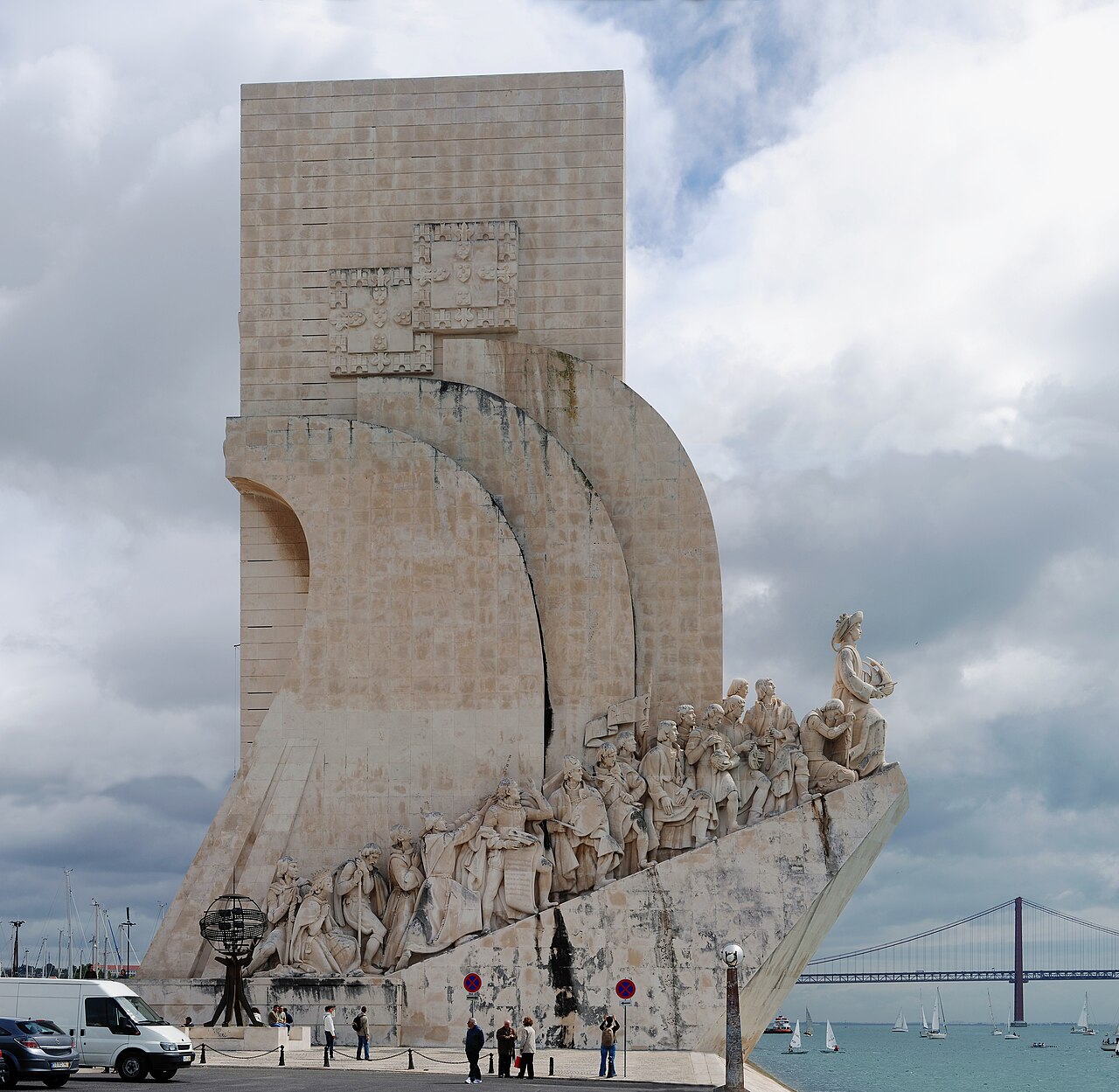
The Monument to the Discoveries rises 52 metres from the Tagus riverbank in reinforced concrete faced with limestone and pink Sesimbra stone, shaped to resemble the prow of a caravel ship pointed toward the river mouth and, beyond it, the Atlantic. Sculpted figures of 33 historical Portuguese explorers, monarchs, and cartographers line both flanks of the structure, led at the bow by Henry the Navigator holding a model caravel, each figure carved by sculptor Leopoldo de Almeida in a stylised, angular figurative mode typical of the monument's 1960 construction era. A lift and internal staircase climb to a viewing platform near the top, giving an elevated panorama over the Tagus, Belém Tower, and the 25 de Abril Bridge to the east. Directly in front of the monument, set into the paving of Praça do Império, a large compass rose mosaic in Portuguese and Italian marble maps the sea routes of Portuguese explorers and the dates they reached each destination, a gift from South Africa marking a 1960 diplomatic occasion.
Mejor momento del día: Late afternoon. Roughly two hours before closing, for the clearest light on the Tagus for photographs from the viewing platform.
Horario de Monument to the Discoveries
- Horario
- 10:00–18:00
Monday Closed Tue–Sun 10:00–19:00 and 10:00–18:00 - Daily 10:00-19:00 (March-September) and 10:00-18:00 (October-February); last admission 30 minutes before closing
- Cierra los
- Monday (October-February only)
Bueno saber: Closed Mondays during the October-February winter season only; open daily March-September.
Horario recopilados de padraodosdescobrimentos.pt y registros públicos, última actualización el . Pueden cambiar sin previo aviso — confírmalos antes de viajar. Cómo escribimos estas guías
Precio de entrada de Monument to the Discoveries
| Entrada | Precio |
|---|---|
| Entrada estándar | €10 |
| Tarifa reducida (estudiante / mayor) | €5 |
| Niños | Gratis |
Adult admission to the viewing platform and exhibition is €10 as of 2026; seniors 65+ and ages 13-25 pay €5, children under 12 enter free. Viewing the monument's exterior from the surrounding plaza and the pavement compass map is free.
Precios recopilados de padraodosdescobrimentos.pt y registros públicos, última actualización el . Pueden cambiar sin previo aviso — confírmalos antes de viajar. Cómo escribimos estas guías
Mejor época para visitar Monument to the Discoveries
- Quiet
- Moderate
- Busy
- Very busy
10:00-11:30
Morning OpeningBest time to go
Fewest visitors of the day; shortest wait for the viewing-platform lift.
Quiet11:30-15:00
Midday Peak
Coincides with the busiest hours at nearby Belém Tower and Jerónimos Monastery; lift queues for the platform can run 15-20 minutes.
Very busy15:00-17:00
Afternoon
Crowds remain elevated but move more freely than midday; the plaza and compass rose mosaic stay busy with passing foot traffic.
Busy17:00-close
Late Afternoon
Best window for platform photography as light softens over the Tagus and day-trip crowds move on toward dinner.
Moderate
Historia de Monument to the Discoveries
The monument was built in 1960 to mark the 500th anniversary of the death of Henry the Navigator, the 15th-century royal patron widely credited with initiating Portugal's systematic programme of Atlantic maritime exploration, though historians increasingly debate how directly he personally organised the voyages attributed to his patronage. An earlier, temporary plaster version of the same design had been built in 1940 for the Portuguese World Exhibition, held under the Estado Novo dictatorship of António de Oliveira Salazar to celebrate Portuguese national identity and imperial history; the 1960 monument rebuilt that design permanently in concrete and stone.
The monument's explicit celebration of the colonial-era 'Age of Discovery' has become a point of active public debate in Portugal in recent years, part of a wider national reckoning with how the maritime expansion era intersected with the transatlantic slave trade and colonial rule, discussions that visitors will find referenced in some of the site's own updated exhibition panels.
Normas y etiqueta en Monument to the Discoveries
The viewing platform lift has limited capacity and during peak periods visitors may wait 15-20 minutes for a turn; the final short stretch to the open-air platform involves stairs, so it is not fully wheelchair accessible at the very top. Photography is unrestricted throughout, including from the platform.
The surrounding plaza and riverside promenade are popular with skateboarders and street performers; the monument's own grounds are generally treated with more formality, and climbing on the sculptural base is discouraged by on-site staff.
Consejos para visitar Monument to the Discoveries
- 1
Combine the visit with the adjacent compass rose mosaic, which costs nothing to view and photographs well from ground level despite lacking the aerial perspective available from a guidebook image — it is genuinely large enough that its full pattern is easier to appreciate at eye level with wide shots than most visitors expect. The riverside walk connecting the monument to Belém Tower, roughly 500 metres west, and Jerónimos Monastery, a similar distance northeast, makes a same-visit circuit of all three straightforward on foot in under two hours total.
- 2
The monument's exhibition space inside covers rotating themes related to Portuguese maritime history rather than a fixed permanent display, so the specific content varies by visit; check the current exhibition on the official site if a particular historical focus is the reason for visiting.
Cómo llegar a Monument to the Discoveries
La estrella roja es Monument to the Discoveries; los pines numerados son los 6 lugares más cercanos de nuestras guías, cada uno con su clasificación en su ciudad. Toca un pin para ver más detalles.
Av. Brasília, 1400-038 Lisboa, PortugalCómo llegar en Google Maps
Desde Humberto Delgado Airport (LIS)
9 km · 20-25 min
€15-€20 taxi/rideshare
Desde Belém railway station
0.6 km · 7-8 min walk
€1.90 one-way from Cais do Sodré with a Viva Viagem card
Desde Torre de Belém
0.5 km · 6-8 min walk
n/a (walking distance)
Aeropuerto más cercano
Desde Humberto Delgado Airport (LIS)
approximately 9 km, 20-25 minutes by taxi.
Estación más cercana
Desde Belém railway station (CP Cascais line)
approximately 600 m, 7-8 minutes on foot.
Preguntas frecuentes sobre Monument to the Discoveries
How much does it cost to go up the Monument to the Discoveries?
Adult access to the viewing platform and exhibition costs €10 as of 2026. Seniors 65+ and visitors aged 13-25 pay €5, and children under 12 enter free. Viewing the monument's exterior and the adjacent compass rose mosaic from ground level is free.
Who are the figures carved on the Monument to the Discoveries?
The monument depicts 33 sculpted figures of Portuguese explorers, monarchs, cartographers, and other historical figures associated with the maritime Age of Discovery, led at the bow by Henry the Navigator holding a model ship, all carved by sculptor Leopoldo de Almeida for the monument's 1960 construction.
Is the Monument to the Discoveries controversial?
Yes, to a degree. Built in 1960 to honour Portugal's maritime exploration era, the monument has become part of an active public debate in Portugal over how that era's legacy intersects with the transatlantic slave trade and colonial rule, a discussion some of the site's own updated exhibition panels now address.
What is the mosaic in front of the Monument to the Discoveries?
The large compass rose set into the paving of Praça do Império is a marble mosaic mapping the sea routes and dates of Portuguese exploratory voyages, given as a gift from South Africa around 1960. It is free to view and located directly in front of the monument's entrance.
Redactado con ayuda de IA a partir de fuentes oficiales y registros públicos, y publicado solo tras las comprobaciones descritas en Cómo escribimos estas guías. Nadie de Traveliac ha visitado este lugar. Última actualización el . Cómo clasificamos y verificamos los lugares
Lugares para visitar cerca de Monument to the Discoveries
Distancias en línea recta según nuestro mapa; los tiempos son estimados.