Mutianyu Great Wall
#9sur 10 lieux à visiter à BeijingBeijing, Beijing Municipality, China
Aussi appelé 慕田峪长城
L'essentiel
Horaires d'ouverture : 07:30–18:00 and 08:00–17:30. Entrée : CN¥45. Comptez 3.5 hrs. Meilleure période : 07:30-09:30.
Mis à jour le · Rédigé par Traveliac, avec assistance IA · 4 min de lecture
- Horaires d'ouverture
- 07:30–17:30
- 07:30-18:00 from mid-March to mid-November; 08:00-17:30 from mid-November to mid-March (one source lists a 18:30 weekend close). Ticket sales end about an hour before closing.
- Prix d'entrée
- CN¥45
- Billet à partir de
- Durée nécessaire
- 3.5 hrs
- Meilleur moment de la journée
- 07:30-09:30
- Meilleurs mois
- Apr – May, Sep – Oct
- Adresse
- Mutianyu Village, Huairou District, Beijing 101407, China
À propos de Mutianyu Great Wall
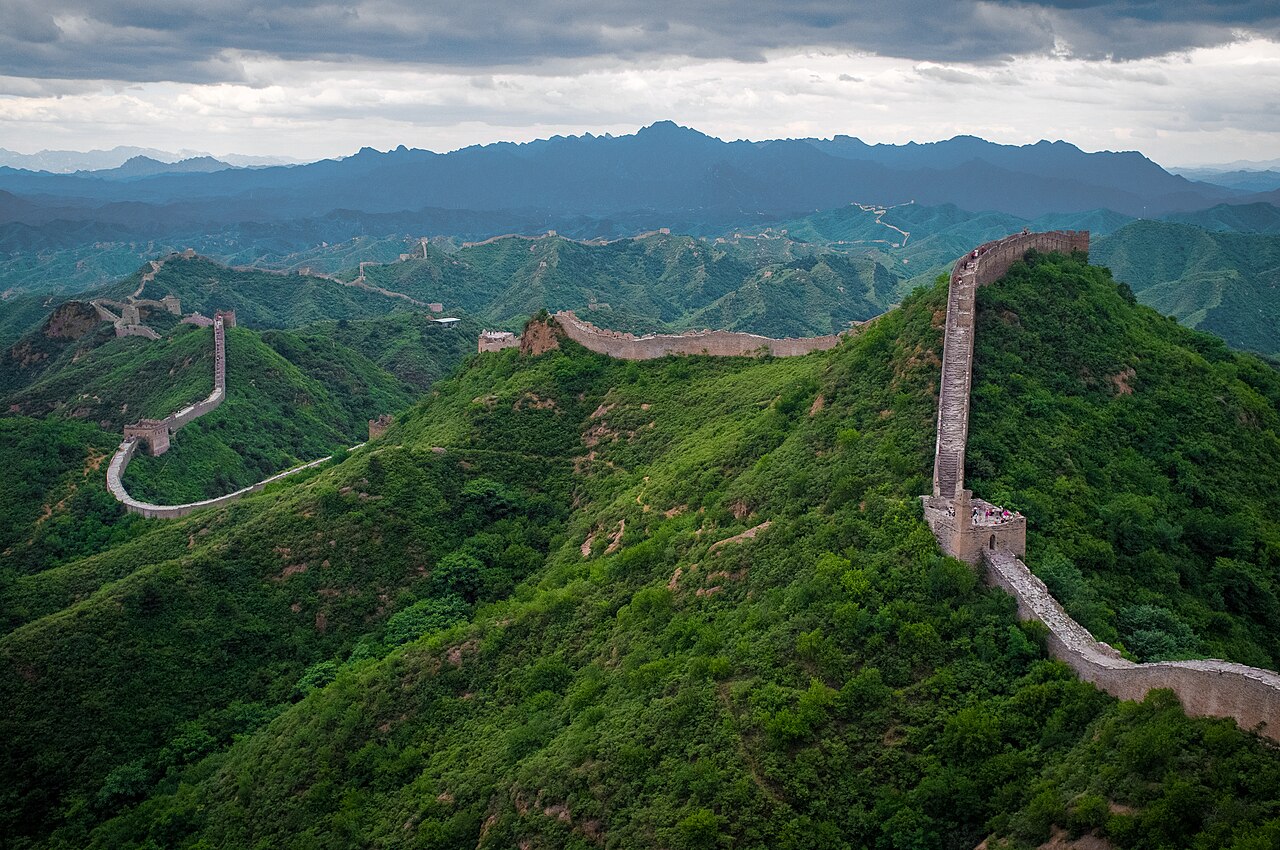
Mutianyu Great Wall charges CNY 45 for adult entry, as of 2026, with cable car, chairlift and toboggan sold separately, and sits about 73 kilometres northeast of central Beijing in Huairou District. The restored stretch runs about 2.25 kilometres with 23 numbered watchtowers along a ridge covered in oak and pine, built in granite blocks with brick parapets and arched crenellated towers. Tower 20 marks the end of the fully restored section; beyond it the wall crumbles into unrestored rubble, which is closed to visitors. Mutianyu draws fewer visitors than Badaling and offers a choice of ways up, from a 723-metre enclosed cable car to a 1,680-metre toboggan track that carries riders down in a wheeled cart with a hand brake.
Meilleur moment de la journée : 07:30-09:30. On a weekday, before the first tour buses arrive from Beijing and while the granite steps are still cool.
Horaires de Mutianyu Great Wall
- Horaires d'ouverture
- 07:30–17:30
Mon–Sun 07:30–18:00 and 08:00–17:30 - 07:30-18:00 from mid-March to mid-November; 08:00-17:30 from mid-November to mid-March (one source lists a 18:30 weekend close). Ticket sales end about an hour before closing.
- Fermé le
- Ouvert tous les jours
Bon à savoir : Toboggan runs about 08:00-17:00 in the high season and closes in rain, snow or high wind. Cable car runs 07:30-17:30 from mid-March to mid-November and 08:00-17:00 in winter.
Horaires d'ouverture établis à partir de r.visitbeijing.com.cn et de sources publiques, mis à jour le . Ils peuvent changer sans préavis — vérifiez avant de partir. Comment nous rédigeons ces guides
Prix d'entrée de Mutianyu Great Wall
| Billet | Prix |
|---|---|
| Billet standard | CN¥45 |
| Tarif réduit (étudiant / senior) | CN¥25 |
| Enfants | CN¥25 |
Entry is CNY 45 per adult, as of 2026 per Beijing tourism guides; one official-listing source shows CNY 40 with a CNY 45 'postcard' ticket, so verify at the ticket office. Children 1.2-1.4 m pay CNY 25 and those under 1.2 m are free. Extras are priced separately: cable car or chairlift CNY 100 one-way or CNY 140 return, toboggan descent CNY 100, internal shuttle bus CNY 20 return. Visitors aged 60 and over are reportedly not allowed on the toboggan. Bring a passport for real-name ticket checks.
Tarifs établis à partir de r.visitbeijing.com.cn et de sources publiques, mis à jour le . Ils peuvent changer sans préavis — vérifiez avant de partir. Comment nous rédigeons ces guides
Meilleure période pour visiter Mutianyu Great Wall
- Quiet
- Moderate
- Busy
- Very busy
07:30 - 09:30
First upBest time to go
Independent walkers reach the towers before tour buses; the light is best and stretches between towers are almost empty.
Quiet09:30 - 12:00
Tour bus wave
Coaches from Beijing arrive together; the cable car queue and the first towers fill up.
Busy12:00 - 15:00
Midday peak
Weekends and holidays bring long queues for the toboggan and shoulder-to-shoulder walking in the stairways.
Very busy15:00 - 17:30
Late afternoon
Groups leave; the light softens, but the toboggan and cable car stop selling tickets well before closing.
Moderate
Histoire de Mutianyu Great Wall
Mutianyu Great Wall traces its origin to a Northern Qi fortification in the sixth century, but the standing wall is Ming. Construction is commonly credited to General Xu Da at the start of the Ming dynasty in 1368, and it was rebuilt and strengthened from 1569 under General Qi Jiguang, who added the hollow watchtowers that let soldiers shelter and store supplies inside. Historians treat some of these attributions as traditional rather than confirmed.
The pass guarded the northern approach to the Ming capital through the mountains of Huairou, and its double-sided battlements, unusually, could be fought from both sides. The wall fell out of military use in the late Ming and Qing periods and was largely left to decay until restoration in the 1980s. Mutianyu opened to visitors in 1986 and has since added a cable car, billed as the first on the Great Wall, and a toboggan, which make it easier for less mobile visitors.
Règles et étiquette à Mutianyu Great Wall
Mutianyu Great Wall sells tickets at the entrance with a passport for real-name checks, and on weekends and holidays you should buy or book in advance through the official channel or a reputable platform. Steps are uneven granite that grows slick when wet, and hand rails are sparse on the steeper sections, so wear shoes with grip and skip sandals. Drones and large tripods are typically banned and tobogganing requires listening to the staff briefing and keeping a safe distance from the cart ahead.
Mutianyu prohibits climbing on unrestored sections beyond Tower 20, where the wall is unstable. Dropping litter and carving graffiti into the stone both attract fines. Vendors along the approach sell souvenirs and drinks at inflated prices, and taxi drivers at the car park quote high fares for the return journey to Beijing, so agree the price or book a return car ahead.
Conseils pour visiter Mutianyu Great Wall
- 1
Mutianyu Great Wall works best if you take the cable car or chairlift up and the toboggan down, which saves legs and gives the fastest visit; the round trip on foot to Tower 20 takes about three hours. Weekday mornings offer near-empty stretches between towers 6 and 14, and the section is spectacular in October when the hillsides turn red and gold.
- 2
Mutianyu is not reachable by metro, so decide early between the 916 bus to Huairou and a taxi or minibus onward (about CNY 12 plus CNY 30-50), a private driver (roughly CNY 800-1,500 per day), or a group tour (roughly CNY 350-500 per person). Pack water and a jacket, because temperatures at the top run cooler than in the city. Winter visits are quiet, but ice can close stairs and the toboggan.
Comment se rendre à Mutianyu Great Wall
Nous n'avons pas encore localisé Mutianyu Great Wall avec précision ; la carte montre les autres lieux de notre guide Beijing. Utilisez l'adresse ci-dessous ou le lien d'itinéraire.
Mutianyu Village, Huairou District, Beijing 101407, ChinaItinéraire sur Google Maps
Depuis Dongzhimen (Beijing)
73 km · 90-120 min total
CNY 12 bus plus CNY 30-50 onward
Depuis Central Beijing hotel
73 km · 75-90 min
CNY 800-1,500 per day
Depuis Beijing (organised tour)
73 km · 75-90 min each way
CNY 350-500 per person
Aéroport le plus proche
Depuis Beijing Capital International Airport (PEK), about 40 km; Beijing Daxing International Airport (PKX), about 110 km.
Gare la plus proche
Depuis No metro. Nearest hub is Dongzhimen (Line 2 and Line 13) for the 916 bus to Huairou, then a taxi or minibus to the Mutianyu entrance.
FAQ — Mutianyu Great Wall
How much does Mutianyu Great Wall cost in 2026?
CNY 45 per adult for entry, as of 2026, plus CNY 140 return for the cable car or chairlift and CNY 100 for the toboggan; another listing shows CNY 40, so verify at the ticket office.
How far is Mutianyu from Beijing?
About 73 kilometres northeast of central Beijing, roughly 75 to 90 minutes by car. There is no metro, so most visitors use a bus to Huairou followed by a taxi, a private driver or a tour.
Is Mutianyu better than Badaling?
For most visitors, yes. Mutianyu draws smaller crowds, is more heavily wooded and has a toboggan descent, while Badaling is easier to reach by train but far busier.
Can you ride the toboggan at Mutianyu in winter?
Only in dry weather. The toboggan closes in rain, snow and high wind, and visitors aged 60 and over are reportedly not allowed on it.
Rédigé avec l'assistance de l'IA à partir de sources officielles et de registres publics, et publié seulement après les vérifications décrites dans Comment nous rédigeons ces guides. Personne chez Traveliac ne s'est rendu sur place. Mis à jour le . Comment nous classons et vérifions les lieux