Mahabodhi Temple Complex
#1sur 5 lieux à visiter à Bodh GayaBodh Gaya, Bihar
Aussi appelé Mahabodhi Mahavihara · Great Enlightenment Temple · Vajrasana Temple
L'essentiel
Horaires d'ouverture : 05:00–21:00. L'entrée est gratuite. Comptez 1.5 hrs. Meilleure période : Dawn.
Mis à jour le · Rédigé par Traveliac, avec assistance IA · 6 min de lecture
- Horaires d'ouverture
- 05:00–21:00
- Prix d'entrée
- Gratuit
- Durée nécessaire
- 1.5 hrs
- Meilleur moment de la journée
- Dawn
- Meilleurs mois
- Oct – Feb
- Adresse
- Mahabodhi Temple Road, Bodh Gaya, Gaya District, Bihar 824231
À propos de Mahabodhi Temple Complex
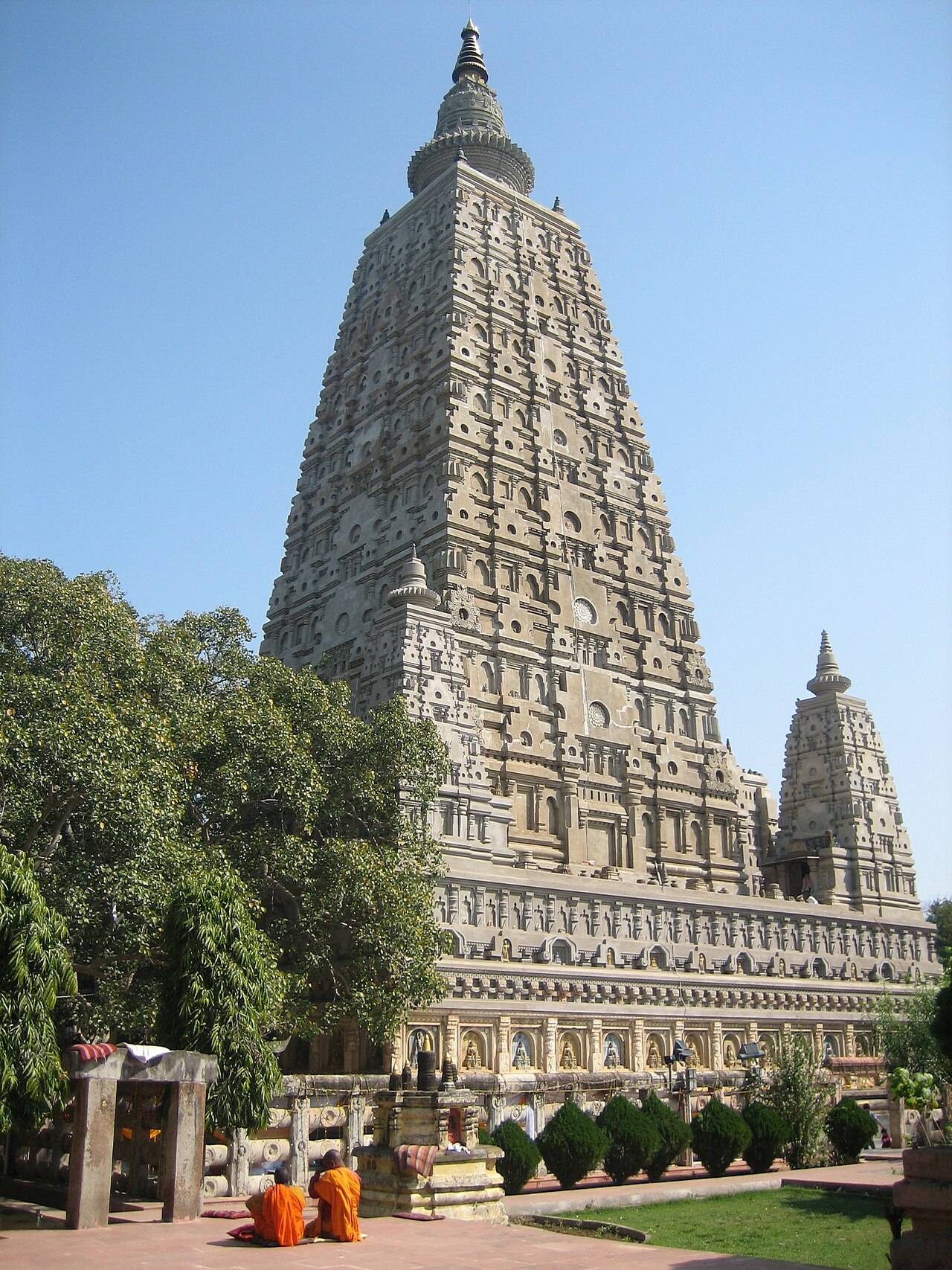
The Mahabodhi Temple Complex rises 55 metres above the flat Bihar plains in a tapering pyramidal tower of honey-coloured Chunar sandstone, its surface studded with carved niches holding seated Buddha figures at every level. It is the single most important sacred site in Buddhism — the ground where Siddhartha Gautama sat under a pipal tree and resolved, across six weeks of unbroken meditation, the nature of suffering and the path beyond it, an event the tradition places at around 528 BCE. What makes the complex unusual among great religious sites is its radical openness: unlike many Indian sacred sites, it permits entry to visitors of any faith, any nationality, any background. You may sit on the meditation platforms, join circumambulating monks from Bhutan or Myanmar in walking the outer pradakshina path, press your palms to the railing around the Bodhi Tree, or simply remain still in the courtyard and absorb the low chanting that surfaces from every direction. The architecture around you is not monumental in the way a cathedral imposes — it accumulates meaning through repetition, through the hundreds of votive stupas in weathered sandstone that crowd the lawns like a silent stone congregation, and through the sound of prayer in Pali, Sinhala, Japanese, Tibetan, Korean, and Thai occurring simultaneously within earshot of each other.
Meilleur moment de la journée : Dawn. 5:00 AM–7:30 AM for circumambulation in the quietest hour, when monks from resident monasteries perform pradakshina around the main tower and the quality of ochre morning light on the Chunar sandstone is unmatched. Late afternoon (4:00 PM–6:00 PM) is also productive — the park-like courtyard fills with meditating pilgrims and the tower catches the western light dramatically.
Photographie
₹100 pour la caméra
Horaires de Mahabodhi Temple Complex
- Horaires d'ouverture
- 05:00–21:00
Mon–Sun 05:00–21:00 - Fermé le
- Ouvert tous les jours
Bon à savoir : The complex is open 365 days a year. Special extended hours apply on full-moon days (Purnima) and major Buddhist festivals such as Buddha Purnima (Vaishakha) and Mahabodhi Mahotsav. During the Kalachakra Puja — a major Tibetan Buddhist ceremony held every few years — the grounds can be accessed around the clock for certain meditation areas.
Horaires d'ouverture établis à partir de sources publiques ; ce lieu n'a pas de site officiel référencé, mis à jour le . Ils peuvent changer sans préavis — vérifiez avant de partir. Comment nous rédigeons ces guides
Prix d'entrée de Mahabodhi Temple Complex
| Billet | Prix |
|---|---|
| Visiteurs indiens | Free |
| Visiteurs étrangers | Free |
| Enfants | Gratuit |
| Caméra | ₹100 |
Entry to the main temple courtyard and the Bodhi Tree enclosure is free for all visitors regardless of nationality or religion. A camera fee of ₹100 applies for still cameras; video cameras cost ₹200. Mobile phone photography is permitted without charge throughout the complex. The inner sanctum of the main shrine has no separate fee but requires removal of footwear and adherence to a no-photography rule enforced by temple guards.
Tarifs établis à partir de sources publiques ; ce lieu n'a pas de site officiel référencé, mis à jour le . Ils peuvent changer sans préavis — vérifiez avant de partir. Comment nous rédigeons ces guides
Meilleure période pour visiter Mahabodhi Temple Complex
- Quiet
- Moderate
- Busy
- Very busy
5:00 AM – 7:30 AM
Monks' HourBest time to go
Resident monastics from surrounding countries begin pradakshina circuits. The courtyard holds perhaps 50–100 people. Security staff are alert but not intrusive. The best window for meditation, photography of the tower, and quiet proximity to the Bodhi Tree enclosure.
Quiet7:30 AM – 10:00 AM
Morning Pilgrimage
Independent pilgrims and smaller tour groups begin arriving. Individual darshan queues form at the inner sanctum. Still manageable for contemplative visitors who move counter to the tour group flow.
Moderate10:00 AM – 2:00 PM
Peak Tourist Hours
Large bus-tour groups from Varanasi, Patna, and Kolkata dominate. The inner sanctum queue extends 20–30 minutes. The Bodhi Tree enclosure becomes congested. Avoid this window if possible; if unavoidable, use the western meditation lawn which tour guides rarely lead groups toward.
Very busy2:00 PM – 4:00 PM
Midday Lull
Heat drives groups back to hotels. The complex quietens substantially. The light is harsh for photography but the meditation platforms are largely vacant.
Moderate4:00 PM – 7:00 PM
Evening Congregation
Pilgrims return for evening prayers and circumambulation. The tower is lit from below after sunset, creating dramatic photography conditions. Full-moon evenings see the complex overflow with thousands of meditating devotees; deeply atmospheric but almost impossible to move through quietly.
Busy7:00 PM – 9:00 PM
Final Hour
Most tour groups have departed. The complex is lit, quiet, and accessible. Security staff begin redirecting people toward the exits 15 minutes before the 9 PM closure.
Quiet
Histoire de Mahabodhi Temple Complex
The site's documented history begins with Emperor Ashoka, who visited Bodh Gaya around 260 BCE and is credited with constructing the first brick shrine — the Vajrasana, or Diamond Throne — at the precise spot of the enlightenment. Ashoka's accounts, corroborated by the 7th-century CE Chinese pilgrim Xuanzang (also romanised as Hiuen Tsang), describe a monastery and shrine already established when he arrived; the current tower is believed to incorporate elements of a 2nd-century BCE structure on the Ashokan foundations.
The distinctive Shikhara-style tower — a form more commonly associated with North Indian Hindu temple architecture — is believed to date in its current form to the 5th–6th century CE, during the Gupta period. The tower was repeatedly restored and altered: by Burmese royal missions in the 11th and 13th centuries, by the Pala dynasty kings who patronised Buddhism extensively, and most controversially by a 19th-century restoration commissioned by the British government under J.D.M. Beglar (1880–1884), working from Burmese drawings and earlier documentation by archaeologist Alexander Cunningham. That Victorian restoration removed centuries of accumulated additions and restored details based partly on conjecture — a fact that continues to generate scholarly debate.
Control of the site has been a source of sustained dispute. After a period of Shaivite Hindu management beginning in the medieval period, the Bodh Gaya Temple Act of 1949 established a management committee split between Hindus and Buddhists — a compromise that Ambedkarite and international Buddhist organisations have periodically contested. In 2002, UNESCO inscribed the complex as a World Heritage Site under the criterion of outstanding universal value. The site has withstood at least two bomb attacks by militant groups in 2013, after which the Bihar government significantly increased security infrastructure around the perimeter.
Règles et étiquette à Mahabodhi Temple Complex
Footwear must be removed before entering any part of the main temple courtyard; a free shoe deposit counter operates near the main gate from 5 AM to 9 PM. Socks are acceptable and advisable — the sandstone paving stones become extremely hot in summer midday sun. There is no formal dress code enforced at the gate, but exposed shoulders and short clothing draw disapproval from monastics and may invite pointed requests from temple staff. Lightweight scarves or shawls, available from vendors outside the main gate for ₹30–₹50, serve the purpose.
Photography of the main Buddha idol in the inner sanctum is strictly prohibited; signs are posted in multiple languages and temple guards enforce this with consistency. Photography of the Bodhi Tree and the outer towers is permitted. Drones are not allowed within the complex or in low-altitude airspace above it — violators have had equipment confiscated by the CISF security personnel now stationed at the complex.
Meditation is encouraged in designated areas on the courtyard lawns — practitioners often mark out small spaces with a mat or shawl. Do not interrupt meditating individuals by standing directly over them or photographing them at close range. Circumambulation of the main tower is done clockwise; moving counter-clockwise against the flow of monks causes genuine irritation. Vendors are not permitted inside the main compound, but aggressive flower and incense sellers operate just outside the entrance gate — decline firmly without extended engagement.
Conseils pour visiter Mahabodhi Temple Complex
- 1
Arrive at the 5 AM opening for the cleanest light, the coolest air, and the spectacle of monks from a dozen traditions beginning their pradakshina circuits as the first light touches the tower top. By 9 AM, tour groups arrive and the courtyard loses its contemplative quality entirely.
- 2
The circuit of nearby international monasteries — Thai, Japanese, Tibetan, Bhutanese, Vietnamese, Chinese, Taiwanese, Bangladeshi — can be done on foot in half a day and provides a visual survey of Buddhist architectural styles across Asia that is available nowhere else. These monasteries are free to enter; some serve meals to the public or offer meditation instruction. The Indosan Nipponji Japanese Temple (1972) and the Royal Bhutan Monastery are particularly worth the short walk.
- 3
The Archaeological Museum, 500 metres from the main gate, holds sculptural fragments from the complex and surrounding sites dating from the Mauryan through Pala periods. Entry is ₹15 for Indians, ₹200 for foreigners. It is poorly lit and unhumanly hot in summer but contains genuinely important pieces, including original Ashokan-period railings replaced by copies inside the complex.
- 4
Auto-rickshaws from the main gate to Gaya Junction should cost ₹80–₹120 — agree before boarding; the driver will quote ₹250 to any foreign face initially. If walking to the ghat road, shared autos to the market charge ₹10–₹20 per seat.
Comment se rendre à Mahabodhi Temple Complex
L'étoile rouge indique Mahabodhi Temple Complex ; les repères numérotés sont les 2 lieux les plus proches de nos guides, chacun avec son classement dans sa ville. Touchez un repère pour plus de détails.
Mahabodhi Temple Road, Bodh Gaya, Gaya District, Bihar 824231Itinéraire sur Google Maps
Depuis Gaya Junction Railway Station
₹80–₹12013 km · 25–35 min
Negotiate before boarding; prepaid counter at station quotes ₹200
Depuis Gaya International Airport (GAY)
₹150–₹2508 km · 15–20 min
For taxi; ₹80–₹120 for auto-rickshaw
Depuis Bodh Gaya Main Market (Mahabodhi Road)
₹10–₹200.5 km · 6–10 min
Cycle-rickshaw; free on foot
Depuis Patna Junction
₹55–₹120110 km · 120–150 min (train) + 35 min (auto)
Sleeper class train) + ₹80–₹120 (auto
Aéroport le plus proche
Depuis Gaya International Airport (GAY)
8 km, approximately 20 minutes by auto-rickshaw
Gare la plus proche
Depuis Gaya Junction Railway Station
13 km, approximately 30 minutes by auto-rickshaw
FAQ — Mahabodhi Temple Complex
Can non-Buddhists and non-Hindus enter the Mahabodhi Temple Complex?
Yes. The Mahabodhi Temple Complex is open to visitors of all faiths and nationalities. There is no religious declaration required at the entrance. The only restrictions are behavioural: shoes must be removed, photography is prohibited inside the main shrine chamber, and a degree of quiet decorum is expected in meditation areas. Non-Buddhists are welcome to observe prayers, sit in the courtyard, and walk the pradakshina path.
Is there a dress code?
No strictly enforced dress code, but sleeveless garments and shorts above the knee are considered disrespectful and may result in polite requests from temple staff. A light scarf wrapped over the shoulders solves the issue. The shoe deposit counter at the gate is free and reliable.
What is the best time of year to visit?
October through February. The air is clear, temperatures are tolerable (15–28°C during the day), and the pilgrimage season is at its peak, which paradoxically makes the atmosphere more charged and alive. The monsoon months (July–September) are hot and humid; the temple complex itself is accessible but the surrounding town floods partially and road travel becomes difficult.
Are audio guides or licensed guides available?
The Archaeological Survey of India does not post official guides at the complex gates. Several private guides offer their services near the entrance — rates are negotiable, typically ₹300–₹500 per hour for English-language guidance. Verify their government-issued guide licence (a laminated card with photo issued by the Bihar Tourism department) before engaging. Many who approach foreign visitors are unlicensed and provide inaccurate historical information.
How long should I budget for a visit?
A minimum of 90 minutes is needed to walk the complex at a reasonable pace: main tower, inner sanctum, Bodhi Tree enclosure, Animesh Lochana Chaitya, the sacred pond, and the outer pradakshina path. For those wishing to meditate or sit for extended periods, half a day is more realistic. A full day including the Archaeological Museum and the surrounding international monasteries is the ideal allocation.
Rédigé avec l'assistance de l'IA à partir de sources officielles et de registres publics, et publié seulement après les vérifications décrites dans Comment nous rédigeons ces guides. Personne chez Traveliac ne s'est rendu sur place. Mis à jour le . Comment nous classons et vérifions les lieux
Lieux à visiter près de Mahabodhi Temple Complex
Distances à vol d'oiseau, depuis notre carte ; les durées sont estimées.