
Jhulta Minar (Shaking Minarets of Sidi Bashir Mosque)
#8Ahmedabad में घूमने की 10 जगहों में सेAhmedabad, Gujarat
इन्हें भी कहा जाता है Jhulta Minara
संक्षिप्त उत्तर
खुलने का समय: No fixed opening hours. प्रवेश निःशुल्क है। 20 min का समय रखें। सबसे अच्छा समय: Morning।
अपडेट किया गया · तैयार किया गया Traveliac, AI की मदद से · 5 मिनट का पठन
- खुलने का समय
- No fixed hours
- Daylight hours, informally accessible; there are no fixed opening or closing times or gate staff
- प्रवेश शुल्क
- निःशुल्क
- आवश्यक समय
- 20 min
- दिन का सबसे अच्छा समय
- Morning
- सबसे अच्छे महीने
- Oct – Mar
- पता
- Sarangpur, near Kalupur Railway Station, Ahmedabad, Gujarat 380002
Jhulta Minar (Shaking Minarets of Sidi Bashir Mosque) के बारे में
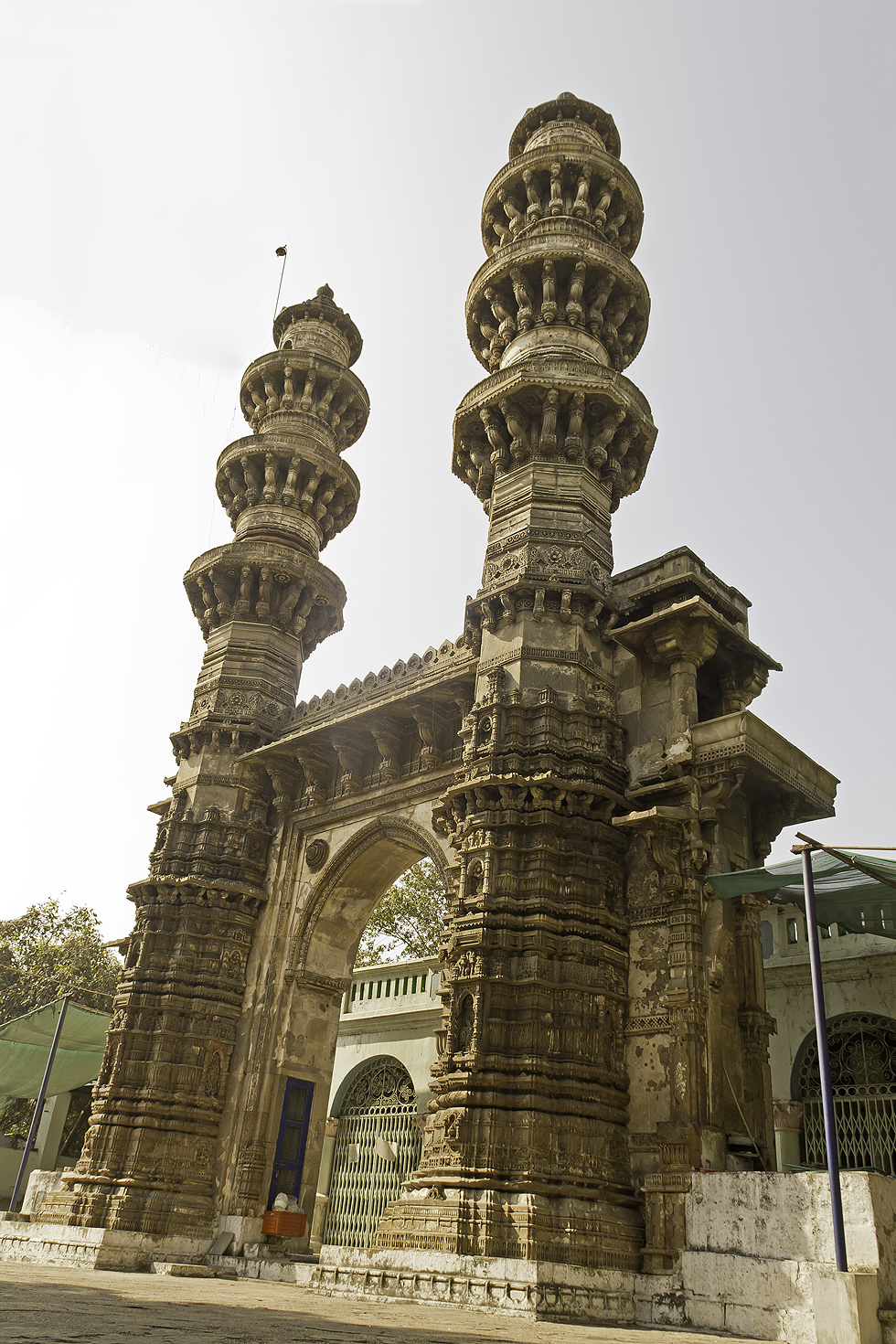
Only a fragment of the original Sidi Bashir Mosque survives — the twin-minaret entrance facade, standing more or less isolated in a small compound a short walk from Kalupur Railway Station, the rest of the mosque body having been demolished in the nineteenth century to make way for the railway line that now runs immediately behind it. What survives is nonetheless one of the more genuinely strange structures in Indian architecture: two carved stone minarets, connected internally to the facade at their base but structurally independent of one another above it, engineered so that shaking one minaret at its upper gallery would set it oscillating while the second minaret, and the connecting facade between them, remained still. The mosque was built in 1452 under the patronage of Sidi Bashir, an Abyssinian noble in the service of the Gujarat Sultanate — one of several such Sultanate-era officials of Sidi (East African) origin whose names attach to Ahmedabad monuments, alongside the more famous Sidi Saiyyed.
दिन का सबसे अच्छा समय: Morning। 08:00–10:00, when the surrounding railway-station traffic and street congestion are comparatively lighter, making the short walk from Kalupur station less chaotic.
Jhulta Minar (Shaking Minarets of Sidi Bashir Mosque) का समय
- खुलने का समय
- No fixed hours
Mon–Sun No fixed hours - Daylight hours, informally accessible; there are no fixed opening or closing times or gate staff
- बंद रहता है
- हर दिन खुला
खुलने का समय gujarattourism.com और सार्वजनिक रिकॉर्ड से तैयार किया गया, आख़िरी बार को अपडेट किया गया. ये बिना सूचना के बदल सकते हैं — यात्रा से पहले पुष्टि करें। हम ये गाइड कैसे लिखते हैं
Jhulta Minar (Shaking Minarets of Sidi Bashir Mosque) टिकट मूल्य
| टिकट | कीमत |
|---|---|
| भारतीय आगंतुक | Free |
| विदेशी आगंतुक | Free |
| बच्चे | निःशुल्क |
| कैमरा | निःशुल्क |
Entry to the surviving facade and compound is free. There is no ticket counter and no formal visitor infrastructure — this is a small, somewhat overlooked monument rather than a managed tourist site. Direct shaking of the minarets by visitors is no longer possible or permitted; see rulesEtiquette.
कीमतें gujarattourism.com और सार्वजनिक रिकॉर्ड से तैयार किया गया, आख़िरी बार को अपडेट किया गया. ये बिना सूचना के बदल सकते हैं — यात्रा से पहले पुष्टि करें। हम ये गाइड कैसे लिखते हैं
Jhulta Minar (Shaking Minarets of Sidi Bashir Mosque) घूमने का सही समय
- Quiet
- Moderate
- Busy
08:00–10:00
Morning, lighter station trafficBest time to go
The surrounding Kalupur station area is comparatively calmer at this hour, making the short approach walk easier. The monument itself rarely attracts more than a handful of visitors at any time.
Quiet10:00–17:00
Daytime station rush
Heavy pedestrian, auto-rickshaw, and vendor activity around Kalupur station spills into the immediate neighbourhood, though this is general area congestion rather than crowding at the monument itself.
Moderate17:00–19:00
Evening station rush
Peak commuter traffic around the station makes the approach on foot or by auto noticeably slower; the monument compound itself remains quiet regardless.
Busy19:00 onward
Evening
The site has no lighting installation of note and is not a night-visit destination; most travellers visit during daylight hours as part of a station-adjacent stop.
Quiet
Jhulta Minar (Shaking Minarets of Sidi Bashir Mosque) का इतिहास
Sidi Bashir constructed the mosque in 1452 during the reign of the Gujarat Sultanate, in the same broad architectural period that produced the Jama Masjid and the earliest phase of the city's stepwell tradition. The mosque's main prayer hall and courtyard were demolished during the nineteenth century as the British-era railway network expanded through Ahmedabad and Kalupur station's yards required the land the mosque occupied; only the entrance facade, with its paired minarets flanking a central arch, was preserved — reportedly because contemporary engineers and administrators recognised the structural curiosity of the shaking minarets and intervened to save that portion specifically.
The minarets' oscillation mechanism became a subject of genuine scientific curiosity in the colonial period. British engineers investigated the phenomenon in the nineteenth century and, in the process of trying to understand the internal structure, partially dismantled sections of at least one minaret — an intervention that is widely reported to have permanently altered its vibrational behaviour. Multiple similar 'shaking minaret' mosques exist elsewhere in Ahmedabad, including at Raj Bibi Mosque, suggesting this was a known constructional technique among the city's Sultanate-era builders rather than a singular accident, likely intended partly as an earthquake-resilience measure — a minaret engineered to flex independently of its neighbour and of the main structure is less likely to transmit destructive seismic stress across the whole facade.
Jhulta Minar (Shaking Minarets of Sidi Bashir Mosque) के नियम व शिष्टाचार
Visitors can no longer climb the minarets or manually shake them to observe the effect; the practice was discontinued for structural preservation reasons, and the interior stairwells are generally closed to public access. What remains visible and appreciable is the facade itself and its historical explanation, rather than a hands-on demonstration.
The site sits in a busy, unglamorous railway-adjacent neighbourhood rather than a tended heritage garden, and visitors should set expectations accordingly — this is a five-minute stop for the specific curiosity of the structure and its story, not a leisurely heritage-park visit. Basic respect for the site as a protected monument applies: no climbing on the fragile stonework, no removal of any loose material.
As an isolated facade rather than an active mosque, there is no prayer-time access restriction, though the immediate area can be crowded with rail-station foot traffic and vendor activity at most hours.
Jhulta Minar (Shaking Minarets of Sidi Bashir Mosque) जाने के लिए टिप्स
- 1
Given its five-to-twenty-minute visit duration and its location barely a kilometre from Kalupur station, Jhulta Minar works best as a first or last stop for travellers arriving or departing by train — walk or take a two-minute auto-rickshaw ride from the station forecourt before heading elsewhere in the city, rather than making a dedicated trip across town for it alone.
- 2
The story is the primary attraction rather than the visual spectacle — the facade itself is modest compared to the Jama Masjid or Sidi Saiyyed Mosque, and visitors expecting a grand standalone monument may be underwhelmed on arrival. Reading the engineering explanation beforehand substantially improves the visit, since the structure's significance is not obvious from looking at it without that context.
- 3
Because the site has no formal visitor infrastructure, there are no guides stationed here and no interpretive signage to speak of at the compound itself; if a specific historical account matters to your itinerary, research it in advance rather than expecting to learn it on-site.
Jhulta Minar (Shaking Minarets of Sidi Bashir Mosque) कैसे पहुंचें
लाल तारा Jhulta Minar (Shaking Minarets of Sidi Bashir Mosque) है; नंबर वाले पिन हमारी गाइड की 7 सबसे नज़दीकी जगहें हैं, हर एक अपने शहर में अपनी रैंक के साथ. विवरण के लिए पिन पर टैप करें।
Sarangpur, near Kalupur Railway Station, Ahmedabad, Gujarat 380002Google Maps में दिशा-निर्देश
Ahmedabad Junction Railway Station (ADI) से
₹20–301 km · 5–10 min
By auto; free on foot
Sardar Vallabhbhai Patel International Airport (AMD) से
₹320–46015 km · 30–45 min
Jama Masjid, Ahmedabad से
₹40–602 km · 10–15 min
नज़दीकी हवाई अड्डा
Sardar Vallabhbhai Patel International Airport, Ahmedabad (AMD) से
approximately 15 km northwest
नज़दीकी रेलवे स्टेशन
Ahmedabad Junction, Kalupur (ADI) से
approximately 1 km, easily the closest site in this guide to the railway station
Jhulta Minar (Shaking Minarets of Sidi Bashir Mosque) — अक्सर पूछे जाने वाले सवाल
Can visitors still shake the minarets to see the effect for themselves?
No. The interior stairwells that once allowed access to the upper galleries where the shaking effect was demonstrated are generally closed to the public for structural preservation reasons. Visitors today see and learn about the phenomenon rather than experiencing it hands-on.
Why does only the facade of Sidi Bashir Mosque survive?
The mosque's main prayer hall and courtyard were demolished in the nineteenth century when the British-era railway network expanded and Kalupur station's yards required the land. Only the entrance facade with its paired minarets was preserved, reportedly because its structural curiosity was recognised and specifically protected.
How does the shaking-minaret mechanism actually work?
The two minarets are structurally independent of one another above their shared base, though visually connected by the facade between them. Shaking one at its upper gallery sets it oscillating while the other minaret and the connecting structure remain still — a vibration-isolation technique also found at other Ahmedabad mosques, such as Raj Bibi Mosque, and likely intended in part as an earthquake-resilience measure.
Is Jhulta Minar worth a dedicated trip, or only a quick stop?
It is best treated as a five-to-twenty-minute stop given its location barely a kilometre from Kalupur Railway Station, ideal for travellers arriving or departing by train. The facade itself is modest in scale, and the site's interest lies mainly in its engineering story rather than in grand visual spectacle.
आधिकारिक स्रोतों और सार्वजनिक रिकॉर्ड से AI की मदद से तैयार किया गया, और इसमें दी गई जांच के बाद ही प्रकाशित किया गया हम ये गाइड कैसे लिखते हैं. Traveliac से किसी ने भी इस जगह का दौरा नहीं किया है। आख़िरी बार को अपडेट किया गया। हम जगहों को कैसे रैंक और जांच करते हैं
Jhulta Minar (Shaking Minarets of Sidi Bashir Mosque) के पास घूमने की जगहें
दूरियां हमारे मानचित्र से सीधी-रेखा में हैं; समय अनुमानित है।
 #4 in Ahmedabadनिःशुल्क प्रवेश
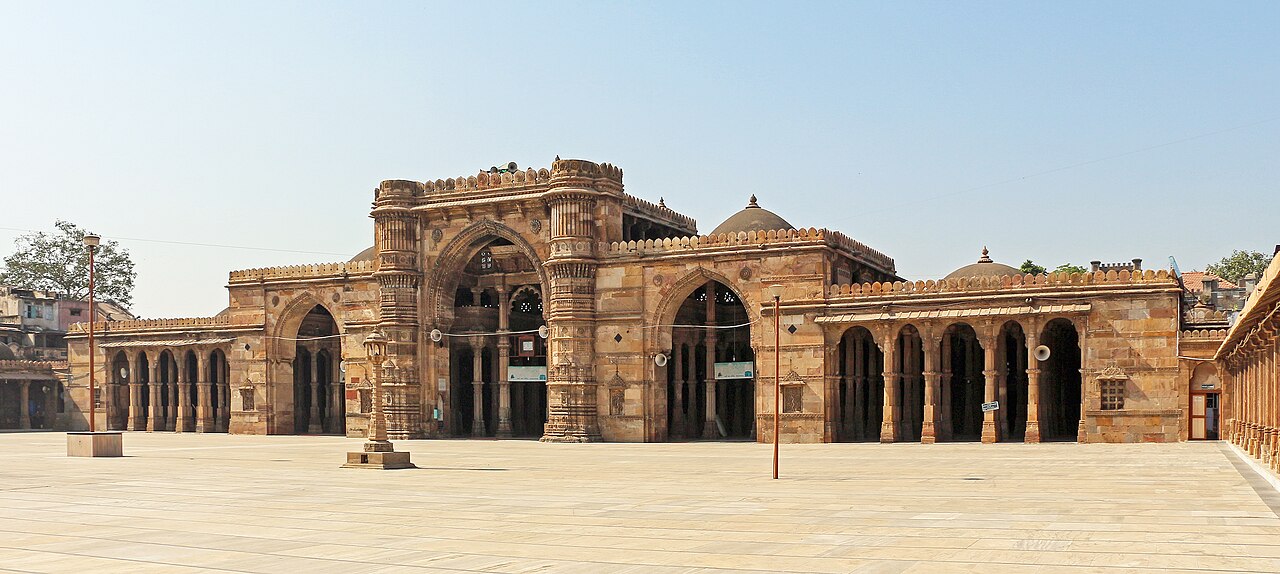
Jama Masjid, Ahmedabad
मस्जिद · 1.3 km · about 21 min walk
 #3 in Ahmedabadनिःशुल्क प्रवेश
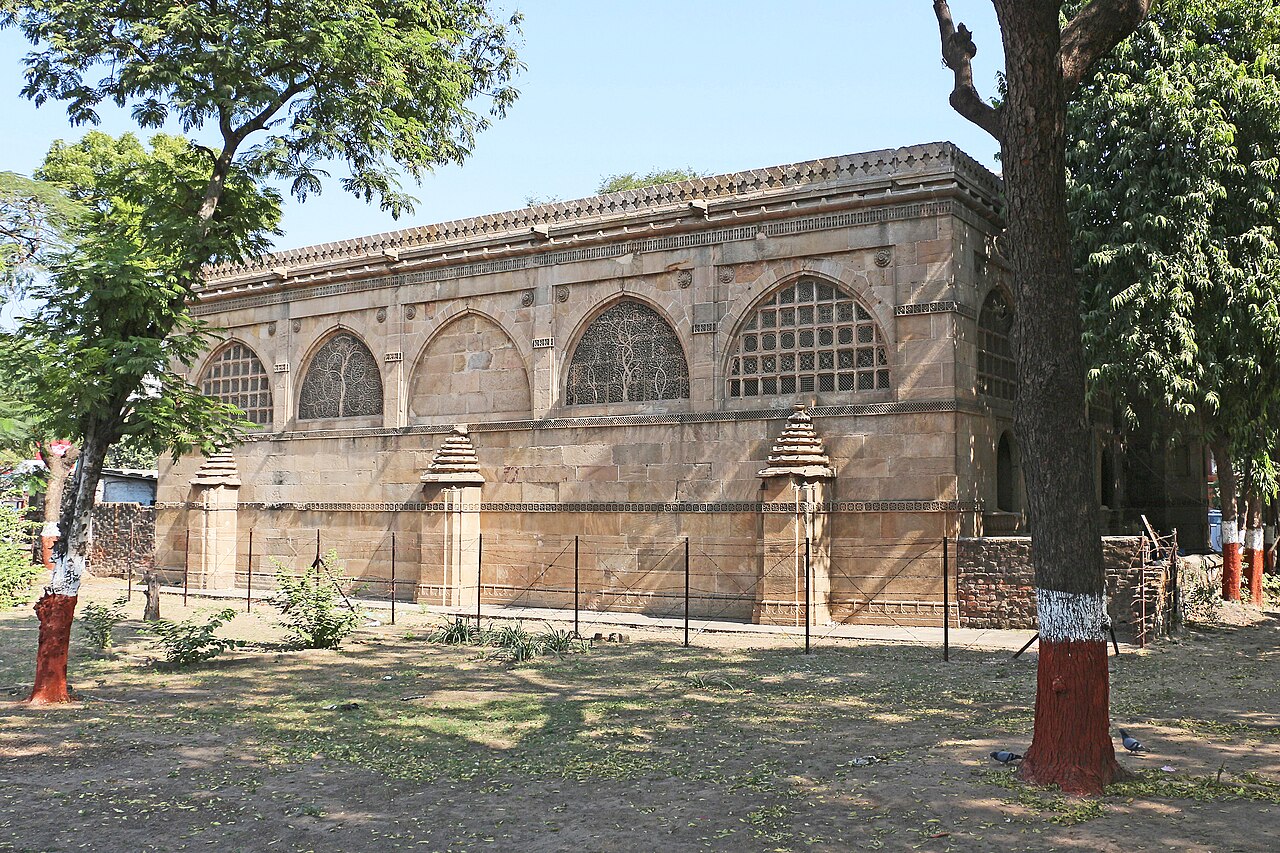
Sidi Saiyyed Mosque
मस्जिद · 1.9 km · about 32 min walk
 #9 in Ahmedabad
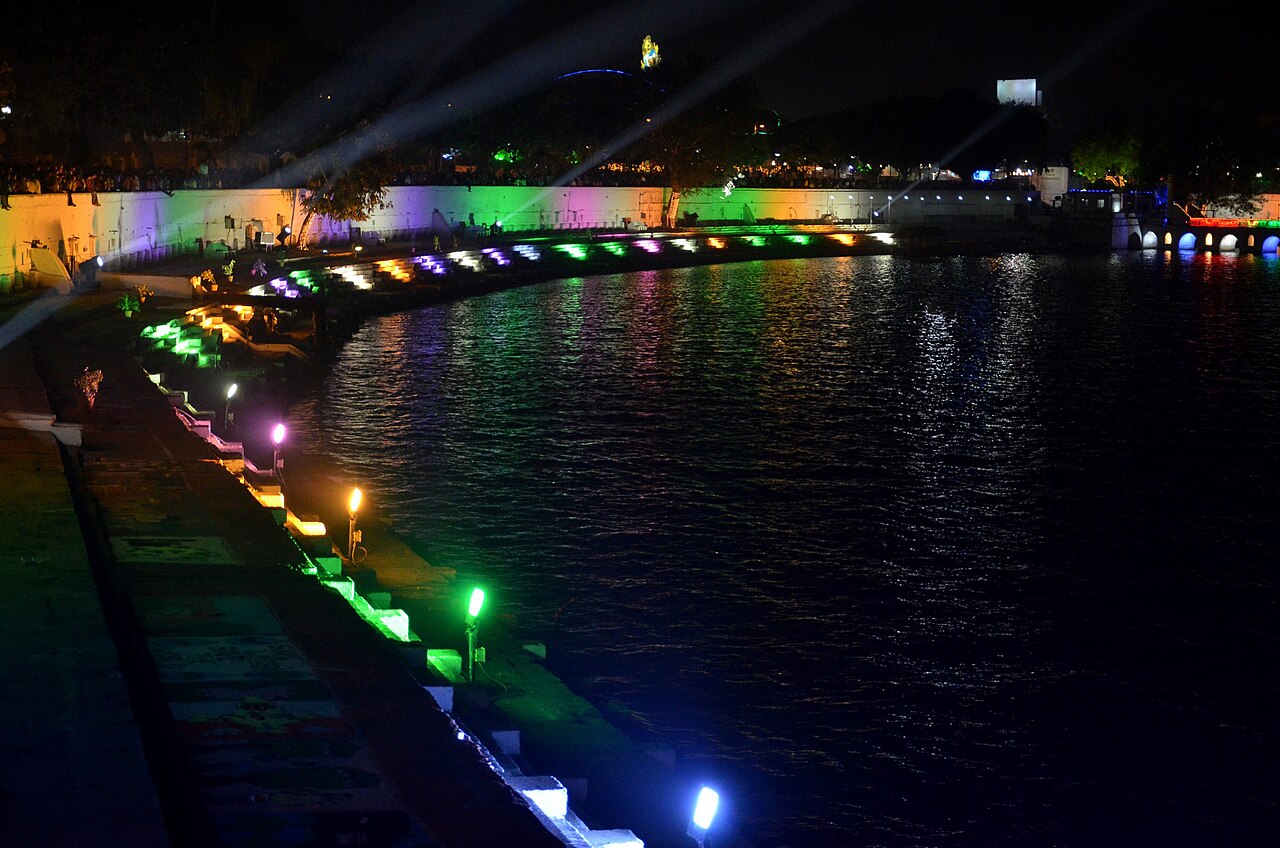
Kankaria Lake
झील · 2.0 km · about 32 min walk
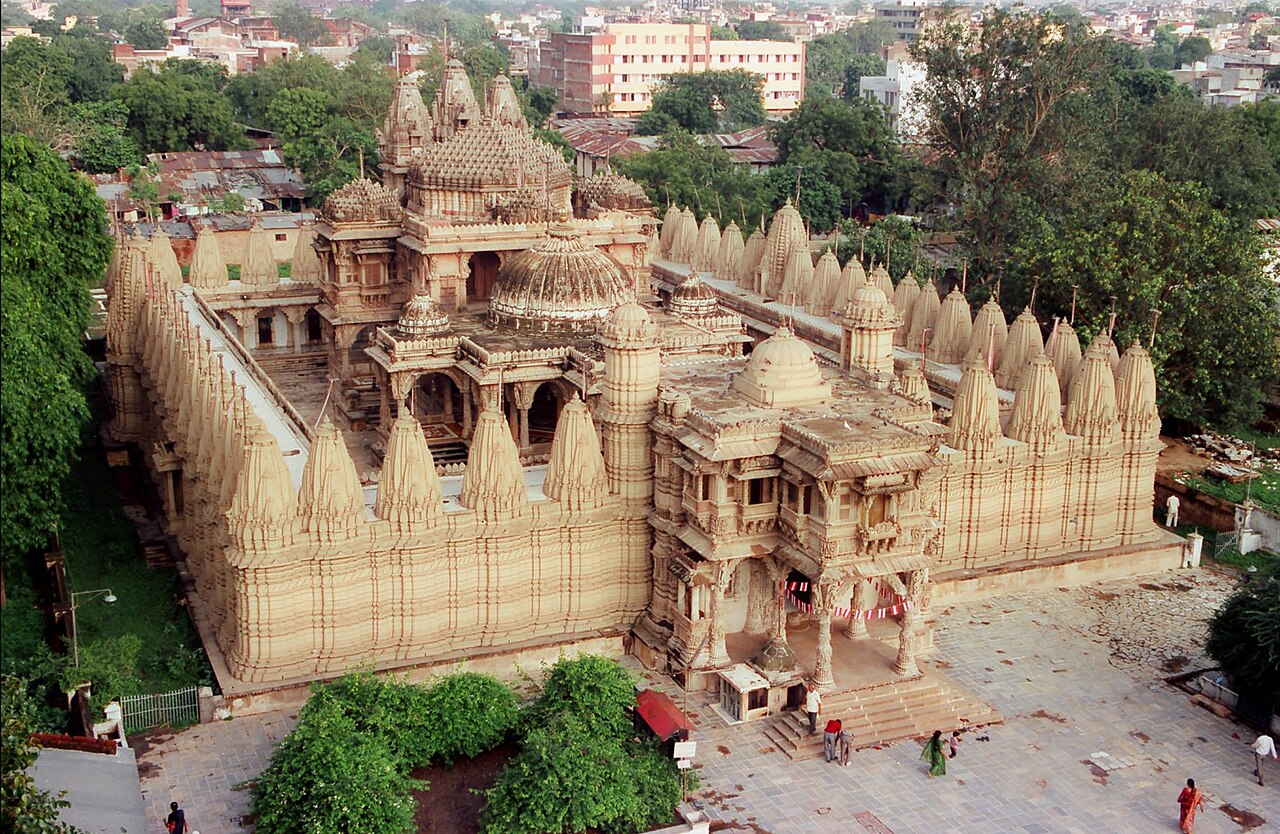 #6 in Ahmedabadनिःशुल्क प्रवेश
Hutheesing Jain Temple
जैन मंदिर · 2.2 km · about 36 min walk