Indosan Nipponji Japanese Temple
#4Bodh Gaya में घूमने की 5 जगहों में सेBodh Gaya, Bihar
इन्हें भी कहा जाता है Japanese Monastery Bodh Gaya · Indosan Nippon Japanese Temple
संक्षिप्त उत्तर
खुलने का समय: 05:30–11:30 and 14:00–18:00. प्रवेश निःशुल्क है। 30 min का समय रखें। सबसे अच्छा समय: Early morning।
अपडेट किया गया · तैयार किया गया Traveliac, AI की मदद से · 4 मिनट का पठन
- खुलने का समय
- 05:30–18:00
- प्रवेश शुल्क
- निःशुल्क
- आवश्यक समय
- 30 min
- दिन का सबसे अच्छा समय
- Early morning
- सबसे अच्छे महीने
- Oct – Feb
- पता
- Near the Great Buddha Statue, Bodh Gaya, Gaya District, Bihar 824231
Indosan Nipponji Japanese Temple के बारे में
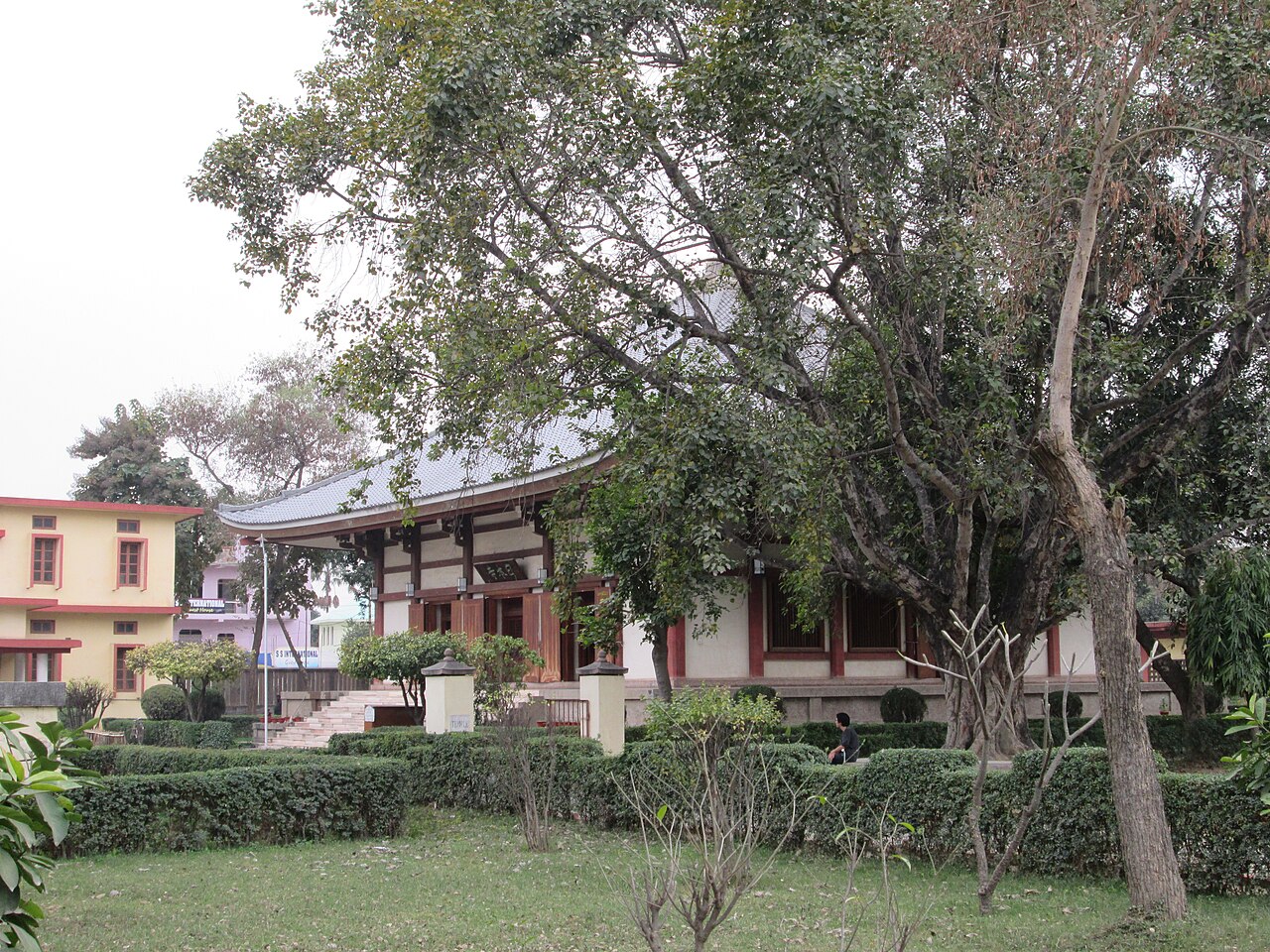
Indosan Nipponji is the deliberate opposite of the gilded, high-colour temples that dominate Bodh Gaya's monastery belt — a plain dark-timber structure with a steeply pitched shingled roof, sliding wooden screens, and a raked-gravel forecourt that would look at home outside Kyoto rather than on the Bihar plain. Built in 1972, it was among the first wave of national monasteries to formalise a Japanese Buddhist presence at the site of the enlightenment, and its interior carries the same restraint as its exterior: a large gilded seated Buddha image under a plain wooden canopy, framed by painted panels tracing scenes from the Buddha's life in a spare, linear style closer to Japanese ink painting than to the dense narrative murals found at the nearby Bhutanese and Tibetan monasteries. The temple's quiet is not incidental — it is a working meditation hall for a resident community, and the architecture is built explicitly to support that use rather than to impress visitors on arrival.
दिन का सबसे अच्छा समय: Early morning। When the temple's plain wooden architecture and raked gravel forecourt are at their most legible in low-angle light and before day-trip groups arrive from the Great Buddha Statue 500 metres away.
Indosan Nipponji Japanese Temple का समय
- खुलने का समय
- 05:30–18:00
Mon–Sun 05:30–11:30 and 14:00–18:00 - बंद रहता है
- हर दिन खुला
खुलने का समय tourism.bihar.gov.in और सार्वजनिक रिकॉर्ड से तैयार किया गया, आख़िरी बार को अपडेट किया गया. ये बिना सूचना के बदल सकते हैं — यात्रा से पहले पुष्टि करें। हम ये गाइड कैसे लिखते हैं
Indosan Nipponji Japanese Temple टिकट मूल्य
| टिकट | कीमत |
|---|---|
| भारतीय आगंतुक | Free |
| विदेशी आगंतुक | Free |
| बच्चे | निःशुल्क |
| कैमरा | निःशुल्क |
No admission or camera fee. Photography of the exterior and garden is unrestricted; photography inside the main hall during meditation or drum ceremony sessions is discouraged, though the hall itself may be photographed when empty of practitioners.
कीमतें tourism.bihar.gov.in और सार्वजनिक रिकॉर्ड से तैयार किया गया, आख़िरी बार को अपडेट किया गया. ये बिना सूचना के बदल सकते हैं — यात्रा से पहले पुष्टि करें। हम ये गाइड कैसे लिखते हैं
Indosan Nipponji Japanese Temple घूमने का सही समय
- Quiet
- Moderate
5:30 AM – 7:30 AM
Morning MeditationBest time to go
Resident monks conduct morning practice, sometimes including drum ceremony. Very few outside visitors; the hall and forecourt are close to silent.
Quiet7:30 AM – 11:30 AM
Independent Visitor Window
Small numbers of independent travellers and pilgrims visit, often en route to or from the Great Buddha Statue. The temple rarely feels crowded even at its busiest natural point.
Quiet11:30 AM – 2:00 PM
Midday Closure
The temple observes a midday closure. The forecourt gate is not physically locked but the hall itself is not open for visits.
Quiet2:00 PM – 6:00 PM
Afternoon Reopening
Reopens for the afternoon; visitor numbers remain modest by Bodh Gaya standards even during peak pilgrimage months, tapering off well before the 6:00 PM close.
Moderate
Indosan Nipponji Japanese Temple का इतिहास
The temple was constructed in 1972, funded and built with the active involvement of Japanese Buddhist organisations re-establishing a formal presence at Bodh Gaya during a period when several nations were completing their own national monasteries at the site. Nichidatsu Fujii, the Japanese Buddhist monk best known for founding the Nipponzan-Myohoji order and for building peace pagodas across Asia, is closely associated with the temple's establishment and with the broader mid-twentieth-century project of restoring active Japanese Buddhist institutions to the birthplace of the religion. The temple's construction overlapped with, and is often confused with, the separate project — led by the Daijokyo sect — that produced the 25-metre Great Buddha Statue standing 500 metres away and inaugurated in 1989 by the 14th Dalai Lama; the two sites share Japanese Buddhist patronage but are administratively distinct. Indosan Nipponji has operated continuously since 1972 as a functioning temple rather than a monument, hosting resident monks, visiting Japanese pilgrimage groups, and periodic ceremonies tied to the Japanese Buddhist calendar.
Indosan Nipponji Japanese Temple के नियम व शिष्टाचार
Shoes are removed before stepping onto the raised wooden floor of the main hall, in the Japanese convention rather than the Indian one — footwear goes onto a low shelf just inside the entrance rather than a separate outdoor rack. Silence is expected throughout the hall at all times, not only during formal ceremonies; this is a stricter and more consistently enforced hush than at some of the louder national monasteries nearby, reflecting the meditative rather than purely devotional character of the space. Photography of the seated Buddha image is generally tolerated when the hall is empty, but photographing resident monks during meditation or drum practice is not appropriate and is discouraged by temple custom rather than posted signage. Dress should be modest — covered shoulders and knees — consistent with expectations across the entire monastery belt.
Indosan Nipponji Japanese Temple जाने के लिए टिप्स
- 1
The temple's proximity to the Great Buddha Statue — a five-minute walk — makes the two a natural pairing, and visitors doing the international monastery circuit on foot should treat Indosan Nipponji as a deliberate change of pace after the visually dense Bhutanese and Tibetan halls: the architectural plainness here is the point, and rushing through misses it. Early morning is genuinely worth the effort, both for the light on the timber facade and because the temple empties out almost completely once day-trip groups from the Mahabodhi Temple arrive mid-morning. As with the rest of the monastery belt, the December–January Kalachakra season brings a noticeable rise in Japanese pilgrimage group traffic timed around related teachings and ceremonies, though Indosan Nipponji's more contemplative character means it never reaches the crowd density seen at the Tibetan monastery or the Mahabodhi Temple itself during the same window.
Indosan Nipponji Japanese Temple कैसे पहुंचें
हमने अभी तक Indosan Nipponji Japanese Temple की सटीक स्थिति मानचित्र पर नहीं जोड़ी है; मानचित्र में हमारी Bodh Gaya गाइड की अन्य जगहें दिख रही हैं। नीचे दिया पता या दिशा-निर्देश लिंक इस्तेमाल करें।
Near the Great Buddha Statue, Bodh Gaya, Gaya District, Bihar 824231Google Maps में दिशा-निर्देश
Great Buddha Statue से
0.5 km · 6–8 min
Free
Mahabodhi Temple Complex से
₹30–₹503 km · 12–15 min
Gaya Junction Railway Station से
₹100–₹15015 km · 30–35 min
नज़दीकी हवाई अड्डा
Gaya International Airport (GAY) से
10 km, approximately 20–25 minutes by auto-rickshaw
नज़दीकी रेलवे स्टेशन
Gaya Junction Railway Station से
15 km, approximately 30–35 minutes by auto-rickshaw
Indosan Nipponji Japanese Temple — अक्सर पूछे जाने वाले सवाल
Is Indosan Nipponji the same site as the Great Buddha Statue?
No, though they are commonly visited together. Indosan Nipponji is a separate Japanese Buddhist temple built in 1972, approximately 500 metres from the Great Buddha Statue, which was a distinct project led by the Daijokyo sect and inaugurated in 1989. Both share Japanese Buddhist patronage but are administratively separate institutions.
Is there an entry fee?
No. Entry is free, with no camera charge. Photography inside the main hall during active meditation or ceremony is discouraged as a matter of respect for practitioners rather than formal rule.
What makes this temple's architecture different from the other national monasteries in Bodh Gaya?
Its plain dark-timber construction, sliding wooden screens, and raked-gravel forecourt follow traditional Japanese temple design rather than the gilded, brightly coloured styles used by the Thai, Bhutanese, and Tibetan monasteries nearby. The restraint is deliberate and reflects the hall's continued use as a working meditation space.
Is the temple busy during the Dalai Lama's Kalachakra teaching season?
It sees a modest rise in Japanese pilgrimage group traffic during the December–January Kalachakra season, but its quieter, more contemplative character means it never reaches the crowd density of the Tibetan monastery or the Mahabodhi Temple during the same period.
आधिकारिक स्रोतों और सार्वजनिक रिकॉर्ड से AI की मदद से तैयार किया गया, और इसमें दी गई जांच के बाद ही प्रकाशित किया गया हम ये गाइड कैसे लिखते हैं. Traveliac से किसी ने भी इस जगह का दौरा नहीं किया है। आख़िरी बार को अपडेट किया गया। हम जगहों को कैसे रैंक और जांच करते हैं