
Places to Visit in Australia
An island continent where the seasons run opposite the Northern Hemisphere and the distances between cities are measured in flight hours, not road trips.
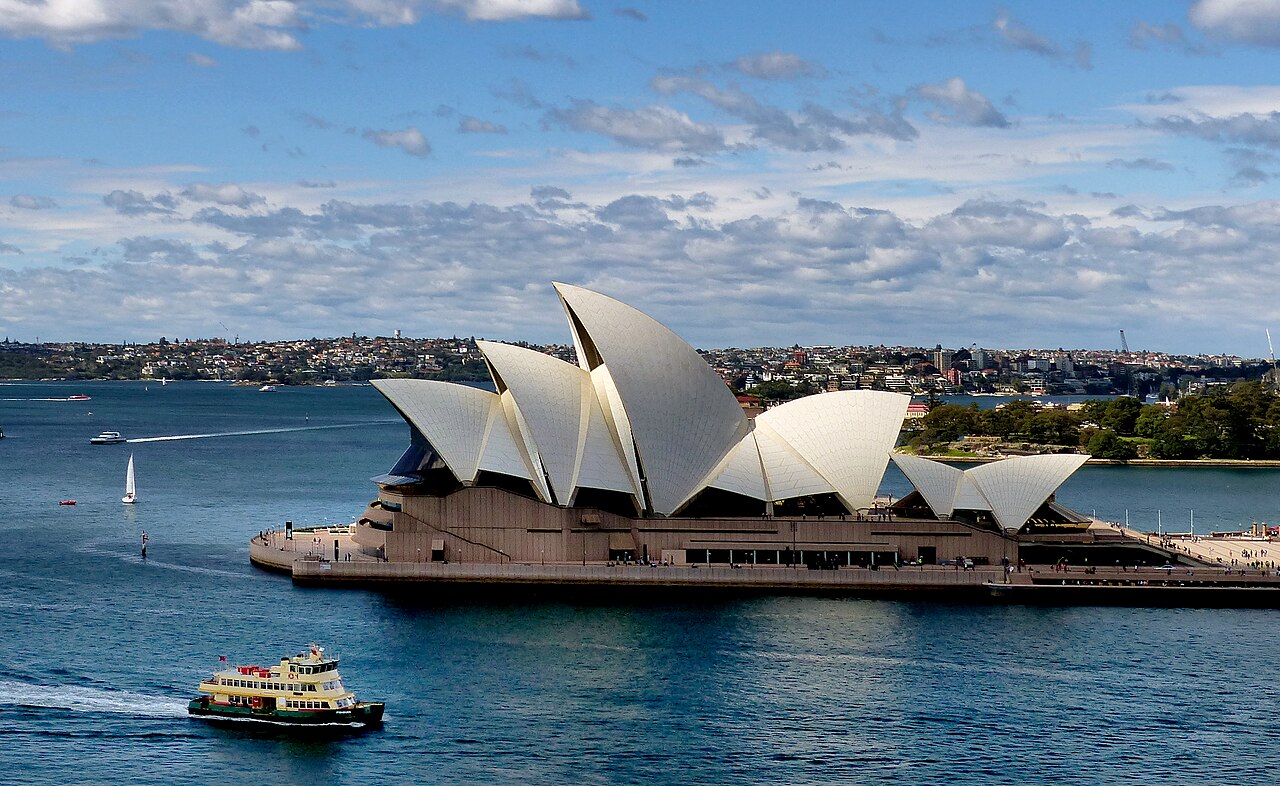
Photo: Bernard Spragg. NZ from Christchurch, New Zealand / Wikimedia Commons, CC0
Australia's seasons run opposite the Northern Hemisphere's — December-February is summer, June-August is winter — and the country's size means climate varies enormously by region: Sydney's temperate east-coast climate is very different from the tropical north (Darwin, Cairns) or the arid interior (the Outback). Sydney, in New South Wales, is the country's largest city and busiest international gateway, though not the national capital (Canberra holds that role). Domestic flights are the practical way to cover Australia's vast distances between major cities; driving between Sydney and, say, Perth takes multiple days. October-April offers the warmest weather on the east coast, with December-February being peak summer tourist season and also the local school-holiday period, meaning higher prices and busier beaches; sun protection is a genuinely serious consideration year-round given the country's high UV index. Tipping is not customary or expected, though appreciated for exceptional service.
Capital
Canberra
Currency
Australian Dollar (AUD, $)
Time zone
Multiple — AEST/AEDT (UTC+10/+11) on the east coast including Sydney, plus separate central and western zones
Calling code
+61
Best months
Mar – May, Sep – Nov
Visas and entry
Nearly all visitors require a visa or Electronic Travel Authority (ETA) arranged online before departure, even for short tourist stays — there is no visa-free entry for any nationality. Most Western passport holders (US, UK, EU, Canada, Japan) qualify for the eVisitor or ETA (subclass 601/651), typically valid for stays up to 3 months per visit over a 12-month period, applied for entirely online.
Where to start in Australia
The place ranked first in each of our city guides.