
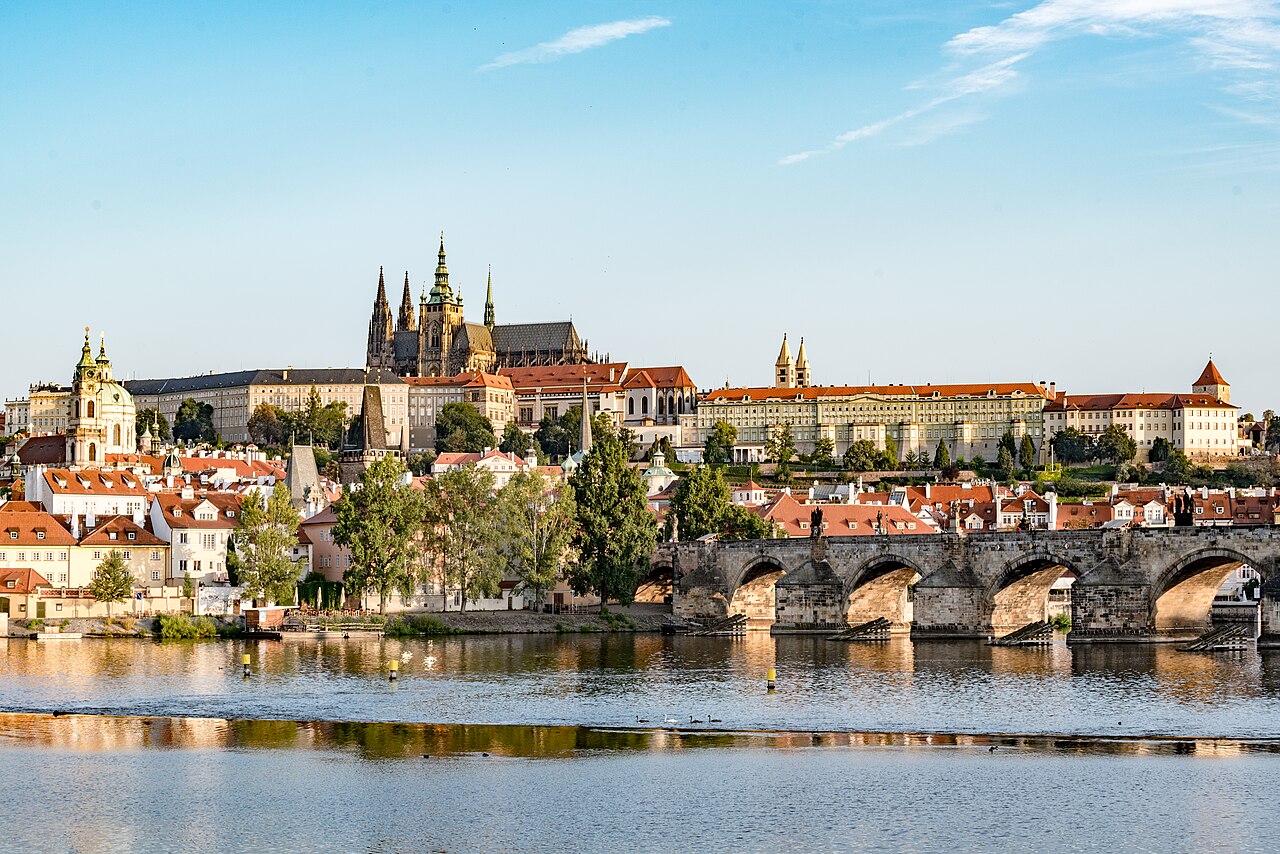
Places to Visit in Czech Republic
A landlocked Central European state whose medieval capital survived the 20th century almost intact, with a beer culture built on Pilsner and a currency that is still the koruna, not the euro.
The Czech Republic (Czechia) is a Schengen member that keeps its own currency, the koruna (CZK), so euros are not the normal means of payment even in central Prague. Prices are quoted in CZK, cards and contactless payment are accepted almost everywhere in cities, and some shops and restaurants that accept euros apply poor exchange rates. Avoid street exchange booths advertising zero commission and decline dynamic currency conversion on card terminals and ATMs. The country has a continental climate: summers (June-August) are warm, with typical daytime highs in the low to mid 20s degrees Celsius and occasional heat waves, while winters (December-February) are cold, often around freezing in Prague, with snow in the hills. April-June and September-October are the most comfortable windows for walking historic centres, while December brings Christmas markets and the coldest weather. Rail is dense and cheap by Western European standards, and trains and buses link Prague to Kutná Hora, Český Krumlov, Karlštejn and other heritage towns within a few hours. Etiquette is informal but polite: greet shopkeepers with 'dobrý den', remove shoes when entering a private home, and expect restaurant service to be unhurried. Tipping of about 10 percent is customary in restaurants and is usually handed over by rounding up when paying, rather than left on the table. Check bills for cover charges, particularly in tourist areas. Tap water is drinkable, and the emergency number is 112.
Capital
Prague
Currency
Czech koruna (CZK, Kč)
Time zone
CET/CEST (UTC+1/+2)
Calling code
+420
Best months
Apr – Jun, Sep – Oct
Visas and entry
Schengen Area member since 21 December 2007. EU/EEA/Swiss citizens need no visa. Many other nationalities (US, UK, Canada, Australia, Japan) can enter visa-free for up to 90 days in any 180-day period under the Schengen short-stay rule; the EU Entry/Exit System records non-EU visitors at the external border, and ETIAS pre-travel authorisation is expected to apply to visa-exempt visitors once phased in (verify current start date at the EU or Czech Ministry of Foreign Affairs sites). Other nationalities require a Schengen visa. Note that the Czech Republic is in the Schengen Area but not the euro area.
Where to start in Czech Republic
The place ranked first in each of our city guides.