Kalka-Shimla Railway (Shimla Railway Station)
#9de 10 lugares para visitar en ShimlaShimla, Himachal Pradesh
También conocido como Toy Train · Kalka-Shimla Toy Train · Shimla Station
Respuesta rápida
Horario: No fixed opening hours. Entrada: ₹65. Calcula 5 hrs.
Actualizado el · Redactado por Traveliac, con ayuda de IA · 5 min de lectura
- Horario
- No fixed hours
- A working railway rather than a site with opening hours. Five trains a day run the Kalka–Shimla route, with departures from Shimla clustered in the morning and early afternoon; the full one-way journey takes 4 to 5.5 hours.
- Precio de entrada
- ₹65
- Entrada desde
- Tiempo necesario
- 5 hrs
- Mejores meses
- Mar – Jun, Sep – Dec
- Dirección
- Shimla Railway Station, Cart Road, Shimla, Himachal Pradesh 171001
Sobre Kalka-Shimla Railway (Shimla Railway Station)
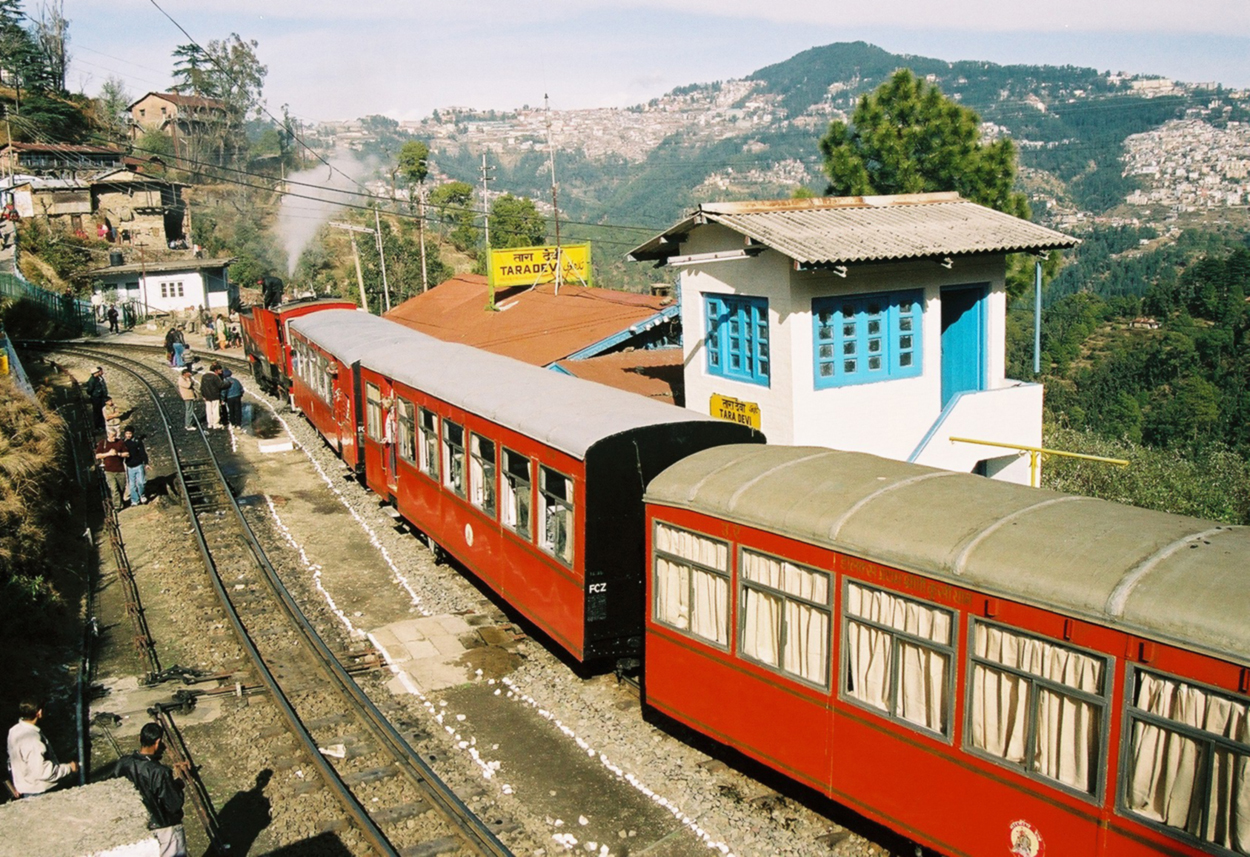
The Kalka-Shimla Railway climbs 96.6 kilometres from 656 metres at Kalka to 2,076 metres at Shimla through 103 tunnels and more than 800 bridges, a narrow-gauge engineering feat that UNESCO inscribed onto the Mountain Railways of India World Heritage list in 2008 alongside the Darjeeling Himalayan Railway. British engineers completed the line in 1903 to give the summer capital a rail link to the plains after years of relying on a slow, unreliable cart road, and the 2 ft 6 in gauge track was chosen specifically to handle the mountain's tight curves and steep grades that a standard-gauge line could not manage. Shimla Railway Station, the line's upper terminus on Cart Road below the Ridge, still runs five scheduled trains a day toward Kalka, ranging from ordinary second-sitting carriages to the glass-roofed Vistadome coaches introduced for tourists in recent years.
Horario de Kalka-Shimla Railway (Shimla Railway Station)
- Horario
- No fixed hours
Mon–Sun No fixed hours - A working railway rather than a site with opening hours. Five trains a day run the Kalka–Shimla route, with departures from Shimla clustered in the morning and early afternoon; the full one-way journey takes 4 to 5.5 hours.
- Cierra los
- Abierto todos los días
Horario recopilados de whc.unesco.org y registros públicos, última actualización el . Pueden cambiar sin previo aviso — confírmalos antes de viajar. Cómo escribimos estas guías
Precio de entrada de Kalka-Shimla Railway (Shimla Railway Station)
| Entrada | Precio |
|---|---|
| Visitantes indios | ₹65 |
| Visitantes extranjeros | ₹65 |
| Niños | Gratis |
| Cámara | Gratis |
Fares are set per train and class, not by nationality - Indian Railways does not charge foreign passengers a surcharge on regular tickets, unlike ASI-monument entry fees. Second-sitting fares start around Rs 65 for shorter segments and rise to roughly Rs 600-630 for the glass-roofed Vistadome coach on services such as the Him Darshan Express; children under 5 travel free and older children pay reduced fares on some classes. Book through IRCTC; as of 2026, verify current fares and seat availability at booking, since timetables and pricing are revised periodically.
Precios recopilados de whc.unesco.org y registros públicos, última actualización el . Pueden cambiar sin previo aviso — confírmalos antes de viajar. Cómo escribimos estas guías
Mejor época para visitar Kalka-Shimla Railway (Shimla Railway Station)
- Quiet
- Moderate
- Busy
06:00-08:00
First Departures
Early trains carry a mix of commuters and tourists booked on the Shivalik Deluxe or Himalayan Queen; platform crowds are manageable outside peak season.
Moderate08:00-11:00
Peak Booking Window
Most tourist-oriented departures cluster here; ticket counters and the platform get busiest, especially with Vistadome passengers during April-June and December.
Busy11:00-15:00
Midday GapBest time to go
Fewer scheduled departures fall in this window; the station itself is quieter, useful for photographing the heritage building without crowds.
Quiet15:00-18:00
Afternoon Arrivals
Trains arriving from Kalka bring a steady flow of passengers disembarking at Shimla; taxi and porter activity picks up outside the station.
Moderate
Historia de Kalka-Shimla Railway (Shimla Railway Station)
Kalka-Shimla Railway construction began in 1898 after colonial administrators spent decades pushing for a rail connection to Shimla, driven by the difficulty of moving officials, mail, and supplies up the mountain cart road during the summer capital's operating season. Engineers built the line under the Delhi-Ambala-Kalka Railway Company, and the project required blasting 103 tunnels through the Shivalik and lower Himalayan rock, the longest of which, Barog Tunnel, runs for more than a kilometre.
The Kalka-Shimla line opened for traffic in 1903 and immediately transformed Shimla's accessibility, cutting a multi-day cart journey down to a matter of hours. It has operated continuously since, surviving the end of the Raj, integration into Indian Railways' Northern zone, and periodic landslide damage during monsoon seasons. The 2008 UNESCO inscription recognised the line's tunnels, bridges, and station architecture - including the timber-framed Barog and Kandaghat stations - as an outstanding example of late-19th-century mountain railway engineering.
Normas y etiqueta en Kalka-Shimla Railway (Shimla Railway Station)
Kalka-Shimla Railway reservations through IRCTC are effectively mandatory during peak season (April to June and the December holiday period), when seats on the Vistadome and Shivalik Deluxe services sell out days in advance; showing up at the counter without a booking generally means either standing room on an unreserved service or no travel at all. Photography from open windows and vestibules is common and generally tolerated, but leaning out fully or hanging from doorways is both dangerous on the tunnel sections and against railway safety rules.
Food and water should be carried on board, since onboard catering on ordinary services is limited to occasional vendors at station stops like Barog and Solan rather than a dining car. Left luggage is not a standard facility at Shimla station, so travellers with heavy bags should plan accordingly. The narrow platforms at intermediate stations mean stepping down carefully, particularly with children, since the gap between the carriage and platform edge is wider than on broad-gauge stations.
Consejos para visitar Kalka-Shimla Railway (Shimla Railway Station)
- 1
Travellers who do not want to commit to the full 4-to-5.5-hour Kalka-Shimla run can take a shorter round trip to Barog, roughly 90 minutes each way, which covers many of the route's most photographed tunnels and viaducts without the full day's commitment - a workaround well known among Shimla-based travel agents even though it is not always advertised at the booking counter. The Vistadome coaches, with glass roof panels and rotating seats, cost several times an ordinary second-sitting fare but are worth it specifically for the Barog-to-Shimla stretch, where the line curves through its most dramatic viaducts.
- 2
Arrive at Shimla station at least 30 minutes before departure, since the station sits below the Ridge on Cart Road and requires either the Mall Road lift or a walk down from town that takes longer than first-time visitors expect. Window seats on the right-hand side heading toward Shimla generally give the better valley views, though this varies by specific tunnel and bend.
Cómo llegar a Kalka-Shimla Railway (Shimla Railway Station)
Todavía no tenemos la ubicación exacta de Kalka-Shimla Railway (Shimla Railway Station); el mapa muestra los demás lugares de nuestra guía de Shimla. Usa la dirección de abajo o el enlace de cómo llegar.
Shimla Railway Station, Cart Road, Shimla, Himachal Pradesh 171001Cómo llegar en Google Maps
Desde Kalka Railway Station
Rs 6596.6 km · 4-5.5 hrs by toy train
2nd sitting) to Rs 630 (Vistadome AC) as of 2026
Desde The Ridge / Mall Road
1.5 km · 10-15 min
Nominal lift fee; taxi Rs 150-200
Desde Shimla Airport, Jubbarhatti (SLV)
Rs 750-95024 km · 55-65 min
By taxi
Aeropuerto más cercano
Desde Shimla Airport, Jubbarhatti (SLV)
approximately 24 km, 55-65 minutes by taxi; Chandigarh International Airport (IXC) is roughly 115 km.
Estación de tren más cercana
Desde This entry is Shimla Railway Station itself, the upper terminus of the line at the town's Cart Road level, below the Ridge.
Preguntas frecuentes sobre Kalka-Shimla Railway (Shimla Railway Station)
Why is the Kalka-Shimla Railway a UNESCO World Heritage Site?
UNESCO inscribed the line in 2008 as part of the Mountain Railways of India listing, recognising its 103 tunnels, more than 800 bridges, and narrow-gauge engineering completed in 1903 across 96.6 kilometres of mountainous terrain.
How much does the Kalka-Shimla toy train cost?
Fares range from about Rs 65 in second-sitting class up to roughly Rs 600-630 for the glass-roofed Vistadome coach as of 2026, with the same pricing regardless of nationality since Indian Railways does not apply a foreign-tourist surcharge on standard tickets.
How long does the full Kalka to Shimla train journey take?
The full journey covers 96.6 kilometres and takes between 4 and 5.5 hours depending on the specific service, climbing from 656 metres at Kalka to 2,076 metres at Shimla.
Is there a shorter toy train option instead of the full route?
Yes. A shorter round trip to Barog station, about 90 minutes each way from Shimla, covers many of the line's most photographed tunnels and viaducts for travellers who do not want the full day's commitment.
Redactado con ayuda de IA a partir de fuentes oficiales y registros públicos, y publicado solo tras las comprobaciones descritas en Cómo escribimos estas guías. Nadie de Traveliac ha visitado este lugar. Última actualización el . Cómo clasificamos y verificamos los lugares