
Thirumalai Nayakkar Palace
#2sur 10 lieux à visiter à MaduraiMadurai, Tamil Nadu
Aussi appelé Thirumalai Nayak Palace · Thirumalai Naicker Mahal
L'essentiel
Horaires d'ouverture : 09:00–13:00 and 14:00–17:00. Entrée : ₹50 pour les Indiens · ₹300 pour les étrangers. Comptez 1.5 hrs. Meilleure période : 09:00–10:30.
Mis à jour le · Rédigé par Traveliac, avec assistance IA · 5 min de lecture
- Horaires d'ouverture
- 09:00–17:00
- Prix d'entrée
- ₹50 pour les Indiens
- Billet à partir de
- Durée nécessaire
- 1.5 hrs
- Meilleur moment de la journée
- 09:00–10:30
- Meilleurs mois
- Oct – Mar
- Adresse
- Palace Road, near Meenakshi Amman Temple East Gate, Madurai, Tamil Nadu 625001
À propos de Thirumalai Nayakkar Palace
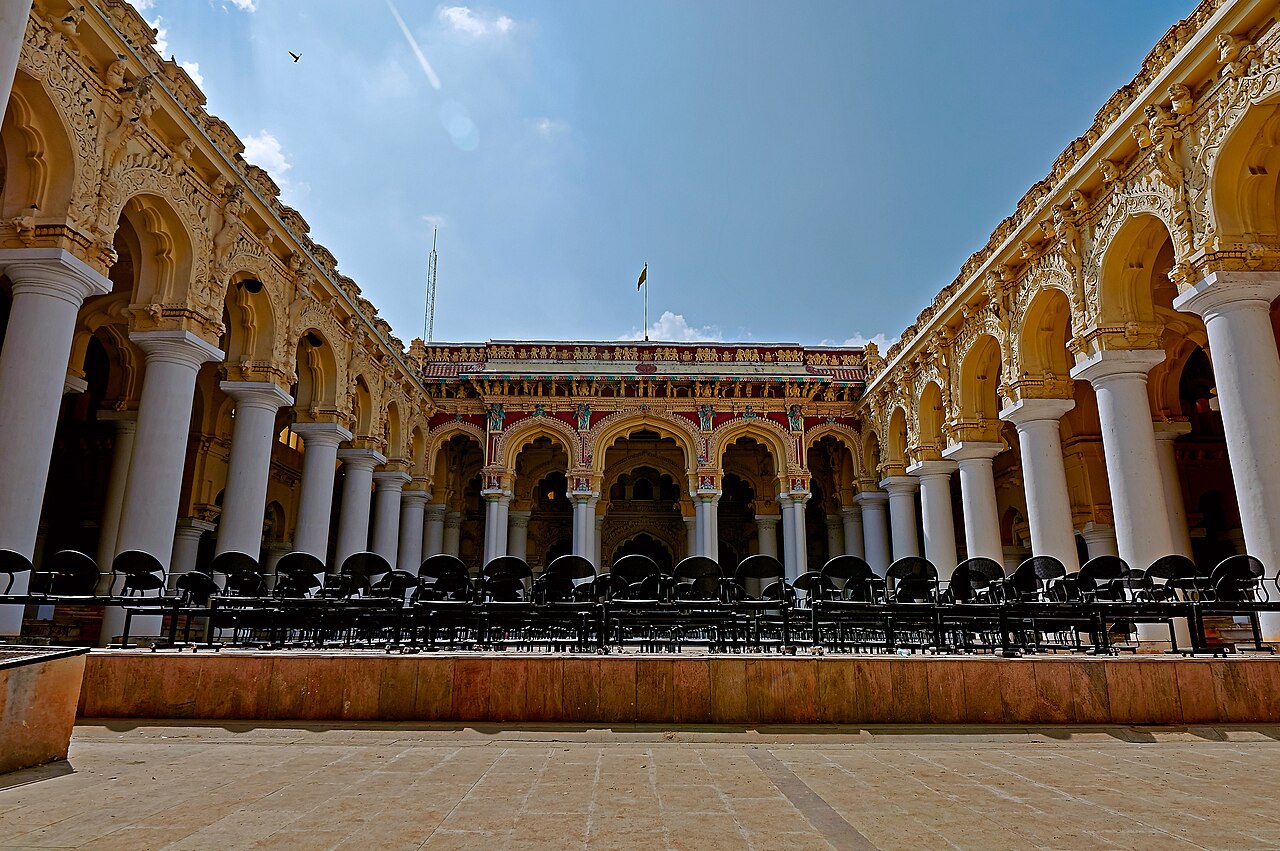
The Thirumalai Nayakkar Palace is an architectural act of immodest self-declaration, built in 1636 by the Nayak king Thirumalai as both a seat of government and a statement of royal appetite for the theatrical. Its entrance courtyard — the Swarga Vilasam, or Heavenly Pavilion — measures 75 metres by 52 metres and is held aloft by 248 stucco-coated brick columns, each rising to a height of approximately twelve metres, their circular drums and fluted necks representing a confident hybridisation of Dravidian and Italian Baroque influences. The palace was designed by an Italian architect under Thirumalai's patronage, resulting in a structure unlike anything else in South India: pointed Islamic arches sit beside Dravidian corbelling, plastered brick surfaces are painted in a palette of ochres and pale greens, and the whole complex exhales a grandeur that is only partially compromised by the scale of what was lost — the original palace covered four times the current footprint, and the zenana and performance halls were dismantled in the 19th century, their materials cannibalised for other construction.
Meilleur moment de la journée : 09:00–10:30. For photography of the Swarga Vilasam (celestial pavilion) with morning light entering the arched arcades; or 19:45 for the English Sound and Light Show
Photographie
₹30 pour la caméra
Horaires de Thirumalai Nayakkar Palace
- Horaires d'ouverture
- 09:00–17:00
Mon–Sun 09:00–13:00 and 14:00–17:00 - Fermé le
- Ouvert tous les jours
Bon à savoir : The Sound and Light Show is conducted daily except during heavy rain or maintenance. The palace may observe reduced hours during government-declared public holidays — verify at the Archaeological Survey of India Madurai office or call +91-452-2331609.
Horaires d'ouverture établis à partir de sources publiques ; ce lieu n'a pas de site officiel référencé, mis à jour le . Ils peuvent changer sans préavis — vérifiez avant de partir. Comment nous rédigeons ces guides
Prix d'entrée de Thirumalai Nayakkar Palace
| Billet | Prix |
|---|---|
| Visiteurs indiens | ₹50 |
| Visiteurs étrangers | ₹300 |
| Enfants | ₹25 |
| Caméra | ₹30 |
Camera fee of ₹30 applies to still cameras and DSLRs. Smartphone photography is included in the entry fee. Video cameras may require a separate permit — confirm at the ticket booth. The Sound and Light Show (Tamil: 18:30, English: 19:45) charges ₹100 per person (Indian and foreign alike). The show runs approximately 45 minutes and is worth attending separately from the daytime visit.
Tarifs établis à partir de sources publiques ; ce lieu n'a pas de site officiel référencé, mis à jour le . Ils peuvent changer sans préavis — vérifiez avant de partir. Comment nous rédigeons ces guides
Meilleure période pour visiter Thirumalai Nayakkar Palace
- Quiet
- Moderate
- Busy
09:00–11:00
Opening HoursBest time to go
The fewest visitors arrive in the first two hours; the light in the Swarga Vilasam is at its most photogenic during this window. School groups arrive after 10:30.
Quiet11:00–13:00
Late Morning
Tour groups from the Meenakshi Temple circuit add volume. Still manageable; queues at the ticket counter rarely exceed 10 minutes.
Moderate14:00–16:00
Afternoon Session
The post-lunch lull makes this the quietest period. The courtyard is in shade, making photography less dramatic but ambient temperature more bearable.
Quiet16:00–17:00
Pre-Closure
Visitors aiming to see the palace before the Sound and Light Show trickle in. Light is warm but the courtyard faces east, so the west colonnade falls into shadow early.
Moderate18:30–20:30
Sound and Light Show
Both the Tamil (18:30) and English (19:45) shows draw significant audiences. Arrive 20 minutes early to secure central seating in the courtyard. Plastic chairs are provided but can run out during peak season (December–January).
Busy
Histoire de Thirumalai Nayakkar Palace
Thirumalai Nayak (r. 1623–1659) was the greatest and most extravagant of the Madurai Nayak rulers, a Telugu-speaking dynasty that governed the region as vassals of the Vijayanagara Empire and then, after Vijayanagara's fall at Talikota in 1565, as independent sovereigns. He commissioned the palace in 1636 on a site adjacent to the existing Meenakshi Temple complex, staffing its construction with local craftsmen working under the direction of an Italian architect whose name Tamil records transcribe variously as Fernandez or Figuerolo. The palace's design philosophy is genuinely syncretic: the Swarga Vilasam courtyard follows Dravidian spatial logic in its axial layout, while the column forms draw from European Renaissance pattern books, and the arch profiles owe as much to Deccan Sultanate precedent as to any single tradition. At its original extent, the palace complex included a swinging hall (Nattakasal), a zenana quarters (Rani Mahal), a throne chamber, and a temple. Only the Swarga Vilasam and the dance hall survive today. The palace fell into significant disrepair under later Nayak successors; the Rani Mangammal, who ruled as regent (1689–1706) for her grandson, undertook some restoration but had insufficient resources for the full complex. In 1866, under the administration of the Madras Presidency, the governor Lord Napier ordered a partial restoration. A more substantial effort was carried out in the late 20th century under the Archaeological Survey of India, which stabilised the surviving structures and introduced the Sound and Light show as a visitor experience. A 2022 conservation audit identified salt efflorescence on several columns and ongoing moisture infiltration at the east end of the courtyard.
Règles et étiquette à Thirumalai Nayakkar Palace
Shoes may be worn throughout the palace — it is a secular heritage monument, not an active place of worship. Still cameras require a ₹30 ticket purchased at the main entrance booth; do not attempt to photograph without this ticket as guards do check. Flash photography of the mural fragments in the inner galleries is prohibited as it accelerates pigment degradation. The columns and wall surfaces should not be touched or leaned against — the stucco is fragile and ongoing conservation efforts make surface contact damaging. During the Sound and Light Show, the entire seating area within the courtyard is designated as the viewing area; mobile phone torches and screens are asked to be switched off once the show begins. No food or drink is permitted inside the courtyard. Children under 12 are charged the child rate; proof of age is rarely requested but the discounted ticket should be purchased honestly. The palace is wheelchair accessible through the main entrance gate, though the courtyard surface is uneven compressed gravel.
Conseils pour visiter Thirumalai Nayakkar Palace
- 1
The Sound and Light Show in English at 19:45 is genuinely well-produced for a state-run attraction — the narration covers Nayak history accurately, and the lighting sequences make the column arcade appear far more dramatic than it does in flat afternoon light. If you can do only one session, make it the evening show rather than the daytime visit. The southern end of the Swarga Vilasam faces northeast, meaning morning light floods the arcade best between 09:00 and 10:30; afternoon light becomes harsh and flat by 14:00. The palace is only 750 metres from the eastern gopuram of Meenakshi Temple — combine both in a morning, arriving at the palace by 09:00 and moving to the temple by 11:00 for the pre-closure rush. Auto-rickshaws between the two sites will quote ₹60–₹100 for what is essentially a five-minute journey; the walk is feasible in good weather. The Archaeological Survey of India sells a small but well-illustrated guidebook at the entrance for ₹50 — it is worth having for the floor plan, which helps contextualise the lost wings.
Comment se rendre à Thirumalai Nayakkar Palace
L'étoile rouge indique Thirumalai Nayakkar Palace ; les repères numérotés sont les 6 lieux les plus proches de nos guides, chacun avec son classement dans sa ville. Touchez un repère pour plus de détails.
Palace Road, near Meenakshi Amman Temple East Gate, Madurai, Tamil Nadu 625001Itinéraire sur Google Maps
Depuis Madurai Junction Railway Station
₹60–₹1002 km · 10–15 min
Depuis Meenakshi Amman Temple (East Gopuram)
0.75 km · 10–12 min
Free
Depuis Madurai Airport
₹300–₹46013 km · 25–40 min
Depuis Periyar Bus Stand
₹70–₹1102.2 km · 10–18 min
Aéroport le plus proche
Depuis Madurai Airport (IXM)
13 km
Gare la plus proche
Depuis Madurai Junction Railway Station
2 km
FAQ — Thirumalai Nayakkar Palace
What is the difference between the daytime visit and the Sound and Light Show?
The daytime visit (₹50 Indian / ₹300 foreign) gives access to the Swarga Vilasam courtyard and inner galleries in natural light with interpretation panels. The Sound and Light Show (₹100, all visitors) is a separate evening ticketed event in the same courtyard, using lighting rigs and narration to dramatise the history of the Nayak dynasty. The two experiences are complementary rather than interchangeable.
Is the palace fully intact?
No. The original palace complex was approximately four times larger than what survives today. The zenana (women's quarters), the main throne hall, and several ancillary pavilions were demolished in the 19th century by the rulers of Travancore, who used the materials for construction in Tirunelveli. The Archaeological Survey of India manages the surviving Swarga Vilasam and dance hall.
Who designed the palace, and why does it look different from other Dravidian architecture?
The palace was designed under the patronage of Thirumalai Nayak with significant input from an Italian architect (possibly known as Fernandez) brought to Madurai in the 1630s. The result is a deliberate hybrid — the spatial layout follows Dravidian palace typology, but the column forms, arch profiles, and decorative vocabulary draw from European and Deccan Sultanate sources simultaneously. This makes it architecturally singular in South India.
Can I combine a visit here with the Meenakshi Temple in one morning?
Yes, and this is the recommended approach. Start at the palace at 09:00 when it opens, spend 90 minutes there, and walk to the Meenakshi Temple's eastern gopuram — roughly 750 metres — to arrive by 10:30 for the final stretch of the morning session before the 12:30 closure.
Rédigé avec l'assistance de l'IA à partir de sources officielles et de registres publics, et publié seulement après les vérifications décrites dans Comment nous rédigeons ces guides. Personne chez Traveliac ne s'est rendu sur place. Mis à jour le . Comment nous classons et vérifions les lieux
Lieux à visiter près de Thirumalai Nayakkar Palace
Distances à vol d'oiseau, depuis notre carte ; les durées sont estimées.
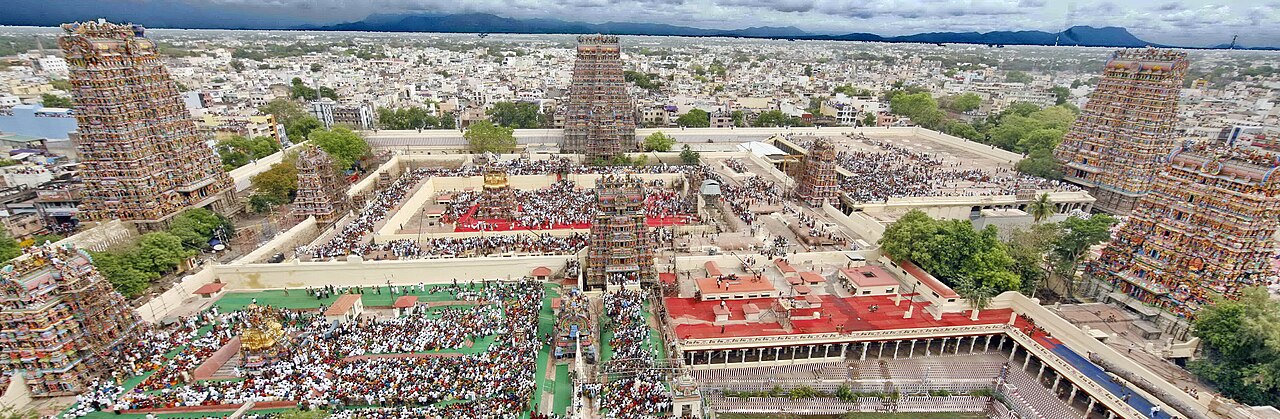 #1 in Madurai
Meenakshi Amman Temple
Temple · 750 m · about 12 min walk
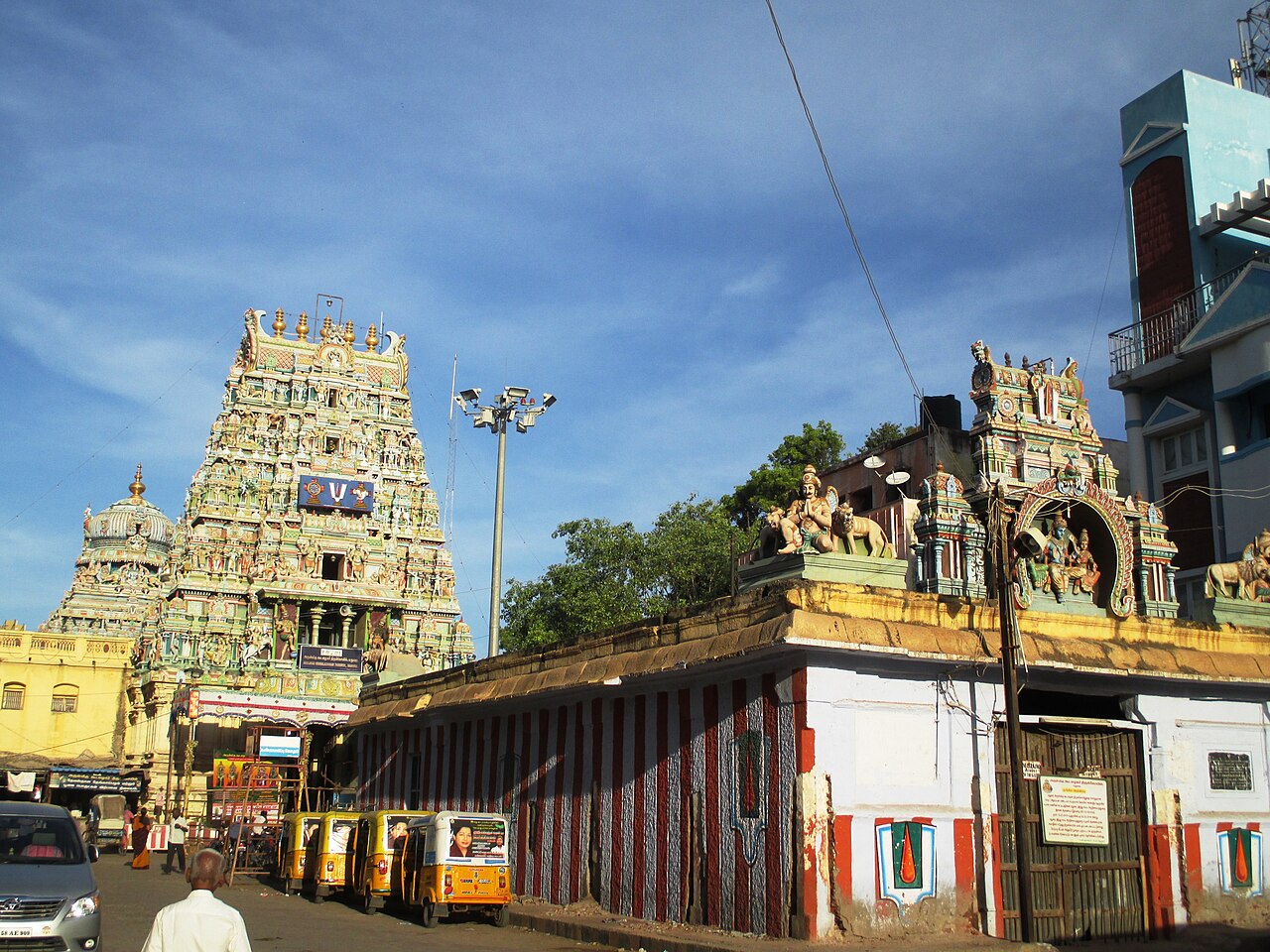 #7 in MaduraiEntrée gratuite
Koodal Azhagar Temple
Temple · 1.1 km · about 18 min walk
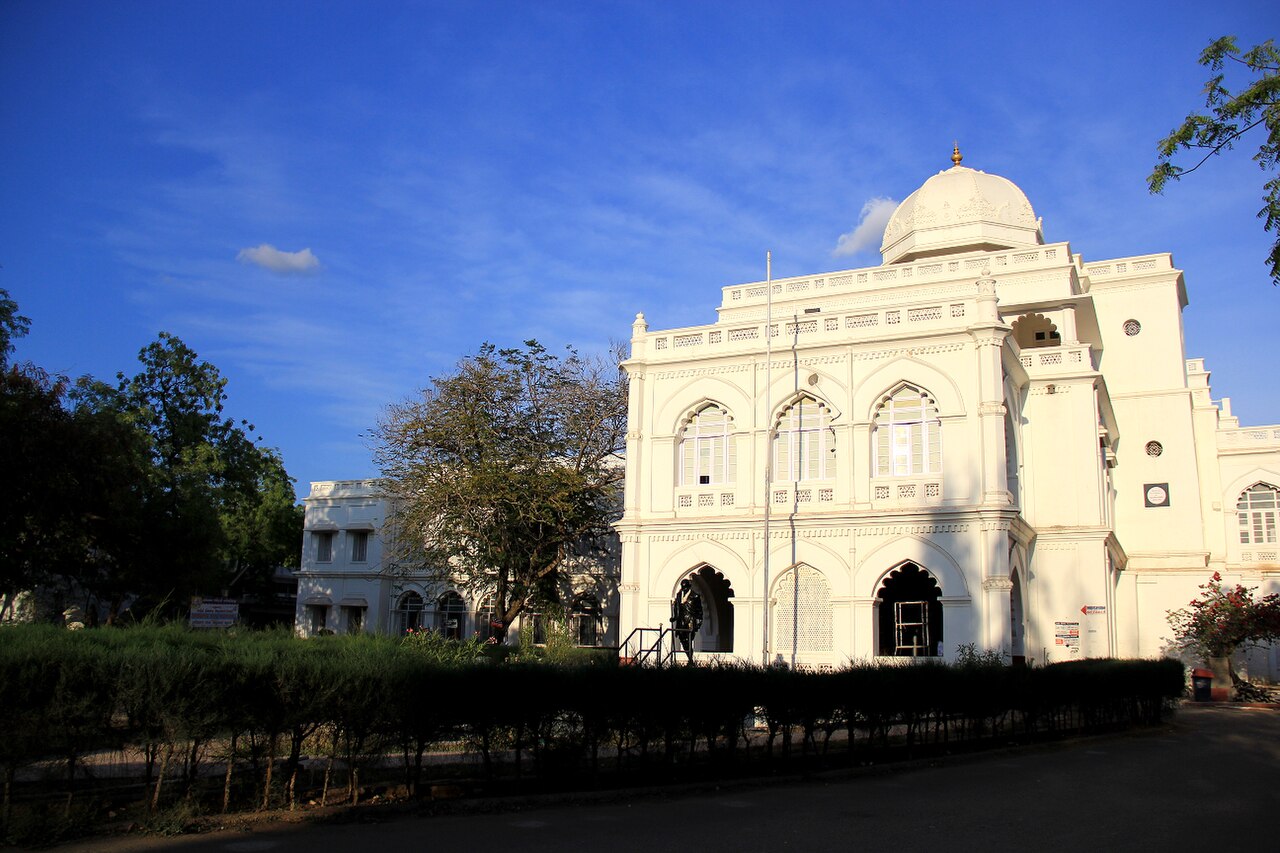 #3 in MaduraiEntrée gratuite
Gandhi Memorial Museum
Mémorial · 2.3 km · about 37 min walk
 #4 in MaduraiEntrée gratuite
Vandiyur Mariamman Teppakulam
Temple · 3 km · about 10 min by road