
Meenakshi Amman Temple
#1of 10 places to visit in MaduraiMadurai, Tamil Nadu
Also known as Meenakshi Sundareswarar Temple · Tiru-aalavaai · Meenakshi Temple
Quick answer
Opening hours: 05:00–12:30 and 16:00–21:30. Entry: Free. Allow 2 hrs. Best time: 05:30–07:00.
Updated · Compiled by Traveliac, AI-assisted · 6 min read
- Opening hours
- 05:00–21:30
- Entry fee
- Free
- Ticket from
- Time needed
- 2 hrs
- Best time of day
- 05:30–07:00
- Best months
- Oct – Mar
- Address
- Madurai Main, Madurai, Tamil Nadu 625001
About Meenakshi Amman Temple
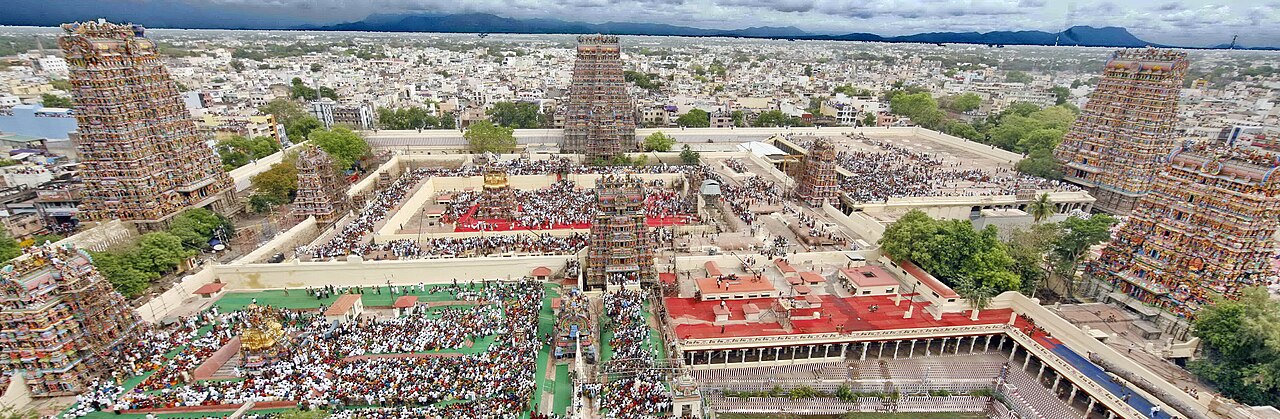
The Meenakshi Amman Temple is not a monument you visit so much as a city you enter. Spread across 14.5 acres in the geographic and spiritual heart of Madurai, its complex of fourteen gopurams — the tallest, the southern gateway, rising 51.9 metres of lime-plaster figures stacked in sculptural tiers — has served simultaneously as cosmological diagram, civic landmark, and functioning place of worship without interruption for the better part of two millennia. The air inside the outer corridors carries the particular combination of incense smoke, coconut oil, wet granite, and crushed flowers that you do not find replicated anywhere else on earth. Priests move between shrines with the focused efficiency of people who have performed the same sequence of rituals since childhood; pilgrims arrive by the bus-load from across Tamil Nadu, often having saved for years to make this journey. The experience is overwhelmingly sensory and demands patience, genuine respect for the operating rules, and the practical wisdom to leave your shoes early.
Best time of day: 05:30–07:00. For early-morning puja rituals, or 20:30 for the nightly procession when the bronze image of Sundareswarar is carried to Meenakshi's shrine — a ritual performed daily for over 400 years
Meenakshi Amman Temple timings
Meenakshi Amman Temple is open 05:00–12:30 and 16:00–21:30. The weekend is no different: Saturday and Sunday follow the same times.
- Opening hours
- 05:00–21:30
Mon–Sun 05:00–12:30 and 16:00–21:30 - Closed on
- Open every day
Good to know: Temple opens earlier (04:00) during major festivals including Chithirai Festival (April–May) and Navaratri. The Aadi festival in July–August sees extended hours. Confirm exact hours via the temple administration office at +91-452-2346171.
Opening hours compiled from public records; this place lists no official website, last updated . They change without notice — confirm before you travel. How we write these guides
Meenakshi Amman Temple ticket price
| Ticket | Price |
|---|---|
| Indian visitors | Free |
| Foreign visitors | ₹50 |
| Children | Free |
| Camera | Free |
Entry is free for Hindu worshippers. Non-Hindus pay ₹50 at the designated counter near the eastern gopuram. Photography inside the inner sanctum and the sanctum corridors is strictly prohibited. Photography with a personal camera is permitted in the outer prakarams (corridors). The separate Meenakshi Sundareswarar Museum within the complex charges an additional ₹5. Special darshan tickets (₹50) available at the ticket counter reduce wait time.
Prices compiled from public records; this place lists no official website, last updated . They change without notice — confirm before you travel. How we write these guides
Best time to visit Meenakshi Amman Temple
- Quiet
- Moderate
- Busy
- Very busy
05:00–07:00
Early Morning Puja
Pilgrims from the first buses of the day mix with local devotees attending the Thiruvanandal puja. The inner shrines are accessible with a 15–30 minute queue. Light levels are low — photography in outer corridors benefits from the golden ambient lamp glow.
Moderate07:00–11:00
Morning Peak
School groups, tour buses from Chennai and Trichy, and pilgrims from overnight trains converge. Main darshan queues run 45–75 minutes. The museum and thousand-pillared mandapam are accessible without queuing.
Busy11:00–12:30
Pre-Closure Rush
Visitors attempting to complete darshan before the 12:30 closure create maximum density near the inner sanctum. Avoid unless you have a special-darshan ticket.
Very busy16:00–18:00
Afternoon Re-OpeningBest time to go
The first 90 minutes after afternoon opening is the least crowded window of the day. Inner sanctum queues rarely exceed 20 minutes. Heat is still significant in summer months.
Quiet18:00–21:30
Evening Puja and Procession
The Arthajama Puja around 20:00 and the subsequent procession of Sundareswarar's image draw large crowds. The atmosphere is devotionally intense; the night procession at 21:00 is worth waiting for.
Busy
History of Meenakshi Amman Temple
Madurai's origins as a seat of Pandyan kingship predate documented history, but the temple's structural evolution begins clearly in the 6th century CE when early Pandyan rulers patronised a shrine on this site dedicated to the goddess Meenakshi — literally 'one with fish-shaped eyes' — the city's presiding deity, understood in Tamil devotional tradition as a form of Parvati. The great Chola expansion of the 9th–12th centuries largely bypassed Madurai, leaving the Pandyan architectural tradition intact. It was the Nayak period — specifically the reign of Thirumalai Nayak (1623–1659) and his predecessors — that produced the temple as it currently stands, with the construction of the massive gopurams, the tank of the Golden Lotus (Potramarai Kulam), and the thousand-pillared mandapam. The temple was ransacked by the Delhi Sultanate general Malik Kafur in 1310, its original structures largely destroyed, which is why most visible stonework dates to Nayak reconstruction from the 14th century onward. The temple complex contains shrines to both Meenakshi and her consort Sundareswarar (Shiva), and the daily ritual of carrying Sundareswarar's image to Meenakshi's bedchamber — a practice called Alagar Kovil procession — has been performed without interruption since the early Nayak period. The Ashta Shakti Mandapam, built around 1560, was the first structure constructed on the western axis. The management of the temple passed through the Madurai Nadar community, various colonial-era trusts, and now rests with the Hindu Religious and Charitable Endowments Department of the Tamil Nadu government. Over 15,000 people visit daily; on festival days, this number exceeds 25,000.
Rules & etiquette at Meenakshi Amman Temple
Dress code is strictly enforced at the main gopuram entrances. Men must not wear shorts; lungis and trousers are acceptable, and dhoti rental is available near the shoe counter for approximately ₹20. Women should wear sarees, salwar kameez, or full-length attire; skirts above the knee are not permitted. Shoulders should be covered. Foreign visitors in inappropriate dress will be turned away — this is not a guideline but a daily reality. Shoes must be deposited at the designated shoe counters near each gopuram entrance; numbered tokens are provided. The counters are managed by temple staff and charge no mandatory fee, though a ₹5 tip per pair is customary. Do not attempt to carry shoes inside. Photography with personal cameras and phones is permitted only in the outer prakarams; at the approach to the inner shrines, camera use is prohibited and temple guards enforce this actively. The inner sanctums are open only to Hindu worshippers; non-Hindus should proceed to the museum section or observe from permitted areas. Mobile phones should be kept on silent throughout. Do not touch the idols, oil lamps, or sacred vessels. The queues for main darshan during peak hours (morning puja, evening puja) can be 45–90 minutes long; special-darshan queue tickets reduce this to 15–20 minutes.
Tips for visiting Meenakshi Amman Temple
- 1
Arrive before 06:00 on weekday mornings for the least crowded conditions; weekends and festival days require a minimum 90-minute buffer in your schedule. The shoe-counter tokens on the eastern side have been known to be lost by staff during high-traffic periods — photograph your token number on your phone immediately after depositing shoes. The Potramarai Kulam (Golden Lotus Tank) is best photographed from the second-floor corridor of the Kambathadi Mandapam in the morning when the gopurams reflect on the water's surface. The eight-headed snake shrine (Naga Shrine) near the western tank receives particularly dense crowds on Tuesdays; avoid if you are crowd-averse. If you hire a temple guide, use only those wearing the official laminated ID badge issued by the Madurai Tourism Board — unofficial touts at the entrance will inflate prices and provide inaccurate information. Accredited guides charge ₹200–₹350 for a 90-minute tour. Avoid visiting on the day of Ekadashi (the 11th lunar day) when ritual restrictions reduce access to certain shrines. The temple's own elephant, Lakshmi, can be seen receiving and giving blessings near the eastern gopuram, typically in the morning session; she is fed by devotees and responds to formal namaste gestures.
How to reach Meenakshi Amman Temple
The red star is Meenakshi Amman Temple; the numbered pins are the 6 nearest places in our guides, each showing its rank in its city. Tap a pin for details.
Madurai Main, Madurai, Tamil Nadu 625001Directions in Google Maps
From Madurai Junction Railway Station
₹50–₹801.5 km · 8–12 min
Negotiate before boarding; meters are rarely used
From Madurai Airport
₹300–₹45012 km · 25–40 min
By Ola/Uber; ₹400–₹600 for pre-paid airport taxi
From Madurai Airport
₹15–₹2012 km · 45–60 min
From Periyar Bus Stand (central)
₹60–₹1002 km · 10–15 min
Nearest airport
From Madurai Airport (IXM)
12 km south of temple
Nearest railway station
From Madurai Junction Railway Station
1.5 km north of temple
Meenakshi Amman Temple FAQs
Can non-Hindus enter the Meenakshi Amman Temple?
Yes, non-Hindus are permitted in the outer prakarams (corridors) and the museum section upon payment of ₹50 at the designated counter. However, the innermost sanctum — the garbhagriha — of both Meenakshi and Sundareswarar is restricted to Hindu worshippers only. Guards enforce this at the threshold.
Is photography allowed inside the temple?
Personal camera and smartphone photography is permitted in the outer corridors and around the Potramarai Kulam (Golden Lotus Tank). Photography is strictly banned inside the inner shrines and the immediate approaches to the sanctums. Commercial videography requires advance permission from the temple administration office.
What is the best time to see the temple's gopurams lit up?
The gopurams are illuminated nightly from approximately 19:00 to 21:30. The most dramatic viewing point is the terrace of the Meenakshi Amman museum (₹5 entry) or the open area near the eastern gopuram on Chitrai Street. The southern gopuram, at 51.9 metres the tallest of the twelve, is best photographed from South Avani Moola Street.
How long does a thorough visit take?
Budget a minimum of two hours for a focused visit covering the main shrines, the Potramarai Kulam, and the thousand-pillared mandapam. If you add the museum and attend an evening puja, three to four hours is more realistic. Pilgrimage-style visitors often spend an entire morning session.
Is there a dress code, and what happens if you don't comply?
Yes, the dress code is actively enforced. Men in shorts will be refused entry at the gopuram gate. Dhoti rental is available at the entrance for approximately ₹20, and you will be directed to it rather than admitted in shorts. Women in sleeveless tops or skirts above the knee are similarly turned away. Scarves and wraps are advisable for foreign visitors.
Compiled with AI assistance from official sources and public records, and published only after the checks in How we write these guides. Nobody from Traveliac has visited this place. Last updated . How we rank and check places
Places to visit near Meenakshi Amman Temple
Straight-line distances from our map; times are estimates.
 #2 in Madurai
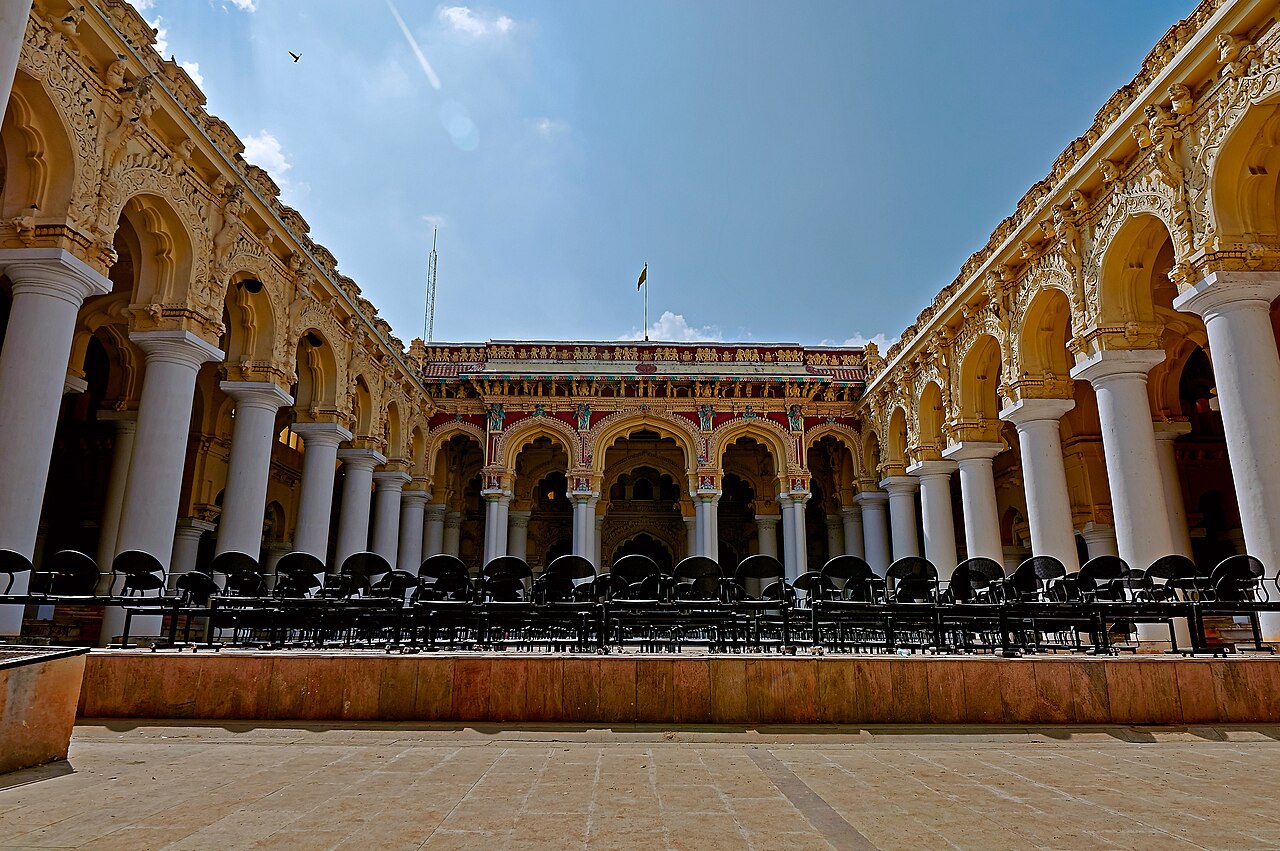
Thirumalai Nayakkar Palace
Palace · 750 m · about 12 min walk
 #7 in MaduraiFree entry
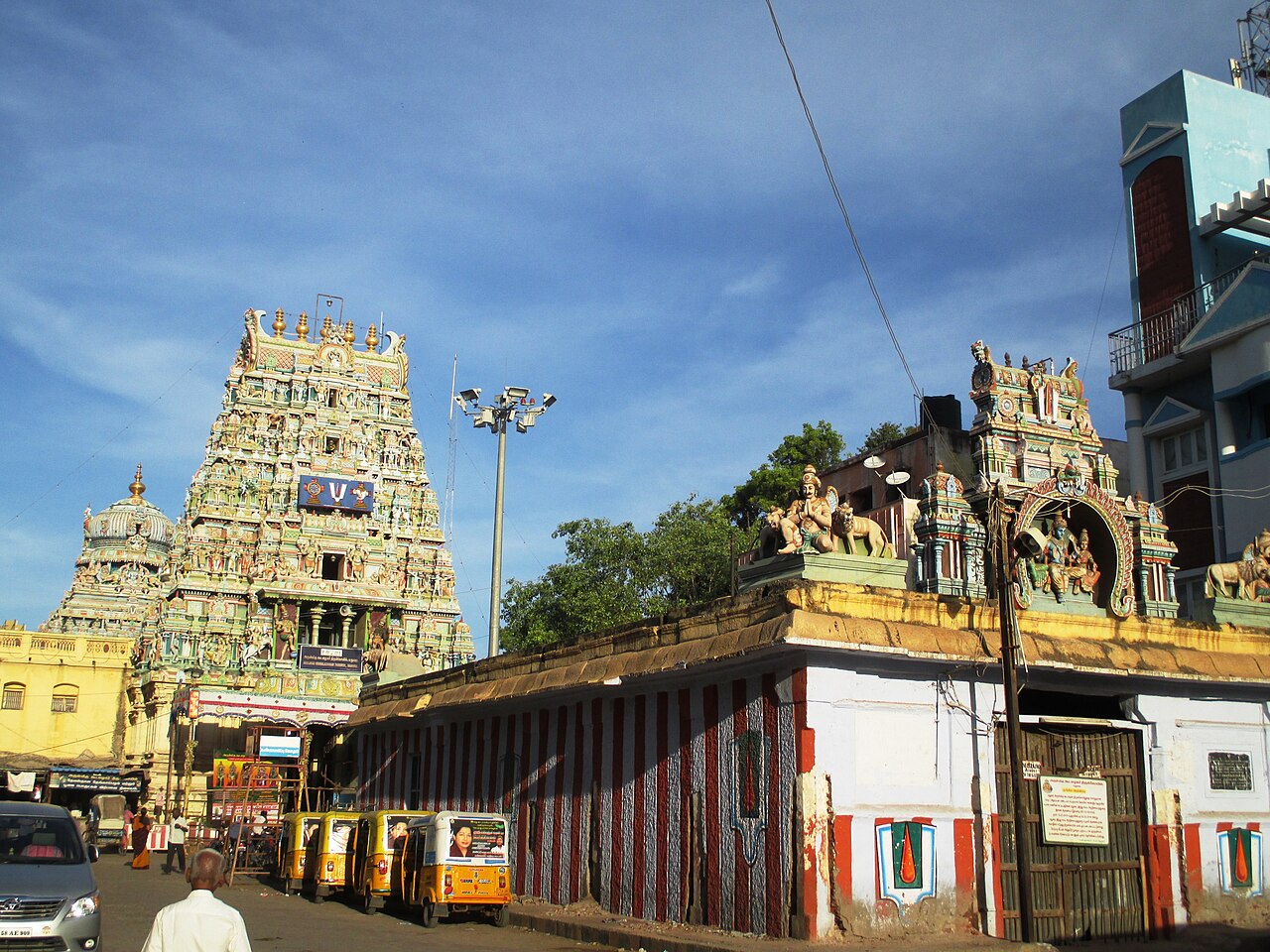
Koodal Azhagar Temple
Temple · 850 m · about 13 min walk
 #3 in MaduraiFree entry
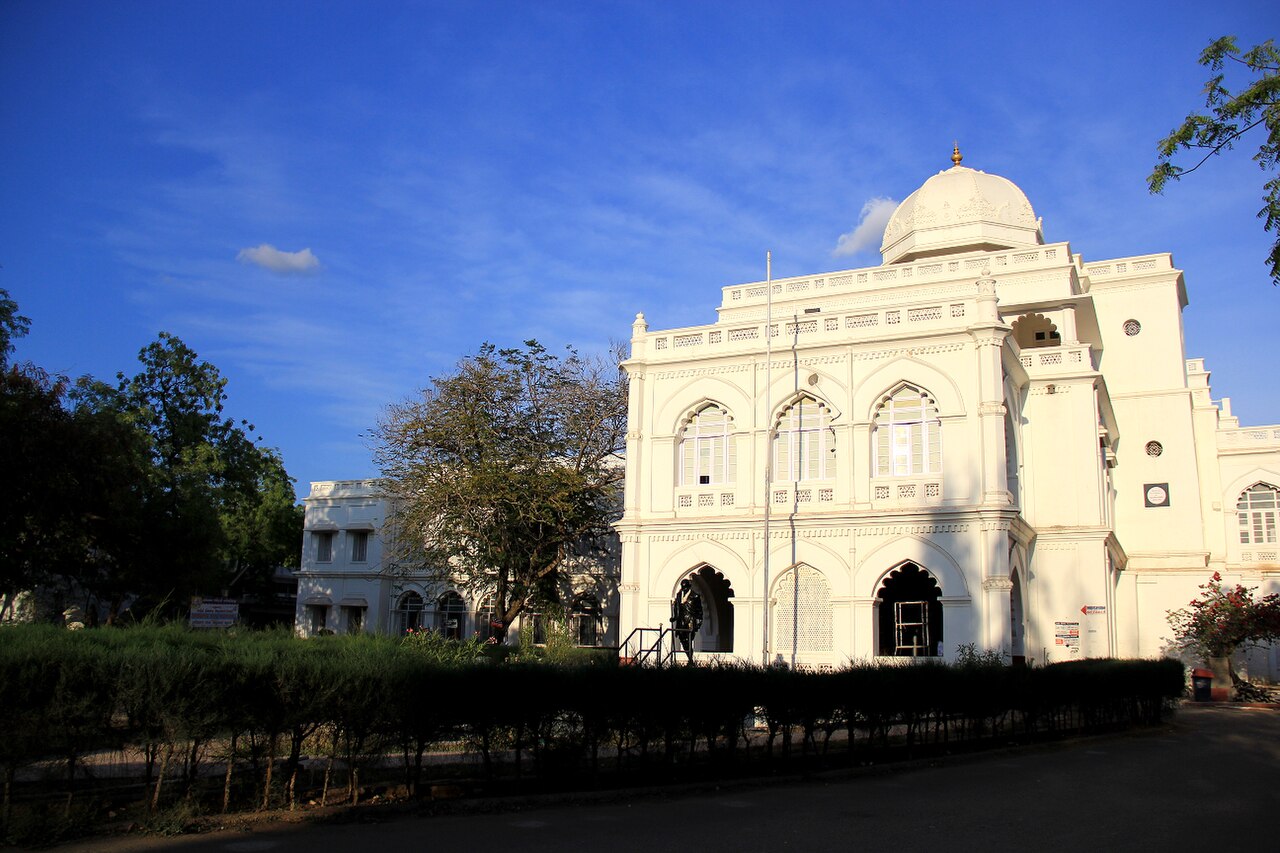
Gandhi Memorial Museum
Memorial · 2.4 km · about 39 min walk
 #4 in MaduraiFree entry
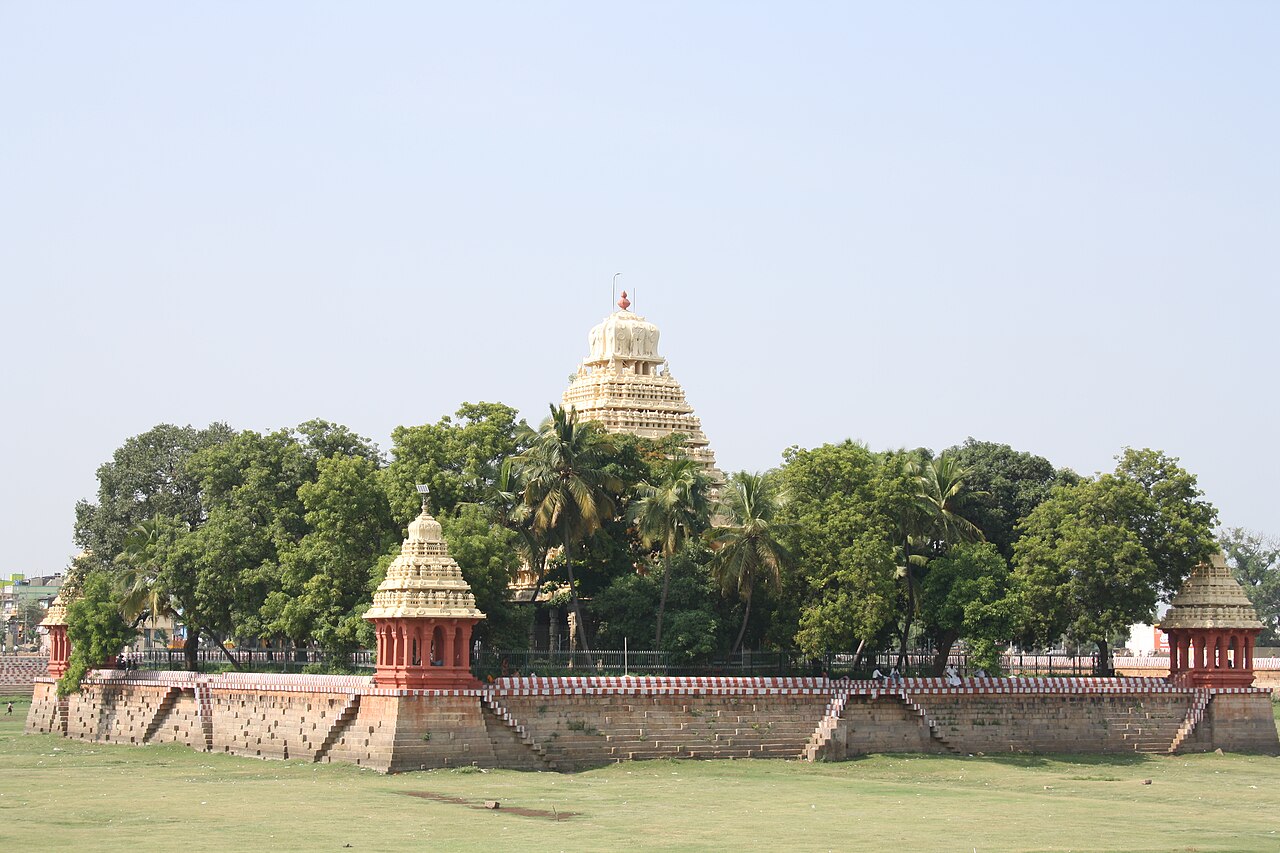
Vandiyur Mariamman Teppakulam
Temple · 3 km · about 10 min by road