
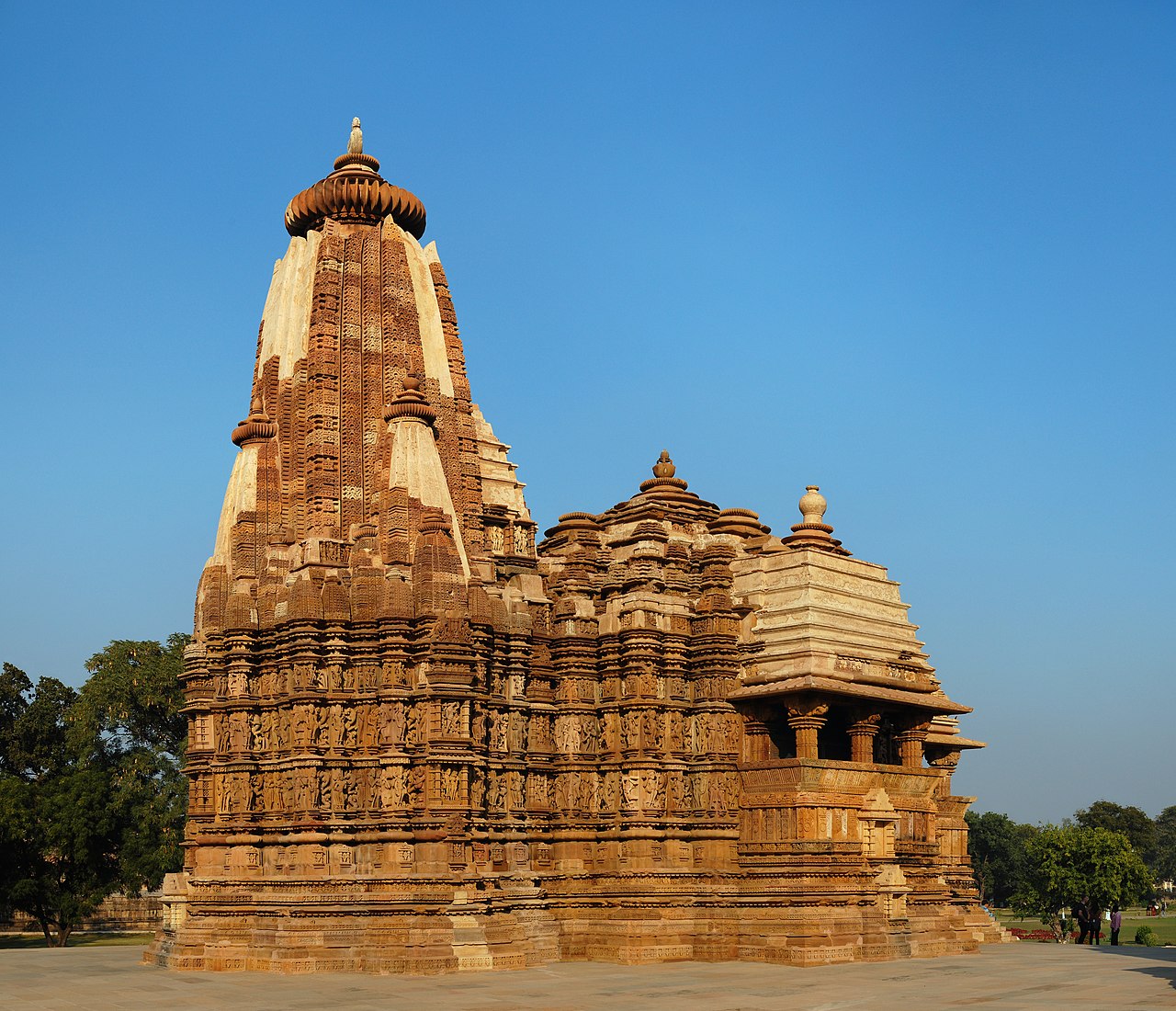
Vishvanatha Temple
#3Khajuraho में घूमने की 9 जगहों में सेKhajuraho, Madhya Pradesh
इन्हें भी कहा जाता है Vishwanath Temple · Temple of Vishvanatha
संक्षिप्त उत्तर
खुलने का समय: 06:00–18:00. प्रवेश शुल्क: ₹40 भारतीय · ₹600 विदेशी. 45 min का समय रखें। सबसे अच्छा समय: 06:00–08:00।
अपडेट किया गया · तैयार किया गया Traveliac, AI की मदद से · 6 मिनट का पठन
- खुलने का समय
- 06:00–18:00
- प्रवेश शुल्क
- ₹40 भारतीय
- टिकट शुरू
- आवश्यक समय
- 45 min
- दिन का सबसे अच्छा समय
- 06:00–08:00
- सबसे अच्छे महीने
- Oct – Mar
- पता
- Western Group of Temples, Khajuraho, Chhatarpur District, Madhya Pradesh 471606 (northern end of the compound, close to the boundary wall)
Vishvanatha Temple के बारे में
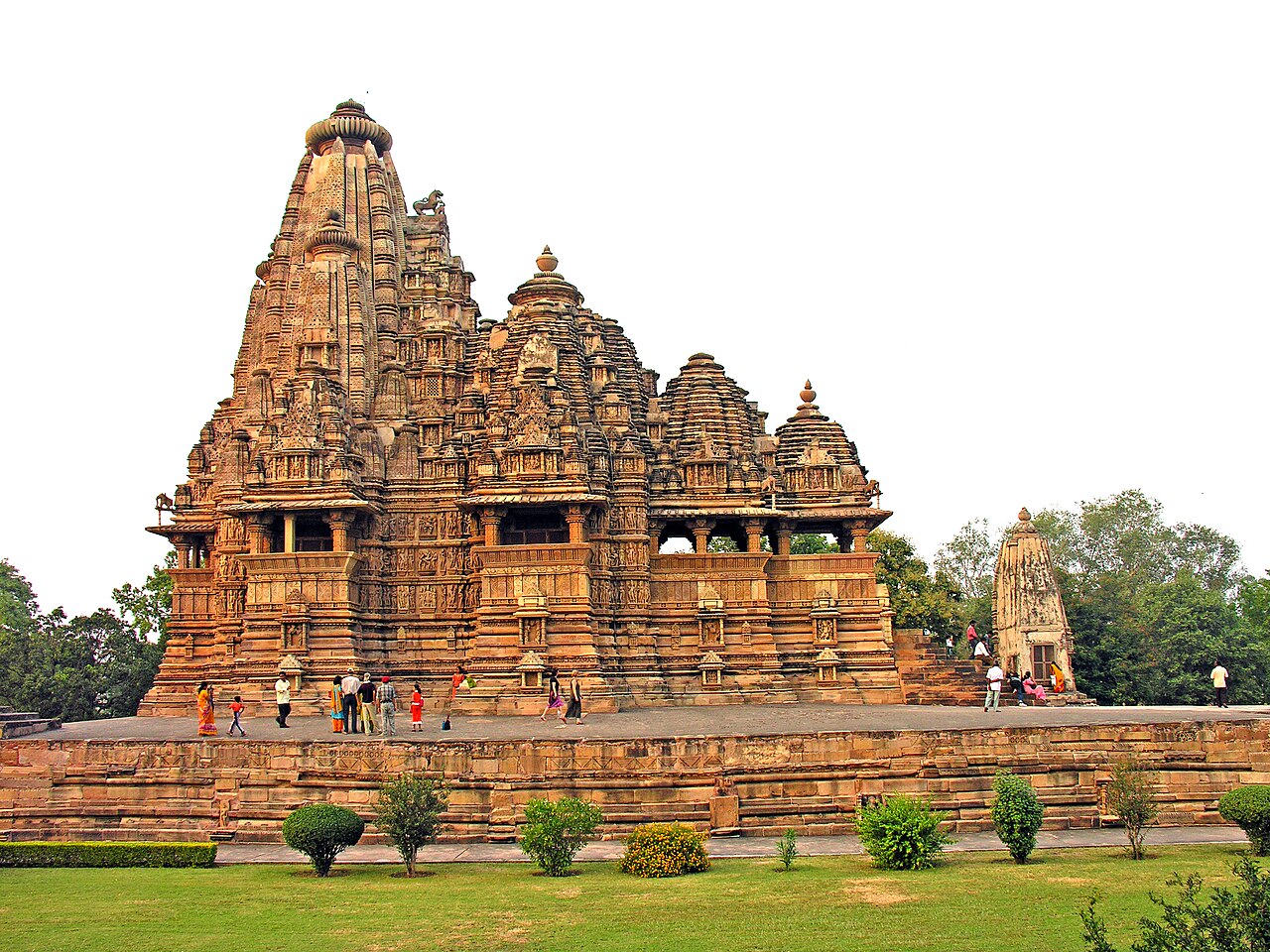
The Vishvanatha Temple stands at the northern edge of the Western Group compound and is one of the few Khajuraho temples whose construction date is fixed by its own inscription rather than by stylistic guesswork: a dedicatory text carved into the structure records its consecration in 1002 CE, placing it in the final years of King Dhanga's long reign or the opening years of his successor Ganda. Dedicated to Shiva under the epithet Vishvanatha — 'Lord of the Universe,' the same title later attached to Varanasi's most famous shrine — the temple follows the panchayatana plan established a generation earlier at the Lakshmana Temple: a principal sanctum raised on a high jagati platform with four corner subsidiary shrines, two of which survive intact. What sets Vishvanatha apart architecturally is not the main shrine but what faces it. Across an open ceremonial gap to the east sits a separate, freestanding Nandi pavilion — an open-pillared canopy sheltering a large stone bull, positioned so that Shiva's mount contemplates the sanctum from a discrete platform of its own rather than being pressed against the temple wall in the usual arrangement. On the temple's north wall a three-headed image of Brahma is carved with only three faces visible — the sculptors' shorthand for the god's mythologically excised fourth head, a detail guides at the site frequently point out and casual visitors frequently miss.
दिन का सबसे अच्छा समय: 06:00–08:00। The temple's sanctum faces east and the low-angle morning sun crosses the entrance porch and the detached Nandi pavilion opposite it, throwing the carved makara-toranas and the pavilion's open pillars into sharp relief before the compound's tour-bus arrivals begin.
Vishvanatha Temple का समय
- खुलने का समय
- 06:00–18:00
Mon–Sun 06:00–18:00 - बंद रहता है
- हर दिन खुला
जानना ज़रूरी: The compound is open year-round without seasonal closure. The Sound and Light show runs nightly — English at 19:30, Hindi at 20:30 — and is curtailed during heavy rain.
खुलने का समय asi.nic.in और सार्वजनिक रिकॉर्ड से तैयार किया गया, आख़िरी बार को अपडेट किया गया. ये बिना सूचना के बदल सकते हैं — यात्रा से पहले पुष्टि करें। हम ये गाइड कैसे लिखते हैं
Vishvanatha Temple टिकट मूल्य
| टिकट | कीमत |
|---|---|
| भारतीय आगंतुक | ₹40 |
| विदेशी आगंतुक | ₹600 |
| बच्चे | निःशुल्क |
| कैमरा | निःशुल्क |
Covered by the single Western Group compound ticket (₹40 Indian / ₹600 foreign, valid one day), which also includes the Kandariya Mahadeva, Lakshmana, Devi Jagadambi, and Chitragupta temples within the same ASI enclosure. The detached Nandi pavilion facing the temple is included in the same ticket — there is no separate charge to view it. The Sound and Light show held nightly at the Western Group requires its own ticket (₹100 Indian / ₹250 foreign).
कीमतें asi.nic.in और सार्वजनिक रिकॉर्ड से तैयार किया गया, आख़िरी बार को अपडेट किया गया. ये बिना सूचना के बदल सकते हैं — यात्रा से पहले पुष्टि करें। हम ये गाइड कैसे लिखते हैं
Vishvanatha Temple घूमने का सही समय
- Quiet
- Moderate
06:00–08:00
Sunrise openingBest time to go
Compound opens at sunrise. Vishvanatha, being at the far end from the main gate, sees fewer than a dozen visitors in this window even when the Kandariya Mahadeva area is already busy. Best light on the Nandi pavilion.
Quiet08:00–11:00
Mid-morning tour groups
Guided groups reach the northern row after covering Kandariya Mahadeva and Lakshmana first, so Vishvanatha's crowd peak lags the rest of the compound by roughly 30–45 minutes.
Moderate11:00–15:00
Midday
Steady but not overwhelming foot traffic. Overhead light flattens the sculptural relief; a reasonable window for those prioritising fewer people over ideal photography.
Moderate15:00–18:00
Afternoon and closing
Crowds thin noticeably after 15:30. Last entry to the compound is at sunset; the final hour is consistently the quietest period of the day at this end of the site.
Quiet
Vishvanatha Temple का इतिहास
Dhanga (r. c. 950–999 CE) was among the most consequential Chandela kings, expanding the dynasty's territory into parts of what is now Uttar Pradesh and consolidating Khajuraho's status as a religious capital distinct from the Chandela seat of political power at Kalinjar. His reign bridges the earlier, more austere temple-building phase represented by the Lakshmana Temple (954 CE) and the later, fully mature phase that would produce the Kandariya Mahadeva under Vidyadhara a generation afterward. The Vishvanatha inscription is therefore a useful anchor point for art historians dating the intervening decades of Chandela architectural development, since it demonstrates that the panchayatana plan and multi-register sculptural programme were already standard practice by 1002 CE, well before Kandariya Mahadeva pushed the same formula to its technical limit.
The temple's dedication to Shiva as Vishvanatha reflects the Chandela dynasty's primary religious affiliation — successive Chandela kings styled themselves as devotees of Shiva even while patronising Vaishnava and Jain establishments elsewhere in the same town, a plurality of religious sponsorship that is easy to overlook amid the site's Shiva-dominated reputation. Like most of the Khajuraho shrines, the temple fell out of active use and out of general knowledge after the Chandela collapse under Delhi Sultanate pressure around 1200 CE, and was rediscovered along with the rest of the Western Group when British engineer T.S. Burt cleared the jungle-covered site in 1838. The temple was inscribed as part of the Khajuraho Group of Monuments UNESCO listing in 1986.
Vishvanatha Temple के नियम व शिष्टाचार
Entry is via the single Western Group ticket booth at the main gate, which opens at 06:00; the same ticket admits visitors to the Nandi pavilion, so there is no separate queue or charge to cross the platform and view the bull image up close. Footwear is not required to be removed on the compound's paved paths, though many visitors remove shoes before mounting the temple's own platform steps as a mark of respect; the sanctum itself no longer hosts active daily worship, unlike the nearby Devi Jagadambi Temple.
The detached Nandi pavilion is a popular photography stop and its open colonnade means there is no barrier preventing close approach — but climbing onto the pavilion's plinth beyond the paved apron is discouraged by ASI staff on site. Photography of the sculptural registers, including the three-headed Brahma panel, is unrestricted; tripods are permitted. Licensed guides carry a laminated green Ministry of Tourism identity card and are stationed at the main compound gate; a half-day rate for the full Western Group circuit runs approximately ₹600–900 per group. Unlicensed touts congregate at the same gate and should be declined without hesitation.
Vishvanatha Temple जाने के लिए टिप्स
- 1
Vishvanatha sits at the far northern end of the Western Group, which means it is usually the last stop — or, if you walk the compound counter-clockwise, the first — on a standard temple circuit, and it is worth deliberately sequencing it early. Arriving at opening time and walking directly to Vishvanatha before doubling back to Kandariya Mahadeva and Lakshmana avoids the bottleneck that forms around the compound's most photographed temples by mid-morning.
- 2
The Nandi pavilion is frequently rushed past by visitors heading straight for the main shrine; treat it as a stop in its own right. Its open-sided construction means it reads well in silhouette against the early morning sky, and the carving on its pillar brackets — makara heads and foliate scrollwork — rewards a slow circuit at close range.
- 3
Because Vishvanatha, Devi Jagadambi, and Chitragupta stand close together along the compound's northern row, they form a natural 45–60 minute sub-loop that can be walked as a unit before or after the more heavily trafficked Kandariya Mahadeva and Lakshmana temples further south. Carry water; there are no refreshment stalls inside the compound itself, only at the main gate.
Vishvanatha Temple कैसे पहुंचें
लाल तारा Vishvanatha Temple है; नंबर वाले पिन हमारी गाइड की 7 सबसे नज़दीकी जगहें हैं, हर एक अपने शहर में अपनी रैंक के साथ. विवरण के लिए पिन पर टैप करें।
Western Group of Temples, Khajuraho, Chhatarpur District, Madhya Pradesh 471606 (northern end of the compound, close to the boundary wall)Google Maps में दिशा-निर्देश
Khajuraho Airport (HJR) से
₹80–1202.5 km · 10–15 min
Khajuraho Railway Station से
₹150–2008 km · 20–25 min
Western Group Main Gate से
0.3 km · 5–8 min
Free (included in Western Group ticket)
नज़दीकी हवाई अड्डा
Khajuraho Airport (HJR) से
approximately 2.5 km south of the Western Group compound
नज़दीकी रेलवे स्टेशन
Khajuraho Railway Station से
approximately 8 km southeast
Vishvanatha Temple — अक्सर पूछे जाने वाले सवाल
Is there a separate ticket for the Vishvanatha Temple and its Nandi pavilion?
No. Both are covered by the single Western Group compound ticket (₹40 Indian / ₹600 foreign), the same ticket that admits visitors to the Kandariya Mahadeva, Lakshmana, Devi Jagadambi, and Chitragupta temples. There is no separate charge to cross to the detached Nandi pavilion opposite the main shrine.
How is the Vishvanatha Temple's construction date known so precisely?
A dedicatory inscription carved into the temple records its consecration in 1002 CE, one of the more securely dated structures in the Khajuraho complex. This places its construction in the final years of King Dhanga's reign (c. 950–999 CE) or the opening years of his successor Ganda, roughly midway between the earlier Lakshmana Temple (954 CE) and the later Kandariya Mahadeva (c. 1025–1050 CE).
Why is the Nandi statue in a separate building instead of next to the temple?
Unlike the more common arrangement where a Nandi image sits directly against the temple's entrance, Vishvanatha's bull mount is housed in its own freestanding, open-pillared pavilion set across an open ceremonial gap to the east of the main sanctum. This creates a spatial relationship in which Nandi appears to gaze at the shrine from a discrete distance rather than crowding the entrance — an arrangement found at only a handful of Khajuraho temples.
What is the three-headed figure carved on the temple's north wall?
It is an image of Brahma, carved with only three faces visible. This is standard sculptural shorthand across Chandela-era temples for Brahma's four-headed form — the fourth head, facing directly backward or upward, is understood to be present but not carved, since it plays no role in the god's mythological narrative and its omission simplifies the composition without altering the iconographic reading.
आधिकारिक स्रोतों और सार्वजनिक रिकॉर्ड से AI की मदद से तैयार किया गया, और इसमें दी गई जांच के बाद ही प्रकाशित किया गया हम ये गाइड कैसे लिखते हैं. Traveliac से किसी ने भी इस जगह का दौरा नहीं किया है। आख़िरी बार को अपडेट किया गया। हम जगहों को कैसे रैंक और जांच करते हैं
Vishvanatha Temple के पास घूमने की जगहें
दूरियां हमारे मानचित्र से सीधी-रेखा में हैं; समय अनुमानित है।
 #2 in Khajuraho
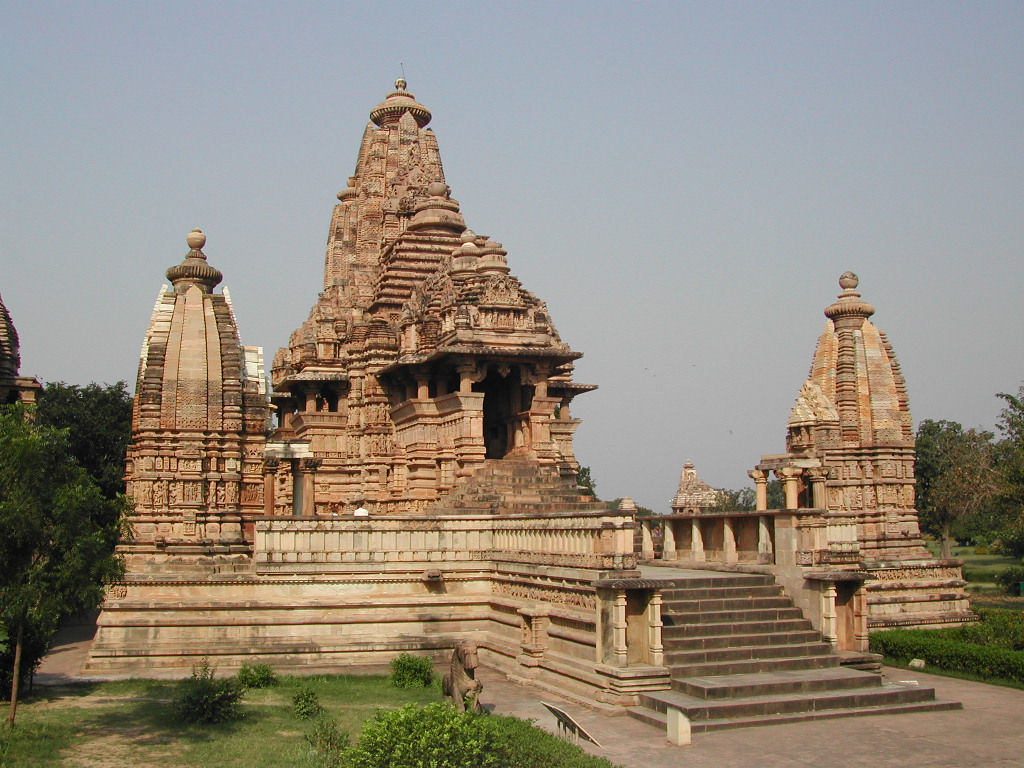
Lakshmana Temple
मंदिर · 150 m · about 3 min walk
 #5 in Khajuraho
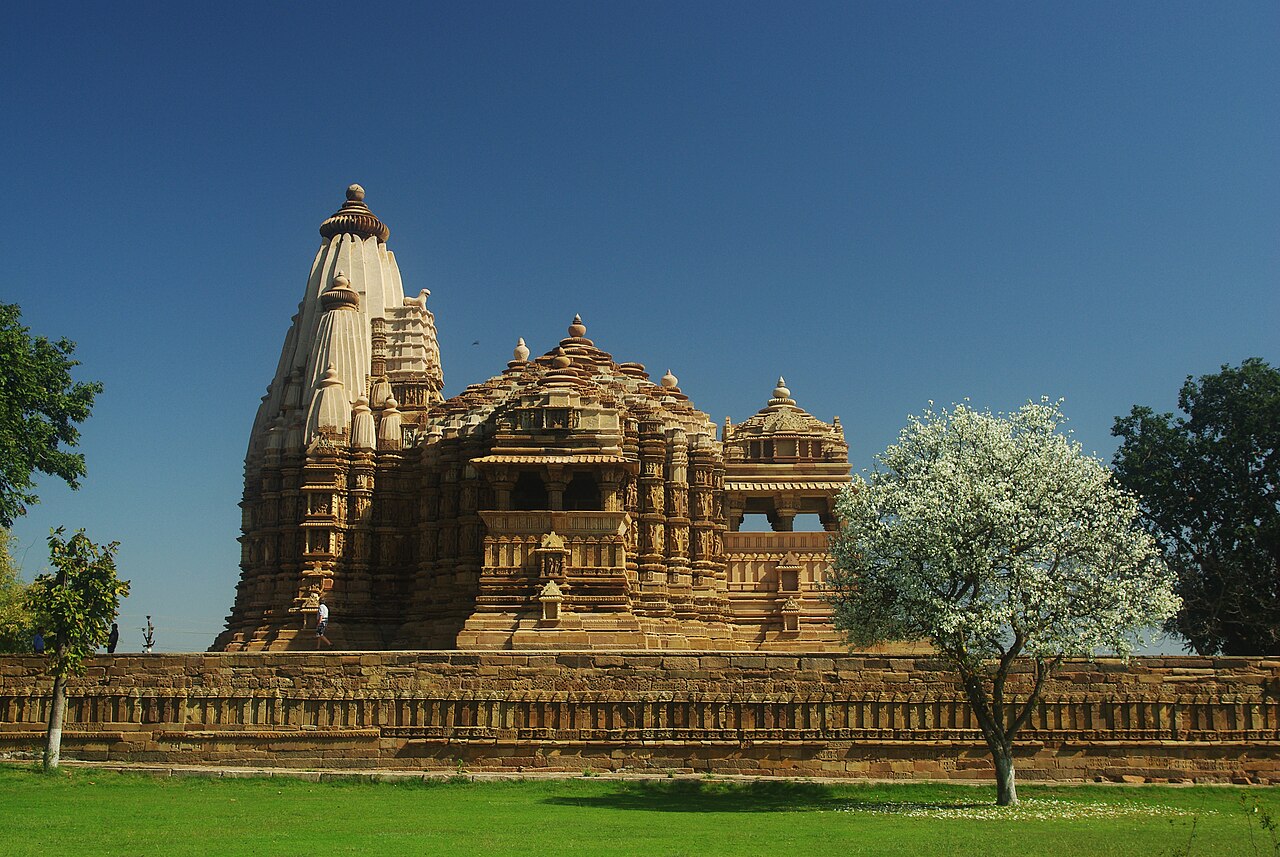
Chitragupta Temple
मंदिर · 300 m · about 5 min walk
 #1 in Khajuraho
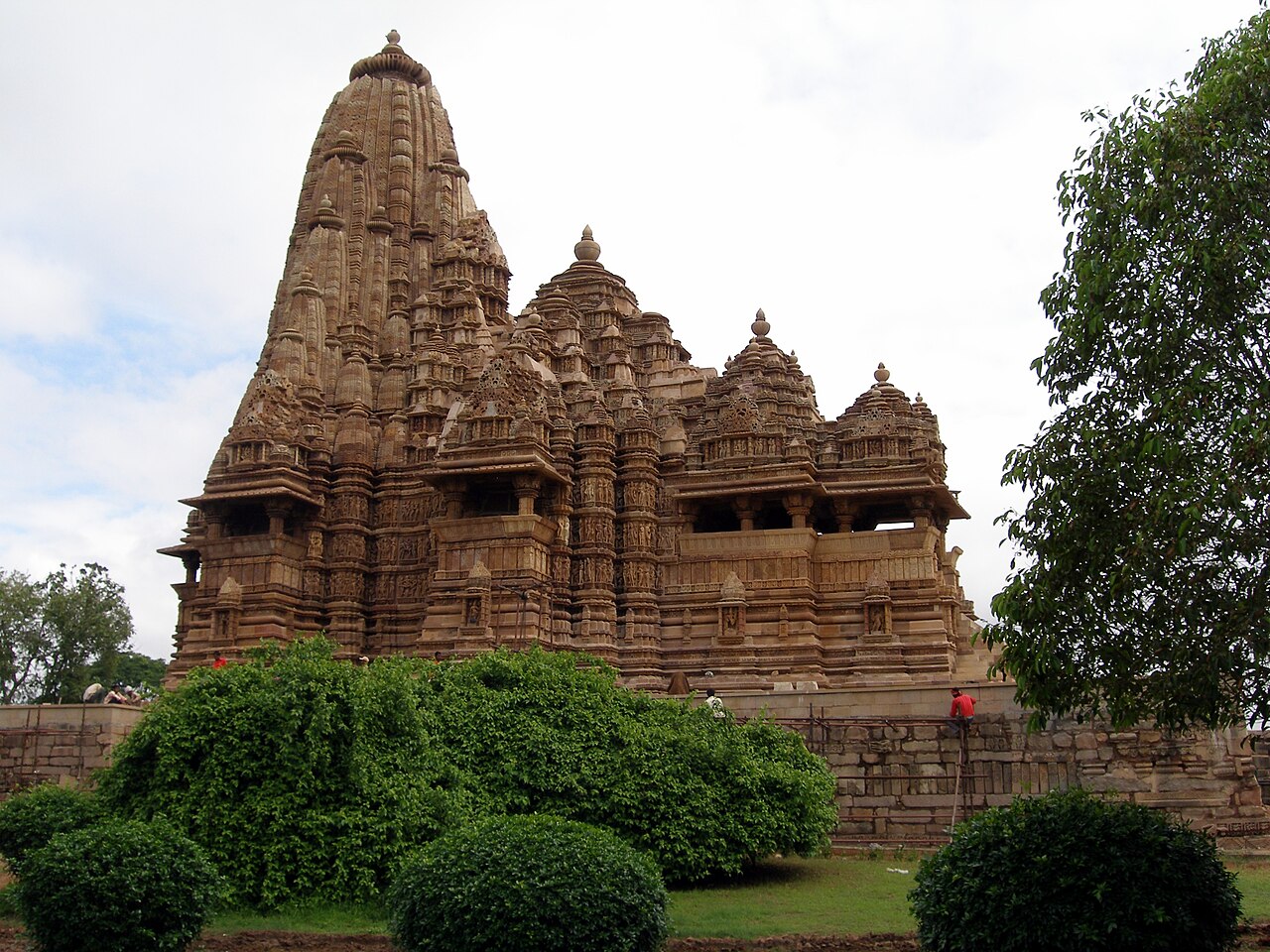
Kandariya Mahadeva Temple
मंदिर · 300 m · about 5 min walk
 #4 in Khajuraho
Devi Jagadambi Temple
मंदिर · 300 m · about 5 min walk