
Kandariya Mahadeva Temple
#1of 9 places to visit in KhajurahoKhajuraho, Madhya Pradesh
Also known as Kandhariya Mahadeva · Great Shiva Temple of Khajuraho
Quick answer
Opening hours: 06:00–18:00. Entry: ₹40 Indian · ₹600 foreign. Allow 1.5 hrs. Best time: 06:00–08:30 or 15:30–17:30.
Updated · Compiled by Traveliac, AI-assisted · 7 min read
- Opening hours
- 06:00–18:00
- Entry fee
- ₹40 Indian
- Ticket from
- Time needed
- 1.5 hrs
- Best time of day
- 06:00–08:30 or 15:30–17:30
- Best months
- Oct – Mar
- Address
- Western Group of Temples, Khajuraho, Chhatarpur District, Madhya Pradesh 471606
About Kandariya Mahadeva Temple
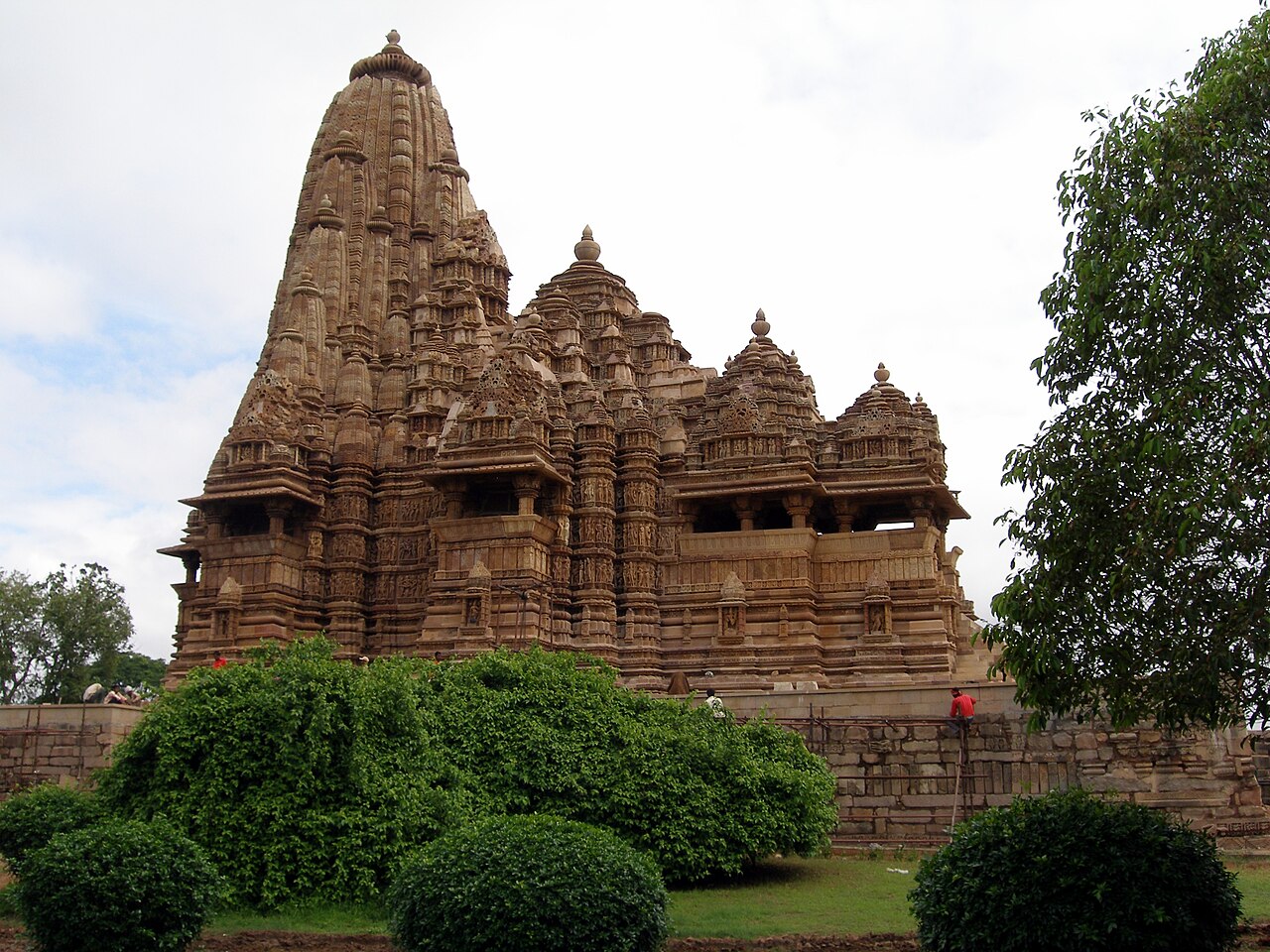
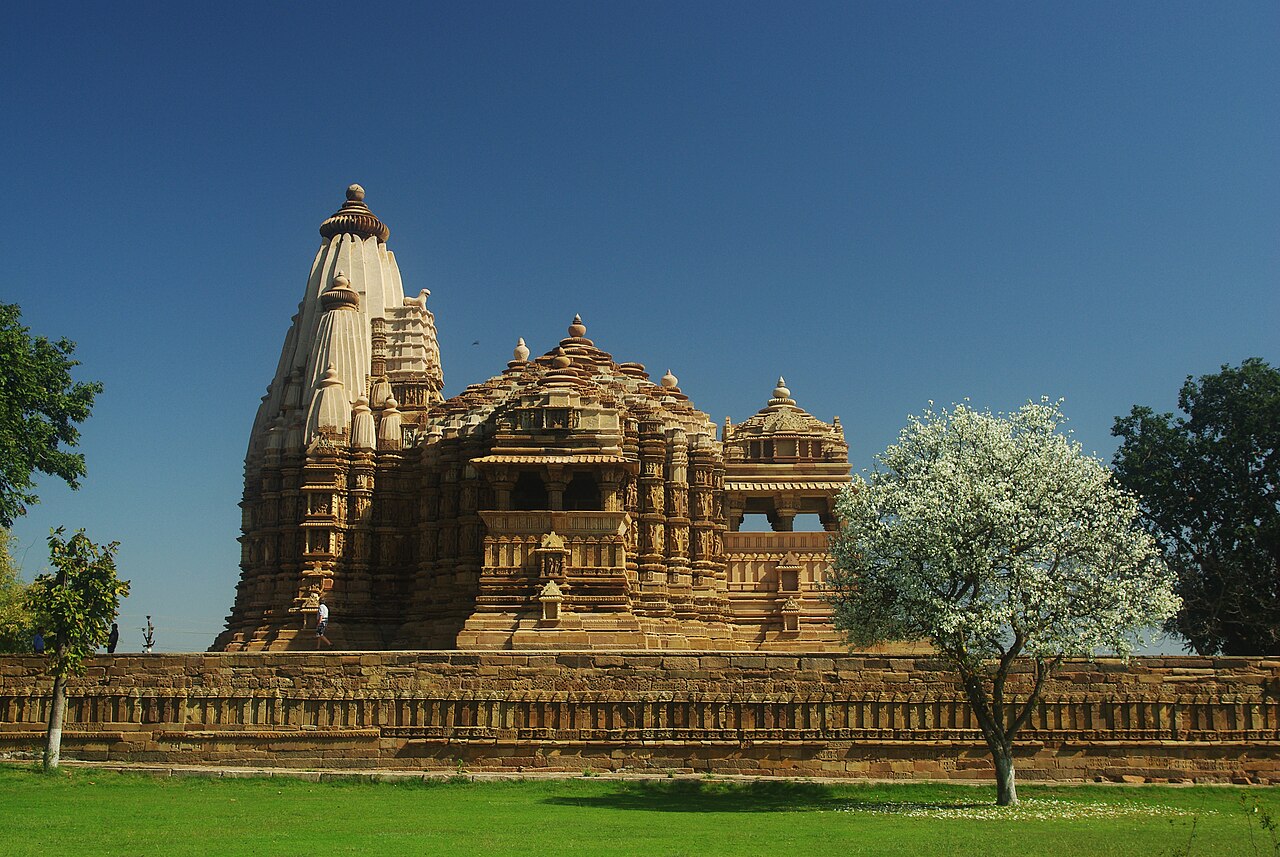
The Kandariya Mahadeva Temple rises 30.5 metres above the Khajuraho plain on a high jagati platform of buff-coloured Vindhyan sandstone, its shikhara a vertical cascade of 84 smaller subsidiary spires — called urushringas — that converge at the finial in a visual argument for verticality that the Chandela architects understood as a direct analogy for the mountain cave of Shiva. Built between approximately 1025 and 1050 CE, it is the largest of the surviving Khajuraho temples, the most ornately carved, and the one that best demonstrates the Chandela building programme at its technical ceiling. Approximately 872 figures have been counted in its sculptural scheme — celestial beings, surasundaris, apsaras, military friezes, erotic couples, hunting scenes, and devotional images — arranged in four horizontal registers around the exterior. The erotic panels, which have attracted so much disproportionate commentary, occupy parts of the second and third register and constitute a numerically small fraction of the total figure count.
Best time of day: 06:00–08:30 or 15:30–17:30. At sunrise, when soft raking light across the shikhara's corrugated stone surface reveals the full relief depth of the sculptural bands. The ambient silence before tour groups arrive is also the most suitable condition for reading the iconographic programme sequentially. Afternoon (15:30–17:30) is the second-best window as westward-facing sculpture panels are well-lit.
Kandariya Mahadeva Temple timings
Kandariya Mahadeva Temple opens at 06:00 and closes at 18:00. The weekend is no different: Saturday and Sunday follow the same times.
- Opening hours
- 06:00–18:00
Mon–Sun 06:00–18:00 - Closed on
- Open every day
Good to know: The Western Group compound is open year-round. The Sound and Light show is held nightly (English version at 19:30, Hindi version at 20:30) subject to weather — the open-air show is cancelled or curtailed during rain. In the winter peak season (November–February) both language shows are typically running; in summer and monsoon the Hindi show may be dropped.
Opening hours compiled from public records; this place lists no official website, last updated . They change without notice — confirm before you travel. How we write these guides
Kandariya Mahadeva Temple ticket price
| Ticket | Price |
|---|---|
| Indian visitors | ₹40 |
| Foreign visitors | ₹600 |
| Children | Free |
| Camera | Free |
This temple is within the Western Group of Temples compound, administered by the Archaeological Survey of India. The single ticket (₹40 Indian / ₹600 foreign) covers access to all temples within the Western Group compound, including Kandariya Mahadeva, the Chitragupta Temple, the Vishvanatha Temple, and the Devi Jagadambi Temple. Ticket is valid for one day only. The Sound and Light show held nightly in the Western Group compound requires a separate ticket (₹250 for foreigners / ₹100 for Indians). No additional camera fee for still photography. Video cameras: no separate fee currently levied.
Prices compiled from public records; this place lists no official website, last updated . They change without notice — confirm before you travel. How we write these guides
Best time to visit Kandariya Mahadeva Temple
- Quiet
- Moderate
- Busy
06:00–08:30
Sunrise openingBest time to go
The compound opens at sunrise. A handful of photographers and early-rising individual travellers are the only visitors. Raking light across the shikhara's carved surface is at its most dramatic. The sanctum receives first light.
Quiet08:30–11:30
Morning tour group peak
Guided tour groups arrive from hotels. The paths between temples become congested. The erotic sculpture panels attract cluster viewing that slows movement through the compound.
Busy11:30–14:30
Midday
Groups depart for lunch. Individual visitors arrive. Summer heat is punishing; in winter this is a comfortable visiting window. Light is overhead and relatively flat.
Moderate14:30–17:00
Afternoon
A reliable second window. Westward-facing sculptural panels on the temple exterior are well-lit in this period. The compound begins to feel spacious again.
Moderate17:00–18:00
Closing hour
Final hour before the compound closes. Golden-hour light on the sandstone is exceptional. Staff begin preparations for the Sound and Light show setup.
Quiet
History of Kandariya Mahadeva Temple
The Kandariya Mahadeva Temple was constructed under the Chandela Rajput dynasty, most probably during the reign of Vidyadhara (c. 1003–1035 CE), the most powerful of the Chandela kings, who expanded the dynasty's territory to include parts of modern Uttar Pradesh and Bihar and whose building programme at Khajuraho represents the culmination of nearly a century of royal patronage.
The Chandelas had ruled from their capital at Kalinjar and maintained Khajuraho — then called Kharjuravahaka — as their ceremonial and religious centre. The temple-building programme began under King Yashovarman (c. 925–950 CE), who is credited with the early construction of the Lakshmana Temple (dedicated to Vishnu), and continued through four successive reigns over approximately a century. By 1100 CE, construction had effectively ceased — whether from dynastic decline, a shift in religious patronage, or exhaustion of resources, the records do not specify.
The temple is dedicated to Shiva in his form as Mahadeva (Great God). The sanctum contains a marble Shiva lingam on a marble yoni pedestal. The name 'Kandariya' is derived from 'kandara', meaning cave or mountain cavity — a reference to Shiva's mythological dwelling in the Himalayan peaks. The architectural form of the shikhara, with its cascading subsidiary spires, is a stone translation of that mountain form: the temple is not merely a building but a surrogate Mount Meru.
The temples at Khajuraho were largely unknown to the wider world between approximately 1200 CE — when the Chandela power collapsed under pressure from the Delhi Sultanate — and 1838, when Captain T.S. Burt of the Bengal Engineers documented them in a report to the Asiatic Society of Bengal. Local populations had never abandoned the site entirely, and some temples continued to receive worship, but the dense vegetation growth across the compound meant that multiple structures were only revealed when the British cleared the site in the 19th century. UNESCO inscribed the Khajuraho Group of Monuments in 1986.
Rules & etiquette at Kandariya Mahadeva Temple
The Western Group compound requires ticket purchase at the main gate booth before entry. The ticket booth opens at 06:00. During peak season (November–February) queues at the booth can form by 08:30; arrive before 07:30 to avoid waiting. Foreign visitors should carry exact change or small denomination bills as the booth's change supply is unreliable.
Footwear is permitted throughout the compound's paved walkways. The sanctum interior of the Kandariya Mahadeva Temple is entered via a small vestibule; shoes are technically not required to be removed for the outer compound but some visitors remove them before ascending the temple platform steps as a mark of respect. The inner sanctum (garbhagriha) may be entered by devotees for darshan; non-Hindu visitors are generally permitted but should not interrupt active puja.
Photography is freely permitted throughout the compound including of all sculptural panels. Tripods are allowed. Drone photography requires prior written permission from the ASI Bhopal Circle office — this permission is very rarely granted and requires several weeks of processing. Do not climb onto the temple platform beyond the sanctum entrance vestibule; the upper platform ledges, though sometimes reached by curious visitors, are prohibited and the stone surface is fragile.
Guides must be licensed by the Ministry of Tourism. Verify the laminated green card. The standard rate for a half-day guide (covering the Western Group) is approximately ₹600–900 for a group. Unlicensed guides are numerous and persistent at the main gate; they can be declined firmly. The ASI publishes a guidebook (₹75–100) available at the ticket counter that provides accurate iconographic descriptions.
Tips for visiting Kandariya Mahadeva Temple
- 1
The Sound and Light show held nightly in the Western Group compound is worth attending on your first evening in Khajuraho, primarily because the spectacle of the illuminated temple facades in darkness provides a spatial orientation to the compound that daylight — with its simultaneous exposure of every surface — does not. The English show begins at 19:30. Arrive 15 minutes early for good seating. Carry mosquito repellent; the open-air seating area adjacent to the temple tank attracts mosquitoes from dusk onward.
- 2
The compound is most photogenic in the first two hours after sunrise and the final 90 minutes before sunset. At midday in October–February the light is acceptable but directional shadows across the sculptural registers can be problematic for documentation purposes. April through June, midday stone temperatures exceed 50°C and the site becomes genuinely uncomfortable.
- 3
Khajuraho Airport is served by IndiGo, Air India, and (seasonally) Vistara from Delhi and Mumbai. Flight times are approximately 1.5 hours from Delhi. From the airport, the Western Group compound is 2.5 km by auto-rickshaw (₹80–120) or by one of the cycle-rickshaws that wait outside the terminal (₹60–80, 15–20 minutes).
- 4
From Jhansi, the overnight Uttar Pradesh Sampark Kranti Express connects to Khajuraho station (a smaller station 8 km from the Western Group); auto-rickshaws from the station to the temples run approximately ₹150–200. Alternatively, the train to Satna (120 km) or Mahoba (61 km) followed by a taxi or bus transfer is a common routing.
- 5
In town, the Radisson Jass Khajuraho and Lalit Temple View represent the upper end of the local accommodation market; Raja Cafe opposite the Western Group entrance is the traveller-circuit standard for affordable food and reliable wi-fi.
How to reach Kandariya Mahadeva Temple
The red star is Kandariya Mahadeva Temple; the numbered pins are the 7 nearest places in our guides, each showing its rank in its city. Tap a pin for details.
Western Group of Temples, Khajuraho, Chhatarpur District, Madhya Pradesh 471606Directions in Google Maps
From Khajuraho Airport (HJR)
₹80–1202.5 km · 10–15 min
From Khajuraho Airport (HJR)
₹60–802.5 km · 15–20 min
From Khajuraho Railway Station
₹150–2008 km · 20–25 min
From Jhansi Junction (JHS)
₹150–400175 km · 240–300 min
Train fare, class dependent) + ₹150–200 auto
From Mahoba Junction (MHO)
₹100–15061 km · 90–110 min
Per person shared; ₹800–1200 private cab
Nearest airport
From Khajuraho Airport (HJR)
approximately 2.5 km south of the Western Group compound
Nearest railway station
From Mahoba Junction (MHO), Uttar Pradesh
approximately 61 km north; Jhansi Junction (JHS) – approximately 175 km northwest (with train connection to most major cities)
Kandariya Mahadeva Temple FAQs
What does the Western Group ticket cover and how much does it cost?
The single ASI ticket costs ₹40 for Indian nationals and ₹600 for foreign visitors. It covers all temples within the Western Group compound for one day, including the Kandariya Mahadeva, Chitragupta, Vishvanatha, and Devi Jagadambi temples. The nightly Sound and Light show requires a separate ticket (₹100 Indian / ₹250 foreign). No camera fee applies.
What percentage of the Kandariya Mahadeva Temple's sculptures are erotic?
The erotic panels constitute a relatively small portion of the total sculptural programme. Of approximately 872 figures counted on the temple's exterior, the erotic couples (maithuna) occupy parts of two of the four decorative registers and represent an estimated 10–15% of the total figures. The dominant imagery comprises apsaras, surasundaris, celestial attendants, military friezes, and devotional icons. The disproportionate attention given to the erotic panels reflects the novelty of their subject matter to 19th- and 20th-century Western visitors rather than their numerical or iconographic primacy.
Why are there erotic sculptures on a Hindu temple?
The precise theological rationale is still debated among art historians. Prevailing theories include: (1) tantric symbolism in which the erotic union represents the union of Shiva and Shakti as cosmic principles; (2) an auspicious threshold imagery intended to protect the temple interior by representing worldly desires left behind before entering the sanctum; (3) straightforward didactic imagery from Kamasutra traditions integrated into a comprehensive representation of human experience. The sculptures are placed on the exterior walls — never inside the sanctum — which is consistent with the threshold-protection interpretation.
How many temples survive at Khajuraho and how many did the Chandelas build?
Historical accounts suggest approximately 85 temples were originally constructed by the Chandela dynasty between roughly 950 and 1050 CE across a 20-square-kilometre area. Approximately 25 survive in varying degrees of completeness. The Western Group contains the largest concentration of well-preserved structures; the Eastern Group includes both Hindu and Jain temples; the Southern Group has two significant temples in more isolated settings.
Is the Sound and Light show worth attending?
Yes, particularly on your first evening. The illuminated temple facades in darkness reveal the three-dimensional depth of the sculptural registers in a way that flat daylight often obscures. The English narration is theatrical but provides useful historical context. The show runs approximately 50 minutes. Carry mosquito repellent and a light layer for the post-sunset chill in winter months. Tickets at the gate: ₹250 foreign / ₹100 Indian.
Compiled with AI assistance from official sources and public records, and published only after the checks in How we write these guides. Nobody from Traveliac has visited this place. Last updated . How we rank and check places
Places to visit near Kandariya Mahadeva Temple
Straight-line distances from our map; times are estimates.
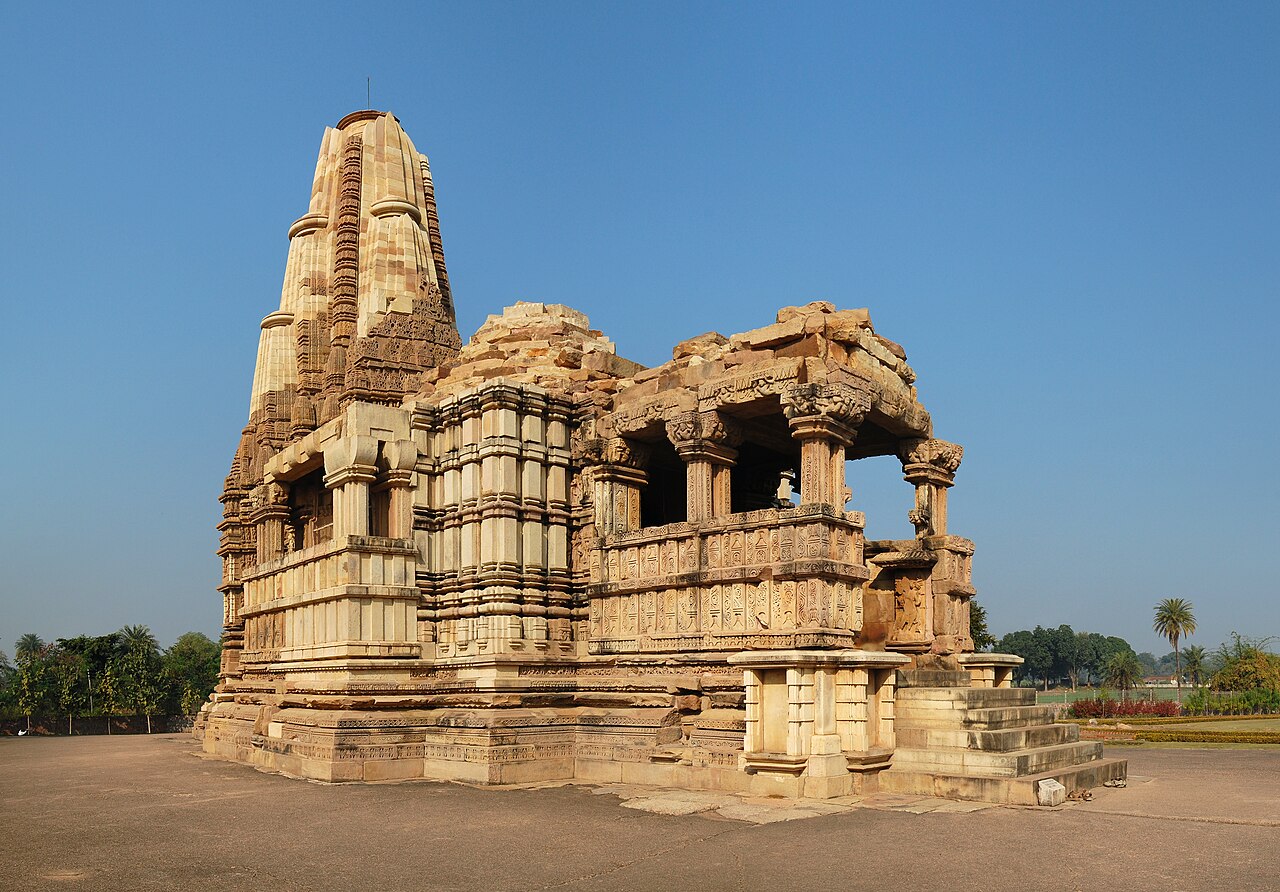 #8 in KhajurahoFree entry
Duladeo Temple
Temple · 50 m · about 2 min walk
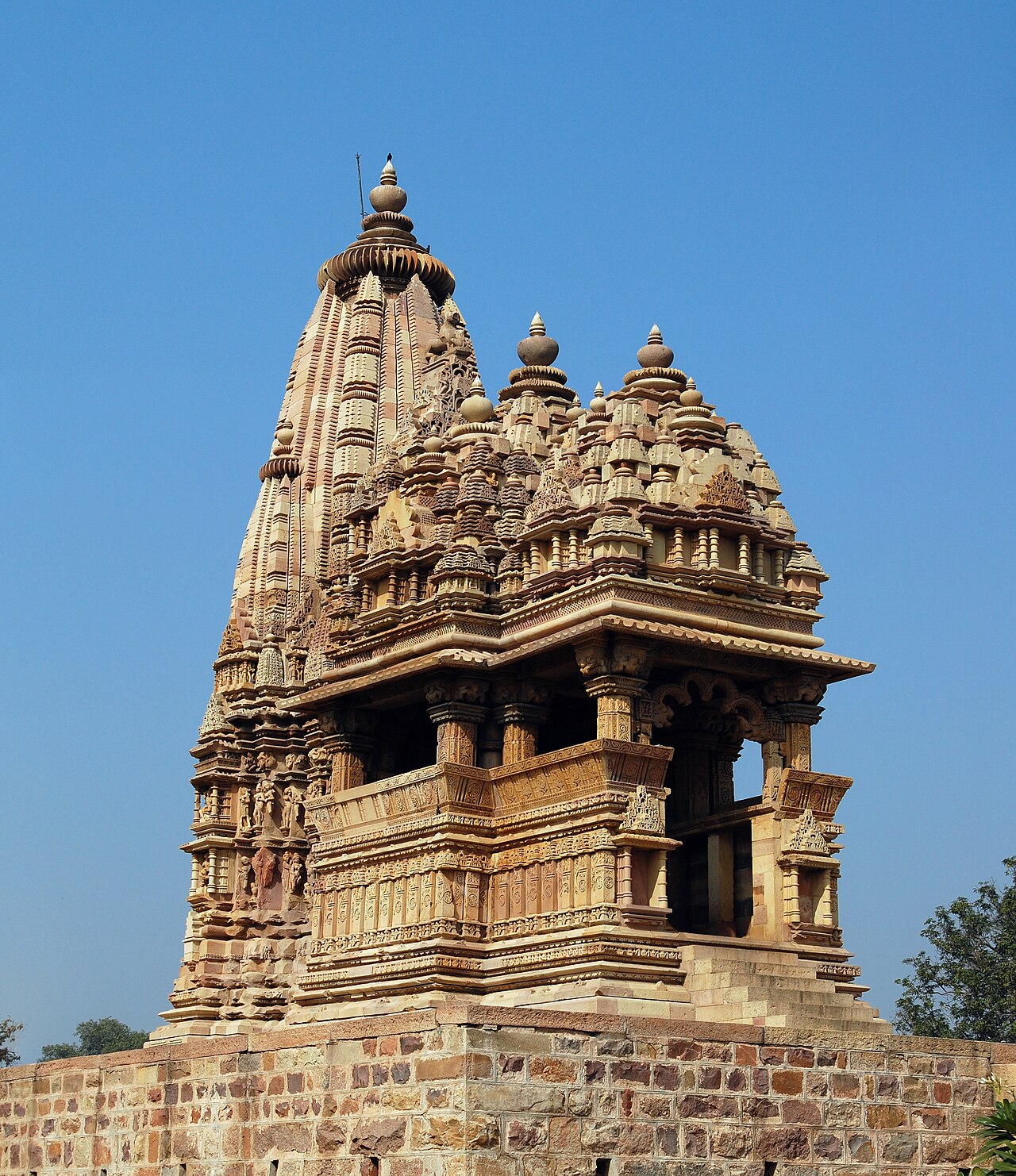 #9 in KhajurahoFree entry
Javari Temple
Temple · 50 m · about 2 min walk
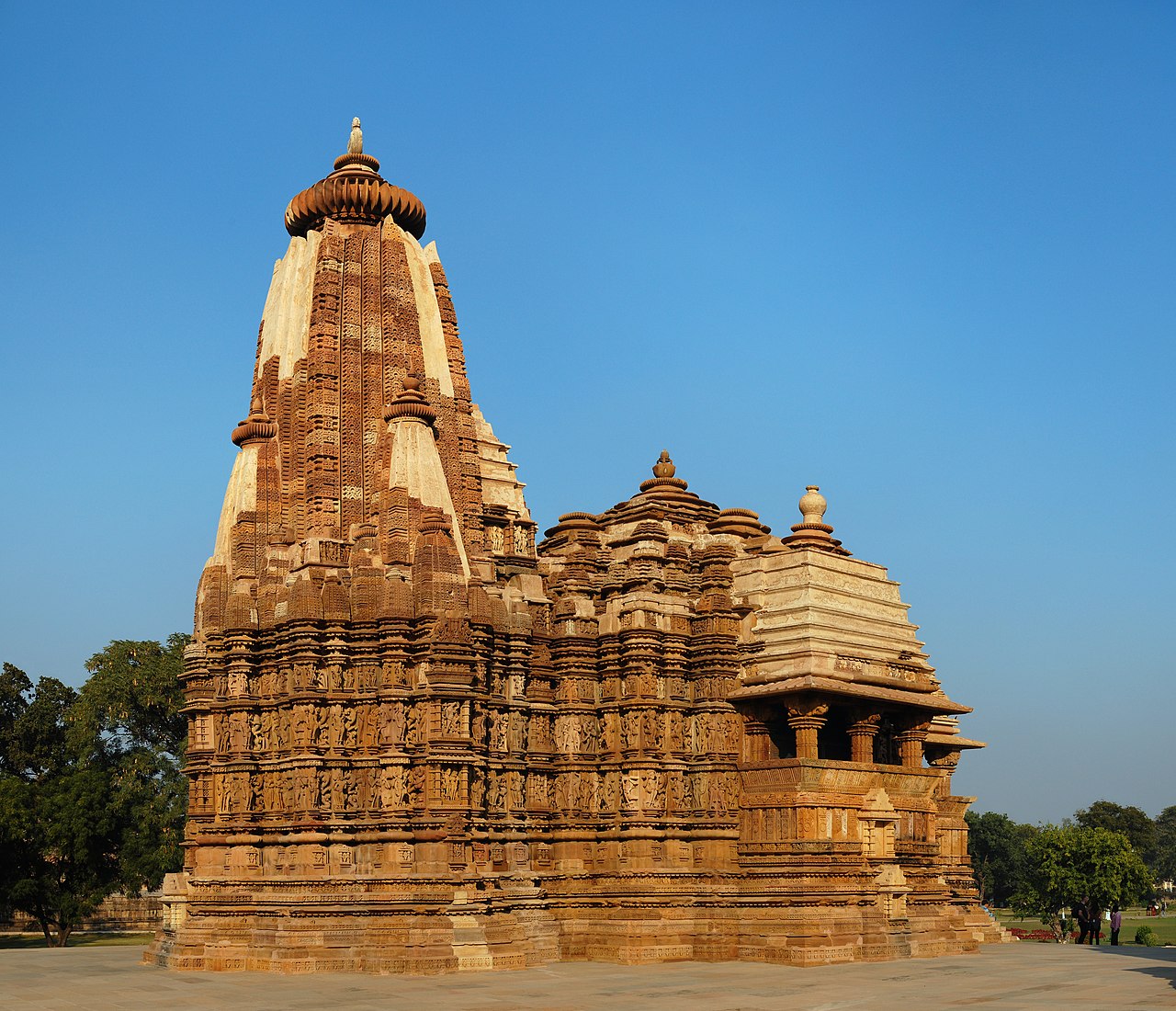 #4 in Khajuraho
Devi Jagadambi Temple
Temple · 50 m · about 2 min walk
 #5 in Khajuraho
Chitragupta Temple
Temple · 150 m · about 3 min walk