
Wat Arun (Temple of Dawn)
#2of 9 places to visit in BangkokBangkok, Central Thailand, Thailand
Also known as Wat Arun Ratchawararam Ratchawaramahawihan · วัดอรุณ
Quick answer
Opening hours: 08:00–18:00, last entry 17:30. Entry: THB 200 for foreign visitors. Allow 1.5 hrs. Best time: 15:30 – 17:30.
Updated · Compiled by Traveliac, AI-assisted · 4 min read
- Opening hours
- 08:00–18:00
- Entry fee
- THB 200
- For foreign visitors
- Time needed
- 1.5 hrs
- Best time of day
- 15:30 – 17:30
- Best months
- Nov – Feb
- Address
- 158 Thanon Wang Doen, Wat Arun, Bangkok Yai, Bangkok 10600
About Wat Arun (Temple of Dawn)
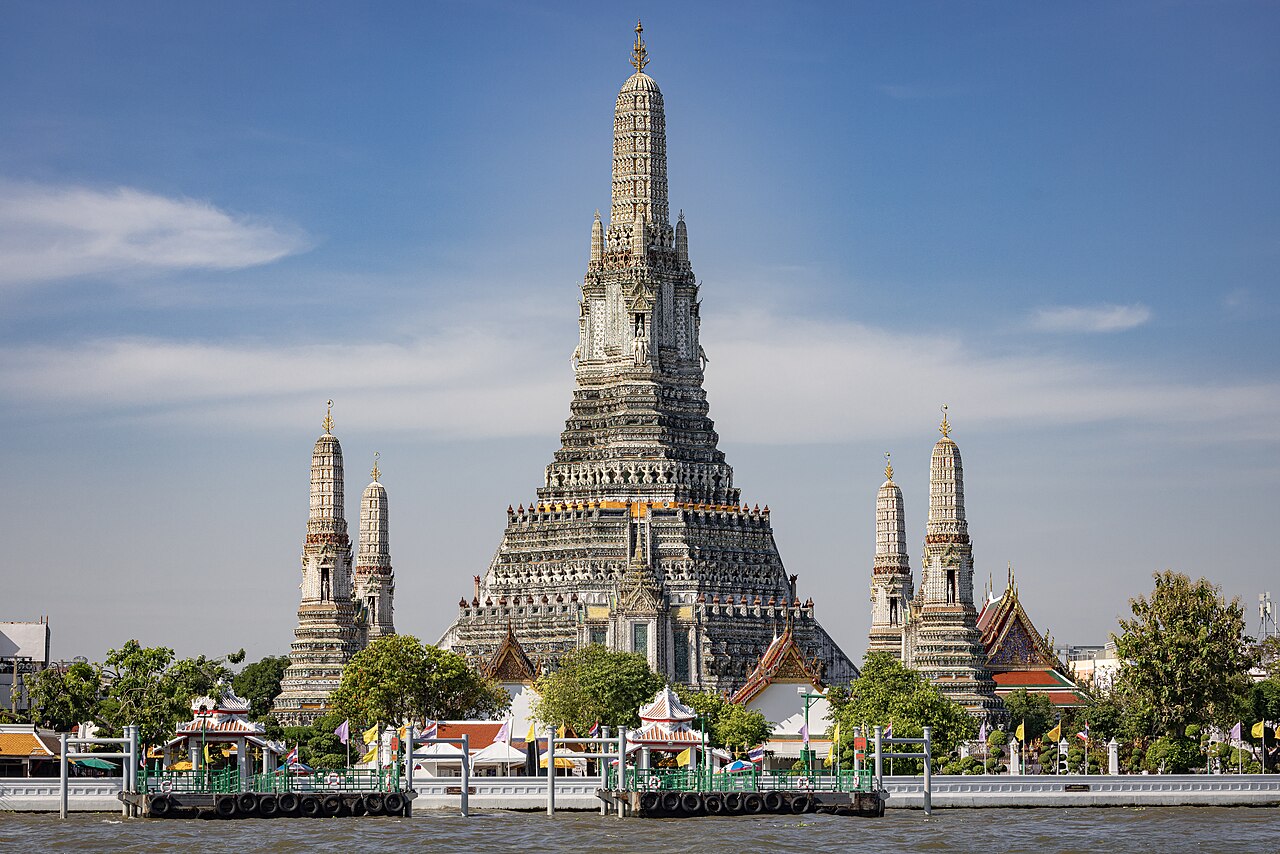
Wat Arun's central prang rises 70 metres above the west bank of the Chao Phraya River, its surface embedded with thousands of fragments of Chinese porcelain arranged into floral rosettes — a technique that reused broken ceramic ballast from 19th-century trading ships rather than importing fresh material. The tower is climbable partway up a steep flight of steps to a mid-level terrace, from which the Grand Palace and Wat Pho are visible directly across the river. The name refers to Aruna, the Hindu god of dawn, and reflects the temple's reputation as the best vantage point in Bangkok to watch first light strike the eastern bank. Four smaller satellite prangs surround the central spire, each guarded by statues of Kinnari, half-bird half-human mythological figures, and by soldiers of the Hindu god Indra's mount, the white elephant Erawan.
Best time of day: 15:30 – 17:30. For photography, when the afternoon sun lights the western-facing central prang directly, and again just after sunset from the Thonburi riverbank opposite for the illuminated night view.
Wat Arun (Temple of Dawn) timings
Wat Arun (Temple of Dawn) opens at 08:00 and closes at 18:00. Those hours hold on Saturday and Sunday too.
- Opening hours
- 08:00–18:00
Mon–Sun 08:00–18:00 - Closed on
- Open every day
Opening hours compiled from tourismthailand.org and public records, last updated . They change without notice — confirm before you travel. How we write these guides
Wat Arun (Temple of Dawn) ticket price
| Ticket | Price |
|---|---|
| Standard ticket (foreign visitors) | THB 200 |
| Concession (student / senior) | Free |
| Children | Free |
Foreign visitors pay 200 THB, as of 2026; Thai nationals enter free. Prices for Thai temples are periodically revised, so verify at the entrance counter or the temple's official channel before visiting.
Prices compiled from tourismthailand.org and public records, last updated . They change without notice — confirm before you travel. How we write these guides
Best time to visit Wat Arun (Temple of Dawn)
- Quiet
- Moderate
- Busy
08:00 – 09:30
Morning OpeningBest time to go
Fewer tour groups have crossed yet from the palace side; steps to the mid-level terrace are climbable without queuing.
Quiet09:30 – 13:00
Midday Cross-River Peak
Visitors combining Grand Palace and Wat Pho arrive via the Tha Tien ferry in volume; the base courtyard and lower steps become congested.
Busy13:00 – 15:30
Afternoon Lull
Midday heat and lunch breaks thin the crowd; the sun is directly overhead, giving flat, less photogenic light on the prang.
Moderate15:30 – 18:00
Golden Hour
Photographers and sunset-chasers return as the western sun lights the porcelain-clad tower directly; last entry is 17:30.
Busy
History of Wat Arun (Temple of Dawn)
Wat Arun's site predates the current structure, having served as a temple under King Taksin during the brief Thonburi period (1767–1782), when the Emerald Buddha was housed here before being moved across the river to the newly built Grand Palace under Rama I. The current 70-metre central prang was substantially rebuilt and enlarged under Rama II and completed under Rama III in the early 19th century, raising it from an earlier, considerably shorter structure recorded in Ayutthaya-era accounts.
The Chinese porcelain decoration reflects a specific 19th-century trade pattern: Chinese ceramic vessels used as ballast in junks trading rice and goods to Siam were often smashed and donated to temple building projects once emptied, turning a disposal problem into an ornamental technique now unique to this temple's silhouette on the Bangkok skyline.
Rules & etiquette at Wat Arun (Temple of Dawn)
Wat Arun enforces the same modest dress code as other active Thai temples — shoulders and knees covered — and turns away visitors in vest tops, short shorts, or beachwear at the entrance; sarongs are available to rent near the ticket counth if needed. The steps up the central prang are steep, narrow, and have no handrail sections on the lower tiers; visitors with knee or balance concerns should use caution and there is no obligation to climb past the first terrace.
Most visitors reach Wat Arun via the short cross-river ferry from Tha Tien pier on the Rattanakosin (palace) side, a crossing of only a few minutes that costs a few baht — arriving directly by road from central Bangkok involves a longer detour around the river.
As with all Thai temples, monks should not be touched by women, and shoes are removed before entering any interior shrine room, though the outdoor prang climb itself is done in shoes.
Tips for visiting Wat Arun (Temple of Dawn)
- 1
The most photographed view of Wat Arun is not from within the temple itself but from the Thonburi riverbank looking east, or from a river-crossing boat at dusk when the porcelain-inlaid prang is floodlit against the darkening sky; this view requires no entrance ticket.
- 2
Pair a Wat Arun visit with Wat Pho and the Grand Palace on the opposite bank — the Tha Tien ferry crossing takes only a few minutes, making a same-morning circuit of all three straightforward. Riverside restaurants directly facing the temple on the Thonburi side charge a substantial premium for the view; a short walk inland finds considerably cheaper noodle and rice shops with the same skyline visible from their upper floors.
- 3
The steep central steps close periodically for maintenance without much advance notice; if closed, the surrounding courtyard and satellite prangs still justify the entrance fee.
How to reach Wat Arun (Temple of Dawn)
The red star is Wat Arun (Temple of Dawn); the numbered pins are the 6 nearest places in our guides, each showing its rank in its city. Tap a pin for details.
158 Thanon Wang Doen, Wat Arun, Bangkok Yai, Bangkok 10600Directions in Google Maps
From Tha Tien Pier (Rattanakosin side)
0.3 km · 3–5 min by boat
4–5 THB per crossing
From Wong Wian Yai BTS Station
2.3 km · 10–15 min by taxi
60–90 THB metered taxi
From Suvarnabhumi Airport (BKK)
33 km · 50–75 min
400–550 THB combined transfer
Nearest airport
From Suvarnabhumi Airport (BKK)
33 km, approximately 50–75 minutes by road.
Nearest station
From Wong Wian Yai BTS (Silom Line)
2.3 km, then a short taxi or cross-river ferry from Tha Tien pier.
Wat Arun (Temple of Dawn) FAQs
How much does it cost to visit Wat Arun?
200 THB for foreign visitors, as of 2026; Thai nationals enter free. Temple fees are revised periodically, so confirming the current rate at the ticket counter on arrival is worthwhile.
Can visitors climb the central prang at Wat Arun?
Yes, partway. Steep steps lead to a mid-level terrace with river views toward the Grand Palace and Wat Pho; the steps are narrow with limited handrails on the lower tiers, and the climb is optional.
What is the fastest way to get from the Grand Palace to Wat Arun?
Walk to Tha Tien Pier, about 10 minutes from the Grand Palace, and take the cross-river ferry, which takes only a few minutes and costs a few baht. This is faster and cheaper than any road route, which must detour to a bridge crossing.
What is the best time of day to photograph Wat Arun?
Late afternoon, roughly 15:30 to 17:30, when the western sun lights the porcelain-inlaid central prang directly. The view from the Thonburi riverbank at dusk, once the tower is floodlit, is also popular and requires no entrance ticket.
Compiled with AI assistance from official sources and public records, and published only after the checks in How we write these guides. Nobody from Traveliac has visited this place. Last updated . How we rank and check places
Places to visit near Wat Arun (Temple of Dawn)
Straight-line distances from our map; times are estimates.
 #1 in Bangkok
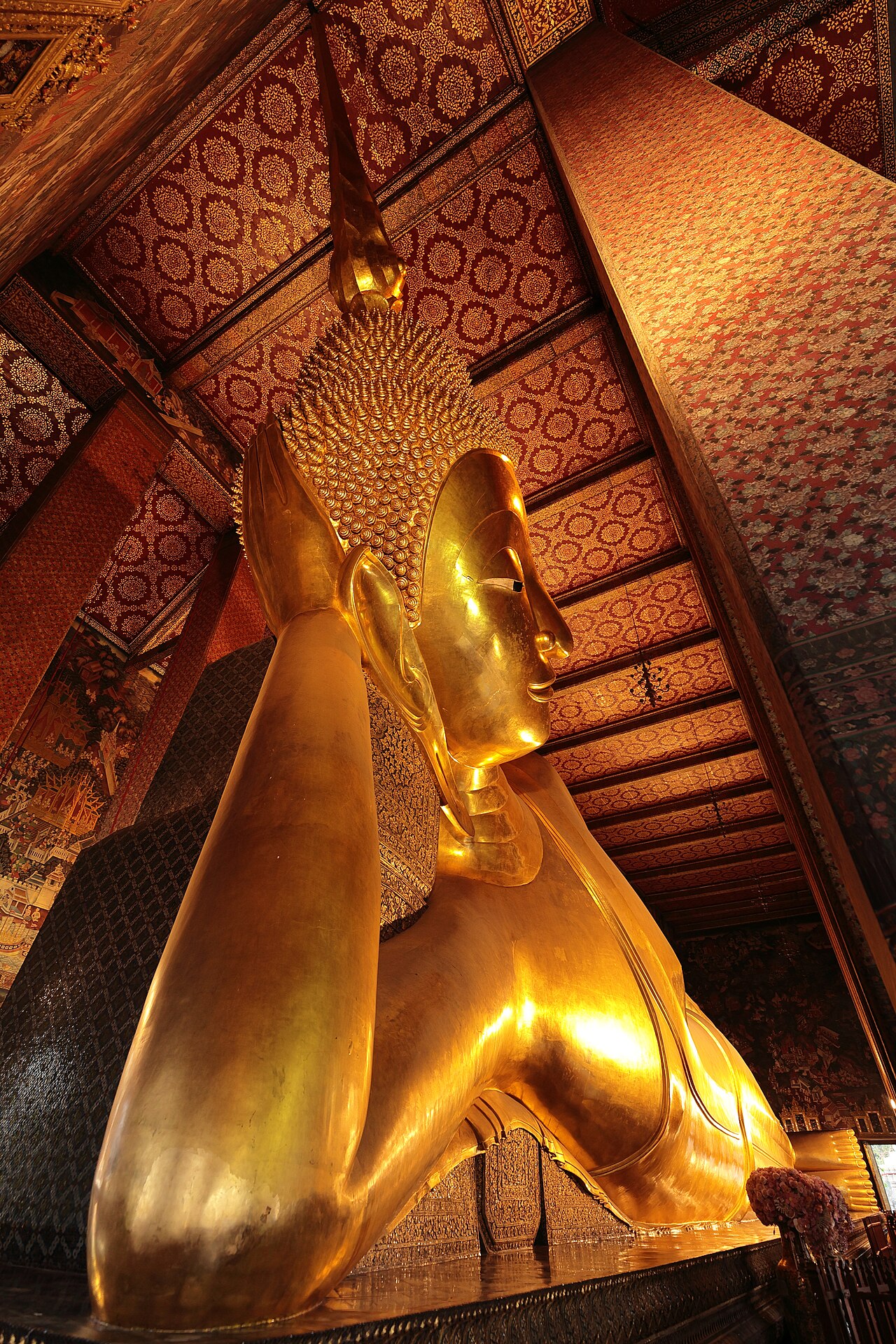
Wat Pho (Reclining Buddha)
Temple · 600 m · about 10 min walk
 #5 in BangkokFree entry
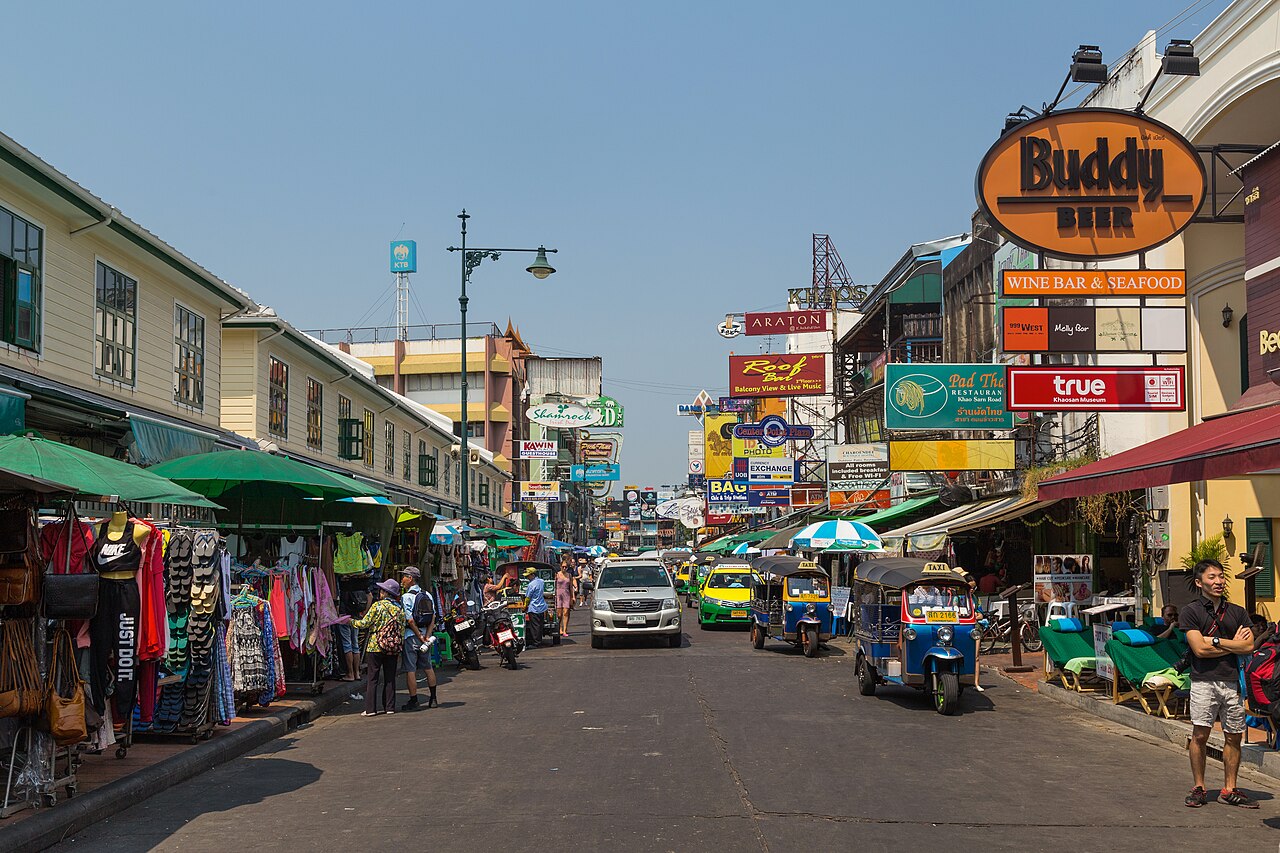
Khao San Road
Market · 1.9 km · about 31 min walk
 #4 in BangkokFree entry
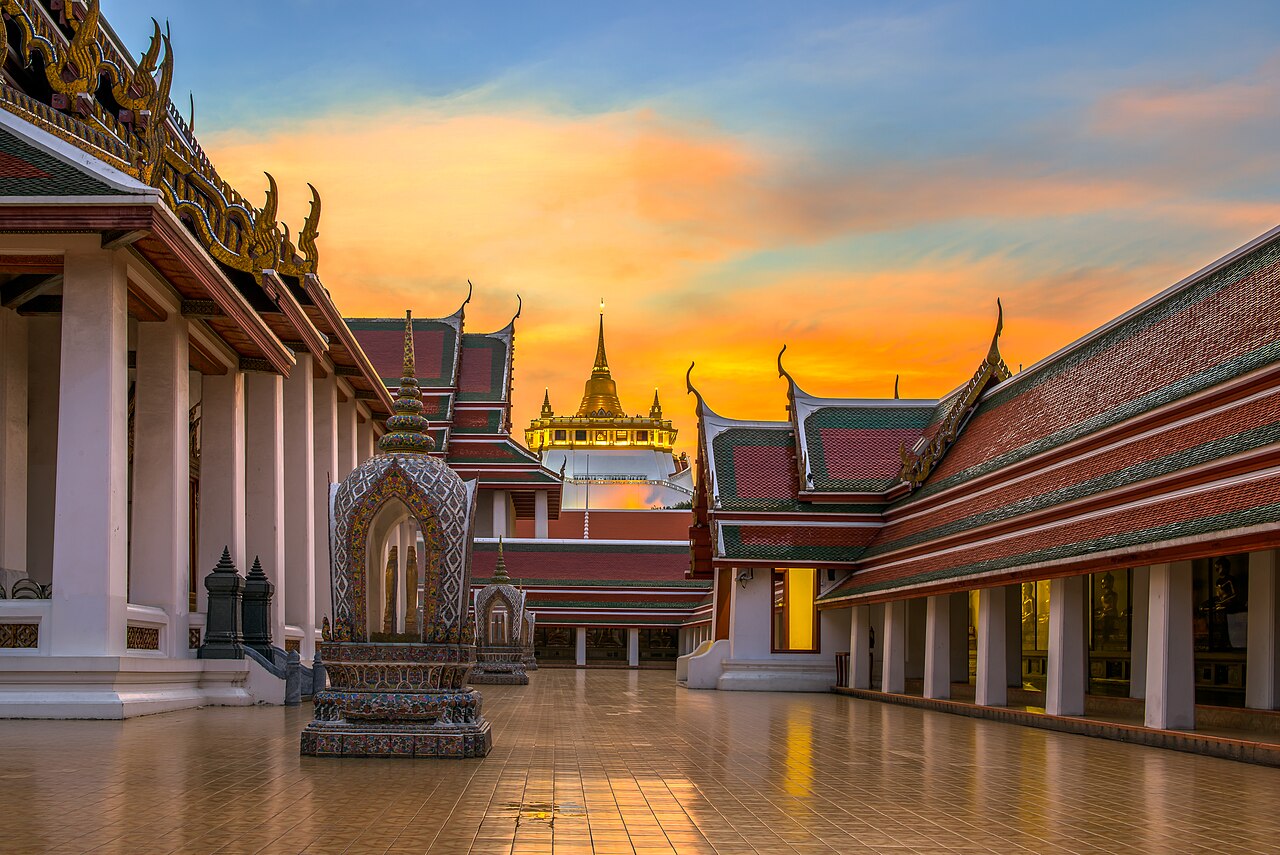
Wat Saket (Golden Mount)
Temple · 2.4 km · about 39 min walk
 #6 in Bangkok
Jim Thompson House
Museum · 4 km · about 15 min by road