
Howrah Bridge
#8of 10 places to visit in KolkataKolkata, West Bengal
Also known as Rabindra Setu · New Howrah Bridge
Quick answer
Opening hours: No fixed opening hours. Entry is free. Allow 40 min. Best time: 05:30 – 07:00 or 20:30 – 22:00.
Updated · Compiled by Traveliac, AI-assisted · 5 min read
- Opening hours
- No fixed hours
- Open 24 hours daily to pedestrians and vehicles
- Entry fee
- Free
- Time needed
- 40 min
- Best time of day
- 05:30 – 07:00 or 20:30 – 22:00
- Best months
- Oct – Mar
- Address
- Rabindra Setu, spanning the Hooghly River between Howrah (West Bengal 711101) and Kolkata (West Bengal 700001)
About Howrah Bridge
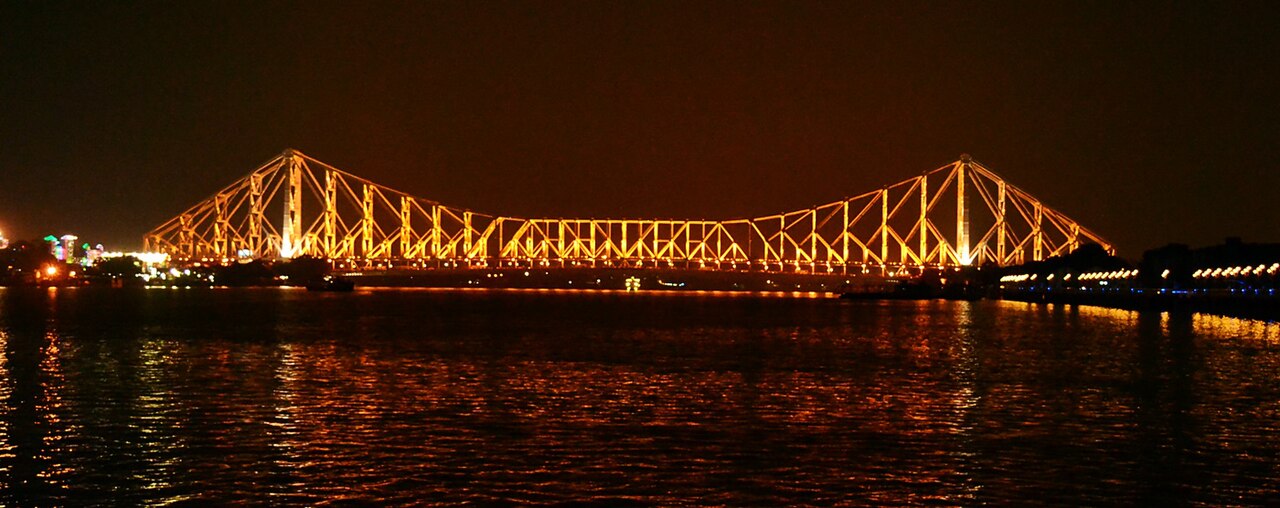
Howrah Bridge carries an estimated 100,000 vehicles and more than 150,000 pedestrians across the Hooghly River daily as of 2026, a volume that makes it the busiest cantilever bridge in the world. The structure uses 26,500 tonnes of steel, of which 23,000 tonnes is the high-tensile alloy Tiscrom supplied by Tata Steel, and the entire span is riveted rather than bolted — a construction choice made in 1943 partly because reliable structural bolting technology for a load of this scale was not yet trusted for wartime deadlines. The main span measures 457.2 metres between the two 82-metre-tall towers, with no piers touching the riverbed below, an engineering requirement imposed because the Hooghly's shipping channel needed to stay clear for Calcutta Port traffic. Walking the 4.6-metre-wide footpath at dawn, with the ironwork silhouetted against the river mist, remains one of the few free experiences in Kolkata that delivers on its reputation.
Best time of day: 05:30 – 07:00 or 20:30 – 22:00. For the Mullik Ghat flower market underneath the Kolkata-side approach and near-empty footpaths, or 20:30 – 22:00 to see the steel lattice lit against the Hooghly.
Howrah Bridge timings
- Opening hours
- No fixed hours
Mon–Sun No fixed hours - Open 24 hours daily to pedestrians and vehicles
- Closed on
- Open every day
Opening hours compiled from wbtourism.gov.in and public records, last updated . They change without notice — confirm before you travel. How we write these guides
Howrah Bridge ticket price
| Ticket | Price |
|---|---|
| Indian visitors | Free |
| Foreign visitors | Free |
| Children | Free |
| Camera | Free |
Howrah Bridge is a public river crossing with no ticket counter and no gate, so pedestrian and vehicle access is free at all hours. Photography of the superstructure from the water or from restricted dockside points near the adjoining naval and port installations has historically fallen under Indian Official Secrets Act restrictions; as of 2026, casual street-level phone photography is tolerated but tripods, drones, and lingering with professional camera rigs can still draw attention from patrolling police, so verify at the counter of the nearest tourist help desk if in doubt.
Prices compiled from wbtourism.gov.in and public records, last updated . They change without notice — confirm before you travel. How we write these guides
Best time to visit Howrah Bridge
- Quiet
- Moderate
- Very busy
05:00 – 07:00
Flower Market DawnBest time to go
Mullik Ghat Flower Market beneath the Kolkata approach is in full trade; footpaths on the bridge itself carry mostly early commuters and market porters rather than tourist traffic.
Quiet09:00 – 11:00
Morning Vehicle Peak
Office-hour traffic from Howrah Junction into central Kolkata fills all carriageways; footpaths remain walkable but photography stops are best avoided here.
Very busy12:00 – 16:00
Midday Lull
Traffic thins slightly after the morning rush. Heat off the steel and tarmac is intense in April–June; the footpath offers no shade.
Moderate20:30 – 22:00
Night Illumination
Floodlights outline the cantilever towers against the river. Vehicle traffic drops, and Millennium Park and Armenian Ghat fill with local visitors rather than daytime commuters.
Quiet
History of Howrah Bridge
Howrah Bridge was designed by the firm Rendel, Palmer and Tritton and built by the Braithwaite, Burn & Jessop Construction Company between 1936 and 1942, replacing an earlier pontoon bridge that could not handle the growing rail and road traffic between Howrah Junction and central Calcutta. Construction continued through the early years of the Second World War, and the bridge opened to traffic on 3 February 1943 without a formal inaugural ceremony — wartime secrecy around a strategic Allied supply route across the Hooghly meant the opening was deliberately low-key. The Calcutta Port Commissioners administered the bridge until India's port trusts were reorganised, and on 14 June 1965 the West Bengal government renamed it Rabindra Setu in honour of Rabindranath Tagore, the Bengali poet and Asia's first Nobel laureate, on the 24th anniversary of his death. In 2005 a cargo vessel's funnel struck the underside during a routine river passage, causing roughly ₹15 million in damage to a cross-girder, an incident the port authority cites when justifying continued restrictions on vessel movement beneath the span. A 2007 traffic study found daily vehicle counts already exceeding the bridge's rated capacity of 60,000, a warning that shaped the later construction of the second Hooghly crossing, Vidyasagar Setu, further downstream.
Rules & etiquette at Howrah Bridge
Howrah Bridge has no visitor centre and no formal queue, so etiquette here is about traffic survival rather than temple protocol. Pedestrians should use the raised footpaths on either side rather than stepping into the vehicle carriageway, which carries buses, hand-pulled carts, and cycle rickshaws moving at uneven speeds. Standing still on the footpath to take photographs during the morning or evening vehicle peak blocks a narrow corridor shared by thousands of commuters, so move to one of the marked alcoves along the railing if pausing for a picture. Uniformed and plainclothes police patrol both ends and have historically stopped visitors photographing the understructure or the adjacent dockyard cranes, a legacy of wartime-era security rules; a phone photo from the footpath is normally unremarkable, but a tripod or long lens aimed at the naval jetty area is not. Hawkers selling tea, peanuts, and cheap sunglasses work the approaches on both banks and expect a firm no rather than eye contact if you are not buying.
Tips for visiting Howrah Bridge
- 1
Mullik Ghat Flower Market operates directly beneath the Kolkata-side approach to the bridge and is worth timing a visit around: wholesalers begin unloading marigold and rose consignments from 03:00, and the market is at its most photogenic and least crowded between 05:30 and 07:00, before the day's heat and the bridge's own traffic noise take over. For an unobstructed view of the full cantilever silhouette rather than the ironwork overhead, cross the river by the Hooghly ferry from Armenian Ghat to Howrah — the ten-minute crossing costs a few rupees and puts the entire structure in frame, something impossible to achieve while standing on the bridge itself. Millennium Park, on the Kolkata bank a short walk south, gives a similar river-level vantage with benches and food stalls, and is the more comfortable option after dark when the bridge's floodlighting is switched on. Avoid driving across during the 09:00–11:00 and 17:30–20:00 peaks unless necessary; a local taxi driver will often suggest the parallel Vidyasagar Setu instead, and that detour is usually faster despite the extra distance.
How to reach Howrah Bridge
The red star is Howrah Bridge; the numbered pins are the 8 nearest places in our guides, each showing its rank in its city. Tap a pin for details.
Rabindra Setu, spanning the Hooghly River between Howrah (West Bengal 711101) and Kolkata (West Bengal 700001)Directions in Google Maps
From Howrah Junction Railway Station
0.3 km · 3–5 min walk
Free (walk); ₹20–₹40 cycle rickshaw for luggage
From Netaji Subhas Chandra Bose International Airport
₹450–₹65019 km · 45–65 min
Prepaid taxi or app cab
From Esplanade / BBD Bagh
₹60–₹1002.5 km · 10–15 min
Auto or app cab); Metro to Howrah Maidan station, 15 minutes
Nearest airport
From Netaji Subhas Chandra Bose International Airport (CCU)
19 km, approximately 45–65 minutes depending on Ultadanga and Central Avenue traffic.
Nearest railway station
From Howrah Junction (HWH)
directly at the bridge's western foot, under 5 minutes on foot from the main station exit.
Howrah Bridge FAQs
Is there an entry fee to walk across Howrah Bridge?
No. Howrah Bridge is a public road and pedestrian crossing with no ticket booth, open 24 hours to both vehicles and pedestrians on its footpaths.
Can you stop in the middle of the bridge to take photographs?
Yes, briefly, from the marked alcoves along the footpath railing, but standing in the main pedestrian lane during traffic peaks (09:00–11:00 and 17:30–20:00) blocks a heavily used corridor. Police discourage tripods and long-lens photography aimed at the dockyard side under long-standing security rules.
Is Howrah Bridge the same as Vidyasagar Setu?
No. Howrah Bridge (Rabindra Setu) is the original 1943 cantilever bridge near Howrah Junction. Vidyasagar Setu is a separate, newer cable-stayed bridge further downstream, opened in 1992 to relieve traffic from the older crossing.
Why is the bridge also called Rabindra Setu?
The West Bengal government renamed the bridge Rabindra Setu on 14 June 1965 to honour the poet Rabindranath Tagore, Asia's first Nobel laureate. Most Kolkata residents still refer to it simply as Howrah Bridge.
Compiled with AI assistance from official sources and public records, and published only after the checks in How we write these guides. Nobody from Traveliac has visited this place. Last updated . How we rank and check places
Places to visit near Howrah Bridge
Straight-line distances from our map; times are estimates.
 #5 in KolkataFree entry
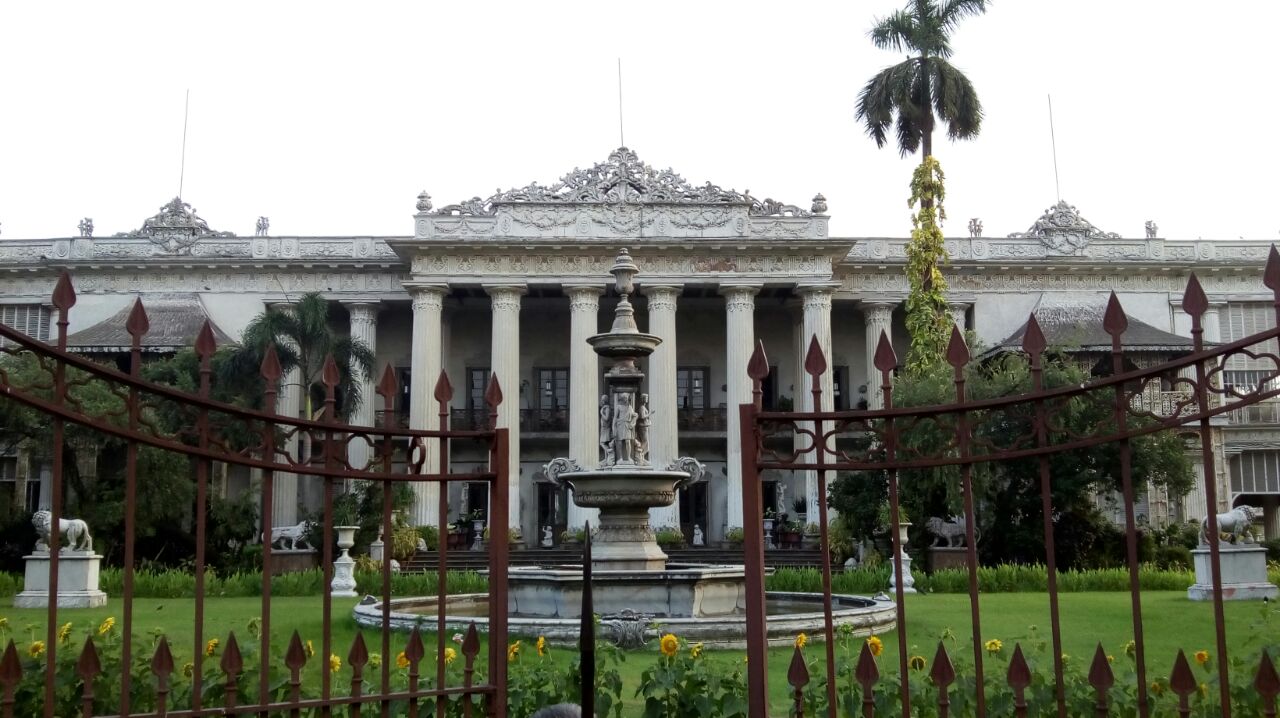
Marble Palace
Palace · 1.4 km · about 23 min walk
 #6 in KolkataFree entry
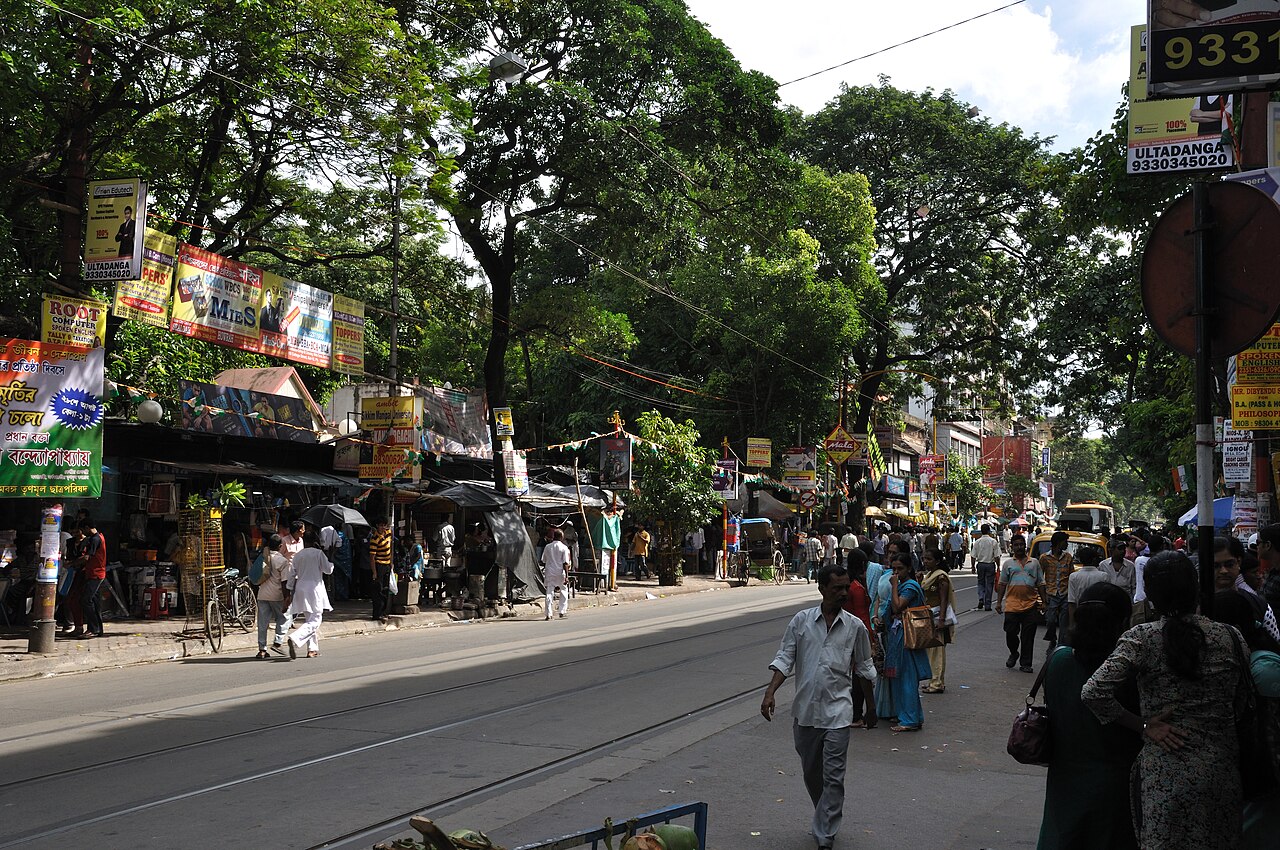
College Street
Heritage · 2.0 km · about 32 min walk
 #3 in Kolkata
Indian Museum
Museum · 3 km · about 10 min by road
 #1 in Kolkata
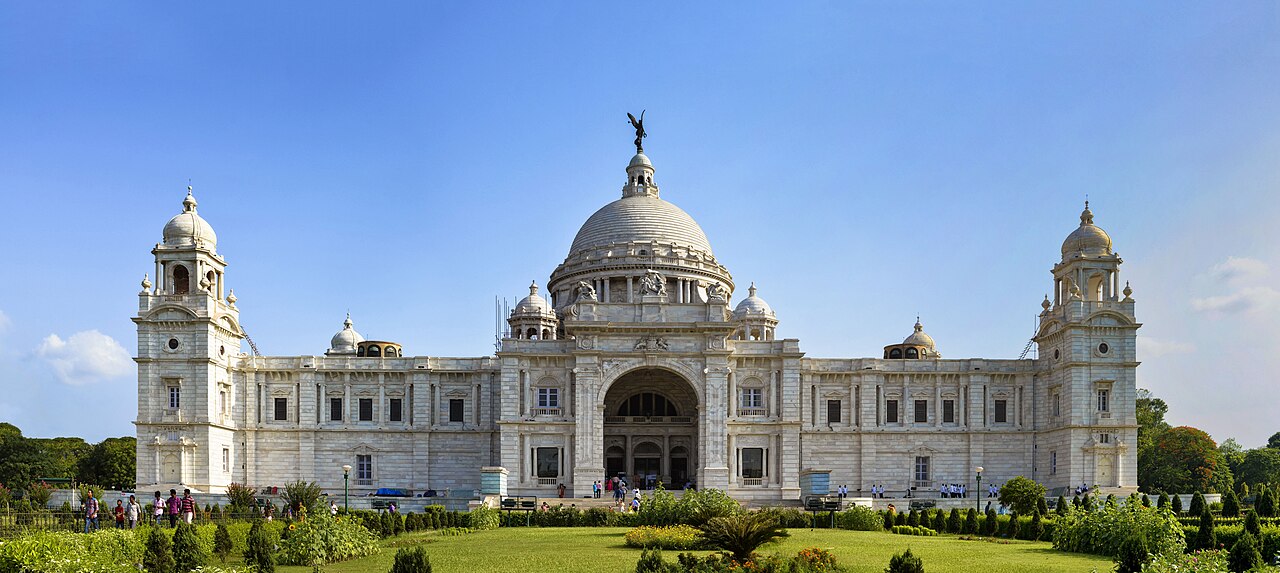
Victoria Memorial
Memorial · 4 km · about 15 min by road