Piazza Navona
#4of 8 places to visit in RomeRome, Lazio, Italy
Also known as Circus Agonalis · Stadium of Domitian
Quick answer
Opening hours: No fixed opening hours. Entry is free. Allow 45 min. Best time: Early morning.
Updated · Compiled by Traveliac, AI-assisted · 4 min read
- Opening hours
- No fixed hours
- Open 24 hours as a public piazza.
- Entry fee
- Free
- Time needed
- 45 min
- Best time of day
- Early morning
- Best months
- Apr – Jun, Sep – Oct
- Address
- Piazza Navona, 00186 Roma RM, Italy
About Piazza Navona
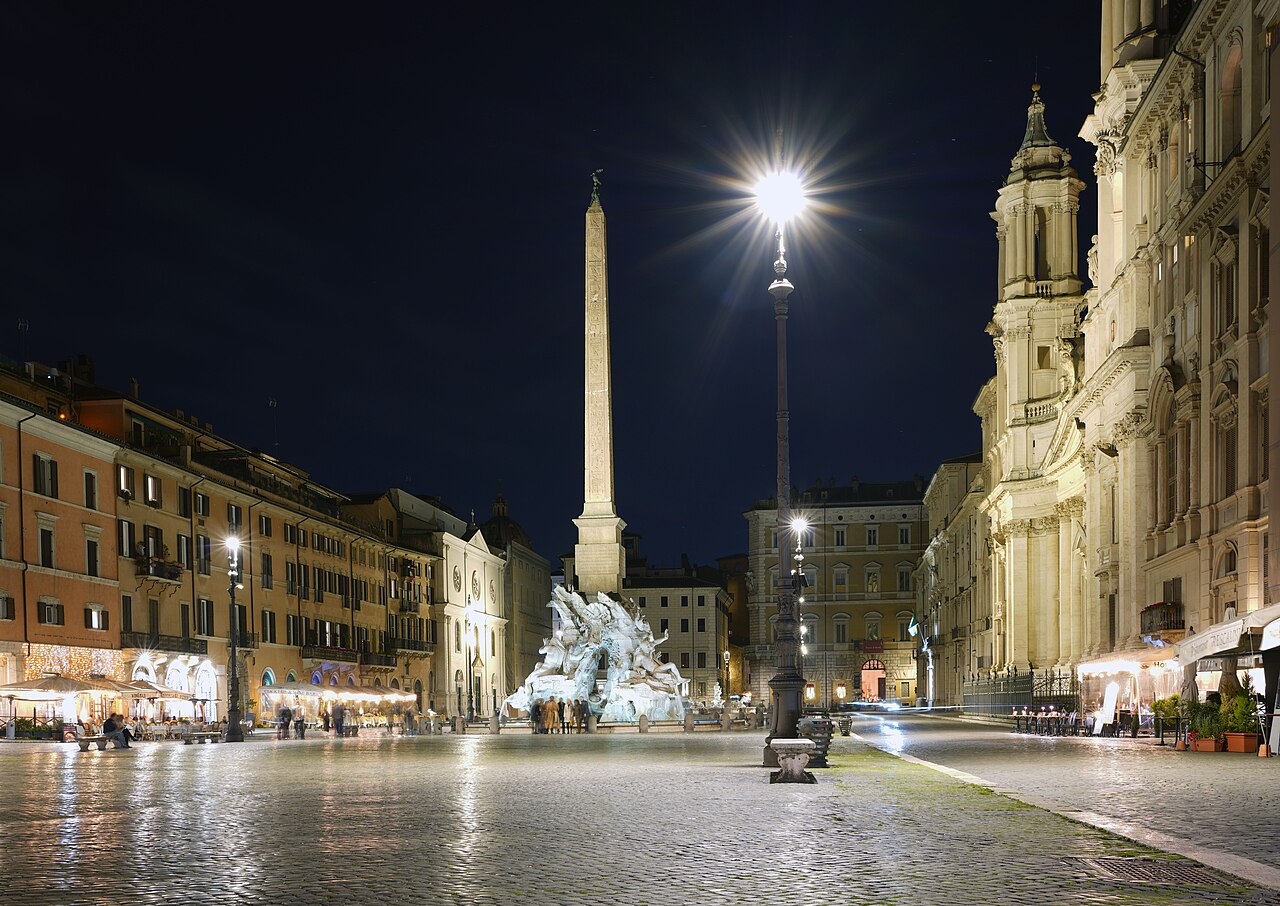
Piazza Navona costs nothing to visit and traces its elongated, rounded-end shape directly to the Stadium of Domitian, an athletics arena built in 86 CE that once held an estimated 20,000–30,000 spectators for Greek-style games (agones) rather than gladiatorial combat. The piazza's footprint sits precisely on the stadium's ancient perimeter, a rare case in Rome where a ground plan survived nearly two millennia of rebuilding intact above an entirely buried Roman structure. Excavated sections of the original travertine stadium arches are visible below street level at the Stadio di Domiziano site on the piazza's north end, reached via a separate ticketed entrance. The square's Baroque character comes from three fountains and the Church of Sant'Agnese in Agone: Gian Lorenzo Bernini's Fontana dei Quattro Fiumi (Fountain of the Four Rivers, 1651) dominates the centre, its four river-god figures representing the Nile, Ganges, Danube, and Río de la Plata as personifications of the four continents then known to Europe.
Best time of day: Early morning. 07:30–09:00 before street artists and cafe seating fill the square, or evening after 20:00 when the Fountain of the Four Rivers is lit and outdoor tables fill with a more local crowd.
Piazza Navona timings
- Opening hours
- No fixed hours
Mon–Sun No fixed hours - Open 24 hours as a public piazza.
- Closed on
- Open every day
Opening hours compiled from turismoroma.it and public records, last updated . They change without notice — confirm before you travel. How we write these guides
Piazza Navona ticket price
| Ticket | Price |
|---|---|
| Standard ticket | Free |
| Concession (student / senior) | Free |
| Children | Free |
The piazza itself is free and open 24 hours as public city space. The underlying Stadio di Domiziano archaeological museum, accessed via a separate entrance on the piazza's north end, charges a small admission fee for those wanting to see the excavated stadium substructure directly.
Prices compiled from turismoroma.it and public records, last updated . They change without notice — confirm before you travel. How we write these guides
Best time to visit Piazza Navona
- Quiet
- Busy
- Very busy
07:30–09:00
Morning QuietBest time to go
Cafe staff setting up outdoor seating, street cleaners, and early joggers; fountains photographable without crowds.
Quiet11:00–15:00
Midday
Street artists, tour groups, and lunch-service terraces fill the square; the Four Rivers fountain area gets congested.
Busy15:00–19:00
Afternoon
Steady foot traffic continues through the afternoon; less concentrated than midday but rarely quiet.
Busy20:00–23:00
Evening
Dinner-hour crowds fill the terraces and fountain steps; illuminated fountains draw the largest evening gathering of the day.
Very busy
History of Piazza Navona
Emperor Domitian commissioned the stadium in 86 CE as part of a broader building programme following the fire that had devastated much of Rome, and the arena's original name, Circus Agonalis (from the Greek agon, 'contest'), corrupted over medieval centuries first to 'in agone,' then to 'navone,' and finally to today's 'Navona.'
After the stadium fell out of use in late antiquity, the site persisted as an open public space and, by the 15th century, hosted a busy city market relocated from the foot of the Capitoline Hill. Pope Innocent X, whose family palace (Palazzo Pamphilj) fronted the square, commissioned the piazza's Baroque transformation in the mid-17th century, engaging Bernini for the central fountain despite Bernini's earlier professional rivalry with the pope, reportedly resolved through a secretly submitted, ultimately irresistible model of the fountain design.
From the late 16th century until 1866, the piazza was periodically flooded on summer weekends by blocking its drainage outlets, turning it into a shallow lake (the 'Lago di Piazza Navona') where Roman nobility paraded in carriages through the water — a civic tradition documented in period paintings and abolished only in the 19th century.
Rules & etiquette at Piazza Navona
Street artists and portrait painters operate along the piazza's edges under a municipal licensing system; prices for a portrait or caricature should be confirmed before sitting, since disputes over final cost are a known friction point for tourists.
Restaurants with direct piazza-facing terraces are priced at a significant premium over equivalent food one or two streets back toward Via del Governo Vecchio; a printed menu with clear pricing should be checked before sitting down, as verbal-only pricing at a handful of piazza establishments has drawn documented complaints.
Pickpocketing is a known risk in the dense evening crowds around the fountains; the square's constant street performance and photography make it a favoured environment for distraction theft.
Tips for visiting Piazza Navona
- 1
The three fountains reward a slow walk end to end: Bernini's Four Rivers fountain at the centre, the Fontana del Moro at the southern end (also with Bernini design input, though largely carved by Giacomo Antonio Fancelli), and the Fontana del Nettuno at the north, added later in the 19th century to balance the square's symmetry.
- 2
The Stadio di Domiziano underground museum, entered from a modest doorway on the piazza's north side, gives one of Rome's clearest single-site views of how much of the ancient city lies directly beneath the modern street level — a worthwhile short detour distinct from the free piazza above.
- 3
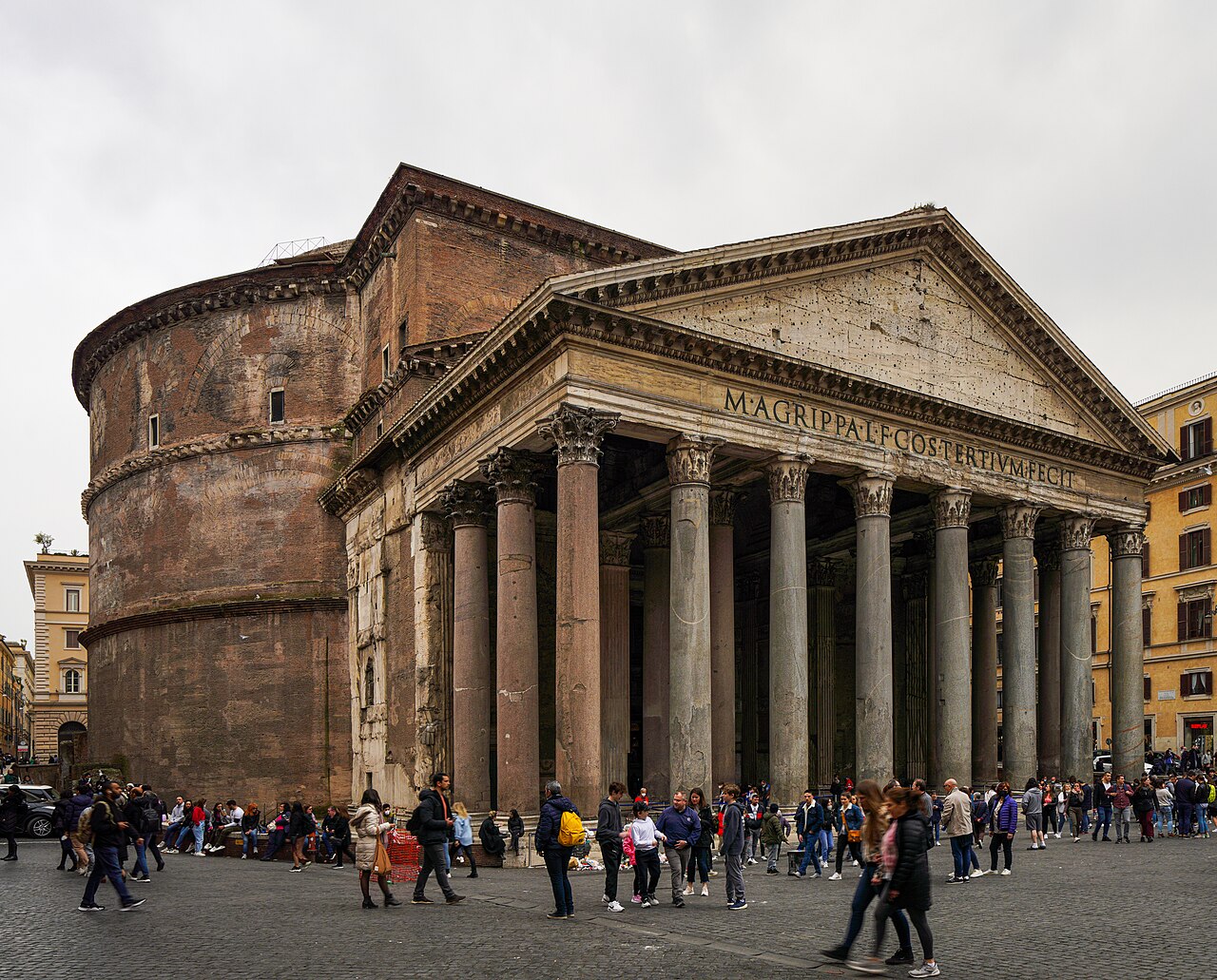
Christmas markets and a historic Befana (Epiphany) toy fair have run in Piazza Navona for centuries around the December–January holiday period, one of the square's few markedly different seasonal characters outside the standard year-round tourist flow. The piazza sits an easy 600-metre walk from the Pantheon, making the two a natural pairing on a centro storico route.
How to reach Piazza Navona
The red star is Piazza Navona; the numbered pins are the 7 nearest places in our guides, each showing its rank in its city. Tap a pin for details.
Piazza Navona, 00186 Roma RM, ItalyDirections in Google Maps
From Rome Fiumicino Airport (FCO)
30 km · 55-75 min
€14 train + local transfer
From Spagna Metro Station (Line A)
1.3 km · 18-20 min
Free
From Pantheon
0.6 km · 8-10 min
Free
Nearest airport
From Rome Fiumicino (FCO)
30 km, approximately 50–70 minutes by road or train-plus-transfer.
Nearest station
From No direct metro; nearest stops are Spagna (Line A) or Barberini (Line A), both roughly a 20-minute walk, or bus routes serving Corso del Rinascimento.
Piazza Navona FAQs
Is Piazza Navona free to visit?
Yes, the piazza is entirely free and open at all hours as public city space. Only the separate Stadio di Domiziano underground archaeological site on its north edge charges an admission fee.
Why is Piazza Navona shaped like an elongated oval?
The piazza's shape follows the footprint of the Stadium of Domitian, an ancient Roman athletics arena built in 86 CE, whose perimeter walls and arches survive buried directly beneath the modern square's street level.
What do the four figures on Bernini's fountain represent?
The four river-god statues on the Fontana dei Quattro Fiumi personify the Nile, Ganges, Danube, and Río de la Plata rivers, chosen by Bernini in 1651 to represent the four continents recognised by 17th-century Europe.
Was Piazza Navona ever flooded on purpose?
Yes. From the late 16th century until 1866, the piazza's drains were periodically blocked on summer weekends to flood the square into a shallow lake, where Roman nobility paraded by carriage — a tradition ended in the 19th century.
Compiled with AI assistance from official sources and public records, and published only after the checks in How we write these guides. Nobody from Traveliac has visited this place. Last updated . How we rank and check places
Places to visit near Piazza Navona
Straight-line distances from our map; times are estimates.