
Jemaa el-Fnaa
#1of 9 places to visit in MarrakechMarrakech, Marrakech-Safi, Morocco
Also known as Djemaa el-Fna · Place Jemaa el-Fna
Quick answer
Opening hours: 17:00–18:00. Entry is free. Allow 1.5 hrs. Best time: 17:30 - 19:30.
Updated · Compiled by Traveliac, AI-assisted · 5 min read
- Opening hours
- 17:00–18:00
- Open 24 hours daily. Daytime stalls (orange juice, dried fruit, snail soup) run from morning; the evening food stalls and performance circles run from about 17:00-18:00 until around midnight.
- Entry fee
- Free
- Time needed
- 1.5 hrs
- Best time of day
- 17:30 - 19:30
- Best months
- Mar – May, Sep – Nov
- Address
- Place Jemaa el-Fna, Medina, 40000 Marrakech, Morocco
About Jemaa el-Fnaa
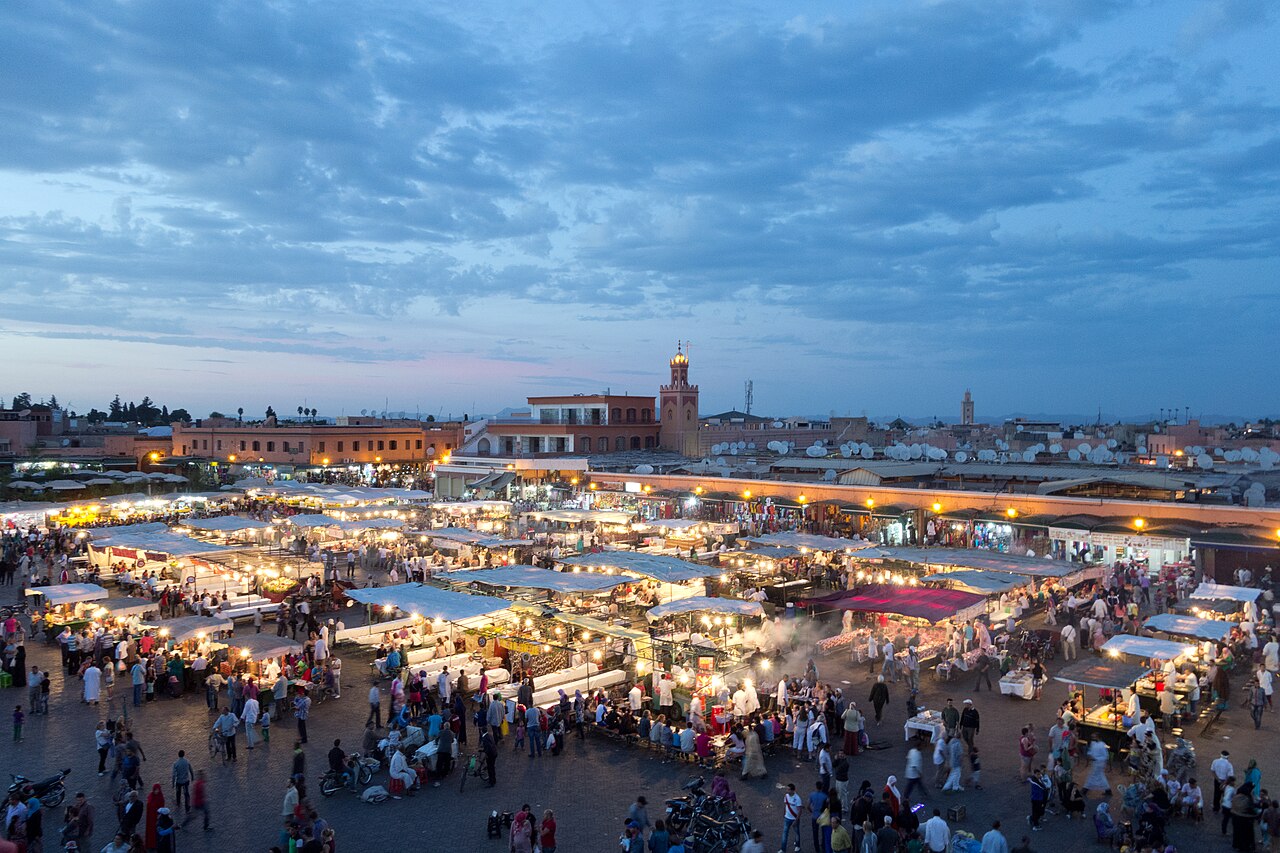
Jemaa el-Fnaa is a free, open-air square in the Marrakech medina that UNESCO inscribed on the Representative List of the Intangible Cultural Heritage of Humanity in 2008, and it charges no admission at any hour, as of 2026. The surface is plain paving rather than monumental masonry, because the square works as a stage: storytellers, Gnaoua musicians, acrobats, henna artists and water sellers hold fixed patches of ground by day, and from about 17:00 the juice carts give way to a grid of numbered cooking stalls under strung bulbs and charcoal smoke. Jemaa el-Fnaa sits at the mouth of the souks and is the reference point every taxi driver and riad host uses to orient a visitor. Come once in daylight, when the square is emptier and easier to read, and once after sunset, when the performance circles and the food stalls are at full strength.
Best time of day: 17:30 - 19:30. When the day stalls are still open, the food-stall grid is being assembled and the light on the Koutoubia minaret behind the square turns orange.
Jemaa el-Fnaa timings
Jemaa el-Fnaa opens at 17:00 and closes at 18:00. Those hours hold on Saturday and Sunday too.
- Opening hours
- 17:00–18:00
Mon–Sun 17:00–18:00 - Open 24 hours daily. Daytime stalls (orange juice, dried fruit, snail soup) run from morning; the evening food stalls and performance circles run from about 17:00-18:00 until around midnight.
- Closed on
- Open every day
Good to know: During Ramadan the daytime square is quiet and the evening stalls open later, around sunset, when the fast is broken.
Opening hours compiled from ich.unesco.org and public records, last updated . They change without notice — confirm before you travel. How we write these guides
Jemaa el-Fnaa ticket price
| Ticket | Price |
|---|---|
| Standard ticket | Free |
| Concession (student / senior) | Free |
| Children | Free |
Jemaa el-Fnaa is an open public square with no admission charge at any hour, as of 2026. Individual performers, henna artists and photo-pose animal handlers expect payment, and prices are not posted, so agree an amount before photographing or sitting down.
Prices compiled from ich.unesco.org and public records, last updated . They change without notice — confirm before you travel. How we write these guides
Best time to visit Jemaa el-Fnaa
- Quiet
- Moderate
- Busy
- Very busy
08:00 - 12:00
Quiet Morning SquareBest time to go
Juice sellers and a few snake charmers or henna artists set up; the paving is close to empty and the square is easiest to cross and photograph.
Quiet12:00 - 16:00
Midday Heat
Tour groups pass through; daytime temperatures in summer push many visitors to cafe terraces and shade under the umbrellas of the juice stalls.
Moderate17:00 - 19:30
Sunset Build-Up
Food stalls are assembled, performance circles form and the terrace cafes fill; the light on the minaret and the smell of charcoal are at their strongest.
Busy19:30 - 23:00
Full Night Market
Every stall is open and the halqa circles are packed three or four deep; pickpocket risk and stall touting are highest, and the square stays lively until around midnight.
Very busy
History of Jemaa el-Fnaa
Jemaa el-Fnaa has been Marrakech's central open space since the city's foundation in the 11th century under the Almoravids, serving as a marketplace, a place for public announcements and, according to local tradition, a site of public executions. The name is commonly translated as 'assembly of the dead' or 'mosque of annihilation'; the etymology is disputed and neither reading is settled fact. UNESCO first proclaimed the square a Masterpiece of the Oral and Intangible Heritage of Humanity in 2001, then folded it into the Representative List in 2008, and the protected object is the living practice of storytelling, music and trade rather than the paving itself.
Jemaa el-Fnaa owes its listing to the halqa, or circle, of oral performers. A halqa forms around a storyteller, singer or musician who keeps the crowd in place by voice alone, then passes a hat. Several of the older formats have shrunk: storytelling in Arabic and Amazigh (Berber) is widely reported to draw smaller audiences than in earlier decades, which is why the UNESCO listing concentrates on supporting the remaining performers. Hand-painted shop signs and the Koutoubia minaret, roughly 500 metres to the west, frame the square, and the surrounding cafe terraces (Cafe de France, Argana) have been the standard elevated viewpoints for decades.
Rules & etiquette at Jemaa el-Fnaa
Jemaa el-Fnaa has no gate, dress code or bag check, but performers and animal handlers expect payment for photographs, and prices are never posted. Agree the amount before raising a camera, and expect an opening request of roughly MAD 20-50 for a phone snapshot with snakes or monkeys, as of 2026 (an estimate, since nothing is posted); many visitors simply photograph from a distance and keep walking. Animal welfare concerns around the snake and Barbary macaque acts are widely raised, and declining to pay for these acts is a reasonable choice.
Jemaa el-Fnaa is not a place to hand a phone to a stranger. Pickpocketing and phone snatching are the most reported crimes in the crowded circles, so carry a bag in front and keep valuables out of back pockets. Henna artists sometimes begin drawing on a hand before a price is agreed and then demand a high fee; say no clearly before any contact. Modest dress (covered shoulders and knees) draws less attention. Tipping performers MAD 10-20 after a full act is customary.
Tips for visiting Jemaa el-Fnaa
- 1
Jemaa el-Fnaa food stalls are numbered, and numbered stalls with a visible price board, queues of local diners and grills cooking to order are the safer choice; touts who pull visitors by the sleeve toward a bench are usually the most expensive. Ask for the price of each dish before sitting, and check the bill line by line.
- 2
For the best free view, climb to a cafe terrace around sunset; most ask only that each visitor buy a drink, and the price is normally listed on the terrace menu. Jemaa el-Fnaa is also the drop-off point for Bus 19 from the airport, and the medina alleys are too narrow for cars, so the last stretch to most riads is on foot with a porter or a guide. After 22:00, visitors travelling alone should go with a companion or leave the crowded circle by the main lit street toward Rue Bab Agnaou or Avenue Mohammed V.
How to reach Jemaa el-Fnaa
The red star is Jemaa el-Fnaa; the numbered pins are the 7 nearest places in our guides, each showing its rank in its city. Tap a pin for details.
Place Jemaa el-Fna, Medina, 40000 Marrakech, MoroccoDirections in Google Maps
From Marrakech Menara Airport (RAK)
6 km · 25-40 min
MAD 30 one-way, MAD 50 return valid for 15 days (as of 2026, verify at the airport bus desk)
From Marrakech Menara Airport (RAK)
6 km · 15-25 min
Fixed airport fares are commonly quoted at MAD 100-150 by day, sources conflict (some list MAD 50-80); agree the fare before boarding
From Marrakech railway station (ONCF)
5 km · 15-20 min
Metered petit taxis start at about MAD 7; drivers often quote MAD 30-50 flat, so ask for the meter first
Nearest airport
From Marrakech Menara Airport (RAK)
approximately 6 km, 15-30 minutes by taxi or Bus 19.
Nearest station
From Marrakech railway station (ONCF)
approximately 5 km; no rail station at the square. Bus 19 from the airport terminates beside the square.
Jemaa el-Fnaa FAQs
Is Jemaa el-Fnaa free to visit?
Yes. Jemaa el-Fnaa is an open public square with no admission charge at any hour, as of 2026. Performers, henna artists and animal handlers expect a fee for photographs or services, so agree the amount before any interaction.
What time does Jemaa el-Fnaa come alive?
Jemaa el-Fnaa fills up from about 17:00-18:00, when the food stalls are set up and the performance circles form, and it stays busy until around midnight. Daytime is quieter, with mainly juice sellers and a few performers.
Is Jemaa el-Fnaa safe at night?
Yes, with normal precautions. Jemaa el-Fnaa is heavily visited and policed in the evening, but pickpocketing and phone snatching are the most reported problems, so keep bags in front and valuables out of back pockets and agree prices before eating or being photographed.
Why is Jemaa el-Fnaa on the UNESCO list?
UNESCO inscribed Jemaa el-Fnaa in 2008 as a Cultural Space on the Representative List of the Intangible Cultural Heritage of Humanity because of its living oral traditions: storytelling, music, dance and trade that recur daily. The listing protects the practices, not just the physical square.
Compiled with AI assistance from official sources and public records, and published only after the checks in How we write these guides. Nobody from Traveliac has visited this place. Last updated . How we rank and check places
Places to visit near Jemaa el-Fnaa
Straight-line distances from our map; times are estimates.
 #2 in MarrakechFree entry
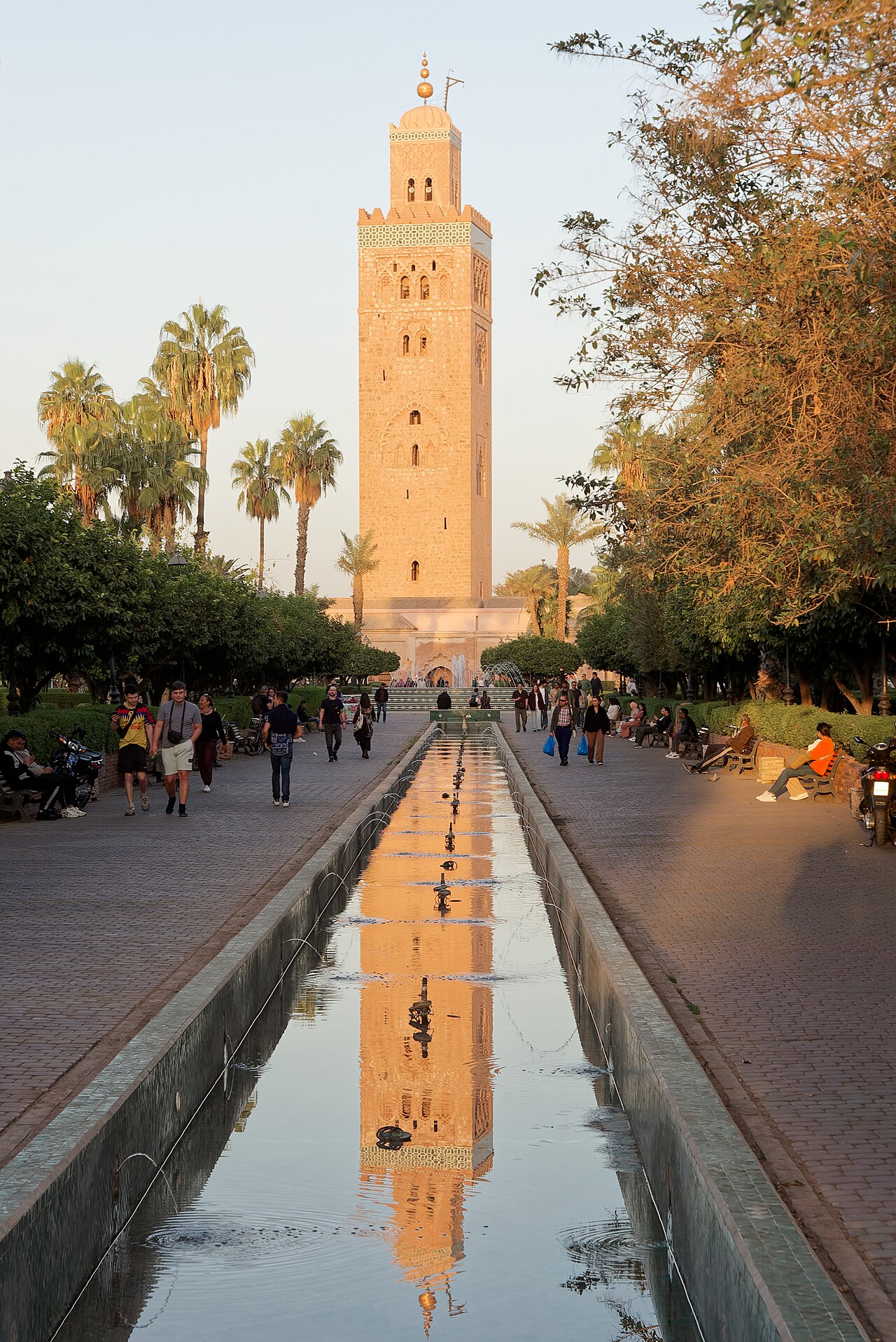
Koutoubia Mosque
Mosque · 450 m · about 7 min walk
 #3 in Marrakech
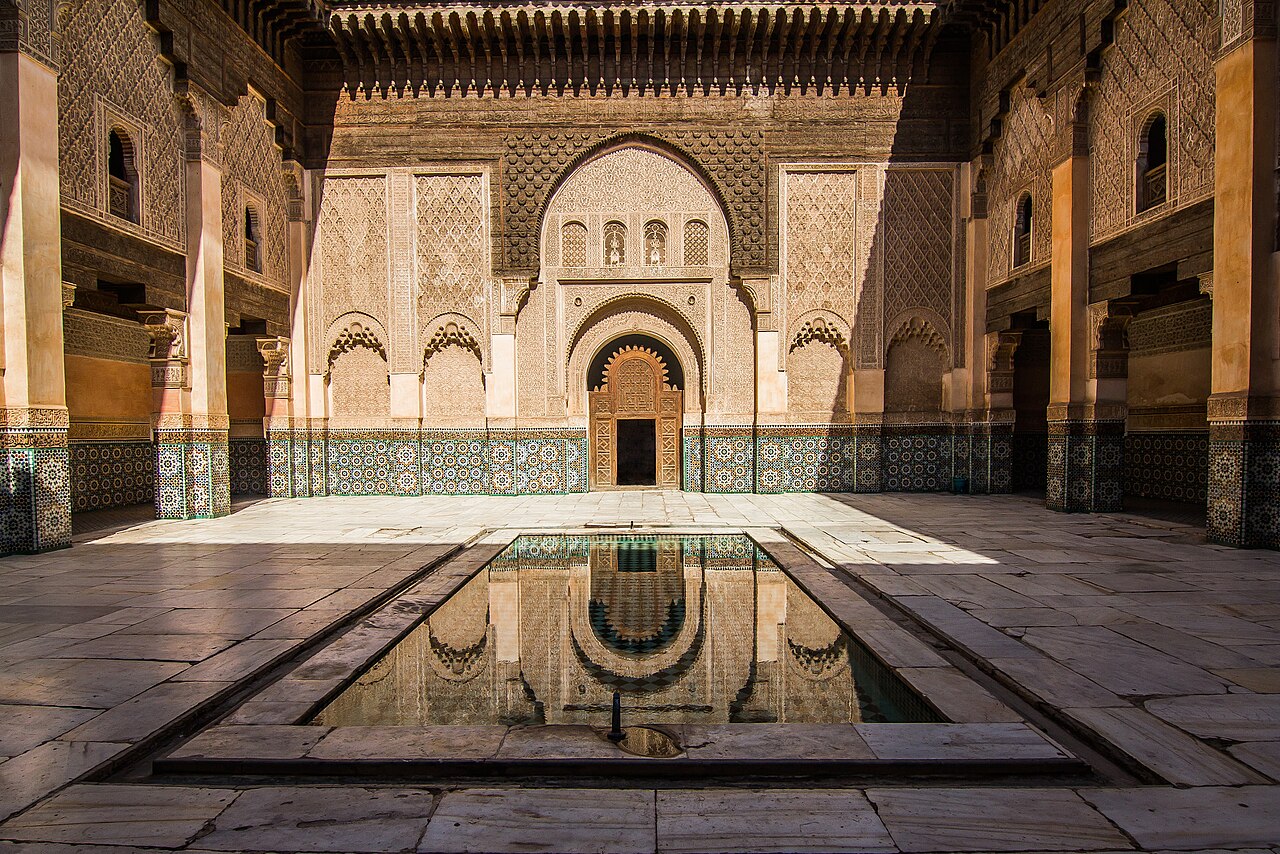
Ben Youssef Madrasa
Heritage · 750 m · about 12 min walk
 #7 in Marrakech
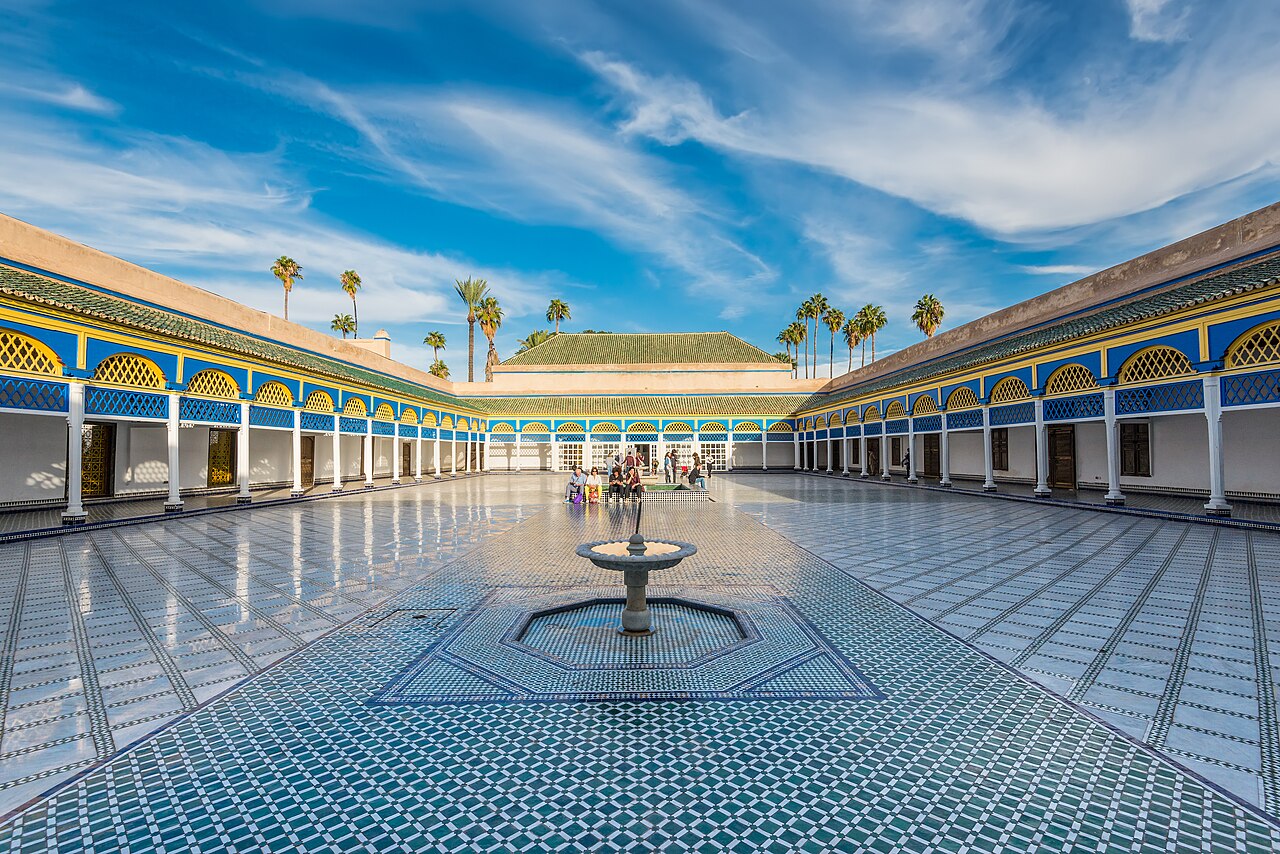
Bahia Palace
Palace · 850 m · about 13 min walk
 #6 in Marrakech
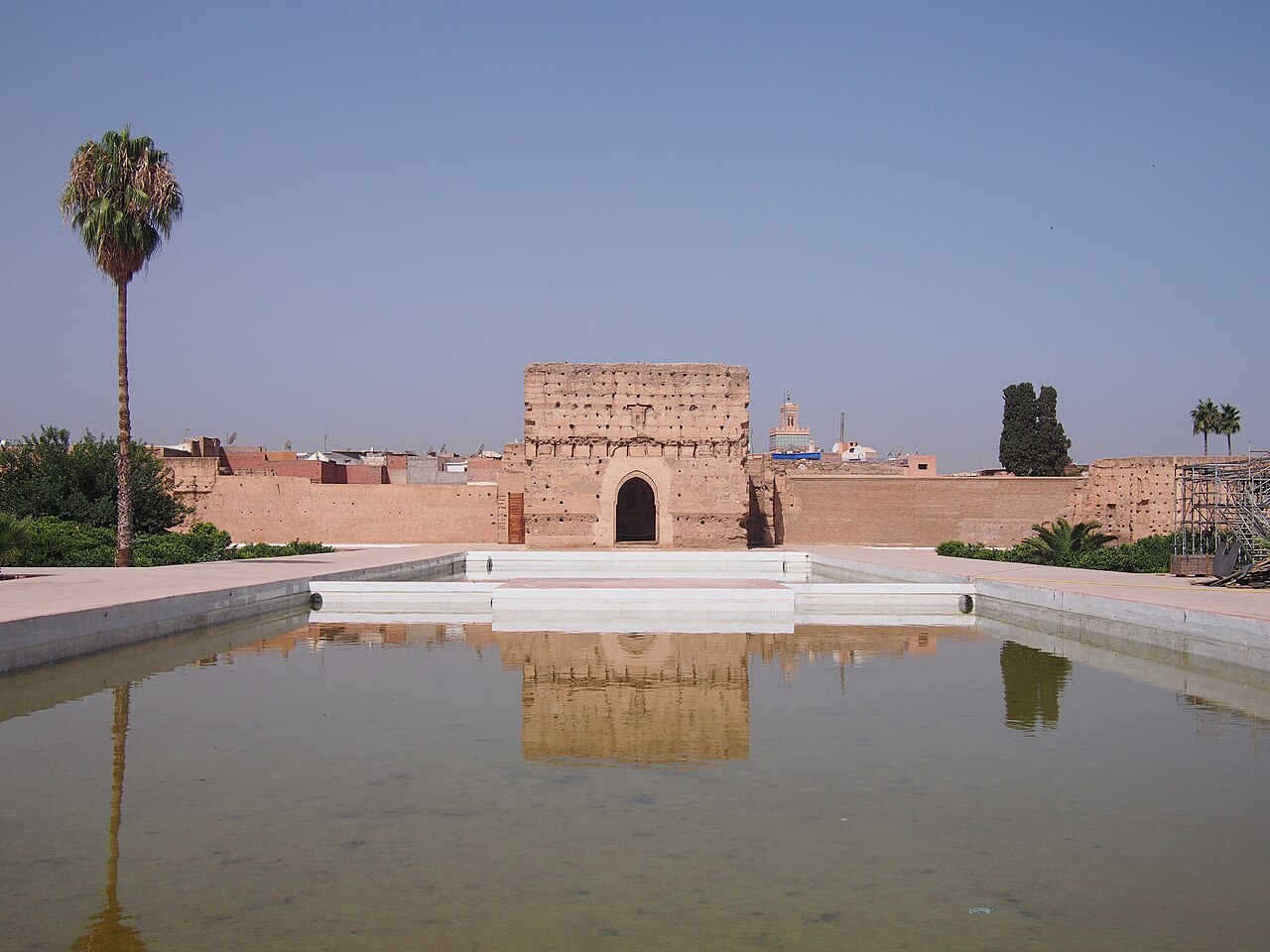
El Badi Palace
Palace · 900 m · about 15 min walk