
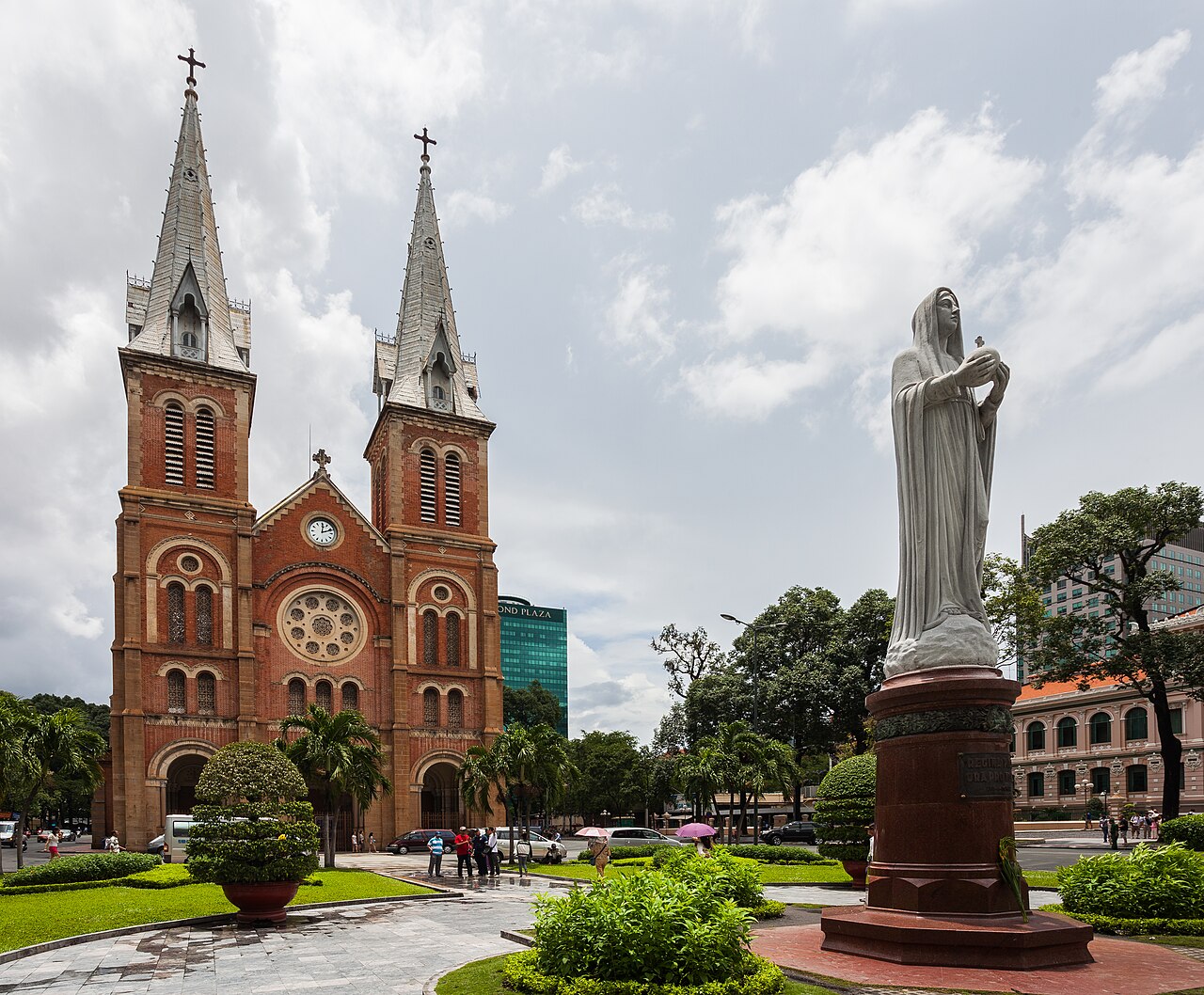
Places to Visit in Vietnam
A narrow, S-shaped coastline stretching over 1,600km, where a single north-south rail line links a French-colonial capital to a war-defined south.
Vietnam's long north-south geography means its climate varies significantly by region and season: Hanoi in the north has a distinct cooler, drier winter (November-March) and hot, humid summer with monsoon rain (May-September), while the south stays warm year-round with its own wet and dry seasons. Hanoi, the capital, sits in the Red River Delta and functions as the country's political and cultural centre, distinct in character from the more commercially driven Ho Chi Minh City in the south. Traffic — dominated by motorbikes rather than cars — is a genuine navigational and safety consideration in every major city; crossing the street means walking at a steady, predictable pace rather than stopping or running. Bargaining is expected in markets and with unmetered transport but not in fixed-price shops or restaurants. Tipping is not traditionally expected but is increasingly common in tourist-oriented restaurants and for tour guides.
Capital
Hanoi
Currency
Vietnamese Dong (VND, ₫)
Time zone
ICT (UTC+7, no daylight saving)
Calling code
+84
Best months
Sep – Nov, Mar – Apr
Visas and entry
Citizens of many countries can obtain an e-Visa online in advance, typically valid for 90 days single or multiple entry. A shorter list of nationalities (mostly Southeast Asian neighbours and a handful of European countries) qualify for visa-free entry for stays of 15-45 days depending on nationality. All visitors should apply or confirm eligibility before departure rather than assuming visa-on-arrival, which requires pre-approval paperwork even where offered.
Where to start in Vietnam
The place ranked first in each of our city guides.