
Kukkarahalli Lake
#6of 8 places to visit in MysuruMysuru, Karnataka
Also known as Kukkarhalli Lake
Quick answer
Opening hours: 06:00–19:00. Entry is free. Allow 1 hr. Best time: 06:00–07:30.
Updated · Compiled by Traveliac, AI-assisted · 4 min read
- Opening hours
- 06:00–19:00
- Entry fee
- Free
- Time needed
- 1 hr
- Best time of day
- 06:00–07:30
- Best months
- Oct – Mar
- Address
- University of Mysore campus, Kukkarahalli, Mysuru, Karnataka 570006
About Kukkarahalli Lake
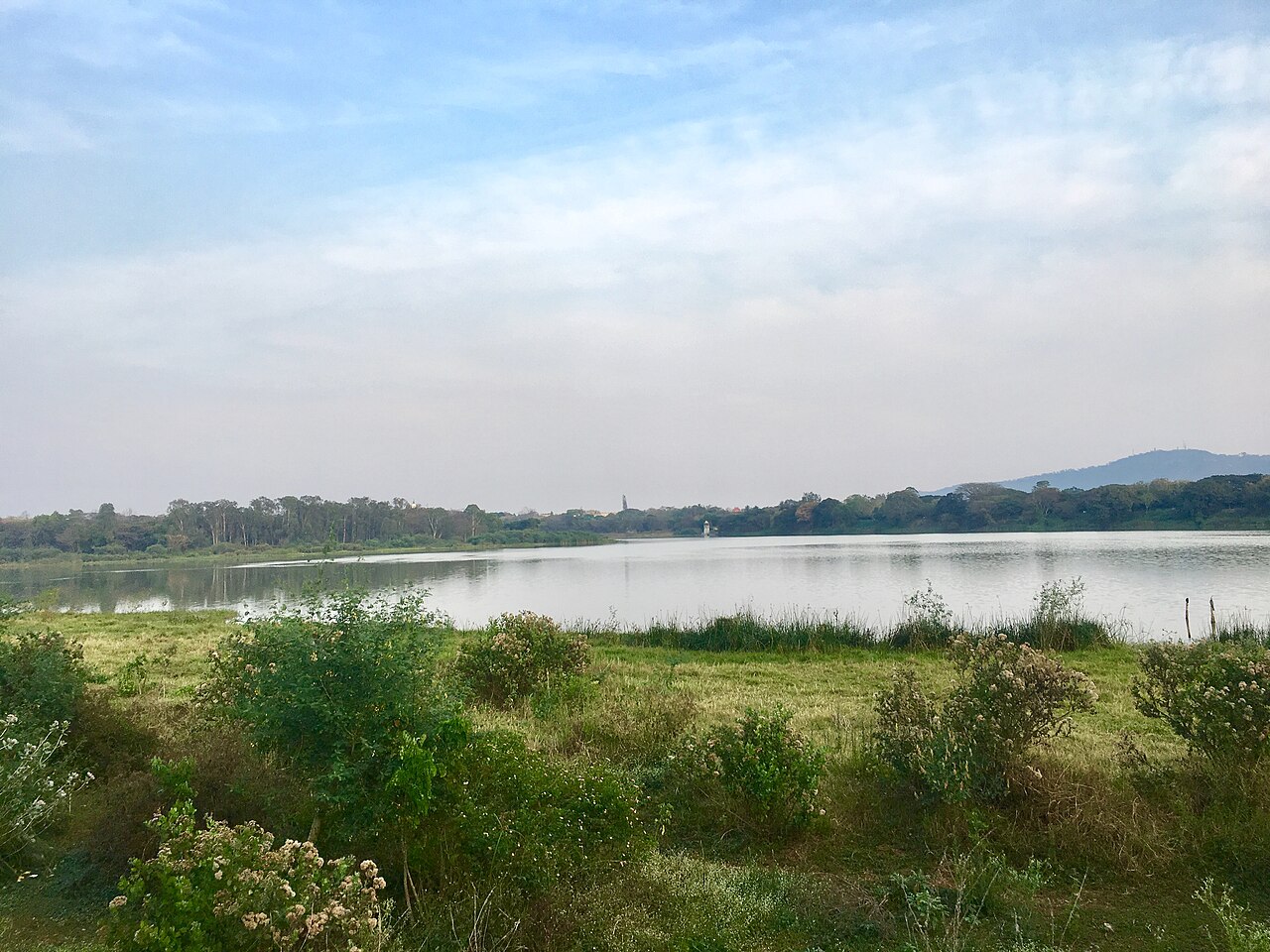
Kukkarahalli Lake covers 62 hectares (150 acres) within the University of Mysore's Manasagangotri campus, holding roughly 2.53 million cubic metres of water at a maximum depth of 5 metres. Mummadi Krishnaraja Wodeyar ordered the lake's construction in 1864 to irrigate about 4,000 hectares of farmland outside the city, a purely agricultural function that has long since given way to its present role as the university's and the city's most-used walking track. A restored footpath now runs the full perimeter, roughly 5 kilometres, along an east-west and northern bund system that gives the lake its distinctive J-shape when viewed from above. The lake also supplied water to the Mysore Sandalwood Oil Factory until 1950, a use that ended as the city's water infrastructure modernised around it.
Best time of day: 06:00–07:30. For the sunrise walk along the eastern bund, when resident waterbirds are most active and the University of Mysore campus paths are at their quietest.
Kukkarahalli Lake timings
Kukkarahalli Lake opens at 06:00 and closes at 19:00. Those hours hold on Saturday and Sunday too.
- Opening hours
- 06:00–19:00
Mon–Sun 06:00–19:00 - Closed on
- Open every day
Opening hours compiled from karnatakatourism.org and public records, last updated . They change without notice — confirm before you travel. How we write these guides
Kukkarahalli Lake ticket price
| Ticket | Price |
|---|---|
| Indian visitors | Free |
| Foreign visitors | Free |
| Children | Free |
| Camera | Free |
No entrance fee for the perimeter walking path. Boating, when operational, has historically charged a small per-person fee; verify availability and price at the jetty as of 2026, since service has been intermittent.
Prices compiled from karnatakatourism.org and public records, last updated . They change without notice — confirm before you travel. How we write these guides
Best time to visit Kukkarahalli Lake
- Quiet
- Busy
06:00–08:00
Morning Walk Hour
Local joggers, walking groups, and university staff fill the perimeter path; this is the lake at its most locally used.
Busy08:00–11:00
Late MorningBest time to go
Foot traffic drops sharply after the morning walking crowd disperses to work and classes.
Quiet11:00–16:00
Midday
Direct sun and heat keep visitor numbers minimal along the unshaded stretches of the bund.
Quiet16:30–19:00
Evening Walk Hour
A second wave of walkers and cyclists arrives for the cooler evening hours before the gates close at dusk.
Busy
History of Kukkarahalli Lake
Mummadi Krishnaraja Wodeyar (1794–1868) commissioned the lake in 1864 as an irrigation tank, part of a broader programme of tank-building that watered agricultural land on Mysuru's western edge before the city's expansion absorbed most of that farmland into campus and residential development. The University of Mysore, established in 1916 as one of the earliest universities in India founded outside British India's presidency capitals, grew its Manasagangotri campus directly around the lake's shoreline through the twentieth century.
Decades of untreated runoff took a measurable toll: water-quality studies between 1981 and 2001 recorded high electrolyte levels, low dissolved oxygen, and elevated phosphate and nitrogen content consistent with advancing eutrophication. Migratory bird visits, once estimated at 10,000 to 15,000 birds annually including Siberian-origin species, declined to roughly 2,000 birds a year over the same period. A 2003–2004 restoration programme, supported by roughly $200,000 in Asian Development Bank funding, added the current walking path, algae-control measures, and rainwater harvesting infrastructure.
Rules & etiquette at Kukkarahalli Lake
Swimming is not permitted and is genuinely dangerous given the lake's depth and unmarked drop-offs near the bunds; local authorities have recorded drowning incidents in past years. Dogs are common on the walking path and are expected to be leashed near the narrower sections shared with cyclists.
Gates close at dusk, and the path lighting is minimal after sunset, so a walk timed for the evening should wrap up well before 19:00 rather than at the posted closing time. No food vendors operate inside the perimeter, so visitors should carry their own water, particularly for the full 5-kilometre loop in warmer months.
Tips for visiting Kukkarahalli Lake
- 1
The lake sits within the University of Mysore's Manasagangotri campus, and a walk here pairs naturally with a look at the university's older departmental buildings nearby, several dating to the early twentieth century. Despite its Important Bird Area recognition from BirdLife International, bird numbers are a fraction of historical counts, so this is a walking and local-life stop first and a serious birdwatching destination second.
- 2
Early morning draws the heaviest local footfall — joggers, walking groups, and university staff — rather than tourists, which makes it one of the few stops on a Mysuru itinerary that shows the city's everyday routine rather than a curated sight.
How to reach Kukkarahalli Lake
The red star is Kukkarahalli Lake; the numbered pins are the 6 nearest places in our guides, each showing its rank in its city. Tap a pin for details.
University of Mysore campus, Kukkarahalli, Mysuru, Karnataka 570006Directions in Google Maps
From Mysuru Junction Railway Station (MYS)
₹70–₹1003 km · 10 min
Auto-rickshaw, negotiated
From Mysore Palace
₹80–₹1203.5 km · 12–15 min
Auto-rickshaw
From Mysore Airport / Mandakalli (MYQ)
₹270–₹35011 km · 20–25 min
Prepaid cab
Nearest airport
From Mysore Airport / Mandakalli (MYQ)
11 km, 20–25 minutes.
Nearest railway station
From Mysuru Junction (MYS)
3 km, 10 minutes.
Kukkarahalli Lake FAQs
Is there an entry fee for Kukkarahalli Lake?
No, the perimeter walking path is free to access at any time within the 06:00–19:00 daily hours. Boating, when operational, has historically carried a small separate fee.
Is swimming allowed in Kukkarahalli Lake?
No, swimming is prohibited and unsafe given the lake's depth of up to 5 metres and unmarked drop-offs near the bunds. Local authorities have recorded drowning incidents in past years.
Is Kukkarahalli Lake still good for birdwatching?
To a lesser degree than in past decades. Migratory bird visits have declined from an estimated 10,000–15,000 annually to roughly 2,000 as water quality has degraded, though the lake retains Important Bird Area recognition from BirdLife International.
Who manages Kukkarahalli Lake?
The University of Mysore, whose Manasagangotri campus surrounds the lake's shoreline. A 2003–2004 restoration project, backed by Asian Development Bank funding, created the current walking path.
Compiled with AI assistance from official sources and public records, and published only after the checks in How we write these guides. Nobody from Traveliac has visited this place. Last updated . How we rank and check places
Places to visit near Kukkarahalli Lake
Straight-line distances from our map; times are estimates.
 #2 in Mysuru
Jaganmohan Palace & Art Gallery
Palace · 2.3 km · about 37 min walk
 #4 in Mysuru
Rail Museum, Mysuru
Museum · 2.3 km · about 38 min walk
 #3 in MysuruFree entry
Devaraja Market
Market · 3 km · about 10 min by road
 #1 in Mysuru
Mysore Palace
Palace · 3 km · about 10 min by road