Manikaran Sahib
#5of 6 places to visit in ManaliManali, Himachal Pradesh
Also known as Gurudwara Shri Manikaran Sahib · Manikaran Hot Springs
Quick answer
Opening hours: 05:00–21:00 and 08:00–10:00 and 19:00–21:00. Entry is free. Allow 2.5 hrs. Best time: Morning.
Updated · Compiled by Traveliac, AI-assisted · 5 min read
- Opening hours
- 05:00–21:00
- Gurudwara and temple precinct open 05:00–21:00 daily. Langar is served continuously through the day, with the fullest service around 08:00–10:00 and 19:00–21:00.
- Entry fee
- Free
- Time needed
- 2.5 hrs
- Best time of day
- Morning
- Best months
- Mar – Jun, Sep – Oct
- Address
- Manikaran, Parvati Valley, Kullu district, Himachal Pradesh 175105 — approximately 80km from Manali via Bhuntar and Jari
About Manikaran Sahib
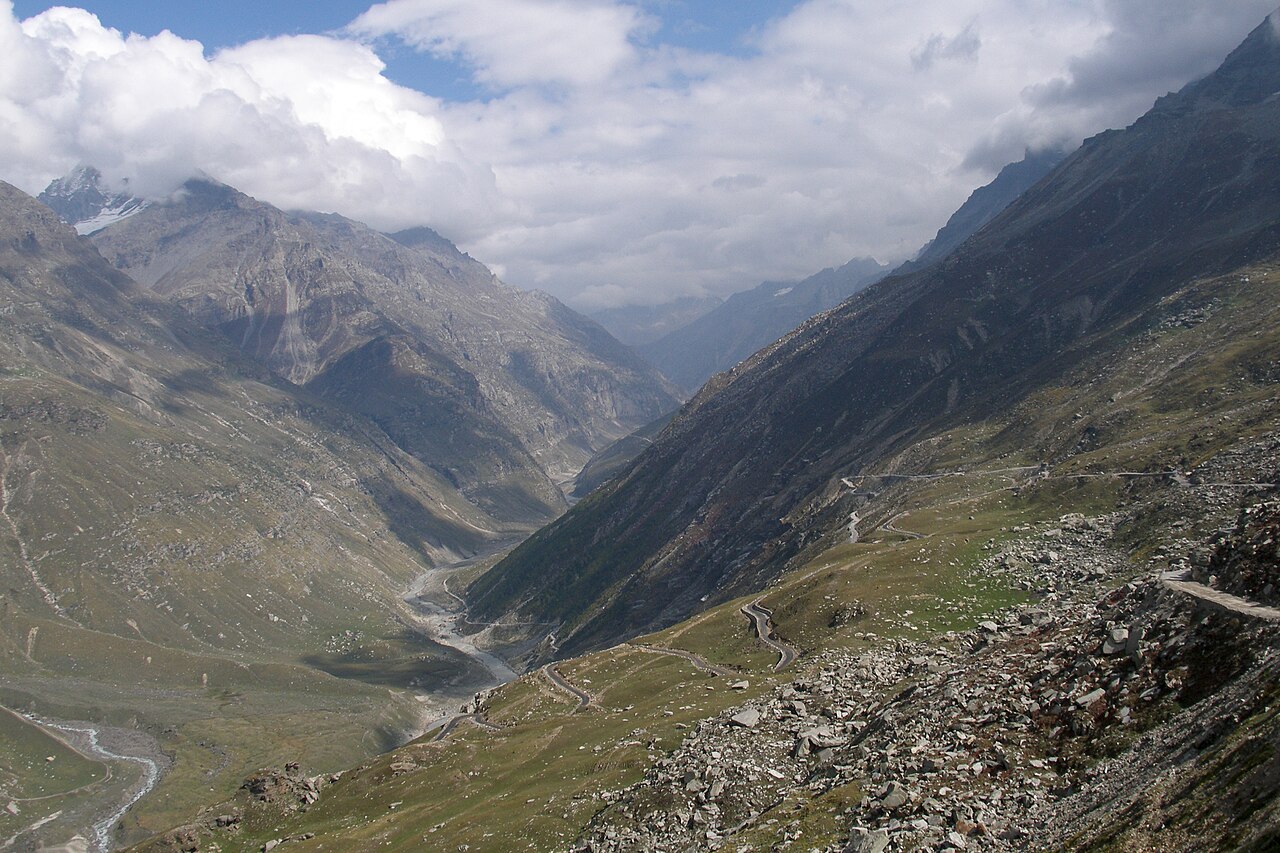
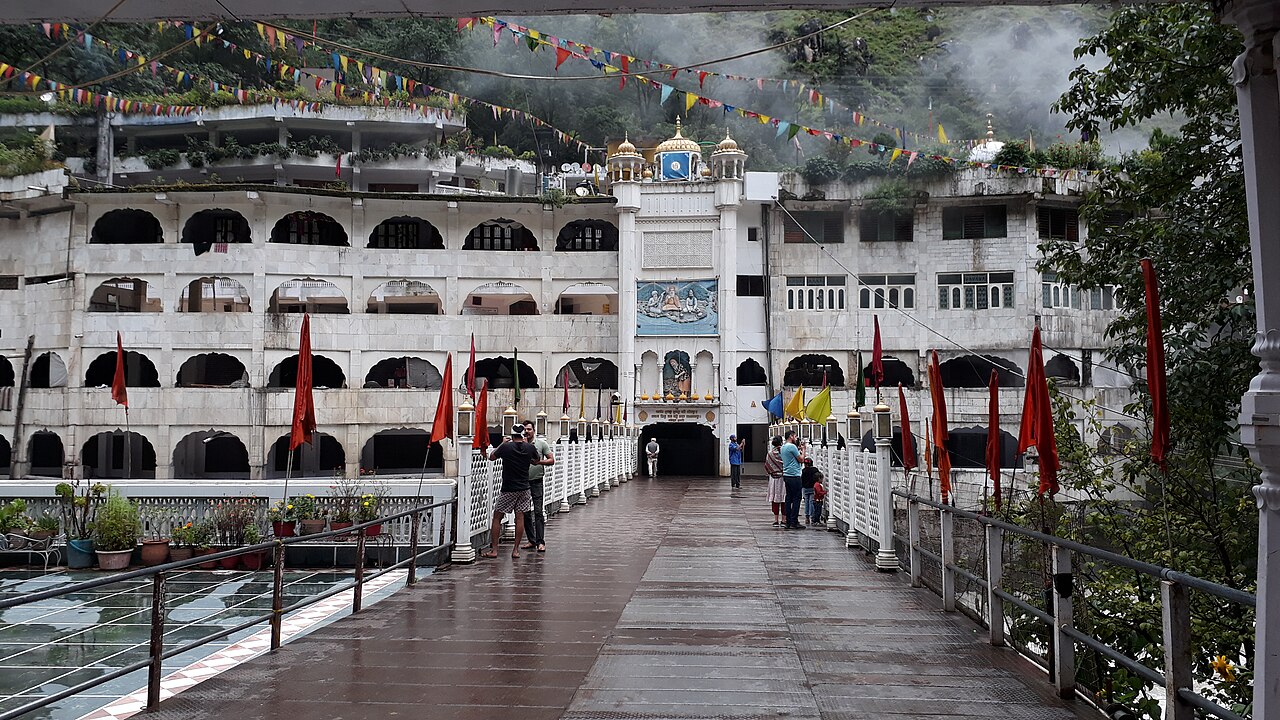
Manikaran sits in the narrow, steep-sided Parvati Valley, a side valley branching east off the main Kullu Valley at Bhuntar, and it is honestly a distance from Manali rather than a short excursion: roughly 80 kilometres and, given the valley road's switchbacks and traffic through Kasol, a realistic 2.5 to 3 hours each way rather than a quick loop. What justifies the drive is a genuinely unusual site — a Sikh gurudwara and several Hindu temples built directly around and above naturally boiling geothermal springs, hot enough that pilgrims cook rice, dal, and other langar staples by suspending cloth pouches of raw ingredients directly into the spring water rather than over any fire. Steam rises visibly from several points along the riverbank even in summer, and the smell of sulphur is constant through the complex.
Best time of day: Morning. 08:00–11:00 for the calmest langar hall and the clearest views up the Parvati gorge before afternoon cloud typically builds.
Manikaran Sahib timings
- Opening hours
- 05:00–21:00
Mon–Sun 05:00–21:00 and 08:00–10:00 and 19:00–21:00 - Gurudwara and temple precinct open 05:00–21:00 daily. Langar is served continuously through the day, with the fullest service around 08:00–10:00 and 19:00–21:00.
- Closed on
- Open every day
Good to know: Open year-round. The Parvati Valley road can be affected by monsoon landslides (July–September) and occasional winter snow closures on the higher stretch near Kasol; check road conditions before travelling in these windows.
Opening hours compiled from hptdc.com and public records, last updated . They change without notice — confirm before you travel. How we write these guides
Manikaran Sahib ticket price
| Ticket | Price |
|---|---|
| Indian visitors | Free |
| Foreign visitors | Free |
| Children | Free |
| Camera | Free |
Entry to the gurudwara, the adjoining Hindu temples, the public hot-spring bathing areas, and the langar (community kitchen meal) are entirely free, funded by donation. Private hot-spring bath cubicles attached to some guesthouses charge separately, typically ₹50–100. Donation boxes are present but voluntary; no one solicits payment for entry or darshan.
Prices compiled from hptdc.com and public records, last updated . They change without notice — confirm before you travel. How we write these guides
Best time to visit Manikaran Sahib
- Quiet
- Moderate
- Busy
05:00–08:00
Dawn prayersBest time to go
Early Sikh pilgrims and local devotees. The gurudwara's morning prayer session (Asa di Var) draws a dedicated but modest crowd.
Quiet08:00–12:00
Morning peak
The main daily wave of pilgrims and day-trip tourists from Kasol and Manali. Langar hall is at its busiest first service; hot-spring bathing areas see the heaviest use.
Busy12:00–16:00
Midday
Crowds thin as many day-trippers move on toward Kasol or begin the drive back to Manali. Temple precinct is more relaxed.
Moderate16:00–19:00
Evening
A second, smaller wave arrives ahead of evening prayers. The gorge falls into shadow early, and the steam off the springs becomes more visually striking against the cooling air.
Moderate
History of Manikaran Sahib
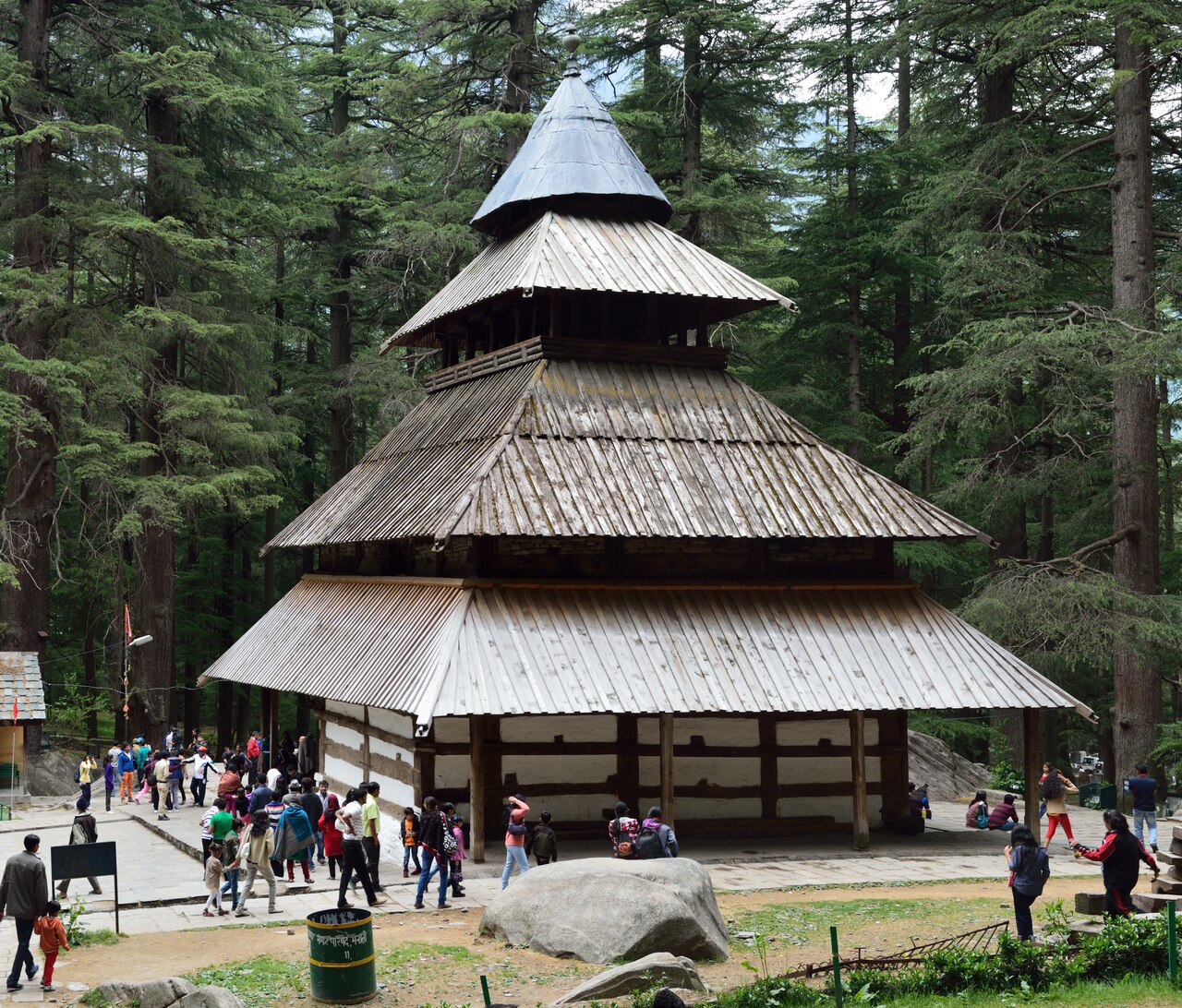
Manikaran's religious significance draws from two separate traditions layered onto the same geothermal feature. In Hindu tradition, the site is associated with a story of Shiva and Parvati: an earring (mani) of Parvati's fell into the river here, and when Shiva's attendant Sheshnag went searching for it in anger, his exhalations are said to have produced the hot springs — an origin story reflected in the town's name. Several riverside temples, including ones dedicated to Rama and to Shiva, occupy the complex, though the most architecturally significant among them was badly damaged in the major Kangra earthquake of 1905 and subsequently rebuilt.
The Sikh gurudwara's presence dates to the tradition that Guru Nanak, the founder of Sikhism, visited Manikaran with his companion Bhai Mardana during his travels through the Himalayan foothills in the 16th century, and that the langar tradition of cooking in the boiling spring water originates from that visit. The gurudwara has since become one of the most visited Sikh pilgrimage sites in Himachal Pradesh, drawing a steady flow of pilgrims from Punjab in particular, alongside the Hindu devotees visiting the adjoining temples and the general tourist traffic passing through the Parvati Valley en route to Kasol and the Kheerganga trek.
Rules & etiquette at Manikaran Sahib
The gurudwara enforces standard Sikh gurudwara protocol without exception: head covering is mandatory for all visitors regardless of faith (headscarves are provided free at the entrance if you do not have your own), shoes must be removed and deposited at the counter, and legs must be covered — shorts are not permitted inside. Alcohol, tobacco, and non-vegetarian food are prohibited anywhere within the complex.
The langar hall operates on the universal gurudwara principle: any visitor, regardless of religion, nationality, or background, is welcome to eat for free, seated on the floor in the communal style (pangat). It is considered courteous to eat what is served without excessive fussiness, to not waste food taken onto your plate, and to help with the simple task of returning your plate to the collection point afterward — voluntary seva (service) in the kitchen is welcomed but not required.
The public hot-spring bathing areas near the temples are used by pilgrims for ritual bathing; modest dress is expected and the same gender-consideration norms as at Vashisht apply, though the arrangement here is less formally partitioned. Water temperature at some points is genuinely close to boiling — do not step into unmarked pools without checking with a local first, since serious scalding has occurred to inattentive visitors.
Tips for visiting Manikaran Sahib
- 1
Given the honest 2.5–3 hour drive each way from Manali, a same-day round trip means 5–6 hours in the car against perhaps 2–2.5 hours actually at the site — workable but tiring as a single-day plan. Many visitors instead combine Manikaran with a night in nearby Kasol (4km away) or Bhuntar, breaking the drive into two more comfortable legs and leaving time to also see the Parvati Valley's other draws.
- 2
The langar meal — simple dal, rice, roti, and a vegetable — is genuinely good and worth timing your visit around if you want to eat there rather than merely observe; arrive outside the two daily peak service windows (08:00–10:00, 19:00–21:00) for a calmer hall.
- 3
Carry a light shawl or scarf even in summer, since Manikaran sits in shadow for a good part of the day within the steep gorge and the air cools quickly once the sun drops behind the ridge. Parking in the town itself is limited and congested in peak season (May–June, and around major Sikh festival dates); taxis usually drop passengers at a stand a short walk from the gurudwara entrance rather than at the door itself.
How to reach Manikaran Sahib
We haven't pinned Manikaran Sahib's exact position yet; the map shows the other places in our Manali guide. Use the address below or the directions link.
Manikaran, Parvati Valley, Kullu district, Himachal Pradesh 175105 — approximately 80km from Manali via Bhuntar and JariDirections in Google Maps
From Manali Mall Road
₹3,000–4,00080 km · 150–180 min
Return
From Kasol
₹30–504 km · 12–15 min
Per person shared; ₹200–300 private
From Bhuntar Airport (Kullu-Manali Airport)
₹1,500–2,20045 km · 80–100 min
Nearest airport
From Bhuntar Airport (Kullu-Manali Airport), 45km
Nearest railway station
From Joginder Nagar Narrow Gauge Railway Station, 135km; Chandigarh Junction, 270km
Manikaran Sahib FAQs
Is Manikaran a realistic day trip from Manali?
It is possible but genuinely tiring — the drive is approximately 80km each way via Bhuntar and Jari, taking 2.5 to 3 hours in each direction given the valley road's condition and traffic through Kasol. A same-day round trip means roughly 5–6 hours of driving against 2–2.5 hours at the site itself. An overnight stop in Kasol, 4km away, is a common and more comfortable alternative.
Can non-Sikhs eat the free langar meal at Manikaran?
Yes. The langar is open to any visitor regardless of religion or nationality, served free in the communal seated style typical of Sikh gurudwaras worldwide. Modest dress and a covered head are required inside the gurudwara complex, and alcohol, tobacco, and non-vegetarian food are prohibited on the premises.
Is it true food is cooked in the hot springs at Manikaran?
Yes. Several of the springs run hot enough that raw rice, dal, and other langar ingredients tied into cloth pouches are lowered directly into the water and cook without any external fire — a practice tied to the site's origin legend and still used for at least part of the langar's daily preparation.
Are the hot springs at Manikaran safe to touch or bathe in?
Some pools and channels run close to boiling and have caused serious scalding to inattentive visitors who step in without checking first. The designated pilgrim bathing areas near the temples are at a safer, moderated temperature — ask a local before entering any unmarked pool.
Compiled with AI assistance from official sources and public records, and published only after the checks in How we write these guides. Nobody from Traveliac has visited this place. Last updated . How we rank and check places