
Fort Kochi & Chinese Fishing Nets
#1of 8 places to visit in KochiKochi, Kerala
Also known as Kochi Fort Area · Cochin Fort · Chinese Nets Kochi
Quick answer
Opening hours: 08:00–17:30 and 17:00–19:00. Entry is free. Allow 2.5 hrs. Best time: 06:00–09:00 or 17:00–19:00.
Updated · Compiled by Traveliac, AI-assisted · 7 min read
- Opening hours
- 08:00–19:00
- The waterfront and streets are accessible 24 hours. St. Francis Church: 08:00–17:30 daily. The fishing nets are most active between 06:00 and 08:30 (dawn haul) and again 17:00–19:00 (dusk haul).
- Entry fee
- Free
- Time needed
- 2.5 hrs
- Best time of day
- 06:00–09:00 or 17:00–19:00
- Best months
- Nov – Mar
- Address
- Fort Kochi Beach, Fort Kochi, Kochi – 682001, Ernakulam District, Kerala
About Fort Kochi & Chinese Fishing Nets
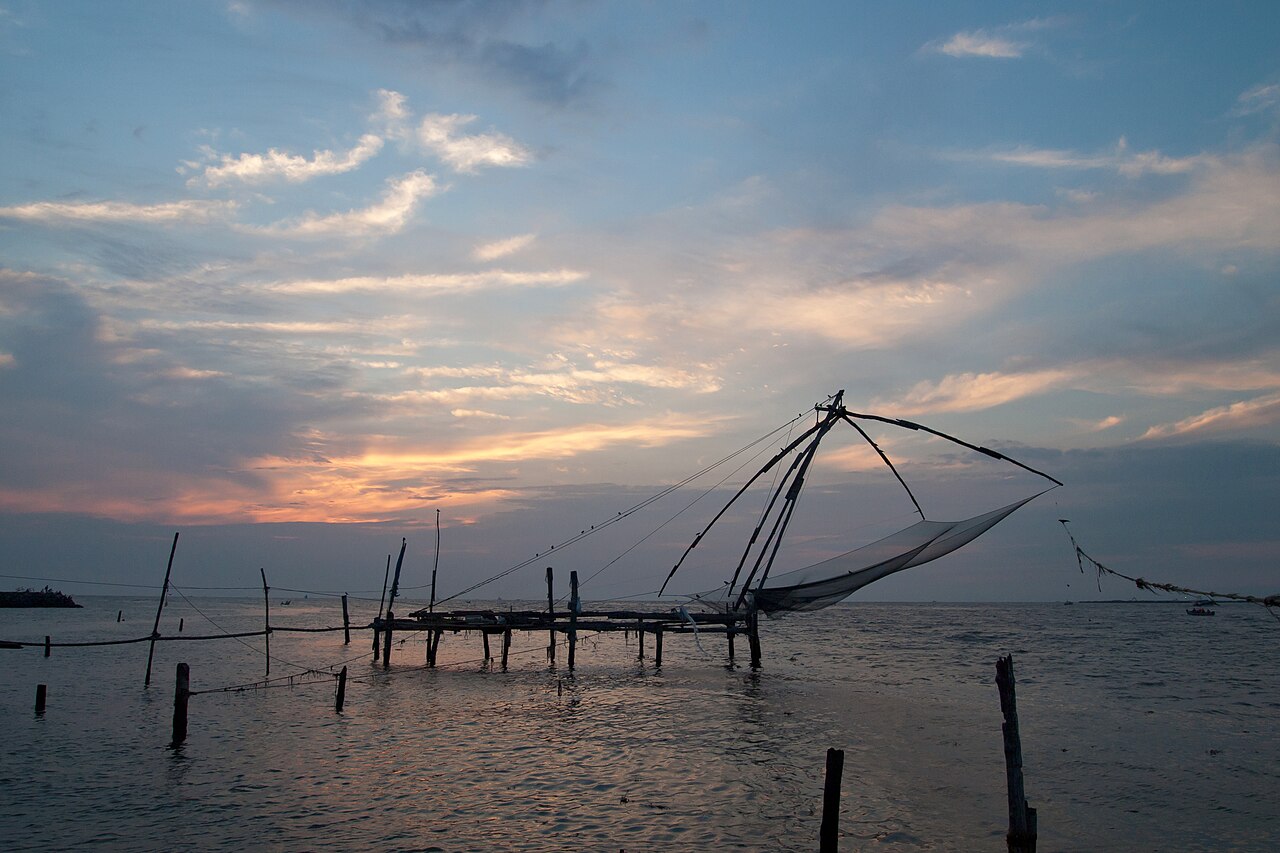
Stand on the Fort Kochi promenade at first light, when the fishing nets are being lowered into the estuary in a slow, counterweighted arc, and the water is the colour of hammered pewter, and a container ship the size of a city block is moving silently toward the open sea in the background, and you begin to understand why every trading civilisation from the Arabs to the Chinese to the Portuguese decided to stop here and stay. The nets themselves are not beautiful in any conventional sense — they are functional machines, lashed teak-pole frames weighted with river stones and operated by a four-man crew — but the interaction between their antique mechanics and the modern harbour behind them is one of the most striking visual compositions in Indian travel. Fort Kochi is not an intact historic town. Its streets mix heritage bungalows with tea shops, boutique hotels, and the kind of art-and-craft retail that attends any neighbourhood discovered by urban tourists. But the underlying skeleton — the Portuguese-era street plan, the Dutch-built warehouses along the waterfront, the British-period Parade Ground — remains legible beneath the commerce, and that legibility is what makes the place worth several hours of unhurried walking.
Best time of day: 06:00–09:00 or 17:00–19:00. For the fishing nets in operation and low crowds; 17:00–19:00 for the golden light over the harbour and the dusk haul.
Fort Kochi & Chinese Fishing Nets timings
- Opening hours
- 08:00–19:00
Mon–Sun 08:00–17:30 and 17:00–19:00 - The waterfront and streets are accessible 24 hours. St. Francis Church: 08:00–17:30 daily. The fishing nets are most active between 06:00 and 08:30 (dawn haul) and again 17:00–19:00 (dusk haul).
- Closed on
- Open every day
Good to know: During the southwest monsoon (June–August), rough sea conditions reduce net activity. The waterfront promenade can flood during extreme high tides in June–July.
Opening hours compiled from public records; this place lists no official website, last updated . They change without notice — confirm before you travel. How we write these guides
Fort Kochi & Chinese Fishing Nets ticket price
| Ticket | Price |
|---|---|
| Indian visitors | Free |
| Foreign visitors | Free |
| Children | Free |
| Camera | Free |
The Chinese Fishing Nets and the public streets of Fort Kochi carry no admission fee. The operators of individual net platforms often request a voluntary contribution of ₹20-50 if you wish to participate in the hauling — this is informal and not compulsory. St. Francis Church (CSI) charges no entry but a ₹20 'donation' box is placed prominently at the door.
Prices compiled from public records; this place lists no official website, last updated . They change without notice — confirm before you travel. How we write these guides
Best time to visit Fort Kochi & Chinese Fishing Nets
- Quiet
- Moderate
- Busy
06:00–08:30
Dawn — Nets ActiveBest time to go
Fishermen operate the nets in near-silence. A handful of serious photographers and early walkers. The ferry from Ernakulam is near-empty. This is the hour the place is designed for.
Quiet08:30–11:00
Morning — Rising
Tour groups begin arriving from Ernakulam hotels. The promenade fills steadily. Street cafes open. Still manageable.
Moderate11:00–15:00
Midday — Peak heat & crowd
Maximum tourist density, coupled with temperatures that can reach 34°C from February onward. The promenade becomes unpleasant. Retire indoors.
Busy15:00–17:00
Afternoon — Recovery
Crowds thin as day-trippers return to Ernakulam. Better for walking the heritage streets.
Moderate17:00–19:00
Dusk — Second golden hour
The nets are active again and the light is spectacular, which makes this the most photographed hour — and therefore crowded. The cruise boats leave from the jetty in this window, adding to foot traffic.
Busy
History of Fort Kochi & Chinese Fishing Nets
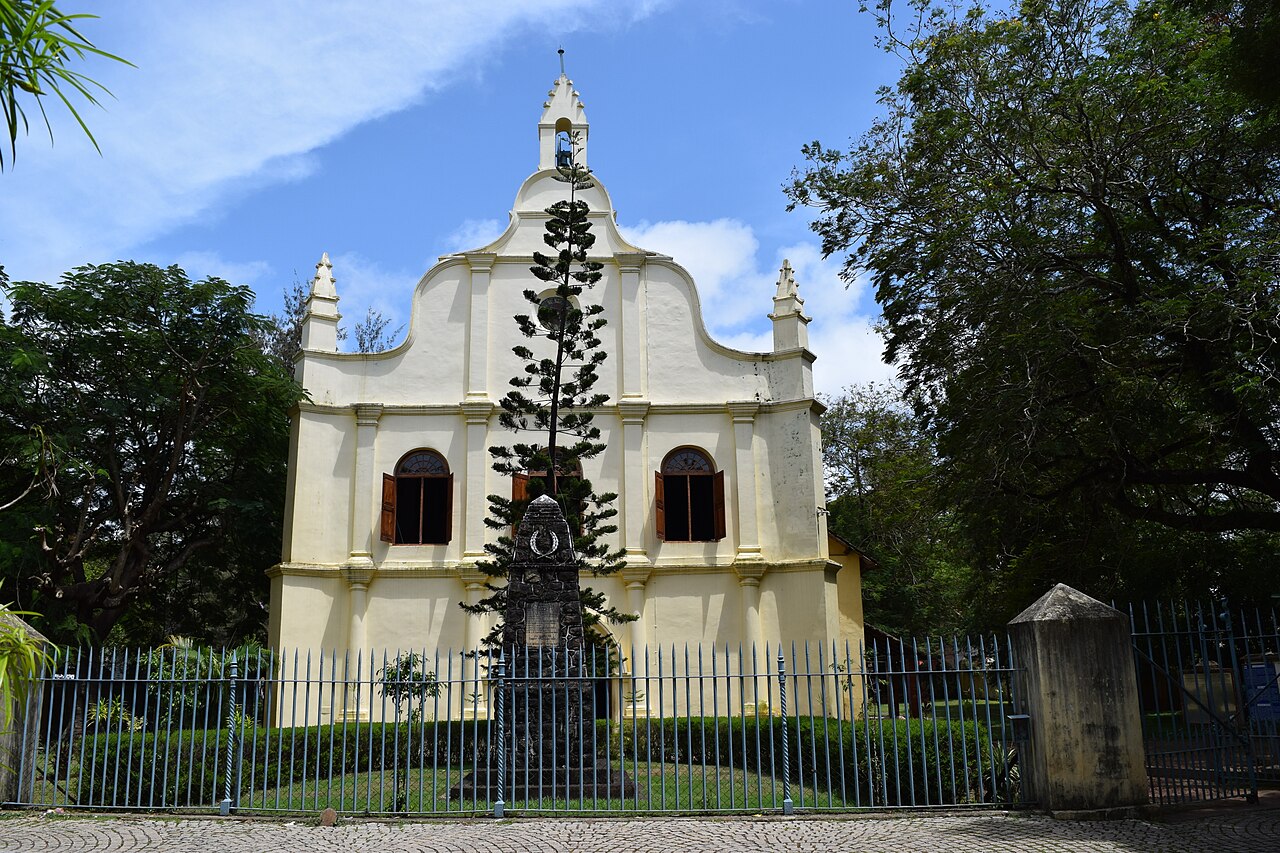
The Kochi harbour was a significant trading port long before European contact, mentioned in Arab and Chinese accounts as a source of pepper, cardamom, and ginger. The Portuguese navigator Vasco da Gama arrived on the Malabar Coast in 1498 and returned in 1500 to establish a trading factory at Kochi with the permission of the Kochi raja, who was in active conflict with the more powerful Zamorin of Kozhikode. The Portuguese built the first Fort Manuel — a wooden palisade — in 1503, replacing it with a more permanent laterite-stone structure shortly after. The Church of Santo António, built in 1503 and later rededicated as St. Francis, is the oldest European-built church surviving in India; Vasco da Gama himself was buried here following his death in Kochi in 1524, though his remains were repatriated to Lisbon in 1538. The church preserves the original grave slab.
The Dutch East India Company (VOC) besieged and captured the Portuguese fort in January 1663 after a brutal artillery campaign that left much of the Portuguese settlement destroyed. The Dutch retained Fort Kochi for 130 years, during which they built or substantially rebuilt most of the civic infrastructure visible today, including the Mattancherry Palace and the town hall. Dutch commercial interests centred on pepper and textile trade with the Kochi raja, whose authority they found more convenient to prop up than to replace.
In 1795, the Dutch ceded Fort Kochi to the British East India Company as part of the Treaty of Paris provisions following the Napoleonic occupation of the Netherlands. The British renamed the Church of St. Francis from its Dutch dedication and converted it to a Church of England institution (it is now a Church of South India parish). British-era additions include the Parade Ground — still intact as a public maidan — and several bungalows along Ridsdale Road that preserve the laterite-stone plinth and teak-wood carved screen construction characteristic of Kerala-European hybrid architecture.
The Chinese fishing nets — locally called cheena vala — are documented from at least the fourteenth century and are associated with the court of Kublai Khan, whose traders are credited with introducing the technique. The nets are unique to Kochi; no similar installation survives elsewhere in India. Each net platform is a family-operated enterprise, typically passed across generations.
Rules & etiquette at Fort Kochi & Chinese Fishing Nets
Fort Kochi's public spaces carry no formal admission rules, but several practical norms govern a respectful visit. At the Chinese Fishing Nets, ask before photographing the operators at close range, particularly during the hauling process when their attention is on the counterweight ropes. Contributing ₹20-50 when invited to pull the hauling ropes is the accepted norm and is not a scam — the fishing income from these nets is marginal and the crews genuinely depend on visitor contributions to supplement it.
St. Francis Church (CSI) requires modest dress — shoulders and knees covered — and shoes must be removed before entering the nave proper. The church is an active place of worship; Sunday services at 08:00 draw a congregation and tourists who arrive during this window should observe or wait outside rather than wander with cameras. Photography inside the church is tolerated but flash photography during services is not.
The streets of Fort Kochi are heavily trafficked with auto-rickshaws and tourist vehicles; pedestrians have no formal right-of-way and the lanes are narrow. The heritage bungalows along Bastion Street and Burgher Street are private residences and boutique hotels — do not enter gates or photograph through windows without permission. Several properties have repurposed their courtyards as cafes or galleries; these are open to visitors during business hours.
Guide licensing: The Government of Kerala tourism department licenses guides for Kochi; a licensed guide will carry a laminated ID card. Unlicensed touts approach visitors near the Customs Jetty ferry landing. A licensed guide for a three-hour Fort Kochi walking tour should cost ₹600-900; significantly lower quotes typically indicate an unlicensed tout who earns commission from shops.
Tips for visiting Fort Kochi & Chinese Fishing Nets
- 1
The KSWTD passenger ferry from Ernakulam Customs Jetty to Fort Kochi Jetty costs ₹5 and takes 15-20 minutes — it is the correct way to arrive and provides a harbour approach that auto-rickshaw or taxi cannot replicate. Ferries run approximately every 20-30 minutes from 06:00 to 21:30. The Ernakulam South Jetty ferries run to Mattancherry; the Customs Jetty ferries go to Fort Kochi. Do not confuse the two.
- 2
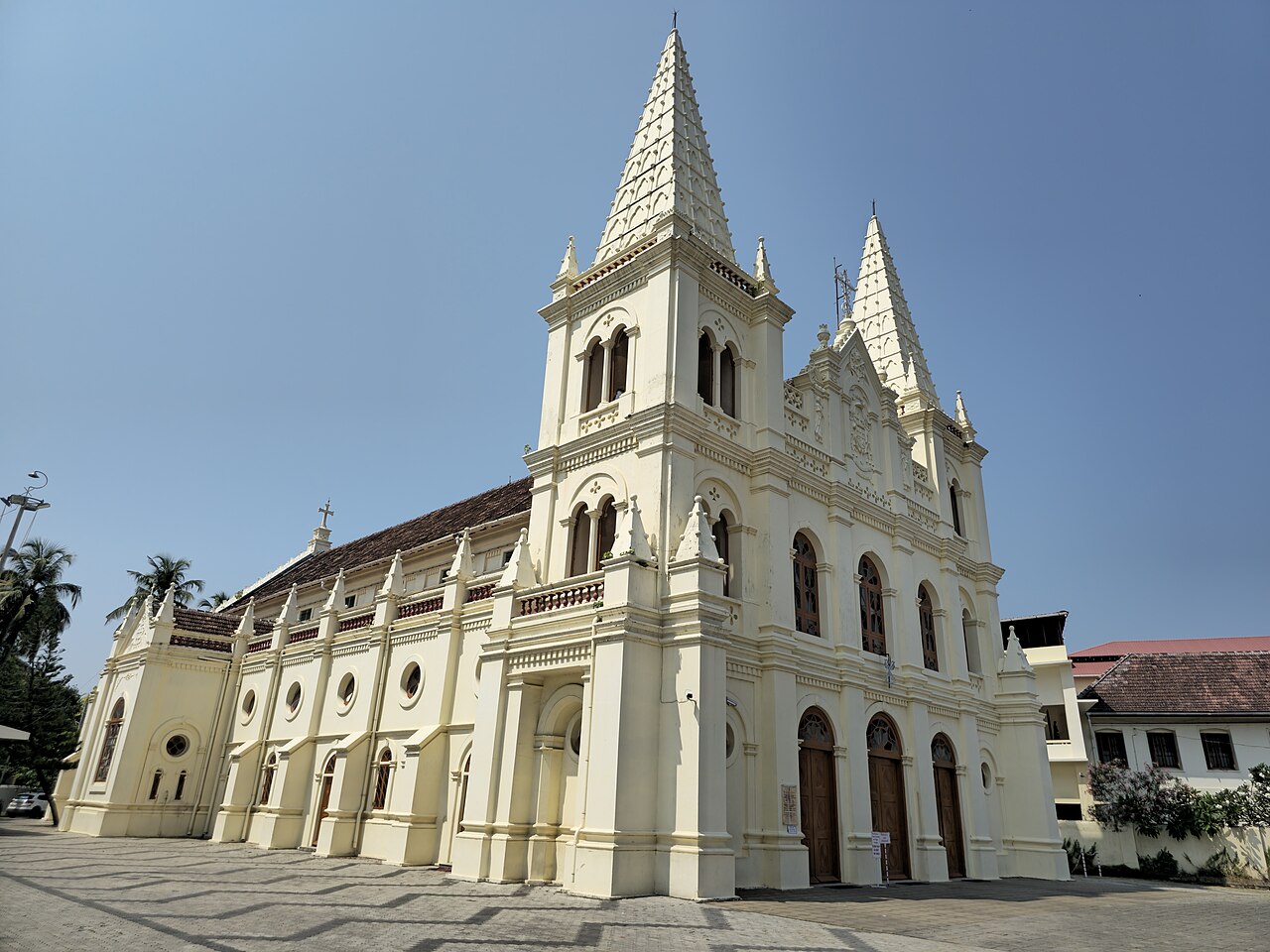
The best sequence for a morning visit: arrive at Fort Kochi Jetty at 06:30, walk directly to the fishing nets for the dawn haul (20-minute walk or ₹40 auto from jetty), then move south through the Parade Ground, along the Bastion Bungalow road to St. Francis Church, and continue to the Santa Cruz Basilica before the streets fill with tourist traffic after 09:00.
- 3
Auto-rickshaw from Fort Kochi Jetty to Mattancherry (Jew Town) runs ₹60-100; bargain firmly. The walk is 2.5km and pleasant if the heat is not oppressive. Heritage Art Gallery and the Indo-Portuguese Museum (₹20 admission) are worth a stop but keep early mornings for the waterfront.
- 4
The afternoon heat between 12:00 and 15:00 makes street walking genuinely uncomfortable from February onward; plan lunch in this window at one of the Fort Kochi cafes and resume walking after 15:30. The Kashi Art Cafe on Burgher Street serves reliable South Indian breakfast from 08:30. Water bottles from local shops run ₹20-25; the same bottles from tourist cafes on the promenade run ₹40-60.
How to reach Fort Kochi & Chinese Fishing Nets
The red star is Fort Kochi & Chinese Fishing Nets; the numbered pins are the 6 nearest places in our guides, each showing its rank in its city. Tap a pin for details.
Fort Kochi Beach, Fort Kochi, Kochi – 682001, Ernakulam District, KeralaDirections in Google Maps
From Ernakulam Customs Jetty
₹54 km · 15–20 min
Fixed government rate
From Ernakulam Junction Railway Station
₹80–12012 km · 35–50 min
Auto to jetty) + ₹5 (ferry
From Cochin International Airport (COK)
₹700–1,10035 km · 55–80 min
From Ernakulam South Jetty
₹53 km · 10–15 min
Fixed government rate
Nearest airport
From Cochin International Airport (COK), Nedumbassery
35 km
Nearest railway station
From Ernakulam Junction (ERS)
12 km by road or 20 min by KSWTD ferry via Ernakulam South jetty
Fort Kochi & Chinese Fishing Nets FAQs
Can you buy fish directly from the Chinese Fishing Net operators?
Yes, and this is one of the better value experiences in Fort Kochi. The operators will show you the catch, you select a fish by weight, negotiate a price (expect ₹200-500 per kg depending on species), and several small restaurants immediately behind the nets will cook it with rice and curry for a preparation charge of ₹60-100. The system works efficiently and the fish is as fresh as it gets.
Is Fort Kochi walkable from Mattancherry?
Yes — the distance between the Chinese Fishing Nets and the Paradesi Synagogue in Jew Town is approximately 2.5km along a direct route. The walk takes 30-40 minutes and passes through a transition from tourist-facing Fort Kochi into the more workaday lanes of Mattancherry, where you'll find wholesale spice warehouses and the Jain trading district. There is no pedestrian hazard beyond normal road traffic.
Are there formal walking tours of Fort Kochi?
The Kerala Tourism Department runs subsidised heritage walks most mornings during peak season (November–March) departing from the Tourist Information Centre near the Customs Jetty at 08:00; these cost ₹100-150 per person. Private licensed guide-led walks can be arranged through certified operators like the Kerala Institute of Tourism & Travel Studies alumni network; expect ₹600-900 for a 3-hour walk. The free audio trail available through the 'Kerala Tourism' app is adequate for self-guided walks.
What are the best cafes and restaurants within Fort Kochi proper?
Kashi Art Cafe on Burgher Street (open from 08:30, breakfast-to-lunch only) remains the standard-setter for the neighbourhood — full Kerala breakfast, good filter coffee, and a small gallery space. Teapot Café on Peter Celli Street is reliable for afternoon refreshment. For a full meal, the restaurants on Beach Road serve fresh fish at reasonable prices (₹180-350 for a main), but quality varies; ask what arrived that morning rather than ordering from a static menu.
Compiled with AI assistance from official sources and public records, and published only after the checks in How we write these guides. Nobody from Traveliac has visited this place. Last updated . How we rank and check places
Places to visit near Fort Kochi & Chinese Fishing Nets
Straight-line distances from our map; times are estimates.
 #2 in KochiFree entry
St. Francis Church
Church · 100 m · about 2 min walk
 #3 in KochiFree entry
Santa Cruz Basilica
Church · 150 m · about 2 min walk
 #7 in Kochi
Bolgatty Palace
Palace · 3 km · about 10 min by road
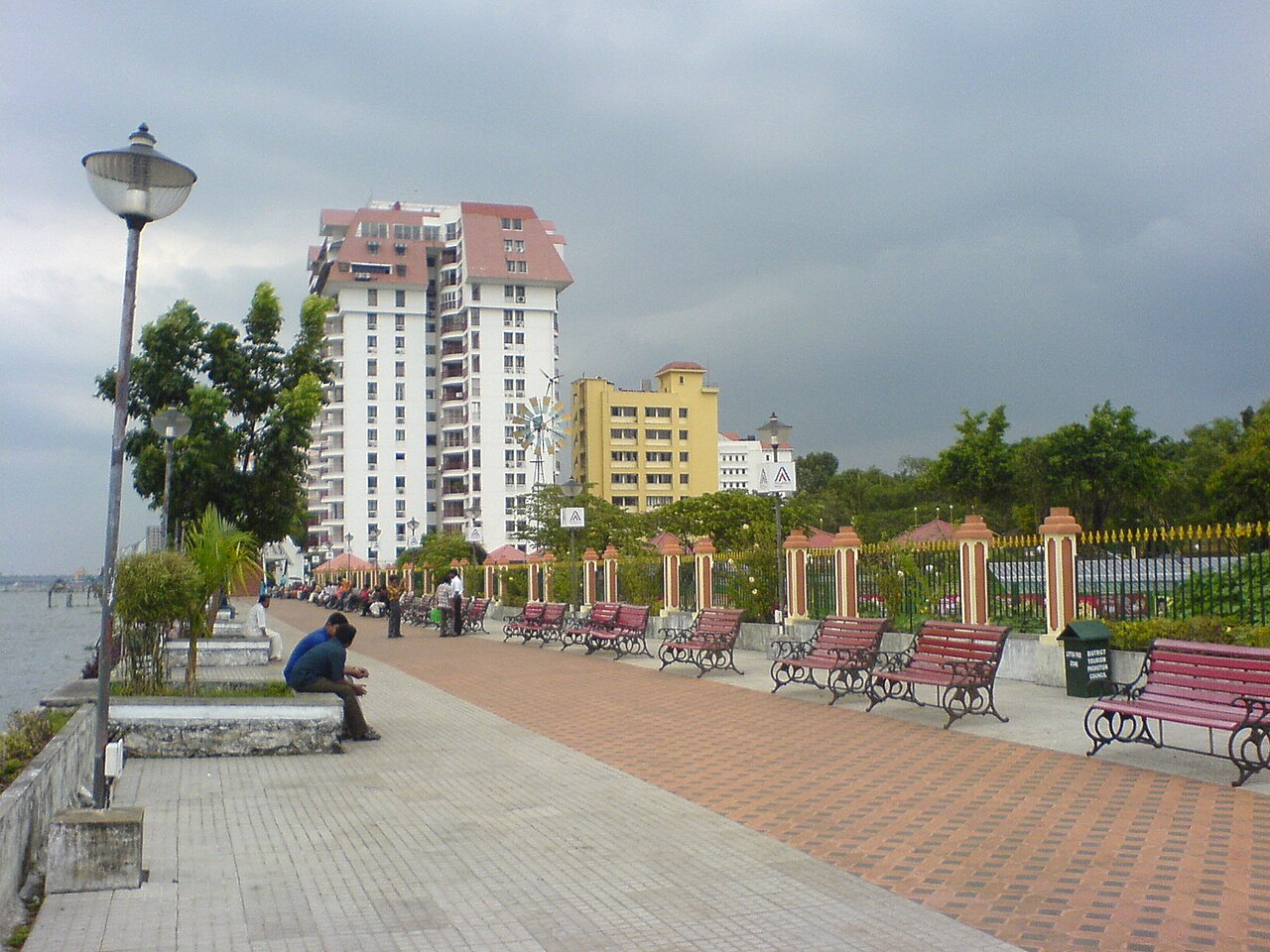 #6 in KochiFree entry
Marine Drive
Heritage · 4 km · about 10 min by road