
Kerala Folklore Museum
#5of 8 places to visit in KochiKochi, Kerala
Also known as Folklore Museum Thevara · Museum of Kerala Folklore
Quick answer
Opening hours: 09:30–18:00. Entry: ₹200. Allow 1.5 hrs. Best time: 10:00–12:00.
Updated · Compiled by Traveliac, AI-assisted · 5 min read
- Opening hours
- 09:30–18:00
- Entry fee
- ₹200
- Ticket from
- Time needed
- 1.5 hrs
- Best time of day
- 10:00–12:00
- Best months
- Nov – Mar
- Address
- Thevara Ferry Road, Thevara, Kochi – 682013, Ernakulam District, Kerala
About Kerala Folklore Museum
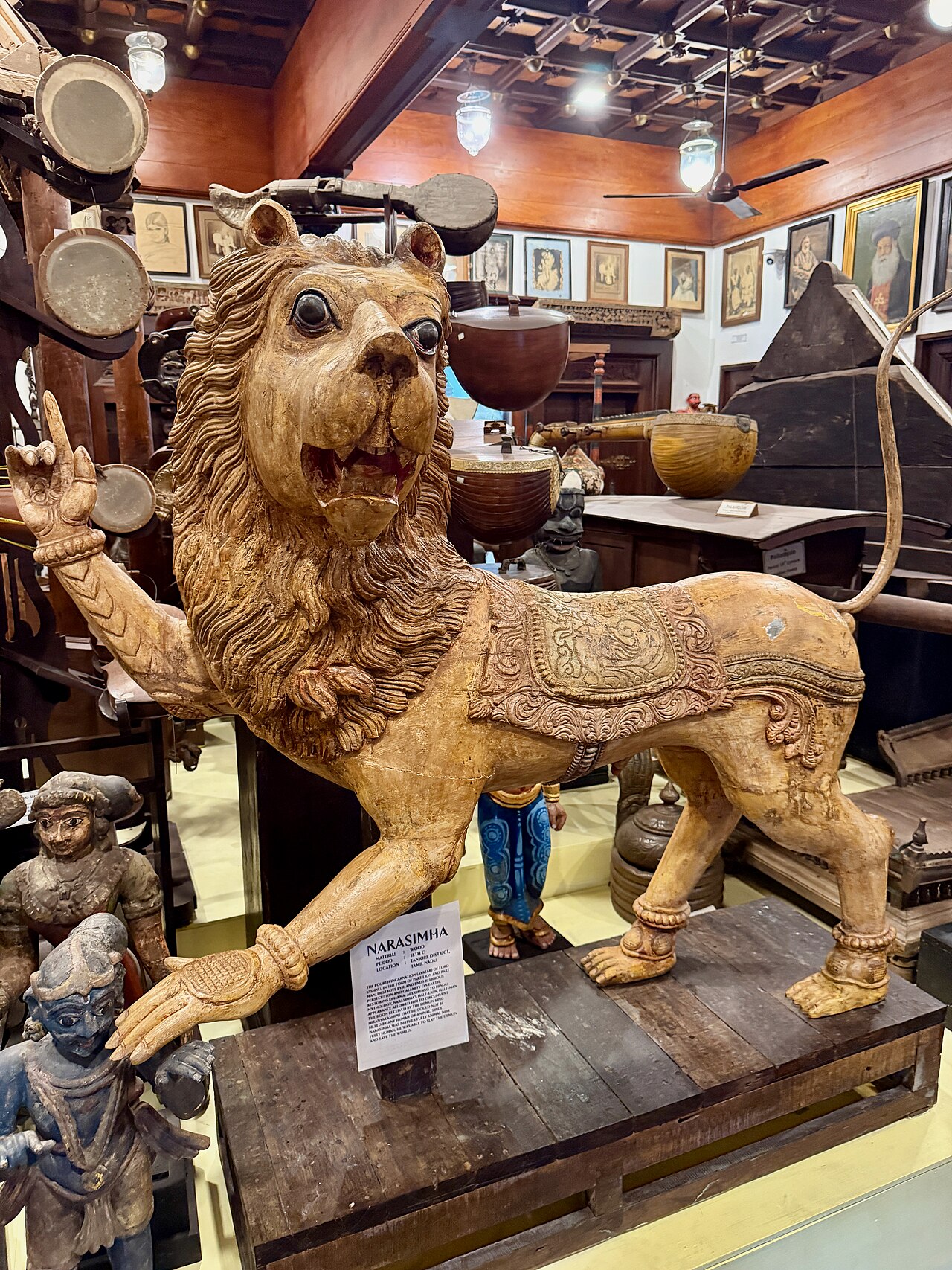
The Kerala Folklore Museum is a private collection built inside a purpose-constructed building that is itself the primary exhibit — three floors, each following a distinct regional architectural style (Malabar in the north, Cochin in the centre, Travancore in the south), assembled substantially from reclaimed temple wood, carved doorframes, and structural timber salvaged from demolished traditional houses and temples across Kerala. The effect, moving up through the floors, is of walking through the state's vernacular building traditions in sequence rather than reading about them on a wall label. The founder spent decades accumulating the roughly 5,000 objects on display — temple woodcarvings, bronze lamps, ritual masks, musical instruments, and a genuinely startling 200-year-old wooden temple chariot occupying much of the ground floor — before opening the building to the public in 2009.
Best time of day: 10:00–12:00. Before tour-group visits from Fort Kochi hotels arrive in the early afternoon.
Kerala Folklore Museum timings
Kerala Folklore Museum opens at 09:30 and closes at 18:00. It keeps the same hours on Saturday and Sunday.
- Opening hours
- 09:30–18:00
Mon–Sun 09:30–18:00 - Closed on
- Open every day
Good to know: No seasonal closures. Occasional evening cultural performances on the top-floor theatre stage run outside standard visiting hours and require a separate, advance booking.
Opening hours compiled from keralafolkloremuseum.com and public records, last updated . They change without notice — confirm before you travel. How we write these guides
Kerala Folklore Museum ticket price
| Ticket | Price |
|---|---|
| Indian visitors | ₹200 |
| Foreign visitors | ₹200 |
| Children | ₹100 |
| Camera | Free |
Single flat ticket price regardless of nationality, a departure from the differential pricing typical of government-run sites. Photography is included in the base ticket in most public galleries; a few rooms holding especially fragile temple-wood carvings restrict photography, marked at the doorway.
Prices compiled from keralafolkloremuseum.com and public records, last updated . They change without notice — confirm before you travel. How we write these guides
Best time to visit Kerala Folklore Museum
- Quiet
- Moderate
09:30–11:00
Morning openingBest time to go
Quietest window of the day; individual visitors and small groups move through the galleries without congestion.
Quiet11:00–14:00
Midday tour-group arrivals
Hotel-organised group visits from Fort Kochi arrive in this window, though volumes remain modest compared to the Fort Kochi and Mattancherry sites.
Moderate14:00–16:00
Afternoon lull
Crowd thins noticeably after lunch. A comfortable window for unhurried photography in the permitted galleries.
Quiet16:00–18:00
Late-afternoon closing window
Steady but light footfall through to closing. Good light through upper-floor windows for the top-floor Travancore-style hall.
Quiet
History of Kerala Folklore Museum
The museum was established by a Kochi-based antique collector and art dealer whose decades of acquiring temple artefacts, woodwork, and ritual objects across Kerala — often salvaged from structures being demolished or renovated rather than purchased from dealers — eventually outgrew private storage and warranted a dedicated public building. Construction of the three-storey structure was itself an act of architectural conservation: large sections of the building fabric, including entire carved wooden facades, pillared halls, and ceiling panels, were sourced from actual traditional houses (tharavadu) and temple structures that were being dismantled elsewhere in the state, then reassembled on site rather than replicated from scratch.
The ground floor follows Cochin-style architecture and houses the largest and heaviest pieces, including the wooden temple chariot (ther) used historically to carry temple deities in procession — a scale of object rarely displayed indoors elsewhere in Kerala. The first floor, in Malabar style, holds the museum's collection of ritual masks, some associated with Theyyam performance traditions from northern Kerala, alongside bronze temple lamps and ceremonial objects. The top floor, in Travancore style, includes a wooden ceiling salvaged from a demolished palace and a stage modelled on a traditional koothambalam temple theatre, used periodically for actual Kathakali and classical dance performances rather than functioning purely as a static display.
As a private institution, the museum operates independently of Kerala's state archaeology or tourism departments, funding conservation and acquisitions through ticket revenue rather than government budget allocation — a distinction that shows in the more curatorial, design-conscious presentation compared to the more institutional feel of government-run museums such as Hill Palace or Mattancherry Palace.
Rules & etiquette at Kerala Folklore Museum
Photography without flash is generally permitted throughout most galleries and is included in the ticket price, a more liberal policy than either Mattancherry Palace or Hill Palace Museum. A small number of rooms holding especially fragile carved-wood pieces restrict photography, marked clearly at the doorway; staff enforce this selectively rather than blanket-banning cameras at entry, which occasionally causes confusion for visitors assuming the ban applies everywhere.
Shoes are typically removed before entering the upper-floor galleries with original wooden flooring salvaged from temple structures, though the ground floor stone areas do not require it; shoe racks are positioned at the relevant staircases rather than at the main entrance.
The top-floor theatre stage occasionally hosts scheduled performances of Kathakali or classical Mohiniyattam dance, which are ticketed separately from general museum admission and require advance booking either directly or through a Fort Kochi hotel concierge; walking in expecting a performance without checking the schedule in advance typically results in disappointment.
Tips for visiting Kerala Folklore Museum
- 1
Budget more time on the ground floor than seems necessary — the temple chariot and the scale of the reclaimed architectural woodwork around it reward slow looking, and rushing through in the first ten minutes is the most common visitor mistake reported by the museum's own guides.
- 2
The museum sits in Thevara, a quieter residential stretch of Ernakulam rather than the tourist-dense Fort Kochi peninsula, and is easily combined with a Marine Drive walk on the same day since both are on the mainland side of the harbour — a more efficient itinerary than trying to fit it into a Fort Kochi-focused day, which would require a return ferry crossing.
- 3
Unlike the government sites elsewhere in Kochi, the flat ticket price here applies equally to Indian and foreign visitors, which is unusual enough that some visitors ask about it at the counter — it reflects the museum's private funding model rather than an oversight. Guided walkthroughs by museum staff are available on request at no extra charge and are considerably more informative than the printed gallery labels, which are sparse by design to keep the focus on the objects and architecture themselves.
How to reach Kerala Folklore Museum
The red star is Kerala Folklore Museum; the numbered pins are the 7 nearest places in our guides, each showing its rank in its city. Tap a pin for details.
Thevara Ferry Road, Thevara, Kochi – 682013, Ernakulam District, KeralaDirections in Google Maps
From Ernakulam Junction Railway Station
₹90–1305 km · 15–20 min
From Marine Drive
₹70–1004 km · 12–18 min
From Cochin International Airport (COK)
₹700–1,00032 km · 50–70 min
Nearest airport
From Cochin International Airport (COK), Nedumbassery
32 km, approximately 50–70 minutes by road.
Nearest railway station
From Ernakulam Junction (ERS)
5 km, approximately 15–20 minutes by auto-rickshaw.
Kerala Folklore Museum FAQs
Is the Kerala Folklore Museum government-run?
No. It is a privately owned and funded museum, built and stocked by a Kochi-based antique collector's decades-long private acquisition of temple woodwork, masks, and ritual objects, and opened to the public in 2009. This distinguishes it from Hill Palace Museum and Mattancherry Palace, both administered by state authorities.
What makes the building itself notable, separate from the exhibits?
Large sections of the three-storey structure — carved wooden facades, pillared halls, ceiling panels — were sourced from actual traditional houses and temples being dismantled elsewhere in Kerala and reassembled on site, rather than built new or replicated. Each floor follows a distinct regional architectural style: Cochin on the ground floor, Malabar on the first, Travancore on the top.
Can visitors see live performances at the museum?
Yes, occasionally. The top-floor theatre stage, modelled on a traditional koothambalam temple theatre, hosts scheduled Kathakali and classical dance performances. These are ticketed separately from general admission and require advance booking; there is no guarantee of a performance on any given visiting day.
How does the entry fee compare to other Kochi museums?
At ₹200, it is more expensive for Indian visitors than the government-run Hill Palace Museum (₹15) or Mattancherry Palace (₹20), but applies a single flat rate to all visitors regardless of nationality, unlike the differential Indian/foreign pricing used at government sites.
Compiled with AI assistance from official sources and public records, and published only after the checks in How we write these guides. Nobody from Traveliac has visited this place. Last updated . How we rank and check places
Places to visit near Kerala Folklore Museum
Straight-line distances from our map; times are estimates.
 #6 in KochiFree entry
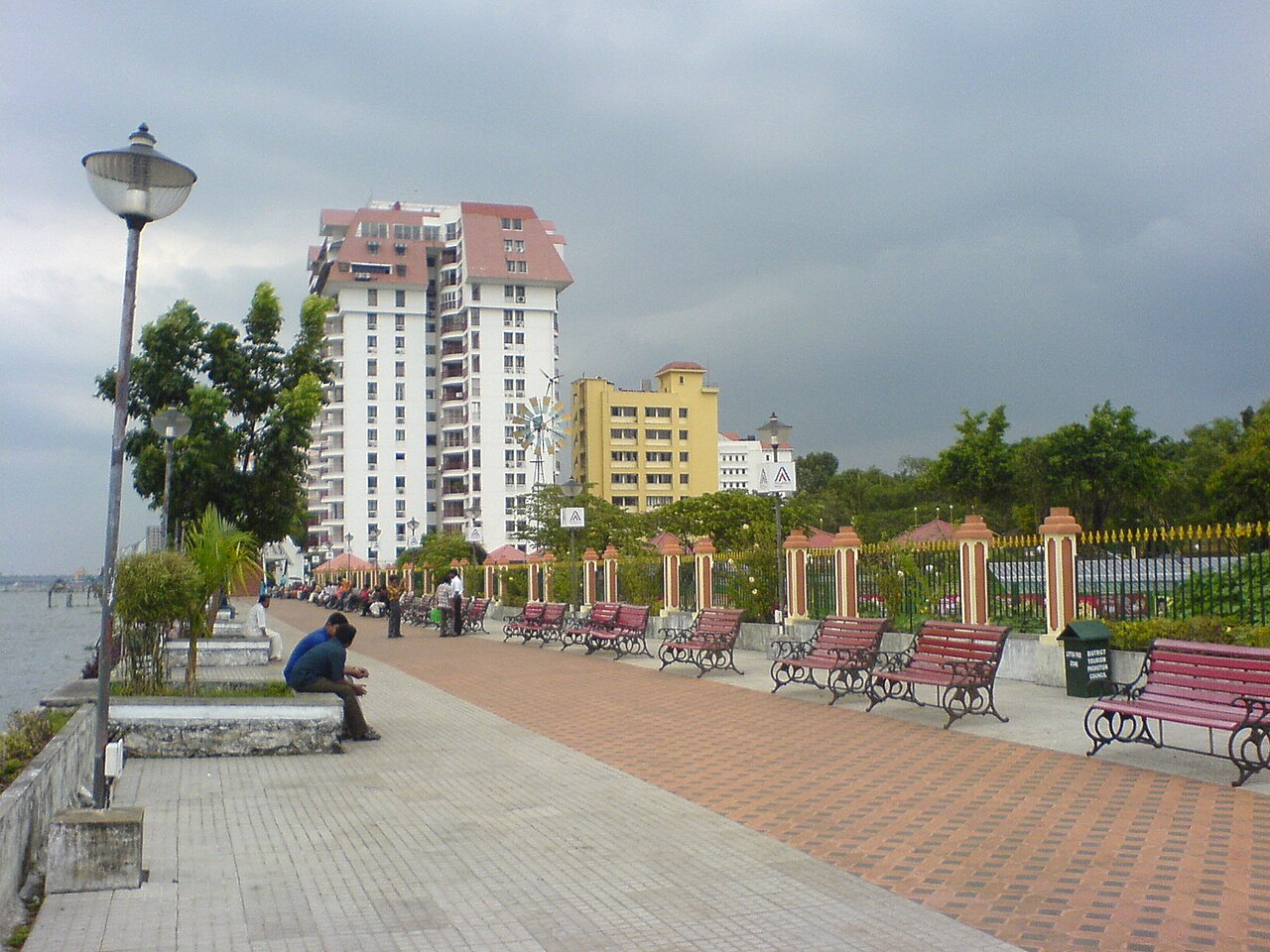
Marine Drive
Heritage · 6 km · about 20 min by road
 #7 in Kochi
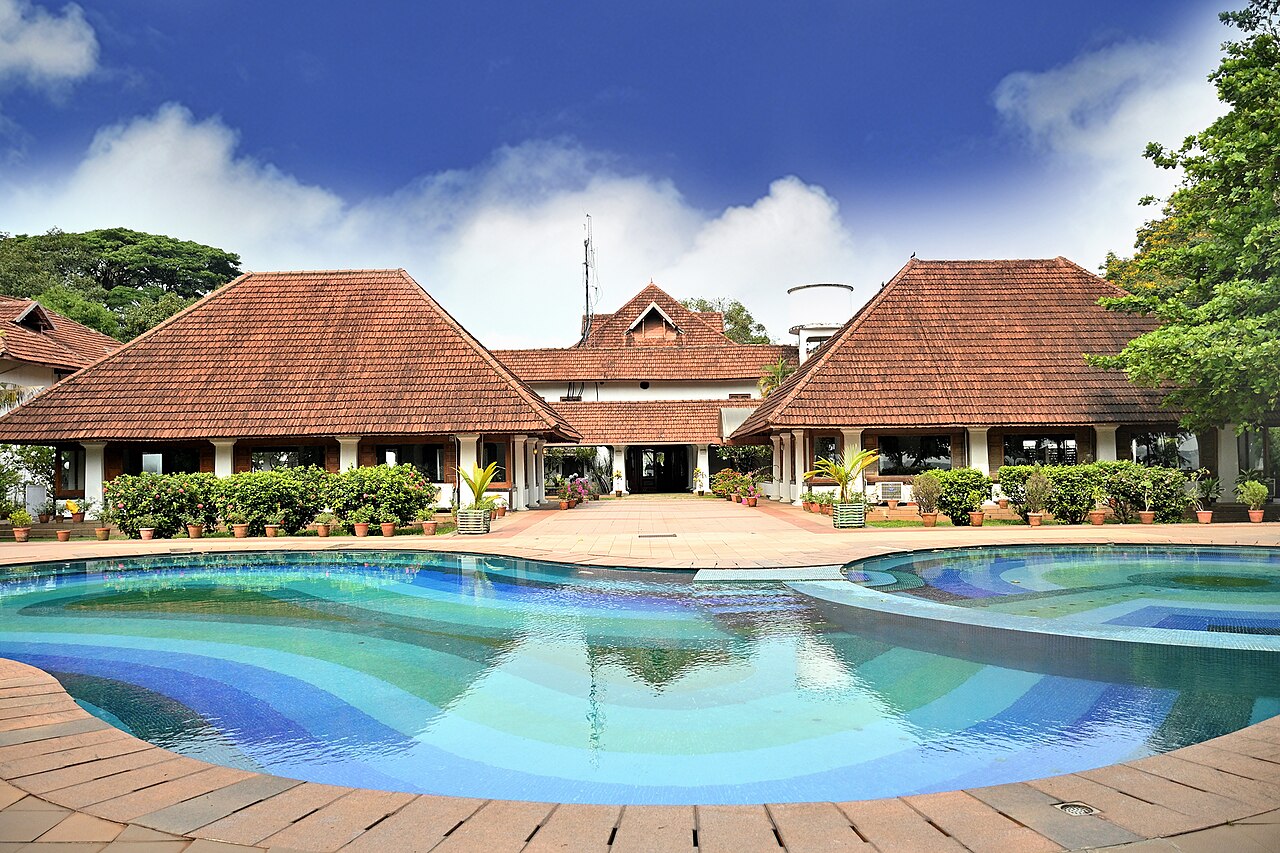
Bolgatty Palace
Palace · 7 km · about 20 min by road
 #3 in KochiFree entry
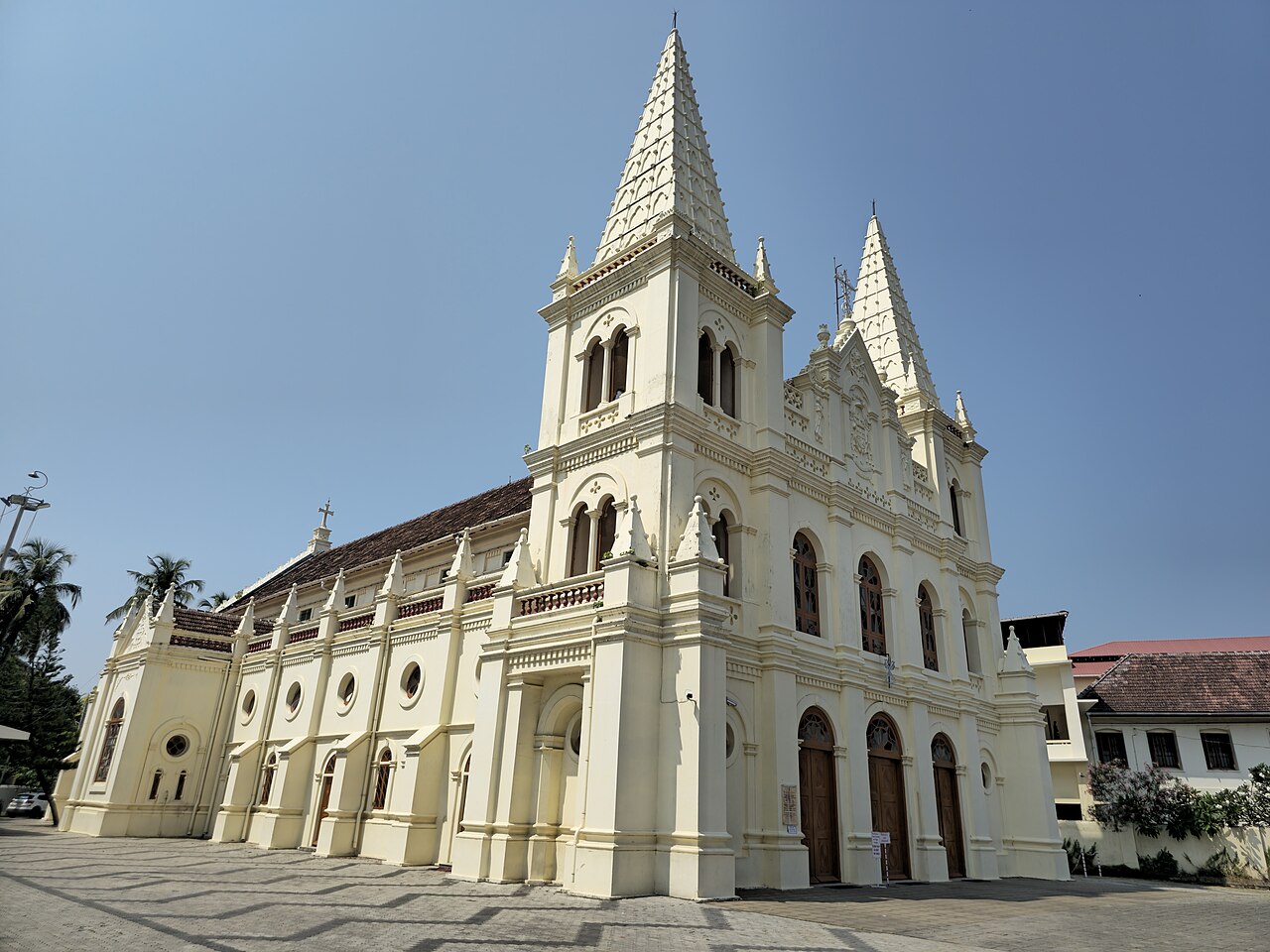
Santa Cruz Basilica
Church · 7 km · about 20 min by road
 #1 in KochiFree entry
Fort Kochi & Chinese Fishing Nets
Fort · 7 km · about 25 min by road