
Insadong
#4of 10 places to visit in SeoulSeoul, Seoul Capital Area, South Korea
Also known as Insa-dong · Insadong-gil · 인사동 · Insadong Cultural Street
Quick answer
Opening hours: 10:00–21:00. Entry is free. Allow 2 hrs. Best time: 10:30-12:30.
Updated · Compiled by Traveliac, AI-assisted · 4 min read
- Opening hours
- 10:00–21:00
- The street is open at all hours, but most shops, galleries and tea houses trade roughly 10:00-21:00 or 22:00; many antique and stationery shops close earlier and some close one day a week, so confirm before travelling for a specific shop.
- Entry fee
- Free
- Time needed
- 2 hrs
- Best time of day
- 10:30-12:30
- Best months
- Apr – Jun, Sep – Oct
- Address
- Insadong-gil, Jongno-gu, Seoul 03145, South Korea (Ssamziegil is at 44 Insadong-gil)
About Insadong
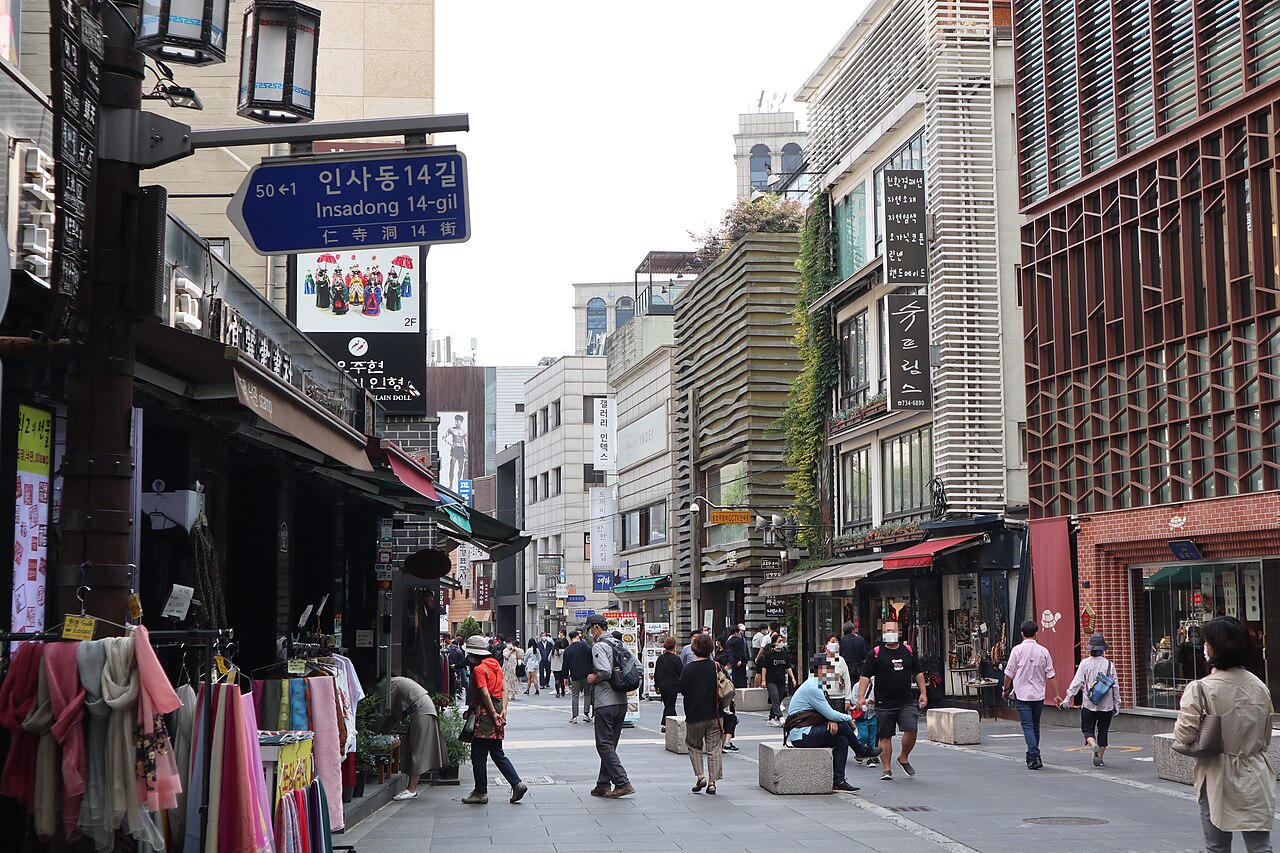
Insadong is free to walk, as of 2026, and centres on Insadong-gil, a street of about 700 metres running from Anguk Station south toward Jongno. The neighbourhood covers about 12.7 hectares of Jongno-gu, and one commonly cited estimate puts roughly 40 percent of Korea's antique dealers and 90 percent of its traditional stationery shops here. Gallery frontages, wooden signs, ceramics, hanji (mulberry-bark paper), brushes and calligraphy ink share the lane with modern souvenir stalls. Ssamziegil, a spiral mall opened in 2004, packs craft studios around a central courtyard.
Best time of day: 10:30-12:30. On a weekday, when shops have opened but coach groups have not arrived; a late-afternoon tea house stop avoids the lunchtime rush.
Insadong timings
Insadong opens at 10:00 and closes at 21:00. The weekend is no different: Saturday and Sunday follow the same times.
- Opening hours
- 10:00–21:00
Mon–Sun 10:00–21:00 - The street is open at all hours, but most shops, galleries and tea houses trade roughly 10:00-21:00 or 22:00; many antique and stationery shops close earlier and some close one day a week, so confirm before travelling for a specific shop.
- Closed on
- Open every day
Good to know: Insadong-gil is traditionally closed to vehicles on weekends and public holidays, making Saturday and Sunday afternoons the most pleasant and most crowded time to walk it (verify the current traffic rule).
Opening hours compiled from english.visitseoul.net and public records, last updated . They change without notice — confirm before you travel. How we write these guides
Insadong ticket price
| Ticket | Price |
|---|---|
| Standard ticket | Free |
| Concession (student / senior) | Free |
| Children | Free |
Insadong is an open public street quarter with no admission fee, as of 2026. Individual galleries, tea rooms, museums and workshops set their own prices; a pot of traditional tea in a tea house typically costs roughly KRW 8,000-12,000 (verify on the menu) and usually includes a small rice-cake snack.
Prices compiled from english.visitseoul.net and public records, last updated . They change without notice — confirm before you travel. How we write these guides
Best time to visit Insadong
- Quiet
- Moderate
- Busy
- Very busy
10:00 - 12:00
Shops OpeningBest time to go
Weekday mornings are the quietest; shopkeepers are setting up, tea rooms are empty and the alleys are easy to explore.
Quiet12:00 - 15:00
Lunch and Tour Groups
Restaurants fill, coach groups arrive from the palaces, and the main lane becomes slow-moving, especially on weekends.
Busy15:00 - 18:00
Afternoon Browsing
Weekend afternoons are the densest; Ssamziegil courtyard and the lane near Anguk are packed with families and hanbok-wearing visitors.
Very busy18:00 - 21:30
Evening Lights
Shops start closing after 20:00 and crowds thin, but tea rooms and restaurants remain busy until late; lanterns and signage are lit.
Moderate
History of Insadong
Insadong takes its origin from two Joseon-era administrative wards where government officials and royal-court staff lived, about 500 years ago. The area filled with painters, calligraphers and scholars, and after the Japanese occupation and the Korean War it became a centre for antiques trading as families sold heirlooms to survive.
Insadong grew into a tourist district after the 1988 Seoul Olympics. Tongmungwan, the oldest bookstore in Seoul, and Kyung-in Art Gallery, the oldest tea house, are cited among the historic survivors, though rents and souvenir chains have pushed many older workshops out of the main street. The quieter side alleys, reached through narrow gaps between buildings, still hold the older tea rooms, calligraphy shops and small galleries.
Rules & etiquette at Insadong
Insadong asks little of visitors, but a few habits help. Bargaining is not standard in fixed-price shops and galleries; light haggling is accepted only at street stalls and antique dealers, and you should never haggle with a tea-house menu. Tipping is not expected anywhere in South Korea, and a service charge is not added to tea-house bills. Photographing craftspeople at work is normal, but ask before photographing the faces of shopkeepers or studio artists.
Insadong tea rooms usually expect you to remove your shoes at raised floors (look for a step and a shoe rack) and to order one drink per person. Antique and export rules apply: objects older than about 50 years may need customs clearance to leave Korea, so ask dealers about paperwork before buying.
Tips for visiting Insadong
- 1
Insadong is best treated as a browsing walk rather than a shopping list, and the main street repeats the same souvenirs. Walk it once from Anguk to Jongno, then turn into the side alleys, where the older tea houses and gallery courtyards sit away from the tourist flow. A stop at a traditional tea house for jujube, citron or omija tea is a better use of KRW 8,000-12,000 than the street-food stalls on the main lane, which charge tourist prices.
- 2
Insadong has some genuine value: hanji stationery, calligraphy brushes and celadon-style ceramics are sold at fair prices in established shops, and Ssamziegil's upper floors have craft studios with maker-priced goods. Skip the mass-produced 'antiques' in stalls that all sell identical stock. Pair the quarter with Jogyesa Temple, which sits at its edge, and Bukchon or Changdeokgung, both a 10 to 15 minute walk. Many restaurants here cater to groups, so for a proper meal walk toward Gwangjang Market or the side streets around Anguk.
How to reach Insadong
The red star is Insadong; the numbered pins are the 7 nearest places in our guides, each showing its rank in its city. Tap a pin for details.
Insadong-gil, Jongno-gu, Seoul 03145, South Korea (Ssamziegil is at 44 Insadong-gil)Directions in Google Maps
From Incheon International Airport (ICN)
60 km · 80-95 min
KRW 4,750-5,000 all-stop AREX plus KRW 1,550-1,650 subway (as of 2026, verify)
From Seoul Station
3 km · 8-12 min plus 5-8 min walk
KRW 1,550-1,650 with a T-money card (as of 2026, verify)
From Gyeongbokgung Palace
1.5 km · 20 min on foot or 5 min by subway
Free on foot, or KRW 1,550-1,650 by subway
Nearest airport
From Incheon International Airport (ICN)
about 60 km, 45 minutes by AREX express to Seoul Station plus 20 minutes by subway.
Nearest station
From Anguk Station (Line 3), Exit 6, at the north end; Jongno 3-ga Station (Lines 1, 3, 5) and Jonggak Station (Line 1) serve the southern end.
Insadong FAQs
Is Insadong free to visit?
Yes. Insadong is an open street quarter with no admission fee, as of 2026, though tea houses, galleries and shops set their own prices.
What is Insadong known for?
Insadong is known for traditional crafts, antiques, calligraphy supplies, hanji paper and tea houses. It is also home to Ssamziegil, a spiral craft mall opened in 2004.
Is Insadong open in the evening?
Yes, the street is open at all hours, but most shops close between about 20:00 and 22:00. Tea houses and restaurants stay open later; verify individual opening times.
Do I need to tip in Insadong tea houses?
No. Tipping is not expected anywhere in South Korea, and tea houses do not add a service charge to the bill.
Compiled with AI assistance from official sources and public records, and published only after the checks in How we write these guides. Nobody from Traveliac has visited this place. Last updated . How we rank and check places
Places to visit near Insadong
Straight-line distances from our map; times are estimates.
 #3 in Seoul
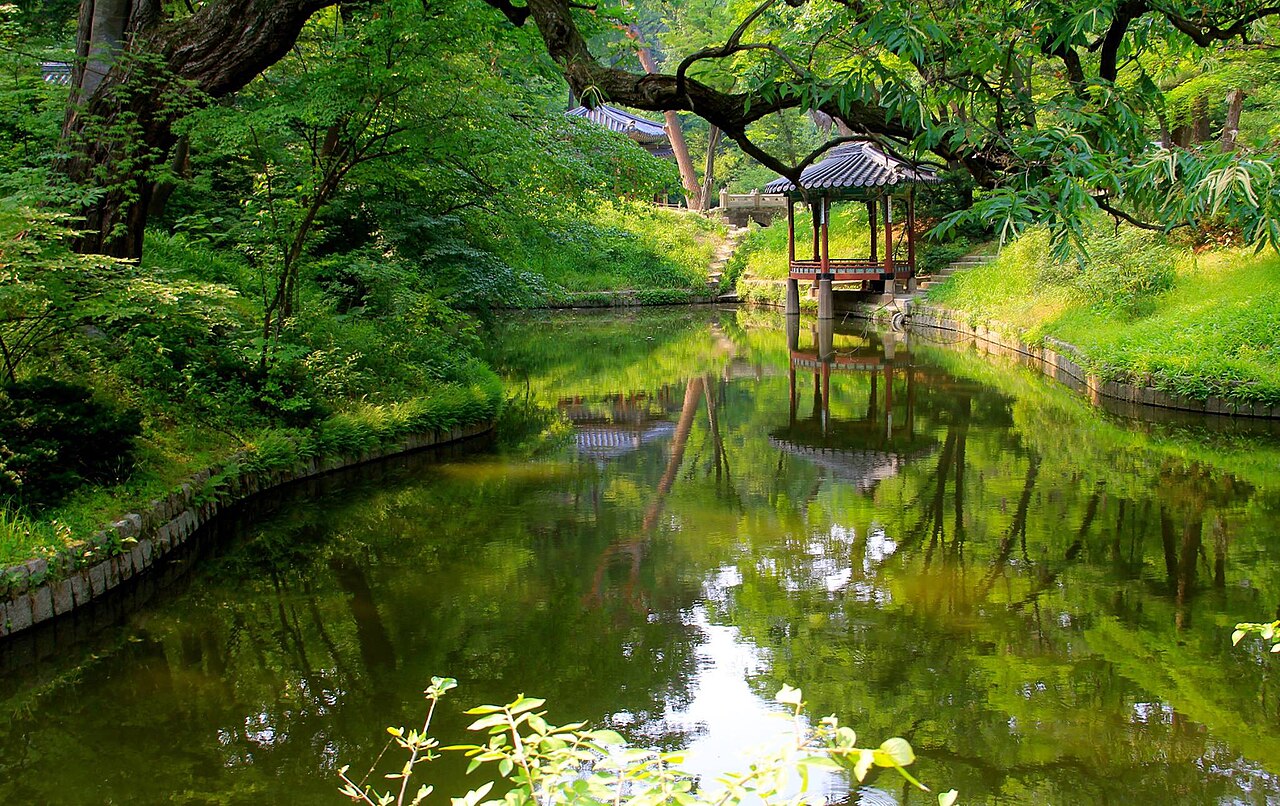
Changdeokgung Palace and Huwon Secret Garden
Palace · 850 m · about 14 min walk
 #2 in SeoulFree entry
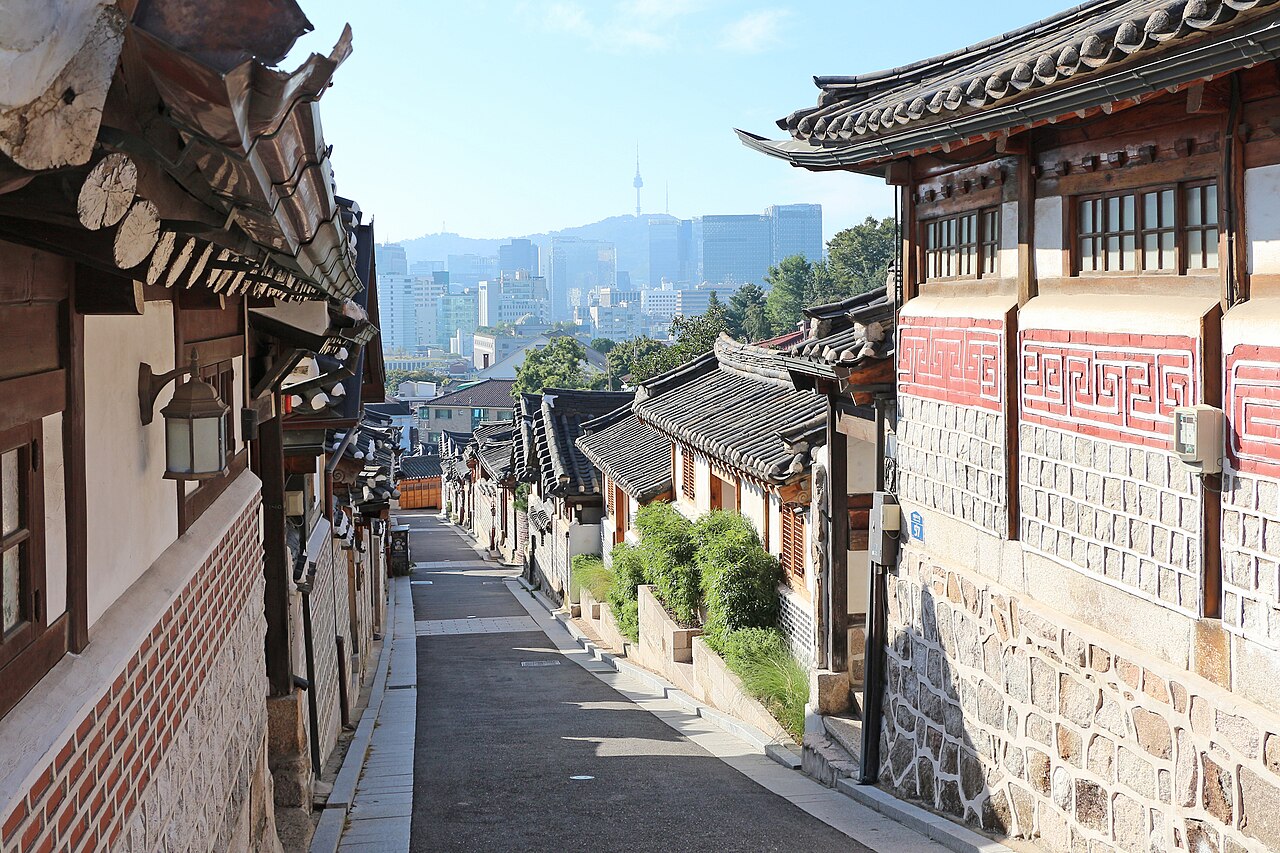
Bukchon Hanok Village
Heritage · 1.1 km · about 19 min walk
 #1 in Seoul
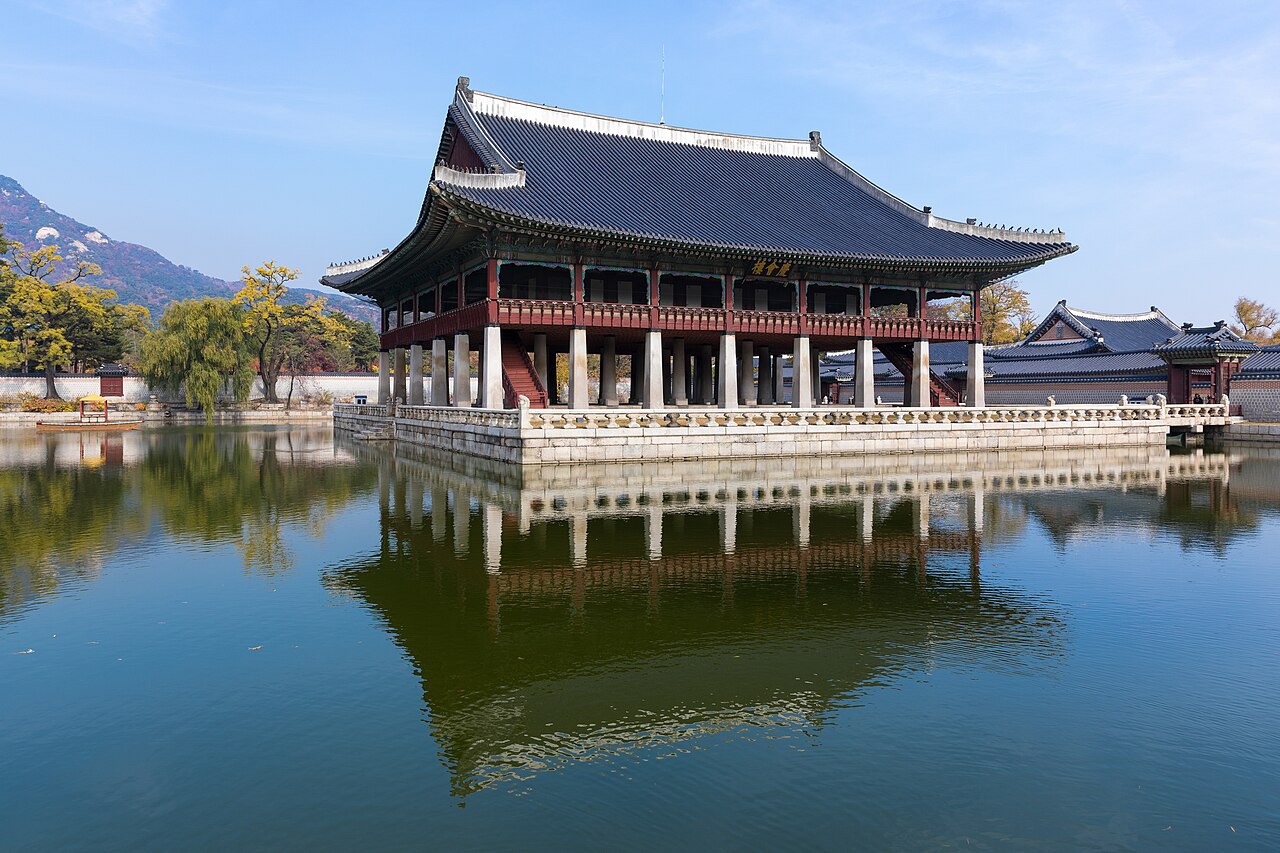
Gyeongbokgung Palace
Palace · 1.2 km · about 19 min walk
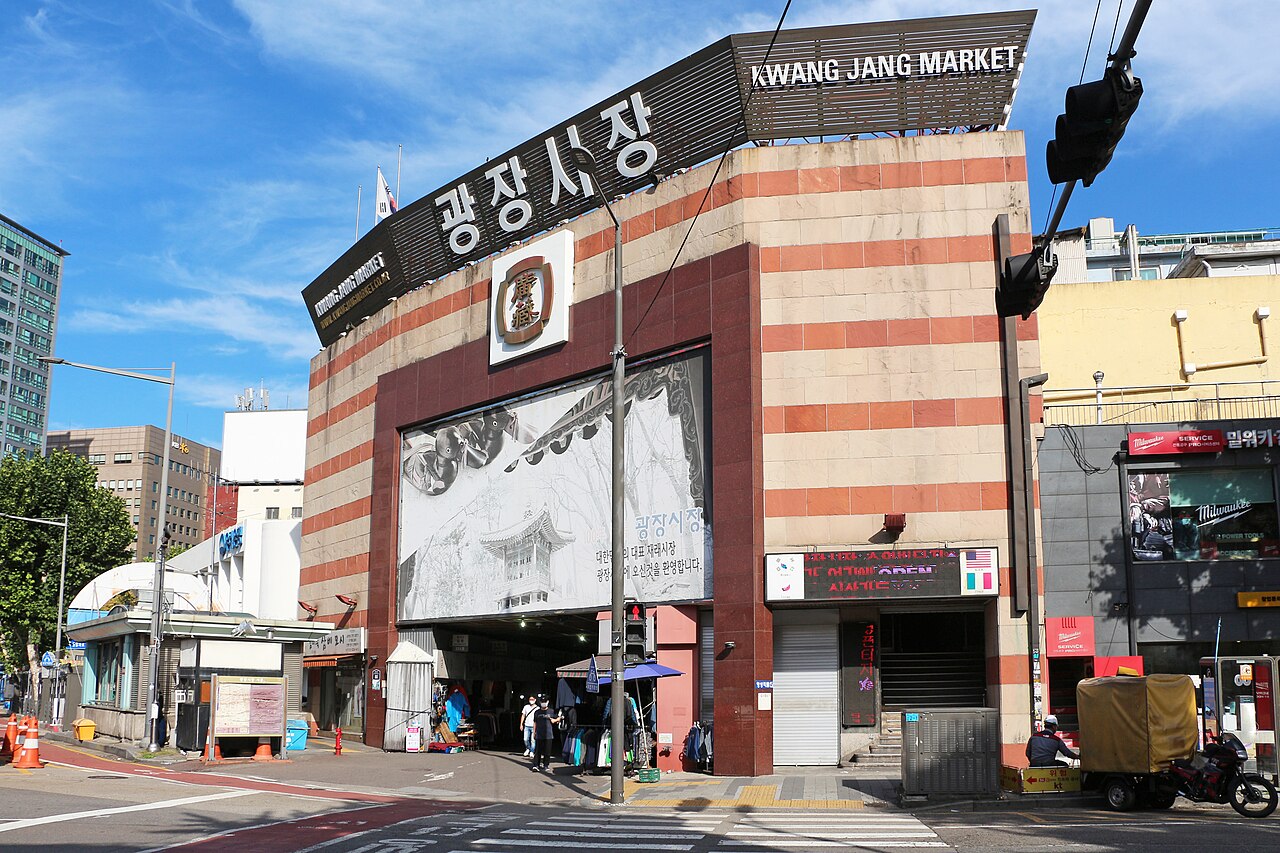 #6 in SeoulFree entry
Gwangjang Market
Market · 1.2 km · about 19 min walk