Agra Fort
#2of 9 places to visit in AgraAgra, Uttar Pradesh
Also known as Lal Qila Agra · Red Fort of Agra
Quick answer
Opening hours: 06:00–18:00. Entry: ₹50 Indian · ₹650 foreign. Allow 2.5 hrs. Best time: 16:00 – 17:30.
Updated · Compiled by Traveliac, AI-assisted · 4 min read
- Opening hours
- 06:00–18:00
- Entry fee
- ₹50 Indian
- Ticket from
- Time needed
- 2.5 hrs
- Best time of day
- 16:00 – 17:30
- Best months
- Oct – Mar
- Address
- Agra Fort, Rakabganj, Agra, Uttar Pradesh 282003
About Agra Fort
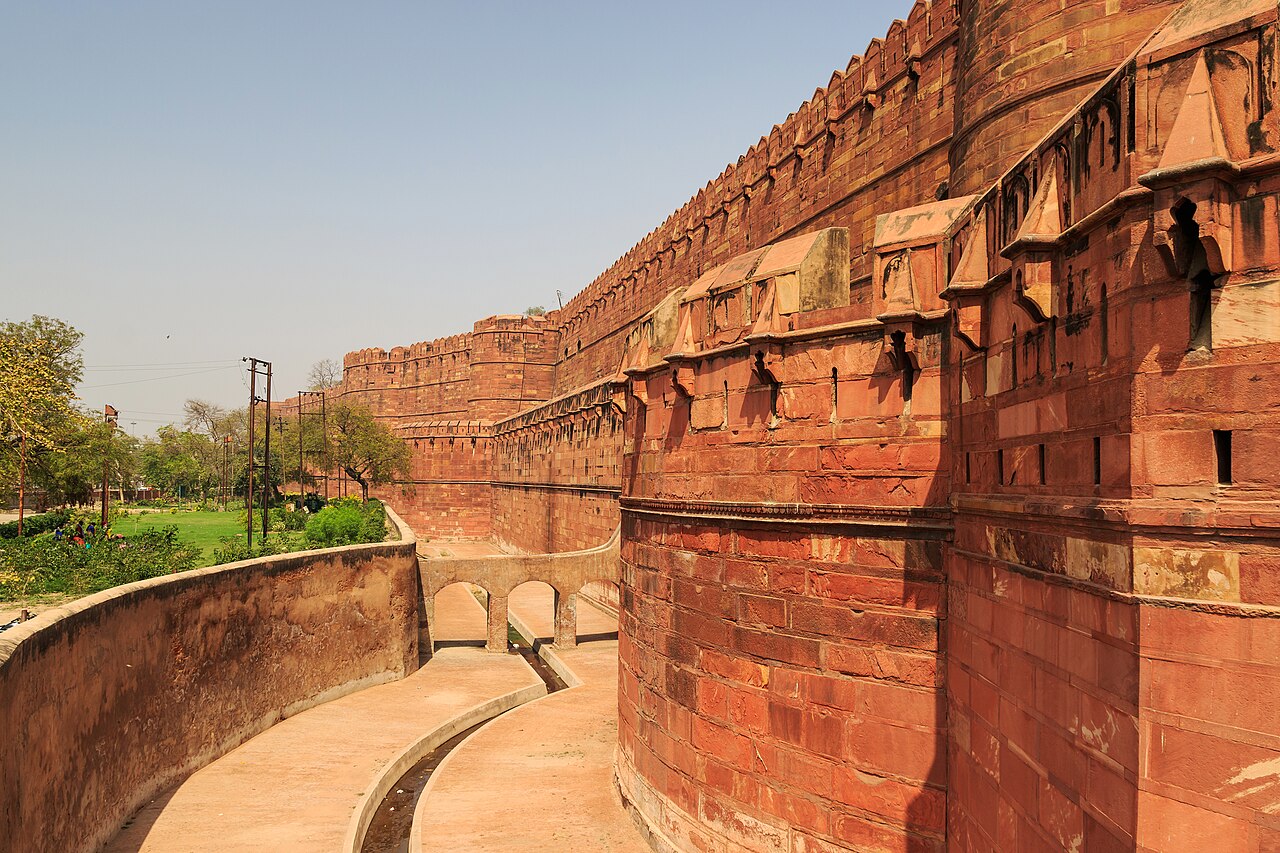
Agra Fort charges Indian nationals ₹50 and foreign nationals ₹650 for entry as of 2026, figures worth confirming at the counter since the Archaeological Survey of India revises Agra Circle rates periodically. Emperor Akbar began the current red sandstone structure in 1565 on the west bank of the Yamuna, replacing an earlier brick fort, and construction continued under three generations of Mughal rulers. The fort functioned as the primary seat of Mughal power until 1638, when Shah Jahan shifted the capital to Delhi, and it later became the gilded prison where Aurangzeb confined his father for the final eight years of his life. The complex covers roughly 94 acres and is enclosed by a double wall of red Sikri sandstone rising up to 20 metres, with a moat once filled from the Yamuna.
Best time of day: 16:00 – 17:30. Roughly two hours before closing, once the mid-morning tour-bus surge has cleared and the low sun softens the sandstone.
Agra Fort timings
Agra Fort opens at 06:00 and closes at 18:00. Those hours hold on Saturday and Sunday too.
- Opening hours
- 06:00–18:00
Mon–Sun 06:00–18:00 - Closed on
- Open every day
Opening hours compiled from uptourism.gov.in and public records, last updated . They change without notice — confirm before you travel. How we write these guides
Agra Fort ticket price
| Ticket | Price |
|---|---|
| Indian visitors | ₹50 |
| Foreign visitors | ₹650 |
| Children | Free |
| Camera | Free |
SAARC/BIMSTEC nationals are reported at a lower ₹40 tier by some ASI listings; as of 2026, verify at the counter since Agra Circle occasionally revises rates. Children under 15 enter free. A combined ASI ticket covering several Agra monuments is sometimes available at the same counter.
Prices compiled from uptourism.gov.in and public records, last updated . They change without notice — confirm before you travel. How we write these guides
Best time to visit Agra Fort
- Quiet
- Moderate
- Busy
- Very busy
06:00 – 09:00
Morning OpeningBest time to go
Gate opens at 06:00. Early risers get the Diwan-i-Am and Jahangiri Mahal courtyards largely to themselves before organised tours arrive.
Quiet09:00 – 13:00
Tour Group Peak
Coach groups arriving from Delhi and combined Taj Mahal itineraries fill the Amar Singh Gate approach and the Sheesh Mahal viewing area.
Very busy13:00 – 16:00
Midday Lull
Groups move on to lunch or Fatehpur Sikri. Open courtyards get uncomfortably hot in the exposed afternoon sun during summer months.
Moderate16:00 – 18:00
Late Afternoon
Local visitors and photographers arrive for golden-hour light on the sandstone ramparts and the Musamman Burj view of the Taj Mahal. Last entry approaches 18:00 closing.
Busy
History of Agra Fort
Agra Fort replaced the earlier Badalgarh fort held by the Chauhan Rajputs on the same site, and construction under Akbar's reign between 1565 and 1573 used red sandstone quarried at Fatehpur Sikri, cut and dressed by an estimated four thousand builders. Shah Jahan, whose personal taste ran to white marble rather than his grandfather's red stone, rebuilt several interior structures in the 1630s and 1640s: the Diwan-i-Khas for private audiences, the Khas Mahal residential pavilion, and the Sheesh Mahal dressing room, whose walls are set with thousands of small convex mirrors. The Musamman Burj, an octagonal marble tower overlooking the Yamuna and the Taj Mahal in the distance, is where Shah Jahan spent his final years under house arrest after Aurangzeb seized the throne in 1658; court accounts describe him viewing the mausoleum of his wife from that tower until his death in 1666. The fort changed hands to the Marathas in 1785 and then to the British East India Company in 1803 following the Second Anglo-Maratha War, after which large sections of the Mughal-era palace quarters were demolished to build colonial barracks. UNESCO listed the fort as a World Heritage Site in 1983, the same year as the Taj Mahal.
Rules & etiquette at Agra Fort
Agra Fort's public entry is restricted to the Amar Singh Gate on the southern side; the Delhi Gate, the fort's grandest entrance, stays closed to tourists because it opens onto an active Indian Army cantonment area. A significant share of the fort's interior, including sections still used by the military, remains off-limits to visitors, which surprises travellers expecting a footprint comparable to the exterior ramparts. Licensed guides cluster near the ticket counter and charge in the range of ₹400–600 for a two-hour circuit; verify the laminated identification card before agreeing a price. Wheelchair access is limited to the lower courtyards, since the connecting ramps between palace levels involve uneven stone stairs original to the Mughal construction.
Tips for visiting Agra Fort
- 1
Agra Fort's Musamman Burj offers the clearest publicly accessible view of the Taj Mahal's dome from anywhere in the city, framed through marble jali screens Shah Jahan reportedly looked through during his imprisonment. Visiting in the late afternoon avoids both the mid-morning tour-bus surge and the harshest sun on the unshaded courtyards. Agra Fort Railway Station sits directly across the road from the Amar Singh Gate, making a same-day pairing with Fatehpur Sikri or Sikandra straightforward by prepaid auto-rickshaw. The Diwan-i-Am's pietra dura peacock-throne platform, though the throne itself was carried off by Nadir Shah's invasion in 1739 and now sits in Tehran, remains one of the few spots in the fort where the scale of Mughal courtly ceremony is still legible in the stonework alone.
How to reach Agra Fort
The red star is Agra Fort; the numbered pins are the 7 nearest places in our guides, each showing its rank in its city. Tap a pin for details.
Agra Fort, Rakabganj, Agra, Uttar Pradesh 282003Directions in Google Maps
From Agra Fort Railway Station (AF)
1 km · 5–10 min
Walkable; auto ₹50–80
From Agra Cantonment Railway Station (AGC)
₹120–1805 km · 15–20 min
Auto, negotiated
From Agra Airport (AGR, Kheria)
₹250–3508 km · 20–30 min
Prepaid taxi
Nearest airport
From Agra Airport (AGR, Kheria)
8 km, 20–30 minutes by road.
Nearest railway station
From Agra Fort Railway Station (AF)
1 km, directly opposite the Amar Singh Gate, 5–10 minutes on foot or by auto.
Agra Fort FAQs
Can visitors enter Agra Fort through the Delhi Gate?
No. The Delhi Gate, the fort's most ornate entrance, is closed to the public because it opens onto an active Indian Army cantonment. All tourist entry and exit is through the Amar Singh Gate on the southern side.
Is the whole of Agra Fort open to visitors?
No. A significant portion of the fort's interior remains restricted, some of it still used by the Indian Army, so the visitable route covers the major Mughal palace courts rather than the entire 94-acre complex.
Can you see the Taj Mahal from inside Agra Fort?
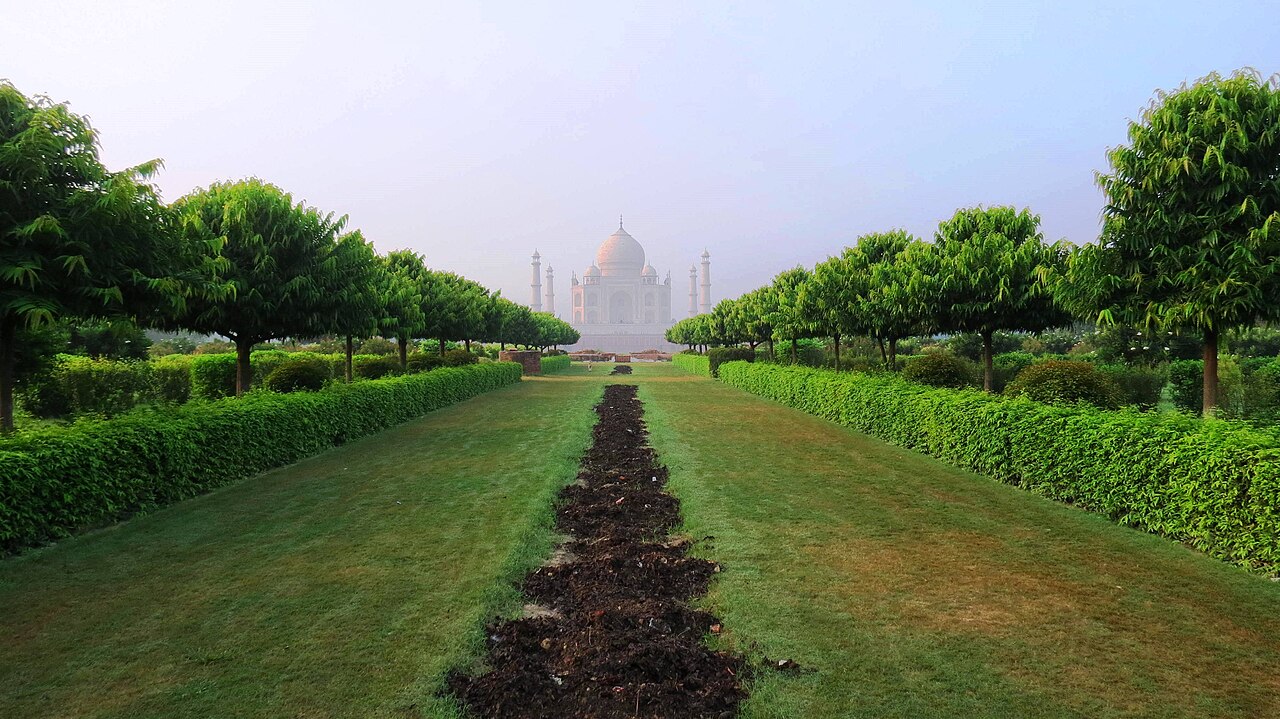
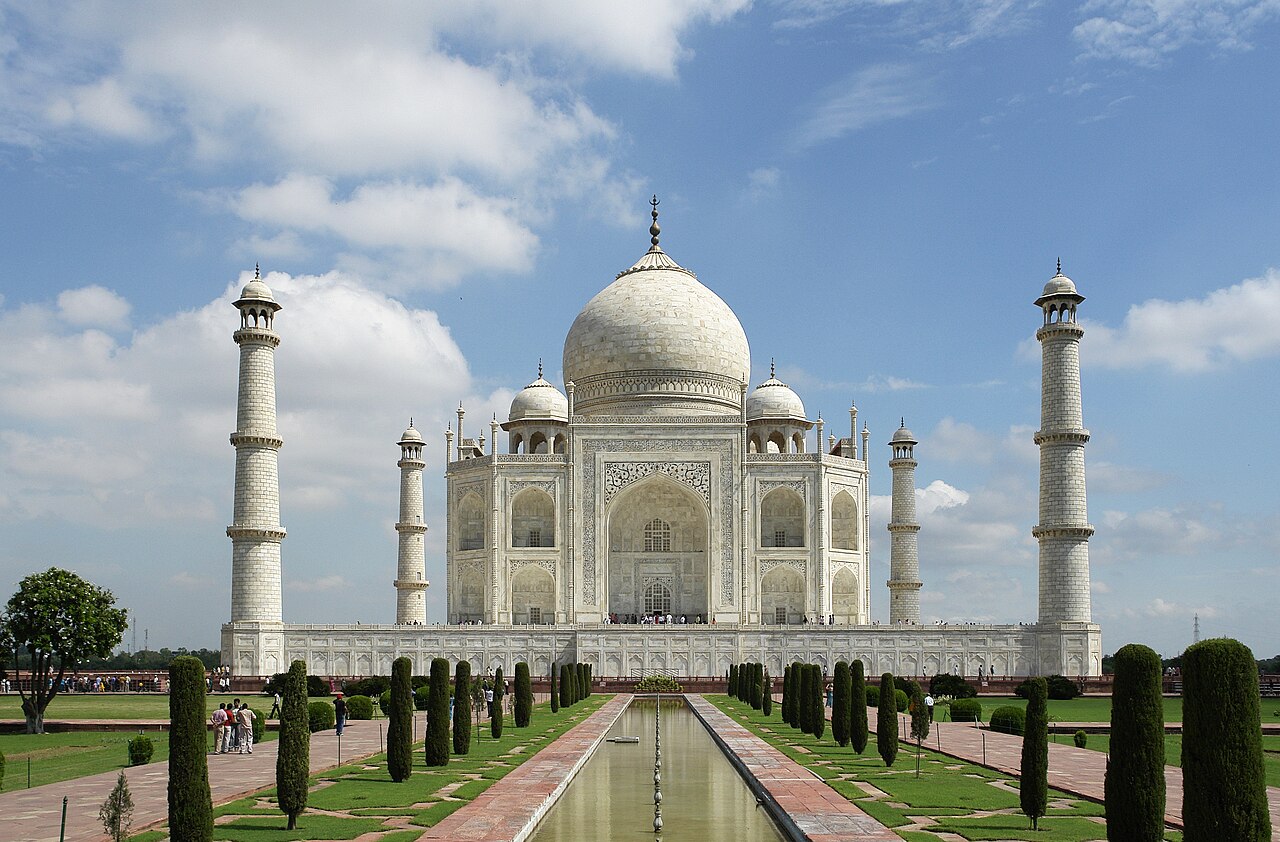
Yes. The Musamman Burj, an octagonal marble tower on the fort's eastern wall, gives an unobstructed view of the Taj Mahal roughly 2.5 kilometres downriver — the same view Shah Jahan reportedly had during his imprisonment there.
How much time should I set aside for Agra Fort?
Around 2 to 3 hours covers the Diwan-i-Am, Diwan-i-Khas, Sheesh Mahal, Khas Mahal, and Musamman Burj at an unhurried pace, including queue time at the Amar Singh Gate security check.
Compiled with AI assistance from official sources and public records, and published only after the checks in How we write these guides. Nobody from Traveliac has visited this place. Last updated . How we rank and check places
Places to visit near Agra Fort
Straight-line distances from our map; times are estimates.