
City Palace Udaipur
#1of 10 places to visit in UdaipurUdaipur, Rajasthan
Also known as Udaipur City Palace · Shiv Niwas Palace Complex · Mewar City Palace
Quick answer
Opening hours: 09:30–17:30, last entry 17:00. Entry: ₹300 Indian · ₹700 foreign. Allow 2.5 hrs. Best time: 09:30 – 11:00.
Updated · Compiled by Traveliac, AI-assisted · 6 min read
- Opening hours
- 09:30–17:30
- Entry fee
- ₹300 Indian
- Ticket from
- Time needed
- 2.5 hrs
- Best time of day
- 09:30 – 11:00
- Best months
- Sep – Mar
- Address
- City Palace Road, Old City, Udaipur, Rajasthan 313001
About City Palace Udaipur
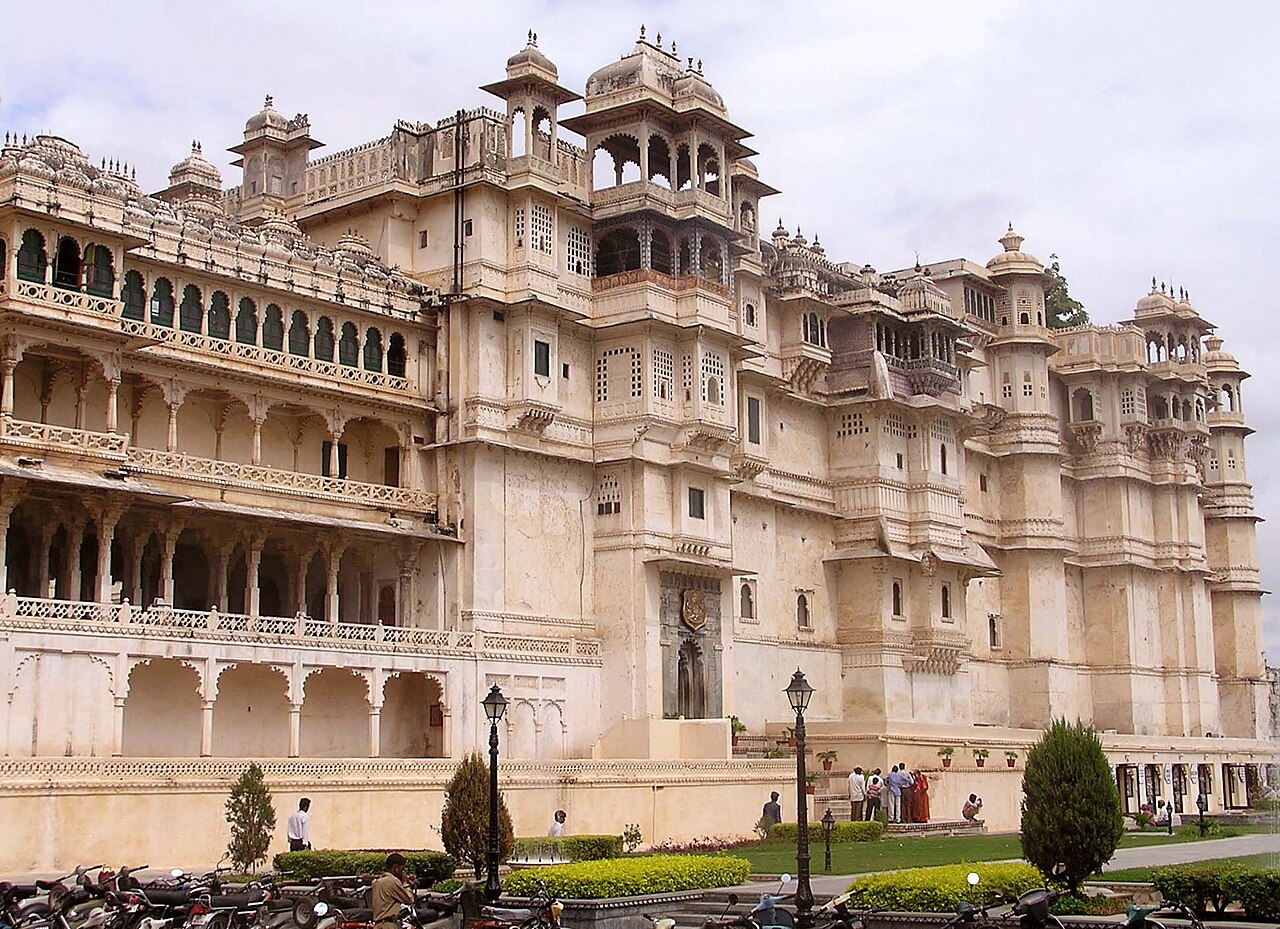
City Palace is not a single building but a fused sequence of eleven palaces, the largest such complex in Rajasthan, stacked along a granite ridge on the eastern shore of Lake Pichola. Maharana Udai Singh II broke ground in 1559, and roughly twenty-two successive Maharanas kept adding wings, courtyards, and towers for the next four centuries, which is why the elevation reads less like a unified plan than a layered argument between generations of rulers about what a palace should be. The base structure is coursed granite, load-bearing and defensive in character; the upper storeys switch to a lighter white Makrana marble used for balconies, cusped arches, and the domed cupolas that break the skyline — a deliberate shift from fortress to ornament as the building rises. The most photographed interior is Mor Chowk, the Peacock Courtyard, where three mosaic peacocks rendered in thousands of cut glass pieces and coloured stone stand in individually tiled wall niches, each bird representing one of the three monsoon seasons in Hindu tradition. The Zenana Mahal, the former women's quarters, now holds the bulk of the museum's costume, weapon, and portrait miniature collections, while the Crystal Gallery in the Fateh Prakash wing displays a Birmingham-ordered set of crystal furniture — a chandelier-lit oddity commissioned by Maharana Sajjan Singh in the 1870s that arrived in India only after his death and was never unpacked for decades.
Best time of day: 09:30 – 11:00. The palace opens before the day's tour coaches from Chittorgarh and Jodhpur arrive, and the eastern-facing Mor Chowk courtyard gets direct sun for photographing the peacock mosaics without harsh shadow from the surrounding balconies.
Photography
₹200 camera fee
City Palace Udaipur timings
City Palace Udaipur opens at 09:30 and closes at 17:30. It keeps the same hours on Saturday and Sunday.
- Opening hours
- 09:30–17:30
Mon–Sun 09:30–17:30 - Closed on
- Open every day
Good to know: The Mewar Sound and Light Show runs two nightly slots (English and Hindi) that shift by season — roughly 19:00 and 20:00 in winter, later in summer to allow for darkness.
Opening hours compiled from eternalmewar.in and public records, last updated . They change without notice — confirm before you travel. How we write these guides
City Palace Udaipur ticket price
| Ticket | Price |
|---|---|
| Indian visitors | ₹300 |
| Foreign visitors | ₹700 |
| Children | ₹100 |
| Camera | ₹200 |
The composite museum ticket covers the main City Palace Museum, Zenana Mahal, and Crystal Gallery. Video camera fee is a separate ₹500. Tickets for the Mewar Sound and Light Show at Manek Chowk are sold separately (₹150–₹250 depending on seating). Children under 5 enter free. The Government-run museum sections and the Fateh Prakash Palace / Shiv Niwas heritage hotel wings inside the same walled complex are managed and ticketed independently — a hotel-side entry does not include museum access and vice versa.
Prices compiled from eternalmewar.in and public records, last updated . They change without notice — confirm before you travel. How we write these guides
Best time to visit City Palace Udaipur
- Quiet
- Moderate
- Very busy
09:30 – 11:00
Morning OpeningBest time to go
Ticket counter opens at 09:30. Mor Chowk gets direct morning light with minimal crowd overlap in photographs. Museum galleries move freely for the first hour.
Quiet11:00 – 14:00
Coach Tour Peak
Domestic tour groups arriving from Chittorgarh and Jodhpur circuits converge here. The narrow connecting stairwells between sub-palaces bottleneck; expect single-file shuffling through Zenana Mahal.
Very busy14:00 – 16:00
Afternoon Lull
Coach groups depart for lunch and boat rides. Crystal Gallery queue shortens noticeably. Good window for unhurried Mor Chowk photography.
Moderate16:00 – 17:30
Late Closing
Last entry at 17:00. Independent travellers and photographers dominate. Golden light hits the marble upper storeys from the lake side, visible from Badi Mahal terrace.
Quiet
History of City Palace Udaipur
Maharana Udai Singh II founded both the city and its palace in 1559, having relocated the Mewar capital from Chittorgarh after its second sack by Akbar's Mughal army in 1568 made the old fort untenable as a seat of government. Udaipur's ridge-and-lake setting, ringed by the Aravalli hills, offered natural defensive depth that flat Chittorgarh lacked. Udai Singh's original core — the Rai Angan courtyard, reputedly built where a hermit sage advised him to found his new capital — remains the oldest section of the complex.
His successor Maharana Pratap, of Haldighati fame, added comparatively little given his reign was consumed by resistance against Mughal expansion, but later rulers built prolifically during periods of peace and Mughal accommodation. Maharana Karan Singh II added the Badi Mahal ('Garden Palace') atop a natural rock elevation in the mid-17th century, disguising a hilltop garden as an upper-storey courtyard. Maharana Sangram Singh II built major residential wings in the early 18th century. The 19th-century additions under Maharana Sajjan Singh and Fateh Singh brought European material culture into the complex — Belgian glasswork, Venetian mosaics, and English cast iron alongside traditional Rajput craftsmanship, an eclecticism you can trace room to room.
Unlike most Rajasthani forts and palaces, City Palace was never absorbed into state or ASI ownership after Independence. It remains under the Maharana of Mewar Charitable Foundation, and the current head of the Mewar house, Arvind Singh Mewar's family, still occupies private wings — one reason parts of the complex operate as functioning heritage hotels (Shiv Niwas, Fateh Prakash) rather than pure museum space.
Rules & etiquette at City Palace Udaipur
Entry to the museum section is through Tripolia Gate, the triple-arched gateway where, historically, Maharanas were weighed against gold and silver on ceremonial occasions and the metal distributed to the poor — a practice called tuladan. Large backpacks and tripods must be deposited at the cloakroom near the ticket counter; a small bag fee of roughly ₹50 applies. Photography inside the museum galleries is permitted with the still-camera ticket, but the Crystal Gallery has historically restricted photography of certain crystal furniture pieces — check current signage at the gallery entrance, as policy has changed more than once.
The museum circuit is a fixed one-way route through narrow stone stairwells connecting eleven sub-palaces; there is no shortcut and no reverse walking permitted once inside, so budget the full two hours rather than trying to cherry-pick sections. Wheelchair access is limited — several connecting passages are stepped rather than ramped.
Guides are available at the ticket counter for ₹300–₹500 for a 90-minute circuit; unlike Amber or Jaipur's forts, there are few unlicensed touts inside the palace itself because entry is metered and controlled at Tripolia Gate, though touts do operate in the surrounding lanes offering 'skip the line' passes that are not genuine — all visitors queue at the same counter.
Tips for visiting City Palace Udaipur
- 1
Buy the Crystal Gallery add-on ticket even though it costs extra — it is a separate, smaller queue and visitors who skip it at the main counter often have to backtrack. The gallery has no natural light and is intentionally dim to protect the crystal, so a good camera with low-light capability helps if the photography ticket is purchased.
- 2
The Mewar Sound and Light Show at Manek Chowk, held most evenings weather permitting, narrates four centuries of Mewar history against the illuminated palace façade — it is a separate ticket and a separate entry point from the daytime museum, worth booking a day ahead in peak season (November–February) since seating is limited to a few hundred chairs.
- 3
For the best exterior photograph of the whole palace elevation against Lake Pichola, cross to Ambrai Ghat on the western shore around sunset — the granite-to-marble colour transition in the façade is far more legible from across the water than from directly beneath the walls. Combine a City Palace museum morning with a Lake Pichola boat ride in the same ticket window at the palace's own jetty, since the boat departure point sits inside the palace precinct.
How to reach City Palace Udaipur
The red star is City Palace Udaipur; the numbered pins are the 8 nearest places in our guides, each showing its rank in its city. Tap a pin for details.
City Palace Road, Old City, Udaipur, Rajasthan 313001Directions in Google Maps
From Maharana Pratap Airport (UDR)
₹450–₹60022 km · 40–50 min
Prepaid taxi). App-based cabs ₹350–₹500 when available.
From Udaipur City Railway Station (UDZ)
₹100–₹1503.5 km · 12–18 min
Auto-rickshaw, negotiated). ₹180–₹230 (Cab).
From Udaipur Bus Stand (Udiapole)
₹70–₹1002.5 km · 10–15 min
Auto-rickshaw). Walkable in 30 minutes along Lake Palace Road.
Nearest airport
From Maharana Pratap Airport (UDR)
22 km, approximately 40–50 minutes by road via the Dabok bypass.
Nearest railway station
From Udaipur City Railway Station (UDZ)
3.5 km, approximately 12–18 minutes.
City Palace Udaipur FAQs
Does the City Palace ticket include the Crystal Gallery and the Sound and Light Show?
No. The composite museum ticket (₹300 Indian / ₹700 foreign) covers the main museum and Zenana Mahal only. The Crystal Gallery requires a separate add-on ticket, and the evening Mewar Sound and Light Show at Manek Chowk (₹150–₹250) is ticketed and entered separately from the daytime museum.
Is City Palace run by the government like Amber Fort or Hawa Mahal?
No. Unlike most major Rajasthan forts under ASI or state archaeology department control, City Palace remains privately owned and operated by the Maharana of Mewar Charitable Foundation, the Mewar royal family's trust. Parts of the same walled complex function as heritage hotels (Shiv Niwas, Fateh Prakash) ticketed independently of the museum.
How much time does the City Palace museum circuit take?
Budget a minimum of two hours. The museum is a fixed one-way route through eleven interconnected sub-palaces via narrow stone stairwells; there is no shortcut through the sequence and backtracking is not permitted once inside.
Where is the best viewpoint to photograph the full City Palace façade?
Ambrai Ghat on the western shore of Lake Pichola, roughly a 10-minute boat or rickshaw-and-walk away, gives the clearest view of the full elevation and the granite-to-marble colour transition, particularly at sunset when the lower stonework darkens against the still-lit upper marble storeys.
Compiled with AI assistance from official sources and public records, and published only after the checks in How we write these guides. Nobody from Traveliac has visited this place. Last updated . How we rank and check places
Places to visit near City Palace Udaipur
Straight-line distances from our map; times are estimates.
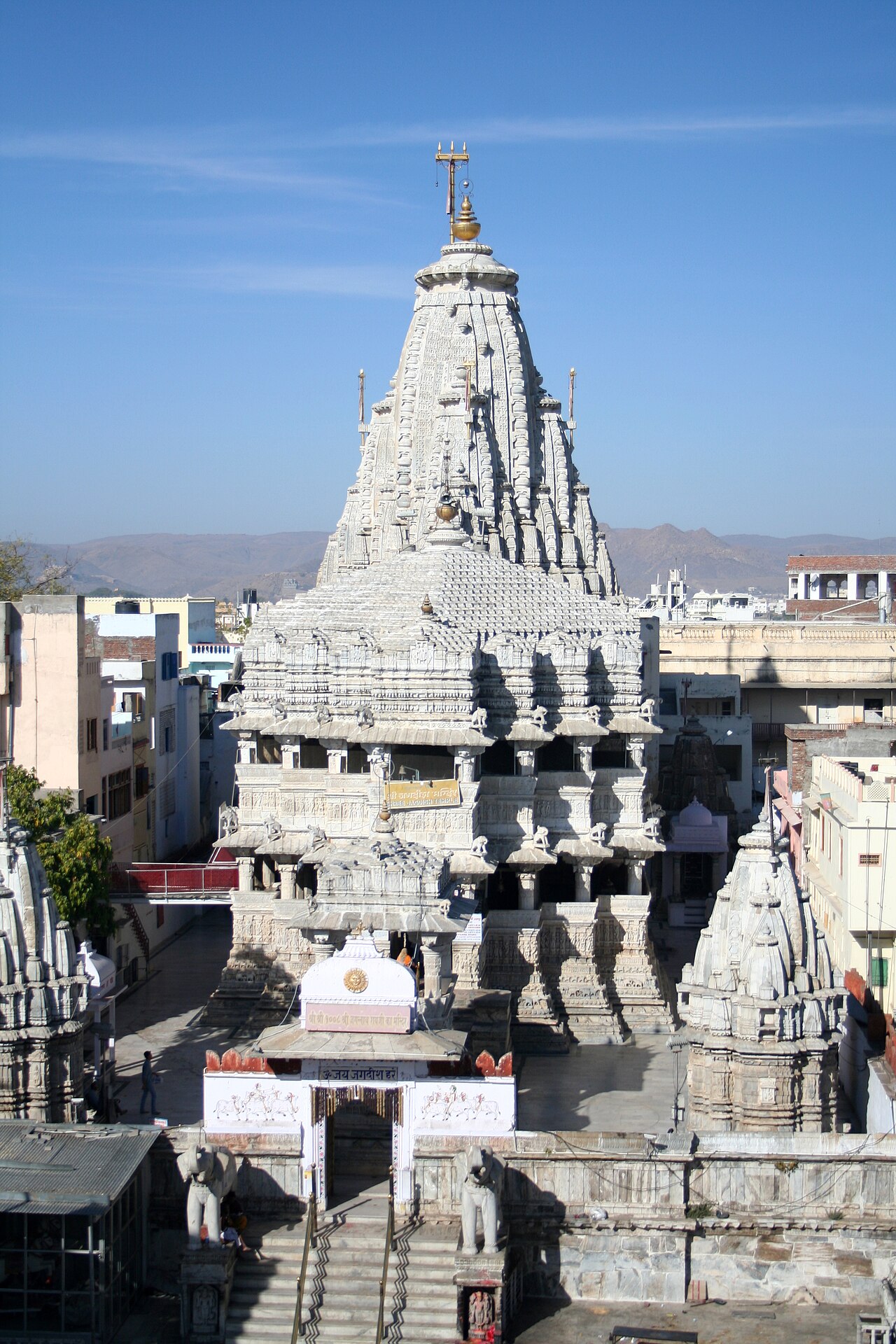 #4 in UdaipurFree entry
Jagdish Temple
Temple · 450 m · about 7 min walk
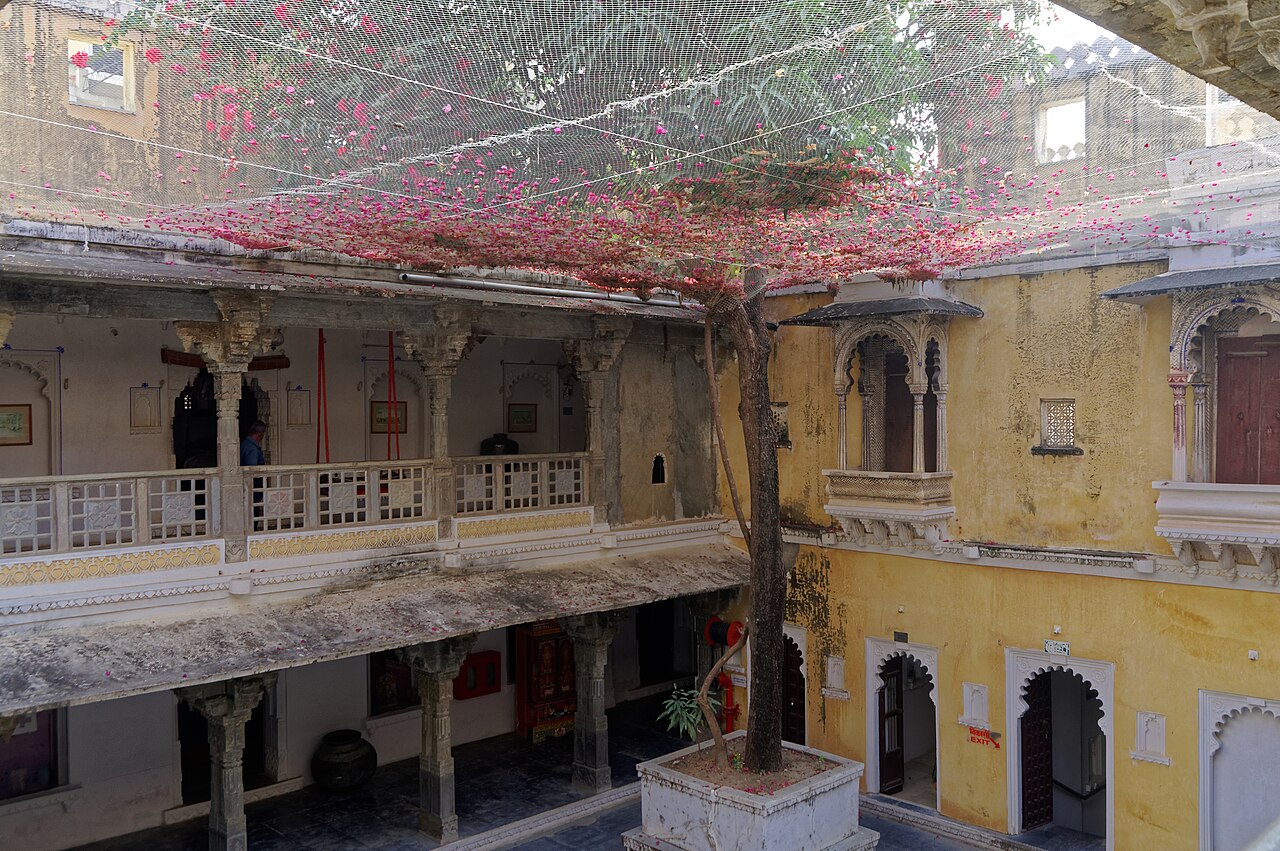 #5 in Udaipur
Bagore Ki Haveli
Palace · 500 m · about 8 min walk
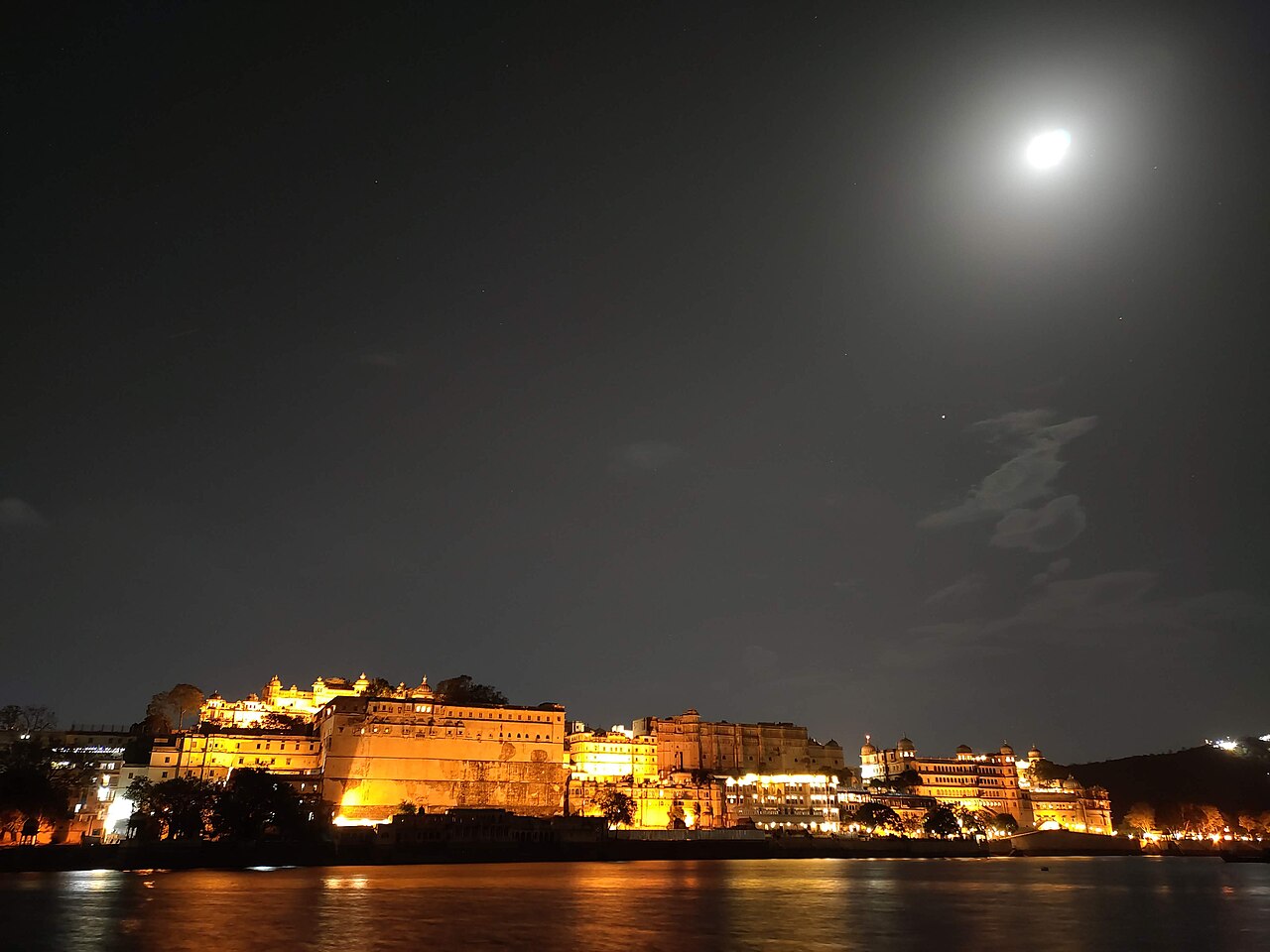 #9 in UdaipurFree entry
Ambrai Ghat
Nature · 550 m · about 9 min walk
 #2 in UdaipurFree entry
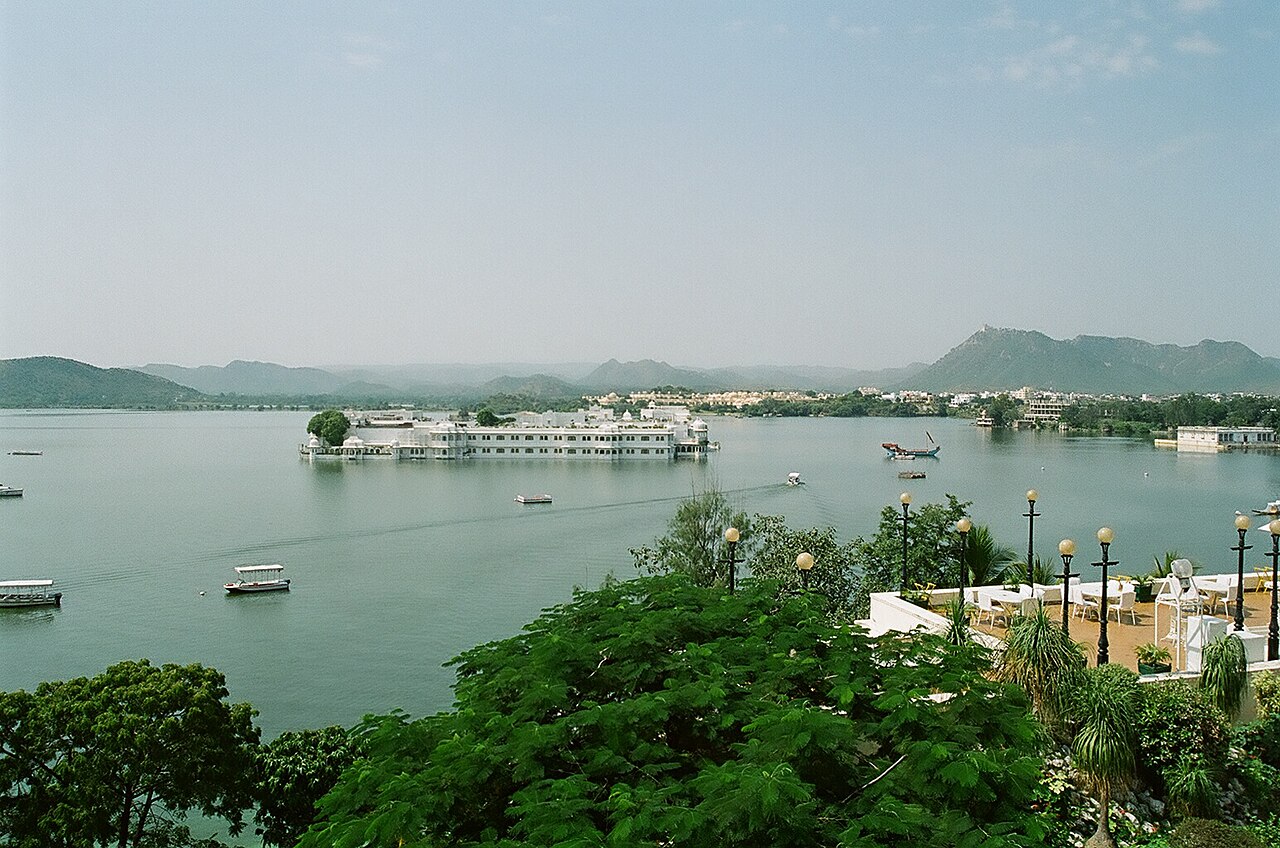
Lake Pichola
Lake · 600 m · about 10 min walk