
Saheliyon Ki Bari
#8of 10 places to visit in UdaipurUdaipur, Rajasthan
Also known as Garden of the Maidens · Garden of the Maids of Honour
Quick answer
Opening hours: 09:00–19:00. Entry: ₹50 Indian · ₹100 foreign. Allow 45 min. Best time: 09:00 – 10:30.
Updated · Compiled by Traveliac, AI-assisted · 4 min read
- Opening hours
- 09:00–19:00
- Entry fee
- ₹50 Indian
- Ticket from
- Time needed
- 45 min
- Best time of day
- 09:00 – 10:30
- Best months
- Sep – Mar
- Address
- Saheliyon Ki Bari Road, Udaipur, Rajasthan 313001
About Saheliyon Ki Bari
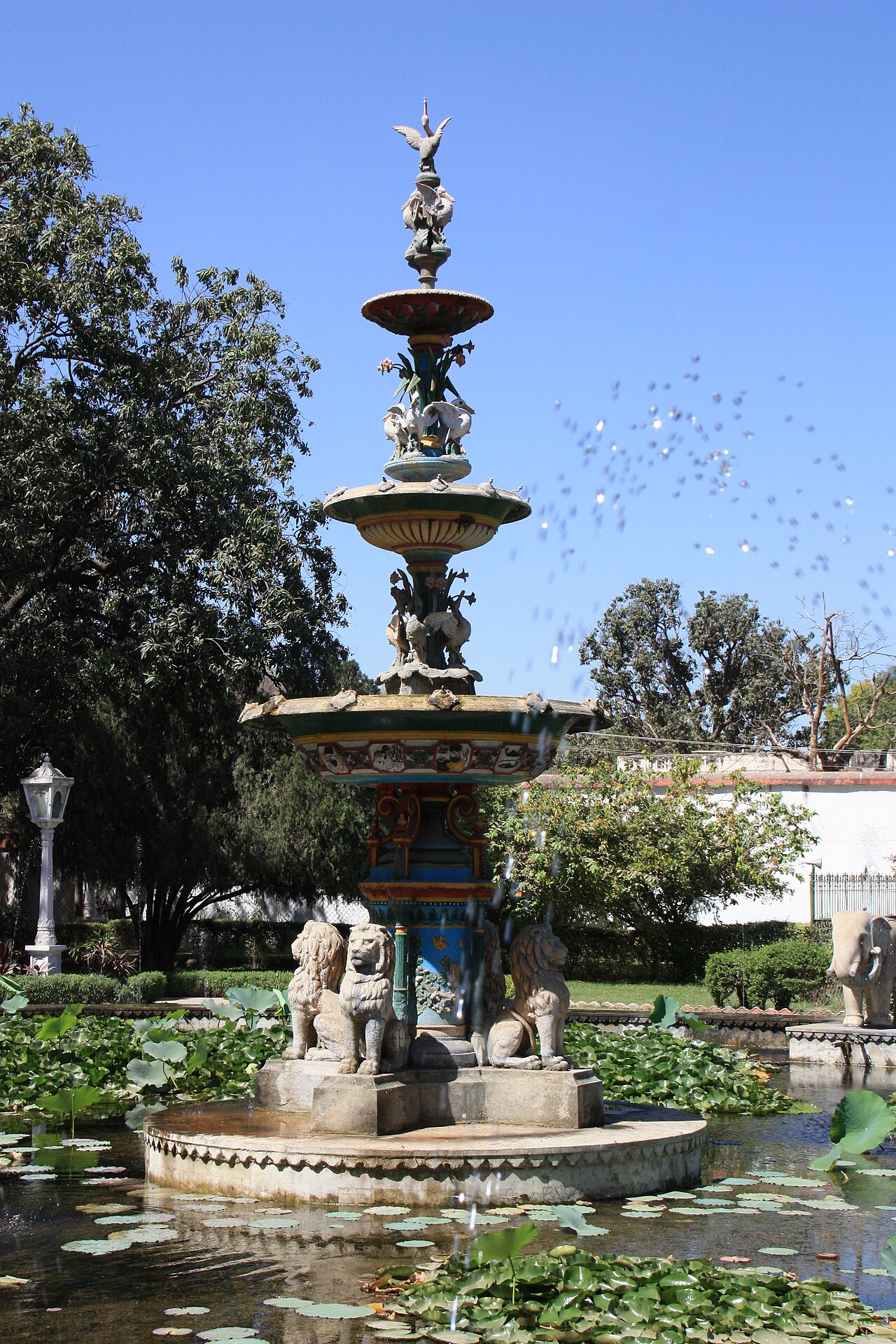
Saheliyon Ki Bari is a compact formal garden built for a specific, narrow purpose: recreation for the ladies-in-waiting of the royal zenana, who under purdah convention could not freely visit public spaces in the city. Maharana Sangram Singh II commissioned it in the 1710s as a gift, according to court tradition, for his queen's entourage of forty-eight attendants who arrived with her as part of a marriage settlement — hence the garden's name, which translates roughly as 'Garden of the Maidens' or 'Garden of the Friends'. The garden's centrepiece is a series of marble-carved elephant fountains arranged around a central lotus pool, each elephant sculpted with a rider figure and positioned to spray water from its trunk into interconnected channels. The fountains, along with a suite of smaller kiosk pavilions and a rain-canopy pergola structure, run on a gravity-fed water pressure system engineered without any mechanical pump — water is drawn from an elevated source and channelled downhill through the garden's plumbing, a piece of 18th-century hydraulic design that still functions largely on its original principle today.
Best time of day: 09:00 – 10:30. Early entry avoids the school-group and domestic family tour buses that arrive from mid-morning, and the marble fountains photograph better without crowds standing in the reflecting pools' foreground.
Saheliyon Ki Bari timings
Saheliyon Ki Bari opens at 09:00 and closes at 19:00. Those hours hold on Saturday and Sunday too.
- Opening hours
- 09:00–19:00
Mon–Sun 09:00–19:00 - Closed on
- Open every day
Opening hours compiled from udaipur.rajasthan.gov.in and public records, last updated . They change without notice — confirm before you travel. How we write these guides
Saheliyon Ki Bari ticket price
| Ticket | Price |
|---|---|
| Indian visitors | ₹50 |
| Foreign visitors | ₹100 |
| Children | ₹20 |
| Camera | Free |
The fountains, which run on gravity-fed pressure rather than electric pumps, are switched on during fixed operating hours and occasionally throttled during water-scarce months — check at the ticket counter whether fountains are running that day before paying, since this is the garden's main draw. A small extra fee applies for the on-site aquarium and toy train ride, both aimed at domestic family visitors rather than international tourists.
Prices compiled from udaipur.rajasthan.gov.in and public records, last updated . They change without notice — confirm before you travel. How we write these guides
Best time to visit Saheliyon Ki Bari
- Quiet
- Moderate
- Busy
09:00 – 10:30
Morning OpeningBest time to go
Garden opens with minimal footfall. Fountains and lotus pool photograph cleanly without crowds in frame.
Quiet10:30 – 13:00
School and Family Groups
School excursions and domestic family tours arrive in volume, drawn by the low entry fee, aquarium, and toy train. Central fountain area gets busy.
Busy13:00 – 16:00
Midday Lull
Visitor numbers thin during the hottest hours. A workable window for unhurried photography of the marble elephant fountains.
Moderate16:00 – 19:00
Evening Local Visitors
Local families return for evening leisure visits ahead of closing. Garden atmosphere is lively but less focused on heritage viewing than family recreation.
Busy
History of Saheliyon Ki Bari
Maharana Sangram Singh II (r. 1710–1734) built the garden as a leisure retreat exclusively for women of the royal household — queens, princesses, and their attendants — reflecting the practical reality that purdah restrictions limited these women's access to the city's public spaces and even to much of the palace's more ceremonial areas. The garden's marble kiosks, small in scale compared to City Palace's grand halls, were designed for intimate gathering rather than state function: reading, conversation, and monsoon-season enjoyment of the fountains.
The fountains were an engineering showpiece as much as a decorative one. Fed by an elevated water source and channelled by gravity through stone conduits, the system allowed continuous fountain operation without any mechanical pumping apparatus — a genuinely advanced piece of hydraulic planning for early 18th-century Rajasthan, executed at a time when most fountain technology in the region depended on manual bucket-and-cistern refilling.
Subsequent Maharanas added to the garden through the 18th and 19th centuries, including additional marble pavilions and a formal lotus pool, but the core layout and its elephant-fountain centrepiece remain Sangram Singh II's original design. The garden was opened to the general public in the 20th century and is now managed as a municipal horticultural park rather than a restricted heritage monument.
Rules & etiquette at Saheliyon Ki Bari
The garden is small and typically walked in under an hour, but it draws heavy domestic family and school-group traffic, particularly on weekends and during Rajasthani school holiday periods, given its low entry fee and family-oriented amenities (aquarium, small toy train). International visitors expecting a quiet heritage garden akin to a Mughal charbagh should adjust expectations toward a livelier, more locally-used public park with a historic core.
Footwear is not required to be removed anywhere in the garden, and there is no religious or dress-code sensitivity here, unlike temple sites elsewhere in the city. Photography is unrestricted throughout, including of the fountains, though getting an uncrowded shot of the central lotus pool during peak hours requires patience or an early visit.
Vendors selling snacks, cold drinks, and small souvenirs operate just outside the main gate rather than inside the garden itself, keeping the interior relatively clutter-free.
Tips for visiting Saheliyon Ki Bari
- 1
Confirm fountain operation before entering during the dry season (April–June), as water pressure and flow are sometimes reduced to conserve supply, diminishing the garden's main visual appeal. Fountains are most reliably at full flow during and shortly after the monsoon (July–September) and through the winter tourist season.
- 2
The garden pairs efficiently with Fateh Sagar Lake, which lies roughly 1.5 kilometres north — both sit outside the old city's dense core, and a single auto-rickshaw or taxi booking covering both in one loop is more efficient than treating them as separate outings on different days.
- 3
The garden is modest in scale compared to City Palace or Jag Mandir and works best as a 45-minute stop within a broader half-day itinerary rather than a dedicated half-day destination on its own.
How to reach Saheliyon Ki Bari
The red star is Saheliyon Ki Bari; the numbered pins are the 8 nearest places in our guides, each showing its rank in its city. Tap a pin for details.
Saheliyon Ki Bari Road, Udaipur, Rajasthan 313001Directions in Google Maps
From Maharana Pratap Airport (UDR)
₹500–₹65026 km · 45–55 min
Prepaid taxi).
From Udaipur City Railway Station (UDZ)
₹120–₹1705 km · 18–22 min
Auto-rickshaw, negotiated).
From Fateh Sagar Lake
₹50–₹801.5 km · 6–10 min
Auto-rickshaw). Walkable in 20 minutes.
Nearest airport
From Maharana Pratap Airport (UDR)
26 km, approximately 45–55 minutes.
Nearest railway station
From Udaipur City Railway Station (UDZ)
5 km, approximately 18–22 minutes.
Saheliyon Ki Bari FAQs
What does 'Saheliyon Ki Bari' mean and why was the garden built?
It translates roughly as 'Garden of the Maidens' or 'Garden of the Friends'. Maharana Sangram Singh II built it in the 1710s as a recreational retreat for the ladies-in-waiting who accompanied his queen, women who were restricted by purdah convention from freely accessing the city's public spaces.
How do the fountains at Saheliyon Ki Bari work without electricity?
The fountains use a gravity-fed water pressure system: water drawn from an elevated source is channelled downhill through stone conduits to the marble elephant fountains and lotus pool, requiring no mechanical pump. The system substantially still operates on its original 18th-century engineering principle.
Is Saheliyon Ki Bari worth visiting if you have limited time in Udaipur?
It is a modest, 45-minute stop best combined with nearby Fateh Sagar Lake rather than visited as a standalone half-day destination. It draws heavy domestic family and school-group traffic due to its low fee and family amenities, so travellers seeking a quiet heritage garden should visit at opening time.
Do the fountains run year-round?
Fountain flow is sometimes reduced during the dry pre-monsoon months (April–June) to conserve water. Flow is most reliable during and after the monsoon (July–September) and through the winter tourist season (October–March).
Compiled with AI assistance from official sources and public records, and published only after the checks in How we write these guides. Nobody from Traveliac has visited this place. Last updated . How we rank and check places
Places to visit near Saheliyon Ki Bari
Straight-line distances from our map; times are estimates.
 #7 in UdaipurFree entry
Fateh Sagar Lake
Lake · 1.6 km · about 26 min walk
 #4 in UdaipurFree entry
Jagdish Temple
Temple · 3 km · about 10 min by road
 #5 in Udaipur
Bagore Ki Haveli
Palace · 3 km · about 10 min by road
 #9 in UdaipurFree entry
Ambrai Ghat
Nature · 3 km · about 10 min by road