Sajjangarh (Monsoon Palace)
#6of 10 places to visit in UdaipurUdaipur, Rajasthan
Also known as Sajjangarh Palace · Sunset Palace
Quick answer
Opening hours: 09:30–18:00. Entry: ₹100 Indian · ₹300 foreign. Allow 1.5 hrs. Best time: 16:30 – 18:00.
Updated · Compiled by Traveliac, AI-assisted · 4 min read
- Opening hours
- 09:30–18:00
- 09:30 – 18:00 daily (last vehicle entry to the sanctuary road is generally enforced around 30 minutes before closing).
- Entry fee
- ₹100 Indian
- Ticket from
- Time needed
- 1.5 hrs
- Best time of day
- 16:30 – 18:00
- Best months
- Sep – Mar
- Address
- Sajjangarh Wildlife Sanctuary, Udaipur, Rajasthan 313001
About Sajjangarh (Monsoon Palace)
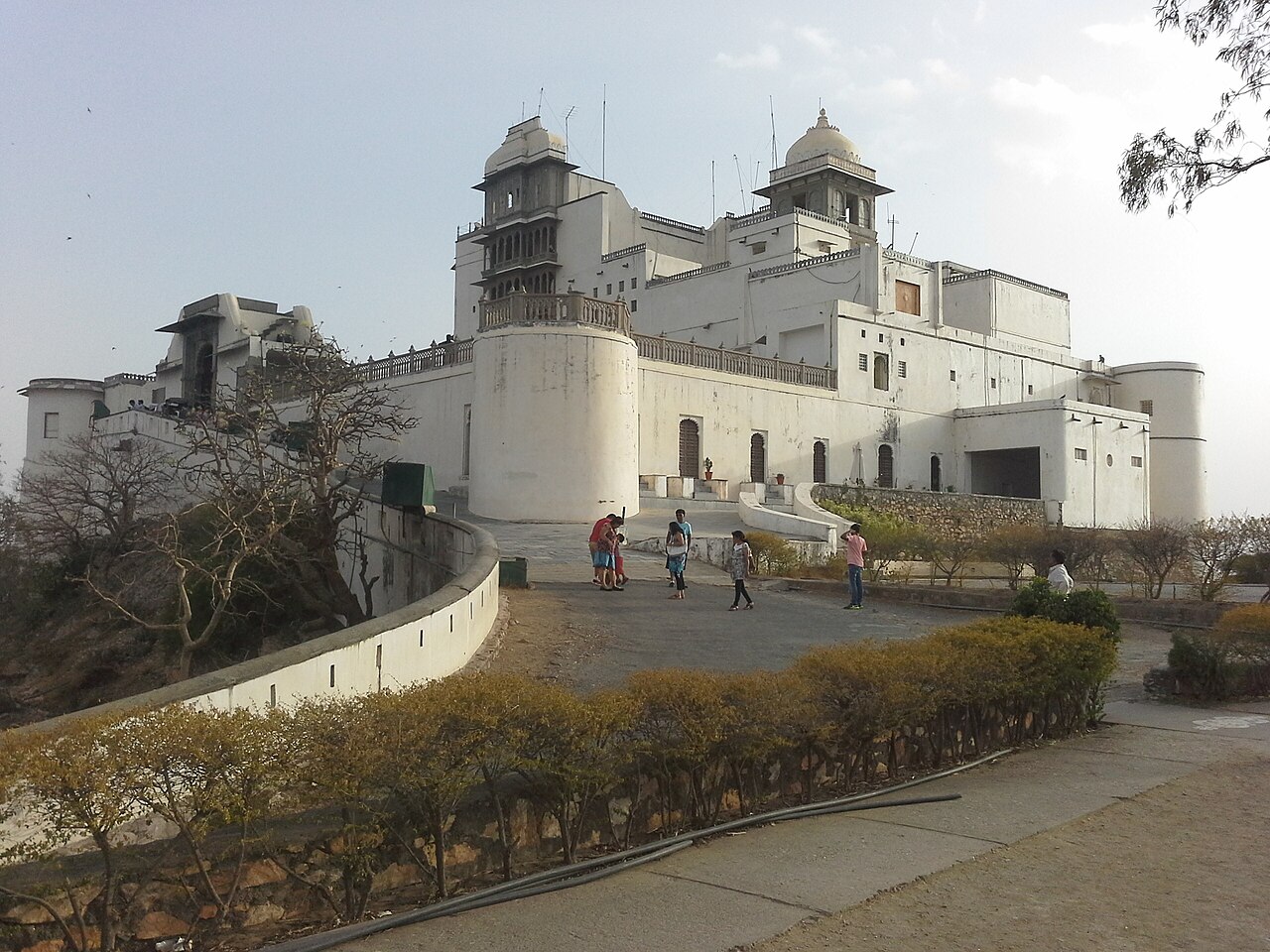
Sajjangarh sits atop Bansdara Peak, roughly 944 metres above sea level and around 350 metres above the city floor, making it the highest point in the immediate Udaipur landscape and giving the palace an unbroken 360-degree view over the city's lake system and the surrounding Aravalli range. The building itself is compact compared to City Palace — a white-plastered structure with domed cupolas and arched loggias, built for observation and short royal retreats rather than governance or residence. The palace's popular name, Monsoon Palace, refers to its original function: Maharana Sajjan Singh intended it partly as a location from which to watch monsoon clouds gather over the Aravallis, and partly as an astronomical observation post, though the observatory ambitions were never fully realised in his lifetime. The access road climbs through Sajjangarh Wildlife Sanctuary, a forested reserve home to leopard, various deer species, and a significant resident and migratory bird population, meaning the drive up is itself part of the destination's appeal rather than a mere transit corridor.
Best time of day: 16:30 – 18:00. For sunset, though this is also the most crowded window; visitors prioritising quiet over the sunset spectacle should consider a mid-morning visit instead.
Sajjangarh (Monsoon Palace) timings
Sajjangarh (Monsoon Palace) opens at 09:30 and closes at 18:00. Those hours hold on Saturday and Sunday too.
- Opening hours
- 09:30–18:00
Mon–Sun 09:30–18:00 - 09:30 – 18:00 daily (last vehicle entry to the sanctuary road is generally enforced around 30 minutes before closing).
- Closed on
- Open every day
Good to know: Sunset timing shifts the effective 'best window' seasonally — winter closing at 18:00 aligns closely with sunset, while summer sunset falls later and visitors should double check that the palace stays open long enough to catch it.
Opening hours compiled from eternalmewar.in and public records, last updated . They change without notice — confirm before you travel. How we write these guides
Sajjangarh (Monsoon Palace) ticket price
| Ticket | Price |
|---|---|
| Indian visitors | ₹100 |
| Foreign visitors | ₹300 |
| Children | ₹50 |
| Camera | Free |
A separate vehicle entry fee applies for the forest access road through Sajjangarh Wildlife Sanctuary, typically around ₹100–₹200 per vehicle depending on size, collected at the sanctuary checkpoint before the final ascent. This is in addition to the palace admission fee paid at the palace itself.
Prices compiled from eternalmewar.in and public records, last updated . They change without notice — confirm before you travel. How we write these guides
Best time to visit Sajjangarh (Monsoon Palace)
- Quiet
- Moderate
- Very busy
09:30 – 12:00
Morning QuietBest time to go
Minimal visitor traffic. Forest road drive is calm; palace terraces are nearly empty, though the haze typical of mid-morning reduces photographic clarity of the distant lake views.
Quiet12:00 – 15:00
Midday Lull
Heat and flat overhead light discourage most visitors; a genuinely quiet window if sunset crowds are unappealing.
Quiet15:00 – 16:30
Pre-Sunset Build-up
Vehicles begin queuing at the forest checkpoint. Parking areas near the summit start filling.
Moderate16:30 – 18:00
Sunset Peak
The busiest window of the day by a wide margin. Viewing terraces fill to capacity; parking overflow requires a short uphill walk for late arrivals.
Very busy
History of Sajjangarh (Monsoon Palace)
Maharana Sajjan Singh (r. 1874–1884) commissioned the palace in 1884, reportedly with an ambition to build a nine-storey astronomical observatory and monsoon-cloud observation post — a project reflecting both his personal interest in astronomy and Mewar's broader tradition of court-sponsored scientific inquiry. Sajjan Singh died the same year construction began, at only 26 years old, and the project was scaled back significantly by his successor, Maharana Fateh Singh, who completed a more modest structure than originally envisioned rather than the full observatory complex.
In the 20th century the palace served various practical roles beyond royal retreat, including as a monsoon-forecasting and hunting lodge outpost for the Mewar court, given its elevated vantage over approaching weather systems and the surrounding forest's game population. During the mid-20th century it also functioned briefly as a relay station for the Mewar state's telecommunications infrastructure.
The palace and its surrounding forest were formally constituted as Sajjangarh Wildlife Sanctuary in 1987, bringing the access road and forest under Forest Department jurisdiction distinct from the palace structure's own Mewar Foundation management — the split administrative arrangement that still governs ticketing today. The palace gained wider international recognition after appearing, along with several other Udaipur landmarks, in the 1983 James Bond film Octopussy, cementing its status as a sunset-viewing destination for international visitors.
Rules & etiquette at Sajjangarh (Monsoon Palace)
Private vehicles and taxis pay the sanctuary entry fee at a forest checkpoint partway up the approach road; shared jeeps and a limited government bus service are also available from a lower staging point for visitors without private transport, though schedules are infrequent and mainly timed around the sunset rush.
Because the site sits inside a wildlife sanctuary, loud music, littering, and leaving the paved viewing areas to enter forest cover are prohibited and occasionally enforced by forest staff, given the presence of leopard in the reserve. Drone flights are prohibited both under general Indian civil aviation restrictions near heritage sites and specifically within the wildlife sanctuary's protected airspace.
The sunset viewing terraces have limited railing in places; the site is not particularly stroller- or wheelchair-friendly given uneven stone paving on the approach to the best viewpoints, though the core palace terrace itself is reasonably level.
Tips for visiting Sajjangarh (Monsoon Palace)
- 1
The sunset crowd is real and worth planning around: vehicles queue at the forest checkpoint from around 16:00 in peak season, and parking near the summit fills up, sometimes requiring a short uphill walk from an overflow area. Visitors who want the view without the crowd should consider the mid-morning slot instead, accepting flatter light in exchange for solitude.
- 2
The drive itself, winding through sanctuary forest with a real chance of spotting deer or peafowl (leopard sightings are rare and not something to plan around), is worth treating as part of the experience rather than rushing through — asking the driver to slow through the forest section rather than treating it purely as approach road.
- 3
Combine a Sajjangarh sunset with an earlier same-day visit to City Palace or the old city, since the two experiences occupy opposite ends of the day and different parts of town — a common and efficient single-day Udaipur pairing is City Palace and Jagdish Temple in the morning, Lake Pichola boating in the afternoon, and Sajjangarh for sunset.
How to reach Sajjangarh (Monsoon Palace)
We haven't pinned Sajjangarh (Monsoon Palace)'s exact position yet; the map shows the other places in our Udaipur guide. Use the address below or the directions link.
Sajjangarh Wildlife Sanctuary, Udaipur, Rajasthan 313001Directions in Google Maps
From Maharana Pratap Airport (UDR)
₹550–₹70028 km · 50–60 min
Prepaid taxi, one-way; round trip with wait time negotiated separately).
From Udaipur City Railway Station (UDZ)
₹300–₹4509 km · 30–40 min
Taxi round trip with wait time, since return transport is scarce from the summit).
From City Palace / Old City
₹350–₹50011 km · 30–40 min
Taxi round trip with sunset wait time). Shared sunset-tour jeeps sometimes available for ₹150–₹250 per person.
Nearest airport
From Maharana Pratap Airport (UDR)
28 km, approximately 50–60 minutes.
Nearest railway station
From Udaipur City Railway Station (UDZ)
9 km to the sanctuary gate, then a further ascent; approximately 30–40 minutes total.
Sajjangarh (Monsoon Palace) FAQs
Is there an extra fee to reach Sajjangarh besides the palace ticket?
Yes. A separate vehicle entry fee (roughly ₹100–₹200 depending on vehicle size) is charged at a Sajjangarh Wildlife Sanctuary checkpoint on the approach road, in addition to the palace admission ticket paid at the top.
Why is Sajjangarh called the Monsoon Palace?
Maharana Sajjan Singh built it in 1884 partly as a vantage point to observe monsoon clouds gathering over the Aravalli range, and partly with ambitions for an astronomical observatory that were never fully realised after his early death the same year construction began.
Did Sajjangarh appear in a James Bond film?
Yes, it appears in the 1983 film Octopussy, along with several other Udaipur landmarks, which contributed significantly to its recognition among international visitors as a sunset destination.
Is it worth visiting Sajjangarh outside of sunset?
Yes, for visitors who prefer to avoid the peak sunset crowd. A mid-morning or early-afternoon visit trades the dramatic sunset light for near-empty terraces and a quieter drive through the wildlife sanctuary forest, with a real chance of spotting deer or peafowl along the way.
Compiled with AI assistance from official sources and public records, and published only after the checks in How we write these guides. Nobody from Traveliac has visited this place. Last updated . How we rank and check places