
Fontainhas
#2of 9 places to visit in PanajiPanaji, Goa
Also known as Latin Quarter · Bairro das Fontainhas
Quick answer
Opening hours: Open at all hours. Entry is free. Allow 1.5 hrs. Best time: 07:30 – 09:30.
Updated · Compiled by Traveliac, AI-assisted · 5 min read
- Opening hours
- Open 24h
- Public streets, open at all hours. Between 08:00 and 18:00 the light is best and visitors are least disruptive to the people who live there.
- Entry fee
- Free
- Time needed
- 1.5 hrs
- Best time of day
- 07:30 – 09:30
- Best months
- Oct – Mar
- Address
- Fontainhas, Panaji, Goa – 403001, on the lower slope of Altinho hill between the Ourem creek and the Panaji Church square
About Fontainhas
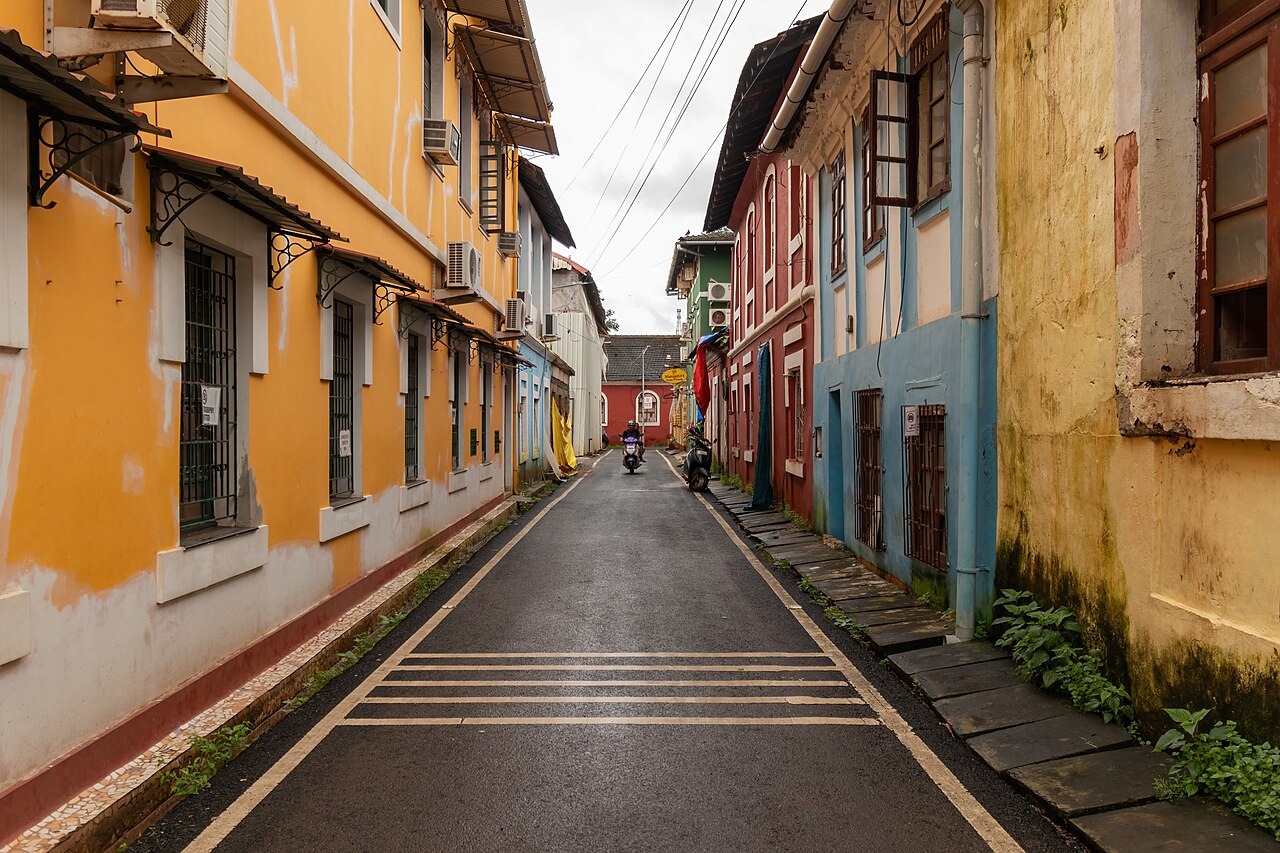
Fontainhas takes its name from the Fonte Phoenix, a spring that once supplied fresh water to this slope of Panaji below Altinho hill, and the neighbourhood built up around it from the late eighteenth century onward remains the most intact stretch of Goan-Portuguese domestic architecture anywhere in the state, including Old Goa itself, whose surviving structures are almost entirely religious rather than residential. The houses are low-rise, tightly packed along lanes barely wide enough for a single car, rendered in a fixed municipal palette of ochre yellow, terracotta red, and indigo blue over lime plaster, and roofed in the burnt-orange, half-cylindrical Mangalore clay tiles standard across the Konkan coast. Wrought-iron balconies, carved wooden door frames with fanlights in art-deco or Belgian-glass patterns, and oyster-shell window panes — a genuinely distinct Goan-Portuguese material, cut from capiz shells before glass became widely affordable — survive here in working residential use rather than as museum exhibits, since the neighbourhood remains substantially inhabited by the Catholic Goan families whose forebears built it.
Best time of day: 07:30 – 09:30. For soft morning light on the coloured facades and the fewest other visitors on the narrow lanes; December, during the Serendipity Arts Festival, for the neighbourhood's most active cultural calendar.
Fontainhas timings
Fontainhas is open 24 hours a day, every day of the week, including Saturday and Sunday.
- Opening hours
- Open 24h
Mon–Sun 00:00–23:59 - Public streets, open at all hours. Between 08:00 and 18:00 the light is best and visitors are least disruptive to the people who live there.
- Closed on
- Open every day
Opening hours compiled from goatourism.gov.in and public records, last updated . They change without notice — confirm before you travel. How we write these guides
Fontainhas ticket price
| Ticket | Price |
|---|---|
| Indian visitors | Free |
| Foreign visitors | Free |
| Children | Free |
| Camera | Free |
Fontainhas is a residential neighbourhood, not a ticketed attraction — walking its lanes is free at all hours. The Chapel of St. Sebastian and other small chapels within it keep their own limited opening hours around Mass timings; entry to those is also free.
Prices compiled from goatourism.gov.in and public records, last updated . They change without notice — confirm before you travel. How we write these guides
Best time to visit Fontainhas
- Quiet
- Moderate
07:30 – 09:30
Morning QuietBest time to go
Residents opening shops and heading to Mass; soft directional light on the coloured facades and the fewest visitors on the lanes.
Quiet09:30 – 13:00
Mid-Morning Walking Tours
Small-group heritage walking tours and independent photographers are most active in this window; still comfortably walkable given the neighbourhood's low overall visitor volume compared to Old Goa or the beaches.
Moderate13:00 – 16:00
Afternoon Heat
Direct sun and narrow lanes with limited shade make midday the least comfortable and least visited period; residents' own activity also quiets during this stretch.
Quiet16:00 – 18:30
Late Afternoon Return
Light softens again and cafe terraces within Fontainhas fill with a mix of residents and visitors; a comfortable second window for a slower walk.
Moderate
History of Fontainhas
Fontainhas developed from the 1770s onward as Panaji itself grew in administrative importance, initially as the Portuguese viceregal seat began relocating from Old Goa — whose population had been devastated by repeated cholera and malaria epidemics through the seventeenth and eighteenth centuries — to the healthier, better-drained site on the Mandovi's left bank. The neighbourhood took its present street layout under Portuguese municipal planning in the nineteenth century and has remained essentially unchanged since, a continuity attributable partly to the area's steep, narrow lanes discouraging the kind of vehicle-oriented redevelopment that has altered much of the rest of Panaji.
The Chapel of St. Sebastian, rebuilt in its current form in 1888, holds the neighbourhood's most distinctive artefact: a large crucifix with open eyes, an unusual iconographic choice within Catholic devotional art, which local tradition holds once hung in the Palace of the Inquisition in Old Goa, watching over the proceedings of the Goa Inquisition before that institution's eighteenth-century decline and the crucifix's eventual relocation here. Whether the object's specific provenance can be documented with full historical certainty or rests substantially on oral tradition is a genuine point of scholarly caution, but the story is deeply embedded in local Panaji identity regardless.
The neighbourhood was formally recognised as a heritage precinct through advocacy by the Goa Heritage Action Group, founded in 2000, which has worked since to document individual houses, resist inappropriate redevelopment, and press the Panaji municipal corporation toward conservation-sensitive infrastructure decisions — an ongoing and only partially successful effort given rising property pressure in a state capital with limited buildable land.
Rules & etiquette at Fontainhas
Fontainhas is a lived-in residential neighbourhood, not an open-air museum, and the houses that make it photogenic are private homes; photographing facades from the public lane is entirely acceptable, but stepping onto private steps or into open doorways for a better angle is not, and residents have grown understandably weary of visitors treating their front stoops as photo props.
The lanes are narrow enough that a single parked delivery scooter can block pedestrian passage; walking rather than driving through the neighbourhood's core is both more practical and considerably more pleasant, since vehicle access is genuinely constrained by the street width the original Portuguese layout allowed.
The Chapel of St. Sebastian and other small chapels within Fontainhas maintain limited public hours around their Mass schedules rather than continuous tourist access; visiting during a service is acceptable as a participant but not as a purely photographic exercise, and flash photography of the open-eyed crucifix specifically is discouraged by the parish given its devotional significance to regular worshippers.
Tips for visiting Fontainhas
- 1
Fontainhas rewards unplanned wandering more than a fixed route — the neighbourhood is small enough that a wrong turn simply leads to another equally photogenic lane, and the useful boundary markers are the Panaji Church (Our Lady of the Immaculate Conception) at the northern edge and the Mhalsa Narayani temple and Ourem creek at the southern, both reasonable points to orient from if disoriented.
- 2
The Serendipity Arts Festival, held annually in December, uses several of Fontainhas's heritage houses and public spaces as gallery and performance venues, and is one of the more genuine reasons to time a Panaji visit around a specific calendar date rather than simply the general October-March season — it substantially changes the neighbourhood's atmosphere for the ten-day run.
- 3
Several heritage houses in Fontainhas have been converted into small guesthouses and boutique cafes rather than left purely residential, and staying in one, even for a single night, gives a materially different sense of the neighbourhood than a daytime walk-through — thick lime-plastered walls keep interiors notably cooler than modern concrete construction elsewhere in Panaji, a detail worth experiencing rather than just reading about.
How to reach Fontainhas
The red star is Fontainhas; the numbered pins are the 6 nearest places in our guides, each showing its rank in its city. Tap a pin for details.
Fontainhas, Panaji, Goa – 403001, on the lower slope of Altinho hill between the Ourem creek and the Panaji Church squareDirections in Google Maps
From Panaji KTC Bus Terminal
1.2 km · 15 min
Free (walk)
From Panaji Church Square
0.5 km · 8 min
Free (walk)
From Goa International Airport, Dabolim (GOI)
₹750–1,00029 km · 50–70 min
Nearest airport
From Goa International Airport, Dabolim (GOI)
29 km, approximately 50–70 minutes.
Nearest railway station
From Karmali Railway Station (GOA)
11 km, approximately 20–25 minutes.
Fontainhas FAQs
Is Fontainhas a museum or a real residential neighbourhood?
It is a genuinely lived-in residential area, substantially inhabited by Goan Catholic families whose forebears built the houses. It has no entry gate, ticket, or curated exhibit format; visitors walk the public lanes as they would any neighbourhood street, and courtesy toward residents' privacy applies accordingly.
What is the story behind the crucifix at the Chapel of St. Sebastian?
The chapel holds a crucifix with unusually open eyes that local tradition says once hung in the Palace of the Inquisition in Old Goa, overseeing Inquisition-era proceedings before its relocation. The precise historical provenance rests substantially on oral tradition rather than fully documented record, but the story is central to local Panaji identity.
How long does it take to walk through Fontainhas?
A focused walk covering the main lanes takes roughly 60-90 minutes at an unhurried pace, though the neighbourhood rewards unplanned wandering beyond any fixed route, since it is compact enough that a wrong turn simply leads to another photogenic lane.
Is there a best time of year to visit Fontainhas specifically?
December is notable beyond the general October-March Goa season, since the Serendipity Arts Festival uses several Fontainhas heritage houses and public spaces as venues, substantially changing the neighbourhood's atmosphere for its roughly ten-day run.
Compiled with AI assistance from official sources and public records, and published only after the checks in How we write these guides. Nobody from Traveliac has visited this place. Last updated . How we rank and check places
Places to visit near Fontainhas
Straight-line distances from our map; times are estimates.
 #7 in Panaji
Reis Magos Fort
Fort · 2.4 km · about 39 min walk
 #9 in PanajiFree entry
Dona Paula Viewpoint
Beach · 6 km · about 20 min by road
 #3 in PanajiFree entry
Fort Aguada
Fort · 7 km · about 25 min by road
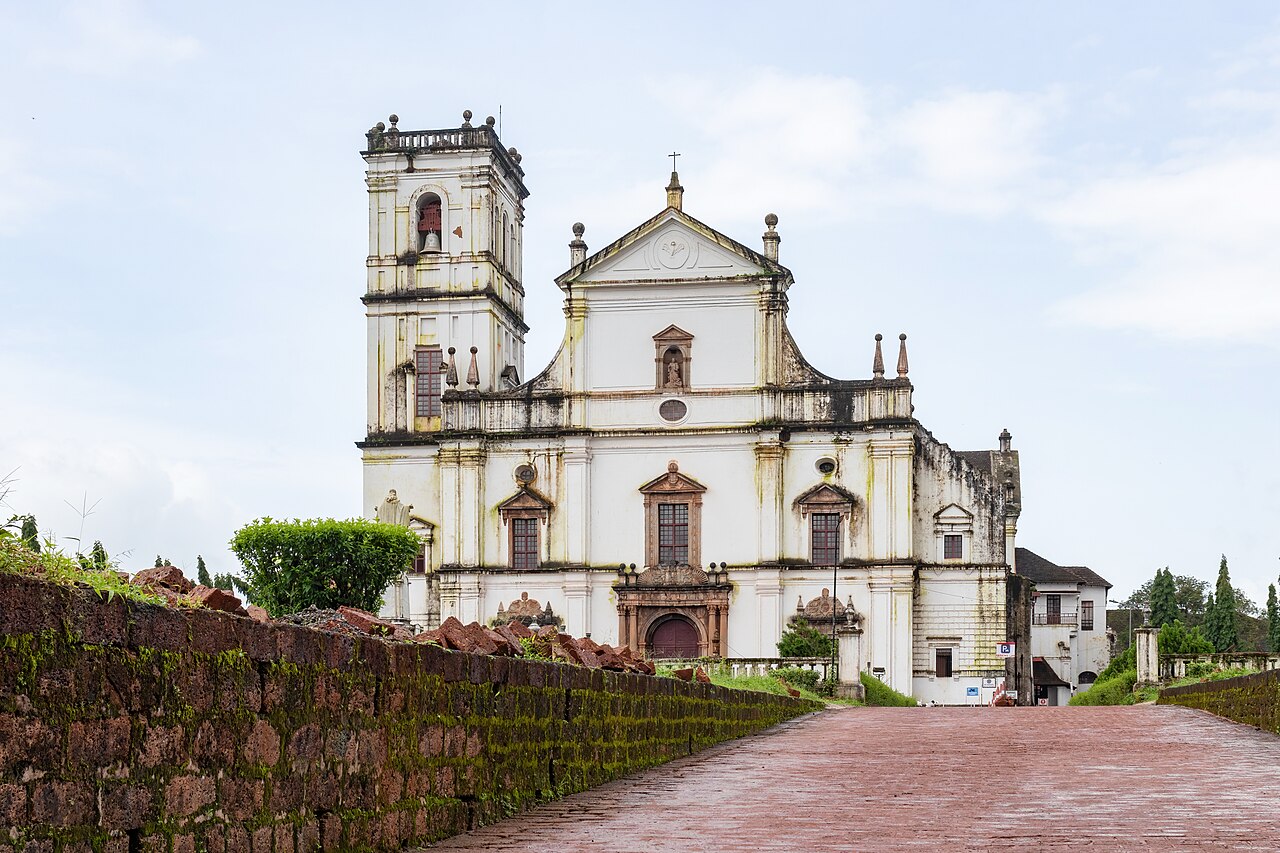 #1 in PanajiFree entry
Se Cathedral
Church · 9 km · about 25 min by road