
Magnetic Hill
#9of 9 places to visit in LehLeh, Ladakh
Also known as Gravity Hill
Quick answer
Opening hours: Open at all hours. Entry is free. Allow 20 min.
Updated · Compiled by Traveliac, AI-assisted · 5 min read
- Opening hours
- Open 24h
- A public road, reachable at any hour. Most visitors stop between 09:00 and 17:00 on the way to or from Kargil or Nubra.
- Entry fee
- Free
- Time needed
- 20 min
- Best months
- Jun – Sep
- Address
- Leh–Kargil Highway (NH1), near Nimmoo, Leh District, Ladakh — approximately 30 km north-west of Leh, close to the Sangam viewpoint and Gurudwara Pathar Sahib.
About Magnetic Hill
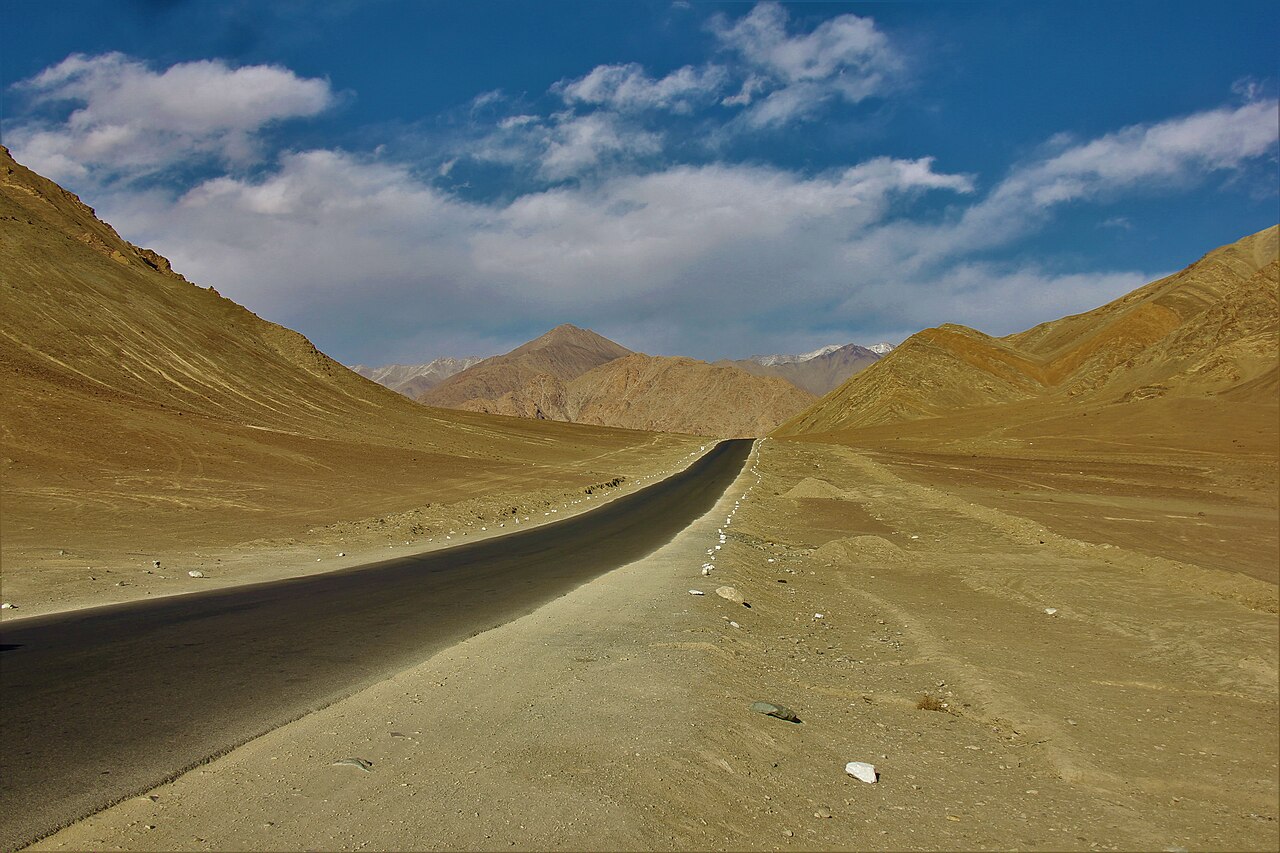
Magnetic Hill is a short stretch of the Leh–Kargil Highway where a vehicle left in neutral at the marked stopping point appears to roll uphill against the visible slope of the road, gathering apparent speed as it does. The effect is a well-documented gravity hill illusion, a phenomenon recorded at dozens of similarly configured roads worldwide, produced by a landscape that obscures the true horizon — surrounding hills, an absent flat reference line, and a road gradient that the eye misreads as inverted. There is no magnetic anomaly, gravitational irregularity, or geological peculiarity involved, despite the name and despite persistent local folklore that attributes the effect to magnetic rock deposits or the pull of a nearby pass; the phenomenon is purely and entirely visual, a trick of a horizon line hidden by terrain rather than a trick of physics. The stop is brief by design — most visitors spend fifteen to twenty minutes testing the illusion, taking photographs at the roadside signboard, and continuing toward the adjacent and more substantive sights of Sangam (the Indus-Zanskar confluence) and Gurudwara Pathar Sahib a short distance further along the same highway.
Magnetic Hill timings
Magnetic Hill is open 24 hours a day, every day of the week, including Saturday and Sunday.
- Opening hours
- Open 24h
Mon–Sun 00:00–23:59 - A public road, reachable at any hour. Most visitors stop between 09:00 and 17:00 on the way to or from Kargil or Nubra.
- Closed on
- Open every day
Good to know: Open year-round in principle since it lies on the maintained Leh–Kargil Highway, but winter ice on this stretch makes stopping for extended photography less comfortable and occasionally hazardous; most visits occur during the May–September tourist season alongside broader Ladakh travel.
Opening hours compiled from leh.nic.in and public records, last updated . They change without notice — confirm before you travel. How we write these guides
Magnetic Hill ticket price
| Ticket | Price |
|---|---|
| Indian visitors | Free |
| Foreign visitors | Free |
| Children | Free |
| Camera | Free |
No entry fee; it is a stretch of public highway rather than a ticketed site. A small painted signboard marks the designated 'magnetic point' where drivers are meant to stop. Roadside stalls sell tea and snacks with no fixed pricing — expect modest markup over Leh town rates.
Prices compiled from leh.nic.in and public records, last updated . They change without notice — confirm before you travel. How we write these guides
Best time to visit Magnetic Hill
- Quiet
- Moderate
- Busy
09:00 – 11:00
Morning tour departures
Half-day Leh outskirts tours (Magnetic Hill, Sangam, Gurudwara Pathar Sahib) departing Leh in the morning arrive in this window.
Moderate11:00 – 14:00
Midday peak
The busiest window, when both morning-departure tours and vehicles en route to or from Kargil and Nubra Valley converge at the stopping point.
Busy14:00 – 16:00
Afternoon lull
Traffic thins somewhat as most half-day tours have already passed through and are returning to Leh via a different stop sequence.
Moderate16:00 – 18:00
Late-afternoon pass-throughBest time to go
Fewer dedicated stops; most remaining traffic on this stretch is through-traffic heading toward or away from Kargil rather than sightseeing vehicles.
Quiet
History of Magnetic Hill
Magnetic Hill has no ancient or monastic history in the way Ladakh's monasteries or palaces do; its identity as a named tourist attraction is a comparatively recent development tied to the growth of Ladakh's road tourism from the 1990s onward, after the region opened more broadly to independent travel. The 'magnetic' framing appears to have developed through local guide and taxi-driver folklore repeated to visitors over decades, eventually calcifying into the site's accepted name despite carrying no basis in the actual cause of the illusion.
The site sits on a strategically significant stretch of highway regardless of its roadside-attraction status: the Leh–Kargil Highway (NH1) that passes it is one of only two land routes connecting Ladakh to the rest of India through the winter shoulder months, alongside the Manali route, and the road itself is maintained by the Border Roads Organisation as a matter of both civilian and military logistics for the Indian Army's Ladakh-based formations. The illusion's popularity as a tourist stop is, in that sense, incidental to a highway whose primary purpose is strategic rather than touristic.
Rules & etiquette at Magnetic Hill
This is an active public highway, not an enclosed attraction — exercise ordinary road safety when stopping. Pull fully off the carriageway at the marked area rather than stopping in the traffic lane, since through-traffic including military convoys and freight trucks uses this road continuously. Do not attempt the illusion by leaving a vehicle in neutral without a driver's hand near the handbrake, particularly with rental vehicles unfamiliar to the driver.
There is no religious or monastic etiquette specific to this site, unlike most other stops on a Leh sightseeing circuit, since it is a natural-optical phenomenon rather than a heritage or religious location. The roadside vendors selling tea and snacks operate informally; agree prices before ordering, as there is no posted menu at most stalls.
Tips for visiting Magnetic Hill
- 1
Manage expectations: Magnetic Hill itself is a five-to-ten-minute novelty rather than a destination worth a dedicated trip, and its real value is as one stop on a half-day loop that also takes in Gurudwara Pathar Sahib (a further 2–3 km along the same highway, commemorating Guru Nanak's passage through the region and maintained by the Indian Army) and the Sangam viewpoint, where the muddy grey Zanskar river visibly merges with the clearer blue-green Indus without immediately blending. Combining all three into one outing from Leh is standard practice among local taxi drivers and makes far better use of the drive than stopping for Magnetic Hill alone.
- 2
Some visitors bring a bottle of water to pour on the road surface near the signboard, on the folklore claim that it will visibly 'roll uphill' — this adds nothing beyond the vehicle-based version of the illusion and is unnecessary, though harmless.
- 3
The drive out passes through Nimmoo and skirts the Indus gorge, offering some of the more striking valley scenery on the Leh side-trip circuit independent of the hill's illusion — worth appreciating the drive itself rather than treating the outing purely as a stop-photograph-leave errand. Fuel up in Leh before departing, as this stretch has limited fuel availability compared to the town itself.
How to reach Magnetic Hill
The red star is Magnetic Hill. Tap a pin for details.
Leh–Kargil Highway (NH1), near Nimmoo, Leh District, Ladakh — approximately 30 km north-west of Leh, close to the Sangam viewpoint and Gurudwara Pathar Sahib.Directions in Google Maps
From Leh Main Bazaar
₹1,000–₹1,50030 km · 40–50 min
Return for the combined half-day loop
From Leh Main Bazaar
₹800–₹1,50030 km · 40–50 min
Per day rental (car); ₹600–₹1,000 per day (motorbike), fuel extra
From Kushok Bakula Rimpochhe Airport (IXL)
₹900–₹1,30027 km · 35–45 min
Nearest airport
From Kushok Bakula Rimpochhe Airport (IXL), Leh
approximately 27 km, 40–50 minutes by road.
Nearest railway station
From No railway connectivity to Ladakh as of 2026. Nearest railhead: Jammu Tawi (JAT), approximately 700 km by road.
Magnetic Hill FAQs
Is Magnetic Hill really magnetic, or is it an illusion?
It is purely a visual illusion, not a magnetic or gravitational anomaly. The surrounding terrain hides the true horizon line, causing the eye to misjudge the road's actual gradient — a vehicle in neutral appears to roll uphill when it is in fact rolling down a real, if subtle, downhill slope. The same gravity-hill effect occurs at similarly configured roads elsewhere in the world.
How much time should I budget for Magnetic Hill?
Fifteen to twenty minutes is typical. It works best as one stop within a half-day loop that also includes the nearby Sangam viewpoint (Indus-Zanskar confluence) and Gurudwara Pathar Sahib, rather than as a standalone destination.
Is it safe to stop on the highway at Magnetic Hill?
Yes, provided you pull fully off the carriageway at the marked area. The road remains an active highway used by through-traffic, freight, and military convoys, so avoid stopping in the traffic lane itself, and keep a driver's hand near the handbrake when testing the illusion.
What else is near Magnetic Hill worth visiting on the same trip?
Gurudwara Pathar Sahib, roughly 2-3 km further along the highway and maintained by the Indian Army, commemorates Guru Nanak's passage through Ladakh. The Sangam viewpoint, where the Zanskar and Indus rivers visibly meet without immediately mixing, is also on the same route. Local taxis routinely combine all three into one outing from Leh.
Compiled with AI assistance from official sources and public records, and published only after the checks in How we write these guides. Nobody from Traveliac has visited this place. Last updated . How we rank and check places
Places to visit near Magnetic Hill
Straight-line distances from our map; times are estimates.
 #8 in Leh
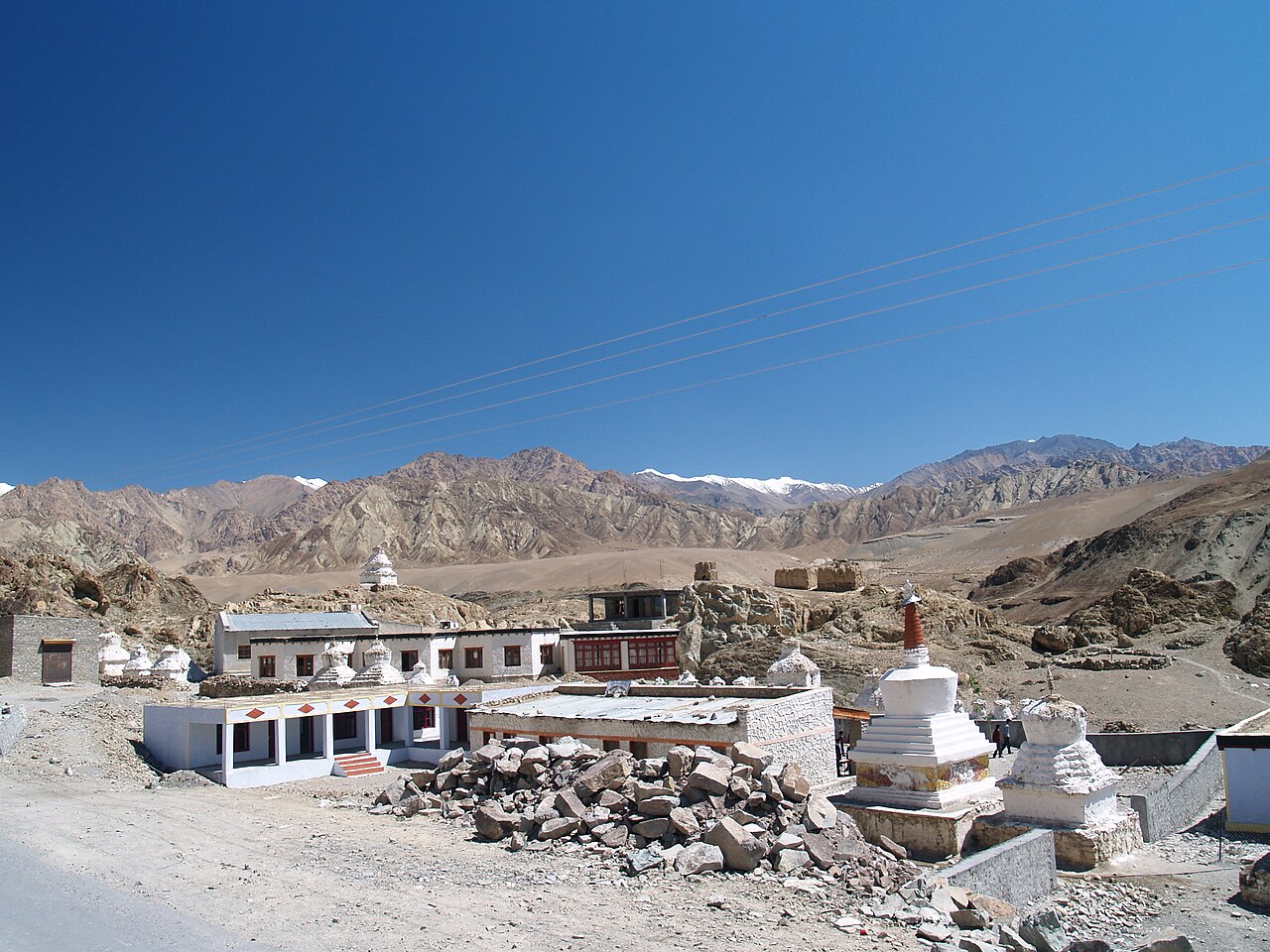
Alchi Monastery
Monastery · 18 km · about 55 min by road
 #5 in LehFree entry
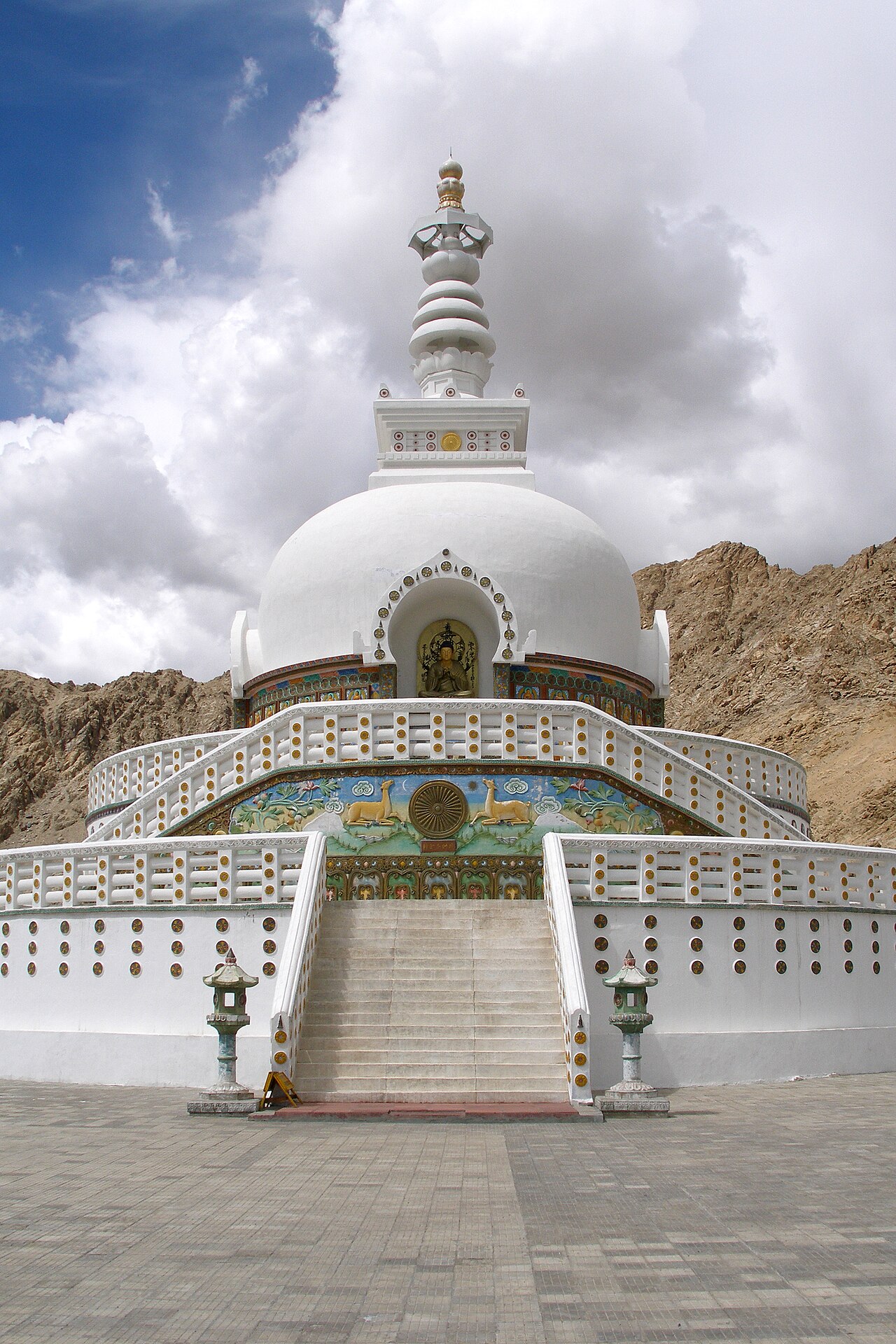
Shanti Stupa
Stupa · 20 km · about 65 min by road
 #3 in Leh
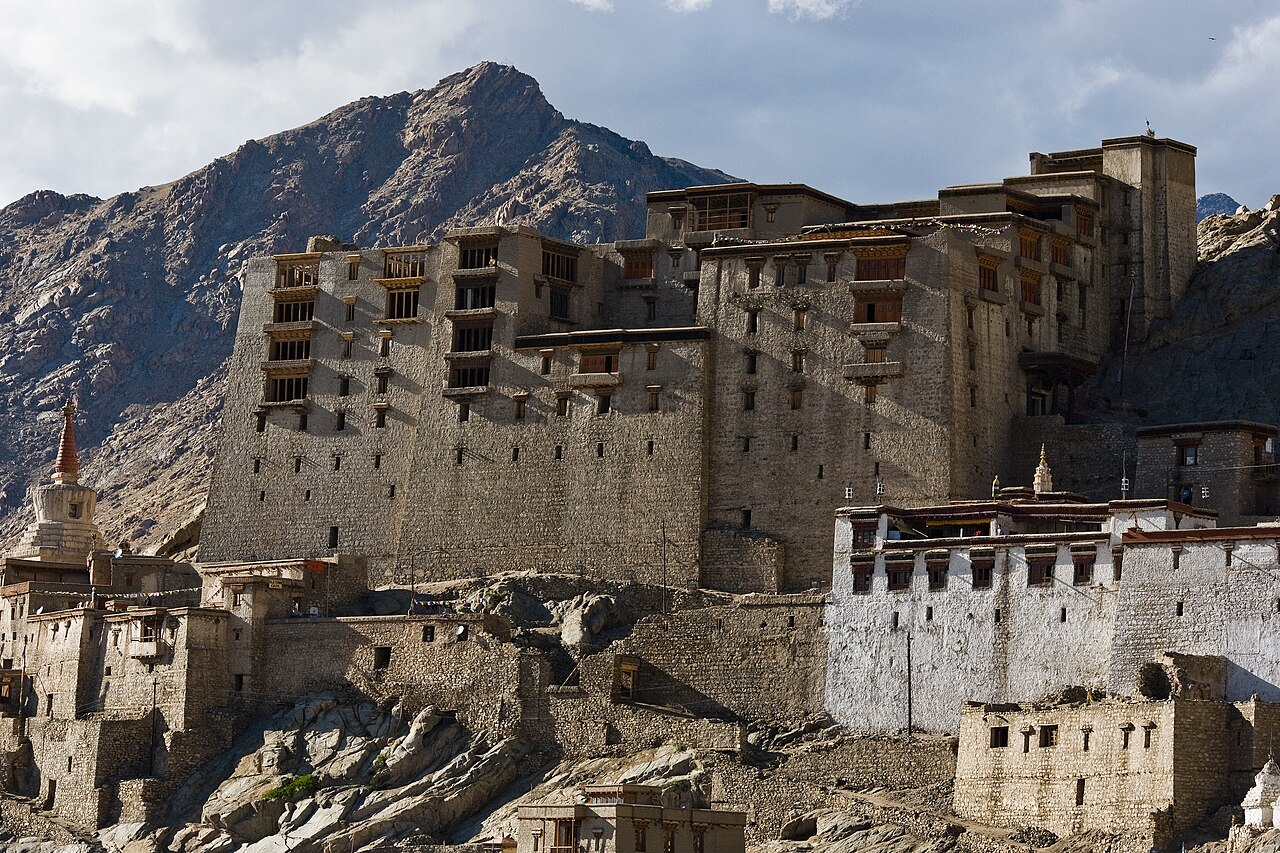
Leh Palace
Palace · 22 km · about 65 min by road
 #6 in LehFree entry
Khardung La Pass
Mountain pass · 26 km · about 80 min by road