
Shanti Stupa
#5of 9 places to visit in LehLeh, Ladakh
Also known as Peace Pagoda, Leh
Quick answer
Opening hours: 05:00–21:00. Entry is free. Allow 45 min. Best time: Sunrise.
Updated · Compiled by Traveliac, AI-assisted · 5 min read
- Opening hours
- 05:00–21:00
- 05:00 – 21:00 daily; the stupa itself is unfenced and technically viewable at any hour, but the access road gate closes at night.
- Entry fee
- Free
- Time needed
- 45 min
- Best time of day
- Sunrise
- Best months
- Jun – Sep
- Address
- Changspa, Leh, Ladakh — 194101, on a hilltop above Changspa village, approximately 5 km from Leh Main Bazaar.
About Shanti Stupa
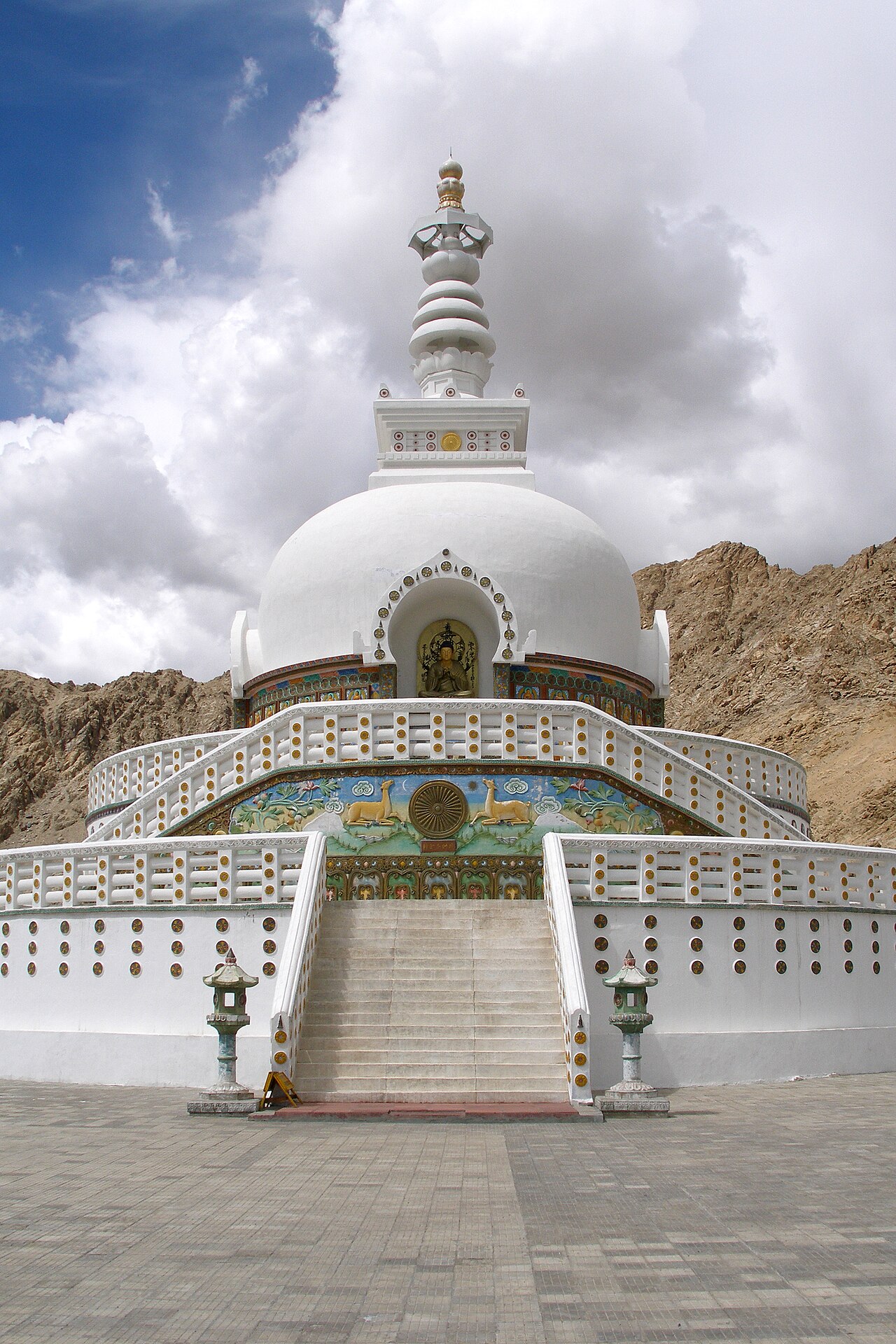
Shanti Stupa's white two-tiered dome sits on a hilltop above Changspa village, visible from most vantage points across Leh town, and its relief panels — gilded reliefs depicting scenes from the life of the Buddha, including his birth, first sermon, and parinirvana — face outward from the base in a style closer to Japanese Buddhist iconography than to the older Ladakhi gompa tradition it stands among. That difference is deliberate: the stupa is one of over eighty 'Peace Pagodas' built worldwide since the 1940s by the Nipponzan-Myohoji order, a Japanese Nichiren Buddhist sect whose founder, Nichidatsu Fujii, dedicated the movement to constructing stupas as physical monuments to nuclear disarmament and world peace following his encounters with Mahatma Gandhi. A 500-step staircase climbs from Changspa village to the stupa platform, and a motorable road reaches a car park just below it for those who prefer not to walk the full ascent. From the platform, the view extends across the whole of Leh town, the Indus Valley's cultivated strip, and — on a clear day — the Leh Palace ridge and the Zanskar range on the southern horizon, making the stupa as much a viewpoint as a place of worship.
Best time of day: Sunrise. Roughly 05:30–06:30 in summer for soft light on the white dome with the Leh valley still in shadow below; sunset for the reverse effect, when the Stok Kangri range catches the last light while the stupa itself is floodlit.
Shanti Stupa timings
Shanti Stupa opens at 05:00 and closes at 21:00. The weekend is no different: Saturday and Sunday follow the same times.
- Opening hours
- 05:00–21:00
Mon–Sun 05:00–21:00 - 05:00 – 21:00 daily; the stupa itself is unfenced and technically viewable at any hour, but the access road gate closes at night.
- Closed on
- Open every day
Good to know: Illuminated after dark year-round, weather permitting; the steep road up can ice over in shoulder-season months (April, October), when a vehicle with reasonable ground clearance or the stepped footpath is the safer approach.
Opening hours compiled from leh.nic.in and public records, last updated . They change without notice — confirm before you travel. How we write these guides
Shanti Stupa ticket price
| Ticket | Price |
|---|---|
| Indian visitors | Free |
| Foreign visitors | Free |
| Children | Free |
| Camera | Free |
No entry fee. A small donation box near the main stupa platform supports its upkeep. A modest parking fee (approximately ₹20 per vehicle) is sometimes collected at the base car park during peak season.
Prices compiled from leh.nic.in and public records, last updated . They change without notice — confirm before you travel. How we write these guides
Best time to visit Shanti Stupa
- Quiet
- Moderate
- Very busy
05:30 – 07:00
SunriseBest time to go
A small number of dedicated early risers and photographers. Cold, still air and the clearest light on the stupa's white dome with the town below still in shadow.
Quiet09:00 – 13:00
Mid-morning city tour
Half-day Leh sightseeing taxis stop here as part of a combined circuit with Leh Palace and Hall of Fame museum. Steady but not overwhelming footfall.
Moderate13:00 – 17:00
Afternoon lull
Fewer visitors during the hottest and brightest part of the day, when the flat overhead light is least flattering for photography.
Quiet17:30 – 19:30
Sunset peak
The busiest window of the day. Independent travellers and tour groups alike converge for sunset views over the Indus Valley; the platform can feel genuinely crowded in July–August.
Very busy
History of Shanti Stupa
Shanti Stupa was built in 1983–1991, inaugurated by the 14th Dalai Lama, as a joint project between Nipponzan-Myohoji and the Ladakh Buddhist Association, with the Japanese Buddhist monk Gyomyo Nakamura credited as the driving figure behind its construction in Ladakh specifically. It belongs to a wider programme of Peace Pagodas that Nipponzan-Myohoji has built across Asia, Europe, and the Americas since the order's founding in the mid-20th century — other examples stand in London, Vienna, New Delhi, and Darjeeling — each intended as a physical statement against nuclear weapons and war rather than a monument to any single historical event or figure.
The choice of Leh as a site was consistent with the order's practice of placing these stupas in locations of Buddhist cultural significance rather than purely Japanese ones, and the Ladakh Buddhist Association's involvement grounded the project locally, distinguishing it from a purely externally imposed monument. Construction relied substantially on local labour and Ladakhi masonry techniques applied to a design brief that was otherwise Japanese in inspiration, which is part of why the finished stupa reads as a hybrid rather than a transplant.
Unlike Ladakh's centuries-old Gelug and Drukpa monasteries, Shanti Stupa has no resident monastic community and no daily puja cycle in the manner of Thiksey or Hemis; its function is closer to a public peace memorial and pilgrimage viewpoint than an active monastic institution.
Rules & etiquette at Shanti Stupa
Walk clockwise around the stupa base, consistent with Buddhist circumambulation practice generally observed at Ladakhi religious sites, even though Shanti Stupa's design and dedication differ from the region's older gompas. Footwear may be worn on the platform itself, though visitors are asked to remove shoes if entering the small shrine room at the base, where a seated Buddha image and butter lamps are maintained.
Photography is unrestricted across the site, including of the gilded relief panels, and this is one of the few religious sites in the Leh area with no photography sensitivity around an active prayer session, since there is no resident monastic community conducting regular puja here. Visitors should nonetheless keep noise levels reasonable, particularly at sunrise and sunset when others are present specifically for quiet reflection or photography.
The steep 500-step staircase is a genuine physical exertion at altitude; visitors with cardiac or respiratory conditions, or those still within their first 24–48 hours in Leh, should take the motorable road to the upper car park instead and limit themselves to the short final approach on foot.
Tips for visiting Shanti Stupa
- 1
Sunset is the more popular and more crowded time to visit; sunrise, while requiring an early start in the cold, offers a genuinely quieter experience and arguably better light, since the stupa's white dome catches direct morning sun while the town below remains in shadow, producing strong contrast in photographs. Either way, dress warmly — wind on the exposed hilltop platform is often sharper than in Leh town itself, even in summer.
- 2
The 500-step ascent from Changspa should not be attempted at a fast pace during your first two days in Leh; this is a common mistake among visitors eager to see the sunset view on their arrival day, and it is one of the more frequent minor triggers of acute mountain sickness symptoms reported by Leh's guesthouses precisely because the exertion is deceptively steep for an otherwise short walk. Taxi to the upper car park instead if you are not yet acclimatised, and save the full staircase climb for later in your stay.
- 3
Shanti Stupa combines naturally with Leh Palace and Namgyal Tsemo Fort in a single half-day city circuit, since all three are visible from one another across the town and sit within a short taxi ride. Evening illumination after dark makes the stupa visible from much of Leh town as a small white beacon on the hillside — worth noting if your guesthouse has a view toward Changspa, since you can gauge the stupa's floodlighting schedule without making the trip up.
How to reach Shanti Stupa
The red star is Shanti Stupa; the numbered pins are the 3 nearest places in our guides, each showing its rank in its city. Tap a pin for details.
Changspa, Leh, Ladakh — 194101, on a hilltop above Changspa village, approximately 5 km from Leh Main Bazaar.Directions in Google Maps
From Leh Main Bazaar
₹250–₹4005 km · 12–18 min
One-way, negotiated; ₹400–₹600 return with a short wait
From Changspa village
1 km · 20–35 min
Free (walking); pace slowly, especially in your first days at altitude
From Kushok Bakula Rimpochhe Airport (IXL)
₹350–₹5006 km · 15–20 min
Nearest airport
From Kushok Bakula Rimpochhe Airport (IXL), Leh
approximately 6 km, 15–20 minutes by road.
Nearest railway station
From No railway connectivity to Ladakh as of 2026. Nearest railhead: Jammu Tawi (JAT), approximately 730 km by road.
Shanti Stupa FAQs
Is Shanti Stupa a historic Ladakhi monastery?
No. It is a modern construction, built between 1983 and 1991 by the Japanese Buddhist order Nipponzan-Myohoji together with the Ladakh Buddhist Association, and inaugurated by the 14th Dalai Lama. It has no resident monastic community and belongs to a global series of Peace Pagodas the order has built since the mid-20th century, distinct from Ladakh's centuries-old Gelug and Drukpa monasteries such as Thiksey or Hemis.
Should I walk the 500 steps or take a taxi to Shanti Stupa?
A motorable road reaches a car park just below the stupa platform, leaving only a short final approach on foot — the better option in your first 48 hours in Leh. The full 500-step staircase from Changspa village is a legitimate exertion at altitude and is best saved for later in your stay once you are acclimatised.
Is sunrise or sunset better at Shanti Stupa?
Sunset is significantly busier, drawing both independent travellers and city-tour groups. Sunrise is quieter and arguably offers sharper light, with the white dome lit directly while Leh town below remains in shadow. Either way, the exposed hilltop platform is windier than the town, so dress warmly.
Is there an entry fee for Shanti Stupa?
No formal entry fee. There is a donation box at the platform supporting its upkeep, and a small parking charge of around ₹20 per vehicle is sometimes collected at the base car park during peak season.
Compiled with AI assistance from official sources and public records, and published only after the checks in How we write these guides. Nobody from Traveliac has visited this place. Last updated . How we rank and check places
Places to visit near Shanti Stupa
Straight-line distances from our map; times are estimates.
 #3 in Leh
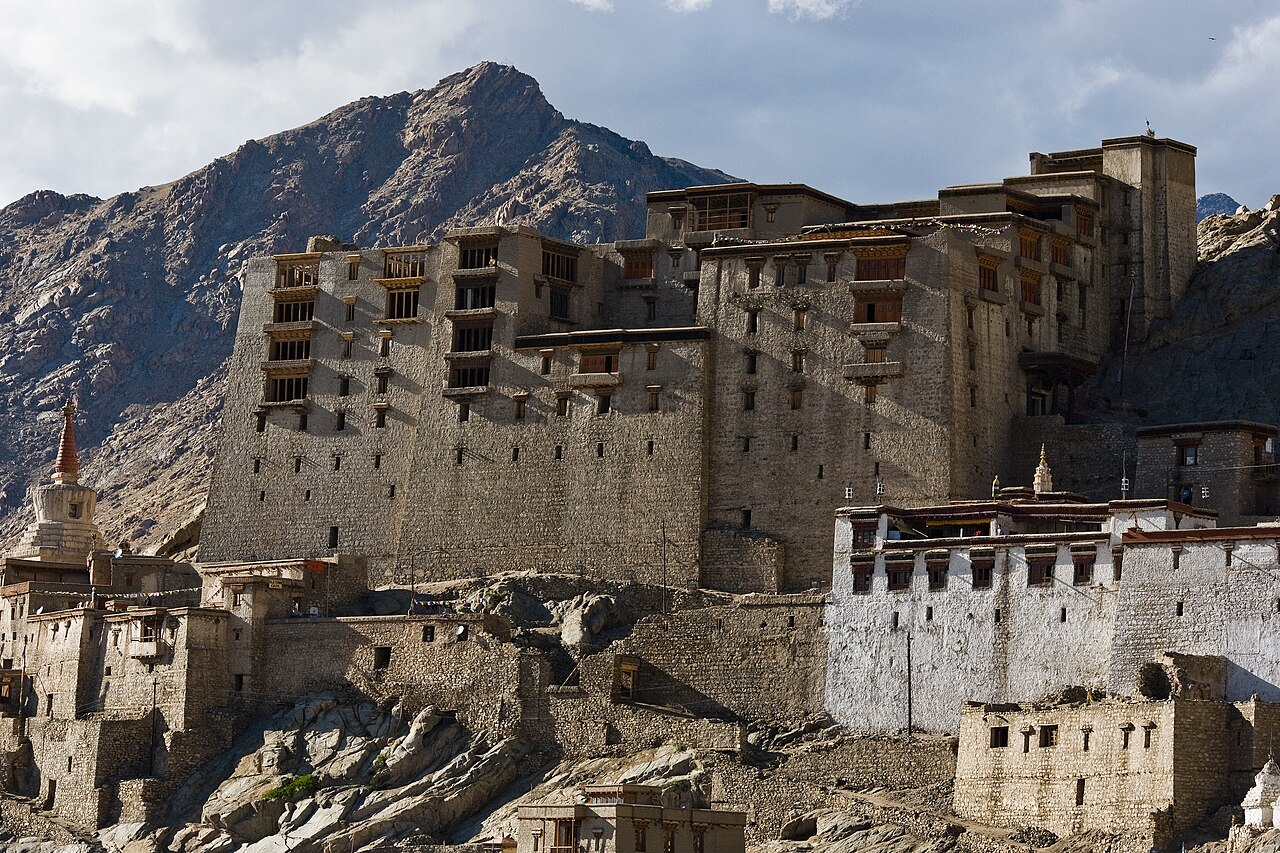
Leh Palace
Palace · 1.3 km · about 22 min walk
 #6 in LehFree entry
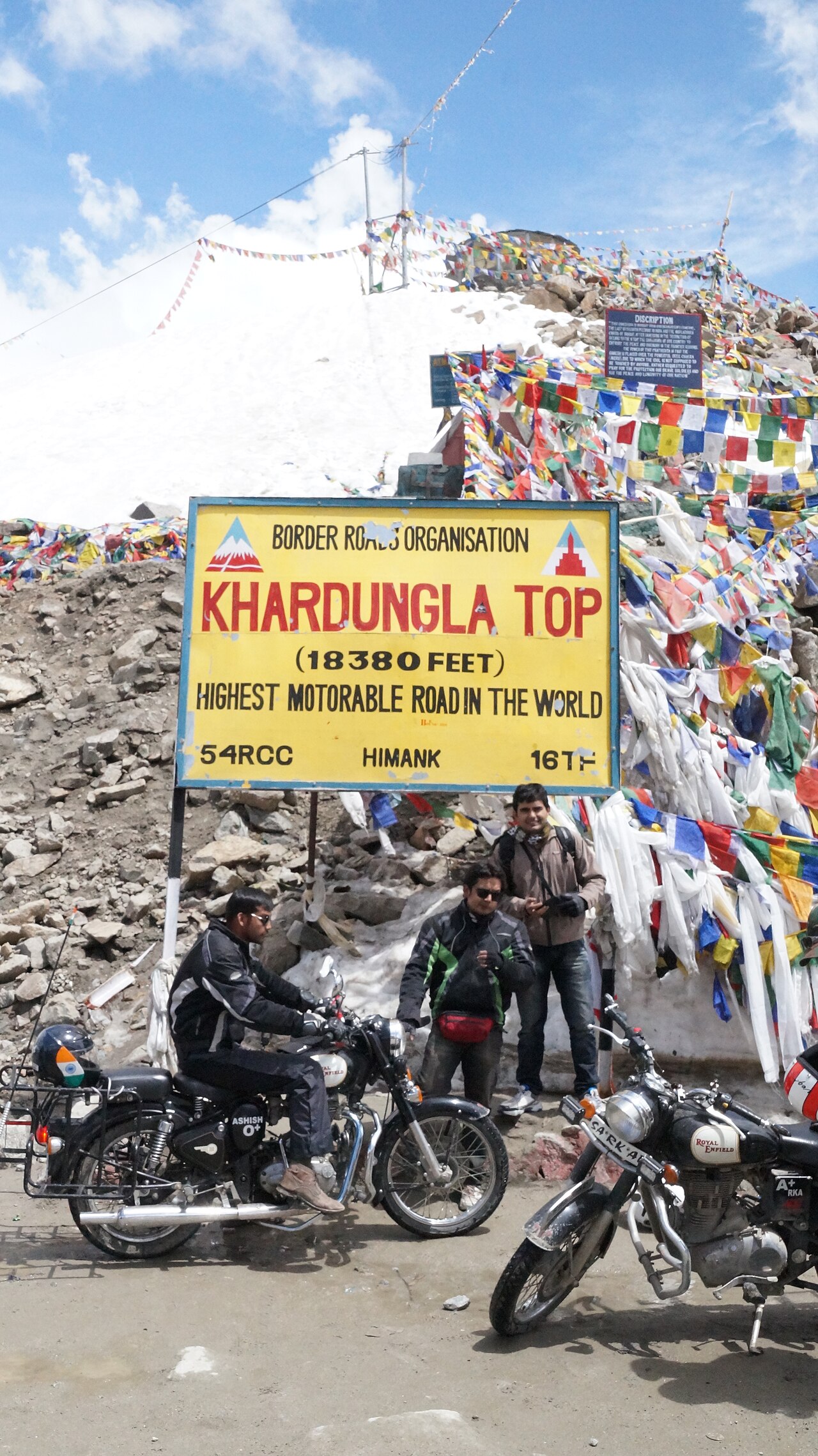
Khardung La Pass
Mountain pass · 12 km · about 35 min by road
 #7 in Leh
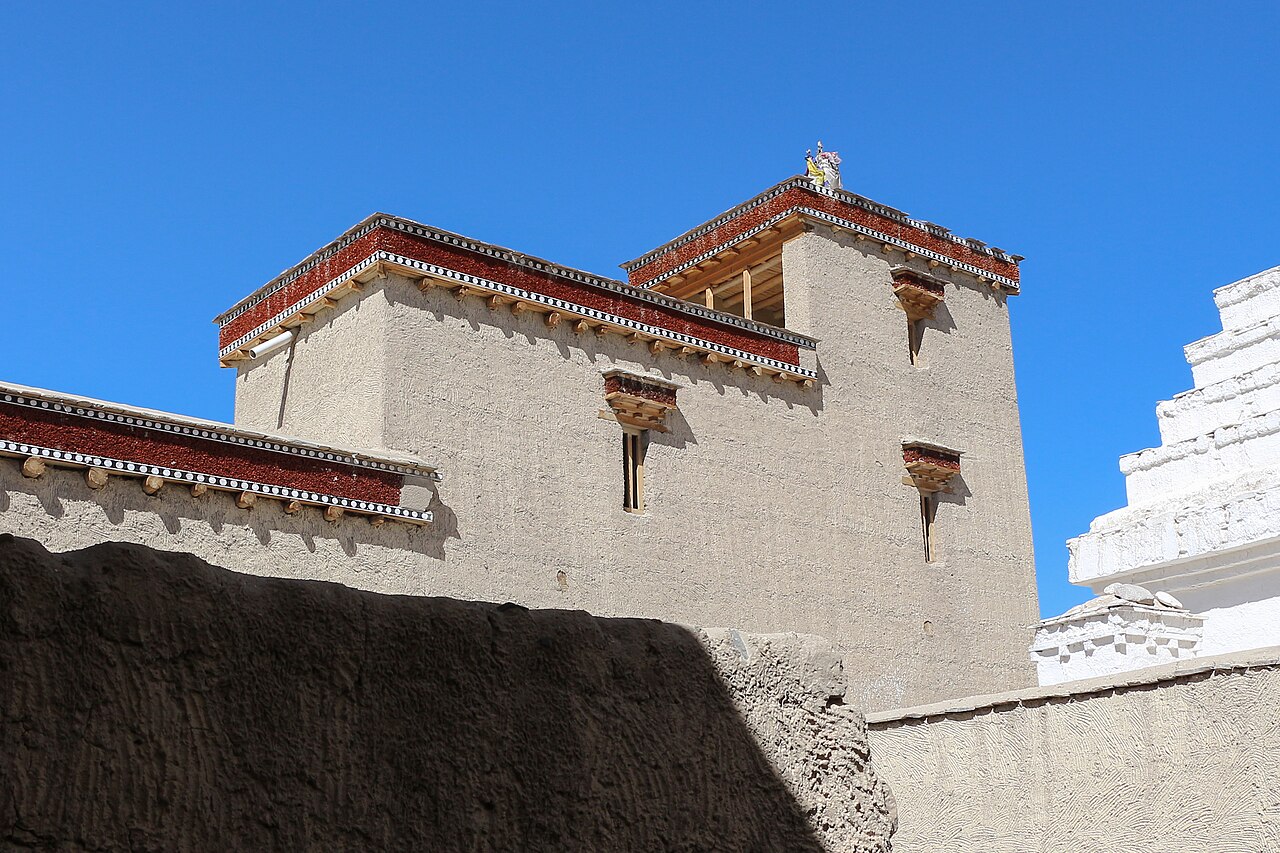
Shey Palace & Monastery
Monastery · 13 km · about 40 min by road
 #9 in LehFree entry
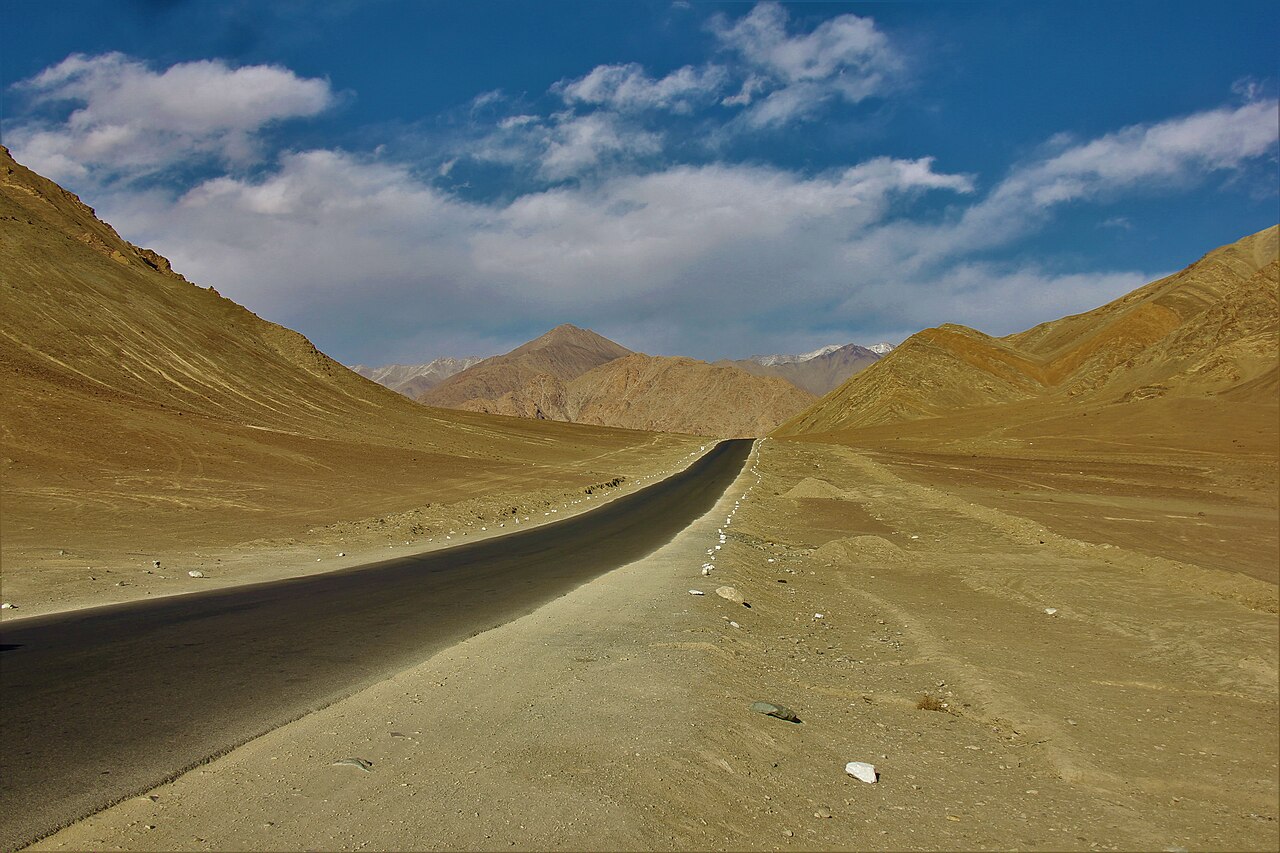
Magnetic Hill
Viewpoint · 20 km · about 65 min by road