
City Palace Jaipur
#2of 12 places to visit in JaipurJaipur, Rajasthan
Also known as Chandra Mahal Complex · Jaipur Rajmahal
Quick answer
Opening hours: 09:30–17:00, last entry 16:15. Entry: ₹400 Indian · ₹1,200 foreign. Allow 2 hrs. Best time: 09:30 – 11:00.
Updated · Compiled by Traveliac, AI-assisted · 5 min read
- Opening hours
- 09:30–17:00
- Entry fee
- ₹400 Indian
- Ticket from
- Time needed
- 2 hrs
- Best time of day
- 09:30 – 11:00
- Best months
- Oct – Mar
- Address
- Tulsi Marg, Gangori Bazaar, Jaipur, Rajasthan 302002
About City Palace Jaipur
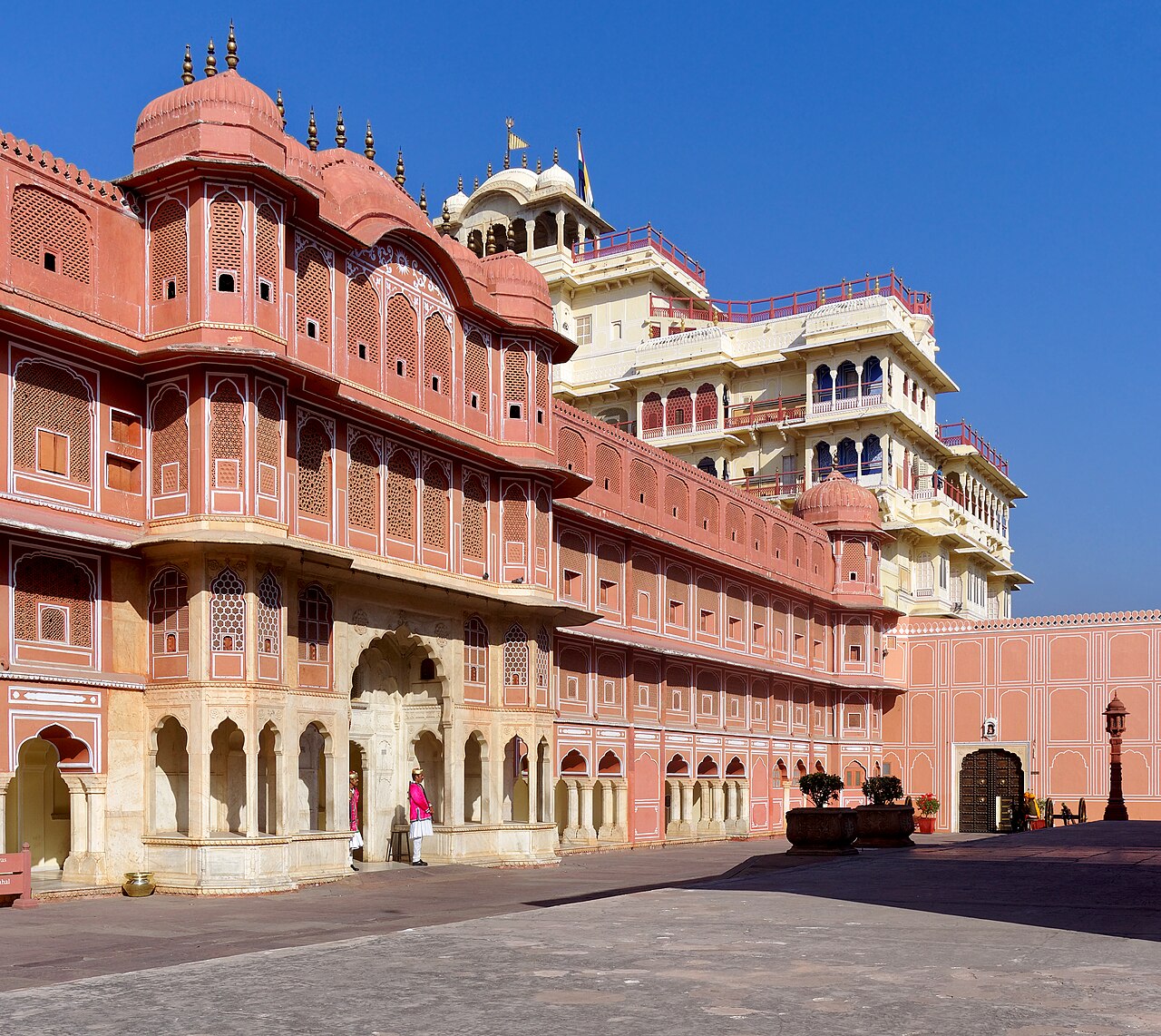
The City Palace occupies roughly one-seventh of the walled Pink City's original grid, a scale that is easy to underestimate from the street because the complex reveals itself in stages — Mubarak Mahal's cream-and-pink sandstone facade first, then the red-and-white marble-chequered floor of Diwan-i-Khas, then the four Pritam Niwas Chowk gateways, each painted for a season. The Peacock Gate on the south side carries the densest ornamentation: raised gesso-work peacocks in green, blue, and gold set against a deep terracotta ground, framed by a scalloped sandstone arch. Diwan-i-Khas, the private audience hall, holds two silver vessels over 1.6 metres tall and weighing 345 kg each — recorded in the Guinness Book of World Records as the largest silver objects on earth — cast in 1894 to carry Ganga water for Maharaja Sawai Madho Singh II's 1902 voyage to attend Edward VII's coronation in London, since he refused to drink foreign water. Mubarak Mahal, the guest-reception building closest to the entrance, was designed in 1900 by British architect Sir Swinton Jacob in a deliberate fusion style — Rajput jharokha balconies over a Mughal-Islamic arch grammar with Gothic-influenced pillar capitals, then a novel building type for Rajasthan. It now houses the Maharani's Textile and Costume Museum, including Sawai Madho Singh I's actual garments, preserved because the king stood nearly 2 metres tall and weighed over 250 kg, making his robes physically impossible to repurpose or gift onward.
Best time of day: 09:30 – 11:00. The Peacock Gate courtyard gets direct sun by late morning, which flattens the painted relief work; arriving at opening preserves the shadow depth in the carved niches.
City Palace Jaipur timings
City Palace Jaipur opens at 09:30 and closes at 17:00. It keeps the same hours on Saturday and Sunday.
- Opening hours
- 09:30–17:00
Mon–Sun 09:30–17:00 - Closed on
- Dhulandi (second day of Holi)
Good to know: Museum at Night (19:00 – 19:30, ticket window opens 18:30) is temporarily closed, per the official website. The Textile Gallery in Mubarak Mahal is closed for restoration from 27 March 2026. The Chandra Mahal Royal Tour runs 09:30 – 18:30; its tickets are sold only at the ticket counter.
Opening hours compiled from citypalace.org and public records, last updated . They change without notice — confirm before you travel. How we write these guides
City Palace Jaipur ticket price
| Ticket | Price |
|---|---|
| Indian visitors | ₹400 |
| Foreign visitors | ₹1,200 |
Museum ticket covers the City Palace courtyards and galleries. Youth concession (students, children under 12): ₹200 Indian, ₹600 foreign. Senior citizens and defence personnel (Indian): ₹200. Composite ticket (City Palace, Jaigarh Fort and the Royal Cenotaphs): ₹500 Indian, ₹1,700 foreign. Chandra Mahal Royal Tour: ₹4,000 Indian, ₹5,000 foreign (youth ₹2,000 / ₹3,000). Parking is only at Gate 2, near Jaleb Chowk; the closest metro station is Badi Chaupar (Pink Line).
Prices compiled from citypalace.org and public records, last updated . They change without notice — confirm before you travel. How we write these guides
Best time to visit City Palace Jaipur
- Quiet
- Moderate
- Busy
- Very busy
09:30 – 11:00
Morning OpeningBest time to go
Shortest queue at Virendra Pole; Peacock Gate courtyard still in soft shadow, best for photography before direct sun hits the relief work.
Quiet11:00 – 14:00
Midday Peak
Domestic tour groups and school batches concentrate in Mubarak Mahal's narrow textile galleries; Diwan-i-Khas courtyard becomes the main bottleneck for photographs with the silver urns.
Very busy14:00 – 15:30
Afternoon Lull
Tour coaches move on to Hawa Mahal or Jantar Mantar; galleries thin out noticeably.
Moderate15:30 – 17:00
Late Afternoon
Independent travellers and photographers return for warmer light on Chandra Mahal's facade before last tickets at 18:00.
Busy
History of City Palace Jaipur
Maharaja Sawai Jai Singh II broke ground on the City Palace in 1729, two years after founding Jaipur itself, and the construction ran in phases across successive reigns rather than a single unified build. Vidyadhar Bhattacharya, the same Bengali architect who laid out the city's nine-sector grid, planned the palace's core according to Shilpa Shastra proportional rules, oriented so that Chandra Mahal's central axis aligns directly with the city's main thoroughfare, giving the Maharaja a symbolic sightline down his own capital.
Chandra Mahal, the seven-storey structure at the complex's western edge, was completed under Jai Singh II and subsequently modified by nearly every successive ruler — each floor carries a different decorative programme, from the mirror-and-glass Sukh Niwas to the painted-glass Chhavi Niwas designed for monsoon viewing. Sawai Ram Singh II, an enthusiastic photography patron in the 1860s, added the palace's first photographic studio here. Sawai Madho Singh II's 1900 commission of Mubarak Mahal marked the palace's last major architectural addition before Independence.
Following the 1949 integration of Rajasthan's princely states into the Indian Union, the Jaipur royal family retained private ownership of Chandra Mahal's upper floors under a legal settlement, while the ground-floor courtyards and Mubarak Mahal were placed under the Maharaja Sawai Man Singh II Museum Trust, established in 1959, which operates the public museum today. The current titular head, Maharaja Padmanabh Singh, occupies part of the private residence.
Rules & etiquette at City Palace Jaipur
General admission tickets are checked at the Virendra Pole entrance; Royal Tour ticket-holders use a separate gate near Tripolia. Shoes are not required to be removed anywhere in the general admission circuit — this is a secular palace museum, not an active temple — except within the small Govind Dev Ji-adjacent shrine areas some tour routes pass near, where footwear rules are posted locally.
Bags larger than a small daypack must be deposited at the free cloakroom near the ticket office; laptop bags and large camera backpacks are routinely refused entry into Mubarak Mahal's textile galleries due to narrow aisle widths between display cases. Flash photography is prohibited in the Textile Museum and Sileh Khana Armoury to protect fabric dyes and metal patinas; the official ticket page lists no separate camera fee, so confirm at the desk. Tripods require separate written permission from the Trust office, arranged at least a day in advance.
Royal Tour guests should note that Chandra Mahal's interior is a lived-in residence one floor below the public route — loud conversation and phone use are discouraged by the accompanying trust staff, and visitors are asked not to photograph any door or corridor marked 'Private'.
Tips for visiting City Palace Jaipur
- 1
Skip the freelance 'guides' who approach near Tripolia Gate quoting ₹300–500 in cash before you've even reached the ticket window — the palace's own licensed guides, identifiable by a laminated Trust badge, operate from a kiosk just past the entrance turnstile at a fixed ₹400 for a 90-minute circuit, and know the family history in enough depth to answer follow-up questions the freelancers cannot.
- 2
The Royal Grandeur tour's real value is not the marble and mirrorwork — it is context: this is the only part of the complex where you're told, room by room, which floor the current Maharaja actually uses, which cuts the abstraction of 'royal family still lives here' down to something concrete. Book it a day ahead in winter; slots run out by midday during the November–February peak.
- 3
Enter through Virendra Pole rather than the Sireh Deori Bazaar side if arriving on foot from Hawa Mahal — it's a shorter queue and puts you at Mubarak Mahal first, which is the logical start of the circuit. The armoury (Sileh Khana) is consistently the least crowded gallery and holds a genuinely startling collection, including a scissor-action dagger designed to widen a wound on withdrawal — worth the ten extra minutes most visitors skip.
How to reach City Palace Jaipur
The red star is City Palace Jaipur; the numbered pins are the 10 nearest places in our guides, each showing its rank in its city. Tap a pin for details.
Tulsi Marg, Gangori Bazaar, Jaipur, Rajasthan 302002Directions in Google Maps
From Jaipur International Airport (JAI)
₹300–₹45012 km · 30–40 min
OLA/Uber). Auto: ₹400–₹550 negotiated.
From Jaipur Junction Railway Station (JP)
₹90–₹1404 km · 12–20 min
Auto). City Bus Route #2 to Chandpole Bazaar (₹12).
From Sindhi Camp ISBT
₹60–₹903 km · 10–15 min
Auto).
Nearest airport
From Jaipur International Airport (JAI)
12 km, 30–40 minutes.
Nearest railway station
From Jaipur Junction (JP)
4 km, 12–20 minutes.
City Palace Jaipur FAQs
Is the Chandra Mahal Royal Tour worth the extra cost over the museum ticket?
Yes if the private-residence context matters to you: the Royal Tour opens parts of Chandra Mahal, the seven-storey palace that is still the royal family's home, which the museum ticket does not include. It costs ₹4,000 for Indian and ₹5,000 for foreign adults, against ₹400 / ₹1,200 for the museum ticket, and Royal Tour tickets are sold only at the ticket counter.
Does the current Jaipur royal family actually still live at City Palace?
Yes. The family retained private legal ownership of Chandra Mahal's upper two floors after Rajasthan's 1949 integration into India. The current titular Maharaja, Padmanabh Singh, occupies part of the residence; this is disclosed and discussed on the Royal Grandeur tour.
Are flash photography and tripods allowed inside?
Flash is prohibited in the galleries to protect textiles and metal surfaces. The official ticket page lists no separate camera fee, so check at the ticket desk. Tripods need written permission arranged in advance with the Trust office.
What is the best order to see City Palace relative to Hawa Mahal and Jantar Mantar?
Enter via Virendra Pole, do Mubarak Mahal first, then Diwan-i-Khas and Pritam Niwas Chowk. Exit toward Sireh Deori Bazaar, which puts Jantar Mantar 200 metres to the south and Hawa Mahal a further 400 metres — a walkable half-day circuit in that order.
Compiled with AI assistance from official sources and public records, and published only after the checks in How we write these guides. Nobody from Traveliac has visited this place. Last updated . How we rank and check places
Places to visit near City Palace Jaipur
Straight-line distances from our map; times are estimates.
 #4 in Jaipur
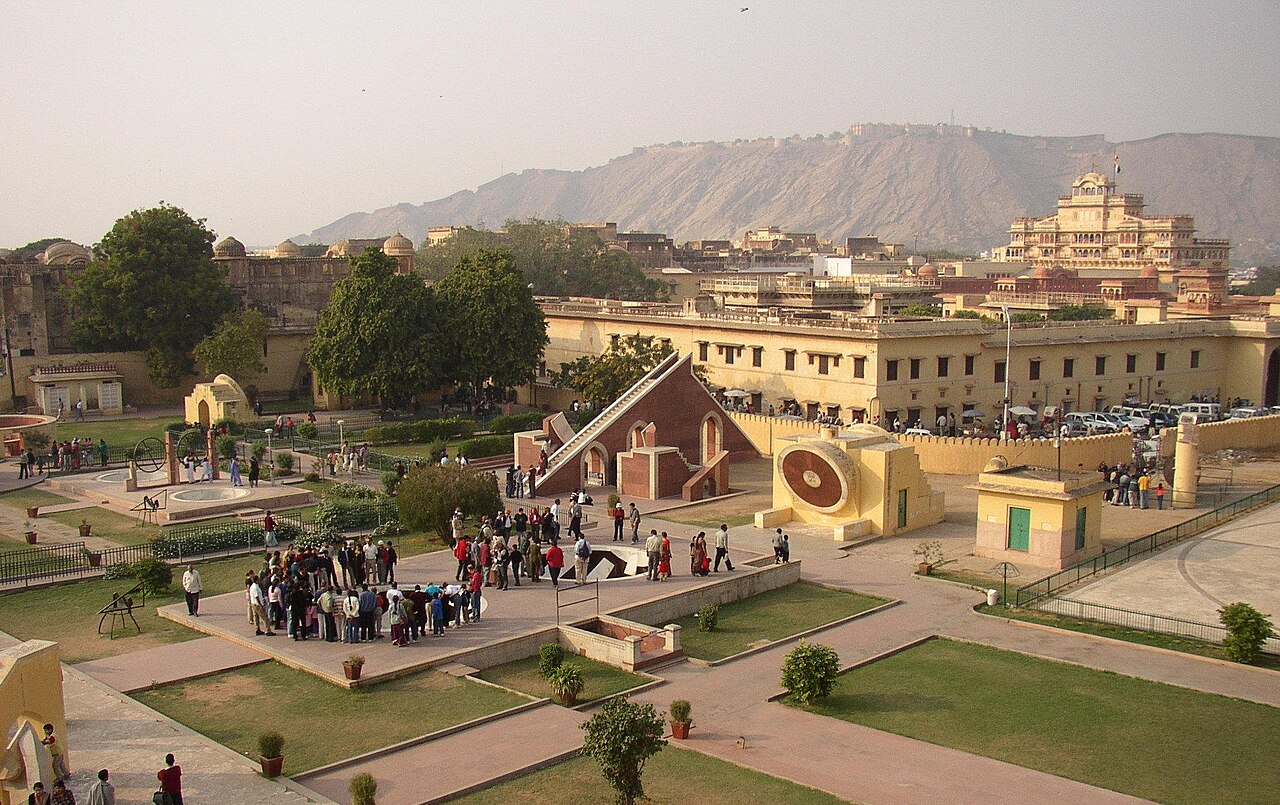
Jantar Mantar
Heritage · 150 m · about 2 min walk
 #3 in Jaipur
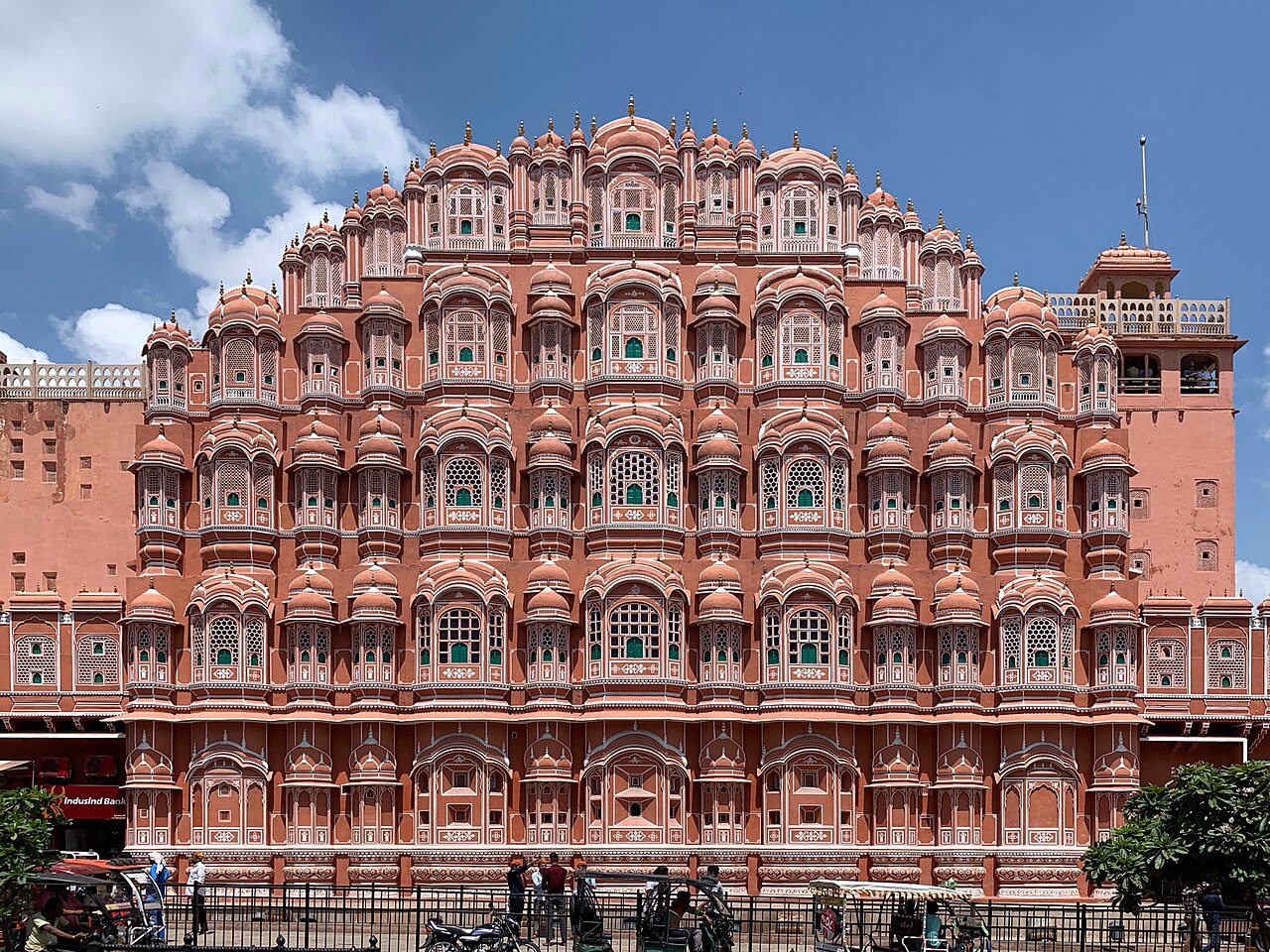
Hawa Mahal
Palace · 350 m · about 6 min walk
 #5 in Jaipur
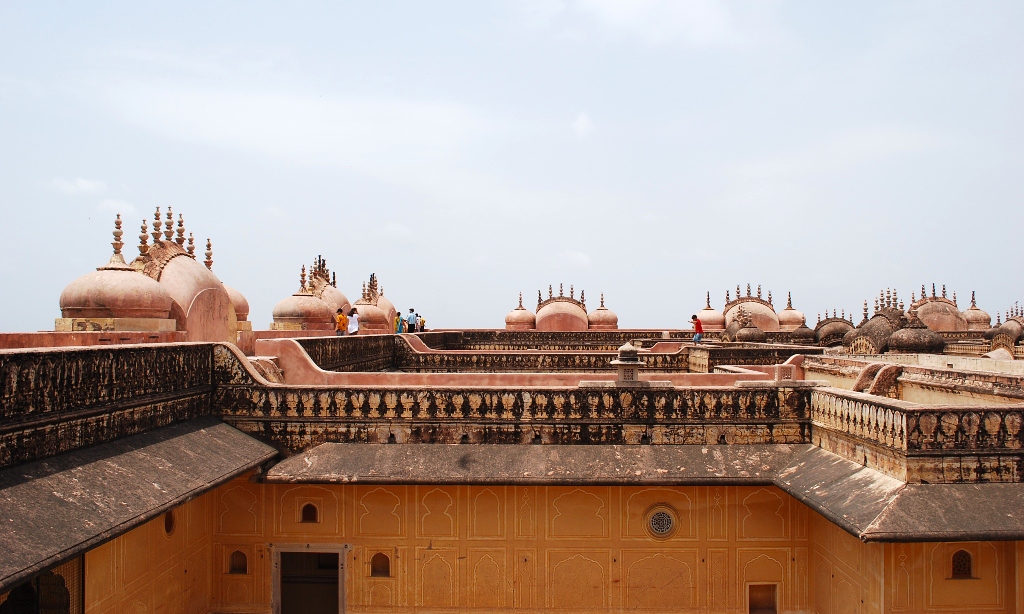
Nahargarh Fort
Fort · 1.5 km · about 24 min walk
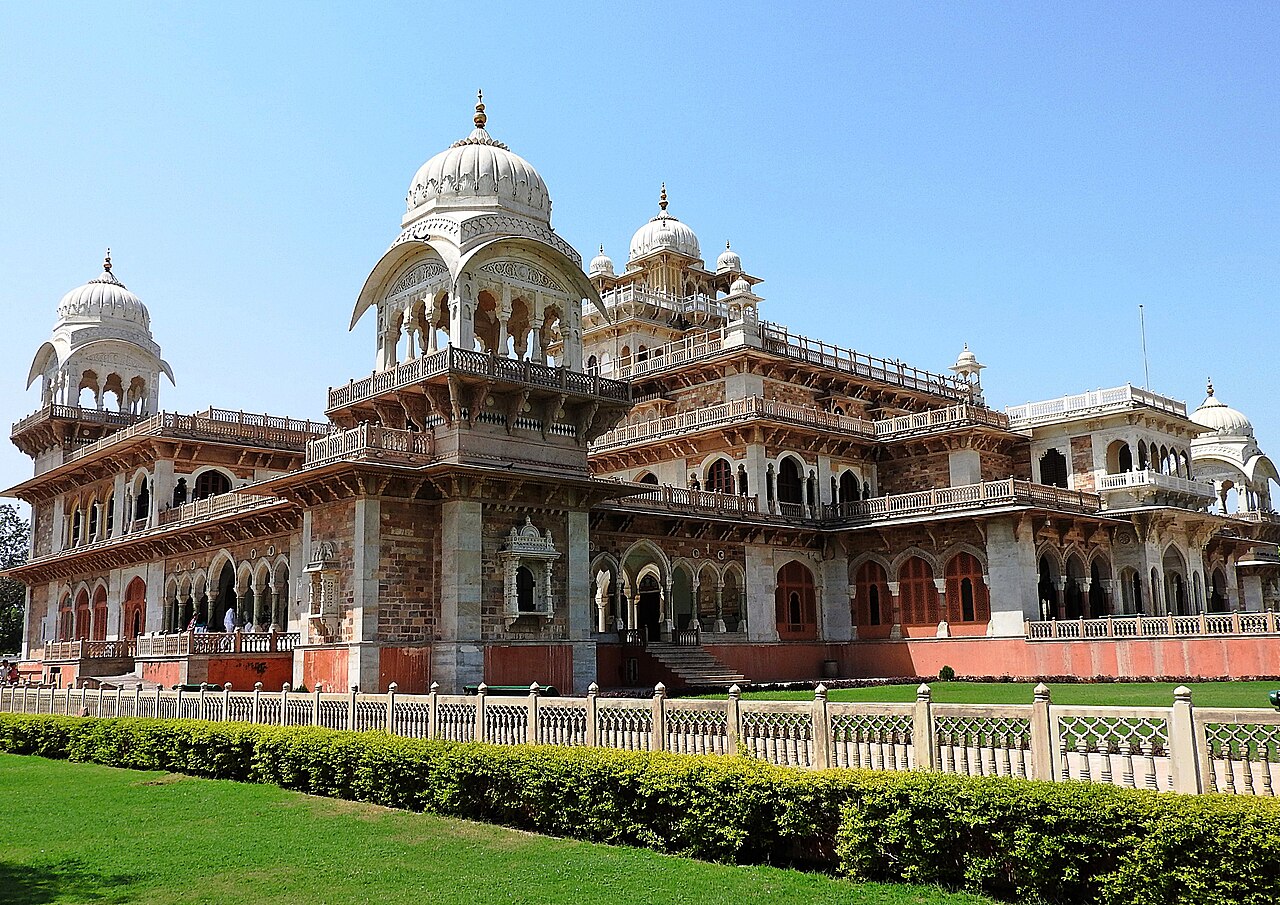 #6 in Jaipur
Albert Hall Museum
Museum · 1.6 km · about 27 min walk