
Panna Meena Ka Kund
#8of 12 places to visit in JaipurJaipur, Rajasthan
Also known as Panna Meena Stepwell
Quick answer
Opening hours: 07:00–18:00. Entry is free. Allow 30 min. Best time: 08:00 – 09:30.
Updated · Compiled by Traveliac, AI-assisted · 4 min read
- Opening hours
- 07:00–18:00
- Accessible 24 hours; most comfortably visited in daylight, 07:00 – 18:00
- Entry fee
- Free
- Time needed
- 30 min
- Best time of day
- 08:00 – 09:30
- Best months
- Oct – Mar
- Address
- Nahargarh Road, near Amer, Jaipur, Rajasthan 302028
About Panna Meena Ka Kund
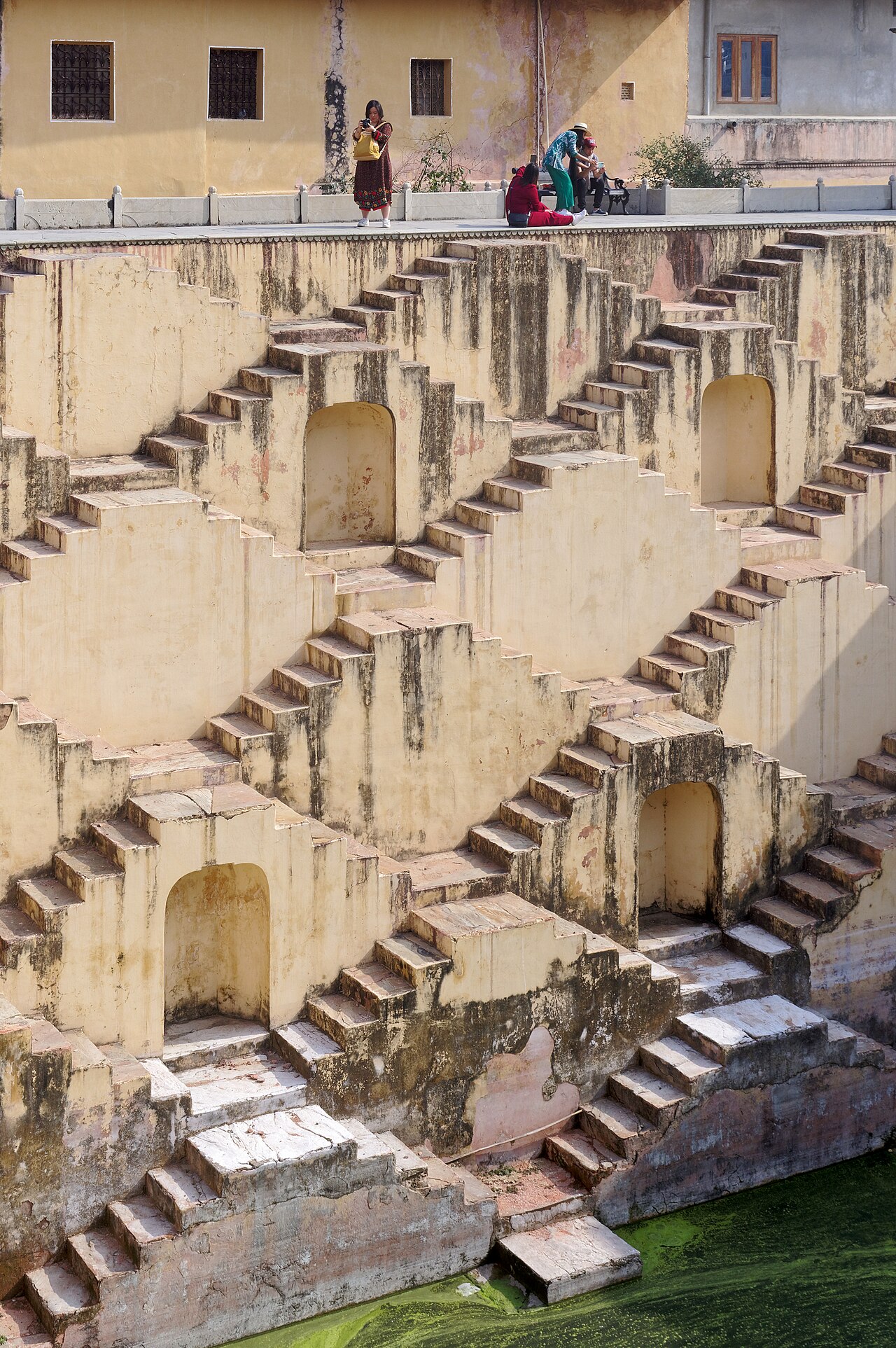
Panna Meena Ka Kund is a compact, deep square stepwell whose defining feature is symmetry — unlike Abhaneri's famous Chand Baori, whose staircases run in an irregular geometric jumble on three sides, Panna Meena's steps are laid out with near-perfect mirror repetition on all four faces, descending in a tightening diamond pattern toward a small square pool at the base. The stone is a plain, undecorated grey-and-buff local sandstone, cut into uniform stair units rather than carved with figural or floral ornament — the visual effect here comes entirely from geometry and shadow, not decoration. The well remains partially water-filled year-round from a natural spring source, and local Amer residents still descend the accessible side steps to wash clothes and utensils in the early morning, an ongoing daily use that most Jaipur heritage sites no longer retain.
Best time of day: 08:00 – 09:30. When direct sunlight has not yet flattened the geometric shadow pattern of the double staircases, which is the entire visual appeal of the site.
Panna Meena Ka Kund timings
Panna Meena Ka Kund opens at 07:00 and closes at 18:00. Those hours hold on Saturday and Sunday too.
- Opening hours
- 07:00–18:00
Mon–Sun 07:00–18:00 - Accessible 24 hours; most comfortably visited in daylight, 07:00 – 18:00
- Closed on
- Open every day
Opening hours compiled from rajasthantourism.gov.in and public records, last updated . They change without notice — confirm before you travel. How we write these guides
Panna Meena Ka Kund ticket price
| Ticket | Price |
|---|---|
| Indian visitors | Free |
| Foreign visitors | Free |
| Children | Free |
| Camera | Free |
No entry fee or ticket counter exists; the stepwell is an open public heritage structure within Amer township with unrestricted street-level access. Local residents still use the lower steps for washing, so this remains a functioning neighbourhood water structure, not purely a museum piece.
Prices compiled from rajasthantourism.gov.in and public records, last updated . They change without notice — confirm before you travel. How we write these guides
Best time to visit Panna Meena Ka Kund
- Quiet
- Moderate
07:00 – 09:00
Morning Local UseBest time to go
Local residents washing at the lower steps; best light for the geometric shadow pattern.
Quiet09:00 – 12:00
Photography Window
Independent travellers and occasional photography or fashion shoots arrive; still uncrowded relative to Amber Fort nearby.
Moderate12:00 – 16:00
Midday
Direct overhead sun flattens the shadow geometry, reducing photographic appeal; visitor numbers drop correspondingly.
Quiet16:00 – 18:00
Late Afternoon
Quiet again; soft indirect light returns some shadow definition to the steps.
Quiet
History of Panna Meena Ka Kund
The stepwell's construction is attributed to the 16th century, predating Jaipur city itself and belonging to the earlier Amer-era Kachwaha settlement period, though unlike the fort and major palace structures nearby, no single named patron or precise construction date survives in court records — stepwells of this type were typically commissioned by local nobles or wealthy merchant patrons as a public water-security work rather than a royal monument, which likely explains the thinner documentary trail compared to Amber Fort a short distance away.
The name 'Panna Meena' is popularly associated with a minister or notable figure of the pre-Kachwaha or early Kachwaha Meena-era administration, though the specific historical identity remains contested among local historians rather than definitively settled, and visitors should treat name attributions offered by informal guides with appropriate scepticism.
Stepwells across Rajasthan and Gujarat served a critical function beyond water storage: their shaded, cool lower chambers provided a genuine respite from surface heat, and many operated as informal community gathering spaces. Panna Meena continued this function at a neighbourhood scale long after larger royal stepwells elsewhere had become purely ceremonial or fallen out of use.
Rules & etiquette at Panna Meena Ka Kund
The stepwell has no barriers, railings, or supervising staff at most hours — footing on the stone steps is uneven and can be slippery near the waterline, and children should be closely supervised given the genuine fall risk into a structure with no safety rail.
Because local residents actively use the lower steps for washing, visitors should be mindful about photographing people at the waterline without asking first — this is someone's daily chore, not a staged tableau, and treating it as a photo backdrop without acknowledgment is a common point of local irritation.
The site has become a popular filming and fashion-shoot location in recent years; if a commercial shoot is in progress on arrival, informal courtesy suggests waiting rather than crowding into the frame, though there is no official enforcement mechanism either way.
Tips for visiting Panna Meena Ka Kund
- 1
This is a five-minute stop, not a destination in itself, and works best as an add-on to an Amber Fort visit rather than a dedicated trip — it sits a short auto-rickshaw ride from Amber's main gate along Nahargarh Road.
- 2
The geometric symmetry photographs best from directly above, looking straight down into the well — position yourself at the centre of one of the four staircase faces rather than at a corner angle, which is where most published photographs of the site are taken from.
- 3
Unlike Chand Baori at Abhaneri, which requires a 95-kilometre, roughly two-hour drive from Jaipur, Panna Meena delivers a comparable (if smaller-scale) stepwell photograph within the city's immediate surroundings — a practical substitute for travellers without a full day to spare for the Abhaneri day trip.
How to reach Panna Meena Ka Kund
The red star is Panna Meena Ka Kund; the numbered pins are the 10 nearest places in our guides, each showing its rank in its city. Tap a pin for details.
Nahargarh Road, near Amer, Jaipur, Rajasthan 302028Directions in Google Maps
From Amber Fort (Suraj Pole)
₹50–₹1001.5 km · 5–10 min
Auto) or a 15-minute walk.
From Jaipur International Airport (JAI)
₹450–₹60021 km · 50–65 min
OLA/Uber).
From Jaipur Junction Railway Station (JP)
₹250–₹35012 km · 30–40 min
Auto).
Nearest airport
From Jaipur International Airport (JAI)
21 km, 50–65 minutes.
Nearest railway station
From Jaipur Junction (JP)
12 km, 30–40 minutes.
Panna Meena Ka Kund FAQs
Is there an entry fee for Panna Meena Ka Kund?
No. It is an open, unstaffed public heritage structure with free access at all hours, unlike the ticketed monuments elsewhere in Jaipur.
How is Panna Meena Ka Kund different from Chand Baori at Abhaneri?
Panna Meena's staircases are symmetrical on all four sides, producing a cleaner geometric pattern, while Chand Baori's steps run in an irregular arrangement on three sides only. Panna Meena is also a five-minute stop near Amber Fort, versus Chand Baori's roughly two-hour drive from Jaipur.
Is it safe to walk down into the stepwell?
There are no railings or barriers, and steps can be slippery near the waterline. It is walkable with care but requires attentiveness, particularly with children, since there is no supervising staff or safety rail.
Is it appropriate to photograph the stepwell if local residents are washing clothes there?
The stepwell remains in daily local use, so ask before photographing people at the waterline directly — treating someone's washing routine as an unannounced photo backdrop is considered discourteous locally.
Compiled with AI assistance from official sources and public records, and published only after the checks in How we write these guides. Nobody from Traveliac has visited this place. Last updated . How we rank and check places
Places to visit near Panna Meena Ka Kund
Straight-line distances from our map; times are estimates.
 #1 in Jaipur
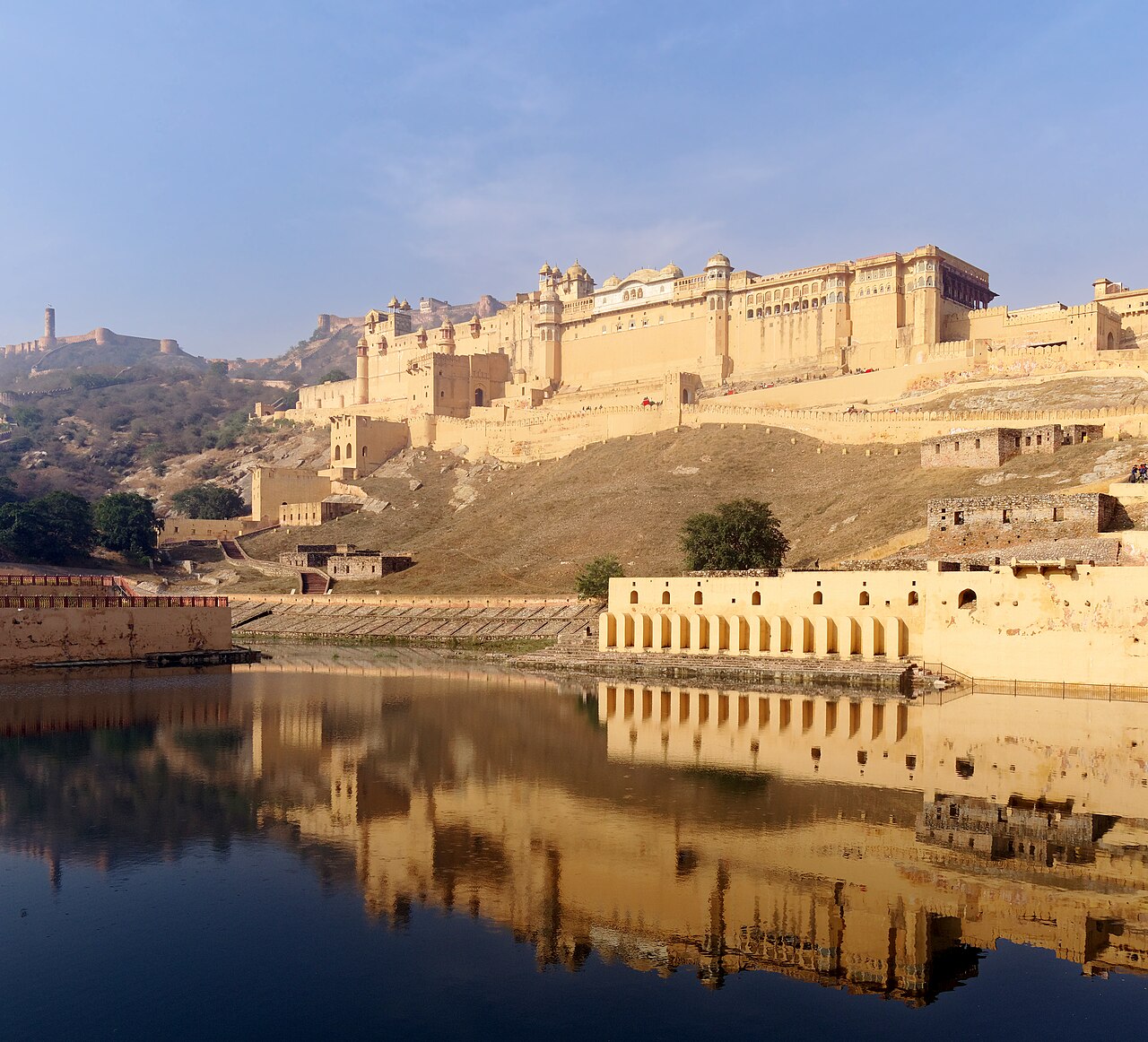
Amber Fort & Palace
Fort · 300 m · about 5 min walk
 #7 in Jaipur
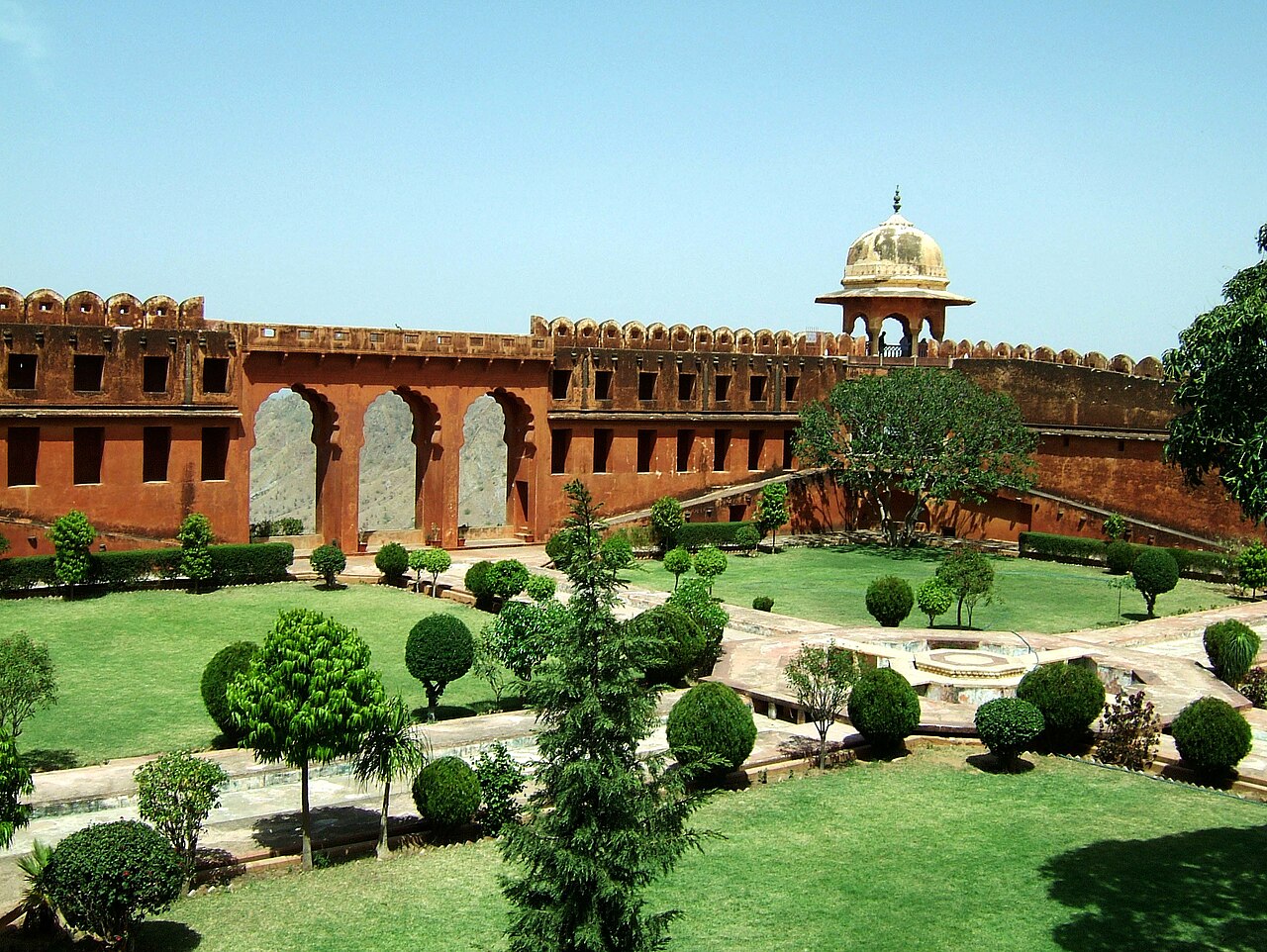
Jaigarh Fort (Jaivana Cannon)
Fort · 750 m · about 12 min walk
 #9 in JaipurFree entry
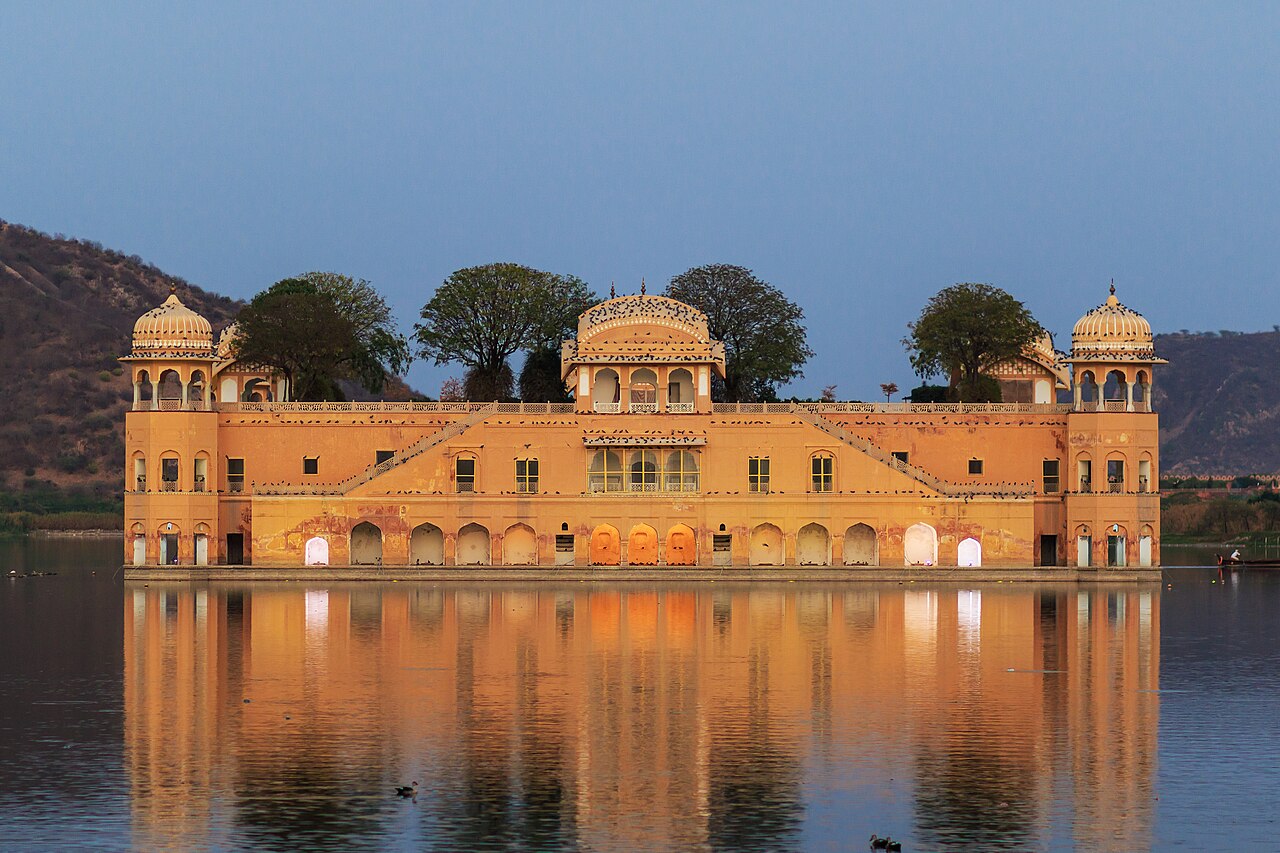
Jal Mahal (Water Palace)
Palace · 4 km · about 10 min by road
 #5 in Jaipur
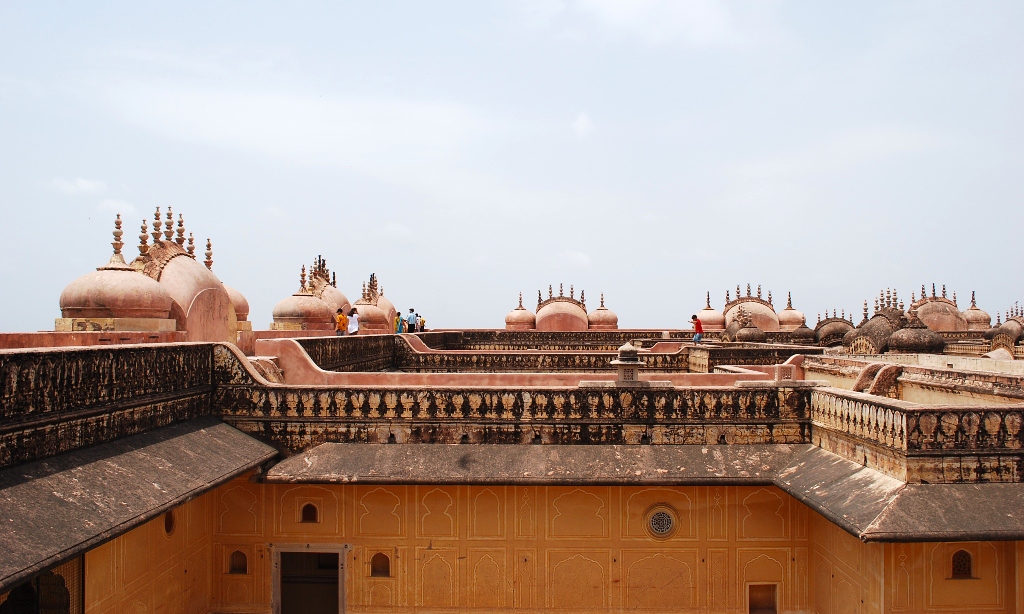
Nahargarh Fort
Fort · 7 km · about 20 min by road