
Hawa Mahal
#3of 12 places to visit in JaipurJaipur, Rajasthan
Also known as Palace of Winds · हवा महल
Quick answer
Opening hours: 09:00–17:00, last entry 16:30. Entry: ₹50 Indian · ₹200 foreign. Allow 1 hr. Best time: 06:30 – 08:00 or 09:00 – 10:30.
Updated · Compiled by Traveliac, AI-assisted · 5 min read
- Opening hours
- 09:00–17:00
- Entry fee
- ₹50 Indian
- Ticket from
- Time needed
- 1 hr
- Best time of day
- 06:30 – 08:00 or 09:00 – 10:30
- Best months
- Oct – Mar
- Address
- Hawa Mahal Road, Badi Choupad, J.D.A. Market, Pink City, Jaipur, Rajasthan 302002
About Hawa Mahal
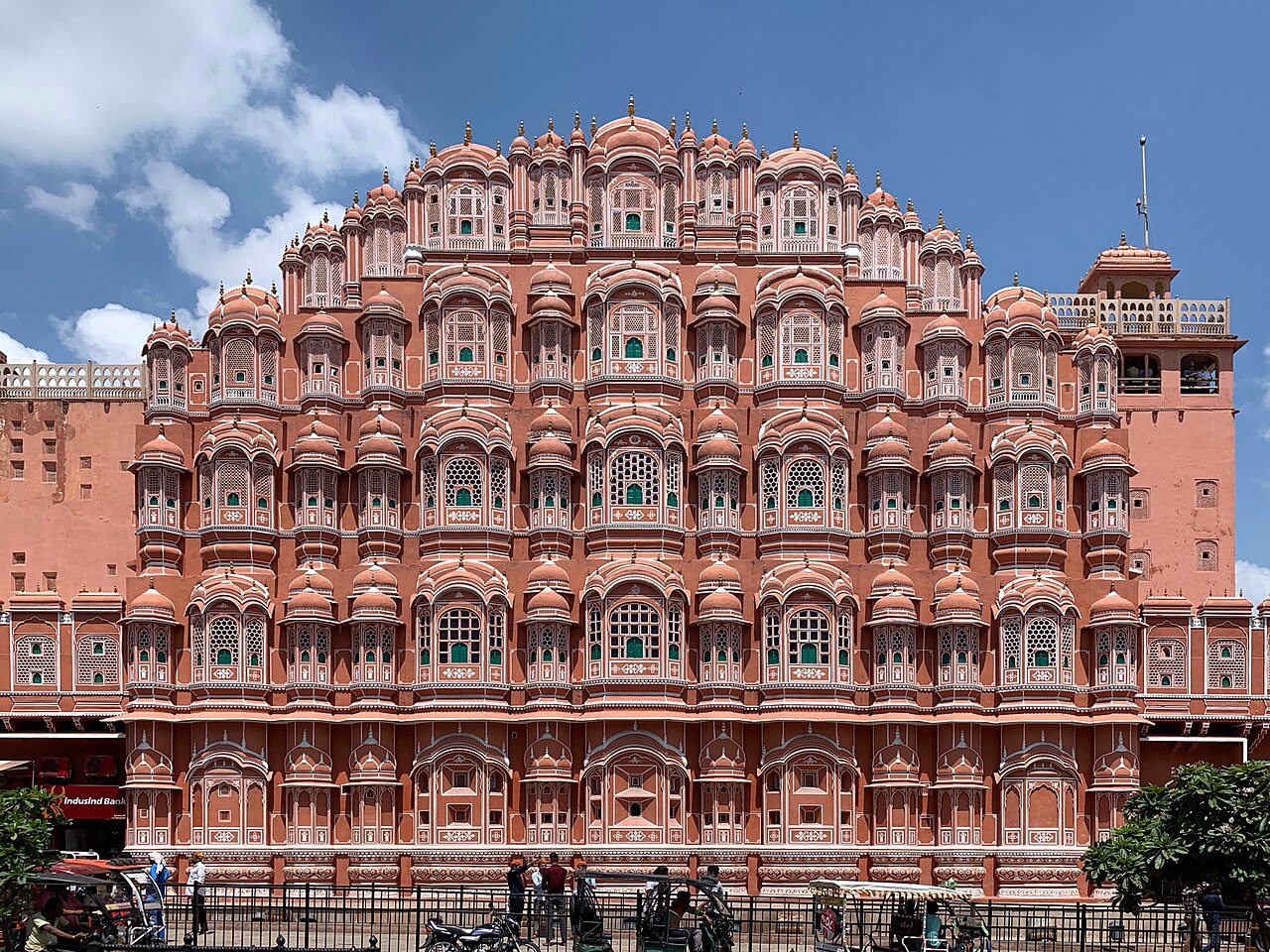
Hawa Mahal's façade onto Siredeori Bazaar is 15 metres tall, 30 metres wide, and contains 953 individual jharokha windows — each one a distinct carved sandstone lattice — stacked across five tapering floors. The structure is, by orthodox architectural definition, a screen rather than a building: the façade is only one room deep throughout most of its five floors, a fact that surprises most visitors expecting palace interiors. It was built in 1799 by Maharaja Sawai Pratap Singh in the form of the crown of the Hindu god Krishna, a reference visible in the curved Bengali-style shikhara roof that tops the central bay. The pink Karaundi sandstone was coated in a thin lime plaster mixed with natural red oxide pigment, delivering the warm terracotta tone that both the architecture and the city are identified by today. The structure's engineering purpose was ventilation by Venturi effect: the 953 perforated lattice screens create a continuous pressure differential between the street-facing façade and the interior chambers, pulling a cooling breeze through the building at speeds 3–4°C lower than the ambient Jaipur air temperature. In an era before mechanical cooling, this made the building functionally habitable throughout the Rajasthan summer.
Best time of day: 06:30 – 08:00 or 09:00 – 10:30. For exterior photography (soft pink morning light on the façade from the east); 09:00 – 10:30 for interior (first entry, quietest crowds, cross-breeze most active).
Hawa Mahal timings
Hawa Mahal opens at 09:00 and closes at 17:00. Those hours hold on Saturday and Sunday too.
- Opening hours
- 09:00–17:00
Mon–Sun 09:00–17:00 - Closed on
- Open every day
Opening hours compiled from rajasthantourism.gov.in and public records, last updated . They change without notice — confirm before you travel. How we write these guides
Hawa Mahal ticket price
| Ticket | Price |
|---|---|
| Indian visitors | ₹50 |
| Foreign visitors | ₹200 |
| Children | Free |
| Camera | Free |
Included in the Rajasthan Composite Ticket (₹300 Indian / ₹1,000 foreign, valid 2 days). Photography is unrestricted throughout. The street-level façade can be photographed for free from the public road at any hour.
Prices compiled from rajasthantourism.gov.in and public records, last updated . They change without notice — confirm before you travel. How we write these guides
Best time to visit Hawa Mahal
- Quiet
- Moderate
- Very busy
06:30 – 09:00
Pre-Opening ExteriorBest time to go
Interior is closed. Exterior façade accessible for photography from street level. Optimal directional morning light. Bazaar vendors and local commuters create authentic urban foreground.
Quiet09:00 – 11:00
Morning Opening
First-entry window. Fewer than 40 visitors typically on upper floors. Venturi cross-breeze most pronounced. Licensed guides available at kiosk.
Quiet11:00 – 14:00
Midday Peak
School groups and domestic tour packages arrive in volume. Upper staircase narrows become congested. Fifth floor rooftop view crowded but accessible.
Very busy14:00 – 17:00
Afternoon Decline
Crowds thin by 14:30. Interior rooms remain cooler. Last entry at 16:30.
Moderate
History of Hawa Mahal
Maharaja Sawai Pratap Singh commissioned Hawa Mahal in 1799, according to an inscription tablet on the building's west wall, and the architect is identified in court records as Lal Chand Usta, a master craftsman of the Usta tradition. Pratap Singh was a poet-king; he composed in Braj Bhasha under the pen name 'Brijnidhi' and produced over 57 volumes of religious verse. His architectural commission was explicitly devotional: the building was designed as a viewing platform from which the ladies of the royal zenana — who observed strict purdah — could watch the city's street processions, religious festivals, and daily commerce without being seen by the public below.
The 953 jharokha windows were not a decorative excess but a functional purdah technology: their stone lattice screens (called jali work, carved from a single sandstone block rather than assembled) provided vision from inside to outside while rendering observers inside invisible from the street. The carving tradition draws from the Mughal jali precedent at the Taj Mahal and Fatehpur Sikri, but Usta's Jaipur school used a coarser Karaundi sandstone that required wider lattice bars — giving Hawa Mahal's screens a more robust, geometric character compared to the translucent Agra white marble jali.
The building fell into disrepair after Pratap Singh's death in 1803, was briefly used as a military administrative office during the British Residency period, and underwent first-phase ASI conservation in 1971–74. The most recent structural stabilisation programme (2005–2008) addressed the failure of the lower floor sandstone corbels on the street-facing elevation.
Rules & etiquette at Hawa Mahal
The public entrance to Hawa Mahal's interior is not through the famous street-facing façade but through a gate on Hawa Mahal Road — the western side of the building, accessed via a left turn off Siredeori Bazaar approximately 50 metres south of the main façade. First-time visitors regularly lose 15–20 minutes looking for the entrance along the wrong street because the front façade has no door.
Floors three, four, and five are accessible only by narrow stone staircases with a 1-metre-wide single-file clearance. Visitors with significant mobility impairments should note that there is no ramp or lift access above the second floor. Bags larger than 35cm are not permitted past the second floor due to staircase width constraints; a free cloakroom is available at the ground floor courtyard.
Hiring a licensed guide (₹200–₹300 for 45 minutes, stationed at the courtyard entrance kiosk) adds substantial context, particularly for the engineering explanation of the Venturi ventilation system. Photography of the street façade from the rooftop cafés opposite is legal and free but some chai shops charge ₹100–₹200 as an unofficial 'photography table fee' — non-refundable.
Tips for visiting Hawa Mahal
- 1
The single most important timing advice is to photograph the exterior before visiting the interior. The eastern-facing façade receives direct sunlight from approximately 06:30 to 10:30, turning the Karaundi sandstone from its daytime tan to a saturated warm pink-gold. After 11:00, the sun moves overhead and the façade flattens. For interior exploration, the first 90 minutes of opening (09:00–10:30) are consistently the calmest.
- 2
The rooftop of the fifth floor is the primary reason to pay the entry fee. The view northward along Siredeori Bazaar toward City Palace — a kilometre of unbroken heritage streetscape — is the most coherent urban vista in Jaipur.
- 3
From Hawa Mahal, the City Palace complex is a 500-metre walk north along Siredeori Bazaar, and Jantar Mantar is 400 metres further — a logical 3-stop morning circuit on foot. Street food along this corridor includes freshly squeezed pomegranate juice (₹40–₹60 per glass) and kachori from the 80-year-old Rawat Mishthan Bhandar at Ajmeri Gate Chauraha — opens at 05:00 and sells out by 12:00.
How to reach Hawa Mahal
The red star is Hawa Mahal; the numbered pins are the 10 nearest places in our guides, each showing its rank in its city. Tap a pin for details.
Hawa Mahal Road, Badi Choupad, J.D.A. Market, Pink City, Jaipur, Rajasthan 302002Directions in Google Maps
From Jaipur International Airport (JAI)
₹280–₹42013 km · 30–45 min
OLA/Uber). Auto from airport: ₹350–₹500 negotiated.
From Jaipur Junction Railway Station (JP)
₹80–₹1305 km · 15–25 min
Auto, metered or negotiated). City Bus Route #2 to Badi Chaupad (₹12, 20 minutes).
From Sindhi Camp ISBT
₹70–₹1004 km · 12–20 min
Auto). Walking via MI Road: 30 minutes.
Nearest airport
From Jaipur International Airport (JAI)
13 km, 30–45 minutes.
Nearest railway station
From Jaipur Junction (JP)
5 km, 15–25 minutes.
Hawa Mahal FAQs
Where is the entrance to Hawa Mahal — there is no door on the front?
The entry gate is on the western side of the building, accessed via Hawa Mahal Road — a narrow lane parallel to and behind the main façade. From Siredeori Bazaar, turn left at the corner approximately 50 metres south of the central bay. The entrance gate is marked with a Rajasthan Archaeological Department sign. The iconic front façade has no public door.
How many floors can visitors access, and is there lift access?
All five floors are accessible, but only via narrow single-file stone staircases approximately 1 metre wide. There is no lift or ramp access above ground floor. Bags wider than 35cm are not permitted past the second floor.
What is the 953 jharokha count and why does it matter architecturally?
The 953 individual jharokha windows are each carved from a single block of Karaundi sandstone into a distinct lattice pattern. Their cumulative surface area creates a continuous Venturi pressure differential: hot street air rises along the exterior face, draws cooler interior air through the screens, and drops the effective indoor temperature by 3–4°C — identical in principle to modern passive-cooling terracotta façades in sustainable architecture.
Is rooftop café photography of Hawa Mahal free?
The street-facing façade can be photographed freely from any public footpath. Rooftop cafés opposite may charge ₹100–₹200 as an unofficial 'photography table fee' which is non-refundable. The elevated angle is available for free from Hawa Mahal's own fifth floor rooftop (included in the ₹50/₹200 entry fee).
Compiled with AI assistance from official sources and public records, and published only after the checks in How we write these guides. Nobody from Traveliac has visited this place. Last updated . How we rank and check places
Places to visit near Hawa Mahal
Straight-line distances from our map; times are estimates.
 #4 in Jaipur
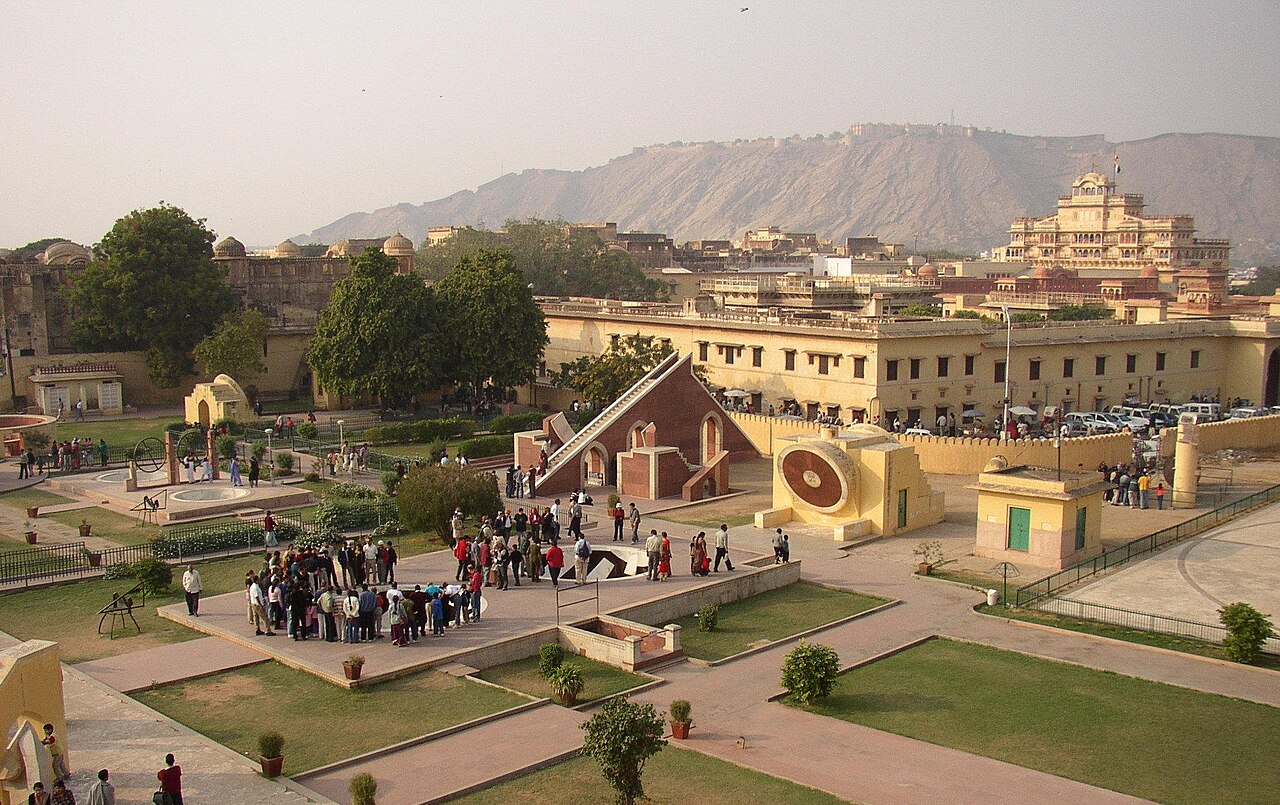
Jantar Mantar
Heritage · 250 m · about 4 min walk
 #2 in Jaipur
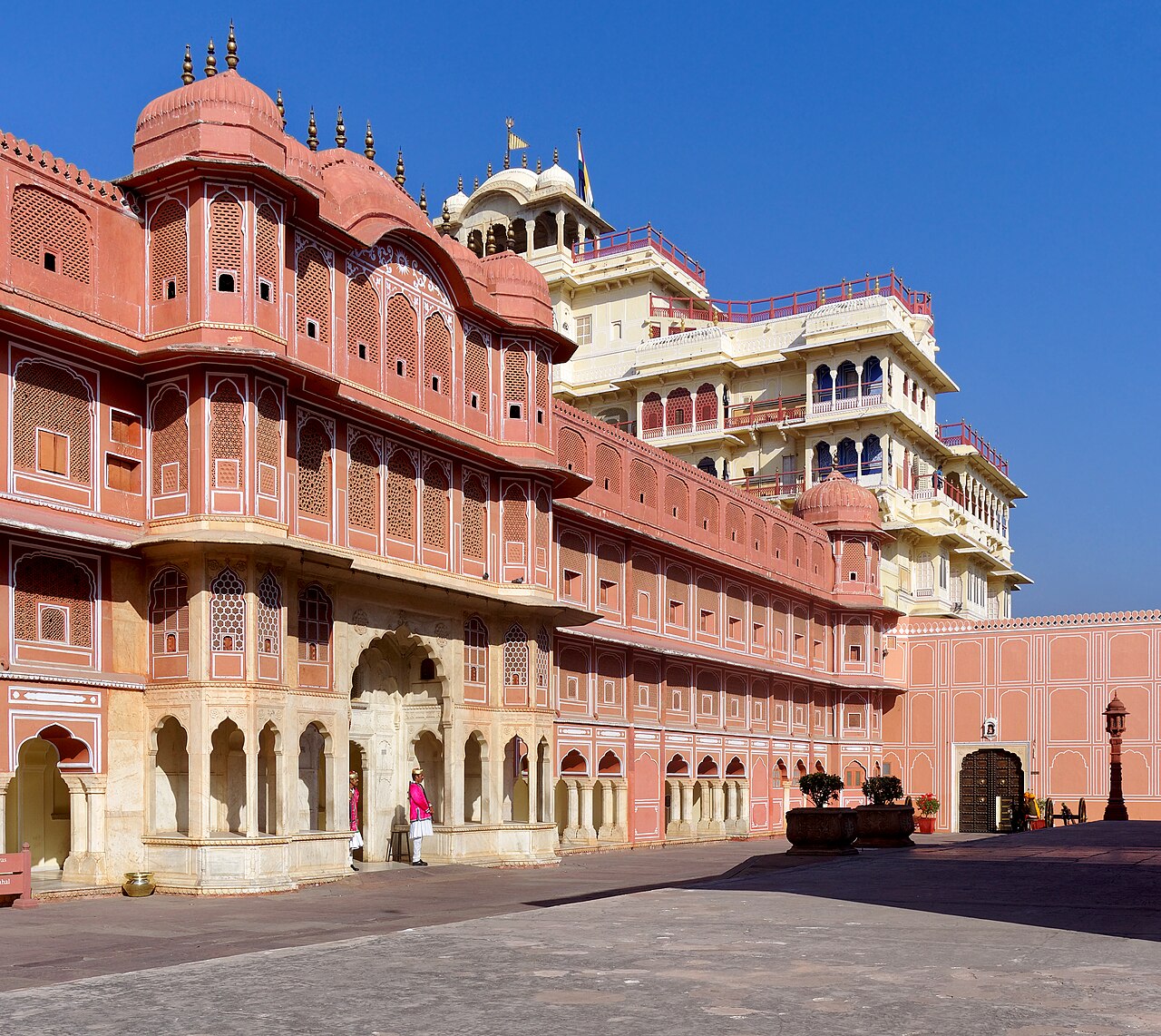
City Palace Jaipur
Palace · 350 m · about 6 min walk
 #6 in Jaipur
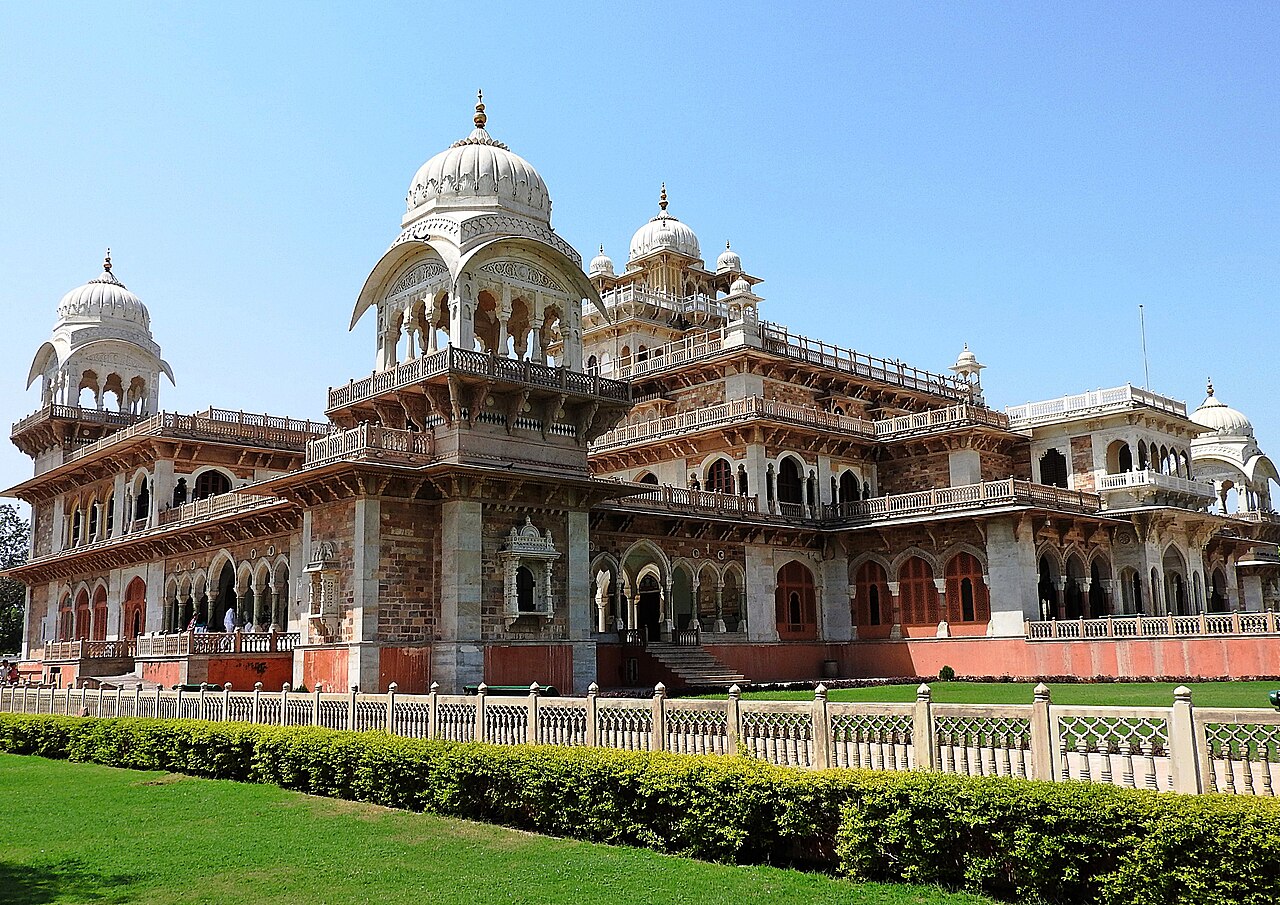
Albert Hall Museum
Museum · 1.5 km · about 25 min walk
 #5 in Jaipur
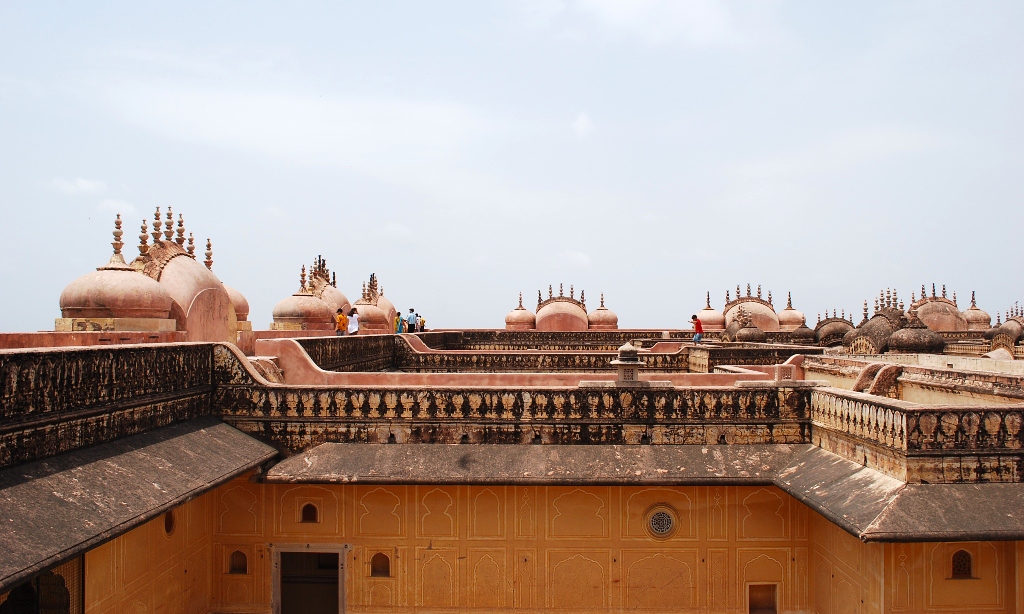
Nahargarh Fort
Fort · 1.8 km · about 30 min walk